






主要心得
- 韓國的主要招募中心包括首爾、釜山、大田、蔚山和大邱。
- 韓國的支柱產業包括資訊通信技術、汽車和未來旅行、生物技術、造船和金融服務。
- 在韓國,僱用員工的方式包括與名義雇主合作、僱用獨立承包商、成立子公司或直接註冊雇主。
韓國是全球企業拓展業務的絕佳選擇。該國經濟規模龐大,人口受教育程度高,並與美國、英國和歐盟簽訂了自由貿易協定。
在進入韓國市場之前,您需要對韓國的稅法、工作時間、帶薪假期以及《勞動標準法》下的其他要求有深入的了解。我們的指南將告訴你關於在韓國招募你需要知道的一切。
在韓國聘僱員工前的須知事項
G-P Gia™如果您不確定從哪裡開始,我們的全球人力資源代理 (由人工智能驅動)可以回答您在50 國家(包括韓國)和所有50 美國州中最棘手的合規問題。使用 Gia,減少對外部律師的依賴,並節省高達 6% 的合規時間和成本。95
7關於在韓國招聘,你需要了解的0件事
1.勞動契約
《勞動標準法》對僱傭合約規定了具體標準。
僱傭合約一般不需要用韓文撰寫。但強烈建議簽訂韓語或雙語合同,以確保員工理解並減少糾紛。
固定期限僱傭合約的期限最長為兩年,但也有例外情況。如果僱傭關係持續超過該期限且沒有適用的例外情況,則該員工通常被視為不定期員工。
在韓國,兼職員工通常享有與其合約工時成比例的法定權益。但是,平均每週工作時間少於 15 個合約工時的員工可能無法享有某些法定權利。
僱傭合約應包含以下資訊:
- 工作職責和工作地點
- 工資,包括構成要素、計算方法和支付時間
- 合約規定的工作時間,包括上下班時間和休息時間
- 國定假日
- 年度帶薪休假
與結聘用和通知相關的法定要求,無論是否在合約中有所體現,均適用。但是,無論如何,最好還是加入這些條款。
G-P名義雇主有一份僱傭合約產生器,可協助您在韓國招聘時起草符合所有法律要求的合規僱傭合約。
2.工資稅
韓國的工資扣除項包括所得稅和四大社會保險項目。對於2026,一般利率為:
| Item | 員工股份 | 雇主份額 |
|---|---|---|
| 國民退休金 | 4.75% | 4.75% |
| 國民健康保險 | 3.595% | 3.595% |
| 長期照護保險 | 1314健康保險費的0.1% | 相同的 |
| 僱傭保險 | 0.9% | 1151750.1–2.3%全部的 |
| 勞工傷害保險 | 無 | 行業費率 |
在考慮這些扣款時,請記住,您可以使用G-P名義雇主簡化您在韓國的團隊成員的整個員工生命週期(包括薪資)。 只需點擊幾下,即可用 150 種貨幣向您的全球團隊支付工資,並輕鬆添加獎金、佣金和例外情況。
3。最低工資和工作時間
韓國員工平均每年工作1 , 877小時。在經合組織國家中,韓國平均工作時間排名第六。
對於擁有五名或以上員工的工作場所,員工每週最多可以工作 52 小時——40 個標準工時和最多 12 個加班工時。某些行業、經批准的緊急加班、彈性工作時間制度以及定義明確的豁免職位可能適用例外情況。
加班工資以員工正常時薪的至少150%的加班費率支付。韓國法律也要求公司每週至少給員工一天帶薪休假,通常是星期日。
截至 1 月1日, 2026 ,韓國的全國最低工資為每小時10韓元, 320美元,以每月2韓元、 156美元、 880美元計算,每月工作209小時。
4。有薪假期
五月1日——勞動節——是韓國的法定帶薪假期。實際上,大多數雇主都將其他國家法定假日視為有薪假期。這些節日包括:
- 元旦
- 春節(農曆新年)-前一天、春節當天、春節後的第二天
- 獨立運動日
- 兒童節
- 佛誕日-農曆四月初八
- 紀念日
- 解放日
- 中秋節——前一天、節日當天以及第二天
- 國家基金會日
- 韓文日
- 聖誕節
- 某些全國性選舉日,包括定期舉行的總統選舉、國會選舉和地方選舉
每年工作天數少於 80 天的員工,服務滿一年後,可享有 15 天帶薪年假。員工每連續工作兩年,即可獲得一天額外假期,最多可獲得25天。
5。帶薪病假
韓國法律沒有強制規定非工傷疾病或受傷必須帶薪病假,但雇主可以根據合約或工作場所政策提供病假。與工作相關的傷害和疾病享有單獨的法定保護和福利,主要透過工傷事故賠償保險制度來實現。
6。產假和陪產假
韓國員工享有產假:
- 單胎分娩需在90個日曆日內完成,且產後至少需45天。
- 多胞胎分娩需等待120個日曆日,且產後至少需等待60天。
- 符合資格的早產兒可獲得100天
支付責任由雇主和就業保險機構共同承擔,具體取決於雇主的分類和員工的資格。
自2月2025起,父親有權享有20天有薪陪產假。該假期可在孩子出生後的 120 天內休,並可分為三個階段以滿足需求。雇主必須支付僱員的工資。
標準的育嬰假權利是每位父母每個孩子最多可享有12月。僅在以下情況下增加至 18 個月:
- 父母雙方為同一個孩子休至少三個月的育嬰假。
- 該員工是單親家長。
- 該員工有一個患有符合條件的嚴重殘疾的孩子。
政府在休假期間提供經濟支持,報酬率會根據休假期間的長短而有所不同。
7.Employment 結束聘用
韓國不是自由僱傭國家。 終止員工合約需要正當理由。公司可以選擇提前30天通知員工,或支付員工至少30天的正常工資作為通知補償。
員工受雇一年後可享有遣散費。遣散費的標準金額為每服務一年可獲得一個月的薪水。
認為自己被不公平解僱的員工可以向勞資關係委員會提出申訴。如果成功,他們可能會被恢復職務或獲得金錢獎勵。
韓國跨國公司招募模式
將業務拓展到韓國有幾種選擇,每種選擇都有其自身獨特的優缺點。這些選項包括:
- 直接雇主註冊:向韓國政府註冊您的公司,同時獨立處理薪資和其他服務。
- Employer of record (名義雇主) :韓國名義雇主代表您的公司處理所有行政和工資流程。
- 子公司或分公司:在韓國設立實體,該實體將根據當地法律作為獨立實體運作。
- 獨立聘用人員:在韓國聘用獨立承包商不需要設立本地實體或分公司。 對於錯誤歸類的工人,存在著嚴重的經濟損失,因此在僱用他們時必須遵循嚴格的指導方針。
韓國主要招聘中心
韓國一些城市以特定產業聞名。瞭解每個城市所能提供的工作機會,可以幫助您將招聘工作引導至正確的地點,並更快地填補職位空缺。
南韓的頂尖人才樞紐有
- 首爾是韓國最大的城市和首都。它是該國主要的商業、金融和科技中心。三星、SK海力士和現代摩比斯等大型公司總部都設在這裡。這為半導體、電子和軟體開發等產業創造了龐大的人才庫。
- 釜山是韓國最大的港口城市,也是世界第六大貨櫃港(以吞吐量計)。它是造船、航運和物流的重要中心。這裡的動力包括船舶設計師、海洋工程師、物流專家和供應鏈專家。
- 大田常被稱為韓國的矽谷。這裡有韓國科學技術院 (KAIST) 、許多政府研究機構,以及科學技術中心大德科技城。
- 蔚山是韓國主要的工業城市。它在石油化工、鋼鐵、造船和汽車製造等行業表現出色。
- 大邱是機器人、汽車零件製造和紡織品領域的頂級中心。
南韓的主要產業
瞭解南韓的主要產業有助於您為薪資和福利訂定基準。您可以運用這些洞察力,明智地選擇在何處投資和發展您的勞動力。南韓的主要產業包括
- 資訊通信技術:韓國是全球高科技製造業和數位技術領域的領導者。三星、LG、SK等大型企業總部都設在這裡。該國提供高速網路存取、高科技產業人才培養計畫以及國際化專家的激勵措施。 專業人才包括網路安全專家、機器學習工程師和軟體開發人員。
- 汽車與未來出遊:韓國是領先的汽車生產國,現代和起亞是其主要品牌。該行業正在迅速向電動車 (EV)、自動駕駛汽車和城市空中交通 (UAM) 轉型。專業人才包括電動車和電池工程師、自動駕駛工程師和機器人工程師。
- 生物技術和生物健康:政府和私人企業的大力投資正在推動產業成長。該產業主要集中於藥品、生物製藥、醫療器材和健康技術。大田等城市是產業的關鍵中心。專業人才包括生物製程工程師、科學研究人員和臨床研究專業人員。
- 造船和海事:韓國是世界領先的造船國家之一。該地區以擁有眾多造船廠而聞名,其中包括現代重工和三星重工。該產業的重點是高價值船舶、智慧船舶和環保技術。專業人才包括焊工、物流和供應鏈專家以及船舶設計師。
- 金融服務:韓國擁有發達的金融市場。雖然大型地方銀行歷來佔據主導地位,但政府正在鼓勵數位金融領域的數位化和創新。 專業人才包括數位金融開發人員、網路安全專家和金融風險專業人士。
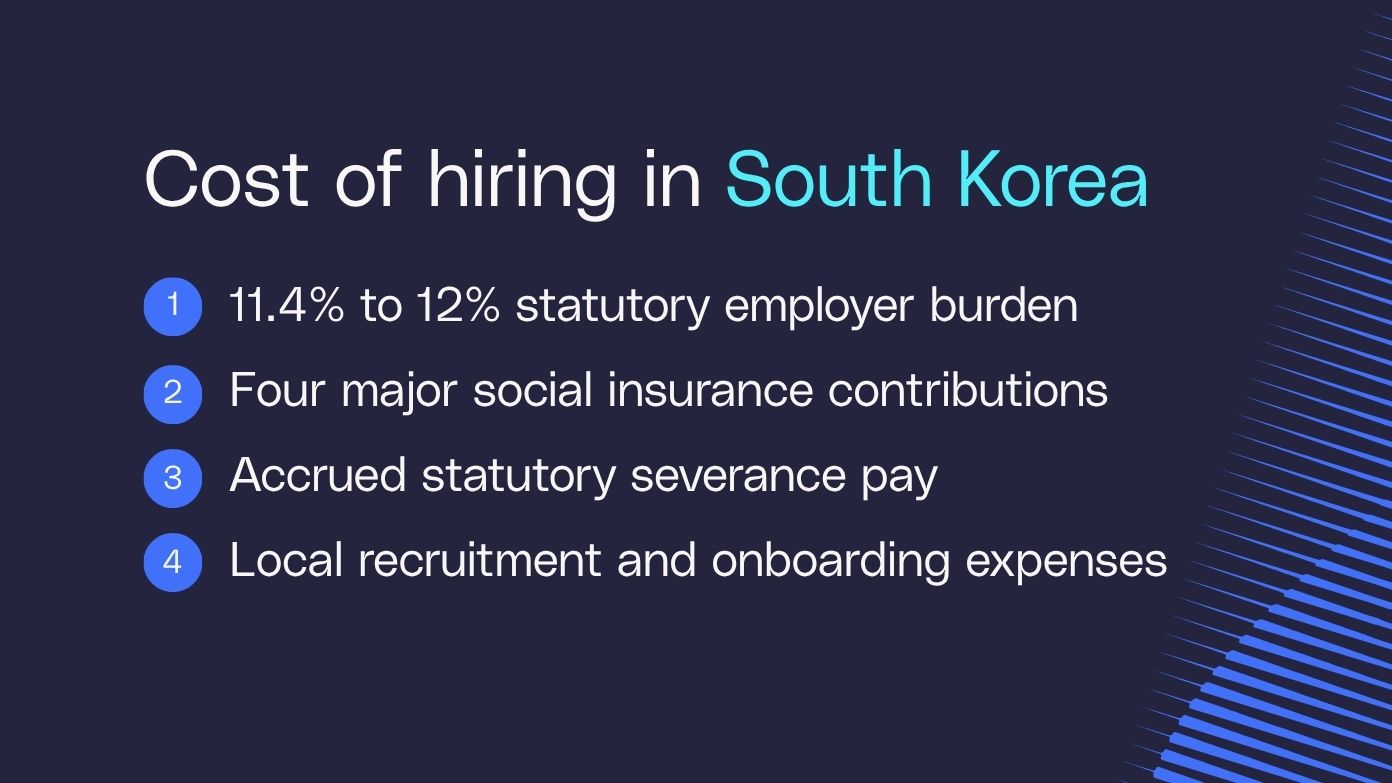
在韓國聘僱員工的成本
- 實體設立(除非您與法定雇主合作)
- 招聘廣告
- 審核應徵者的勞動成本
- 往返韓國的旅遊費用,包括飯店住宿、餐飲和交通(如適用)
- 與翻譯人員合作撰寫文件或促進對話(如適用)
- 起草符合規定的僱傭合約、進行法律審查以及與人力資源和法律專家進行諮詢
- 提供電腦、電話和軟體授權的成本
- 入職資料及初步訓練費用
- 維護所需稅務和薪資記錄與文件的成本
根據G-P Verified Sources from Gia的數據,韓國年度雇主總負擔率(包括工資以外的成本)介於11 4至12 % 之間。 由於報酬保險費率不同,高風險產業的情況可能更為嚴重。
公司在韓國招募員工需要哪些條件?
- 選擇公司成立的方式。
- 開發公司印章。
- 開設銀行帳戶。
- 註冊您的公司。
- 登記參加社會保險。
- 選擇並開設辦公室(如適用)。
- 文件僱用規則(如果工作場所定期僱用10名或更多員工)
在韓國設立子公司可能需要數週或數月的時間。使用韓國雇主僱用僱員,而無需設立自己的實體。 以更低的成本組建您的團隊,並安心地確保您所做的一切都符合規定。
在韓國招募的步驟
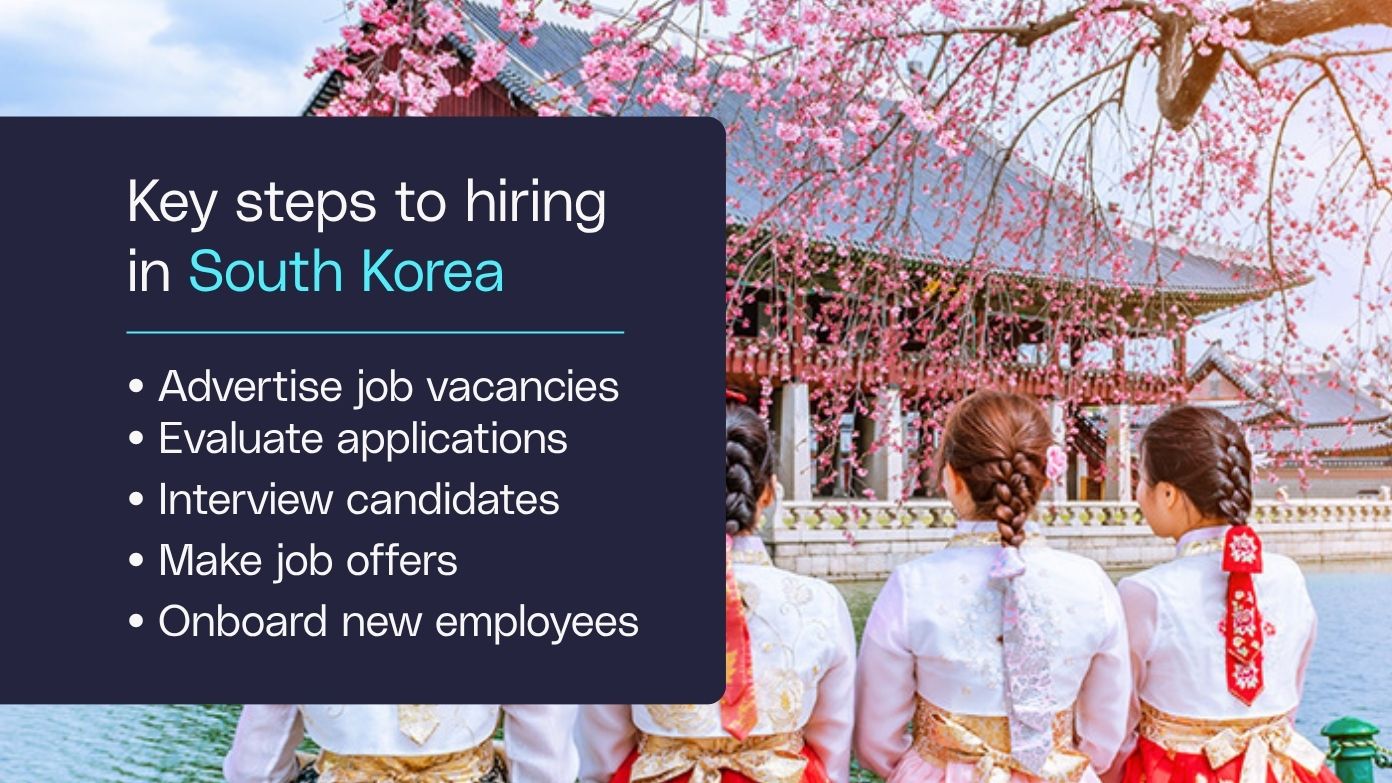
韓國的招募流程與你在自己國家可能熟悉的流程類似。以下是五個基本步驟:
1.刊登招聘廣告
韓國的反歧視法律,如《勞動標準法》和《平等就業機會和工作家庭平衡援助法》,在招聘過程中保護求職者的權益。 雇主不得基於性別、年齡、國籍、宗教、社會地位、婚姻狀況、懷孕、殘疾或就業狀況進行歧視。確保招聘資訊只專注於與工作相關的資格要求。
韓國通過了一項“盲聘法”,限制公司在招聘面試中可以提出的問題。擁有30名以上員工的潛在雇主必須避免詢問以下話題,否則將面臨最高5百萬韓元的罰款:
- 國籍
- 婚姻狀況
- 家庭成員
- 財產所有權狀況
- 外貌,包括身高和體重(除非與工作職責相關)
2.評估應用程式
依照反歧視法律篩選申請並進行面試。
雇主在處理應徵者資料時,必須遵守《個人資訊保護法》(PIPA),並在適用情況下遵守《公平招聘程序法》。
主要要求:
- 只收集與工作相關的資訊。
- 向申請人提供隱私權聲明,解釋收集哪些資料、為什麼需要這些資料、資料將保留多長時間以及是否會共享這些資料。
- 必要時,取得有效同意。
- 除非法律有明確授權,否則應避免收集韓國居民登記號碼。
- 限制背景調查。犯罪記錄、信用記錄、健康狀況和其他敏感資訊核查需要明確、適度、與工作相關的依據和適當的授權。一般而言,犯罪記錄核查並非例行程序。
- 限制內部存取權限,僅允許真正需要該資訊的招募人員和決策者存取。
- 招聘目的和規定的保存期限結束後,刪除或退還未被錄用的申請人的文件。《公平招聘程序法》也賦予申請人有關退還某些已提交文件的權利。
- 確保所有決定都與工作相關。訪談記錄應記錄客觀的甄選標準,而不是主觀的或受保護的個人特質。
3.面試候選者
面試入圍候選人名單。你可以選擇親自面試或線上面試。使用結構化、非歧視性的面試問題。Gia可以幫助您創建符合韓國反歧視法律的問題,以便在遵守當地法規的同時,找到最適合該職位的人選。
4。發出工作邀請
聯絡您選擇的候選人,為他們提供您公司的職位。 錄用通知書應明確列明雇主、職位、職責、工作地點、僱用類型、開始日期、薪資、工作時間、使用期限、福利及接受流程。
務必明確區分固定薪資與酌情發放的獎金、佣金和股權。
5.讓新員工入職
現在你可以辦理新員工入職手續了。滿足以下要求可以簡化流程:
- 在非本國公民從事任何工作之前,必須核實其工作許可。
- 在開始之前或開始時交付強制性書面勞動契約。
- 請提供完整的薪資、工時、假日、休假、工作場所和職責資訊。
- 新增定期合約工和兼職員工的必要詳細資訊。
- 為員工辦理適用的社會保險和薪資預扣。
- 每個發薪日都發出符合規定的詳細薪資單。
- 對員工資料應用PIPA控制措施。
- 提供適用的安全、工作場所政策、騷擾、保全和職位職責培訓。
- 避免隨意或自動試用結束聘用語言。
有了G-P名義雇主,您就不必擔心入職的行政負擔。 我們將簡化流程,以便您可以專注於培訓您的新員工,並將他們融入您的公司文化中。
在韓國僱用獨立承包商
在韓國,僱用獨立承包商是一種經濟高效的方式,可以在不僱用全職員工的情況下測試市場並建立業務。
總部位於韓國的承包商了解當地的消費者行為、規則和商業慣例。他們將做好準備,利用自己的設備和既定的工作流程迅速投入工作。
在韓國僱用承包商,您可以根據業務需求輕鬆調整您的動力,而無需承擔僱用的複雜性和成本。在與韓國的獨立約聘人員簽訂協議之前,請考慮以下事項:
1.員工與獨立約聘人員
了解僱員和獨立承包商之間的差異很重要。在韓國,僱員受《當地服務代理法》管轄。 當地勞務派遣為員工提供法定的保障和福利,包括遣散費、帶薪休假、參加社會保險等。 承包商依據《民法典》開展業務。
員工分類取決於關係的實質。當局和法院會考慮以下因素:
- 對工作方法、工時和工作地點擁有控制權。
- 能夠接受或拒絕任務
- 提供工具和設備
- 能夠委託或分包
- 付款方式
- 財務風險和獲利機會
- 融入客戶業務
- 排他性、連續性和經濟依賴性
2.錯誤分類的罰款
當某人不是約聘人員時,將其歸類為約聘人員可能會導致嚴重的罰款。 如果出現分類錯誤,您可能需要:
- 支付補發的員工福利,包括社會保險費、 遣散費、 帶薪休假和健康保險。
- 面臨行政罰款和稅務處罰。
- 處理會損害您吸引人才能力的聲譽損害。
3.如何向韓國承包商支付款項
G-P Contractor ™省去了僱用和支付國際化承包商的繁瑣、耗時的過程。 只需點擊幾下滑鼠,即可建立和發布合約並向承包商付款,同時確保流程合規。
使用 G-P 在南韓聘請員工和承包商
我們的全球僱傭平台™ (全球僱傭平台)及其人工智慧產品—雇主、承包商和Gia使各種規模的公司能夠建立和管理全球團隊。
G-P是全球就業領域公認的領導者,擁有十多年的經驗、最大的人力資源、法律和合規專家團隊以及全球專有知識庫。
使用 G-P,讓您更輕鬆地拓展韓國市場。立即聯絡我們或預約演示。
 常見問題
常見問題
在韓國,勞動合約應該包含哪些內容?
根據韓國《勞動基準法》,韓國雇主必須向所有員工提供書面勞動合同,其中應詳細說明:
工作職責和工作地點
工資,包括構成要素、計算方法和支付時間
合約規定的工作時間,包括上下班時間和休息時間
國定假日
年度帶薪休假
面試時禁止詢問哪些問題?
為遵守反歧視法,除非與工作直接相關,否則應避免詢問性別、年齡、婚姻狀況、家庭背景和外表等個人資訊。
南韓的最低工資是多少?
截至 1 月 1、2026 日,韓國的全國最低工資為每小時 10、320 韓元,每月 209 小時計算,相當於每月 2、156、880 韓元。
在南韓聘請國際化工人有什麼要求?
所有國際化勞工必須遵守就業許可證制度,並取得適當的工作簽證、簽證簽發確認書 (CCVI) 及其他文件。
雇主在招募過程中應如何處理資料隱私問題?
雇主在處理應徵者資料時,必須遵守《個人資訊保護法》(PIPA),並在適用情況下遵守《公平招聘程序法》。