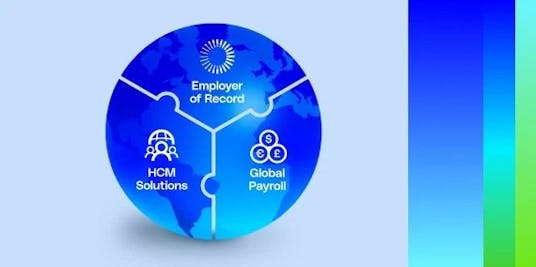




Navigating the complexities of Philippine labor law is a significant challenge when expanding into this dynamic market. A Philippines Employer of record (EOR) products and services provide businesses a streamlined approach to navigate these challenges effectively. G-P EOR solution simplifies your expansion by enabling you to hire and onboard Filipino talent in the Philippines in minutes, without the need to establish a local legal entity.
Through our global entity infrastructure, G-P acts as the legal employer, handling payroll, tax compliance, benefits administration, and HR matters in full compliance with Philippine laws and regulations. This allows you to focus on managing your team and growing your business opportunities while we manage the complexities of employment compliance and legal requirements.

Hiring in the Philippines
Understanding AI-powered EOR services in the context of hiring Philippines helps in creating a robust recruitment strategy. This process ensures compliance with local and international employment requirements. When extending an offer to a candidate in the Philippines, it’s important to understand local cultural customs and regulations. Professionals commonly negotiate their salary in net terms (take-home pay) rather than gross salary. This can create challenges for foreign employers seeking to hire Filipino employees. Using an EOR in the Philippines helps mitigate this risk by ensuring accurate gross-to-net calculations and compliant offer letters from the start, which align with legal requirements.
Watch how an EOR works
Employment contracts in the Philippines
While oral contracts are permissible, best practice is to have a strong, written employment contract in English. The contract should clearly outline the terms of the employee’s compensation, benefits, and termination requirements. Salary and compensation should be stated in Philippine pesos (PHP) as the controlling amount. A foreign-currency equivalent may be included for reference only, if needed.
The Labor Code distinguishes between Filipino managerial and rank-and-file employees. Rank-and-file employees are entitled to statutory benefits such as overtime pay, night shift differential, holiday pay, and 5 days of paid service incentive leave after at least 1 year of service, unless an equivalent or better paid leave benefit applies. While managerial employees are not automatically entitled to these, employers can offer them as part of a competitive compensation package, provided it is stipulated in the employment contract. EOR products and services guide employers on legal obligations and benefits for Filipino workers, ensuring all necessary steps are covered.
Working hours in the Philippines
In the Philippines, normal hours of work are up to 8 hours per day. The standard workweek is generally 6 days or 48 hours, with at least 24 consecutive hours of rest after 6 consecutive normal workdays. Employees who work beyond 8 hours in a day are generally entitled to overtime pay at 125% of their regular hourly rate. Higher rates may apply for overtime on a rest day, special day, or regular holiday. Work performed on a designated rest day is compensated at 130% of the regular rate. Employers generally cannot offer compensatory time off in lieu of overtime pay. Using an AI-powered EOR service ensures compliance with both local and global employment standards.
Holidays in the Philippines
The Philippines observes two types of holidays, each with different pay rules:
- Regular holidays: Eligible employees receive 100% of their daily wage even if they do not work. If required to work, they receive 200% for the first 8 hours, with higher rates for overtime or rest-day work.
- Special (non-working) days: These follow the principle of “no work, no pay” unless a company policy, employment contract, or collective bargaining agreement states otherwise. Work is paid at 130% of the basic wage for the first 8 hours, with higher rates if the day falls on a rest day.
The government proclaims the official holidays for each year. An Employer Record (EOR) ensures compliance with these regulations, providing consistent compliance across regions.. For 2025, these holidays include:
Regular Philippines holidays:
- New Year's Day (January 1)
- Araw ng Kagitingan (April 9)
- Maundy Thursday (April 17)
- Good Friday (April 18)
- Labor Day (May 1)
- Independence Day (June 12)
- National Heroes Day (August 25)
- Bonifacio Day (November 30)
- Christmas Day (December 25)
- Rizal Day (December 30)
- Eid'l Fitr & Eid'l Adha (Dates to be proclaimed)
Special (non-working) days in the Philippines:
- Chinese New Year (January 29)
- EDSA People Power Revolution Anniversary (February 25)
- Black Saturday (April 19)
- Ninoy Aquino Day (August 21)
- All Saints' Day (November 1)
- Feast of the Immaculate Conception of Mary (December 8)
- Christmas Eve (December 24)
- Last Day of the Year (December 31)
Leave entitlements in the Philippines
Philippines vacation leave
Covered rank-and-file employees with at least one year of service are entitled to 5 days of paid Service Incentive Leave (SIL) per year. This generally does not apply if they already receive an equivalent or more favorable paid leave benefit. However, to attract and retain talent in the Philippines, most companies offer more generous leave, with 15 days of vacation and 15 days of sick leave being a common market standard for all employees.
Sick leave in the Philippines
Beyond the convertible SIL, there is no statutory paid sick leave. However, employees who are unable to work due to sickness or injury can receive a cash allowance from the Social Security System (SSS), provided they meet certain criteria, including a minimum number of contributions and confinement for at least 4 days. The employer facilitates this process and is reimbursed by the SSS.
Maternity and paternity leave in the Philippines
Under the Expanded Maternity Leave Law, female employees are entitled to 105 days of paid maternity leave for live births, regardless of delivery type. Solo parents may receive 15 additional days. Employees may also allocate up to 7 days to the child’s father or an eligible alternate caregiver.
Fathers are entitled to 7 calendar days of employer-paid paternity leave for the first 4 deliveries or miscarriages of their lawful wife. They must cohabit with their wife, unless there is a valid reason for living apart.
Philippines health insurance and supplementary benefits
All employees must be enrolled in the national health insurance program (PhilHealth), which is funded by joint employer and employee contributions. While this provides basic coverage, many employers offer supplementary private health insurance as a key benefit to attract top talent.
Other common benefits include cost-of-living or transportation allowances and supplementary life or disability insurance. An EOR can help you design a competitive and compliant benefits package for the Filipino market, ensuring the package aligns with both local and international requirements.
13th-month pay in the Philippines
Covered rank-and-file employees are generally legally entitled to a 13th-month pay, equivalent to at least 1/12 of their basic salary earned during the calendar year. This must be paid on or before December 24. For Filipino employees who have worked for less than a year, it is prorated. The calculation is based on the employee's basic salary and excludes non-integrated allowances. Some employers also offer a 14th-month pay or Christmas bonus as a competitive perk.
Termination and severance in the Philippines
The probationary period for an employee generally cannot exceed 6 months from the employee’s start date, unless an apprenticeship agreement provides for a longer period. Employers must communicate the standards for regularization at engagement. Termination is strictly regulated and must be based on a just or authorized cause.
- Just cause: Termination due to employee misconduct (e.g., serious misconduct, fraud, willful disobedience). In these cases, no severance pay is required, but the employer must follow procedural due process known as the “two-notice rule.” This involves a first written notice detailing the grounds and giving the employee a meaningful opportunity to respond, followed by a second written notice stating the decision and reasons if dismissal is imposed.
- Authorized cause: Termination due to business reasons (e.g., redundancy, retrenchment, installation of labor-saving devices). The employer must provide written notice to the employee and the Department of Labor and Employment (DOLE) at least 30 days before an authorized-cause termination takes effect. Any required separation pay depends on the specific ground for termination. The amount varies from one-half month's to one month’s pay per year of service, depending on the reason for termination.
Failure to follow these procedures can lead to claims of illegal dismissal, resulting in potential reinstatement, back wages, and damages.
Payroll and taxes in the Philippines
Employers in the Philippines are responsible for withholding and remitting taxes and contributions to several government agencies on behalf of their employees. This is a core function simplified by using an Employer of Record. Mandatory contributions include:
- Social Security System (SSS): Provides private-sector social security benefits, including sickness, disability, retirement, death, and maternity benefits.
- Philippine Health Insurance Corporation (PhilHealth): The national health insurance program.
- Home Development Mutual Fund (HDMF or Pag-IBIG Fund): A provident savings system that includes housing loan provisions.
- Employee Compensation Commission (ECC): Provides coverage for work-related sickness, injury, disability, or death. For private-sector employees, EC contributions are administered through SSS and are generally employer-paid.
G-P, as your EOR in the Philippines, can manage payroll calculations, withholdings, and remittances to these agencies, ensuring your business remains compliant.
Choosing an EOR in Philippines
When selecting an employer of record (EOR) in the Philippines, consider the following factors:
- Compliance expertise: The EOR should have in-depth knowledge of Philippine labor laws, including the Labor Code, regional wage orders, and statutory benefits such as SSS, PhilHealth, and Pag-IBIG. This ensures all employment practices, from contracts to termination, are compliant with local regulations.
- Comprehensive service offering: A best-in-class Philippines EOR should manage all aspects of employment, including payroll processing, tax remittances, mandatory government contributions, benefits administration, leave management, and offboarding procedures.
- Local market understanding: Look for an EOR with a strong local presence or proven experience in the Philippines. This ensures familiarity with market norms, cultural nuances, and region-specific requirements that can impact employee experience and compliance.
- Scalability and flexibility: The EOR should be able to accommodate your hiring needs, whether you’re hiring a single employee or building a larger team, and scale with your business as it grows in the Philippines or across the region.
- Technology and integration: An AI-powered EOR platform simplifies onboarding, benefits management, and payroll. Confirm that the EOR can integrate with your existing HR, PEO, or payroll systems to avoid operational delays and ensure data accuracy.
- Transparent, flat-rate pricing: Evaluate total cost predictability rather than low base rates. Look for standard, clear pricing models. Compare pricing structures carefully, as some EORs use percentage-of-payroll models that penalize high earners. Flat-rate pricing ensures long-term operating budget accuracy. The G-P EOR starting price of USD $599 monthly gives you full access to the G-P Global Employment Platform. We use a flat platform fee rather than charging a percentage of payroll.
- Reputation and references: Research the EOR’s reputation, customer testimonials, and industry recognition to ensure they have a track record of reliability and success in the Philippines.
- Data security and compliance: Ensure your EOR follows strict data security protocols and complies with the Philippines’ Data Privacy Act. This is critical for protecting sensitive employee information and maintaining regulatory compliance.
Selecting the right EOR services in the Philippines will help you navigate complex local requirements, reduce compliance risks, and provide a positive experience for your employees.
Calculate the ROI of using G-P EOR
Use G-P EOR for global hiring in the Philippines
G-P EOR is the award-winning, AI-powered global hiring solution that empowers startups, SMB, and enterprise businesses to build global teams with ease. Onboard, manage, and pay top talent in over 180 countries in minutes, without the complexity of entity setup.
G-P EOR is the preferred partner for leading HCM, PEO, and payroll platforms. Bring your workforce data together in one place to maintain existing workflows while keeping consistent and accurate data across your integrated systems.
Request a proposal to start hiring in the Philippines today.
FAQs
What is a Philippines employer of record (EOR)?
A Philippines EOR is a provider that legally employs your global talent on your behalf. The platform manages local compliance, contracts, payroll, and benefits without a local entity setup. This framework mitigates legal risks and removes administrative friction during market capture.
Is an EOR cost-effective for hiring a single employee?
An EOR provides a cost-effective alternative to managing global compliance through internal teams or external legal counsel. For a scaling company, setting up a legal entity often costs tens of thousands of dollars. G-P EOR offers flat-rate platform pricing starting at USD 599 per month for a single employee in 180+ countries.
What should startups look for in EOR solutions?
Startups should look for EOR solutions with clear cost models. User-friendly platforms, dependable customer support, and proven track records of compliant hiring are also crucial.
How does a Philippines EOR work for international companies?
A Philippines EOR acts as the legal employer to streamline compliant hiring for your business. The platform manages contracts, payroll, benefits, and labor law compliance while you direct day-to-day assignments. This approach eliminates setup delays and secures operational agility.
Philippines EOR vs. PEO: Who is the legal employer?
A Philippines EOR acts as the sole legal employer of your international professionals. In contrast, a Professional Employer Organization (PEO) establishes a co-employment structure that shares operational responsibilities. In the Philippines, only the EOR assumes full legal employer obligations.
What payroll and tax tasks does a Philippines EOR handle?
The platform executes payroll processing, secures accurate salary payments, and manages statutory deductions. The provider handles tax withholding, remits payments to government agencies, and maintains local payroll compliance. This automated structure reduces configuration errors and tax compliance penalties.