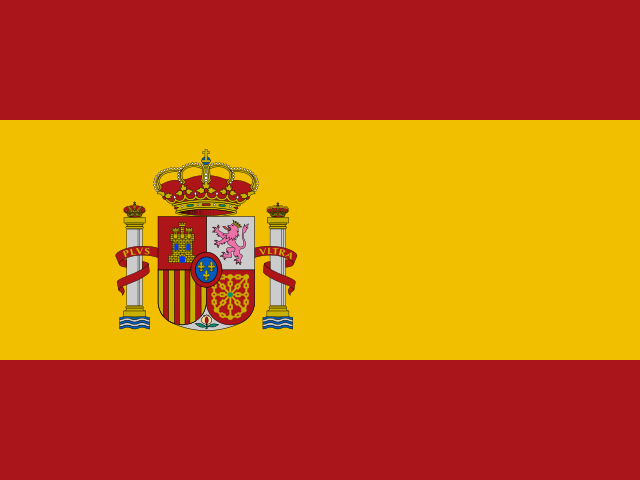
Global expansion offers many opportunities, but navigating the complexities of global employment can be challenging. For companies planning to hire employees in Spain, it's essential to understand the unique requirements and legal obligations involved. Spain, with its dynamic economy and skilled workforce, offers an attractive market for businesses looking to grow their global footprint.
As a global employer of record (EOR), G-P manages the entire employment lifecycle — from onboarding and payroll to employment contracts, benefits, and offboarding. G-P allows you to harness the talent of the brightest people in 180+ countries around the world, quickly and easily — without setting up new entities.
With a Spain employer of record like G-P by your side, you'll have peace of mind knowing all Spain hiring and employment needs are handled by a team of dedicated experts.
Simplify hiring in Spain with an employer of record
By using a Spain EOR, you can efficiently manage employment contracts and payroll operations in Spain. Spain's complex labor laws and Collective Bargaining Agreements (CBAs) can be a roadblock for companies looking to hire talent in Spain. An employer of record (EOR gives you a compliant path to build your team in Spain without setting up a local entity.
An EOR acts as the legal employer for your chosen candidates, managing all local HR responsibilities so you can focus on growing your business. The process is simple and efficient.
The EOR hiring process in Spain
- Partner with an employer of record (EOR). Choose an EOR with deep expertise in Spain as they’ll be your guide through the local legal landscape.
- Source your ideal candidate. You find the best talent for your needs, and the EOR handles the rest of the employment process.
- Generate a compliant employment contract. Your EOR drafts a locally compliant contract that reflects all mandatory terms under Spain’s Workers’ Statute (Estatuto de los Trabajadores), including salary, working hours, and notice periods.
- Onboard and manage your team. The EOR manages all aspects of the employment lifecycle. This includes registering the employee with Spain’s tax agency (Agencia tributaria) and social security system (Tesorería General de la Seguridad Social), processing payroll, and administering benefits.
Watch how an EOR works
Employment contracts in Spain
While some contracts can be oral, a written employment contract is legally required in many situations, including for part-time, fixed-term, or remote work arrangements. It’s best practice to always draft a written contract in Spanish. Under the Workers' Statute, fixed-term contracts longer than four weeks must be in writing. Other relationships longer than four weeks require written information on essential terms. The contract should outline the employee's compensation, benefits, and termination requirements.
How an employer of record in Spain helps manage leave entitlements
A Spain EOR ensures you comply with the country’s complex leave laws by managing entitlements, from annual and sick leave to parental and other required time off. By handling all administration, an EOR reduces the risk and complexity of leave management.
Working hours in Spain
The standard workweek has a statutory maximum of 40 hours, averaged over the year. Collective agreements or contracts can set shorter hours. The specifics are often regulated by a CBA, which may define different limits for certain industries. Overtime is limited to 80 hours per calendar year. Hours offset by paid rest within four months and force-majeure overtime don't count toward the cap. Employees must be compensated for overtime with either payment or additional time off at a rate no less than their standard hourly wage.
Holidays in Spain
Employees in Spain are entitled to up to 14 paid public holidays per year. Specific dates vary by autonomous community and municipality. National holidays include:
- New Year’s Day
- Epiphany
- Good Friday
- Labor Day
- Assumption Day
- Spanish National Day
- All Saints’ Day
- Constitution Day
- Immaculate Conception
- Christmas Day
Autonomous communities and local municipalities designate the remaining holidays.
Vacation days in Spain
Employees are entitled to at least 30 calendar days of paid annual leave. This equals 22 working days for a standard five-day workweek. Vacation days can’t be substituted for payment unless the employment contract is terminated.
Spain sick leave
Employees on sick leave have to provide a medical certificate. The payment during temporary disability (Incapacidad temporal) depends on the cause:
For non-work-related illness or injury:
- Days 1–3: Unpaid for non-work-related sick leave, unless a CBA, employment contract, or company policy provides payment.
- Days 4–15: The employer pays 60% of the employee’s regulatory base.
- Days 16–20: The benefit remains 60%, but the cost is covered by the INSS or mutual insurer, usually advanced by the employer.
- From day 21: The INSS or collaborating mutual insurer pays 75% of the employee's applicable regulatory base (base reguladora).
For work-related illness or injury:
- Day occupational injury or disease leave begins: The employer pays the employee's full salary.
- From the day after medical leave begins: Social Security pays 75% of the employee’s applicable regulatory base (base reguladora).
Birth and care leave in Spain
Spain provides equal leave for both parents, referred to as birth and care leave. Each parent gets 19 weeks of paid birth and childcare leave. Social Security pays 100% of the applicable regulatory base, subject to eligibility and contribution requirements.
Each parent must take the first six weeks immediately after birth, uninterrupted, and full-time. The remaining 11 weeks for each parent can be taken flexibly, full-time or part-time, within 12 months of birth. Two additional weeks can be taken until the child turns eight.
To be eligible, employees must be registered with social security and meet minimum contribution requirements.
Health insurance and supplementary benefits in Spain
Spain’s public healthcare system is funded through social security contributions. However, many employers offer supplementary private health insurance as a highly valued benefit. Other common supplementary benefits include:
- Meal vouchers
- Life insurance
- Private pension plans
How an employer of record helps with benefits in Spain
A Spain employer of record streamlines benefits administration and compliance, including health insurance. The EOR manages social security, administers supplementary benefits (like private health insurance), and stays updated on regulatory changes.
Bonuses and 13th/14th-month pay in Spain
While performance-based bonuses are discretionary, Employees are generally entitled to 12 monthly payments and two extra payments (pagas extraordinarias). One is paid at Christmas, and the other is typically paid in June or July. CBAs sometimes allow both to be prorated across monthly payroll. An EOR like G-P ensures all compensation, including mandatory extra payments, complies with the applicable CBA for your team members.
Read more about 13th-month bonuses around the world.
Termination and severance in Spain
Probationary periods are generally capped at two months unless a CBA states otherwise. There are some exceptions, however. For qualified technicians the limit is six months. For employees at companies with fewer than 25 employees, the limit is three months. For fixed-term contracts of six months or less, the limit is one month. For termination of an indefinite contract, specific rules apply. Dismissal must be for objective reasons (economic, technical, etc.) or disciplinary causes.
- Objective dismissal (e.g., redundancy): Requires 15 calendar days’ notice and severance of 20 days’ salary per year of service, prorated monthly and capped at 12 months’ salary.
- Unfair dismissal: If a court deems a dismissal unfair, the employee is entitled to severance pay of 33 days’ salary per year of service, prorated by month for partial years, capped at 24 months’ salary. For employment that began before Feb. 12, 2012, 45 days per year applies for service before that date, and a higher cap may apply.
Navigating termination regulations is complex. Partnering with an EOR streamlines offboarding and terminations by ensuring compliance with Spanish labor laws. This involves navigating termination rules, calculating correct severance pay, managing notice periods, and handling probationary period terminations.
Payroll and taxes in Spain
Both employers and employees make monthly contributions to Spain's social security system (Seguridad Social). These contributions are calculated based on the employee's salary up to a maximum contribution base, which is updated annually (e.g., EUR 5,101.20 per month for 2026).
Employers are also responsible for withholding personal income tax (impuesto sobre la renta de las personas físicas - IRPF) from employee salaries. IRPF is a progressive tax, and the rate varies based on income and personal circumstances.
A Spain EOR handles all aspects of payroll management in Spain. This includes calculations of employee salaries, bonuses, and commissions, alongside all mandatory withholdings, such as income tax and social security contributions.
Choosing an EOR in Spain
When selecting an employer of record in Spain, consider the following factors:
- Compliance expertise: The EOR should have in-depth knowledge of Spanish labor laws, including the Estatuto de los Trabajadores (Workers' Statute), CBAs, and local tax regulations. This ensures that all employment practices, from contracts to termination, are fully compliant.
- Comprehensive service offering: A best-in-class EOR should manage all aspects of employment, including payroll processing, tax remittances, benefits administration, leave management, and offboarding procedures.
- Local market understanding: Look for an EOR with a strong local presence or proven experience in Spain, as this often indicates a better understanding of market norms and cultural nuances that can impact employee experiences.
- Scalability and flexibility: The EOR should be able to accommodate your hiring needs, whether you're hiring a single employee or a global team, and scale with your global expansion strategy.
- Technology and integration: An AI-powered platform simplifies onboarding, benefits management, and payroll. Confirm that the EOR integrates with existing HCM, PEO, or payroll systems to avoid operational delays.
- Transparent, flat-rate pricing: Evaluate total cost predictability rather than low base rates. Look for standard, clear pricing models. Compare pricing structures carefully, as some EORs use percentage-of-payroll models that penalize high earners. Flat-rate pricing ensures long-term operating budget accuracy. The G-P EOR starting price of USD $599 monthly gives you full access to the G-P Global Employment Platform. We use a flat platform fee rather than charging a percentage of payroll.
- Reputation and references: Research the EOR's reputation, customer testimonials, and industry recognition to ensure they have a track record of reliability and success.
- Data security and compliance. Ensure your EOR follows strict data security protocols like GDPR. This is critical for protecting sensitive employee information and maintaining compliance.
Simplify global hiring with G-P EOR
With G-P EOR, startups, SMBs, and enterprises can hire, manage, and pay professionals in 180+ countries, without setting up local entities. Our platform combines vetted employment expertise with intuitive AI and human support – so you can operate globally with ease.
G-P EOR is engineered to adapt entirely to you. Bring your workforce data together in one place to maintain existing workflows while keeping consistent and accurate data across your integrated systems.
Book a demo to hire globally without the delays, risks, or overhead of local entities.
FAQs
Spain EOR vs. PEO: What are the main differences?
An Employer of Record (EOR) in Spain becomes the legal employer. The EOR manages compliance, payroll, and HR administration, while you oversee daily work.
A Professional Employer Organization (PEO) uses a co-employment model. Spanish law does not recognize co-employment, making G-P EOR the compliant choice for international hiring.
Is an EOR cost-effective for hiring a single employee?
An EOR provides a cost-effective alternative to managing global compliance through internal teams or external legal counsel. For a scaling company, setting up a legal entity often costs tens of thousands of dollars. G-P EOR offers flat-rate platform pricing starting at USD 599 per month for a single employee in 180+ countries.
What should startups look for in EOR solutions?
Startups should look for EOR solutions with clear cost models. User-friendly platforms, dependable customer support, and proven track records of compliant hiring are also crucial.
What should you compare when choosing a Spain EOR provider?
Evaluate providers based on local compliance expertise, transparent pricing, service scope, and technology integration. Look for deep experience with Spanish labor law and collective bargaining agreements (CBAs). Choose a partner like G-P that delivers clear contracts, itemized invoicing, and robust onboarding support.
What HR and payroll tasks does a Spain EOR handle?
A Spain EOR manages the full lifecycle for supported employees. Key operational responsibilities include:
Managing employment contracts and registrations.
Processing payroll and withholding social security taxes.
Distributing statutory benefits.
Reporting contracts to local employment offices.
Aligning all terms with mandatory collective bargaining agreements (CBAs).