







प्रमुख निष्कर्ष
- 2026 में वैश्विक कप्लैन्स को नेविगेट करना: फेयर क्रेडिट रिपोर्टिंग एक्ट (एफसीआरए) और सामान्य डेटा संरक्षण जनसंख्या (जीडीपीआर) जैसे विनियम, उम्मीदवार डेटा को कैसे एकत्र, उपयोग और संरक्षित किया जाता है, इसके लिए दृढ़ रेलिंग निर्धारित करते हैं।
- स्वचालन में जवाबदेही: कृत्रिम प्रतिभा हायरिंग की प्रक्रिया को सुव्यवस्थित और तेज करती है, लेकिन आप अभी भी निष्पक्ष भर्ती निर्णय लेने के लिए जिम्मेदार हैं।
- G-P कैसे मदद कर सकता है: G-P मानव विशेषज्ञता को कृत्रिम-संचालित कंप्लान्स मार्गदर्शन के साथ जोड़कर जोखिम का प्रबंधन करता है।
सीमा पार करते ही पृष्ठभूमि जांच के नियम बदल जाते हैं।
प्रत्येक स्थानीय बाजार के अपने नियम होते हैं, जिनमें यह शामिल होता है कि नियोक्ता क्या जानकारी मांग सकते हैं, वे उस जानकारी का उपयोग कैसे कर सकते हैं और वे पृष्ठभूमि की जांच कब कर सकते हैं।
यह प्रक्रिया आर्टिफिशियल इंटेलिजेंस से उत्पन्न बायोडाटा और आर्टिफिशियल इंटेलिजेंस स्क्रीनिंग टूल के साथ जटिलता की एक अतिरिक्त परत पर ले जाती है। अब, नियामक आर्टिफिशियल आर्ट हायरिंग सिस्टम की निगरानी कड़ी कर रहे हैं। उदाहरण के लिए, न्यूयॉर्क शहर का स्थानीय कानून 144 कृत्रिम बुद्धिमत्ता-संचालित रोजगार निर्णय उपकरणों के लिए स्वतंत्र पूर्वाग्रह ऑडिट की आवश्यकता है।
यह गाइड आपको अंतरराष्ट्रीय पृष्ठभूमि जांच के बारे में जानने के लिए आवश्यक सभी बातों, आप किन सूचनाओं की जांच कर सकते हैं, स्थानीय गोपनीयता कानूनों, जांच संबंधी प्रतिबंधों और आप वैश्विक जांच को अधिक कुशलता से कैसे प्रबंधित कर सकते हैं, इन सभी के बारे में विस्तार से बताती है।
अंतर्राष्ट्रीय पृष्ठभूमि की जाँच कब चलाएँ
सबसे पहले, यह निर्धारित करें कि किसी उम्मीदवार की स्क्रीनिंग से पहले अंतरराष्ट्रीय पृष्ठभूमि की जांच आवश्यक है या नहीं। आप जिस प्रकार की पृष्ठभूमि की जांच करते हैं, वह उस पद की आवश्यकताओं और उन स्थानीय कानूनों से संबंधित होनी चाहिए जहां उम्मीदवार काम करेगा।
पृष्ठभूमि की जांच किस प्रकार की जानकारी प्रदान कर सकती है?
- रोजगार इतिहास सत्यापन
- शिक्षा और प्रमाण पत्र सत्यापन
- पेशेवर लाइसेंस सत्यापन
- पहचान सत्यापन
- आपराधिक रिकॉर्ड की जांच (जहां कानूनी रूप से अनुमति हो)
- क्रेडिट इतिहास की जांच (कुछ विशिष्ट भूमिकाओं और अधिकारक्षेत्रों के लिए)
- ड्राइविंग रिकॉर्ड की जांच (उन पदों के लिए जिनमें ड्राइविंग की आवश्यकता होती है)
अंतर्राष्ट्रीय पृष्ठभूमि जाँच की चुनौतियाँ
अंतर्राष्ट्रीय पृष्ठभूमि की जांच अक्सर अधिक चुनौतीपूर्ण होती है क्योंकि कोई भी एक प्रणाली उम्मीदवार की जानकारी एकत्र और सत्यापित नहीं करती है। रिकॉर्ड आमतौर पर विभिन्न शैक्षणिक संस्थानों, सरकारी एजेंसियों, नियोक्ताओं, अदालतों और अन्य संगठनों द्वारा रखे जाते हैं। विभिन्न स्रोतों से यह डेटा एकत्र करना हमेशा आसान नहीं होता है।
आपकी टीम को डेटा डेटा, प्रतियोगी की सहमति, आपराधिक रिकॉर्ड जांच और रिकॉर्ड प्रतिधारण से संबंधित विभिन्न आवश्यकताओं का भी सामना करना पड़ सकता है। ध्यान रखें कि एक देश में कारगर प्रक्रिया दूसरे देश में कारगर नहीं हो सकती है।
अंतर्राष्ट्रीय कर्मचारियों के लिए पृष्ठभूमि की जाँच करते समय चुनौतियाँ शामिल हैं:
- विभिन्न कानूनी आवश्यकताएं: प्रत्येक देश में पृष्ठभूमि जांच करने के अपने नियम होते हैं।
- बिखरे हुए रिकॉर्ड: शिक्षा, रोजगार और अदालती रिकॉर्ड अक्सर अलग-अलग स्रोतों से आते हैं।
- गोपनीयता संबंधी प्रतिबंध: स्थानीय गोपनीयता कानूनों में इस बात पर सीमाएं हैं कि आप किसी उम्मीदवार की जानकारी का उपयोग, भंडारण, संग्रह और स्थानांतरण कैसे कर सकते हैं।
- लंबी प्रक्रिया अवधि: विभिन्न देशों और अधिकारक्षेत्रों में किसी उम्मीदवार की जानकारी एकत्र करने और सत्यापित करने में घरेलू स्क्रीनिंग की तुलना में अधिक समय लगता है।
- असंगत प्रक्रियाएं: प्रत्येक देश में अलग-अलग प्रक्रियाओं का उपयोग वैश्विक भर्ती प्रक्रिया को और अधिक चुनौतीपूर्ण बना सकता है।
- उम्मीदवार का अनुभव: अदालती दस्तावेजों जैसी व्यक्तिगत जानकारी के लिए अनुरोध हायर करने की प्रक्रिया के दौरान उम्मीदवारों के साथ असहजता पैदा कर सकते हैं।
इन चुनौतियों को देखते हुए, एक मानकीकृत वैश्विक प्रक्रिया इस प्रक्रिया को सुव्यवस्थित कर सकती है। हालांकि, उस मानकीकृत प्रक्रिया में स्थानीय आवश्यकताओं और गोपनीयता कानूनों को ध्यान में रखा जाना चाहिए।
मानव संसाधन के लिए वैश्विक कर्मचारी स्क्रीनिंग एक दोहरा दायित्व क्यों है?
वैश्विक टीमें एक ही समय में दो भर्ती प्राथमिकताओं का प्रबंधन करती हैं। उन्हें कई क्षेत्रों में कंप्लांट्स और कर्मचारियों की संख्या के जोखिम को कम करते हुए प्रतियोगी अनुभव की रक्षा करनी चाहिए।
जोखिम कम करने और भर्ती की गति के बीच संतुलन बनाए रखना
अव्यवस्थित स्क्रीनिंग प्रक्रिया से भर्ती में बाधाएं उत्पन्न होती हैं। सर्वश्रेष्ठ उम्मीदवारों को कई प्रस्ताव मिलते हैं और वे धीमी गति से होने वाले भर्ती निर्णयों का इंतजार नहीं करते हैं। देरी से भर्तीकर्ताओं का समय भी बर्बाद होता है और इससे आपके ब्रांड की प्रतिष्ठा को नुकसान पहुंच सकता है।
प्रमाण पत्रों और शिक्षा की वैधता सुनिश्चित करना
यह सत्यापित करना कि एक प्रतियोगी के शिक्षा रिकॉर्ड और पेशेवर लाइसेंस उनके फिर से शुरू होने से मेल खाते हैं, भर्ती का एक बुनियादी कदम है।
कुछ धोखाधड़ी करने वाले संगठन, जिन्हें आमतौर पर डिप्लोमा मिल कहा जाता है, वैध शिक्षा या प्रशिक्षण प्रदान किए बिना नकली डिग्री और प्रमाण पत्र बेचते हैं। वैश्विक परिवेश में इन जोखिमों का प्रबंधन करना अधिक कठिन है क्योंकि कोई केंद्रीकृत अंतरराष्ट्रीय शिक्षा सत्यापन प्रणाली नहीं है।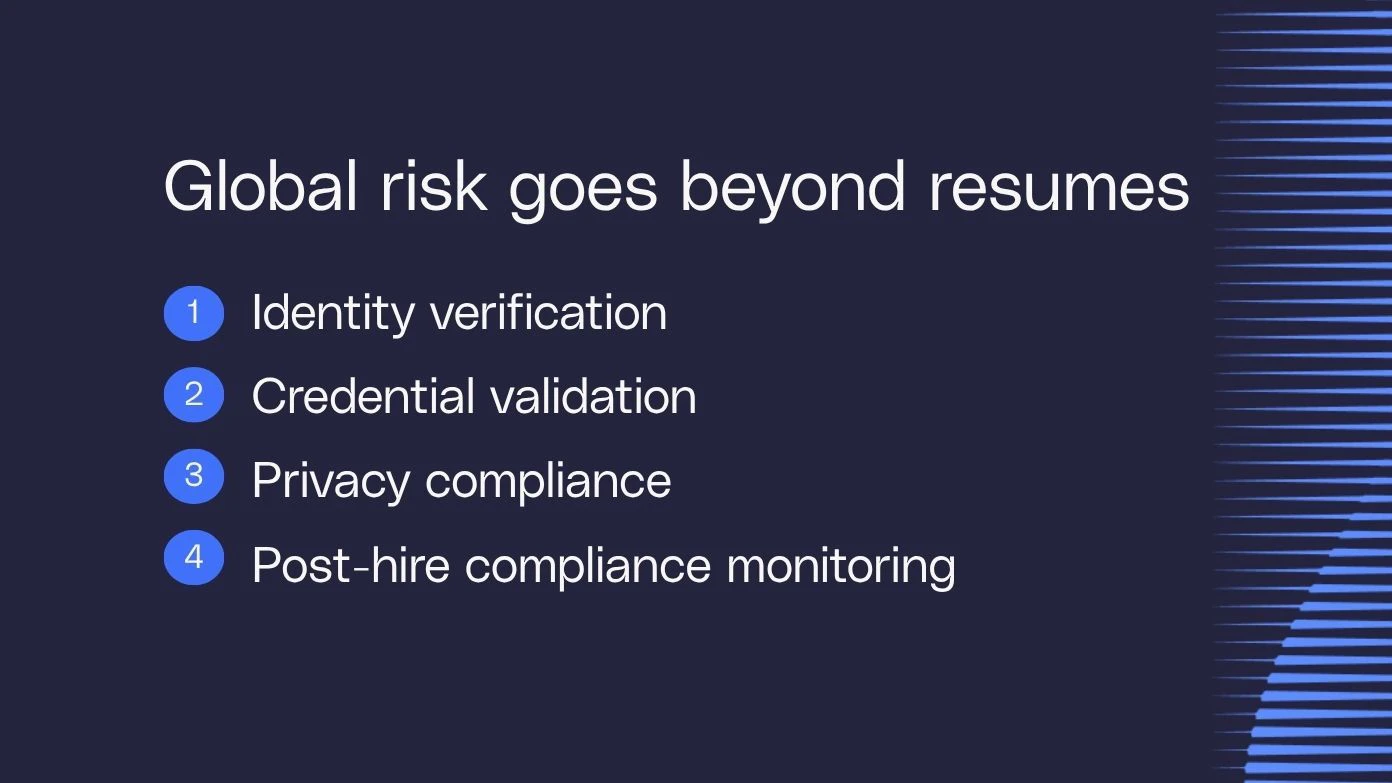
2026 वैश्विक कंप्लान्स ढांचा
नियमों का पालन करते हुए वैश्विक स्तर पर भर्ती प्रक्रिया की शुरुआत एक ऐसी स्क्रीनिंग प्रक्रिया से होती है जिसमें स्थानीय गोपनीयता कानूनों, श्रम नियमों और उम्मीदवारों की सुरक्षा को ध्यान में रखा जाता है। क्योंकि ये आवश्यकताएँ देश के अनुसार अलग-अलग होती हैं, इसलिए आपकी टीम को पृष्ठभूमि की जाँच करने से पहले इनकी पुष्टि कर लेनी चाहिए।
अमेरिका में निष्पक्ष क्रेडिट रिपोर्टिंग अधिनियम (एफसीआरए)
एफसीआरए अमेरिका में पारदर्शिता और उम्मीदवारों की सहमति से संबंधित सख्त नियम लागू करता है।
पृष्ठभूमि की जाँच करने से पहले, नियोक्ताओं को यह करना होगा:
- एक स्पष्ट और सुस्पष्ट स्वतंत्र खुलासा प्रदान करें।
- उम्मीदवार से लिखित अनुमति प्राप्त करें।
- नौकरी के आवेदन पत्र से प्रकटीकरण संबंधी भाषा को अलग रखें।
एफसीआरए के तहत औपचारिक प्रतिकूल कार्रवाई प्रक्रिया की भी आवश्यकता होती है जब स्क्रीनिंग के परिणाम भर्ती संबंधी निर्णय को प्रभावित कर सकते हैं।
इस प्रक्रिया में आमतौर पर निम्नलिखित शामिल होते हैं:
- प्रतिकूल कार्रवाई से पूर्व सूचना
- पृष्ठभूमि रिपोर्ट की एक प्रति
- उम्मीदवारों के अधिकारों का सारांश
- प्रतीक्षा अवधि
- अंतिम प्रतिकूल कार्रवाई सूचना
यह प्रक्रिया उम्मीदवारों को अंतिम निर्णय लेने से पहले गलत या अधूरी जानकारी पर प्रतिक्रिया देने का समय देती है।
यूरोप में सामान्य डेटा सुरक्षा सांख्यिकी और डेटा डेटा
यूरोपीय गोपनीयता कानून उम्मीदवारों के डेटा को एकत्र करने और प्रबंधित करने के तरीके पर कड़ी सीमाएं लगाते हैं।
सामान्य डेटा संरक्षण सुरक्षा के तहत, पृष्ठभूमि की जांच आवश्यक और भूमिका के अनुपात में होनी चाहिए। आपकी टीम को केवल वही जानकारी एकत्र करनी चाहिए जो सीधे पद से संबंधित हो।
परिस्थितियों के आधार पर, सामान्य डेटा संरक्षण रिजर्वेशन उम्मीदवारों को उनके व्यक्तिगत डेटा पर मजबूत नियंत्रण भी देता है, जिसमें शामिल हैं:
- उन्हें अपनी पृष्ठभूमि रिपोर्ट तक पहुंचने का अधिकार है।
- कुछ मामलों में डेटा हटाने का अनुरोध करने का अधिकार
- नियोक्ताओं द्वारा डेटा को संग्रहित और स्थानांतरित करने के तरीके से संबंधित सुरक्षा उपाय
आपराधिक जांच पर क्षेत्रीय प्रतिबंध
आपराधिक पृष्ठभूमि की जांच के तरीके दुनिया भर में अलग-अलग हैं। कुछ देशों में इस बात पर सख्त सीमाएं हैं कि नियोक्ता कब आपराधिक इतिहास के बारे में पूछ सकते हैं और यह जानकारी भर्ती संबंधी निर्णयों को कैसे प्रभावित करती है।
अमेरिका में, कई राज्य "बैन द बॉक्स लॉ" लागू करते हैं, जो हायर करने की प्रक्रिया में बाद में आपराधिक इतिहास के बारे में प्रश्न पूछने पर रोक लगाते हैं, इसलिए उम्मीदवारों का मूल्यांकन पहले योग्यताओं के आधार पर किया जाता है। कुछ देश इस मामले में एक कदम और आगे बढ़ते हैं। अर्जेंटीना में, नियोक्ता उम्मीदवारों से सीधे आपराधिक पृष्ठभूमि की जांच का अनुरोध नहीं कर सकते हैं। उम्मीदवार यह जानकारी केवल स्वेच्छा से ही प्रदान कर सकते हैं।
G-P Gia™ जैसा कृत्रिम रूप से संचालित वैश्विक मानव संसाधन एजेंट आपके मानव संसाधनों और कानूनी टीमों को स्थानीय कंप्लान्स दायित्वों, भेदभाव-विरोधी कानूनों और 50 देशों और सभी 50 अमेरिकी राज्यों में भर्ती प्रतिबंधों पर वास्तविक समय मार्गदर्शन के साथ समर्थन कर सकता है।
चरण-दर-चरण: एक कंप्लेंट अंतर्राष्ट्रीय पृष्ठभूमि की जांच का संचालन करना
आपकी टीम को ऐसी स्क्रीनिंग कार्यप्रवाह की आवश्यकता है जो विभिन्न देशों में पहचान सत्यापन, उम्मीदवारों की गोपनीयता और स्थानीय आवश्यकताओं के बीच संतुलन बनाए रखे। यहां से शुरुआत करें।
चरण 1: स्थानीय श्रम कानूनों और समय-सीमा पर शोध करें
समय सब कुछ है। कुछ देशों में आवेदन पत्र प्रक्रिया के दौरान स्क्रीनिंग की अनुमति होती है, जबकि अन्य देशों में नियोक्ताओं को सशर्त प्रस्ताव देने के बाद तक इंतजार करना पड़ता है।
यह सुनिश्चित कर लें:
- जब स्क्रीनिंग कानूनी रूप से अनुमत हो
- आपके लक्षित क्षेत्र में उम्मीदवारों की सहमति के लिए कौन से नियम लागू हैं?
पृष्ठभूमि की जांच बहुत जल्दी शुरू करने से हेयर कटिंग की प्रक्रिया शुरू होने से पहले ही कंप्लान्स के जोखिम पैदा हो सकते हैं।
चरण 2: उम्मीदवार की सहमति प्राप्त करें और डिजिटल पहचान सत्यापन (डीआईवी) करें
एक बार जब आपकी टीम पुष्टि कर देती है कि स्क्रीनिंग की अनुमति है, तो पृष्ठभूमि की जांच करने से पहले उम्मीदवार की सहमति आवश्यकताओं का पालन करें।
कृत्रिम पहचान की धोखाधड़ी को कम करने के लिए कंपनियों ने इस चरण में डिजिटल पहचान सत्यापन (डीआईवी) को शामिल करना शुरू कर दिया है।
आधुनिक DIV टूल निम्नलिखित का उपयोग करते हैं:
- दस्तावेज़ प्रमाणीकरण
- डिजिटल पहचान वॉलेट
- चेहरे के स्कैन जैसे बायोमेट्रिक सत्यापन
इन जांचों से आप यह सत्यापित कर सकते हैं कि उम्मीदवार वही हैं जो वे होने का दावा करते हैं, इससे पहले कि आप हायर करने की प्रक्रिया में आगे बढ़ें।
चरण 3: देश के भीतर विश्वसनीय डेटा का स्रोत
वैश्विक पृष्ठभूमि जांच किसी एक केंद्रीकृत वैश्विक डेटाबेस के बजाय स्थानीय डेटा स्रोतों पर निर्भर करती है। अदालती रिकॉर्ड, शिक्षा सत्यापन और रोजगार संबंधी आंकड़े अक्सर विभिन्न एजेंसियों और क्षेत्रों में बिखरे हुए होते हैं। ये खंडित प्रणालियाँ परिणामों की प्राप्ति में लगने वाले समय को धीमा कर देती हैं और वैश्विक स्क्रीनिंग को मानकीकृत करना कठिन बना देती हैं। सटीक जानकारी प्राप्त करने के लिए आपको स्थानीय सत्यापन प्रदाताओं के साथ काम करने और देश-विशिष्ट रिपोर्टिंग प्रणालियों को समझने की आवश्यकता हो सकती है।
चरण 4: निष्कर्षों की समीक्षा करें और उन्हें दस्तावेज़ में दर्ज करें
आपकी टीम को भेदभावपूर्ण भर्ती निर्णयों से बचने के लिए स्क्रीनिंग परिणामों की सावधानीपूर्वक समीक्षा करनी चाहिए। कई देश आपराधिक इतिहास से जुड़े व्यापक बहिष्करणों को प्रतिबंधित करते हैं।
इसके बजाय, मानव संसाधन टीमों को व्यक्तिगत मूल्यांकन करना चाहिए जिसमें यह विचार किया जाए कि क्या निष्कर्ष सीधे पद से संबंधित है और क्या उम्मीदवार को जवाब देने का अवसर दिया गया है।
वास्तविक दुनिया का उदाहरण: नेली से मिलिए।
नेली कंपनी अर्जेंटीना में एक रिमोट-फर्स्ट टीम के लिए फाइनेंस मैनेजर की भर्ती कर रही है। चूंकि अर्जेंटीना में नियोक्ता आमतौर पर आपराधिक रिकॉर्ड प्राप्त नहीं कर सकते हैं, इसलिए नेली की टीम ने विनम्रतापूर्वक उम्मीदवार (एंड्रिया) से स्वेच्छा से अपना आपराधिक रिकॉर्ड प्रमाणपत्र प्रदान करने का अनुरोध किया।
एंड्रिया की रिपोर्ट से पता चलता है कि उसने 12 साल से भी पहले एक मामूली दुकान से चोरी का अपराध किया था।
उम्मीदवार को सीधे अस्वीकार करने के बजाय, नेली की टीम निम्नलिखित की समीक्षा करती है:
- क्या अपराध सीधे तौर पर भूमिका से संबंधित है?
- यह घटना कितने समय पहले घटी थी?
- क्या स्थानीय भर्ती कानून उस जानकारी के उपयोग को प्रतिबंधित करते हैं?
क्योंकि यह अपराध वित्तीय कदाचार से संबंधित नहीं है, कई साल पहले हुआ था, और इस पद के लिए प्रासंगिकता की सीमा से बाहर है, इसलिए नेली की टीम उम्मीदवार को स्वतः अयोग्य घोषित करने के बजाय हायर करने की प्रक्रिया जारी रखती है।
यह उदाहरण बताता है कि वैश्विक पृष्ठभूमि की जांच के लिए संदर्भ की आवश्यकता क्यों है। स्पष्ट दस्तावेज़ीकरण से भर्ती संबंधी निर्णयों को बाद में चुनौती दिए जाने की स्थिति में एक मजबूत रिकॉर्ड बनता है। 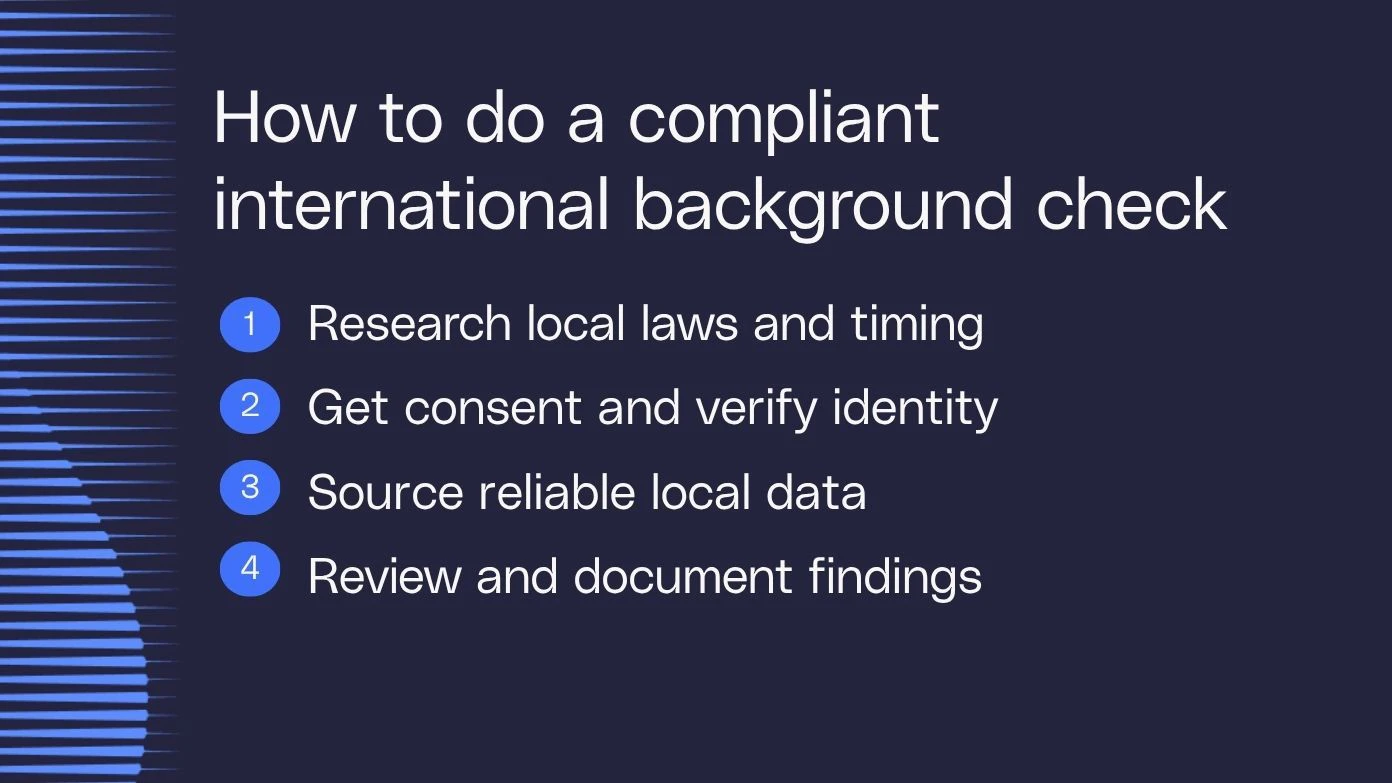
वैश्विक पृष्ठभूमि स्क्रीनिंग में कृत्रिम प्रतिभा और स्वचालन की भूमिका
अंतरराष्ट्रीय कर्मचारियों के लिए मैन्युअल पृष्ठभूमि जांच से प्रशासनिक बाधाएं उत्पन्न होती हैं, खासकर यदि आपकी टीम कई देशों में भर्ती कर रही हो। कृत्रिम बुद्धिमत्ता-संचालित स्वचालन, स्क्रीनिंग अनुरोधों को सीधे भर्ती कार्यप्रवाह में एकीकृत करके उस बाधा को कम करता है।
इससे आपकी टीम को ये सुविधाएँ मिलेंगी:
- मैन्युअल डेटा एंट्री को कम करें
- स्क्रीनिंग कार्यप्रवाह को सुव्यवस्थित करें
- विभिन्न क्षेत्रों में उम्मीदवारों की प्रगति को अधिक कुशलता से ट्रैक करें
- उन कार्यों की पहचान करें जिनकी अतिरिक्त समीक्षा की आवश्यकता है
वास्तविक समय के कंप्लान्स मार्गदर्शन के लिए G-P Gia™ उपयोग करें
विभिन्न न्यायक्षेत्रों में वैश्विक स्क्रीनिंग कानूनों का निरंतर विकास हो रहा है। आपकी मानव संसाधन और कानूनी टीमों को भर्ती संबंधी बदलते प्रतिबंधों के अनुरूप बने रहने के लिए अद्यतन मार्गदर्शन की आवश्यकता है।
यहीं पर Gia जैसे एजेंटिक कृत्रिम सौंदर्य उपकरण आते हैं।
Gia™ आपकी मदद करती है:
- विशेषज्ञ-सत्यापित कंप्लाएन्स मार्गदर्शन को 50 देशों और सभी 50 अमेरिकी राज्यों में एक्सेस करें।
- श्रम कानूनों में होने वाले परिवर्तनों के बारे में वास्तविक समय में अलर्ट प्राप्त करें।
- स्थानीय स्तर पर कंप्लाएंट अनुबंध और मानव संसाधन दस्तावेज़ तैयार करें।
Gia प्रशासनिक कार्य को कम करती है और कंप्लाएन्स प्रबंधन समय को 95% तक कम करती है।
एल्गोरिथम निष्पक्षता सुनिश्चित करना
न्यूयॉर्क शहर के स्थानीय कानून 144 और ईईओसी मार्गदर्शन जैसे नियम कृत्रिम बुद्धिमत्ता-संचालित भर्ती प्रौद्योगिकियों की जांच को लगातार बढ़ा रहे हैं। इसका अर्थ यह है कि नियोक्ता स्वचालित प्रणालियों से जुड़े भेदभावपूर्ण भर्ती परिणामों रोकने के लिए जिम्मेदार हैं सर्वोत्तम अभ्यास यह है कि:
- पूर्वाग्रह की पहचान करने के लिए स्वचालित स्क्रीनिंग उपकरणों का नियमित रूप से ऑडिट करें।
- रोजगार संबंधी सभी अंतिम निर्णयों में किसी मानवीय हस्तक्षेप को अवश्य शामिल रखें।
- कृत्रिम कृत्रिम स्वचालित उपकरणों का उपयोग कैसे किया जाता है, इस पर दस्तावेज़ रखें
- परिणामों की समीक्षा करके किसी भी विसंगति का पता लगाएं।
कृत्रिम बुद्धिमत्ता से कार्यकुशलता में सुधार होता है, लेकिन निष्पक्षता और एकरूपता सुनिश्चित करने के लिए मनुष्यों को अभी भी भर्ती परिणामों की समीक्षा करने की आवश्यकता होती है। Giaकी प्रतिक्रियाएँ कृत्रिम कृति उद्योग मानक से10गुना बेहतर हैं।
कानूनी रूप से सत्यापित लेखों और सरकारी स्रोतों के एक मालिकाना ज्ञान आधार पर 100 निर्मित, मार्गदर्शन की मानव संसाधन और कानूनी विशेषज्ञों द्वारा सावधानीपूर्वक समीक्षा की जाती है।000 1500 मानव हस्तक्षेप वाला यह दृष्टिकोण सुनिश्चित करता है कि सभी सामग्री G-P सत्यापित हो, ताकि उपयोगकर्ता Giaके उत्तरों पर पहली बार और हर बार भरोसा कर सकें।
G-P वैश्विक भर्ती में कैसे सहयोग करता है
|
OFAC जाँचें |
क्षेत्रीय भर्ती कानूनों पर मार्गदर्शन |
केंद्रीकृत कर्मचारियों की संख्या का प्रबंधन |
|
G-P सीधे प्लेटफॉर्म के भीतर ही एकीकृत विदेशी संपत्ति नियंत्रण कार्यालय (ओएफएसी) जांच करता है। |
Gia स्थानीय कंप्लाएन्स की आवश्यकताओं और भर्ती संबंधी प्रतिबंधों पर विशेषज्ञ वास्तविक समय मार्गदर्शन प्रदान करती है। |
G-P वैश्विक भर्ती, कर्मचारियों की संख्या और कर्मचारियों की संख्या प्रबंधन प्रक्रियाओं को एक मंच पर केंद्रीकृत करता है। |
|
इसका मतलब है कि आपकी टीम भर्ती प्रक्रिया को रोके बिना संभावित जोखिमों को समय रहते पहचान सकती है। |
आपकी टीम बदलते गोपनीयता कानूनों और क्षेत्रीय स्क्रीनिंग नियमों का आत्मविश्वास से पालन कर सकती है। |
इससे आपकी टीम को अंतरराष्ट्रीय परिचालनों की बेहतर जानकारी मिलती है और प्रशासनिक जटिलता कम होती है। |
" G-P के साथ साझेदारी करके, हमें एक विश्वसनीय सहयोगी मिला है जो हमारे वैश्विक संचालन को सुव्यवस्थित करता है।" G-P की व्यापक वैश्विक भर्ती विशेषज्ञता जटिल नियामक वातावरणों में सुगम संचालन को सुगम बनाती है।" मार्क ली, प्रोटोपाई में सीएफओ और सीओओ।
G-Pके साथ अपनी वैश्विक टीम बनाएं
G-P वैश्विक रोजगार से जुड़ी कानूनी, प्रशासनिक और अन्य बाधाओं को दूर करता है। उन्नत कृत्रिम कृति-संचालित उत्पादों - एम्प्लॉयर ऑफ रिकॉर्ड, कॉन्ट्रैक्टर, और Gia द्वारा संचालित - हमारा ग्लोबल एम्प्लॉयमेंट प्लेटफ़ॉर्म ™ (वैश्विक रोज़गार स्पार्क) आपको पूर्ण कर्मचारी जीवन चक्र को प्रबंधित करने के लिए आवश्यक उपकरण (और गति) देता है।
आज ही 180+ देशों में अपनी वैश्विक टीम का निर्माण करें। [डेमो बुक करें]
 अक्सर पूछे जाने वाले सवाल
अंतर्राष्ट्रीय पृष्ठभूमि की जांच में कितना समय लगता है?
घरेलू जांच में 2–7 दिन लग सकते हैं, जबकि अंतरराष्ट्रीय जांच में आमतौर पर 2–4 सप्ताह लगते हैं।
क्या सभी देशों में आपराधिक पृष्ठभूमि की जांच की अनुमति है?
नहीं। अर्जेंटीना, सिंगापुर, जापान और यूरोपीय संघ के कुछ हिस्सों जैसे देश नियोक्ताओं को सीधे आपराधिक रिकॉर्ड की जांच करने से रोकते हैं। इन मामलों में, नियोक्ता उम्मीदवार से स्वेच्छा से अपना आपराधिक रिकॉर्ड प्रमाणपत्र साझा करने के लिए कह सकता है।
7-वर्ष पूर्व अवलोकन नियम क्या है?
फेयर क्रेडिट रिपोर्टिंग एक्ट (एफसीआरए) के तहत, उपभोक्ता रिपोर्टिंग एजेंसियों को आम तौर पर सात साल से अधिक पुरानी नकारात्मक जानकारी की रिपोर्टिंग करने से प्रतिबंधित किया गया है। यह प्रतिबंध उन भूमिकाओं पर लागू होता है जिनका वेतन USD 75,000 से कम होता है।
क्या मैं पृष्ठभूमि की जांच के परिणाम प्राप्त करने के लिए कृत्रिम कृति का उपयोग कर सकता हूँ?
हां, लेकिन आपको यह सुनिश्चित करना चाहिए कि कृत्रिम-संचालित स्कोरिंग आपके अधिकार क्षेत्र में पारदर्शिता और लोकतंत्रीकरण आवश्यकताओं का अनुपालन करती है। भेदभावपूर्ण परिणामों को रोकने के लिए, इन प्रक्रियाओं में मानवीय सत्यापन और निगरानी शामिल होनी चाहिए।
क्या मुझे ठेकेदारों के लिए एक अलग पृष्ठभूमि जांच की आवश्यकता है?
कुछ देशों में विशिष्ट कानून या नियम हैं जिनके तहत कुछ भूमिकाओं के लिए पृष्ठभूमि की जांच अनिवार्य होती है (उदाहरण के लिए, फिनलैंड में बच्चों के साथ काम करना, यूएई में विनियमित पेशे), चाहे पेशेवर कर्मचारी हो या ठेकेदार।


