




प्रमुख निष्कर्ष
- कंप्लाएन्स ट्रेड-ऑफ के साथ हायरिंग विकल्प: वैश्विक नियोक्ता एक एम्प्लॉयर ऑफ रिकॉर्ड (ईओआर) का उपयोग करके, बिना किसी इकाई के प्रत्यक्ष पंजीकरण करके, एक स्थानीय सहायक कंपनी स्थापित करके, या स्वतंत्र ठेकेदारों के साथ काम करके पोलैंड में प्रवेश कर सकते हैं। सही मॉडल का चयन करना महत्वपूर्ण है। पोलैंड के राज्य श्रम निरीक्षणालय (पीआईपी) द्वारा अनुचित व्यवस्थाओं को चुनौती दी जा सकती है, जिसके परिणामस्वरूप बकाया भुगतान और वैधानिक जुर्माना हो सकता है।
- मजबूत आर्थिक और प्रतिभा केंद्र: पोलैंड की अर्थव्यवस्था बढ़ रही है (3.4%) औसत वार्षिक सकल घरेलू उत्पाद वृद्धि) उच्च शिक्षित, बहुभाषी और एसटीईएम-केंद्रित कर्मचारियों की संख्या द्वारा समर्थित है। यह आईटी, व्यावसायिक सेवाओं (बीपीओ/एसएससी) और उन्नत विनिर्माण के लिए एक प्रमुख गंतव्य है।
- सख्त कप्लैन्स और रोजगार मानक: पोलिश श्रम कानून के लिए पहले दिन से पहले लिखित अनुबंध (पोलिश या द्विभाषी में), सात दिनों के भीतर ZUS सामाजिक सुरक्षा पंजीकरण और अनिवार्य पूर्व-रोजगार चिकित्सा और सुरक्षा (बीएचपी) मंजूरी की आवश्यकता होती है। मानक कार्यसप्ताह को अनिवार्य विश्राम अवधि के साथ 40 घंटे, पीएलएन का मासिक न्यूनतम न्यूनतम 4,806, और वैतनिक अवकाश के 20-26 दिनों तक सीमित किया गया है।
पोलैंड यूरोपीय संघ में सबसे तेजी से बढ़ती अर्थव्यवस्थाओं में से एक है। इसकी अर्थव्यवस्था में पिछले दशक में औसतन वार्षिक सकल घरेलू उत्पाद वृद्धि दर 3.4% के साथ लगातार विस्तार हुआ है।
यूरोपीय संघ के रिकवरी फंड और उन्नत विनिर्माण, आईटी और ऊर्जा परिवर्तन पर केंद्रित निजी क्षेत्रों से बड़े पैमाने पर नियोजित निवेश के कारण पोलैंड प्रत्यक्ष विदेशी निवेश (एफडीआई) के लिए एक आकर्षक गंतव्य है। पोलैंड की प्रतिभा स्वामी अत्यधिक कुशल, सुशिक्षित (विशेष रूप से विज्ञान, प्रौद्योगिकी, गणित और गणित के क्षेत्रों में) और बहुभाषी हैं, जो पोलैंड में काम पर रखने की इच्छुक वैश्विक कंपनियों के लिए एक प्रमुख आकर्षण है।
पोलैंड में अपना कारोबार बढ़ाने से पहले, आपको अनुबंधों, करों, वेतन, लाभों और अन्य रोजगार कानूनों को समझना होगा। हमारी गाइड आपको पोलैंड में कर्मचारियों को नियुक्त करने के बारे में वह सब कुछ बताएगी जो आपको जानना आवश्यक है।
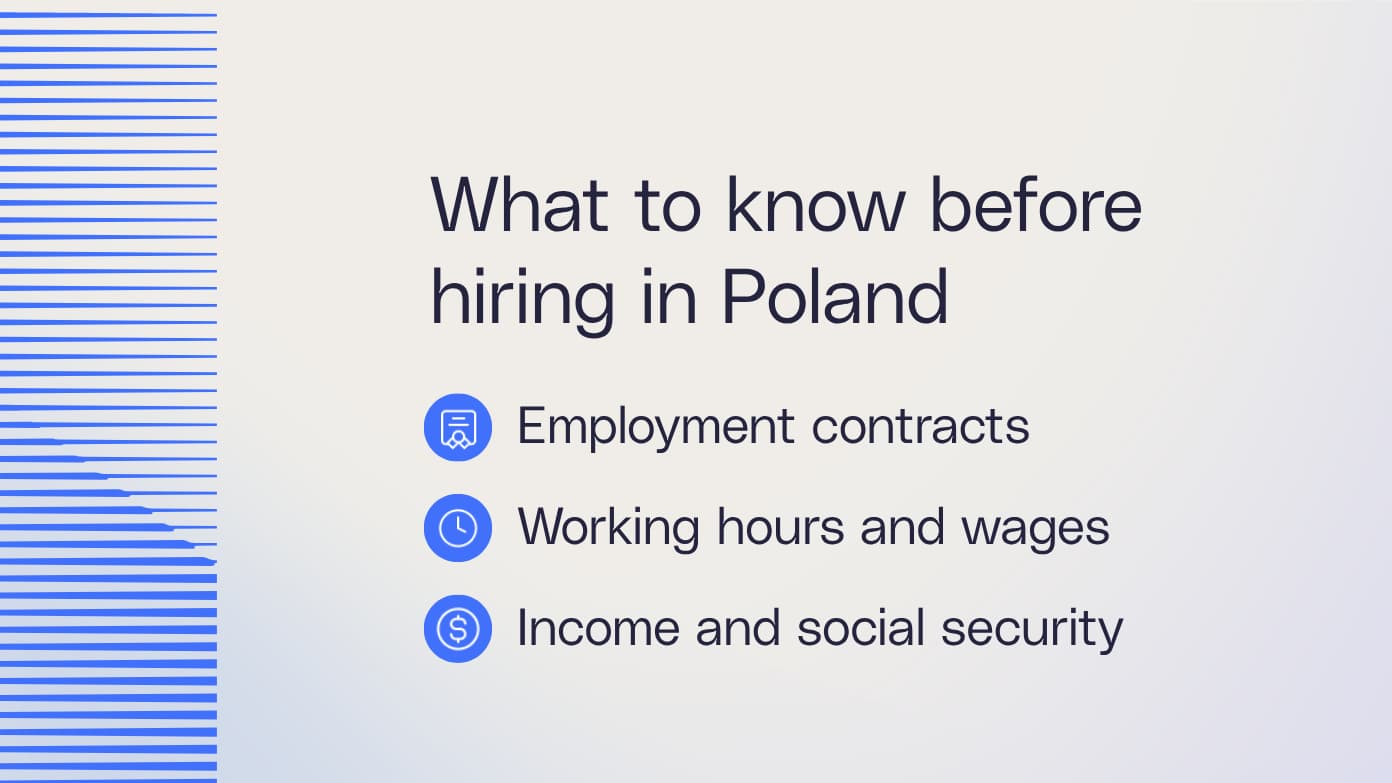
पहले क्या जानना चाहिए पोलैंड में भर्ती
यदि आप पहली बार पोलैंड में अपने व्यवसाय का विस्तार कर रहे हैं, तो कुछ महत्वपूर्ण कानूनी आवश्यकताओं के बारे में जानना आवश्यक है। ये मानदंड और कानून पोलैंड में भर्ती प्रथाओं और रोजगार-कर्मचारी संबंधों के कई पहलुओं को प्रभावित करते हैं, जिसमें नुकसान और लाभ शामिल हैं।
G-P Gia™, हमारा कृत्रिम-संचालित वैश्विक मानव संसाधन एजेंट, 50 देशों में - पोलैंड सहित - और सभी 50 अमेरिकी राज्यों में आपके सबसे कठिन कंप्लान्स प्रश्नों का उत्तर दे सकता है। बाहरी वकीलों पर अपनी निर्भरता कम करें और Gia के साथ समय और लागत में 95% तक की कटौती करें।
पोलैंड में काम पर रखने के बारे में जानने के लिए यहां पांच चीजें दी गई हैं।
1। पोलैंड में भाषाएँ
पोलिश आधिकारिक भाषा है। अंग्रेजी सबसे आम गैर-पोलिश भाषा है। अंग्रेजी भाषा की दक्षता के मामले में यह देश वैश्विक स्तर पर शीर्ष 15-20 देशों में शुमार है। पोलैंड के बड़े बिजनेस प्रोसेस आउटसोर्सिंग (बीपीओ) और शेयर्ड सर्विसेज सेंटर (एसएससी) क्षेत्र योग्य, बहुभाषी प्रतिभाओं
एक बड़े समूह द्वारा संचालित हैं
2। पोलैंड में रोजगार अनुबंध
नियोक्ताओं कर्मचारी के काम शुरू करने से पहले लिखित रोजगार समझोता , या मुख्य शर्तों की लिखित पुष्टि प्रदान करनी होगी
अनुबंध पोलिश भाषा में होना चाहिए या उसके साथ पोलिश अनुवाद संलग्न होना चाहिए। बहुभाषी अनुबंधों में, पोलिश संस्करण
कानूनी रूप से बाध्यकारी होता है
अनुबंध में कम से कम निम्नलिखित बातें शामिल होनी चाहिए:
- रोजगार समझोता का प्रकार (परीक्षण, निश्चित अवधि, अनिश्चितकालीन)
- नियोक्ता और कर्मचारी दोनों के नाम और पते
- अनुबंध की अवधि (निश्चित अवधि या परीक्षण)
- हस्ताक्षर की तारीख और कम के शुरुआत की तिथि
- नौकरी का शीर्षक और विवरण
- कार्य स्थान
- वेतन और लाभों का विवरण
- कार्य समय (पूर्णकालिक/अंशकालिक)
यदि अनुबंध में शामिल नहीं है, तो नियोक्ताओं को कर्मचारी के कार्य प्रारंभ होने की तिथि से सात दिनों के भीतर लिखित रूप में निम्नलिखित जानकारी प्रदान करनी होगी:
- दैनिक और साप्ताहिक कार्य अनुसूची
- भुगतान अवधि और भुगतान की विधि
- अवकाश हकदार
- सेवा समाप्ति के लिए नोटिस अवधि
- ओवरटाइम, आराम की अवधि और ब्रेक के नियम
- कोई भी लागू सामूहिक समझौते
इन विवरणों की समीक्षा कर्मचारी के पहले दिन या उससे पहले की जानी चाहिए।
3। पोलैंड में काम के घंटे और मजदूरी
पोलैंड में कार्य सप्ताह 40 घंटे का होता है, जो पाँच दिनों में फैला होता है। ओवरटाइम सालाना 150 घंटे तक सीमित है, जब तक कि सामूहिक समझौते, कार्यस्थल नियमों या व्यक्तिगत अनुबंध में उच्च सीमा निर्धारित न हो। किसी भी समझौते के बावजूद, औसत साप्ताहिक कार्य घंटे (ओवरटाइम सहित) 48 घंटे से अधिक नहीं हो सकते। कर्मचारियों को प्रत्येक 24घंटे की अवधि
कम से कम 11 घंटे का निरंतर विश्राम और प्रति सप्ताह कम से कम 35 घंटे का निरंतर विश्राम मिलता है
2025 तक, पोलैंड में न्यूनतम न्यूनतम पीएलएन 4,806 प्रति माह है।
4। पोलैंड में भुगतान समय समाप्त हो गया
पोलैंड में 14 राष्ट्रीय अवकाश हैं।
को इन दिनों वेतन सहित अवकाश मिलता है
सेवा वर्षों की गणना में सभी पिछले रोजगार (अवरोधों या नियोक्ता की परवाह किए बिना) और श्रेय प्राप्त शिक्षा अवधि (जैसे, उच्च शिक्षा के लिए आठ वर्ष तक) शामिल हैं। मान्यता प्राप्त सेवा के 10 वर्ष से कम वाले कर्मचारियों (रोजगार और कुछ शैक्षिक अवधियों सहित) को 20 दिन की सवैतनिक वार्षिक छुट्टी मिलती है। जिन कर्मचारियों की मान्यता प्राप्त सेवा अवधि 10 वर्ष या उससे अधिक
26 दिन मिलते हैं।नियोक्ताओं को कर्मचारी 80के वेतन का कम से कम 5% हिस्सा बीमारी की छुट्टी के लिए देना होगा। नियोक्ता द्वारा वित्त पोषित बीमारी की छुट्टियों की संख्या कर्मचारी की उम्र पर निर्भर करती है:
- 50 से कम उम्र के कर्मचारियों के लिए, नियोक्ता प्रति कैलेंडर वर्ष 33 दिनों तक की बीमारी की छुट्टी का भुगतान करता है।
- 50 या उससे अधिक आयु के कर्मचारियों के लिए, नियोक्ता 14 दिनों तक का भुगतान करता है।
- इन अवधियों के बाद (उम्र के आधार पर 33 या 14 दिन), सामाजिक बीमा संस्था (ZUS) बीमारी के दौरान मिलने वाले वेतन का भुगतान अपने हाथ में ले लेती है।
5। पोलैंड में आयकर और सामाजिक सुरक्षा
नियोक्ताओं को रोजगार शुरू होने के सात कैलेंडर दिनों के भीतर कर्मचारियों को ZUS के साथ पंजीकृत कराना होगा। सामाजिक सुरक्षा अंशदान में पेंशन, विकलांगता, दुर्घटना और स्वास्थ्य बीमा शामिल हैं, जिनमें से प्रत्येक प्रकार के लिए विशिष्ट दरें निर्धारित हैं। स्वास्थ्य बीमा अंशदान दर वेतन का 9% है। नियोक्ताओं को अपनी कानूनी स्थिति के आधार पर अगले महीने की 15 या 20 तारीख तक ZUS को सामाजिक सुरक्षा योगदान भेजना होगा।
पोलैंड में प्रगतिशील आयकर प्रणाली लागू है। 2025 में, दरें PLN 120,000 तक की वार्षिक आय पर 12% और उस सीमा से ऊपर की आय पर 32% हैं। नियोक्ता व्यक्तिगत आयकर (पीआईटी) की गणना करने, उसे रोकने और जमा करने के लिए जिम्मेदार हैं।
नियोक्ताओं को कर्मचारी और नियोक्ता दोनों के सामाजिक सुरक्षा अंशदान की मासिक कटौती करके उसे ZUS को भेजना होगा। सामाजिक सुरक्षा में पेंशन, विकलांगता, दुर्घटना और बीमारी बीमा के साथ-साथ स्वास्थ्य बीमा भी शामिल है।
- पेंशन बीमा: समान रूप से विभाजित (9.76%)
- विकलांगता बीमा: 6.5% नियोक्ता द्वारा, 1.5% कर्मचारी द्वारा भुगतान किया जाता है
- दुर्घटना बीमा: नियोक्ता द्वारा भुगतान किया जाता है, आमतौर पर छोटे नियोक्ताओं के लिए 1.67%, लेकिन जोखिम के आधार पर दर भिन्न होती है।
- बीमारी बीमा: कर्मचारी द्वारा भुगतान किया जाता है (2.45%)
- स्वास्थ्य बीमा: कर्मचारी द्वारा भुगतान किया जाता है (9%)
कुल मिलाकर, नियोक्ता का योगदान (सभी निधियों सहित) लगभग 18–20% है, और कर्मचारी का योगदान 13–14% है।
नियोक्ताओं को कर्मचारियों के सकल वेतन का 2.45% श्रम कोष में योगदान देना होगा (1.00% श्रम कोष में और 1.45% एकजुटता कोष में)। नियोक्ता भी कर्मचारियों के गारंटीकृत लाभ कोष में 0.1% का योगदान करते हैं।
स्वास्थ्य सेवाओं का वित्तपोषण अनिवार्य स्वास्थ्य बीमा अंशदान द्वारा किया जाता है। आपको निजी स्वास्थ्य बीमा प्रदान करने की आवश्यकता नहीं है, लेकिन पूरक स्वास्थ्य बीमा एक लोकप्रिय लाभ है।
वैश्विक कंपनियों के लिए भर्ती मॉडल जो तलाश कर रही हैं पोलैंड में काम पर रखना
पोलैंड में कर्मचारियों को काम पर रखने का निर्णय लेते समय सबसे अच्छा मॉडल आपके समग्र व्यावसायिक लक्ष्यों पर निर्भर करता है।
| नमूना | के लिए सबसे अच्छा | प्रमुख बिंदु | मुख्य जोखिम |
|---|---|---|---|
| नियोक्ता का सीधा पंजीकरण | जहां संभव हो, वहां स्थानीय इकाई के बिना पोलैंड में कर्मचारियों की भर्ती करना। | पोलिश पेरोल चलाएँ, पीआईटी रोकें, ज़ूस का भुगतान करें, कर्मचारियों को 7 दिनों के भीतर पंजीकृत करें, रिकॉर्ड रखें। | पेरोल त्रुटियाँ, देर से ZUS पंजीकरण, कर जोखिम, श्रम कोड गैर-कम्प्लाएन्स, PIP/ZUS प्रवर्तन। |
| एम्प्लॉयर ऑफ रिकॉर्ड | तेजी से बाजार में.. | एंप्लॉयर ऑफ रिकॉर्ड अनुबंध, पेरोल, ZUS, टैक्स रोक और श्रम कोड कंप्लान्स को संभालता है। | यदि ग्राहक वास्तविक नियोक्ता की तरह श्रमिकों को निर्देशित करता है या व्यवस्था में कानूनी ढांचा नहीं है, तो अवैध श्रम पट्टे का जोखिम होता है। |
| सहायक कंपनी या शाखा | दीर्घकालिक संचालन। | नियुक्ति, पेरोल, ज़ेडयूएस पंजीकरण, और श्रम कोड, कर, लेखांकन और कॉर्पोरेट कंप्लान्स संभालता है। | उच्चतर स्थापना बोझ, कॉर्पोरेट अनुपालन, कर जोखिम, मूल कंपनी की देनदारी और स्थानीय शासन की विफलताएँ। |
| स्वतंत्र ठेकेदार | स्वायत्तता के साथ परियोजना-आधारित कार्य। | ठेकेदार की स्वतंत्रता बनाए रखें। रोजगार-शैली के नियंत्रण, निश्चित समय-सारणी और एकीकरण से बचें। | अनुच्छेद 22 श्रम कोड के तहत पुनर्वर्गीकरण से पीआईपी/जेडयूएस प्रवर्तन, पूर्वव्यापी जेडयूएस/कर, हकदारी और जुर्माना का जोखिम होता है। |
पोलैंड में शीर्ष भर्ती केंद्र
पोलैंड के कुछ शहर विशेष उद्योगों के लिए जाने जाते हैं। प्रत्येक शहर की विशेषताओं को जानने से आपको पोलैंड में कर्मचारियों की भर्ती करते समय अपने प्रयासों पर ध्यान केंद्रित करने और पदों को तेजी से भरने में मदद मिलती है।
पोलैंड के प्रमुख प्रतिभा केंद्र निम्नलिखित हैं:
- वारसॉ पोलैंड की राजधानी और सबसे बड़ा शहर है। वारसॉ देश का शीर्ष व्यापार, वित्त और प्रौद्योगिकी केंद्र है। यहां बहुराष्ट्रीय निगम, वित्तीय संस्थान और प्रौद्योगिकी कंपनियां स्थित हैं।
- क्राकोव अपने आईटी, व्यावसायिक सेवाओं (बीपीओ/एसएससी) और स्टार्टअप परिदृश्य के लिए जाना जाता है। वैश्विक कंपनियों के लिए पोलैंड में काम पर रहने का विकल्प चुनने पर क्राकोव एक प्रमुख गंतव्य है, खासकर प्रौद्योगिकी, वित्त और साझा सेवाओं के क्षेत्र में।
- व्रोकला आईटी, अनुसंधान एवं विकास, विनिर्माण और व्यावसायिक सेवाओं का एक केंद्र है, जिसमें वैश्विक तकनीकी फर्मों और इंजीनियरिंग कंपनियों की मजबूत उपस्थिति है।
- पोज़नान अपने विनिर्माण, लॉजिस्टिक्स और व्यावसायिक सेवा क्षेत्रों के लिए जाना जाता है, और यह वैश्विक नियोक्ताओं के लिए एक लोकप्रिय स्थान है।
- गडांस्क में आईटी, शिपिंग, लॉजिस्टिक्स और वित्त में कुशल प्रतिभाएं हैं। शहर में तकनीकी स्टार्टअप और वैश्विक व्यापार केंद्रों की संख्या लगातार बढ़ रही है।
पोलैंड में प्रमुख उद्योग
पोलैंड के मुख्य उद्योगों को समझने से आपको पोलैंड में भर्ती करते समय वेतन और लाभों के बारे में जानकारी मिलती है। आप इस जानकारी का उपयोग यह तय करने में कर सकते हैं कि कहां निवेश करना है और अपने कर्मचारियों की संख्या को कैसे बढ़ाना है।
पोलैंड में मुख्य उद्योगों में शामिल हैं:
- बिजनेस प्रोसेस आउटसोर्सिंग (बीपीओ) और शेयर्ड सर्विसेज (एसएससी): यह पोलैंड के सबसे तेजी से बढ़ते और सबसे आधुनिक क्षेत्रों में से एक है। अत्यधिक कुशल, बहुभाषी और शिक्षित कर्मचारियों की संख्या के कारण वैश्विक निगम वित्त, लेखांकन, मानव संसाधन और अनुसंधान एवं विकास के लिए अपने साझा सेवा केंद्र क्राको, वारसॉ और व्रोकला जैसे शहरों में रखते हैं।
- आईटी और डिजिटल सेवाएं: पोलैंड सॉफ्टवेयर डेवलपर्स, इंजीनियरों और आईटी विशेषज्ञों के एक बड़े समूह के साथ एक महत्वपूर्ण आईटी प्रतिभा केंद्र है। वैश्विक कंपनियां यहां अनुसंधान एवं विकास तथा डिजिटल प्रौद्योगिकी केंद्र तेजी से स्थापित कर रही हैं। सरकार डिजिटल प्रौद्योगिकियों और कृत्रिम कृतियों में भी भारी निवेश कर रही है।
- ऑटोमोटिव: यह पोलैंड के सबसे बड़े औद्योगिक क्षेत्रों में से एक है। यह पुर्जों और घटकों के उत्पादन (वैश्विक निर्माताओं को आपूर्ति करने) के साथ-साथ हल्के वाणिज्यिक वाहनों के उत्पादन पर केंद्रित है। पोलैंड में यूरोप की सबसे बड़ी इलेक्ट्रिक वाहन बैटरी फैक्ट्री भी है।
- इलेक्ट्रॉनिक्स और घरेलू उपकरण: पोलैंड घरेलू इलेक्ट्रॉनिक्स और घरेलू उपकरणों का एक प्रमुख यूरोपीय उत्पादक है। वहां प्रमुख वैश्विक कंपनियों के उत्पादन और अनुसंधान एवं विकास केंद्र हैं।
- उन्नत विनिर्माण: इसमें एयरोस्पेस और रक्षा जैसे क्षेत्र शामिल हैं, विशेष रूप से दक्षिणपूर्व में एविएशन वैली जैसे क्षेत्रों में।
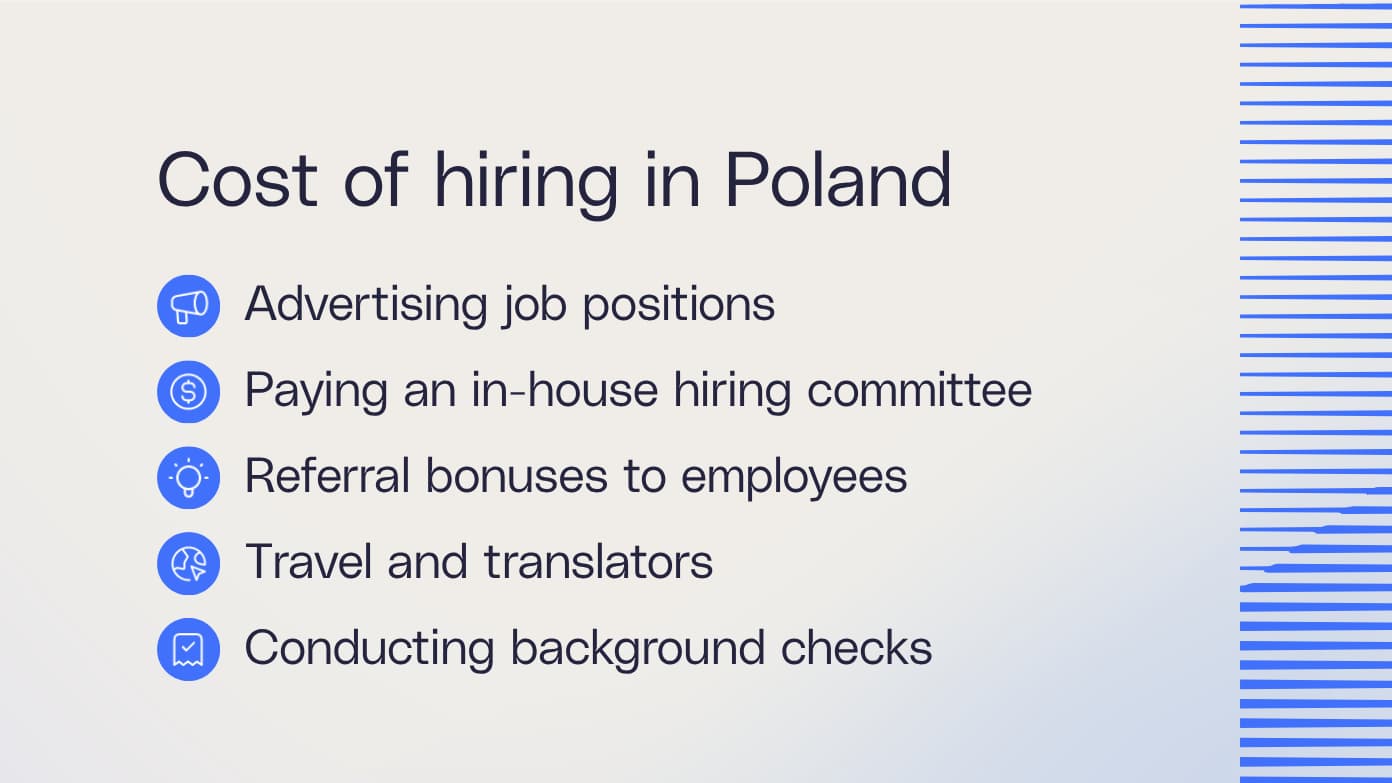
लागत पोलैंड में कर्मचारियों की भर्ती
चाहे आप एक टीम के सदस्य को काम पर रख रहे हों या पूरे डिवीजन का विस्तार कर रहे हों, जब आप पोलैंड में कीप कर्मचारियों के साथ काम करते हैं तो खर्च अपरिहार्य हैं। निम्नलिखित के लिए बजट बनाएं:
- संस्था की स्थापना (जब तक कि आप किसी पंजीकृत नियोक्ता के साथ साझेदारी न करें)
- नौकरी का विज्ञापन
- आवेदक समीक्षा के लिए श्रम लागत
- पेरोल
- कर
- वेतन
- लाभ
- बोनस
- भत्ते
- बीमा
- यात्रा
- अनुवादक (यदि लागू हो)
Gia के G-P सत्यापित स्रोतों के अनुसार, पोलैंड में नियोक्ता भार दर, जिसमें वेतन के अतिरिक्त होने वाली लागतें शामिल हैं, लगभग 20-21% है।
एक कंपनी को पोलैंड में कर्मचारियों को काम पर रखने के लिए क्या चाहिए?
पोलैंड में अपनी टीम का विस्तार करने से पहले इन आवश्यक बातों का ध्यान रखें:
- व्यवसाय का पंजीकरण कराएं, आमतौर पर कंपनियों के लिए केआरएस या एकल स्वामित्व वाले व्यवसायों के लिए सीईआईडीजी का उपयोग किया जाता है।
- REGON और NIP नंबरों की पुष्टि करें।
- ZUS अंशदानकर्ता के रूप में पंजीकरण करें।
- वेतन, कर और ZUS के भुगतान के लिए एक पोलिश बैंक खाता खोलें।
- प्रत्येक कर्मचारी को उनकी कार्यभार ग्रहण करने की तिथि के सात दिनों के भीतर ZUS में पंजीकृत कराएं।
- काम शुरू होने से पहले एक लिखित रोज़गार समझोता प्रदान करें।
- काम शुरू होने से पहले प्रारंभिक सुरक्षा प्रशिक्षण सहित आवश्यक बीएचपी दायित्वों को पूरा करें।
- कंप्लाएंट पेरोल, पीआईटी रोक, ज़ूस योगदान और कर्मचारी रिकॉर्ड सेट करें।
- VAT पंजीकरण करें।
पोलैंड में सहायक कंपनी स्थापित करने में हफ्तों या महीनों का समय लग सकता है। अपनी खुद की इकाई स्थापित किए बिना पोलैंड में कर्मचारियों को काम पर रखने के लिए G-P एम्प्लॉयर ऑफ रिकॉर्ड का उपयोग करें। कम लागत में और इस बात की तसल्ली के साथ कि आप नियमों का पूरी तरह से पालन कर रहे हैं, पोलैंड में अपनी टीम का गठन करें।
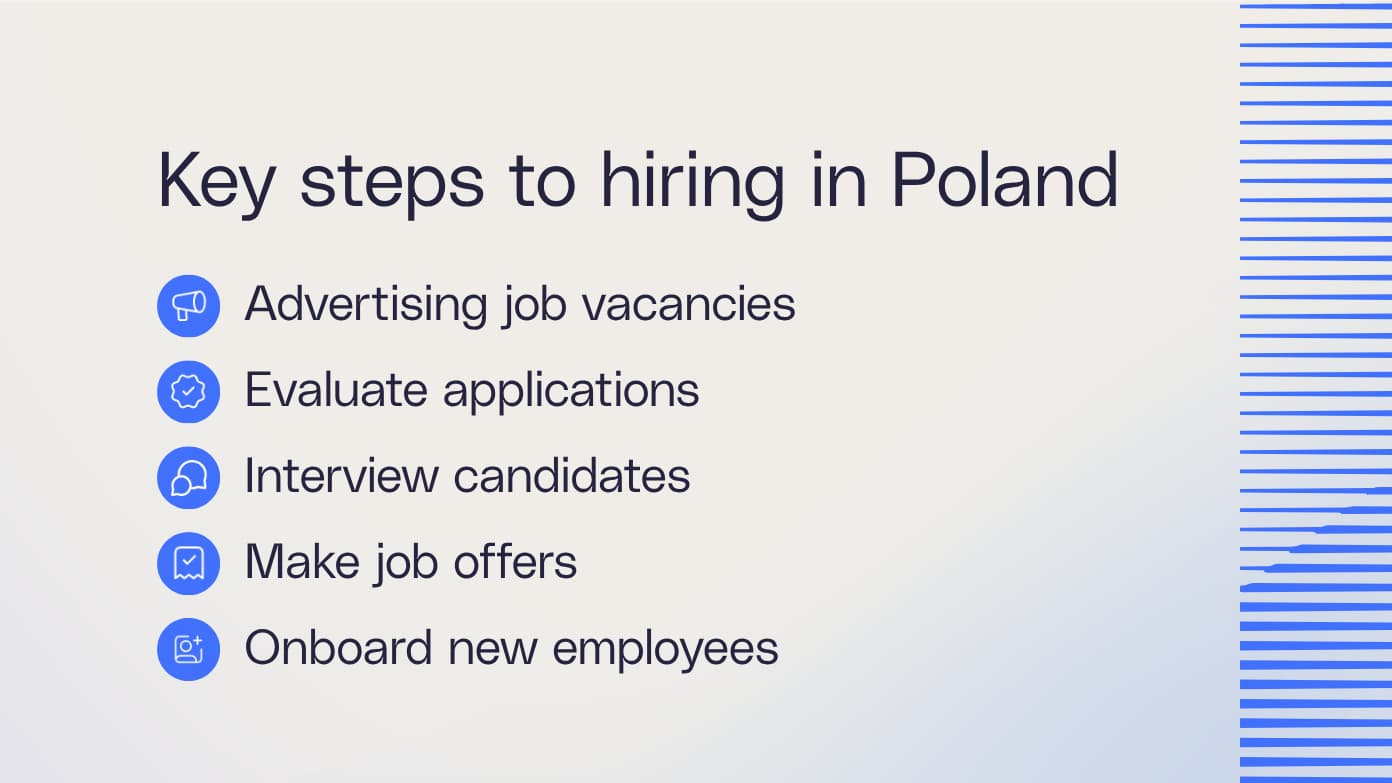
पोलैंड में भर्ती के चरण
पोलैंड में भर्ती की प्रक्रिया वैसी ही है जैसी आप संभवतः अपने देश में देखते होंगे। हायर करने की प्रक्रिया पांच बुनियादी चरणों का पालन करती है: नौकरी का विज्ञापन करना, आवेदनों का मूल्यांकन करना, उम्मीदवारों का साक्षात्कार लेना, नौकरी के प्रस्ताव भेजना और नए कर्मचारियों को नियुक्त करना।
1। पोलैंड में नौकरी रिक्तियों का विज्ञापन करें
एक विस्तृत कार्य विवरण तैयार करें और जिम्मेदारियों और योग्यताओं के आधार पर भूमिका को परिभाषित करें। सुनिश्चित करें कि नौकरी का विवरण पोलैंड के भेदभाव-विरोधी और श्रम कानूनों
अनुरूप हो
प्राकुज, प्राका, ओएलएक्स प्राका, लिंक्डइन और गोल्डनलाइन पोलैंड में लोकप्रिय नौकरी साइटें हैं।
2। अपने पोलिश उम्मीदवारों के लिए आवेदनों का मूल्यांकन करें
आवेदन एकत्र करें और रिज्यूमे की समीक्षा करें। उम्मीदवारों को उनकी योग्यता, अनुभव और भूमिका के लिए फिट के आधार पर स्क्रीन करें। आपको पृष्ठभूमि की जांच करने, पिछले नियोक्ताओं से संपर्क करने या किसी पेशेवर के सोशल मीडिया की समीक्षा करने के लिए स्पष्ट सहमति की आवश्यकता है।
3। पोलैंड में साक्षात्कार के उम्मीदवार
उन उम्मीदवारों का साक्षात्कार लें जिन्हें आपने शॉर्टलिस्ट किया है। आप ये साक्षात्कार व्यक्तिगत रूप से या ऑनलाइन माध्यम से दे सकते हैं। संरचित और गैर-भेदभावपूर्ण साक्षात्कार प्रश्नों का प्रयोग करें। Gia आपको ऐसे प्रश्न तैयार करने में मदद कर सकती है जो पोलैंड में भेदभाव विरोधी कानूनों का पालन करते हैं, ताकि आप स्थानीय नियमों का अनुपालन करते हुए भूमिका के लिए सबसे उपयुक्त व्यक्ति को ढूंढ सकें।
4। पोलैंड में नौकरी की पेशकश करें
अपने चुने हुए उम्मीदवार को अपनी कंपनी में पद प्रदान करने के लिए उनसे संपर्क करें। पोलिश में एक कंप्लांट रोज़गार समझोता तैयार करें। इसमें कानूनी रूप से आवश्यक सभी शर्तें शामिल करें, जैसे कि पदनाम, वेतन, कार्य घंटे, प्रारंभ तिथि आदि। कर्मचारी के काम शुरू करने से पहले दोनों पक्षों को अनुबंध पर हस्ताक्षर करने होंगे।
5। पोलैंड में नए कर्मचारियों को ऑनबोर्ड करें
अब आप नए कर्मचारियों को काम पर रख सकते हैं। रोजगार शुरू होने के सात दिनों के भीतर ZUS के साथ अपनी हायर का पंजीकरण कराएं। अनिवार्य व्यावसायिक स्वास्थ्य और सुरक्षा (बीएचपी) प्रशिक्षण की व्यवस्था करें और रोजगार पूर्व चिकित्सा परीक्षण का कार्यक्रम निर्धारित करें। पहचान पत्र, डिप्लोमा और वर्क परमिट जैसे आवश्यक दस्तावेजों को एकत्र करें और उनकी पुष्टि करें।
यदि आप जीपी ™ G-Pनियोक्ता ऑफ रिकॉर्डके साथ काम कर रहे हैं, तो आपको ऑनबोर्डिंग के प्रशासनिक बोझ के बारे में चिंता करने की ज़रूरत नहीं होगी। हम प्रक्रिया को सरल बनाएंगे, ताकि आप अपने कर्मचारियों को प्रशिक्षित करने और उन्हें अपनी कंपनी की संस्कृति में एकीकृत करने पर ध्यान केंद्रित कर सकें।
पोलैंड में ठेकेदारों को काम पर रखना
पोलैंड में स्वतंत्र ठेकेदारों के साथ काम करना, पूर्णकालिक कर्मचारियों की प्रतिबद्धता के बिना, बाजार का परीक्षण करने और अपनी उपस्थिति बनाने का एक लागत प्रभावी तरीका हो सकता है। पोलैंड में स्थित ठेकेदार स्थानीय उपभोक्ता व्यवहार, नियमों और व्यावसायिक प्रथाओं को समझते हैं। वे अपने स्वयं के उपकरणों और स्थापित कार्य प्रक्रियाओं के साथ जल्दी से काम करना शुरू करने के लिए तैयार होंगे।
ठेकेदारों को काम पर रखने से आप रोज़गार की जटिलताओं और लागतों के बिना, अपने व्यवसाय की ज़रूरतों के आधार पर अपने कर्मचारियों की संख्या को आसानी से समायोजित कर सकते हैं।
पोलैंड में किसी स्वतंत्र ठेकेदार के साथ समझौता करने से पहले, निम्नलिखित बातों पर विचार करें:
1। पोलैंड में कर्मचारी बनाम स्वतंत्र ठेकेदार
कर्मचारियों और स्वतंत्र ठेकेदारों के बीच अंतर को समझना महत्वपूर्ण है। पोलैंड में, यदि कोई ठेकेदार निम्नलिखित कार्य करता है तो उसे कानूनी रूप से कर्मचारी के रूप में पुनर्वर्गीकृत कर दिया जाएगा:
- कंपनी के प्रत्यक्ष पर्यवेक्षण या निर्देशन के अंतर्गत
- कंपनी द्वारा निर्धारित एक विशिष्ट समय और स्थान पर
- नियमित पारिश्रमिक के बदले में
स्वतंत्र ठेकेदार सेवाएं प्रदान करते हैं। कर्मचारियों के विपरीत, ठेकेदार अपनी समय सारिणी स्वयं तय करते हैं, अपने स्वयं के उपकरण का उपयोग करते हैं और किसी स्थायी भूमिका के बजाय विशिष्ट परियोजनाओं पर काम करते हैं।
2। पोलैंड में गलत वर्गीकरण के लिए दंड
किसी व्यक्ति को ठेकेदार के रूप में वर्गीकृत करना जबकि वह ठेकेदार नहीं है, गंभीर दंड का कारण बन सकता है। यदि गलत संकुचन होता है, तो आपको यह करना होगा:
- सभी बकाया सामाजिक सुरक्षा अंशदानों का भुगतान करें, साथ ही वैधानिक ब्याज का भी भुगतान करें।
- बकाया आयकर का भुगतान न करने के लिए उत्तरदायी होना।
- कर्मचारी को पूर्वव्यापी रूप से अर्जित कर्मचारी लाभ (उदाहरण के लिए, वैतनिक अवकाश, ओवरटाइम वेतन) प्रदान करें।
- प्रत्येक अपराध के लिए PLN 1,000–30,000 तक का प्रशासनिक जुर्माना अदा करें।
3। पोलैंड में ठेकेदारों को भुगतान कैसे करें
G-P कॉन्ट्रैक्टर अंतरराष्ट्रीय ठेकेदारों को काम पर रखने और भुगतान करने की जटिल और समय लेने वाली प्रक्रिया को आसान बनाता है। आप कुछ ही क्लिक में अनुबंध बना सकते हैं, जारी कर सकते हैं और ठेकेदारों को भुगतान कर सकते हैं, साथ ही यह सुनिश्चित कर सकते हैं कि प्रक्रिया सुचारू रूप से चले।
G-Pके साथ पोलैंड में कर्मचारियों और ठेकेदारों को नियुक्त करें
हमारे SaaS और आर्टिफिशियल लीजेंड-संचालित उत्पाद - एम्प्लॉयर ऑफ रिकॉर्ड, कॉन्ट्रैक्टर और Gia - कंपनियों का समर्थन करते हैं क्योंकि वे वैश्विक टीमों का निर्माण और प्रबंधन करते हैं।
G-P वैश्विक रोजगार के क्षेत्र में एक मान्यता प्राप्त अग्रणी कंपनी है, जिसके पास एक दशक से अधिक का अनुभव, मानव संसाधन, कानूनी और अनुपालन विशेषज्ञों की सबसे बड़ी टीम और एक वैश्विक स्वामित्व वाला ज्ञान भंडार है।
G-P के साथ पोलैंड में भर्ती प्रक्रिया को आसान बनाएं। आज ही हमसे संपर्क करें या डेमो बुक करें । 
अक्सर पूछे जाने वाले सवाल (FAQs)
पोलैंड में कर्मचारियों को काम पर रखने के लिए मुख्य कानूनी आवश्यकताएं क्या हैं?
आपको अपने व्यवसाय का पंजीकरण कराना होगा, एक टैक्स आईडी (एनआईपी) प्राप्त करनी होगी, ZUS के साथ पंजीकरण कराना होगा और पोलिश भाषा में रोजगार अनुबंध तैयार करने होंगे। प्रत्येक नए कर्मचारी को काम शुरू करने के सात दिनों के भीतर ZUS में पंजीकृत होना अनिवार्य है।
पोलैंड में रोजगार समझोता में क्या शामिल होना चाहिए?
अनुबंध में अनुबंध का प्रकार, पक्षों का विवरण, पदनाम, कार्यस्थल, वेतन, कार्य घंटे, प्रारंभ तिथि और अन्य शर्तें निर्दिष्ट होनी चाहिए। अतिरिक्त रोजगार की शर्तें सात दिनों के भीतर लिखित रूप में प्रदान की जानी चाहिए यदि अनुबंध में शामिल नहीं है।
पोलैंड में मानक परीक्षा अवधि क्या है?
परीक्षा की अवधि तीन महीने तक हो सकती है। बाद के अनुबंध के प्रकार और अवधि के आधार पर विशिष्ट नियम लागू हो सकते हैं।
पोलैंड में मानक काम के घंटे और ओवरटाइम नियम क्या हैं?
मानक कार्य सप्ताह 40 घंटे का होता है (प्रति दिन आठ घंटे, प्रति सप्ताह पांच दिन)। ओवरटाइम प्रति वर्ष 150 घंटे तक सीमित है जब तक कि एक सामूहिक समझौते द्वारा उच्च सीमा निर्धारित नहीं की जाती है। औसत साप्ताहिक कार्य घंटे (ओवरटाइम सहित) 48 घंटे से अधिक नहीं हो सकते।
पोलैंड में नियोक्ताओं द्वारा सामाजिक सुरक्षा में किए जाने वाले मुख्य योगदान क्या हैं?
आपको पेंशन, विकलांगता, दुर्घटना बीमा, श्रम कोष, एकजुटता कोष और कर्मचारियों के गारंटीकृत लाभ कोष में योगदान करना होगा। नियोक्ता पर कुल भार वेतन का लगभग 20–21% होता है।