





प्रमुख निष्कर्ष
- भारत के कुशल प्रतिभा समूह तक पहुंचें: देश में ऐसे कौशल वाले कर्मचारियों की बड़ी संख्या है जो प्रौद्योगिकी, वित्त, विनिर्माण, कृत्रिम बुद्धिमत्ता, मशीन लर्निंग और क्लाउड कंप्यूटिंग सहित कई क्षेत्रों के लिए प्रासंगिक हैं।
- केंद्र और राज्य की आवश्यकताओं को समझें: ऐसे केंद्र और राज्य-विशिष्ट नियम हैं जो नुकसान को प्रभावित करते हैं। लाभ और छुट्टी।
- भारत के श्रम संहिताओं के लिए तैयार रहें: भारत ने रोजगार आवश्यकताओं के लिए अधिक एकीकृत ढांचा बनाने के लिए 29 केंद्रीय श्रम अधिनियमों को चार श्रम संहिताओं में आधुनिक और समेकित किया है।
- भारत में भर्ती के रास्ते: कंपनियों के पास सेटअप के लिए विभिन्न विकल्प हैं, जिनमें एक नियोक्ता ऑफ रिकॉर्ड (एम्प्लॉयर ऑफ रिकॉर्ड) के साथ साझेदारी करना, ठेकेदारों को काम पर रखना, एक सहायक कंपनी स्थापित करना, या सीधे नियोक्ता पंजीकरण शामिल है।
भारत उन वैश्विक कंपनियों के लिए सबसे अधिक मांग वाले देशों में से एक है जो विस्तार करना चाहती हैं और काम पर रहना चाहती हैं। यह तकनीक, वित्त, विनिर्माण और कई अन्य मांग वाले क्षेत्रों में कर्मचारियों की विशाल संख्या का दावा करता है।
यदि आप भारत में काम पर रहने की तलाश में हैं, तो यहां बहुत सारे अवसर हैं। हालाँकि, आपको देश के अनूठे कानूनों और दिशानिर्देशों को समझने की आवश्यकता है, जिसमें रोजगार अनुबंधों, नुकसानों के लिए स्थानीय नियम शामिल हैं। कर, लाभ और वैधानिक अंशदान।
यह गाइड भारत में भर्ती के बारे में वह सब कुछ बताती है जो आपको जानना आवश्यक है, भर्ती मॉडल चुनने से लेकर अपनी टीम बनाने और प्रबंधित करने तक।
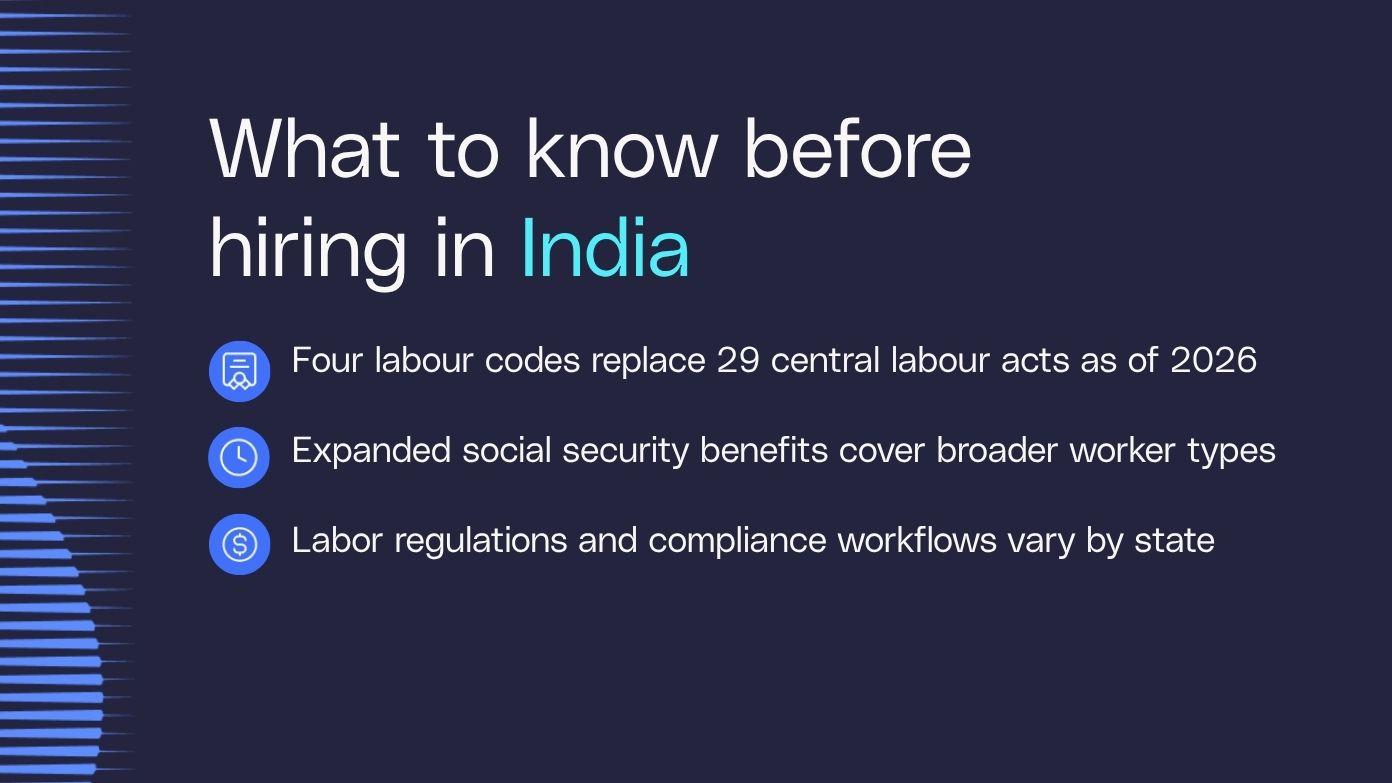
भारत में काम पर रखने से पहले क्या जानना चाहिए
भारत में कर्मचारियों को नियुक्त करते समय आपको कई कानूनी आवश्यकताओं का पालन करना होगा। देश के रोजगार ढांचे में केंद्र और राज्य स्तर के कानून दोनों शामिल हैं जो नियोक्ता-कर्मचारी संबंधों को प्रभावित करते हैं। इसमें नुकसान और लाभ शामिल हैं।
यदि आप निश्चित नहीं हैं कि कहां से शुरू करें, तो G-P Gia™, हमारा कृत्रिम कृति-संचालित वैश्विक मानव संसाधन एजेंट, भारत सहित 50 देशों और सभी 50 अमेरिकी राज्यों में आपके सबसे कठिन कप्लैन्स प्रश्नों का उत्तर दे सकता है। बाहरी वकीलों पर अपनी निर्भरता कम करें और Gia के साथ समय और लागत में 95% तक की कटौती करें।
आइए भारत में भर्ती के बारे में जानने योग्य छह बातों पर एक नजर डालते हैं:
भारत के श्रम संहिता और 2026 विनियामक अद्यतन
भारत में श्रम कानूनों में व्यापक बदलाव किए गए हैं। नएश्रम संहिता चार व्यापक कानून हैं जो 29 केंद्रीय श्रम अधिनियमों का आधुनिकीकरण और समेकन करते हैं। इन बदलावों से स्थानीय और वैश्विक दोनों तरह के व्यवसायों के लिए भारत में काम करना आसान हो जाएगा, साथ ही नए प्रकार के श्रमिकों को भी लाभ मिलेगा।
दिनांक 2026 से येश्रम संहिताएं लागू हैं:
- वेतन और मजदूरी संबंधी अनुपालन: परिवर्तन इस बात को प्रभावित करते हैं कि नियोक्ता वेतन को कैसे परिभाषित करते हैं, उसकी गणना करते हैं और उसका दस्तावेजीकरण करते हैं। इनमें से एक संहिता न्यूनतम मजदूरी, समय पर वेतन भुगतान आदि के लिए नियम निर्धारित करती है, साथ ही पूरे भारत में मजदूरी की समग्र परिभाषा को मानकीकृत करती है।
- सामाजिक सुरक्षा और वैधानिक अंशदान: जो कंपनियां भारत में कर्मचारियों को काम पर रखना चाहती हैं, उन्हें लागू वैधानिक योजनाओं, रिपोर्टिंग और रिकॉर्ड रखने की आवश्यकताओं को समझना होगा। इन परिवर्तनों से सामाजिक सुरक्षा लाभों का विस्तार होता है और अधिक प्रकार के श्रमिकों को इसमें शामिल किया जाता है।
- औद्योगिक संबंध और विवाद प्रक्रियाएं: औद्योगिक संबंधों से संबंधित संहिता में ट्रेड यूनियनों, कर्मचारियों की छंटनी और अन्य संबंधित नियमों को समेकित किया गया है। कर्मचारी संबंधों के लिए उपयोग किए जाने वाले नोटिस, स्थायी आदेश और कुछ कंप्लाएन्स वर्कफ़्लो के लिए नई प्रक्रियाएं हैं।
- व्यावसायिक स्वास्थ्य एवं सुरक्षा: स्वास्थ्य जांच और समग्र सुरक्षा मानकों के लिए नए नियम कार्यस्थल की नीतियों, प्रशिक्षण और घटना रिपोर्टिंग को प्रभावित कर सकते हैं।
लागू होने वाले नियम राज्य के अनुसार भिन्न हो सकते हैं। इस बात पर विचार करें कि भारत में काम पर रहने के बाद आपकी नई टीम कहाँ काम करेगी, और उसी के अनुसार अपने कार्य अनुबंधों, मानव संसाधन नीतियों और वेतन प्रक्रियाओं को संरेखित करें।
2. भारत के तकनीक और मानव-केंद्रित कर्मचारियों की संख्या
भारत के कर्मचारियों की संख्या बड़ी है और लगातार बढ़ रही है, और देश प्रौद्योगिकी के क्षेत्र में एक वैश्विक बिजलीघर है। देश के कई कामगारों के पास कृत्रिम बुद्धिमत्ता, मशीन लर्निंग, साइबर सुरक्षा, क्लाउड कंप्यूटिंग और डेटा एनालिटिक्स में कौशल है। भारत में भर्ती करने से आपको विशिष्ट, प्रासंगिक कौशल वाले लोगों के विशाल समूह का लाभ उठाने का अवसर मिलता है।
3. भारत में कर्मचारी गतिशीलता और प्रतिधारण
जब आप भारत में काम पर रहना चाहते हैं, तो भर्ती तो आधी लड़ाई ही होती है। 2026 फरवरी को एसीसीए द्वारा किए गए एक अध्ययन के अनुसार, भारत में रहने वाले लगभग आधे कर्मचारी अगले वर्ष के भीतर एक नई भूमिका में जाना चाहते हैं। एओएन के एक अन्य अध्ययन में पाया गया कि कर्मचारियों के छोड़ने की दर लगभग 16.2% तक कम हो गई।
करियर में प्रगति और कौशल उन्नयन अभी भी देश के कर्मचारियों की संख्या के लिए महत्वपूर्ण हैं। नौकरी में बदलाव कौशल को व्यापक बनाने और विभिन्न विभागों में काम करने का अनुभव प्राप्त करने का एक अवसर है। हालांकि, भारत में भर्ती करने वालों के लिए, ये अध्ययन दर्शाते हैं कि टीम बनाते समय कर्मचारियों को बनाए रखना सर्वोच्च प्राथमिकता होनी चाहिए। प्रतिस्पर्धी नुकसान कैरियर विकास और कैरियर उन्नति के अवसर आपको कुशल पेशेवरों को आकर्षित करने और बनाए रखने में मदद कर सकते हैं।
4। भारत में वेतन पैकेज
नुकसान पर बातचीत भारत में पैकेज एक जटिल प्रक्रिया है क्योंकि कर्मचारियों को मूल वेतन के अलावा कई भत्ते मिलते हैं। वेतन पैकेज में मूल वेतन, प्रदर्शन-आधारित बोनस, लाभ, बाल देखभाल भत्ता और अन्य प्रकार के लाभ शामिल हो सकते हैं। भत्ते किसी कर्मचारी के संपूर्ण उत्पाद पैकेज का एक महत्वपूर्ण हिस्सा बन सकते हैं।
नुकसान आपके द्वारा उपयोग की जाने वाली संरचना मायने रखती है क्योंकि भारत के श्रम संहिता ने देश में वैधानिक गणनाओं के लिए मजदूरी को परिभाषित करने के तरीके को बदल दिया है। नई परिभाषा के तहत, मूल वेतन, महंगाई भत्ता (जो एक प्रकार का सीओएलए है), और प्रतिधारण भत्ता मूल मजदूरी घटक बनाते हैं। यदि अन्य भत्ते कुल पारिश्रमिक के 50% से अधिक हैं, तो अतिरिक्त राशि को नए वैधानिक गणनाओं के लिए मजदूरी में वापस जोड़ दिया जाता है। हालाँकि, कुछ प्रदर्शन-आधारित प्रोत्साहन, कर्मचारी स्टॉक विकल्प लाभ, और प्रतिपूर्ति-आधारित भुगतान को मजदूरी नहीं माना जाता है।
वैधानिक अंशदान और लाभों की गणना करते समय इन नियमों का ध्यान अवश्य रखें। यह भी ध्यान में रखना महत्वपूर्ण है कि कर योग्य भत्ते और लाभ किसी कर्मचारी के घर ले जाने योग्य वेतन को कैसे प्रभावित करते हैं।
5। भारत में कर और सामाजिक सुरक्षा अंशदान
भारत में दो प्रगतिशील कर प्रणालियाँ लागू हैं, जिसका अर्थ है कि आय बढ़ने के साथ कर दरें भी बढ़ती हैं। नियोक्ता प्रत्येक टीम के सदस्य द्वारा चुने गए सिस्टम के आधार पर वेतन से सीधे कर काटते हैं। आकलन वर्ष 2026-2027के लिए, नई प्रणाली INR 4,00,000 तक की आय पर कर माफ करती है। पुरानी प्रणाली 2 50000 12 वर्ष से कम आयु 60 के करदाताओं के लिए 9, 10, 11 रुपये की कर-मुक्त सीमा बनाए रखती है।
पुरानी प्रणाली 60 वर्ष से कम आयु के व्यक्तियों के लिए INR 2,50,000 की सीमा को बरकरार रखती है। हालांकि नई व्यवस्था डिफ़ॉल्ट रूप से लागू है, पात्र श्रमिक पुरानी व्यवस्था का विकल्प चुन सकते हैं।
जब आप भारत में कर्मचारियों को काम पर रखते हैं, तो आपकी वेतन प्रक्रिया में कर रोक और लागू वैधानिक अंशदानों का हिसाब रखना आवश्यक होता है। सामान्यतः, नियोक्ता कर योग्य वेतन से स्रोत पर ही कर काट लेते हैं और उसे सरकार को भेज देते हैं।
एक और महत्वपूर्ण पहलू भारत की सामाजिक सुरक्षा प्रणाली है। नियोक्ता और कर्मचारी दोनों ही कर्मचारी भविष्य निधि (ईपीएफ) नामक सेवानिवृत्ति बचत योजना में योगदान करते हैं। मानक अंशदान दर लागू ईपीएफ वेतन का 12% है। हालाँकि, वह दर सीमा और अन्य नियमों के अधीन है। कर्मचारी जमा से जुड़ी बीमा योजना पात्र ईपीएफओ सदस्यों को जीवन बीमा लाभ भी प्रदान करती है।
जब आप भारत में काम पर रहते हैं, तो आपकी पेरोल व्यवस्था में शुरू से ही इन आवश्यकताओं का ध्यान रखा जाना चाहिए। कर्मचारी के क्षति विनाश पैकेज के आधार पर सटीक नियम अलग-अलग होंगे। राज्य और केंद्र सरकार की आवश्यकताएं भी इसमें महत्वपूर्ण भूमिका निभाती हैं।
6। भारत में कर्मचारी लाभ की गारंटी
भारत में वैधानिक लाभों की कोई सार्वभौमिक सूची नहीं है जो सभी श्रमिकों पर लागू होती हो। इसके बजाय, लाभ संघीय कानूनों और राज्य-विशिष्ट विधानों द्वारा निर्धारित किए जाते हैं। ये नियम उद्योग क्षेत्र और उस राज्य पर निर्भर करते हैं जहां कर्मचारी काम करता है।
नए श्रम कानूनों ने नियोक्ताओं द्वारा कर्मचारी लाभ और सामाजिक सुरक्षा के कई क्षेत्रों से संबंधित दृष्टिकोण को बदल दिया है। उदाहरण के लिए, वार्षिक अवकाश को लें। नए श्रम कानूनों के तहत, जो व्यक्ति एक कैलेंडर वर्ष में कम से कम 180 दिन काम करते हैं, उन्हें आमतौर पर काम किए गए प्रत्येक 20 दिनों के लिए एक दिन की छुट्टी मिलती है। पात्र कर्मचारी अधिकतम 30 दिनों की छुट्टी आगे ले जा सकते हैं, और अनुरोधित लेकिन अस्वीकृत कोई भी छुट्टी उस सीमा के बिना आगे ले जाई जा सकती है। राज्य के नियम अधिक अनुकूल लाभ भी प्रदान कर सकते हैं।
जब आप भारत में कर्मचारियों को काम पर रखते हैं, तो आपको देश की तीन राष्ट्रीय छुट्टियों, यानी गणतंत्र दिवस, स्वतंत्रता दिवस और महात्मा गांधी के जन्मदिन को भी ध्यान में रखना होगा। ध्यान रखें कि राज्य-विशिष्ट अवकाश भी लागू हो सकते हैं।
भारत में काम पर रहने के दौरान मातृत्व लाभों पर भी विशेष ध्यान देने की आवश्यकता होती है। C पात्र कर्मचारी अपने पहले दो बच्चों के लिए 26 सप्ताह के प्रसूति अवकाश के हकदार हैं, और 12 सप्ताह के जब उनके 2+ बच्चे हों।
अन्य वैधानिक लाभों में सामाजिक सुरक्षा कवरेज और कार्यस्थल पर स्वास्थ्य और सुरक्षा संबंधी सुरक्षा उपाय शामिल हो सकते हैं। हालांकि, कर्मचारियों के वेतन, उनके द्वारा काम किए जाने वाले प्रतिष्ठान के प्रकार और लागू राज्य-विशिष्ट नियमों के आधार पर आवश्यकताएं भिन्न हो सकती हैं। पात्र कर्मचारियों को भारत की कर्मचारी राज्य बीमा (ईएसआई) योजना के माध्यम से स्वास्थ्य कवरेज भी प्राप्त हो सकता है। कई नियोक्ता वैधानिक लाभों के पूरक के रूप में निजी समूह स्वास्थ्य बीमा भी प्रदान करते हैं।
भारत में अपनी टीम को नियुक्त करने और बनाने से पहले, सुनिश्चित करें कि आपके नुकसान लाभ, अवकाश और कार्यस्थल नीतियां सभी लागू आवश्यकताओं को ध्यान में रखती हैं।
भारत में वैश्विक कंपनियों के लिए भर्ती मॉडल
आपकी वैश्विक कंपनी के पास भारत में कर्मचारियों को भर्ती करने के कई तरीके हैं। सही दृष्टिकोण आपके भर्ती लक्ष्यों, वांछित कर्मचारियों की संख्या, व्यावसायिक गतिविधियों और इस बात पर निर्भर करेगा कि क्या देश में आपकी पहले से ही एक स्थापित उपस्थिति है या नहीं। यहां कुछ सबसे आम भर्ती मॉडल दिए गए हैं।
- प्रत्यक्ष नियोक्ता पंजीकरण: भारत के रोजगार प्राधिकरणों के साथ अपनी कंपनी का पंजीकरण कराने से आपको अपने स्थानीय संचालन पर अधिक नियंत्रण मिलता है। इसका नकारात्मक पहलू यह है कि आपको संस्था की स्थापना और वेतन, लाभ और अन्य संबंधित रोजगार आवश्यकताओं को संभालना होगा।
- रिकॉर्ड का नियोक्ता: रिकॉर्ड का नियोक्ता (एम्प्लॉयर ऑफ रिकॉर्ड) आपको स्थानीय इकाई स्थापित किए बिना भारत में काम करने की सुविधा देता है। यह मार्ग बाजार में जाने का एक सरल तरीका प्रदान करता है, और आप एक इकाई स्थापित करने के लिए आवश्यक लागत और समय के बिना एक टीम का निर्माण कर सकते हैं। G-P एम्प्लॉयर ऑफ रिकॉर्ड वैश्विक यूनिट इंफ्रास्ट्रक्चर के माध्यम से भारत में भर्ती का समर्थन करता है।
- सहायक कंपनी या शाखा: भारत में एक नई सहायक कंपनी या शाखा स्थापित करने से आपको देश में अपनी उपस्थिति स्थापित करने में मदद मिलती है, जिससे आप अधिक दीर्घकालिक संचालन कर सकते हैं। यह एक भारतीय कंपनी के रूप में काम करती है, और यह आपकी अपनी कंपनी का ही एक विस्तार है।
संस्था की आवश्यकताएं, पंजीकरण और अनुमत गतिविधियां आपके व्यवसाय की संरचना और संचालन के आधार पर भिन्न-भिन्न होती हैं।
- स्वतंत्र ठेकेदार: जब आपको भर्ती में अधिक लचीलेपन की आवश्यकता होती है, तो स्वतंत्र ठेकेदार एक विचारणीय विकल्प हैं। जैसा कि कहा गया है, किसी को ग्राहक के रूप में गलत वर्गीकृत करना, जबकि वह वास्तव में एक कर्मचारी है, महत्वपूर्ण वित्तीय और कंसल्टेंसी समस्याएं पैदा कर सकता है।
इस मॉडल को चुनने से पहले, औद्योगिक हायर की भूमिका, नियंत्रण का स्तर और कार्य व्यवस्था की समीक्षा करें। भारत का कानूनी ढांचा स्वतंत्र ठेकेदार और कर्मचारी के बीच अंतर करने के लिए किसी सार्वभौमिक परीक्षण पर निर्भर नहीं करता है, इसलिए कार्य संबंध का सावधानीपूर्वक मूल्यांकन करें।
भारत में शीर्ष भर्ती केंद्र
भारत में कई प्रमुख शहर हैं जहां आपकी जैसी वैश्विक कंपनियां विभिन्न क्षेत्रों में विशिष्ट प्रतिभाएं पा सकती हैं। कुछ शहर विशिष्ट उद्योगों के लिए प्रसिद्ध हैं। प्रत्येक शहर में क्या-क्या सुविधाएं उपलब्ध हैं, यह जानने से आप अपनी भर्ती प्रक्रिया को सही जगह पर केंद्रित कर सकते हैं।
भारत के शीर्ष प्रतिभा केंद्र निम्नलिखित हैं:
- बेंगलुरु (बैंगलोर) प्रौद्योगिकी, आईटी सेवाओं, स्टार्टअप और अनुसंधान एवं विकास केंद्रों के लिए देश के शीर्ष भर्ती केंद्रों में से एक है। जैव प्रौद्योगिकी, एयरोस्पेस और फ़िनटेक में इसकी मजबूत उपस्थिति है।
- हैदराबाद एक प्रमुख आईटी और बिजनेस प्रोसेस आउटसोर्सिंग (बीपीओ) केंद्र है। हैदराबाद कई वैश्विक प्रौद्योगिकी कंपनियों, दवा कंपनियों और एक बढ़ते स्टार्टअप इकोसिस्टम का घर है।
- दिल्ली एनसीआर (राष्ट्रीय राजधानी क्षेत्र) में दिल्ली, गुरुग्राम और नोएडा शामिल हैं। एनसीआर आईटी, वित्त, परामर्श, ई-कॉमर्स, विनिर्माण और मीडिया क्षेत्रों में भर्ती का एक प्रमुख केंद्र है। यह कई बहुराष्ट्रीय कंपनियों का भी घर है।
- मुंबई भारत की वित्तीय राजधानी है। मुंबई बैंकिंग, वित्त, बीमा, मीडिया, मनोरंजन और बहुराष्ट्रीय कंपनियों के मुख्यालयों का केंद्र है।
- पुणे में आईटी, ऑटोमोटिव विनिर्माण, इंजीनियरिंग और अनुसंधान के लिए प्रतिभाओं का मजबूत आधार है। ऐसे कई विश्वविद्यालय और शैक्षणिक संस्थान हैं जो शहर के कुशल कर्मचारियों की संख्या में योगदान करने में मदद करते हैं।
भारत में प्रमुख उद्योग
भारत की अर्थव्यवस्था विविधतापूर्ण है, जिसमें कई स्थापित उद्योग और नए तेजी से विकसित हो रहे क्षेत्र शामिल हैं। भारत में कर्मचारियों की भर्ती करते समय, देश के प्रमुख उद्योगों को समझना आपको वेतन और लाभों के बारे में जानकारी देता है। आप इस जानकारी का उपयोग यह तय करने में कर सकते हैं कि कहां निवेश करना है और अपनी प्रतिभा को कैसे बढ़ाना है।
भारत में मुख्य उद्योगों में शामिल हैं:
- आईटी और आईटी-सक्षम सेवाएं: भारत सॉफ्टवेयर विकास, आईटी सेवाओं, बिजनेस प्रोसेस आउटसोर्सिंग (बीपीओ) और डिजिटल परिवर्तन में वैश्विक स्तर पर अग्रणी है।
- विनिर्माण: इस क्षेत्र में ऑटोमोटिव, इलेक्ट्रॉनिक्स, वस्त्र, रसायन, मशीनरी और उपभोक्ता वस्तुएं शामिल हैं। हाल के वर्षों में "मेक इन इंडिया" पहल ने इस क्षेत्र को बढ़ावा दिया है।
- फार्मास्यूटिकल्स और जैव प्रौद्योगिकी: भारत जेनेरिक दवाओं के विश्व के सबसे बड़े उत्पादकों में से एक है और इसका जैव प्रौद्योगिकी और जीवन विज्ञान क्षेत्र काफी मजबूत है।
- वित्तीय सेवाएं: इस क्षेत्र में बैंकिंग, बीमा, फ़िनटेक और पूंजी बाजार शामिल हैं, और मुंबई इसकी वित्तीय राजधानी है।
- दूरसंचार: भारत में वैश्विक स्तर पर सबसे बड़े दूरसंचार बाजारों में से एक है, खासकर मोबाइल और इंटरनेट की तीव्र पहुंच के कारण।
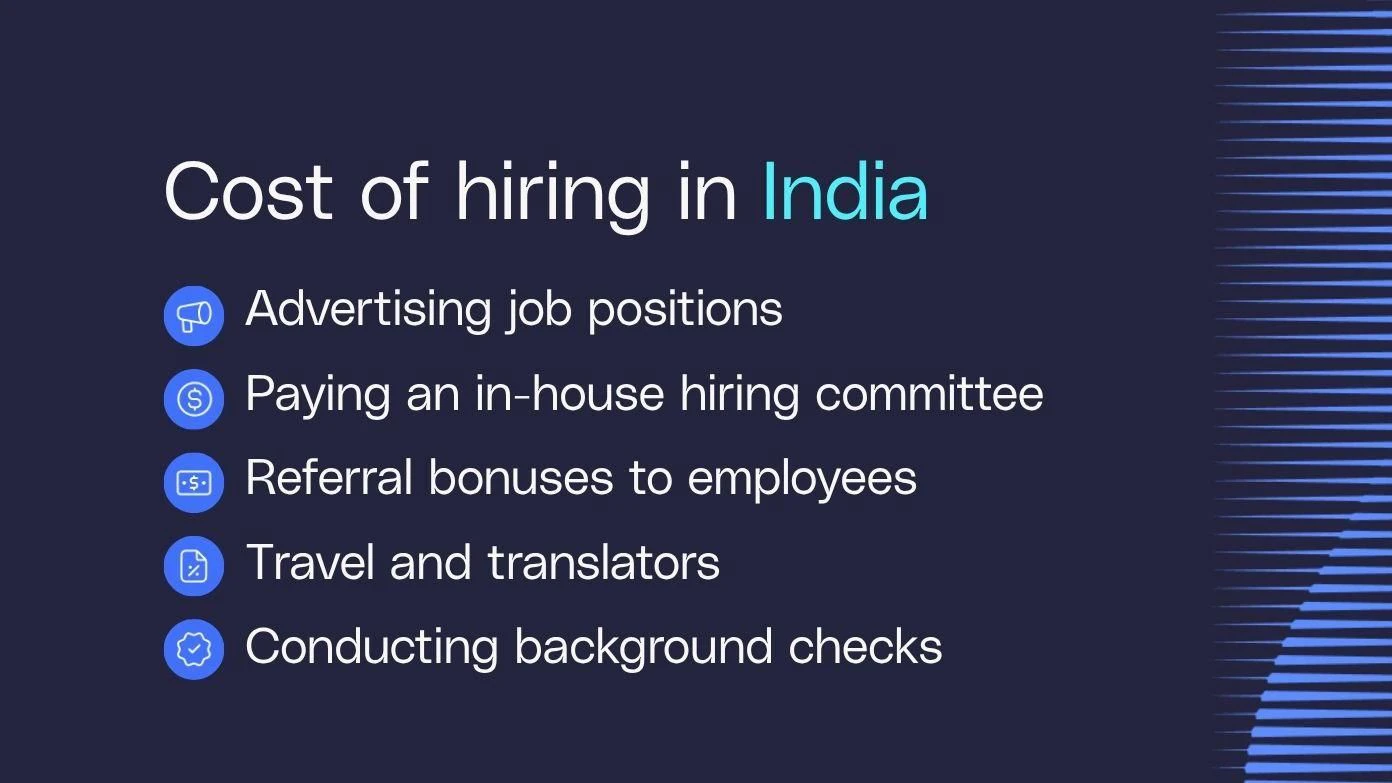
भारत में कर्मचारी नियुक्त करने की लागत
चाहे आप एक कर्मचारी को काम पर रख रहे हों या पूरी टीम को, आपको कई तरह के खर्चों को वहन करना होगा। निम्नलिखित के लिए बजट बनाएं:
- संस्था की स्थापना (जब तक कि आप किसी पंजीकृत नियोक्ता के साथ साझेदारी न करें)
- नौकरी का विज्ञापन
- भर्ती और आवेदक-समीक्षा की लागत
- पेरोल
- कर
- वेतन
- लाभ
- बोनस
- भत्ते
- बीमा
- यात्रा
- अनुवादक (यदि लागू हो)
आपको लागू होने वाले नियोक्ता अंशदान और वैधानिक लाभों को भी ध्यान में रखना चाहिए। इसमें सामाजिक सुरक्षा कार्यक्रमों, भविष्य निधि और अन्य प्रकार के योगदान शामिल हो सकते हैं।
जिया G-P Gia के सत्यापित स्रोतों के अनुसार भारत में उचित वैधानिक बोझ का अनुमान सकल वेतन का लगभग 7-12% है, लेकिन वास्तविक प्रतिशत वेतन संरचना, पात्रता और कार्य स्थिति पर निर्भर करता है।
एक कंपनी को भारत में कर्मचारियों को काम पर रखने के लिए क्या चाहिए?
यदि आप भारत में कर्मचारियों को सीधे काम पर रखने के लिए अपनी खुद की इकाई स्थापित करने की योजना बना रहे हैं, तो आपको कई आवश्यक बातों का ध्यान रखना होगा।
- एक कानूनी इकाई स्थापित करें।
- कॉर्पोरेट मामलों के मंत्रालय (MCA) के साथ SPICe+ (Simplified Proforma for Incorporating Company Electronically Plus) पोर्टल के माध्यम से अपनी कंपनी का पंजीकरण कराएं।
- कंपनी के निगमन का प्रमाण पत्र प्राप्त करें।
- एक स्थायी खाता संख्या (पैन) प्राप्त करें।
- लागू करों की कटौती और भुगतान करने के लिए टैक्स डिडक्शन एंड कलेक्शन अकाउंट नंबर (TAN) प्राप्त करें।
- कर्मचारी भविष्य निधि संगठन (ईपीएफओ) और कर्मचारी राज्य बीमा निगम (ईएसआईसी) द्वारा संचालित वैधानिक सामाजिक सुरक्षा योजनाओं के लिए पंजीकरण करें।
- भारत के श्रम कानूनों और राज्य-विशिष्ट आवश्यकताओं के अनुरूप रोजगार अनुबंध, प्रस्ताव पत्र और मानव संसाधन नीतियां तैयार करें।
- वेतन की गणना करने, करों की कटौती करने और वैधानिक अंशदान (ईपीएफ, ईएसआई, पेशेवर कर, टीडीएस) जमा करने के लिए एक पेरोल प्रणाली स्थापित करें।
भारत में सहायक कंपनी स्थापित करने में कई सप्ताह लग सकते हैं। G-P एम्प्लॉयर ऑफ रिकॉर्ड के साथ, आप अपनी खुद की इकाई स्थापित किए बिना भारत में पूर्णकालिक कर्मचारी रख सकते हैं। G-P रोजगार, वेतन, लाभ और स्थानीय अनुपालन का प्रबंधन करता है, जबकि आप अपनी टीम के दिन-प्रतिदिन के काम का प्रबंधन करते हैं।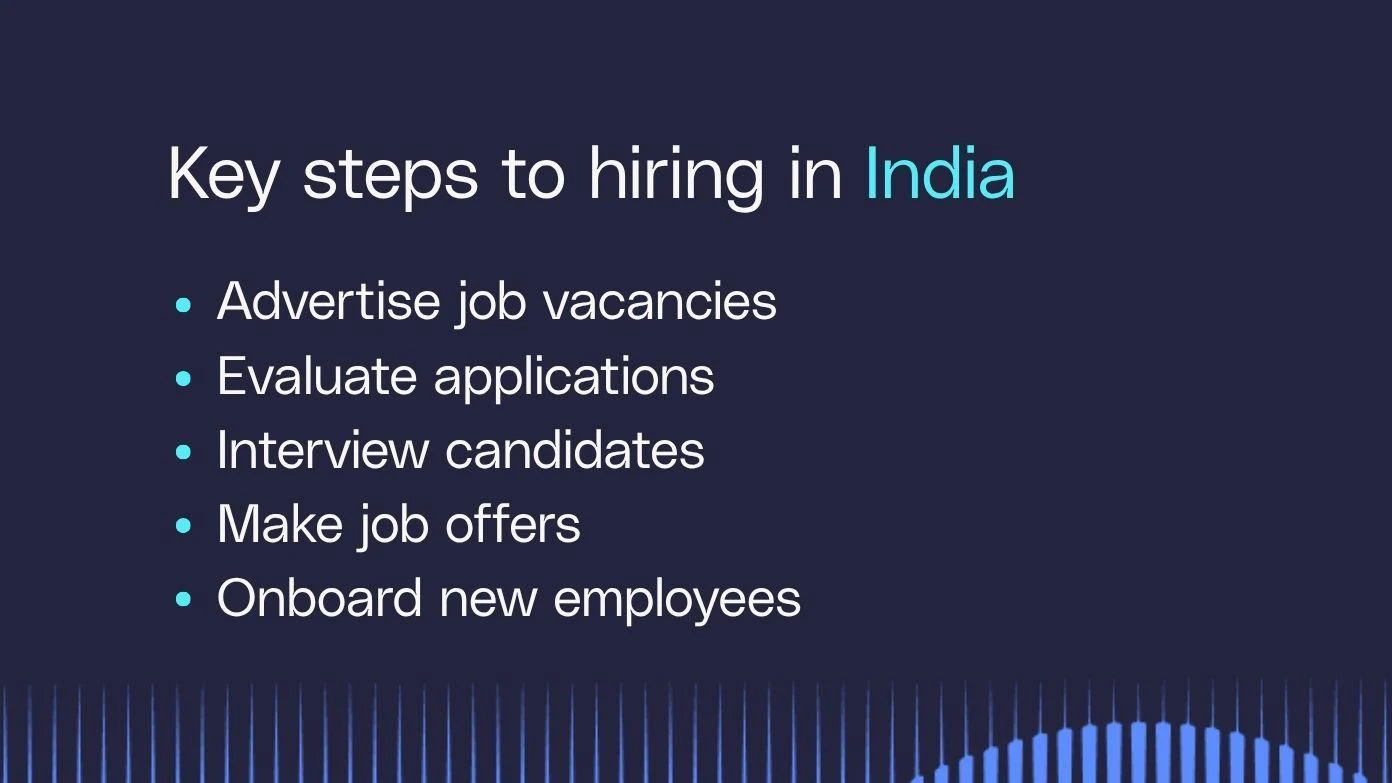
भारत में भर्ती के लिए कदम
जब आप भारत में काम पर रहने के लिए तैयार हों, तो आप एक ऐसी प्रक्रिया की उम्मीद कर सकते हैं जो आपके अपने देश में होने वाली प्रक्रिया के समान हो। इसमें पांच बुनियादी चरण होते हैं: नौकरी का विज्ञापन देना, आवेदनों का मूल्यांकन करना, उम्मीदवारों का साक्षात्कार लेना, नौकरी के प्रस्ताव भेजना और नए कर्मचारियों को काम पर रखना।
1। भारत में नौकरी रिक्तियों का विज्ञापन करें
एक विस्तृत कार्य विवरण तैयार करें और जिम्मेदारियों और योग्यताओं के आधार पर भूमिका को परिभाषित करें। कुछ निजी क्षेत्र के प्रतिष्ठानों में, जिनमें 25 या उससे अधिक कर्मचारी हैं, रिक्त पदों को भरने से पहले संबंधित रोजगार एक्सचेंजों को नौकरी की रिक्तियों की सूचना देनी होती है। ये आवश्यकताएं भारत के मौजूदा सामाजिक सुरक्षा ढांचे का हिस्सा हैं।
अधिसूचना संबंधी आवश्यकताओं का पालन न करने पर दंड और शिकायत जैसी समस्याएं उत्पन्न हो सकती हैं। किसी पद के लिए विज्ञापन देने और उसे भरने से पहले अपनी कंपनी पर लागू होने वाली सभी आवश्यकताओं की जांच कर लें।
संभावित उम्मीदवारों से जुड़ने की बात करें तो भारत में Naukri, LinkedIn, Indeed और Monster जैसी जॉब साइटें काफी लोकप्रिय हैं।
2। भारत में नौकरी के आवेदनों का मूल्यांकन
आवेदन एकत्र करें और रिज्यूमे की समीक्षा करें। उम्मीदवारों की योग्यता, अनुभव और पद के लिए उनकी उपयुक्तता के आधार पर उनका चयन करें। स्क्रीनिंग के दौरान पूछे जाने वाले प्रश्न नौकरी और पद की आवश्यकताओं पर केंद्रित होने चाहिए। भेदभावपूर्ण प्रश्नों या चयन प्रक्रियाओं से बचें।
3। भारत में उम्मीदवारों का साक्षात्कार
इसके बाद, उन उम्मीदवारों का साक्षात्कार लें जो आपकी शॉर्टलिस्ट में शामिल हैं। आप दुनिया में कहीं से भी व्यक्तिगत रूप से या वर्चुअल माध्यम से साक्षात्कार आयोजित कर सकते हैं। ऐसे संरचित प्रश्नों का उपयोग करें जो उम्मीदवार की योग्यताओं और उस पद को निभाने की उसकी समग्र क्षमता पर केंद्रित हों।
इस प्रक्रिया के दौरान G-P Gia™ भी आपकी मदद कर सकती है। इसका उपयोग ऐसे साक्षात्कार प्रश्न तैयार करने के लिए करें जो भारत में लागू सभी रोजगार नियमों के अनुरूप हों।
4। भारत में नौकरी की पेशकश करना
एक बार जब आप किसी उम्मीदवार का चयन कर लेते हैं, तो आप औपचारिक प्रस्ताव दे सकते हैं और उपयुक्त कर्मचारी दस्तावेज़ तैयार कर सकते हैं। आपको संपर्क स्थापित करना होगा, एक रोजगार समझौता तैयार करना होगा और आधिकारिक तौर पर कार्य संबंध शुरू करने के लिए कई आवश्यक दस्तावेज एकत्र करने होंगे।
भारत में एक कर्मचारी के रूप में काम करने के लिए आपको जिन दस्तावेज़ों की आवश्यकता होगी
अगला चरण पेरोल और वैधानिक नामांकन स्थापित करने के लिए आवश्यक कागजात एकत्र करना है। आपको किन प्रकार के दस्तावेजों की आवश्यकता होगी, और संभावित उम्मीदवारों से आपको क्या अनुरोध करना चाहिए, यह पद, आपकी कंपनी और लागू नियमों के आधार पर भिन्न हो सकता है।
- हस्ताक्षरित प्रस्ताव पत्र/रोजगार समझौता: यह दस्तावेज़ रोजगार की विशिष्ट शर्तों को रेखांकित करता है। एक हस्ताक्षरित अनुबंध में सहमत नुकसान नुकसान, लाभ, नोटिस की अवधि और अन्य प्रासंगिक शर्तें प्रतिबिंबित होनी चाहिए।
- पहचान और पते का प्रमाण: कई रोजगार और वेतन संबंधी प्रक्रियाओं के लिए आपको सरकार द्वारा जारी पहचान पत्र और वर्तमान पते का प्रमाण एकत्र करना होगा। विशिष्ट आवश्यकताएं राज्य और नियोक्ता के अनुसार भिन्न हो सकती हैं।
- पैन और बैंक विवरण: कर और वेतन भुगतान संबंधी उद्देश्यों के लिए पैन जानकारी आवश्यक है। बैंक खाते की जानकारी से वेतन भुगतान संभव हो पाता है।
- वेतन और वैधानिक नामांकन संबंधी जानकारी: ये विवरण नए कर्मचारी को ईपीएफ और ईएसआई जैसी आवश्यक योजनाओं के लिए पंजीकृत करने और वेतन प्रशासन में सहायता करने के लिए आवश्यक हैं।
- पद-आधारित योग्यताएं और कार्य रिकॉर्ड: यदि आवश्यक हो, तो आप ऐसे दस्तावेज़ मांग सकते हैं जो उम्मीदवार की शिक्षा, पेशेवर अनुभव और पद-विशिष्ट प्रमाणपत्रों को प्रमाणित करते हों।
5। भारत में नए कर्मचारियों को शामिल करना
अब आप नए कर्मचारियों को काम पर रख सकते हैं। सभी आवश्यक वैधानिक पंजीकरण (ईपीएफ, ईएसआई, पेशेवर कर, जैसा लागू हो) पूर्ण करें और इंडक्शन, कंपनी की नीतियां और प्रारंभिक प्रशिक्षण प्रदान करें।
यदि आप G-P एम्प्लॉयर ऑफ रिकॉर्ड का उपयोग कर रहे हैं, तो आपको ऑनबोर्डिंग के प्रशासनिक बोझ के बारे में चिंता करने की ज़रूरत नहीं होगी। हम प्रक्रिया को सरल बनाते हैं, ताकि आप औद्योगिक हायर को प्रशिक्षित करने और उन्हें अपनी कंपनी की संस्कृति में एकीकृत करने पर ध्यान केंद्रित कर सकें।
भारत में ठेकेदारों को काम पर रखना
भारत में स्वतंत्र ठेकेदारों के साथ काम करने से आपको बाजार में प्रवेश करने या परियोजना-आधारित कार्यों के लिए प्रतिभाओं को नियुक्त करने में अधिक लचीलापन मिल सकता है। आप भारत में अपनी उपस्थिति बना सकते हैं, विशेष कौशल वाले पेशेवरों के साथ काम कर सकते हैं और पूर्णकालिक कर्मचारियों की प्रतिबद्धता के बिना अपने व्यवसाय को बढ़ा सकते हैं। भारत में स्थित ठेकेदार स्थानीय उपभोक्ता व्यवहार, नियमों और व्यावसायिक प्रथाओं के बारे में भी जानकारी ला सकते हैं।
ठेकेदारों को काम पर रखने से आपको अपने व्यवसाय की आवश्यकताओं के आधार पर कर्मचारियों की संख्या को आसानी से समायोजित करने की सुविधा मिलती है। हालांकि, ठेकेदार हर परिस्थिति में कर्मचारियों का विकल्प नहीं होते हैं। भारतीय कानून के तहत कार्य संबंध एक सच्चे स्वतंत्र ठेकेदार व्यवस्था को प्रतिबिंबित करना चाहिए।
भारत में किसी स्वतंत्र ठेकेदार के साथ समझौता करने से पहले, निम्नलिखित बातों पर विचार करें:
1। भारत में कर्मचारी बनाम स्वतंत्र ठेकेदार
कर्मचारियों और स्वतंत्र ठेकेदारों के बीच अंतर को समझना महत्वपूर्ण है। कर्मचारी आमतौर पर रोजगार संबंध के तहत काम करते हैं। उन्हें अपने काम के बदले में लाभ और लागू लाभ मिलते हैं। और लागू लाभ। इस बीच, स्वतंत्र ठेकेदार अलग-अलग संविदात्मक व्यवस्थाओं के तहत सेवाएं प्रदान करते हैं। उन्हें अक्सर अपने काम को करने के तरीके में अधिक स्वतंत्रता प्राप्त होती है।
यह अंतर महत्वपूर्ण है। एक कर्मचारी की तरह एक कर्मचारी को गलत वर्गीकृत करने से आपके व्यवसाय के लिए महत्वपूर्ण कंप्लेंट और वित्तीय जोखिम पैदा हो सकते हैं।
2। भारत में ठेकेदारों को भुगतान कैसे करें
G-P कॉन्ट्रैक्टर अंतरराष्ट्रीय ठेकेदारों को काम पर रखने और भुगतान करने की जटिल और समय लेने वाली प्रक्रिया को आसान बनाता है। आप कुछ ही क्लिक में अनुबंध बना सकते हैं, जारी कर सकते हैं और ठेकेदारों को भुगतान कर सकते हैं, साथ ही ठेकेदार प्रबंधन प्रक्रिया का समर्थन भी कर सकते हैं।
G-Pके साथ भारत में कर्मचारियों और ठेकेदारों को नियुक्त करें
भारत में कर्मचारियों को नियुक्त करना मुश्किल नहीं होना चाहिए। हालांकि इसमें कुछ अनूठे नियम और कानूनी आवश्यकताएं हैं जिनका पालन करना आवश्यक है, फिर भी हम आपको आत्मविश्वास के साथ प्रतिभाशाली पेशेवरों के विशाल समूह तक पहुंचने में मदद कर सकते हैं।
हमारा ग्लोबल एम्प्लॉयमेंट प्लेटफ़ॉर्म ™ (वैश्विक रोज़गार स्पार्क्स) और इसके कृत्रिम कृति-संचालित उत्पाद, एम्प्लॉयर ऑफ़ रिकॉर्ड, कॉन्ट्रैक्टर और Gia, सभी आकार की कंपनियों को वैश्विक टीम बनाने और प्रबंधित करने में सक्षम बनाते हैं।
G-P वैश्विक रोजगार के क्षेत्र में एक मान्यता प्राप्त अग्रणी कंपनी है, जिसके पास एक दशक से अधिक का अनुभव, मानव संसाधन, कानूनी और अनुपालन विशेषज्ञों की सबसे बड़ी टीम और एक वैश्विक स्वामित्व वाला ज्ञान भंडार है।
G-P के साथ भारत में अपना विस्तार आसान बनाएं। आज ही हमसे संपर्क करें या डेमो बुक करें ।
अक्सर पूछे जाने वाले सवाल (FAQs)
भारत में नियोक्ताओं के मुख्य दायित्व क्या हैं?
भारत में नए नियोक्ता के रूप में भर्ती करते समय, आपको रोजगार अनुबंध, वेतन, कर, सामाजिक सुरक्षा, लाभ और कार्यस्थल की स्थितियों के लिए लागू आवश्यकताओं को पूरा करना होगा। आपको कर्मचारी भविष्य निधि (ईपीएफ), कर्मचारी राज्य बीमा (ईएसआई), व्यावसायिक कर (लागू राज्यों में) और दुकानें और प्रतिष्ठान अधिनियम (या विनिर्माण के लिए कारखाना अधिनियम) जैसी आवश्यकताओं के लिए पंजीकरण करने और उनका अनुपालन करने की भी आवश्यकता हो सकती है।
भारत में मानक काम के घंटे और ओवरटाइम नियम क्या हैं?
भारत के व्यावसायिक सुरक्षा, स्वास्थ्य और कार्य स्थितियों संहिता के तहत मानक प्रतिदिन आठ घंटे और प्रति सप्ताह 48 घंटे है। कुछ व्यवस्थाओं के तहत प्रतिदिन काम के घंटे बढ़ाए जा सकते हैं, लेकिन रोजगार के लिए कुछ शर्तों को पूरा करना आवश्यक है। आम तौर पर, ओवरटाइम की दर सामान्य दर से दोगुनी होती है।
भारत में एक कर्मचारी के रूप में काम करने के लिए आपको किन दस्तावेजों की आवश्यकता होगी?
सामान्य दस्तावेजों में रोजगार समझौता, पहचान और पते की जानकारी, पैन कार्ड और बैंक विवरण, वैधानिक नामांकन जानकारी और पद-विशिष्ट योग्यताएं या कार्य रिकॉर्ड शामिल होते हैं। कर्मचारी, संस्थान, भूमिका और लागू नियमों के आधार पर दस्तावेजों की सटीक आवश्यकताएं भिन्न-भिन्न होती हैं।
क्या भारत में कर्मचारियों के लिए स्वास्थ्य बीमा अनिवार्य है?
कर्मचारी भारत की कर्मचारी राज्य बीमा (ईएसआई) योजना के माध्यम से चिकित्सा दायरा और अन्य सामाजिक बीमा लाभों के लिए पात्र हो सकते हैं। हालांकि, कई कंपनियां पूरक लाभ के रूप में निजी समूह स्वास्थ्य बीमा भी प्रदान करती हैं।
भारत में समाप्ति के लिए नोटिस की अवधि क्या है?
भारत में नोटिस की अवधि रोजगार समझ, कर्मचारी की भूमिका, लागू श्रम कानूनों और राज्य-विशिष्ट आवश्यकताओं पर निर्भर करती है। वे आम तौर पर 30 दिन होते हैं, लेकिन किसी कर्मचारी को बर्खास्त करने से पहले आपको अपनी कंपनी पर लागू होने वाली रोजगार की शर्तों और नियमों की समीक्षा करनी होगी।
भारत में परिवीक्षा अवधि के नियम क्या हैं?
भारत में कोई सार्वभौमिक परीक्षा अवधि नहीं है। रोज़गार समझोता आमतौर पर शर्तें निर्धारित करता है।