










Principais conclusões:
-
A escassez de talentos é um problema local: se as habilidades que você precisa não estiverem em sua cidade, amplie sua pesquisa. Ótimos desenvolvedores estão em todo o mundo.
-
Obtenha produtividade que nunca para: contratar desenvolvedores remotos dá a você acesso às melhores habilidades e pode cortar custos enquanto aumenta a produtividade.
-
Como contratar desenvolvedores remotos: comece definindo o escopo da função e entrevistando candidatos, depois use um Employer of Record (EOR) para integrar novos contratados em minutos.
-
O parceiro certo elimina o atrito e o risco: use o G-P Employer of Record para contratar globalmente sem estabelecer entidades locais. Ou use G-P Contractor™ para contratar e pagar prestadores de serviços globais por projetos especializados.
O talento de que você precisa pode não estar no seu país, mas eles ainda podem estar na sua equipe.
O trabalho remoto coloca os melhores talentos do mundo ao seu alcance. Agora, você pode contratar desenvolvedores remotos no Brasil, Polônia ou Cingapura.
Mas encontrar grandes talentos é apenas metade do desafio. A outra metade é a conformidade: classificar os trabalhadores corretamente, proteger sua PI e executar a folha de pagamento transfronteiriça são apenas alguns dos obstáculos que você enfrentará.
Neste blog, mostraremos como contratar desenvolvedores remotos em conformidade usando a abordagem de emprego global certa para suas necessidades.
Quais são os benefícios de contratar desenvolvedores remotos?
A inovação tecnológica é ininterrupta. O acesso às habilidades certas pode ser sua vantagem competitiva. O trabalho remoto permite que você aproveite um pool de talentos maior, dimensione mais rapidamente e crie uma equipe global que mantenha as operações funcionando 24 horas por dia, 7 dias por semana.
Essa flexibilidade é o motivo pelo qual a contratação remota se tornou uma estratégia essencial para equipes de tecnologia de alto crescimento.

Ao construir uma equipe global de especialistas em tecnologia, você pode:
1. Acesse os melhores talentos
Para 50% dos executivos, o acesso a um pool de talentos maior é o principal benefício da contratação remota. Suas chances de encontrar o desenvolvedor certo aumentam quando você expande seu pool de talentos para a população global de desenvolvedores de software, que foi de 28,7 milhões em 2024.
2. Construir uma equipe diversificada
Equipes distribuídas trazem diferentes formas de pensar, e essa diversidade muitas vezes se traduz em melhor resolução de problemas.
Desenvolvedores multilíngues oferecem informações no local para se conectar melhor com uma base de clientes internacional. Os membros da equipe global têm conhecimento sobre como adaptar um produto a uma determinada parte do mundo. Essa experiência local pode revelar pontos cegos críticos antes de lançar seus produtos em novos mercados.
3. Adaptar-se às necessidades de negócios em constante mudança
Em vez de competir por talentos locais escassos, você pode criar equipes mais rapidamente contratando desenvolvedores remotos. O talento remoto oferece a flexibilidade de escalar sua equipe à medida que as necessidades de negócios flutuam.
Cada contratação se enquadra em uma das duas categorias: funcionários ou contratados. A chave é combinar a contratação com o trabalho. Não há um modelo “certo”, apenas o adequado para o seu escopo:
-
Funcionários remotos: contrate um funcionário em tempo integral por meio de um Employer of Record (EOR) para criar uma equipe permanente e dedicada.
-
Contratados remotos: contrate umcontratado independente quando precisar de talentos especializados para projetos de curto prazo.
4. Corte custos
Equipes remotas também podem ser mais fáceis no seu orçamento. Menos espaço no escritório. Menos despesas gerais no local. E, dependendo de onde você contratar, mais flexibilidade na remuneração sem comprometer a habilidade.
Com o G-P EOR, é possível contratar talentos em mais de 180 países de forma rápida e em conformidade, sem estabelecer uma entidade local.
5. Aumente a produtividade
Produtividade é a preocupação que todos apresentam com o trabalho remoto. No entanto, pesquisas mostram que trabalhadores remotos são frequentemente mais produtivos do que equipes no escritório. Sem as distrações de um escritório tradicional, os desenvolvedores remotos podem se concentrar em seu trabalho com menos interrupções.
Como contratar desenvolvedores remotos
De acordo com o relatório 2025 World at Work, 84% dos executivos lutam para encontrar talentos qualificados em seu mercado local. Adicione preocupações sobre a qualidade do trabalho, comunicação e produtividade entre as regiões, e é fácil ver por que as equipes param.
A contratação de desenvolvedores remotos começa com o planejamento. Use nosso scorecard de prontidão de contratação global para avaliar rapidamente se seu pessoal, processos e sistemas estão prontos para contratação internacional. O scorecard revela lacunas críticas e dá os próximos passos para que você possa iniciar seus planos de contratação com confiança.
Depois de estabelecer as bases, siga estas etapas para obter talentos tecnológicos remotos e expandir sua equipe.
1. Defina suas necessidades e escolha o modelo de contratação certo
Antes de escrever a descrição do cargo, mapeie o escopo da função. Suas prioridades de negócios determinam o tipo de trabalhador e o caminho de contratação que você seguirá.
O que queremos dizer com escopo de função?
O escopo da função é a expectativa geral da posição para a qual você está contratando. É uma combinação de:
-
Duração:
a função será um sprint curto (dias/semanas), projeto médio (1–6 meses) ou trabalho contínuo de longo prazo? -
Resultados:
a função consiste em tarefas únicas (bugfix, recurso), resultados repetidos (relatórios mensais) ou propriedade de sistemas? -
Sensibilidade de IP:
O trabalho afeta sistemas proprietários, segredos comerciais ou dados de clientes? -
Intensidade da colaboração:
A função precisará de emparelhamento diário, sessões de planejamento de produtos e informações em tempo real? -
Sobreposição de tempo:
a função exige sobreposição síncrona com sua equipe principal ou pode ser principalmente assíncrona? Isso é importante quando você está considerando fusos horários e marcos do projeto. -
Velocidade de orçamento e contratação:
Você precisa de um recurso rápido e flexível ou de um número de funcionários orçado de longo prazo?
Como o escopo da função define os tipos de trabalhador
Depois de definir o escopo da função, combine as necessidades da função com o modelo de contratação.
1. Produtos a curto prazo e claramente definidos → Contratados
Ideal para sprints, recursos únicos ou projetos com escopo restrito em que a produção é mensurável. Os prestadores de serviços não precisam de integração e podem gerar resultados rápidos quando o trabalho está dentro do prazo.
Exemplo: uma integração de API de 6 semanas ou uma auditoria de segurança de 2 semanas.
2. Trabalho de médio prazo ou repetível → Empreiteiros de prazo fixo ou modelos mistos
Se você precisar de alguém por vários meses, mas não quiser se comprometer com o número de funcionários, considere um contrato de prestador de serviços com a possibilidade de conversão de funcionários em tempo integral se a função crescer.
Exemplo: 3-month compilação de oleoduto de dados com potencial para iteração adicional.
3. Funções de longo prazo, IP principal ou trabalho de produto incorporado → Funcionários em tempo integral via Employer of Record
Se o desenvolvedor possuir sistemas críticos, liderar a estratégia do produto ou lidar com IP sensível, contrate-os por meio de um Employer of Record. Isso reduz o risco legal e apoia planos de carreira.
Exemplo: engenheiro de back-end da equipe possuindo sistemas de autenticação para o roteiro do seu produto.

✅Principalmente sim
Você está olhando para um funcionário em tempo integral — melhor contratado em conformidade por meio de um Employer of Record.
❌Principalmente não
Um empreiteiro ou modelo combinado é provavelmente a opção certa para velocidade e flexibilidade.
2. Defina seu candidato ideal e a descrição do cargo
Antes de publicar uma vaga, defina como é o candidato ideal . De quais habilidades técnicas e experiência profissional você precisa? Priorizar habilidades interpessoais relacionadas ao trabalho remoto, incluindo disciplina, capacidade de aprender e se adaptar, comunicação, gestão de tempo, proatividade e colaboração. Certifique-se de também:
-
Defina seus requisitos de desenvolvimento de software, incluindo desenvolvimento de web, engenharia de software ou necessidades de desenvolvimento de aplicativos.
-
Considere o tamanho da sua força de trabalho para decidir se você precisa de uma equipe inteira ou de um único desenvolvedor remoto. Se você estiver contratando em uma base de projeto, um prestador de serviços é uma escolha melhor.
-
Defina a remuneração apropriada dependendo dos anos de experiência.
3. Simplifique o processo de revisão
Uma das partes mais difíceis da contratação é passar de uma pilha de candidatos para uma lista curta. Um forte processo de pré-triagem torna esse passo mais rápido e justo.
Use critérios claros antecipadamente para que todos avaliem os candidatos da mesma forma. Isso pode incluir:
-
Uma lista de requisitos técnicos não negociáveis
-
Sinais específicos da função (pensamento do sistema, depuração, qualidade do código)
-
Itens essenciais para o trabalho remoto (atualizações assíncronas, propriedade, estilo de colaboração)
Você também pode usar um formulário de inscrição por escrito com perguntas direcionadas para uma triagem inicial ou pedir que os candidatos enviem respostas curtas em vídeo. Essas perguntas dão a você uma visão sobre suas habilidades, experiência e compatibilidade com sua empresa, e ajudarão você a identificar quem se encaixa na função e quem não se encaixa.
4. Entrevistar candidatos
Assim que tiver sua lista, fale ao vivo. Entrevistas em vídeo ajudam você a ver como alguém se comunica, pensa e colabora. Isso é especialmente importante quando sua equipe não estará na mesma sala diariamente.
O profissionalismo e a capacidade dos candidatos de se comunicarem por meio de uma chamada de vídeo são um ótimo indicador do desempenho remoto. Faça perguntas para avaliar as habilidades interpessoais e técnicas.
5. Testar a capacidade técnica dos candidatos
Antes de fazer uma oferta, valide as habilidades com uma avaliação prática. Mantenha-a específica da função e alinhada ao trabalho que eles realmente farão. Há ferramentas digitais que permitem que você faça uma variedade de avaliações, desde avaliações cognitivas e técnicas até testes de personalidade, para ver se o candidato se encaixa na cultura da sua empresa.
-
Para prestadores de serviços, considere uma tarefa de teste paga vinculada a um resultado real.
-
Para contratações de longo prazo, procure sinais de propriedade mais profundos: pensamento arquitetônico, raciocínio sob restrições e capacidade de melhorar os sistemas ao longo do tempo.
6. Triagem para adequação da cultura e prontidão remota
A habilidade técnica é apenas parte da equação. O sucesso remoto depende de como alguém opera quando ninguém está assistindo. Crie prontidão remota em sua avaliação avaliando:
-
Habilidades de comunicação
Especialmente comunicação escrita e atualizações assíncronas -
Requisitos de sobreposição de fuso horário
Quanta colaboração em tempo real sua equipe precisa -
Autogestão
Propriedade, responsabilidade e capacidade de gerenciar a si mesmo
Estratégias de sourcing: onde encontrar os melhores talentos
Encontrar os desenvolvedores remotos certos começa com a escolha do canal de sourcing certo. Considere seu cronograma de contratação, orçamento e escopo do projeto.
Opção 1
Plataformas freelance , como Upwork ou Fiverr, dão acesso a um conjunto global de desenvolvedores e modelos de engajamento flexíveis.
A compensação é a consistência. A qualidade pode variar, e as empresas precisam gastar tempo verificando habilidades, gerenciando produtos e garantindo que os contratados sejam classificados corretamente.
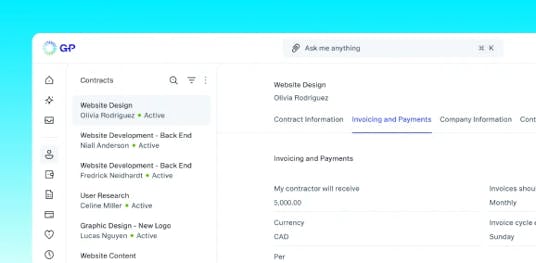
Alternativas compatíveis com plataformas freelance oferecem mais estrutura e mitigação de risco. G-P Contractor™ torna a contratação de prestadores de serviços mais rápida e fácil. Gere contratos compatíveis, automatize pagamentos e garanta a classificação do trabalhador, tudo em um único painel.
Opção 2
Quadros de empregos com foco remoto , como WeWorkRemotely, RemoteOK e LinkedIn, oferecem um grande grupo de profissionais globais que buscam ativamente funções remotas. Eles são comumente usados para obter desenvolvedores ou contratados em tempo integral.
Opção 3
Agências de recrutamento e desenvolvimento , como Uplers ou nCube, são frequentemente usadas quando as empresas precisam de equipes inteiras ou conhecimento especializado rapidamente. As agências normalmente lidam com compras, verificações e, às vezes, gerenciamento diário, o que reduz a carga de trabalho interna.
Essa opção geralmente tem um custo inicial mais alto, mas pode reduzir o tempo de contratação e fornecer suporte operacional quando a velocidade é mais importante.
Custo para contratar desenvolvedores remotos
A eficiência de custos é uma das maiores razões pelas quais as empresas contratam programadores e desenvolvedores remotos, mas a economia não é única. Eles variam de acordo com a região, função e tempo de serviço.
Por exemplo, um desenvolvedor de software sênior no Leste Europeu normalmente custa 40–50% menos do que uma função sênior comparável nos EUA, enquanto desenvolvedores na América Latina ou em partes da Ásia podem oferecer diferenciais de custo ainda maiores. Essa flexibilidade permite que você equilibre restrições orçamentárias e ainda acesse talentos de alta qualidade.
Dito isso, o salário é apenas parte da equação. O custo real do emprego também inclui benefícios estatutários, contribuições sociais do empregador, impostos, licença remunerada e requisitos de conformidade locais. Essas despesas adicionais podem adicionar 20–30% ou mais à remuneração básica, dependendo do país.
Elimine a adivinhação com G-P o Employer of Record. Nosso recurso Employer Burden Calculator oferece uma análise detalhada dos custos potenciais. Basta inserir alguns detalhes sobre onde você quer contratar e obter uma visão clara antes de fazer sua próxima mudança.
Os riscos ocultos da contratação remota: conformidade, PI e folha de pagamento

Contratar desenvolvedores remotos tem riscos legais e operacionais que muitas empresas ignoram.
Cuidado com esses três erros comuns:
1. Erro de classificação do trabalhador
Tratar um desenvolvedor como um contratado independente quando ele funciona como um funcionário — trabalhando horas fixas, reportando-se a gerentes ou usando equipamentos da empresa — pode resultar em multas, impostos retroativos e penalidades de acordo com as leis trabalhistas locais.
2. Lacunas de proteção de propriedade intelectual
As regras de propriedade de propriedade intelectual variam de acordo com o país e, em muitas jurisdições, a propriedade intelectual não é automaticamente atribuída ao empregador sem linguagem contratual específica. O não cumprimento das leis locais de PI pode colocar em risco o código proprietário, os produtos ou as inovações.
Tradicionalmente, contratar funcionários em tempo integral em um novo país exigia a criação de uma entidade local. Isso pode levar meses e requer gerenciamento contínuo e custos administrativos. Essas barreiras retardam os processos de contratação e aumentam o risco legal se a entidade não for gerenciada corretamente.
Obtenha um caminho mais claro através da complexidade. O kit de ferramentas de contratação global oferece orientação prática sobre conformidade, contratos e planejamento da força de trabalho transfronteiriça.
Etapas para integrar desenvolvedores remotos
A contratação remota bem-sucedida não para de assinar uma oferta. O processo de integração define o tom de como os novos contratados veem sua função e o futuro com sua empresa.
Etapa 1:
comece com a documentação: minuta das condições de emprego, proteções de PI e requisitos estatutários específicos do país. Com o G-P, você pode gerar contratos em conformidade local rapidamente, independentemente da localização.
Etapa 2:
configure o acesso a ferramentas essenciais como Jira, GitHub, Slack e uma VPN segura para que os desenvolvedores remotos possam contribuir desde o primeiro dia.
Etapa 3:
Estabelecer fluxos de trabalho assíncronos antecipadamente, com documentação clara, expectativas definidas e verificações regulares. Essa estrutura ajuda as equipes distribuídas a colaborarem entre fusos horários, mantendo-se produtivas e responsáveis.
Como gerenciar uma equipe de desenvolvimento remoto
Estima-se que 44% dos trabalhadores pesquisados relatam que trabalhar em uma equipe global melhorou suas oportunidades e habilidades de carreira. A prontidão operacional garante que essas oportunidades sejam reais e equitativas entre os mercados.
Os desenvolvedores remotos podem precisar de um estilo de gerenciamento e abordagem técnica adaptados. Veja como gerenciar desenvolvedores que trabalham em casa:
1. Use as ferramentas de colaboração certas
Suas ferramentas se tornam sua infraestrutura quando você não pode simplesmente caminhar até a mesa de alguém. Use videoconferências para tempo de atendimento e ferramentas de gestão de projetos para manter o trabalho visível e em movimento.
As equipes remotas funcionam melhor quando o progresso é rastreável sem verificações constantes. Ferramentas como Zoom, Trello, Jira e Slack podem ajudar, especialmente quando são combinadas com práticas claras de segurança e acesso para trabalho distribuído.
2. Aproveite os fusos horários
Uma forte equipe de desenvolvimento de software é independente e organizada. Planeje transferências para que o trabalho possa avançar 24 horas por dia. Por exemplo, um desenvolvedor envia uma mudança no final do dia, outro revisa e, em seguida, a GQ a coleta pela manhã.
Uma equipe de desenvolvimento remoto típica pode incluir desenvolvedores, QA, testadores e suporte de back-end em todas as regiões. Quando as responsabilidades são claras, as equipes distribuídas podem entregar mais rapidamente com menos gargalos.
3. Definir expectativas claras
Defina como é o sucesso, como o trabalho é priorizado e onde as decisões são tomadas. Seja claro sobre as normas de comunicação: tempos de resposta, formatos de atualização e horas de sobreposição necessárias.
Pesquisas mostram que a transparência salarial ou salarial é uma preocupação para 34% dos funcionários ao considerar acordos de trabalho transfronteiriços.
Ser aberto com as expectativas dá aos funcionários uma compreensão clara de suas funções e responsabilidades, promovendo responsabilidade e alinhamento.
4. Nutrir a conexão da equipe
O trabalho remoto pode ser isolado, especialmente entre fronteiras. Faça perguntas e crie pontos de contato suaves para se conectar com suas equipes.
Isso não é apenas uma coisa boa de se ter: 26% dos funcionários citam a dificuldade de construir relacionamentos com colegas de trabalho como uma preocupação ao trabalhar para uma empresa sediada em outro país. A comunicação consistente ajuda a evitar mal-entendidos, mantém as equipes alinhadas e fortalece a confiança ao longo do tempo.
Empresas de todos os tamanhos usam G-P o para criar equipes globais de maneira rápida e em conformidade.
G-Pprodutos de emprego global para todas as necessidades:
|
Contrate desenvolvedores em tempo integral sem configurar entidades Com o
G-P EOR
, é possível contratar desenvolvedores de software remotos em mais de 180 países em minutos, sem configurar entidades locais. |
Contrate talentos especializados para projetos |
Obtenha orientação instantânea de conformidade em 50 países
Gia
O é um agente global de RH com tecnologia de IA que responde às suas perguntas mais difíceis sobre conformidade. |
Contrate de forma rápida e em conformidade com G-P
Construir uma equipe global é mais fácil quando você tem o parceiro certo. Com o G-P como seu Employer of Record, você pode contratar, integrar e gerenciar equipes globais em qualquer lugar do mundo, sem configurar entidades locais.
Seja contratando um desenvolvedor em tempo integral ou construindo um hub de prestadores de serviços distribuídos, lidamos com contratos, folha de pagamento, benefícios, conformidade e requisitos de emprego contínuos em conformidade com a legislação local.
Contrate globalmente com confiança hoje mesmo. Reserve uma demonstração.