




الوجبات السريعة الرئيسية
- خيارات التوظيف مع تفاضلات أساسية: يمكن لأصحاب العمل العالميين دخول بولندا باستخدام مؤسسة تُدير شؤون الموظفين (EOR))، أو التسجيل المباشر بدون كيان، أو تأسيس شركة تابعة محلية، أو العمل مع متعاقدين مستقلين. يُعد اختيار الطراز المناسب أمراً بالغ الأهمية. يمكن لهيئة التفتيش العمالي الحكومية البولندية (PIP) الطعن في الترتيبات غير السليمة، مما يؤدي إلى دفعات متأخرة وغرامات قانونية.
- اقتصاد قوي ومركز شخص موهوب قوي: تتمتع بولندا باقتصاد متنامي (3.4٪ متوسط إجمالي السنوي المحلي نمو) مدعوما بقوة عاملة تعليمية عالية، متعددة اللغات، وتركز على العلوم والتكنولوجيا والهندسة والرياضيات. إنها وجهة رئيسية لتكنولوجيا المعلومات وخدمات الأعمال (BPO/SSC) والتصنيع المتقدم.
- معايير صارمة ومعايير توظيف: يتطلب القانون البولندي عقودا مكتوبة (بالبولندية أو ثنائية اللغة) قبل اليوم الأول، وتسجيل تأمين اجتماعي في زوس خلال سبعة أيام، وتصريح طبي وسلامة إلزامي قبل التوظيف (BHP). تحدد أسابيع العمل القياسية بساعات عمل 40 مع فترات راحة إلزامية، وحدود شهرية للعمل 4وأيام806وأيام 20–26 أيام إجازة مدفوعة الأجر.
بولندا هي واحدة من أسرع الاقتصادات نموًا في الاتحاد الأوروبي. لقد توسع اقتصادها بشكل مطرد، حيث بلغ متوسط معدل الناتج المحلي الإجمالي السنوي 3.4% خلال العقد الماضي.
تعتبر بولندا وجهة جذابة للاستثمار الأجنبي المباشر نظراً للاستثمارات الكبيرة المخطط لها من صناديق التعافي التابعة للاتحاد الأوروبي والقطاعات الخاصة التي تركز على التصنيع المتقدم وتكنولوجيا المعلومات وتحويل الطاقة. مجمع المواهب في بولندا يتمتع بمهارات عالية، ومتعلم جيدا (خاصة في مجالات العلوم والتكنولوجيا والهندسة والرياضيات)، ومتعدد اللغات، وهو ما يجذب الشركات العالمية التي تسعى لتوظيف في بولندا.
قبل التوسع في بولندا، ستحتاج إلى فهم العقود والضرائب والأجور والمزايا وقوانين العمل الأخرى. سيخبرك دليلنا بكل ما تحتاج لمعرفته حول توظيف الموظفين في بولندا.
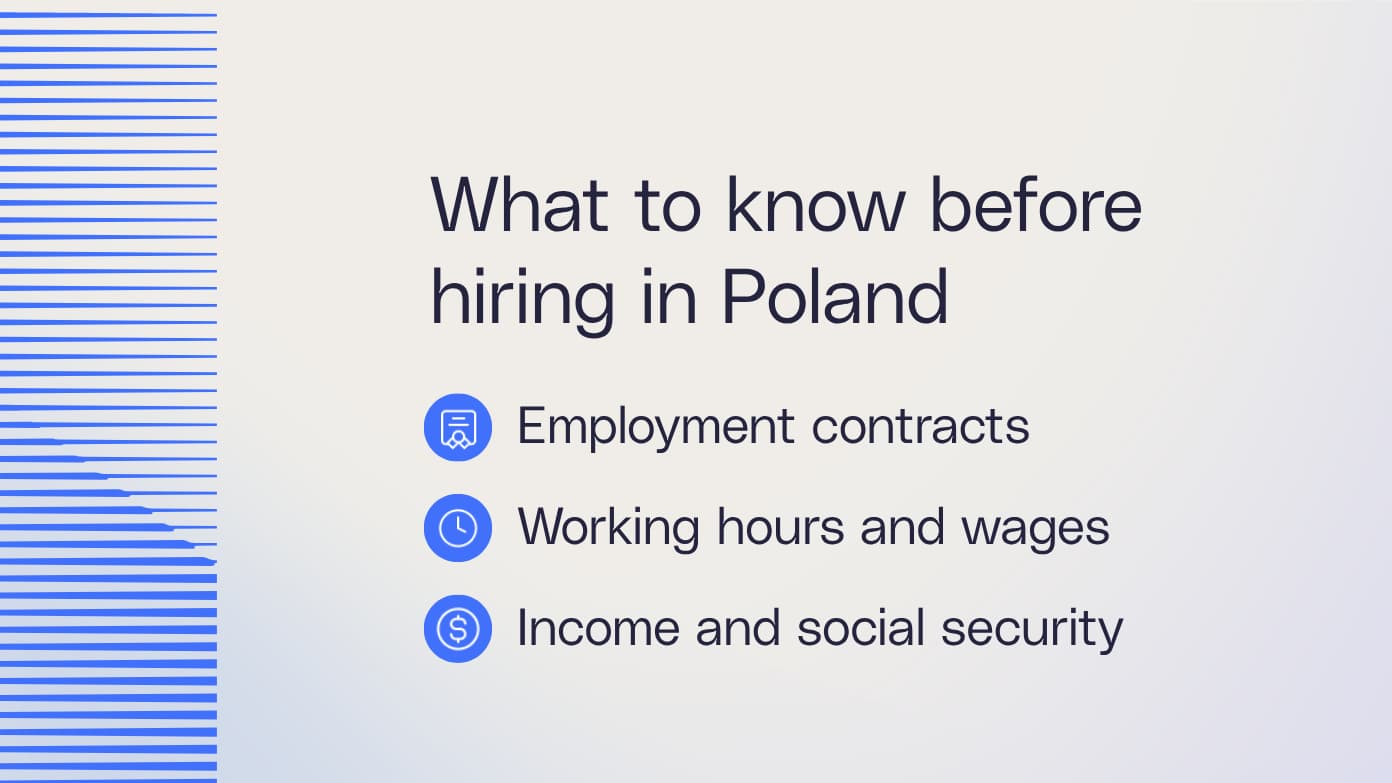
ما يجب معرفته قبل التوظيف في بولندا
إذا كنت تقوم بتوسيع أعمالك التجارية إلى بولندا لأول مرة، فهناك متطلبات قانونية مهمة يجب أن تكون على دراية بها. تؤثر هذه المعايير والقوانين على ممارسات التوظيف في بولندا وعلى العديد من جوانب علاقة صاحب العمل بالموظف، بما في ذلك التعويضات والمزايا.
G-P Gia™، يمكن لوكيل الذكاء الاصطناعي (الذكاء الاصطناعي العام) العالمي المعتمد على موارد بشرية عالمية، أن يجيب على أصعب أسئلتك عبر 50 الدول — بما في ذلك بولندا — وجميع الولايات 50 الولايات المتحدة. قلل اعتمادك على محامين خارجيين وقلل من الوقت والتكلفة بنسبة تصل إلى 95٪ مع Gia.
فيما يلي خمسة أشياء يجب معرفتها حول التوظيف في بولندا.
1. اللغات في بولندا
اللغة البولندية هي اللغة الرسمية. اللغة الإنجليزية هي اللغة غير البولندية الأكثر شيوعاً. تحتل دولة المرتبة الأولى 15-20 عالميا من حيث الكفاءة في اللغة الإنجليزية.
تعمل قطاعات العمليات التجارية الكبيرة الاستعانة بالمصادر الخارجية (BPO) ومراكز الخدمات المشتركة (SSC) في بولندا بمجموعة كبيرة من الأشخاص المؤهلين ومتعددي اللغات موهوب.
2. عقود العمل في بولندا
يجب على أصحاب العمل تقديم عقد توظيف مكتوب أو تأكيد كتابي للشروط الرئيسية قبل بدء العمل الموظف.
يجب أن يكون العقد باللغة البولندية أو مصحوباً بترجمة بولندية. في العقود متعددة اللغات،
النسخة
هي النسخة الملزمة قانونًا.يجب أن يتضمن العقد على الأقل ما يلي:
- نوع عقد توظيف (محاكمة، محدود المدة، غير محدد)
- أسماء وعناوين كل من صاحب العمل والموظف
- مدة العقد (محدود المدة أو التجربة)
- تاريخ التوقيع وتاريخ بدء العمل
- عنوان الوظيفة والوصف
- موقع (مواقع) العمل
- تفاصيل الراتب والمزايا
- وقت العمل (بدوام كامل/بدوام جزئي)
إذا لم يتم تضمين ذلك في العقد، يجب على أصحاب العمل تقديمه كتابياً في غضون سبعة أيام من تاريخ بدء عمل الموظف:
- جدول العمل اليومي والأسبوعي
- فترات الدفع وطريقة الدفع
- استحقاق الإجازة
- فترة الإشعار بفسخ العقد
- قواعد العمل الإضافي وفترات الراحة وفترات الراحة
- أي اتفاقيات جماعية قابلة للتطبيق
يجب مراجعة هذه التفاصيل مع الموظف في يومه الأول أو قبله.
3. ساعات العمل والأجور في بولندا
أسبوع العمل في بولندا 40 ساعة، موزعة على خمسة أيام. يقتصر العمل الإضافي على 150 ساعات سنويًا، ما لم يتم تحديد حد أعلى في اتفاقية جماعية أو لوائح مكان العمل أو عقد فردي. بغض النظر عن أي اتفاق، لا يمكن أن يتجاوز متوسط ساعات العمل الأسبوعية (بما في ذلك العمل الإضافي) 48 6 ساعات. يحصل الموظفون على 11 ساعات راحة متواصلة على الأقل خلال
فترة 24ساعات
و 35 ساعات راحة متواصلة على الأقل أسبوعيًا.اعتبارا من عام 2025، الحد الأدنى للأجور في بولندا هو 4زلوتي زلوتي (806 PLN) في الشهر.
4. إجازة مدفوعة الأجر في بولندا
لا يوجد في بولندا أي 14 عطلات وطنية. يحصل الموظفون
الأيام إجازة مدفوعة الأجر.يشمل حساب سنوات الخدمة جميع الوظائف السابقة (بغض النظر عن فترات الراحة أو صاحب العمل) وفترات التعليم المعتمدة (مثل حتى ثماني سنوات للتعليم العالي). الموظفون الذين لديهم أقل من 10 سنوات من الخدمة المعترف بها (بما في ذلك العمل وفترات تعليمية معينة) يحصلون على 20 أيام من إجازة سنوية مدفوعة. يحصل الموظفون الذين لديهم 10 سنوات أو أكثر من الخدمة المعتمدة على 26 أيام.
يجب على أصحاب العمل دفع ما لا يقل عن 80٪ من راتب الموظفين مقابل إجازة مرضية. تعتمد كمية أيام المرض الممولة من صاحب العمل على عمر الموظف:
- بالنسبة للموظفين الذين تقل أعمارهم عن 50 ، يدفع صاحب العمل ما يصل إلى 33 يومًا من إجازة مرضية لكل سنة تقويمية.
- بالنسبة للموظفين الذين تبلغ أعمارهم 50 أو أكبر، يدفع صاحب العمل لمدة تصل إلى 14 أيام.
- بعد هذه الفترات (33 أو 14 يومًا، حسب العمر)، تتولى مؤسسة التأمين الاجتماعي (ZUS) دفع أجر المرض.
5. ضريبة الدخل والتأمين الاجتماعي في بولندا
يتعين على أصحاب العمل تسجيل الموظفين لدى شركة التأمين الصحي ZUS في غضون سبعة أيام تقويمية من بدء العمل. شؤون مساهمات الضمان الاجتماعي تشمل المعاش، والعجز، والحوادث، وتأمين صحي، مع معدلات محددة لكل نوع. معدل مساهمة تأمين صحي هو 9٪ من راتب. يجب على أصحاب العمل إرسال مساهمات تأمين اجتماعي إلى شركة ZUS بحلول 15 أو 20 من الشهر التالي، حسب وضعهم القانوني.
تستخدم بولندا نظام ضريبة دخل تصاعدية. في 2025، تكون المعدلات 12% على الدخل السنوي حتى PLN 120، 000، و 32% على الدخل الذي يزيد عن هذا الحد. أصحاب العمل مسؤولون عن حساب الضرائب المقتطعة، وتحويل ضريبة دخل شخصي (PIT).
يجب على أصحاب العمل خصم وتحويل مساهمات كل من الموظفين وصاحب العمل تأمين اجتماعي إلى ZUS شهريا. شؤون تأمين اجتماعية يغطي تأمين التقاعد، والعجز، والحوادث والمرض، بالإضافة إلى تأمين صحي.
- التأمين التقاعدي: يُقسم بالتساوي (9 76 )
- تأمين العجز: 6.5٪ يدفعها صاحب العمل، 15٪ من الموظف
- تأمين الحوادث: يدفع من قبل صاحب العمل، عادة 1.67٪ لأصحاب العمل الصغار، لكن السعر يختلف حسب المخاطر
- تأمين المرض: يدفعه الموظف (2.45٪)
- التأمين الصحي: يدفع من قبل الموظف (9٪)
في المجمل، تبلغ مساهمات صاحب العمل (بما في ذلك جميع الأموال) حوالي 18–20٪، ومساهمات الموظف هي 13–14٪.
يتعين 2 على أصحاب العمل المساهمة بنسبة450.1% من إجمالي أجور الموظفين في صندوق العمل (2.3%1 00لصندوق العمل 1 45و4.5% لصندوق التضامن). يساهم أصحاب العمل أيضًا 0 1% في صندوق المزايا المضمونة للموظفين.
يتم تمويل الرعاية الصحية من خلال مساهمات التأمين الصحي الإلزامية. لا تحتاج إلى تقديم تأمين صحي خاص، ولكن التأمين الصحي التكميلي يعد منفعة شائعة.
نماذج التوظيف للشركات العالمية التي تتطلع إلى التوظيف في بولندا
أفضل نموذج عند اتخاذ قرار توظيف موظفين في بولندا يعتمد على أهدافك التجارية العامة.
| نموذج | الأفضل لـ | النقاط الرئيسية | المخاطر الرئيسية |
|---|---|---|---|
| التسجيل المباشر لصاحب العمل | توظيف موظفين في بولندا بدون كيان محلي، حيثما كان ذلك ممكناً. | إدارة الرواتب البولندية، واستقطاع ضريبة الدخل الشخصي، ودفع ضريبة التأمين الاجتماعي، وتسجيل الموظفين في غضون 7 أيام، والاحتفاظ بالسجلات. | أخطاء في الرواتب، تأخر تسجيل ZUS، تعرض ضريبي، عدم الامتثال لقانون العمل، تطبيق PIP/ZUS. |
| مؤسسة تُدير شؤون الموظفين | دخول سريع السوق. | مؤسسة تُدير شؤون الموظفين تتولى العقود والرواتب وZUS والضرائب المقتطعة وقانون العمل أمتثال. | خطر استئجار العمالة غير القانونية إذا كان العميل يوجه العمال مثل صاحب العمل الحقيقي أو إذا كان الترتيب يفتقر إلى هيكل قانوني. |
| شركة تابعة أو فرع | عمليات طويلة الأجل. | يتعامل مع التوظيف، الرواتب، تسجيل ZUS، وقانون العمل، الضرائب، المحاسبة، والامتثال المؤسسي. | عبء إعداد أعلى، وامتثال الشركات، والتعرض الضريبي، ومسؤولية الشركة الأم، وإخفاقات في الحوكمة المحلية. |
| المقاولون المستقلون | العمل القائم على المشاريع مع التمتع بالاستقلالية. | حافظ على استقلالية المقاول. تجنب أساليب التحكم التي تشبه أساليب التوظيف، والجداول الزمنية الثابتة، والتكامل. | إعادة التصنيف بموجب المادة 22 قانون العمل تخاطر بتطبيق نظام PIP/ZUS، والضرائب الرجعية، والاستحقاقات، والغرامات. |
أفضل مراكز التوظيف في بولندا
تشتهر بعض المدن في بولندا بصناعات معينة. إن معرفة ما تقدمه كل مدينة يسمح لك بتركيز جهودك عند توظيف الموظفين في بولندا وملء الشواغر بشكل أسرع.
أهم مراكز موهوب الشخصية في بولندا هي:
- وارسو هي عاصمة بولندا وأكبر مدنها. وارسو هي المركز الأهم للأعمال والتمويل والتقنية في دولة. وهي تضم شركات متعددة الجنسيات ومؤسسات مالية وشركات تقنية.
- تشتهر مدينة كراكوف بقطاع تكنولوجيا المعلومات وخدمات الأعمال (BPO/SSC) وبيئة الشركات الناشئة. تعتبر كراكوف وجهة رئيسية عندما تختار الشركات العالمية التوظيف في بولندا، وخاصة في مجالات التكنولوجيا والتمويل والخدمات المشتركة.
- تُعد فروتسواف مركزًا لتكنولوجيا المعلومات والبحث والتطوير والتصنيع وخدمات الأعمال، مع وجود قوي لشركات التكنولوجيا العالمية وشركات الهندسة.
- تشتهر مدينة بوزنان بقطاعات التصنيع والخدمات اللوجستية وخدمات الأعمال، وهي وجهة مفضلة لأصحاب العمل العالميين.
- تمتلك غدانسك مجموعة مواهب ماهرة في مجالات تكنولوجيا المعلومات والشحن والخدمات اللوجستية والتمويل. تضم المدينة عدداً متزايداً من الشركات الناشئة في مجال التكنولوجيا ومراكز الأعمال العالمية.
الصناعات الرئيسية في بولندا
فهم الصناعات الرئيسية في بولندا يسمح لك بتحديد معايير الرواتب والمزايا عند التوظيف في بولندا. يمكنك استخدام هذه الرؤية لاتخاذ قرارات ذكية حول أماكن الاستثمار وتنمية قوة عاملة لديك.
تشمل الصناعات الرئيسية في بولندا:
- الاستعانة بعمليات الأعمال بالمصادر الخارجية (BPO) والخدمات المشتركة (SSC): هذا أحد أسرع القطاعات نموا وأكثر القطاعات حداثة في بولندا. تقوم الشركات العالمية في مراكزها المشتركة للتمويل والمحاسبة وموارد بشرية والبحث والتطوير في مدن مثل كراكوف ووارسو وفروتسواف بسبب قوة عاملة عالية المهارات، متعددة اللغات، ومتعلمة.
- تكنولوجيا المعلومات والخدمات الرقمية: تُعد بولندا مركزًا مهمًا لتكنولوجيا المعلومات، حيث تضم مجموعة كبيرة من مطوري البرامج والمهندسين والمتخصصين في تكنولوجيا المعلومات. تتزايد أعداد الشركات العالمية التي تنشئ مراكز البحث والتطوير والتكنولوجيا الرقمية هنا. كما تستثمر الحكومة بشكل كبير في التقنيات الرقمية والذكاء الاصطناعي.
- السيارات: هذا أحد أكبر القطاعات الصناعية في بولندا. وهي تركز على إنتاج الأجزاء والمكونات (تزويد المصنعين العالميين)، بالإضافة إلى المركبات التجارية الخفيفة. كما تمتلك بولندا أكبر مصنع لبطاريات السيارات الكهربائية في أوروبا.
- الأجهزة الإلكترونية والأجهزة المنزلية: تُعد بولندا منتجًا أوروبيًا رائدًا للأجهزة الإلكترونية والأجهزة المنزلية. تتواجد هناك مراكز إنتاج وبحث وتطوير لشركات عالمية كبرى.
- التصنيع المتقدم: يشمل ذلك مجالات مثل الطيران والدفاع، وخاصة في تجمعات مثل وادي الطيران في الجنوب الشرقي.
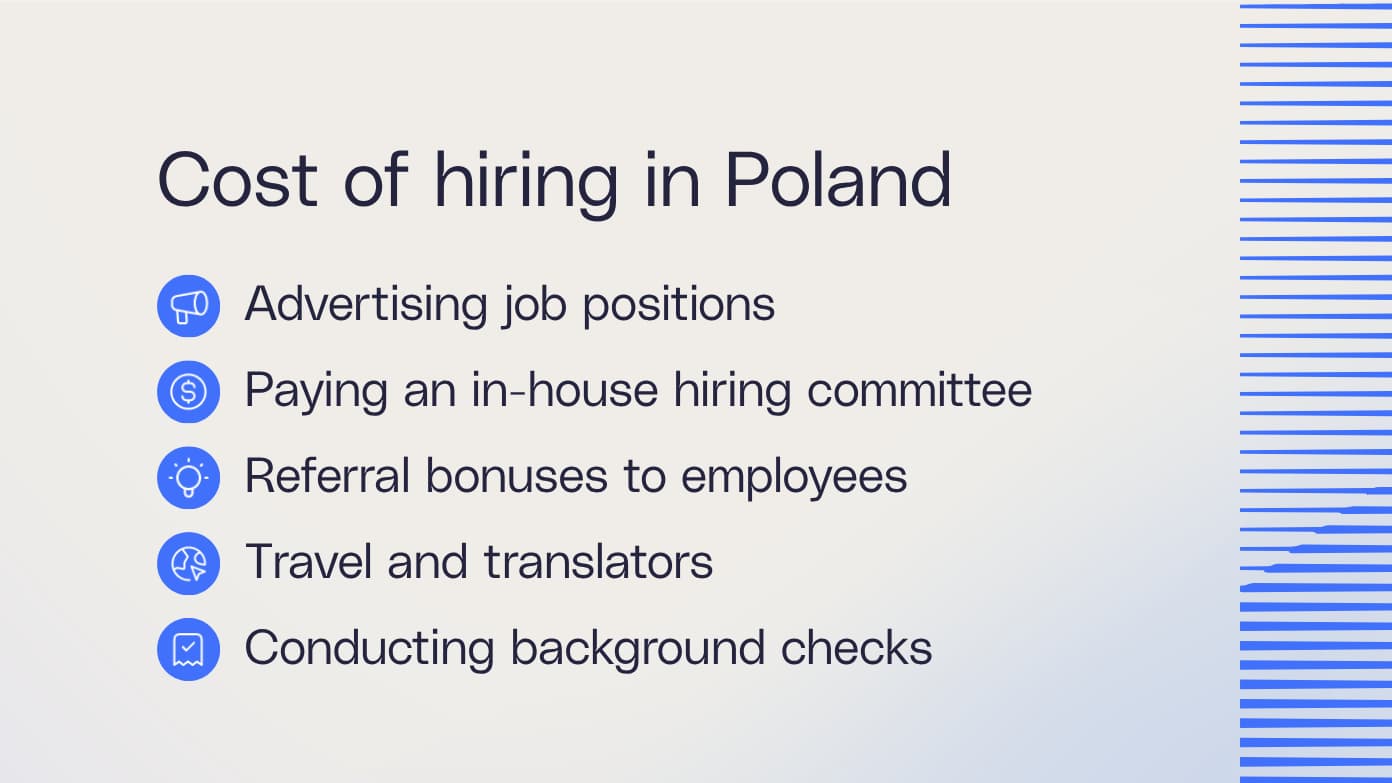
تكلفة توظيف موظفين في بولندا
سواء كنت توظف عضو فريق واحد أو توسع قسما كاملا، فإن النفقات لا مفر منها عند توظيف الموظفين في بولندا. ضع ميزانية لما يلي:
- إعداد الكيان (إلا إذا كنت تتعاون مع صاحب عمل مسجل)
- إعلانات الوظائف
- تكاليف العمل لمراجعة مُقدِّم الطلب
- كشف رواتب
- الضرائب
- الرواتب
- الفوائد
- المكافآت
- البدلات
- التأمين
- السفر
- المترجم (إن وجد)
وفقا لمصادر G-P الموثوقة من Gia، فإن معدل عبء صاحب العمل في بولندا، والذي يشمل التكاليف الناتجة عن الرواتب، هو حوالي 20-21٪.
ما الذي تحتاجه الشركة لتوظيف موظفين في بولندا؟
تأكد من تغطية هذه الأساسيات قبل توسيع فريقك في بولندا:
- قم بتسجيل النشاط التجاري، وعادةً ما يكون ذلك باستخدام نظام KRS للشركات أو نظام CEIDG لأصحاب الأعمال الفردية.
- تأكد من أرقام REGON و NIP.
- سجل كدافع مساهمات في نظام التأمين الصحي الحكومي (ZUS).
- افتح حسابًا مصرفيًا بولنديًا لدفع الرواتب والضرائب والتأمين الاجتماعي (ZUS).
- سجل كل موظف في ZUS خلال سبعة أيام من تاريخ بدء عمله.
- تقديم عقد توظيف مكتوب قبل بدء العمل.
- أكمل الالتزامات المطلوبة من شركة BHP، بما في ذلك التدريب الأولي على السلامة قبل بدء العمل.
- قم بإعداد ممتثل الرواتب، وPIT الضرائب المقتطعة، ومساهمات ZUS، وسجلات الموظفين المستخدمين.
- تسجيل ملف ضريبة قيمة مضافة.
قد يستغرق إنشاء شركة تابعة في بولندا أسابيع أو شهور. استخدم G-P مؤسسة تُدير شؤون الموظفين لتوظيف الموظفين في بولندا دون إنشاء كيان خاص بك. ابن فريقك في بولندا بتكلفة أقل ومع راحة بال لأنك تقوم بذلك بشكل متوافق.
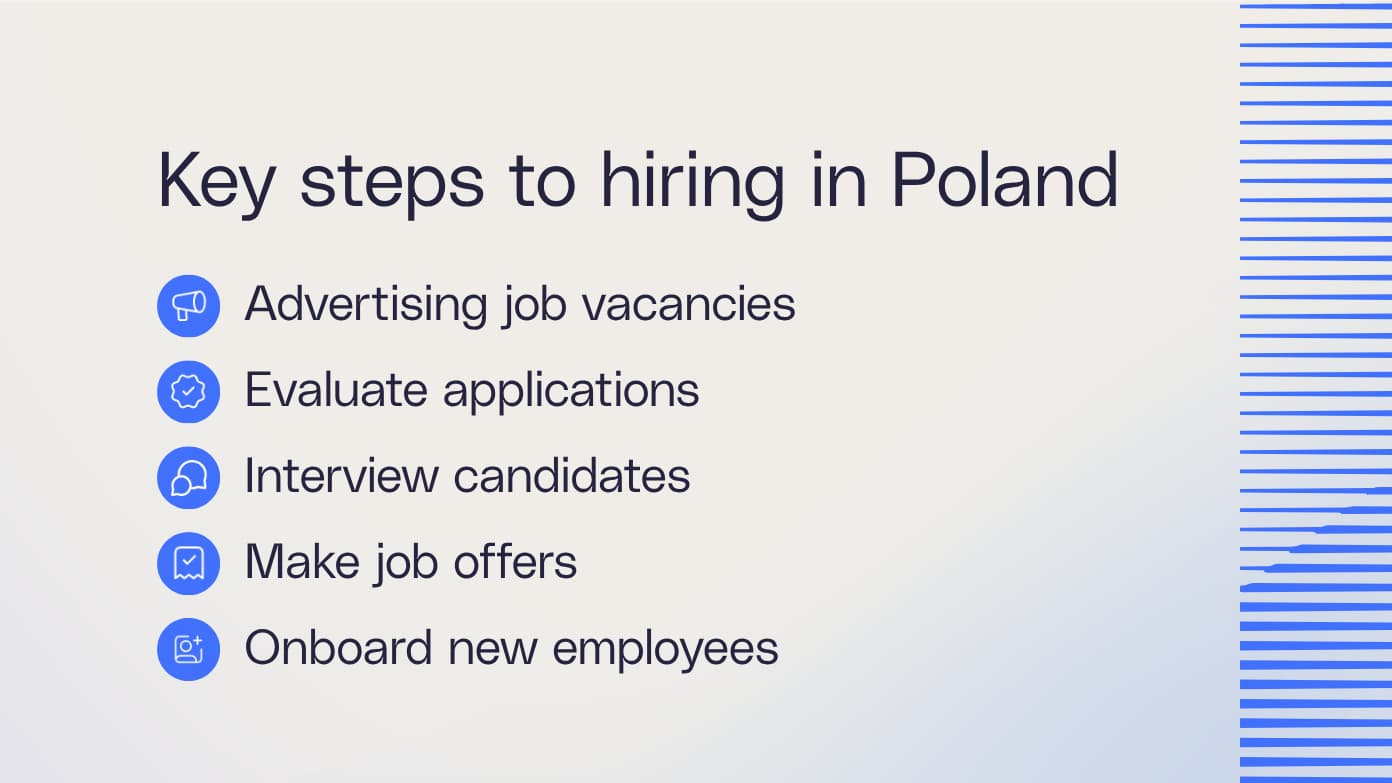
خطوات التوظيف في بولندا
عملية التوظيف في بولندا مشابهة لتلك التي من المحتمل أن تكون على دراية بها في دولتك الخاصة. تتبع عملية التوظيف خمس خطوات أساسية: الإعلان عن الوظيفة، تقييم الطلبات، إجراء مقابلات مع المرشحين، إرسال عروض العمل، وضم الموظفين الجدد.
1. أعلن عن الوظائف الشاغرة في بولندا
قم بإنشاء وصف وظيفي مفصل وحدد الدور بناءً على المسؤوليات والمؤهلات. تأكد من وصف الوظيفة متوافق مع قوانين مكافحة التمييز وقوانين العمل البولندية
تعد مواقع Pracuj وPraca وOLX Praca وLinkedIn وGoldenLine من مواقع التوظيف الشهيرة في بولندا.
2. قم بتقييم الطلبات لمرشحيك البولنديين
جمع التطبيقات ومراجعة السير الذاتية. فحص المرشحين بناءً على مؤهلاتهم وخبراتهم ومدى ملاءمتهم للدور. تحتاج إلى موافقة صريحة لإجراء فحوصات خلفية أو الاتصال بأصحاب العمل السابقين أو مراجعة وسائل التواصل الاجتماعي الخاصة بالمحترف.
3. مقابلة المرشحين في بولندا
قم بإجراء مقابلات مع المرشحين الذين تم اختيارهم ضمن قائمتك المختصرة. يمكنك إجراء هذه المقابلات شخصيًا أو عبر الإنترنت. استخدم أسئلة مقابلة منظمة وغير تمييزية. يمكنGia مساعدتك في إنشاء أسئلة تتبع قوانين مكافحة التمييز في بولندا، حتى تتمكن من العثور على الأنسب للدور مع الالتزام باللوائح المحلية.
4. تقديم عروض عمل في بولندا
تواصل مع المُرشح الذي اخترته لتقدم لهم وظيفة مع شركتك. قم بإعداد عقد توظيف باللغة البولندية. قم بتضمين جميع الشروط المطلوبة قانونًا، مثل المسمى الوظيفي والراتب وساعات العمل وتاريخ البدء وما إلى ذلك. يتعين على كلا الطرفين توقيع العقد قبل أن يبدأ الموظف العمل.
5. تعيين موظفين جدد في بولندا
الآن يمكنك توظيف موظفين جدد. سجل موظفك المحتمل لدى زوس خلال سبعة أيام من بدء العمل. نظم تدريبا إلزاميا في الصحة والسلامة المهنية (BHP) وحدد موعدا لفحص طبي قبل التوظيف. جمع والتحقق من المستندات اللازمة مثل بطاقات الهوية والشهادات وتصاريح العمل.
إذا كنت تعمل مع مؤسسة تُدير شؤون الموظفين مثل G-P™، فلن تضطر للقلق بشأن العبء الإداري لضم الموظفين. سنبسط العملية، حتى تتمكن من التركيز على تدريب موظفك محتمل ودمجهم في ثقافة شركتك.
توظيف المقاولين في بولندا
يمكن أن يكون العمل مع المقاولين المستقلين في بولندا وسيلة فعالة من حيث التكلفة لاختبار السوق وبناء حضور، دون الالتزام بتوظيف موظفين بدوام كامل. يفهم المقاولون المقيمون في بولندا سلوك المستهلك المحلي والقواعد والممارسات التجارية. سيكونون مستعدين لبدء العمل بسرعة باستخدام معداتهم الخاصة وعمليات العمل المعمول بها.
يتيح لك توظيف المقاولين تعديل قوة العمل لديك بسهولة بناءً على احتياجات عملك، دون تعقيدات وتكاليف التوظيف.
قبل إبرام أي اتفاقية مع مقاول مستقل في بولندا، ضع في اعتبارك ما يلي:
1. الموظفون مقابل المقاولين المستقلين في بولندا
من المهم فهم الفرق بين الموظفين والمقاولين المستقلين. في بولندا، يعاد تصنيف المقاول قانونيا كموظف إذا قام بعمل:
- تحت الإشراف أو الإشراف المباشر من الشركة
- في وقت ومكان محددين تحدده الشركة
- مقابل أجر منتظم
يقدم المقاولون المستقلون الخدمات. على عكس الموظفين، يقوم المقاولون بتحديد جداولهم الزمنية، ويستخدمون معداتهم الخاصة، ويعملون على مشاريع محددة بدلاً من أن يكون لهم دور مستمر.
2. عقوبات سوء التصنيف في بولندا
تصنيف شخص كمقاول عندما لا يكون كذلك قد يؤدي إلى جزاءات خطيرة. إذا حدث سوء تصنيف ، سيتعين عليك إلى:
- ادفع جميع المساهمات المجتمعية المستحقة، بالإضافة إلى الفوائد القانونية.
- يتحمل مسؤولية دفع ضرائب الدخل المتأخرة غير المدفوعة.
- توفير مزايا موظف متراكمة للعامل (مثل إجازة مدفوعة الأجر، أجر العمل الإضافي) بأثر رجعي.
- دفع غرامات إدارية تتراوح من 0 1 إلى0003 زلوتي بولندي30 000 لكل مخالفة.
3. كيفية الدفع للمقاولين في بولندا
تقوم شركة G-P Contractor™ بإزالة العملية الفوضوية والمستهلكة للوقت المتمثل في توظيف ودفع رواتب المقاولين الدوليين. يمكنك إنشاء وإصدار العقود ودفع رواتب المقاولين ببضع نقرات فقط، مع ضمان عملية ممتثل.
وظّف موظفين ومتعاقدين في بولندا مع G-P
تدعم منتجاتنا التي تعمل بنظام SaaS والذكاء الاصطناعي (AI) - مؤسسة تُدير شؤون الموظفين والمقاولين و Gia - الشركات أثناء قيامها ببناء الفرق العالمية وإدارتها.
تعد G-P الرائدة المعترف بها في مجال التوظيف العالمي مع أكثر من عقد من الخبرة، وأكبر فريق من خبراء موارد بشرية وقانونية وخبراء أمتثال، وقاعدة معرفية عالمية مملوكة للوظائف.
سهّل عملية التوظيف في بولندا مع G-P. تواصل معنا أو احجز عرضًا تجريبيًا اليوم.
الأسئلة الشائعة (FAQs)
ما هي المتطلبات القانونية الرئيسية لتوظيف الموظفين في بولندا؟
عليك تسجيل عملك، والحصول على رقم تعريف ضريبي (NIP)، والتسجيل لدى ZUS، وصياغة عقود عمل ممتة باللغة البولندية. يجب تسجيل كل موظف جديد لدى شركة التأمين الصحي ZUS في غضون سبعة أيام من بدء العمل.
ما الذي يجب أن يتضمنه عقد التوظيف في بولندا؟
يجب أن يحدد العقد نوع العقد، وتفاصيل الأطراف، والمسمى الوظيفي، ومكان العمل، والراتب، وساعات العمل، وتاريخ البدء، والشروط الأخرى. يجب تقديم شروط العمل الإضافية كتابيًا في غضون سبعة أيام إذا لم يتم تضمينها في العقد.
ما هو اختبار الكلمة القياسي في بولندا؟
يمكن أن يصل اختبار المدة إلى ثلاثة أشهر. يمكن تطبيق قواعد محددة اعتمادًا على نوع ومدة العقد اللاحق.
ما هي ساعات العمل القياسية وقواعد العمل الإضافي في بولندا؟
يبلغ أسبوع العمل القياسي 40 ساعة (ثماني ساعات في اليوم، خمسة أيام في الأسبوع). يتم تحديد الوقت الإضافي بـ 150 ساعة في السنة ما لم يتم تعيين حد أعلى بموجب اتفاقية جماعية. لا يمكن أن يتجاوز متوسط ساعات العمل الأسبوعية (بما في ذلك العمل الإضافي) 48 ساعة.
ما هي المساهمات الرئيسية لصاحب عمل التأمين الاجتماعي في بولندا؟
يجب عليك المساهمة في التقاعد والعجز والتأمين ضد الحوادث وصندوق العمل وصندوق التضامن وصندوق المزايا المضمونة للموظفين. يبلغ إجمالي عبء صاحب العمل حوالي 20-21% من الراتب.