





Key takeaways:
- Global payroll management helps businesses pay international employees properly while following local laws, labor, and tax requirements.
- International payroll management becomes more complex as companies expand into multiple countries, making compliance important.
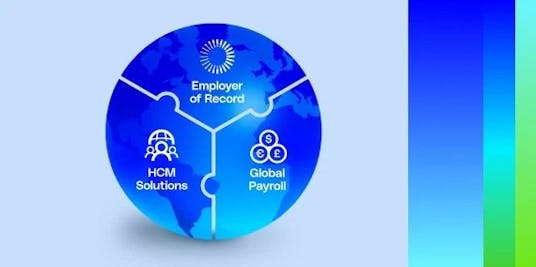
- Global payroll alternatives include hiring an employer of record (EOR), which can hire employees and manage payroll on your behalf, especially in countries where you don’t have a legal entity.
- Choosing what works for your company depends on your workforce size, where you're expanding, and whether setting up an entity in each country is a necessity.
Working through international tax laws, currencies, and labor rules can feel like a maze. Yet, no matter how complex payroll becomes, employees expect to be paid accurately, on time, and in compliance with local laws.
Managing international payroll calls for a good tech stack as well as compliance expertise. If you're expanding your business, a global payroll strategy can help you manage international employees with confidence.
What is global payroll?
Global payroll is the process of paying employees across multiple countries and currencies. It involves managing salary, taxes, benefits, and compliance with each country's labor laws.
What are global payroll management solutions?
Global payroll management solutions are the tools and services that help businesses stay compliant and consistent as they run payroll. They simplify international payroll by centralizing key processes while helping companies keep up with changing tax codes, social contributions, and employment regulations. A global payroll system needs to:
- Reduce manual work: Instead of managing payroll separately for every location, global payroll management solutions can centralize payroll tasks so that your HR and finance teams oversee salaries from a centralized system.
- Mitigate errors: Multi-country payroll solutions include automated payroll tasks, localized payment methods, and currency conversions to reduce errors. This makes sure that all employees (no matter where they’re based) are paid accurately, in the right currency, and on time.
- Protect your company from risk: A global payroll management solution helps you stay compliant while delivering a better employee experience. It integrates your existing HR and finance systems, so that data is centralized and flows between onboarding, timekeeping, payroll runs, and reporting.
- Provide visibility: With a centralized and single dashboard, you can track and manage each payroll cycle, monitor status in real time, and make sure employees get the correct pay on time, across different countries.
The result is a more efficient and reliable international payroll management process that is transparent, more accurate, and compliant — wherever your team is.
Global payroll vs. local payroll
A well-rounded global payroll system scales with your business, centralizes control, and adapts to new markets. Global paychecks involves:
- Understanding varying labor laws and tax requirements
- Giving location-specific benefits and entitlements
- Converting wages across currencies and exchange rates
- Processing payments through local banks and systems
- Maintaining data security and compliance in each region
Since it's limited to one region, local payroll involves:
- Following national labor laws and tax rules
- Managing a single currency and benefits structure
- Working with local payroll vendors or technology
- Meeting local deadlines and reporting formats
- Handling compliance on a country-by-country basis
What are the top challenges of global payroll?
Managing payroll across global markets is complex. Regulations change fast, and errors are costly. With finance, HR, and legal stakeholders involved, clarity is nonnegotiable. Here are the top five payroll challenges in global hiring, and how the right partner can solve them.
1. Compliance complexity
Each region has different rules, making it difficult to follow tax laws and local requirements. Without in-country expertise, managing contribution rates, overtime policies, and minimum wage laws is tricky.
A global employment platform with built in legal support helps make sure you meet evolving requirements without added internal burden.
2. Employee classification
Classifying contractors as employees or vice versa can trigger audits, fines, and reputational risk. Compliance documents won’t protect your operations from penalties if your work arrangements contradict what's on paper.
Contractors use invoicing, and employees are on payroll, so you need to find a provider that covers both. Working with a smart EOR allows you to adjust worker classification by role and country — all in one place.
3. Managing benefits across markets
Sick leave, pension requirements, maternity leave, and health insurance vary from country to country.
In France, a percentage of employee income is taxed to fund a gratuity pension program. Calculation missteps can damage trust, delay payroll, or cause legal exposure. Finance, HR, and legal teams need a unified view to stay connected.
The right global employment platform helps you offer compliant, competitive benefits globally, without building separate systems for each country.
4. Timely, accurate payments
Global teams need payments in multiple currencies and countries. Fluctuating exchange rates and transfer delays impact timing and accuracy. Some banks charge extra fees. Late or incorrect pay damages retention and compliance. Errors in exchange rates, time zones, or currencies can snowball into larger financial risks.
Use a global employment platform to automate payroll across regions. Make ssure local currency payments are timely, accurate, and scalable, backed by in-country support and real-time compliance checks.
5. Data security and privacy
Because global payroll involves collecting sensitive data, such as bank details, national IDs, compensation, and tax documents, protecting this payroll data is important. With cross-border teams, you're subject to multiple privacy laws, including the EU's General Data Protection Regulation (GDPR), the Personal Data Protection Act (PDPA) in Singapore, and the German Federal Data Protection Act. Many companies lack the in-house legal resources to manage these regulations.
Strong global payroll management solutions encrypt payroll data whether it’s being sent or stored, use role-based access controls and least-privilege permissions, keep secure audit trails for payroll runs, and follow local requirements for data retention and deletion. These solutions help companies prepare for audits, manage compliance across multiple countries or jurisdictions, and reduce security risks.
Choose a reliable global employment platform that follows frameworks such as Systems and Organization Controls 2 (SOC 2) and is ISO 27001-certified. You want to prioritize enterprise-grade security, multifactor authentication, and single sign-on to protect your people and data.
How to implement and improve international payroll processing
Global payroll isn’t just an HR exercise. It requires coordinated effort across legal, compliance, finance, IT, and leadership teams.
Here's an overview of how to streamline international payroll processing:
- Map legal and tax requirements per country.
- Set up your tech stack.
- Draft global-local payroll policies.
- Set up payroll funding and payment channels.
- Test your payroll system in a few pilot markets.
- Roll it out globally.
- Review the system and adjust as needed.
You can skip these requirements with a global employment platform. Pay your teams anywhere, free up internal resources, and lower your risk while getting real-time insights, transparency, and consistency.
1. Centralize your global payroll infrastructure
To hire and pay global employees, you need a legal foundation. There are three main options:
- Internal payroll management: Internal payroll management refers to in-house processing. It involves in-depth knowledge of local laws and taxes, which can create liabilities. It means you need a registered business in each country. This gives you full control over payroll, contracts, and compliance. The process is slow and complex, needing tax registration, local banking, and legal counsel.
- Local payroll processing company: A payroll processing company is a third-party company that manages the mechanics of payroll, such as calculations, disbursement, and reporting. It reduces the operational load but needs your company to have legal entities in each country. You’re liable for compliance, taxes, and following labor laws. Support is limited beyond payroll processing, especially for hiring and onboarding.
- Employer of record: A global EOR acts as the legal employer on your behalf. You keep control of employees' daily work, while the EOR manages contracts, taxes, benefits, and payroll in full compliance with local laws. You don't need to set up an entity with an EOR. You get fast global hiring, full legal compliance, and integrated HR, payroll, and benefits management. This option delivers unmatched speed, simplicity, and peace of mind. Combined with AI-powered tools, it supports your business to scale faster and smarter.
2. Prioritize compliance
Every country has rules governing taxes, social contributions, holiday pay, notice periods, and more. Failure to follow them can lead to audits, fines, or blocked operations. Start by understanding local labor laws and identifying expected deductions, filing deadlines, and payment frequencies. Make sure that all contracts follow these regulations, and track changes across all locations.
It's important to track:
- Global labor expenses by region
- Compensation, equity, and anomalies
A global employment platform helps you stay compliant with payroll regulations anywhere in the world. It automates payroll tasks and reduces the risk of manual errors. A global employment platform monitors local compliance on your behalf, making sure everything aligns with current laws.
3. Streamline payments and currency with precision
International payroll involves more than accurate currency conversion. Effective international payroll management depends on reliable multi-currency payments, predictable exchange rates, and payment methods that work in each country.
Delays frustrate employees, create tax issues, and reduce trust. Working with a provider that supports multi-country payroll solutions makes sure:
- currency conversion will be automatic
- funds will be disbursed using localized payment methods, such as local bank transfers
- employees will be paid on time.
Partner with a provider that locks exchange rates in real time or uses a defined-rate window. This helps protect you against market fluctuations and surprise expenses that can occur between payroll processing and payment. Strong global payroll management platforms generate clear conversion logs and payout receipts, making it easier to reconcile payroll, support tax and compliance reporting, and stay transparent with your finance teams and employees.
With the right global payroll solution, multi-currency payments become consistent, accurate, and auditable. The result is fewer payment errors, reduced surprise fees, stronger compliance, and greater employee trust across every location.
4. Use technology to standardize and scale
Manual processes lead to delays, duplicate work, and errors. Look for a provider that supports multiple currencies and global locations. A strong global employment platform lets you onboard, pay, and manage employees from a single dashboard. It supports real-time reporting, so you’ve visibility into labor expenses across markets. This supports better budgeting, forecasting, and planning.
Define consistent frameworks for each region and establish:
- Payroll frequency
- Payment methods
- Payslip formats and transparency
- Mandatory deductions
5. Ensure data security and confidentiality
Payroll data includes national IDs, bank accounts, and compensation details that need to be secured, encrypted, and protected. Follow GDPR or other applicable frameworks to stay compliant, limit access to authorized team members, and store information in secure, certified systems with role-based permissions. Train internal teams on handling data and access policies, and remember every click and upload matters.
6. Align payroll with the employee experience
Payroll is part of your employer brand. Timely, accurate pay builds confidence and long-term employee loyalty. Give employees access to their pay data and allow them to view payslips, tax forms, and benefits in one place. Offer support in their preferred language and time zone.
More ways to connectpayroll with the employee experience include:
- Clearly communicating how pay is calculated
- Explaining regional payroll differences in advance
- Offering region-specific benefits
- Giving early notification of payroll adjustments, bonuses, or delays
- Letting employees update bank information, view documents, or track benefits through self-service workflows
- Offering flexible compensation options, such as cash bonuses or a wellness allowance
7. Keep improving and adapting
As your company changes, so do your needs. Flexibility and communication are important to building trust with employees and improving your operations. Add new locations, roles, and benefits while carrying out regular audits to find potential errors and gaps. Measure the system's success by payroll accuracy, cycle time, and employee satisfaction. Set goals for continuous improvement, and keep feedback loops open with your finance and HR teams to refine the payroll strategy.
How to ensure global payroll processing complies with local regulations
Compliance looks different in every country, and it changes often. To stay ahead, focus on structure, expertise, and precision at every step:
- Work with in-country experts who understand local tax codes, labor laws, and benefits.
- Use a platform that tracks regulatory changes and updates workflows automatically to reflect new requirements.
- Set up audit trails for every payroll run, including filing, payment confirmations, and approvals.
- Classify workers correctly from the start to reduce penalties, back pay, and legal exposure.
- Store and streamline data according to local privacy laws, including GDPR and similar frameworks in other regions.
- Standardize global processes while allowing for local variations in pay cycles, deductions, and reporting.
- Document every employment term in locally compliant contracts, reviewed by regional legal advisors.
- Schedule regular compliance reviews to catch gaps, reduce risk, and keep up with evolving laws.
An AI-powered global HR agent, such as G-P Gia™, can answer your toughest compliance questions across 50 countries and 50 U.S. states. Use Gia to get trusted guidance across multiple jurisdictions and navigate complex legal landscapes with ease. Gia's Verified Sources make sure you get accurate information regarding regulatory changes impacting benefits, pay, and deductions.
What is a global payroll provider, and how can they help?
A global payroll provider manages payroll processing for businesses with teams in multiple countries. It makes sure employees and contractors are paid accurately, on time, and in full compliance with their local laws. Instead of juggling local payroll providers in each country, you can use one global employment platform to centralize payroll operations.
Say you hire developers in Brazil, designers in Germany, and a sales team in Singapore. A global employment platform can streamline payroll, calculate taxes, process payments, and manage filings for each location. Global employment platforms look after:
- Statutory benefits
- Fringe benefits
- Currency conversion
- Data security
This support helps lessen legal risk, reduce administrative overhead, and improve employee experience globally. Whether you're entering a new market or scaling a remote team, a global payroll provider gives you control without the complexity.
Should you work with a global payroll partner?
Working with a global payroll provider is a smart choice, especially for fast-growing businesses in industries such as tech, e-commerce, professional services, and manufacturing. Startups and mid-sized businesses can benefit from this model to enter new markets quickly and legally.
A software company hiring developers in Poland, support teams in South Africa, and marketers in Spain can manage payroll through one global partner instead of managing partnerships in each region. A global payroll provider saves time, reduces expenses, and improves accuracy. It helps keep a consistent employee experience across countries.
How do you choose a global HR payroll provider?
Choosing the right provider is important. Look for a centralized global payroll management platform that supports multi-country payroll with the tools, expertise, and compliance capabilities you’ll need to run payroll consistently across every location.
A provider should offer:
- Centralized payroll workflows: A single, standardized process for payroll runs, reporting, and audit trails across multiple countries
-
Automated compliance: Continuous monitoring of local tax laws, statutory deductions, and labor requirements to reduce compliance risks
- Multi-currency payments: Automated currency conversion and localized payment methods so that employees are paid on time and in the right currency
- Real-time visibility: Dashboards and reporting that show payroll status, labor costs, timelines, and compliance across regions
-
Localized support: In-country expertise to handle country-specific payroll, employment, and tax requirements without increasing your internal administrative burden
- Secured data handling: Enterprise-grade security controls for sensitive payroll and identity information as well as transparent data handling practices
-
AI-powered insights: AI analytics and reporting that can help identify trends and improve payroll efficiency
-
Support for employees and contractors: Flexible workforce that can accommodate different worker types when necessary
Why trust us
G-P™ is the industry leader in global employment. We streamline the entire employee lifecycle, including payroll, so you can build your team anywhere. We help companies quickly and compliantly onboard, pay, and manage teams in 180+ countries.
Our global employment platform is built on deep legal expertise, powerful technology, and a global partner network. With a 96% customer satisfaction rating, we're trusted by startups, mid-sized businesses, and enterprises alike. G-P upholds compliance with these standards:
- California Consumer Privacy Act (CCPA)
- GDPR
- ISO 27001
- ISO 27001 SoA
- SOC 2
Our team of HR and legal experts monitors and applies local regulations so you don't have to. We're consistently named the #1 EOR by top industry analysts like NelsonHall, IEC, and QKS.
Streamline global payroll management with G-P
Simplify payroll for global teams with a best-in-class EOR like G-P EOR. Automate compliance, streamline pay cycles, and support all your teams, without the need to set up local entities.
G-P makes each step of the payroll management process quick and easy with our global employment products and EOR solutions. Pay your team with confidence anywhere in the world in 150+ currencies with our 99% on-time payroll solution.
Contact us to learn more.
Frequently asked questions
Do I need local entities to centralize payroll?
Not necessarily. It depends on how you choose to hire employees internationally. If you’ve local entities in each country where your business operates, you can centralize your payroll using a global payroll platform. If you don’t have a legal entity in each location, you can use an EOR.
What is the difference between payroll software and EOR?
Payroll software helps businesses generate payroll runs, reports, and tax withholdings. It streamlines your payroll administration activities.
An EOR legally employs workers on your behalf in a country or jurisdiction where you don’t have a legal entity. The EOR then handles payroll runs, employment contracts, tax withholdings, and compliance with local labor laws.
How do companies reduce compliance risk across countries?
Companies can reduce compliance risk across countries by using a centralized global payroll management approach. This makes sure your company keeps consistent payroll workflows across multiple countries and jurisdictions.
In-house vs local providers vs EOR: which payroll model fits?
The right payroll model depends on whether you have a legal entity in the countries where you’re hiring, your expansion plans, and your compliance requirements.
Choose an in-house global payroll if you’ve legal entities in each country and dedicated HR and finance teams.
Choose local payroll providers if you’ve set up entities across multiple countries but need local-specific payroll guidance and expertise.
Choose an EOR if you don’t have legal entities across multiple countries where you’re hiring or you want to expand quickly.
How do you standardize payroll processes across countries?
The most convenient way to standardize payroll processes across countries is by using a centralized global payroll management approach.
This allows companies to run their payroll across all locations through a single system.