



Key takeaways
- Strategic workforce planning aligns talent with business goals: It helps you anticipate future staffing needs, spot skills gaps, and prepare for long-term growth.
- Strategic and operational workforce planning serve different purposes: Strategic planning focuses on long-term workforce needs, while operational planning addresses immediate staffing priorities.
- Effective workforce planning requires cross-functional collaboration: HR, finance, and executive leadership need to work together to balance talent needs, workforce costs, and business objectives.
- Workforce data supports better decision-making: Metrics such as full-time equivalent, vacancy rate, cost of vacancy, and internal mobility rate help you evaluate staffing capacity and workforce performance.
Strategic workforce planning helps you anticipate future needs and identify skills gaps that stand between where your business is now and where you want it to be. It also gives HR, finance, and business leaders a shared framework for making informed hiring decisions that align with your company's broader goals.
This guide breaks down strategic workforce planning, its benefits, and the many steps involved in building an effective approach.
What is strategic workforce planning?
Strategic workforce planning is the process of assessing your current workforce and forecasting future talent needs based on your long-term goals. Organizations use it to understand gaps in staffing, skills, and capabilities to make more informed decisions about recruiting, employee development, and retention. With the right strategy and workforce planning, you can prepare your company for growth while finding the most efficient and cost-effective way to build teams.
An effective workforce plan involves more than headcount. It should account for shifting business priorities, labor market trends, workforce costs, and the types of skills your organization needs to grow. By aligning your talent strategy with broader business objectives, you can prepare for future challenges rather than reacting to staffing shortages as they arise.
Strategic vs. operational workforce planning: Key differences
Both strategic and operational workforce planning help your company manage talent, but they serve different purposes. Strategic planning focuses on your long-term workforce needs. It's about the bigger picture, looking forward several years while considering factors like succession and labor market forecasting. Meanwhile, operational planning addresses your immediate staffing priorities and day-to-day operational needs. It involves managing schedules, tactical hiring, and working within annual budgets.
Using both approaches together helps align your company's short-term hiring decisions with broader business goals.
|
Factor |
Strategic workforce planning |
Operational workforce planning |
|---|---|---|
|
Time horizon |
Long-term planning (1–5 years) |
Short-term planning (up to 12 months) |
|
Analytical focus |
Future skills, talent demand, and workforce trends |
Current vacancies, staffing levels, and schedules |
|
Governance |
Executive leadership, HR, and finance |
HR teams and operational managers |
|
Orientation |
Proactive, focused on future business needs |
Tactical, focused on immediate staffing needs |
|
Deliverables |
Workforce forecasts, succession plans, and long-term talent strategies |
Hiring schedules, staffing plans, and resource allocations |
What is an example of strategic workforce planning?
Imagine your company plans to expand into three new international markets over the next two years. To support those goals, you'll need to determine how many professionals to hire, which skills you need, and where to find the right talent.
Workforce strategy planning helps you prepare for this expansion by assessing your current workforce and identifying any gaps. For example, you might discover that your company needs additional software engineers, regional sales professionals, and managers with international experience.
With those insights, you can create a hiring timeline, develop existing team members, and estimate workforce costs before entering each market. You can also evaluate hiring models, such as direct employment, independent contractors, or an employer of record (EOR), based on your expansion goals.
Careful planning positions your company for success from day one, helping you anticipate workforce needs, reduce hiring delays, and prepare for challenges before entering new markets.
What are the major objectives of strategic workforce planning?
The primary goal of strategic workforce planning is to ensure that your company has the right talent, skills, and resources to achieve its business goals. That means looking beyond immediate staffing needs to determine how your workforce should evolve as your company grows.
An effective workforce planning strategy can follow the Seven Rights framework, which focuses on aligning talent decisions with organizational needs. It outlines seven key objectives:
- The right capabilities: Ensure your workforce has the skills, knowledge, and experience needed to support your company's long-term goals.
- The right risk management: Anticipate workforce challenges, including employee turnover, talent shortages, and succession gaps that can disrupt operations.
- The right costs: Balance salaries, benefits, recruitment expenses, and other workforce costs with your company's financial objectives.
- The right mix: Maintain the appropriate mix of roles, responsibilities, skills, and employment arrangements across your organization.
- The right size: Align workforce headcount with business demand to avoid understaffing, overstaffing, and unnecessary expenses.
- The right location: Have access to talent in the locations where your company operates or plans to expand.
- The right time: Make sure the necessary people and capabilities are available when your company needs them.
Why do you need strategic workforce planning?
Strategic workforce planning helps you make decisions that support both immediate priorities and long-term plans. By anticipating workforce needs, you can manage skills shortages, improve employee retention, and position your organization for future growth. This proactive approach supports workforce agility, helping you prepare for potential challenges and achieve a smoother, more controlled expansion.
5 benefits of strategic workforce planning
The benefits of workforce planning go beyond HR. An effective strategy supports financial planning, operational efficiency, and cross-departmental collaboration, helping you make better use of your people and resources.
1. Reach financial objectives
HR and finance teams play complementary roles in achieving your company's goals. By working together to forecast talent needs, they can make better decisions about hiring investments, resource allocation, and long-term labor costs.
This coordination helps you direct resources toward roles and capabilities that support revenue growth and improve the return on your workforce investments.
2. Solve for workforce gaps
Workforce gaps can leave critical positions unfilled, reduce productivity, and limit your ability to meet business objectives. These gaps aren't always about headcount. They can also involve missing skills, specialized expertise, or leadership capabilities.
Addressing these shortages helps you maintain business continuity, support existing teams, and prepare for changing workforce demands. It also puts your organization in a stronger position to pursue growth opportunities without being held back by talent limitations.
3. Improve employee engagement
When your team members feel supported, they are more likely to stay engaged and committed to your organization. One benefit of workforce planning is that you can anticipate employee needs and create a better workplace experience.
By accounting for factors such as manageable workloads, flexible work arrangements, competitive benefits, and career development opportunities, you can improve overall satisfaction and reduce unwanted turnover. This can help you build a more stable, productive workforce as your company grows.
4. Reduce costs
Overstaffing increases labor expenses, while understaffing can lead to higher overtime costs, lower productivity, and team burnout. Both issues can strain your budget in different ways.
Effective workforce strategy planning helps you find a better balance. You can anticipate changes in staffing demands and adjust headcount accordingly. Assessing workload and talent needs can reduce unnecessary hiring expenses, make better use of existing resources, and keep costs under control.
5. Mitigate risk
Expanding into new markets introduces several employment risks, including unfamiliar labor laws, worker classification requirements, and country-specific payroll obligations. Without the right strategy and workforce planning, you can run into challenges that lead to compliance issues, operational disruptions, and financial penalties.
A proactive workforce strategy makes it easier to assess those risks before expanding. When hiring internationally, working with G-P EOR can also help you navigate local employment requirements. As the legal employer, G-P manages employment contracts, payroll, and benefits for global professionals.
How to build a strategic workforce planning framework
Building an effective workforce plan starts with a clear understanding of your company's broader strategy. Instead of focusing solely on immediate hiring needs, you need to consider how future goals will affect your workforce.
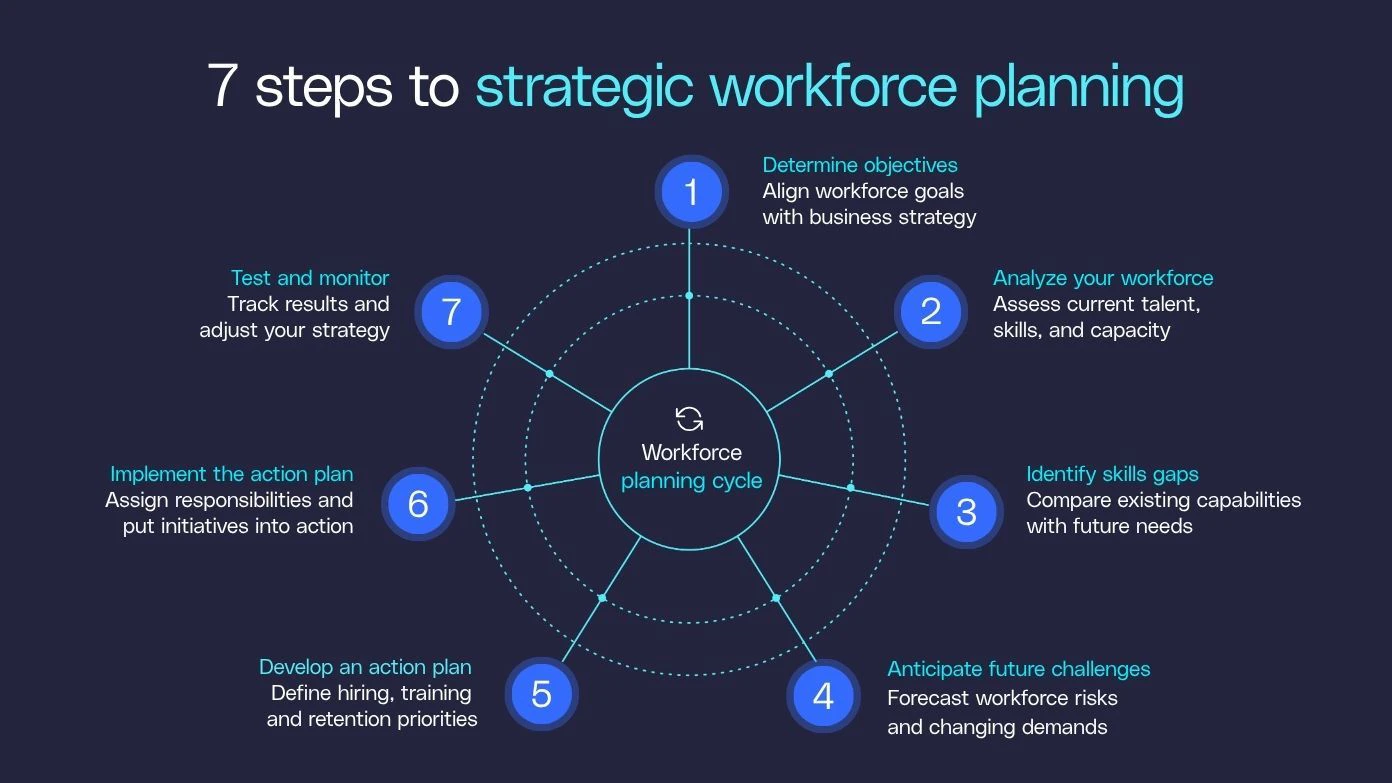
Here are seven steps to building a strategic workforce planning framework:
1. Determine objectives
Start by defining what you want to achieve over the next several years. Whether you're expanding into new international markets, launching products, or restructuring operations, your workforce objectives should support those goals.
Bring HR, finance, operations, and executive leadership into the planning process. Together, establish measurable targets, agree on priorities, and determine which workforce outcomes matter most to your organization's success.
2. Analyze your workforce
Review headcount data, employee demographics, turnover rates, and the distribution of roles across departments and locations.
Also consider how your company uses technology and different employment models, including full-time employees and independent contractors. This gives you a clearer picture of your existing resources and a baseline for measuring future workforce needs.
3. Identify skills gaps
Compare your workforce's existing skills and capabilities with those needed to achieve future business goals. A skills gap analysis can reveal shortages in technical expertise, management skills, and other competencies critical to growth.
Use these findings to determine which gaps need immediate attention and which could become more significant as your business expands. From there, you can prioritize workforce needs before developing an action plan.
4. Anticipate future challenges
Look past your immediate needs and consider external factors that could affect your workforce. Economic uncertainty, changing labor markets, emerging technologies, global workforce trends, and supply chain disruptions can influence future staffing decisions.
Use workforce forecasts and scenario planning to evaluate the potential impact on your business. Preparing for different outcomes can help you adjust priorities, allocate resources, and respond more effectively when conditions evolve.
5. Develop an action plan
Turn your workforce analysis into an actionable plan for addressing talent gaps and future staffing needs. Depending on your company's priorities, this could involve hiring new professionals, upskilling existing team members, developing clear succession plans, or engaging contractors for specialized projects.
Set realistic timelines, assign responsibilities, and establish measurable targets for each initiative. With a clear roadmap in place, your teams can turn workforce planning decisions into action.
6. Implement the action plan
Put your workforce strategy planning into motion by coordinating activities across HR, finance, and operational teams. Ensure teams have the resources, technology, and support they need to carry out your hiring, training, and workforce development initiatives.
Keep lines of communication open across departments and address obstacles as they arise. Regular progress updates can help stakeholders stay aligned while keeping implementation on track.
7. Test and monitor
Track key performance indicators, including employee retention, hiring timelines, staffing costs, and progress toward larger workforce development goals.
Compare actual results against your original targets to see what's working and what's not. Make adjustments as necessary. As business priorities and labor market conditions change, revisit your forecasts and update your plan to keep your workforce strategy aligned with business needs.
Essential quantitative formulas for workforce planners
Forecasting is an important part of workforce planning, but quantitative metrics give you a clearer picture of staffing capacity, hiring efficiency, and workforce costs.
Tracking the right metrics helps HR and finance teams evaluate performance, spot potential problems, and make more informed decisions about workforce needs.
Normalizing capacity: Full-time equivalent (FTE)
Full-time equivalent (FTE) is a measurement that converts employees' working hours into a standardized full-time workload. It can help you compare staffing capacity across teams, including those with different schedules or part-time arrangements.
FTE formula:
FTE = Total working hours ÷ Standard full-time working hours
For example, if a full-time schedule is 40 hours per week, an employee working 20 hours represents 0.5 FTE.
When comparing teams across countries, use the applicable full-time working-hour standard for each location. Working hours and employment requirements vary by jurisdiction, so one global benchmark won't always provide an accurate comparison.
Identifying hiring bottlenecks: The operational vacancy rate equation
The vacancy rate measures the percentage of authorized positions that remain unfilled. A high vacancy rate can signal hiring challenges, talent shortages, or difficulties keeping up with workforce demand.
Vacancy rate formula:
Vacancy rate = (Vacant positions ÷ Total authorized positions) × 100
For example, if your company has 100 authorized positions and 10 remain vacant, your vacancy rate is 10%.
Tracking this metric over time helps you recognize persistent staffing gaps and determine where recruitment efforts need more attention.
Modeling financial exposure: The total cost of vacancy (COV) formula
Leaving a position unfilled can create financial pressure through lost productivity, overtime, and delayed projects. Calculating the total cost of vacancy helps you estimate the financial impact of lengthy hiring gaps.
Total cost of vacancy formula:
Total cost of vacancy = Estimated daily vacancy cost × Number of days unfilled
For example, say you have an unfilled position that costs your company roughly USD 200 per day, and it remains vacant for 30 days. Your estimated total cost of vacancy is USD 6,000.
Actual costs vary by role, industry, and business conditions. Consider lost productivity, additional staffing expenses, and potential effects on revenue when estimating daily vacancy costs.
Tracking workforce agility: The internal mobility rate
Internal mobility measures how frequently employees move into new roles within your organization, including promotions and lateral transfers. Tracking these movements helps you evaluate career development opportunities and your ability to fill positions using existing talent.
Internal mobility rate formula:
Internal mobility rate = (Employees who changed roles internally ÷ Total eligible employees) × 100
Let's say 20 out of 200 eligible employees move into new internal roles in a single year. Your internal mobility rate is 10%.
Define which movements count and use the same reporting period and methodology to compare results.
Executing your workforce plan with an agentic Global Employment Platform
Turning your workforce strategy into action can be challenging, especially when expanding across international borders. Establishing legal entities, navigating local employment requirements, and coordinating hiring across multiple countries can slow your progress, often creating significant delays for growth initiatives.
G-P’s Global Employment Platform brings together agentic technology, local expertise, and AI-powered tools to support international workforce management.
With G-P EOR, you can hire, onboard, and manage team members in 180+ countries without establishing your own local entities. G-P serves as the legal employer and handles local employment contracts, payroll, benefits administration, and employment compliance support. You retain responsibility for your teams' day-to-day operations.
AI-powered tools add another layer of support. G-P Gia™ provides employment guidance, helps create HR documents, and surfaces relevant regulatory information. G-P Assist offers integrated guidance and workflow support within the platform. Together, these capabilities help your HR teams navigate international hiring requirements and move workforce plans forward.
Build an agile workforce with G-P
Strategic workforce planning takes collaboration across your entire organization. HR leaders identify talent and skills gaps, finance teams evaluate workforce costs, and executive leadership sets the direction for long-term growth. When these teams work toward shared goals, you can make more informed hiring decisions while adapting your workforce strategy as business needs change.
G-P helps you put those plans into action. From international hiring and onboarding to payroll, benefits, and workforce management, our Global Employment Platform supports your expansion goals across borders without the need to establish local entities.
Book a demo to discover how we can help you hire, manage, and onboard global teams in 180+ countries today.
Frequently Asked Questions
What is strategic workforce planning?
Strategic workforce planning is the process of assessing your current workforce and forecasting future talent needs. It helps you align staffing decisions with broader business goals, identify skills gaps, and prepare for long-term growth.
Why is workforce planning more than just an HR function?
Workforce planning directly affects hiring budgets, operational capacity, and long-term business strategy. HR, finance, operations, and executive leadership need to collaborate to align workforce investments with company goals.
What is a skills gap analysis?
A skills gap analysis compares the capabilities your workforce has with those your company needs to meet its goals. It helps you pinpoint where to invest in training, upskilling, or recruitment.
How does workforce planning help a company's bottom line?
Strategic workforce planning helps your organization control staffing costs, reduce unnecessary hiring expenses, and direct resources toward priority roles. It also helps you anticipate talent shortages that could affect productivity and growth.
Is a strategic workforce plan a one-time project?
No. Strategic workforce planning is an ongoing process. Review your plan regularly and adjust it as business priorities, labor market conditions, and workforce needs change.