





Le terme société multinationale (MNC) ne se limite plus aux grandes entreprises, car la technologie et le travail à distance ont égalisé les conditions de concurrence pour que les organisations émergentes soient en concurrence pour les affaires, les talents et les opportunités à grande échelle.
Quelle que soit leur taille, les CMN sont confrontées à un paysage dynamique et imprévisible du droit du travail caractérisé par des changements législatifs rapides, une incertitude géopolitique et des perturbations technologiques, en particulier l’IA. Ces défis découlent de réglementations nationales divergentes, de l’accélération du travail à distance et de l’accent mis sur les droits des travailleurs, la transparence, la protection des données et les pratiques éthiques.
La conformité est compliquée et de plus en plus complexe
Alors que nous entrons dans le 2026, le paysage réglementaire mondial est défini par les effets à long terme du cycle électoral historique de 2024 . En 2024, on estime que 49 % de la population mondiale, provenant de 64 pays et de l’Union européenne, s’est rendue aux scrutins pour voter lors des élections majeures. Le magazine Time s'est nommé 2024 « L'année de l'élection ultime », avec des résultats susceptibles de s'avérer conséquents pour les années à venir.
Les élections apportent toujours de nouveaux changements législatifs, quel que soit le résultat. Des pays comme les États-Unis, l’Inde, le Mexique et l’Union européenne, ainsi que les économies émergentes, voient désormais les résultats de leurs votes se manifester par des changements politiques qui ont inauguré une vague de nouvelles lois et de lois du travail, augmentant la complexité de la conformité mondiale et des risques pour les entreprises multinationales.
Voici quelques exemples notables de législation du travail qui font rapidement la une des journaux depuis ce cycle électoral :
États-Unis : l’adoption de la loi One Big Beautiful Bill Act (OBBA) a introduit une variété d’obstacles importants à la conformité pour les employeurs américains, y compris de nouvelles règles de traitement fiscal pour le salaire des heures supplémentaires et le revenu des pourboires, avec des définitions nuancées des rôles « qualifiés » des heures supplémentaires et des pourboires.
De plus, les audits d’immigration étendus sur le lieu de travail et les examens de conformité I-9 signifient que les employeurs sont confrontés à des risques accrus d’audits, d’amendes et de pénuries de main-d’œuvre. Sans parler du nouveau décret ayant un impact sur le visa H-1 B, augmentant les coûts, les obstacles et les risques liés à l’accès aux talents étrangers.
Mexique : a légiféré une nouvelle catégorie de travailleurs pour les travailleurs de plateforme basés sur des applications (par ex., Uber), accordant aux travailleurs temporaires éligibles un traitement plus similaire à celui d’un employé régulier. Y compris l’accès à la sécurité sociale, aux protections salariales minimales, à l’intéressement, aux droits syndicaux et à d’autres avantages fondamentaux.
Applicable à toute organisation qui utilise la main-d’œuvre de la plateforme ou les contrats avec des fournisseurs de services basés sur la plateforme pour réévaluer la classification des travailleurs, l’éligibilité aux avantages sociaux, les obligations de paie et de sécurité sociale, et les exigences de reporting connexes. Ensuite, le gouvernement mexicain prévoit de réduire progressivement la semaine de travail standard de 48 à 40 heures d’ici Janvier 2030, signalant des changements significatifs de conformité à l’horizon.
Union européenne : les employeurs dans les États membres s’efforcent déjà de mettre en œuvre la Directive européenne sur la transparence des salaires d’ici Juin 2026. En outre, la directive Platform Workers de Décembre 2026, qui introduit des protections renforcées pour les travailleurs de l’économie des gig, y compris les droits à une rémunération équitable et à la transparence algorithmique, augmente les risques de classification et étend les obligations de conformité à la paie, à la sécurité sociale, à la gouvernance des données et aux droits des travailleurs.
Argentine : les réformes récentes ont déréglementé le droit du travail pour favoriser la flexibilité, marquant un tournant significatif dans la politique du travail. De même, des pays comme le Brésil et le Chili ont renforcé les lois sur l’égalité salariale et le harcèlement. Illustrant un environnement réglementaire fragmenté, aggravé par les tensions géopolitiques, la gouvernance de l’IA, la souveraineté des données et les mandats de main-d’œuvre liés au climat, transformant la gestion mondiale des effectifs en un champ minier afflué de risques.
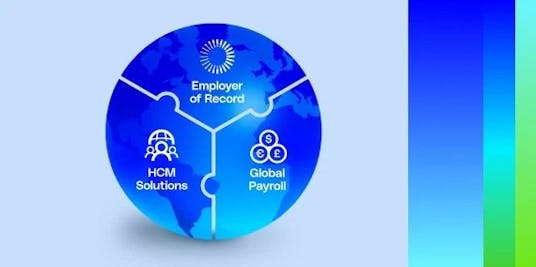
Cette hausse de la complexité réglementaire souligne la raison pour laquelle les services EOR mondiaux évoluent, passant de simples outils administratifs à des moteurs de croissance stratégiques et des leviers d’agilité organisationnelle. Alors que les multinationales naviguent dans ce paysage, les fournisseurs mondiaux d’EOR peuvent réduire les risques liés aux plans stratégiques, permettant aux entreprises de se développer, d’acquérir des talents et d’innover tout en évitant les pièges de la conformité.
Rôle de l’EOR mondial dans la stratégie de réduction des risques
Fondamentalement et par le passé, l’EOR mondial a toujours été axé sur la conformité et la gestion des risques. Global EOR est également un partenaire commercial et un bouclier contre les risques croissants liés à l’exploitation mondiale. De plus en plus, intégré dans la stratégie RH, permettant l’agilité de la main-d’œuvre et atténuant les risques. Bientôt, elle sera entièrement rendue possible par l’IA et les informations prédictives.
En intégrant l’expertise et les connaissances d’EOR en matière de conformité dans la structure des stratégies de main-d’œuvre, l’EOR mondial devient un vecteur d’emploi conforme et un moteur de croissance. Donner aux entreprises l’infrastructure (personnes, processus, technologie, entités) et les informations nécessaires pour protéger les plans stratégiques contre les risques juridiques imprévus ou le manque d’expérience de l’organisation avec l’emplacement et l’opportunité ciblés.
Global EOR favorise en fin de compte l’agilité organisationnelle en permettant aux entreprises d’accéder aux talents n’importe où, n’importe quand et à la demande, en toute conformité. Plus important encore, impliquer ce talent dans le flux des affaires, le protéger des risques associés à l’exploitation sur de nouveaux sites et accélérer les résultats stratégiques en alignant le capital humain sur les priorités commerciales.
Global EOR agira comme couche de conformité à l’avenir
À l’avenir, l’EOR mondial est sur le point de devenir une couche de conformité intelligente et adaptative qui orbite autour de l’entreprise et de ses besoins en main-d’œuvre. Tirant parti de l’IA et de l’analyse prédictive, elle passera de l’atténuation réactive des risques à l’anticipation proactive des changements réglementaires, des besoins en talents et des opportunités stratégiques.
L’EOR mondial de l’avenir tirera parti de l’IA pour surveiller la législation mondiale, signaler les mises à jour sur les lois émergentes ou les exigences en matière de main-d’œuvre avant qu’elles n’affectent les opérations et la stratégie. Cette couche de conformité modélisera des scénarios pour les décisions clés, telles que l’entrée sur un nouveau marché ou l’intégration de la main-d’œuvre après la fusion, en fournissant des informations prescriptives pour éviter les erreurs.
Les paiements et les mouvements d’argent évolueront avec les calculs de revenus continus, le traitement automatisé et la gestion fiscale, les règlements interdevises instantanés et le mouvement d’argent numérique. Tous alimentés, orchestrés et activés par l’IA.
En tant que structure de données, EOR mondial regroupera des données disparates sur les RH, la paie, la conformité et les performances dans une vue unifiée. Cette intelligence hyperconnectée permettra de débloquer des informations cachées, de prévoir les pénuries de talents et les risques de conformité, et de mettre en place des modèles de main-d’œuvre fluides dans lesquels les talents sont approvisionnés et déployés à la demande. Pour les organisations multinationales, cela signifie simuler les fusions, les acquisitions et les cessions avec une précision basée sur l’IA, réduire les décisions et amplifier la croissance stratégique.
Les informations mondiales sur l’EOR avec l’ IA agentique pourraient surveiller, interpréter et faire apparaître des changements législatifs. Avec l’approbation, mettez à jour les contrats de travail, les descriptions de poste ou les systèmes de paie et de RH, et testez et confirmez les changements liés à la conformité.
L’EOR mondial devient la pierre angulaire de la résilience et de l’agilité de l’entreprise. En agissant comme cette couche de conformité prospective, elle navigue non seulement sur le champ minier, mais ouvre également la voie à une croissance durable.
À propos de l’auteur
Pete A. Tiliakos
Analyste principal, conseiller stratégique et responsable de la paie chez Payroll Influences LLC
Pete tire parti de son expertise unique du marché depuis plus de 30 ans dans la technologie, les services et la transformation des RH et de la paie. Pete est mondialement reconnu pour ses connaissances approfondies, sa couverture, ses recherches et ses conseils stratégiques auprès des principaux fournisseurs de solutions émergents dans les domaines de la paie, de l’employeur de services d’enregistrement, des paiements et de la technologie HCM. Les praticiens et les prestataires tirent largement parti de ses recherches et de ses perspectives, car il contribue régulièrement aux associations, podcasts, publications et événements de l’industrie, et co-hôte du podcast RH et Paie 2.0 , et hôte du podcast The Source de DailyPay.
LinkedIn : https://www.linkedin.com/in/petetiliakos/