




נקודות מפתח
- מרכזי הגיוס המובילים בגרמניה הם ברלין, פרנקפורט והמבורג.
- התעשיות המובילות בגרמניה כוללות את הרכב, הכימיה והפרמצבטיקה, וכן את הפיננסים והבנקאות.
- לגרמניה יש הנחיות תאימות ייחודיות למעסיקים גלובליים, כולל רישיונות AUG נדרשים, תקנות סיווג עובדים מחמירות, ודרישות רישום מפורטות מאוד.
- לחברות שמגייסת בגרמניה יש אפשרויות שונות להקמה, כולל שותפות עם מעסיק רשום (מעסיק רשום), גיוס קבלנים, הקמת חברה בת או רישום ישיר.
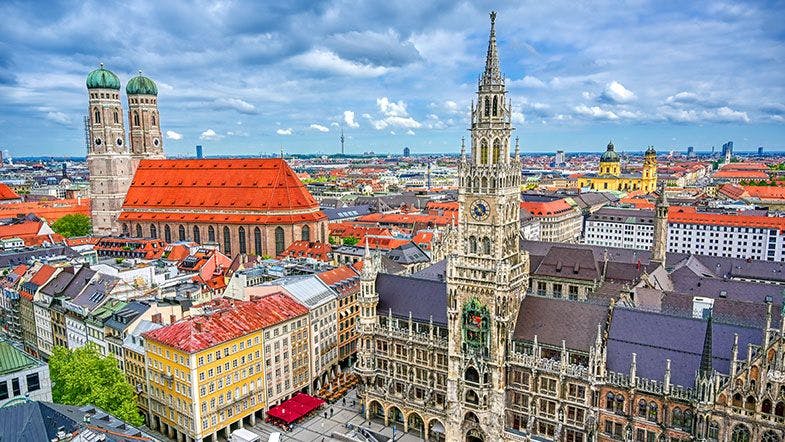
לגרמניה יש כלכלה חזקה וכוח עבודה מיומן מאוד, במיוחד בתעשיות הרכב וההנדסה. כוח העבודה שלה מעל 45.48M אנשים. מיקומה המרכזי של גרמניה מספק את השער המושלם לגוש הסחר הגדול בעולם: האיחוד האירופי (EU).
גרמניה היא ביתו של שוק הצרכנים הגדול ביותר באיחוד האירופי, אך לפני שתתרחב למדינה זו, תצטרך להבין חוזים, מיסים, שכר, הטבות וחוקי תעסוקה אחרים. המדריך שלנו יספר לכם כל מה שאתם צריכים לדעת על גיוס עובדים בגרמניה במהירות ובתאימות.
מה לדעת לפני שעובדים בגרמניה 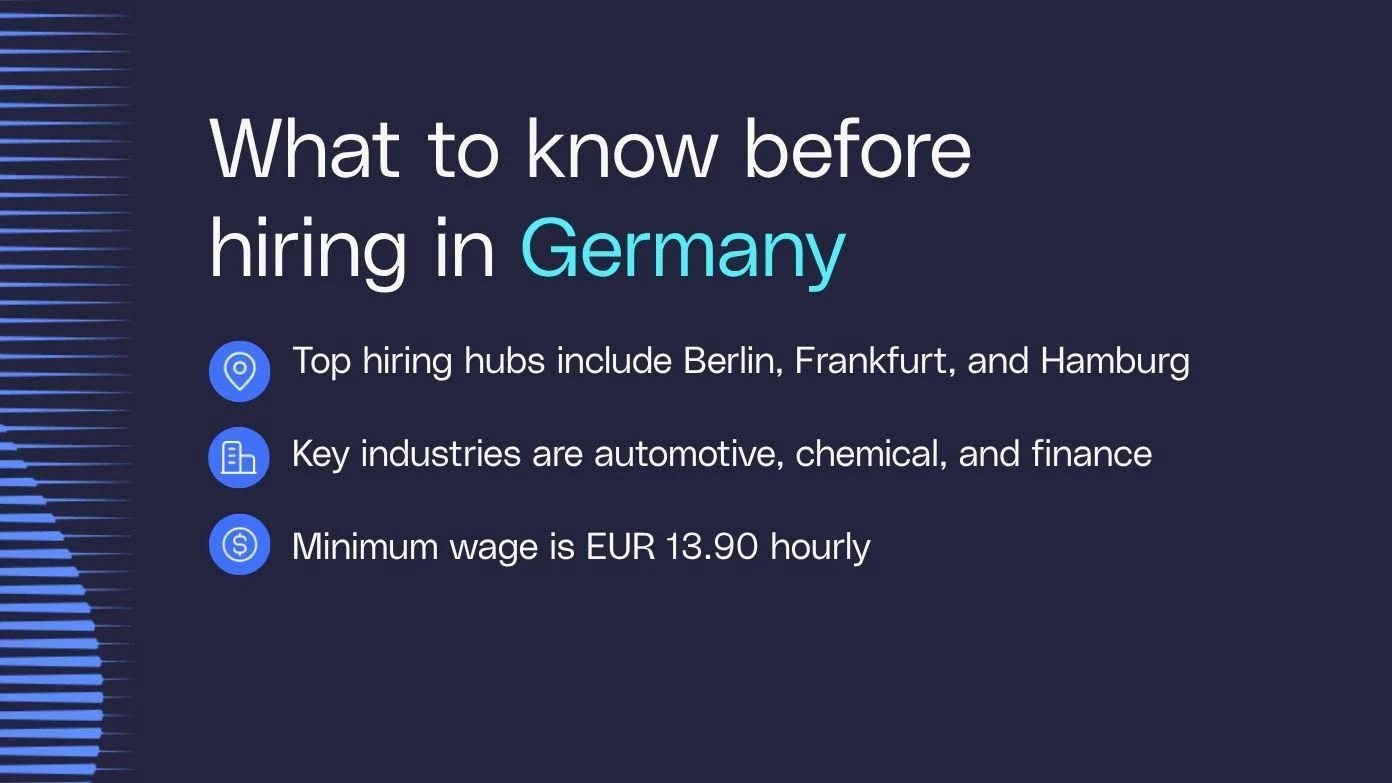
אם אתם מרחיבים את העסק שלכם לגרמניה בפעם הראשונה, ישנן דרישות משפטיות חשובות שכדאי להיות מודעים להן. נורמות וחוקים אלו משפיעים על שיטות הגיוס בגרמניה ועל היבטים רבים של מערכת היחסים מעסיק-עובד, כולל פיצוי והטבות.
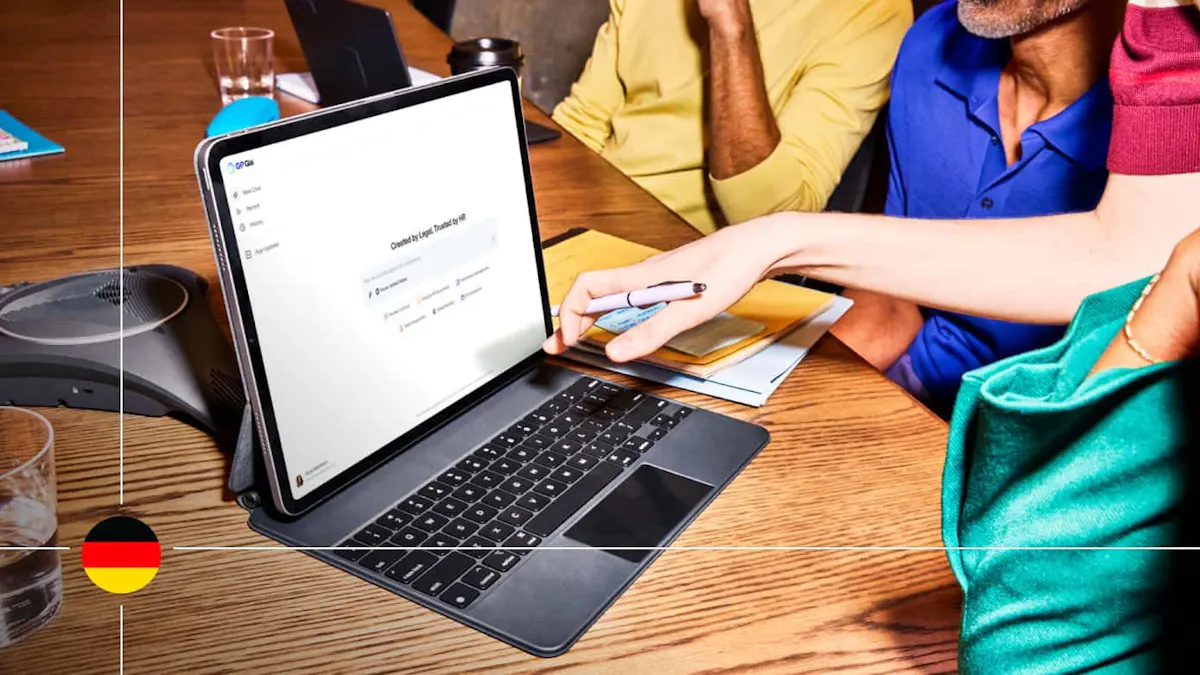
G-P Gia™, הסוכן הגלובלי שלנו, שמופעל על ידי מלאכותית, יכול לענות על השאלות הקשות ביותר שלכם במדינות 50 — כולל גרמניה — ובכל 50 מדינות ארה"ב. הפחית את התלות שלך בייעוץ חיצוני וקטין את הזמן והעלות של תאימות עד 95% עם Gia.
הנה ארבעה דברים שכדאי לדעת על גיוס עובדים בגרמניה:
1. חוקי פיצויים
שכר מינימום בגרמניה הוא 13אירו.90 לשעה נכון ל- 2026בינואר. השיעור נבדק ומותאם מעת לעת על ידי ועדת שכר המינימום. במגזרים מסוימים כמו בנייה, טיפול או ניקיון עשויים להיות שכר מינימום גבוה יותר שנקבע בהסכמים קיבוציים.
חוק שקיפות התגמולים מקדם שכר שווה עבור עבודה שווה או מקבילה. זה חל על חברות עם 200+ עובדים. החוק מעניק לעובדים את הזכות לבקש מידע על קריטריוני שכר ושכר חציוני עבור תפקידים דומים. מעסיקים חייבים להצדיק כל הפרשי שכר באמצעות שיקולים אובייקטיביים ולא מפלים. שוויון בשכר מגדרי הוא דרישה חוקית.
מעסיקים בגרמניה חייבים לשמור תיעוד מפורט של שעות עבודה ותשלומי שכר למשך לפחות שנתיים. אי עמידה בשכר מינימום או דרישות תיעוד עלולה לגרום לקנסות עד אירו 500,000, החרגה מחוזים ציבוריים, ועלולה לגרום לנזק למוניטין. אי מתן תנאי העסקה בכתב עלול להוביל לקנסות בסך 2,000 אירו לכל מקרה.
2. שעות עבודה וחופשה
גרמניה מציינת תשעה חגים ציבוריים ברחבי המדינה. מדינות מסוימות עשויות לחגוג חגים נוספים. עובדים שעובדים חמישה ימים בשבוע מקבלים לפחות 20 ימי עבודה בתשלום של חופשה שנתית, בעוד שעובדים שישה ימים בשבוע מקבלים לפחות 24.
שעות נוספות מוסדרות על ידי חוק שעות עבודה (Arbeitszeitgesetz). יום העבודה הסטנדרטי הוא שמונה שעות. תשלום עבור שעות נוספות אינו חובה על פי חוק, אך בדרך כלל מוסדר על ידי הסכמים קיבוציים או חוזים אישיים.
חופשת הלידה היא 14 שבועות: בדרך כלל שישה שבועות לפני הלידה ושמונה שבועות לאחריה. חופשת לידה יכולה להאריכה ל-5 12 שבועות עבור לידות מרובות ילדים או פגים או תינוקות עם מוגבלויות. דמי הלידה מכוסים הן על ידי המעסיקים והן ביטוח בריאות. אמהות בדרך כלל מקבלות 13 אירו ליום מחברת הביטוח שלהן ואת יתרת השכר מהמעסיק.
אין גמלת חופשת אבהות מבוססת בגרמניה. אבות או בני זוג שאינם לידה יכולים לקחת חופשת לידה (Elternzeit). חופשת הורות מעניקה עד שלוש שנות חופשה מוגנת בעבודה לכל הורה.
אם זכאים, ההורים יכולים לקבל קצבה הורית של אירו 300-1800 חודשי (אלטרנגלד) במהלך תקופה זו. זוהי הטבה מדינתית שמחליפה בערך 65% מההכנסה נטו הקודמת שלהם. להורים יש עד יום הולדתו השמיני של הילד לקחת חופשה זו. התשלום מתבצע עבור 14 חודשים אם שני ההורים לוקחים את החופשה, או 12 חודשים אם רק הורה אחד לוקח אותה.
3. שלם בהתאם למה שאתה מרוויח וביטוח לאומי
במערכת הגרמנית "שלם בהתאם למה שאתה מרוויח"), מעסיקים משלמים מראש מס הכנסה (Lohnsteuer), היטל סולידריות (Solidaritätszuschlag), ואם רלוונטי, מס ילדים וכנסייה (Kirchensteuer) משכר העובדים. סכום המס נקבע לפי סוג המס של העובד, רמת ההכנסה ונסיבות אישיות (למשל, מצב משפחתי, מספר הילדים).
מערכת ביטוח לאומי בגרמניה היא חובה לרוב העובדים. סך ההפקדה הוא בדרך כלל 42.3% מהכיסוי הגולמי לפני ביטוח תאונה, מחולק שווה בשווה בין מעסיקים לעובדים. זה מיועד לביטוח בריאות, ביטוח פנסיה, ביטוח אבטלה, ביטוח סיעודי ארוך טווח וביטוח תאונות.
4. דרישות רישוי AUG
רישוי AUG מתייחס לחוק השכרת עובדים של גרמניה. חוק זה מסדיר את אספקת העובדים הזמנית (המכונה השכרת עבודה או השכרת עובדים) מסוכנויות גיוס לחברות לקוחות. כל חברה שמעוניינת לספק עובדים לחברות אחרות בגרמניה חייבת להחזיק ברישיון AUG מסוכנות התעסוקה הפדרלית (Bundesagentur für Arbeit) לפני תחילת הפעילות.
הפעלה ללא רישיון היא עבירה על החוק וצפוי להענישה. סוכנויות מורשות חייבות לעבוד בהתאם לכל דרישות החוק. זה כולל שכר ותנאי עבודה שווים לעובדים, חוזי העסקה תקינים ותשלומי ביטוח לאומי. רישיון AUG הראשוני ניתן לשנה אחת. אם הסוכנות תוכיח תאימות, ניתן לחדשה עד שלוש שנים.
מעסיקים רשומים (EORs) זקוקים לרישיון AUG תקף כדי לפעול בגרמניה. ל-G-P יש את הרישוי והמומחיות לעזור לכם לגייס, לגייס ולנהל עובדים במהירות ובציות בגרמניה.
2026 ציפיות עובדים בגרמניה
לעובדים בגרמניה יש רגשות מעורבים לגבי ביטחון תעסוקתי. לפי מחקר עדכני, 56% מודאגים מאובדן עבודה ו- 54% חשים אי נוחות לגבי מוכנות מיומנויות בינה מלאכותית. עם זאת, 39% מחפשים או מתכננים לחפש עבודה חדשה ב- 2026.
עסקים המגייסים עובדים בגרמניה צריכים להדגיש מסלולי קריירה ארוכי טווח והצעות יציבות. שילוב הכשרה על טכנולוגיות חדשות בתהליכי עבודה יומיומיים היא דרך רבת עוצמה להכין עובדים לאימוץ בינה מלאכותית, מבלי לשבש את תחושת הביטחון הנוכחית.
גיוס דוגמנים לחברות גלובליות בגרמניה
ישנן מספר אפשרויות להרחבת העסק שלך לגרמניה, לכל אחת יתרונות וחסרונות משלה. אפשרויות אלה כוללות:
- רישום מעסיק ישיר: הקמת ישות רשומה חוקית בגרמניה להעסיק עובדים ישירות. אתה תנהל באופן עצמאי משכורות, מניעה, ביטוח סטטוטורי וחובות מעסיק נוספות.
- מעסיק רשום (מעסיק רשום): G-P מעסיק רשום משמש כמעסיק המשפטי, ומטפל בתהליכים מנהליים ושכר מטעם חברה, כולל חוזים, מניעה, תרומות והטבות סטטוטוריות. נדרש רישיון AUG בתוקף עבור כל רישיונות ה-EOR.
- חברת בת או סניף: חברת בת תפעל כישות משפטית נפרדת, בעוד שסניף יפעל כהרחבה של חברת אם שלך וחייב להיות רשום מקומית.
- קבלן עצמאי: העסקת קבלנים עצמאיים בגרמניה בדרך כלל אינה דורשת הקמת ישות או סניף מקומי. עם זאת, ישנם עונשים משמעותיים על עובדים שסיווגם שגוי, ולכן יש לבצע מבחנים משפטיים בעת העסקתם.
מרכזי גיוס מובילים בגרמניה
חלק מהערים בגרמניה ידועות בתעשיות מסוימות. ידיעת מה יש לכל עיר להציע מאפשרת לך למקד את מאמצי הגיוס שלך במקום הנכון ולאייש משרות מהר יותר.
מרכזי הכישרונות המובילים בגרמניה הם:
- ברלין היא מרכז מרכזי לטכנולוגיה, סטארט-אפים, תעשיות יצירתיות וממשל. העיר ידועה בסצנה התרבותית שלה. זה יותר זול ממינכן או פרנקפורט, ומושך אליו כישרונות חדשים מרחבי הארץ.
- פרנקפורט היא בירתה הפיננסית של גרמניה. בעיר שוכנים בנקים, חברות ביטוח ותאגידים בינלאומיים. הבנק המרכזי האירופי, דויטשה בנק וקומרצבנק ממוקמים כאן. נמל התעופה של פרנקפורט הוא מרכז תחבורה מרכזי.
- המבורג היא מרכז לפעילויות לוגיסטיקה, תקשורת וספנות. יש לה בסיס תעשייתי חזק והיא הנמל השלישי בגודלו באירופה. חברת התעופה Airbus ממוקמת כאן.
- שטוטגרט ידועה בתעשיות הרכב, ההנדסה והייצור המתקדם שלה. זהו ביתם של כמה ממותגי ההנדסה והרכב המפורסמים ביותר בגרמניה, כולל בוש, מרצדס-בנץ ופורשה.
- מינכן היא מרכז תעשייתי לתעשיות הפיננסים, הרכב, ההנדסה והטכנולוגיה. ב.מ.וו, אאודי, אליאנץ וסימנס ממוקמות כאן.
תעשיות מפתח בגרמניה
הבנת התעשיות המרכזיות בגרמניה מאפשרת לך בחינת ביצועים שכר והטבות. אתה יכול להשתמש בתובנה זו כדי לקבל החלטות מושכלות לגבי היכן להשקיע ולהרחיב את כוח העבודה שלך.
התעשיות העיקריות בגרמניה כוללות:
- רכב: גרמניה היא ביתם של מותגי רכב מפורסמים כמו פולקסווגן, מרצדס-בנץ ו-BMW. חברות אלו יוצרות מקומות עבודה רבים ומשקיעות רבות במחקר ופיתוח. כישרונות מיוחדים כוללים תפקידי הנדסה שונים, מדעני חומרים ויועצי שירות.
- כימיקלים ופרמצבטיים: גרמניה היא היצואנית השלישית בגודלה של כימיקלים ויש לה 16% נתח שוק במחקר ופיתוח פרמצבטי. כישרונות מומחים כוללים מדעני מחקר ופיתוח, מהנדסים ומומחי אבטחת איכות ובקרת איכות.
- פיננסים ובנקאות: פרנקפורט היא המרכז הפיננסי המוביל בגרמניה. זהו ביתם של הבנק המרכזי האירופי, דויטשה בנק ובנקים בינלאומיים רבים אחרים. הכישרונות המומחים כוללים מומחי פינטק, מדעני נתונים ואנליסטים, ואנשי מקצוע בתחום הסיכונים והתאידות.
- טכנולוגיית מידע ותקשורת: מגזר הטכנולוגיה של גרמניה חזק בערים כמו ברלין ומינכן. חברות כמו SAP, אחת מחברות התוכנה הארגונית הגדולות בעולם, ממוקמות בגרמניה. כישרונות מומחים כוללים מפתחי תוכנה, מהנדסים ואנשי מקצוע בתחום אבטחת הסייבר.
- לוגיסטיקה ותחבורה: מיקומה המרכזי של גרמניה הופך אותה למרכז לוגיסטי אסטרטגי. חברות גדולות כמו DHL ולופטהנזה קרגו פועלות כאן. הכישרונות המומחים כוללים מנהלי שרשרת אספקה, אנליסטים ומנהלי לוגיסטיקה, ומומחי תאימות מיוחדים ומסחריים.
- הנדסת חשמל ואלקטרוניקה: סימנס ובוש הן חברות חשובות בתחום זה. הם מספקים מגוון מוצרים אלקטרוניים למגזרי האנרגיה, הבריאות והרכב. כישרון מיוחד כולל תפקידי הנדסה שונים.
עלות העסקת עובד בגרמניה 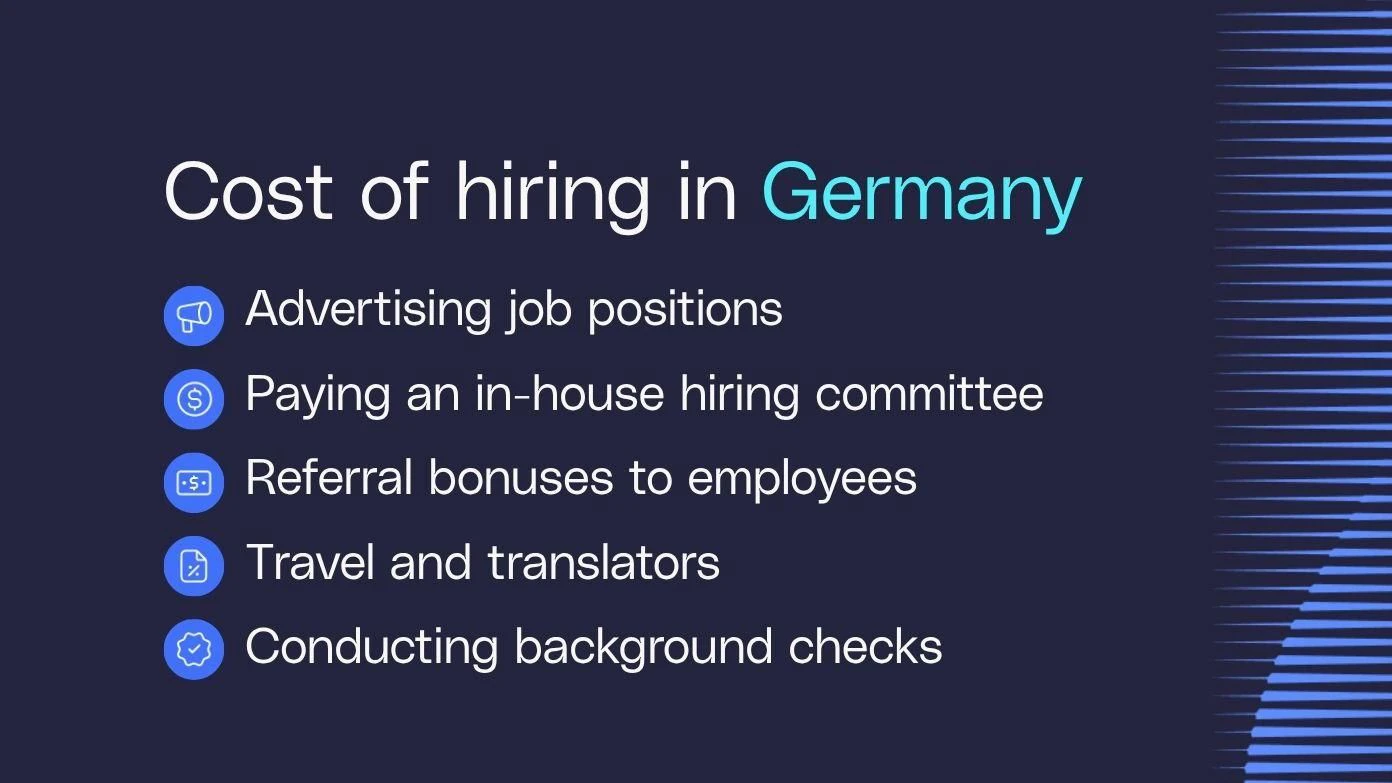
בין אם אתם מגייסים עובד אחד או צוות שלם בגרמניה, הוצאות הן בלתי נמנעות. תקציב עבור הדברים הבאים:
- הקמת ישות (אלא אם כן אתה שותף עסקי עם מעסיק רישום)
- משרות פרסום
- תשלום בונוסי הפניה לעובדים בעלי קשרים בגרמניה
- תשלום לוועדת גיוס פנימית
- נסיעה לגרמניה וממנה, כולל שהייה במלון, ארוחות ותחבורה
- שיתוף פעולה עם מתרגם לניסוח מסמכים או לניהול שיחות, במידת הצורך
- שימוש בשירות בדיקות רקע לסינון מועמדים
- ניסוח חוזי העסקה תואמים, בדיקה משפטית וייעוץ עם מומחי משאבי אנוש ומשפט
- עלויות עבור אספקת מחשבים, טלפונים ורישיונות תוכנה
- הוצאות עבור חומרי קליטת עובדים והדרכה ראשונית
- ביטוח תאונות חובה (Berufsgenossenschaft) וכל ביטוח אחריות או ביטוח עסקי נוסף
- עלויות עבור תחזוקת רישומי מס ושכר ותיעוד נדרשים
לפי מקורות G-P Verified מ-Gia, שיעור נטל המעסיקים בגרמניה, הכולל עלויות שמופעלות בנוסף לשכר, נע בין 20ל-22%, ללא ביטוח תאונות.
מה חברה צריכה לעשות כדי לגייס עובדים בגרמניה?
ודאו שאתם מכסה את הדברים החיוניים הבאים לפני שאתם מרחיבים את הצוות שלכם בגרמניה:
- קבל מספר זיהוי מס (Steuernummer)
- רישום למע"מ
- קבל מספר זיהוי מעסיק (Betriebsnummer)
- הירשם באיגוד לביטוח חבות מעבידים (Berufsgenossenschaft)
- רישום עובדים לביטוח לאומי
- ליידע את הרשויות ולשמור רישומים
הקמת חברת בת בגרמניה יכולה להימשך שבועות או חודשים. השתמש ב -G-P Employer of Record כדי להעסיק עובדים במשרה מלאה בגרמניה מבלי להקים ישות משלך. בנה את הצוות שלך בעלות נמוכה יותר ועם שקט נפשי שאתה עושה זאת בצייתיות.
השלבים לגיוס עובדים בגרמניה
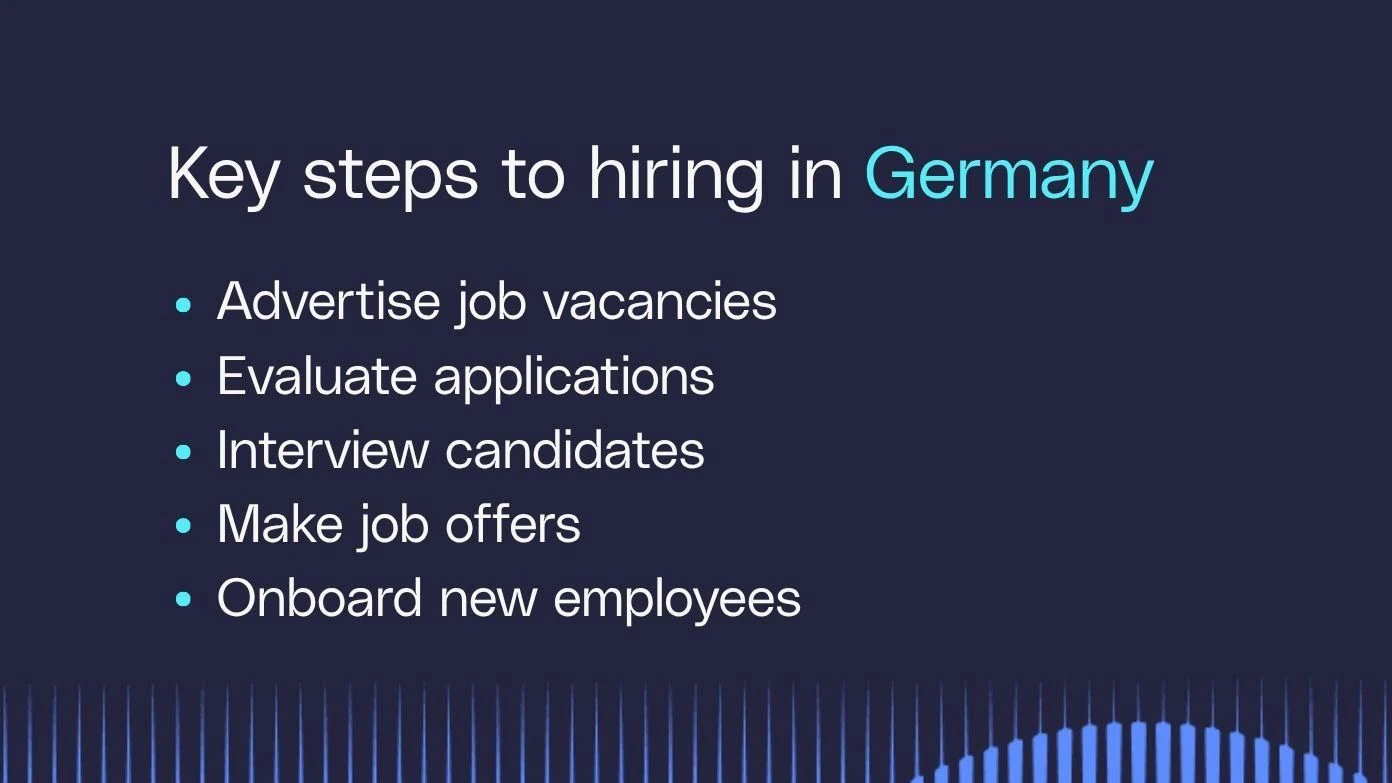
תהליך ההעסקה בגרמניה דומה לזה שאתה כנראה מכיר במדינתך. תהליך ההעסקה עובר בחמישה שלבים בסיסיים: פרסום המשרה, הערכת מועמדויות, ראיון מועמדים, שליחת הצעות עבודה וקליטת עובדים חדשים.
1. פרסום משרות פנויות
תאר בבירור את תיאור התפקיד, תחומי האחריות והכישורים. ודאו שמודעות דרושים תואמות לחוקי איסור אפליה, כמו חוק שוויון הטיפול הכללי. השתמשו בשפה ניטרלית ומכילה והימנעו מכל ניסוח שעלול, באופן ישיר או עקיף, להוציא מועמדים מקבוצות מוגנות. לדוגמה, מקובל להשתמש ב-"m/w/d" (זכר/נקבה/מגוון) אחרי תארי תפקידים כדי לאותת על הכלה.
XING, Stepstone, Indeed, LinkedIn, Monster, Glassdoor ו-Zuhausejobs הם אתרי דרושים פופולריים בגרמניה. אתה יכול גם לפרסם משרות פנויות בפורטל סוכנות התעסוקה הפדרלית (Bundesagentur für Arbeit's Jobbörse) כדי להרחיב את טווח ההגעה של המועמדים שלך.
2. הערכת בקשות
אספו קורות חיים וטפסים. סנן מועמדים על פי הכישורים וניסיון כדי להבטיח תאימות באמצעות תקנות פרטיות ואנטי-אפליה.
חברות עם 200+ עובדים חייבות לספק מידע על מבני משכורת לפי בקשה ולעיין באופן שוטף בפרקטיקות שכר. הנחיית שקיפות התשלום של האיחוד האירופי, אותה צפויה גרמניה ליישם בתחילת 2027, תחזק עוד יותר את הדרישות הללו.
3. ראיון מועמדים
ראיין מועמדים שנכנסו לרשימה המצומצמת שלך. ניתן לערוך את הראיונות הללו באופן אישי או באופן וירטואלי. השתמשו בשאלות ראיון מובנות ולא מפלות. Gia יכולה לעזור לך ליצור שאלות העומדות בחוקי אנטי-אפליה בגרמניה, כדי שתוכל למצוא את ההתאמה הטובה ביותר לתפקיד תוך עמידה בתקנות המקומיות.
4. להגיש הצעות עבודה
צור קשר עם המועמד שבחרת כדי להציע לו משרה עם החברה שלך. הכינו חוזה העסקה בכתב הכוללת תפקיד, חובות, משכורת, שעות עבודה, תקופות הודעה מוקדמת והתייחסות לכל הסכם קיבוצי. שני הצדדים צריכים לחתום על החוזה לפני תחילת ההעסקה.
5. קליטת עובדים חדשים
עכשיו תוכלו לקלוט עובדים חדשים. רשמו את שכירה פוטנציאלית לביטוח לאומי וקבלו מספר זיהוי מס. יש להודיע למשרד המס המקומי ולאיגוד ביטוח אחריות המעסיקים (Berufsgenossenschaft).
אם אתה עובד עם מעסיק רישום כמו G-P, לא תצטרך לדאוג לעומס המנהלי של קליטת עובדים. נפשט את התהליך, כך שתוכלו להתמקד באימון שכירה פוטנציאלית שלכם ובשילוב שלה בתרבות החברה שלכם.
גיוס קבלנים בגרמניה
עבודה עם קבלנים עצמאיים בגרמניה יכולה להיות דרך חסכונית לבחון את השוק ולבנות נוכחות ללא התחייבות של עובדים במשרה מלאה. קבלנים שבסיסם בגרמניה מבינים את התנהגות הצרכנים המקומית, הכללים ונהלי העסקים. הם יהיו מוכנים להתחיל לעבוד במהירות עם הציוד שלהם ותהליכי עבודה קבועים.
שכירת קבלנים מאפשרת לך להתאים בקלות את כוח העבודה שלך בהתאם לצורכי העסק שלך, ללא המורכבויות והעלויות הכרוכים בהעסקה.
לפני שאתם חותמים על הסכם עם קבלן עצמאי בגרמניה, קחו בחשבון את הדברים הבאים:
1. עובדים לעומת קבלנים עצמאיים
חשוב להבין את ההבדל בין שכירים לקבלנים עצמאיים. בגרמניה, מעסיקים שוכרים עובדים לעבודה ובתמורה משלמים להם משכורת והטבות קבועות. קבלנים עצמאיים מספקים שירותים. בניגוד לעובדים, קבלנים קובעים את לוחות הזמנים שלהם, משתמשים בציוד שלהם ועובדים על פרויקטים ספציפיים, במקום שתפקידם יהיה קבוע.
2. עונשים על סיווג שגוי
סיווג מישהו כקבלן כשהוא לא כזה עלול להוביל לעונשים חמורים. אם מתרחשת סיווג שגוי , ייתכן שתצטרך:
- לשלם מעסיק ועובד ביטוח לאומי לתרומות עד ארבע שנים, או עד 30 שנים אם הסיווג שגוי היה מכוון, בתוספת ריבית.
- לשלם קנסות מנהליים. חיובים בגין איחור בתשלום הם בדרך כלל 1% לכל חודש תשלומים שהוחמצ. הפרות חמורות ומכוונות עלולות לגרור קנס של עד 10מיליון אירו.
- עומדים בפני מאסר של עד חמש שנים (או 10 שנים במקרים חמורים) על סיווג שגוי או מניעה של ביטוח לאומי בכוונה.
סיווג מחדש של עובדים יכול גם לגרום למס שכר וחובות נוספות. אם הסיווג אינו ברור, שקול DRV, כלומר קביעה משפטית על סטטוס העובד.
3. כיצד לשלם לקבלנים בגרמניה
G-P Contractor™ מסירה את התהליך המבולגן והממושך של גיוס ותשלום לקבלנים בינלאומיים. אתה יכול ליצור ולהנפיק חוזים ולשלם לקבלנים בכמה קליקים בלבד, וכל זאת תוך שמירה על תהליך תואם.
שכור עובדים וקבלנים בגרמניה עם G-P
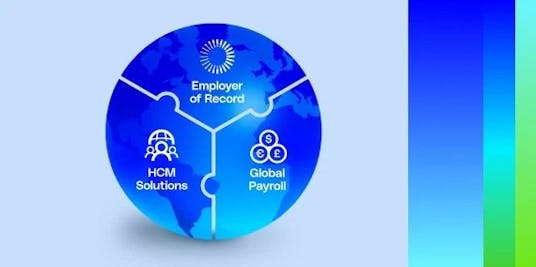
פלטפורמת™ שירותי ההעסקה הגלובלית שלנו (פלטפורמת שירותי ההעסקה הגלובלית) ומוצריה המופעלים על ידי בינה מלאכותית, Employer of Record, Concontract ו -Gia, תומכים בחברות בבניית וניהול צוותים גלובליים.
G-P היא המובילה המוכרת בתחום התעסוקה הגלובלית עם יותר מעשור של ניסיון, הצוות הגדול ביותר של משאבי אנוש, מומחים משפטיים ותאיברים, ובסיס ידע עולמי קנייני.
תקל על ההתרחבות שלך לגרמניה עם G-P. צרו קשר או הזמינו הדגמה עוד היום.
 שאלות נפוצות
מהי שכר מיני בחוק?
נכון ל- 1בינואר 2026, שכר מינימום הסטטוטורי הוא 13אירו.90 לשעה. בחלק מהמגזרים נקבעים תעריפים גבוהים יותר במסגרת הסכמים קיבוציים.
מהם כללי שעות העבודה והשעות הנוספות הרגילות?
שעות עבודה סטנדרטיות הן שמונה שעות ביום (עד 10 אם ממוצע שעות העבודה הוא על פני שישה חודשים). תשלום עבור שעות נוספות אינו חובה על פי חוק, אך בדרך כלל נקבע בהסכמים קיבוציים.
מהן חובות ביטוח לאומי וחובות שכר?
מעסיקים חייבים לרשום עובדים לביטוח לאומי, לנכות ולהעביר מסי שכר, ולשמור על רישומי שכר מדויקים. מעסיקים בינלאומיים ללא ישות מקומית חייבים למנות נציג מגרמניה לתשלום תאימות.
אילו הגנות קיימות מפני פיטורין לא הוגן?
חוק ההגנה מפני פיטורים (Kündigungsschutzgesetz או KSchG) מגן על עובדים מפני פיטורים לא הוגנים או לא מוצדקים. הוא חל על עובדים שעבדו יותר משישה חודשים בחברה עם מעל 10 עובדים כדי להבטיח שהפיטורים הוגנים, מוצדקים ונכונים מבחינה פרוצדורלית.
אילו חוקי איסור אפליה חלים בגרמניה?
חוק השוויון הכללי מונע אפליה על בסיס גזע, מין, דת, מוגבלות, גיל או נטייה מינית במהלך הגיוס, העסקה ופיטורין.