











Principais conclusões
-
As condições econômicas e as políticas governamentais definem leis salariais: os governos locais ajustam os salários mínimos para acompanhar a inflação ou as mudanças econômicas.
-
Nem todos os países têm um salário mínimo: alguns países estabelecem altos níveis salariais estatutários, enquanto outros dependem de negociação coletiva ou não têm um mínimo legalmente exigido.
-
Gestão de conformidade: o monitoramento constante e a parceria com o empregador de registro (EOR) certo são essenciais para gerenciar sua força de trabalho global.
As taxas globais de salário mínimo são normalmente fáceis de acompanhar, até que sua força de trabalho esteja espalhada pelo mundo. As diferenças no custo de vida, desenvolvimento econômico e política social variam de um país para o outro. Sua folha de pagamento global precisa considerar todas as variações, e errar coloca seu negócio em risco.
Este guia explora como funciona um salário mínimo, quais países têm os salários mínimos mais altos e mais baixos e fatores que influenciam essas taxas.
Uma visão geral dos salários mínimos globais
Os governos definem taxas de salário mínimo para proteger os trabalhadores e reduzir as chances de salários explorativos. Muitos países ajustam os salários mínimos regularmente com base na inflação, nas condições do mercado de trabalho ou nas mudanças políticas. Alguns links aumentam para medidas de custo de vida, enquanto outros se ajustam por meio de processos legais. Por causa disso, as tabelas salariais podem rapidamente ficar desatualizadas, a menos que sejam provenientes de fontes atuais e confiáveis.
Dois conceitos surgem nas discussões sobre salários:
-
Salário mínimo estatutário, que é definido pelo governo local.
-
Salário vivo, que é a renda que as pessoas precisam para atender às suas necessidades básicas, como moradia, alimentação e saúde.
Manter-se atualizado sobre as atualizações de salário mínimo de cada país é um trabalho em tempo integral, mas ter o parceiro certo faz toda a diferença. Use o G-P EOR para formar sua equipe global em mais de 180 países, sem o estresse de acompanhar os salários em vida e os salários mínimos estatutários. Lidamos com todos os aspectos do emprego para que você possa contratar em qualquer lugar com confiança e oferecer pacotes de benefícios competitivos para equipes globais.
“G-Pparece uma verdadeira parceira”, explicou Annie Diiorio, gerente de RH da Canidium. "Sua abordagem proativa e a dedicação do nosso gerente de sucesso do cliente têm sido revolucionárias, fazendo toda a diferença em nossa experiência. A integração de novos contratados é fácil tanto para a nossa equipe administrativa quanto para os membros da nossa equipe global.”
Fatores que influenciam o salário mínimo de um país
As taxas salariais mínimas mudam ao longo do tempo. Inflação, ganhos de produtividade e prioridades políticas impulsionam essas atualizações. Em economias de rápido crescimento, os governos muitas vezes ajustam os salários para apoiar os padrões de vida.
A adoção da tecnologia também desempenha um papel importante. Sistemas de folha de pagamento digital, dados da força de trabalho e análise de mão de obra melhoram a aplicação e a transparência. Essas ferramentas ajudam os reguladores a rastrear a conformidade em escala e ajudam os empregadores a gerenciar a mudança com menor risco.
Um salário mínimo não é um padrão universal. Há muitos fatores que influenciam o piso salarial de um cargo, incluindo:
-
O nível de desenvolvimento econômico de um país
-
Tendências de custo de vida e inflação
-
Legislação e política trabalhista
-
Acordos coletivos de trabalho (CBAs)
-
Variações regionais nos países
A contratação global adiciona uma camada extra de complexidade. De repente, você está monitorando regras salariais locais, atualizações e exceções em vários países.
Mas você não precisa fazer isso sozinho. G-P Gia™ O monitora continuamente as mudanças estatutárias em 50 países e em todos os 50 estados dos EUA para fornecer a você as orientações de conformidade mais atualizadas. Obtenha dados específicos do local sobre benefícios e provisões comuns, incluindo visão, saúde, aposentadoria e bem-estar, em seus países-alvo, setores ou para funções específicas.
Países com salário mínimo mais alto
Os altos salários mínimos estatutários refletem fortes sistemas de apoio social e proteções especiais.

Nações com salários mínimos estatutários elevados
Aqui estão exemplos de países com os maiores salários mínimos estatutários do mundo:
-
Austrália: o salário mínimo da Austrália é de AUD 24.95 por hora (USD 16.87). A Austrália também descreve as taxas salariais específicas do setor sob seu moderno sistema de prêmios.
-
Bélgica: o salário mínimo é atualmente de EUR 2,154.11 por mês (USD 2,517.33). A renda mensal mínima garantida aumentará em EUR 35 em abril de 2026. O forte modelo social da Bélgica sustenta esses níveis salariais.
-
Canadá: o Canadá não tem um único salário mínimo federal que se aplique a todos os trabalhadores. Cada província tem seu próprio salário mínimo, variando de CAD 15–19.75 (USD 10.84–14.28), refletindo as diferenças de custo regionais.
-
França: o salário mínimo estatutário é de EUR 1,823.03 por mês (USD 2,130.47), mas varia para aprendizes e contratos de profissionalização, dependendo da idade do trabalhador. A França atualiza seus salários mínimos anualmente, com base na inflação e no crescimento salarial.
-
Alemanha: o salário mínimo da Alemanha é de EUR 13.90 por hora (USD 16.24) e aumentará novamente em 2027 para EUR 14.60 (USD 17.06).
-
Luxemburgo: entre os mais altos do mundo, Luxemburgo tem um salário mensal mínimo de EUR 2,703.74 (USD 3,159.70) para um trabalhador adulto não qualificado e EUR 3,244.48 (USD 3,791.63) para um trabalhador adulto qualificado. O salário mínimo é menor para trabalhadores com menos de 18 anos.
-
Países Baixos: a idade mínima básica para trabalhadores a partir de 21 anos é de EUR 14.71 por hora (USD 17.19). Para trabalhadores com menos de 21 anos, o mínimo varia com base na idade. Os Países Baixos também incluem um subsídio de férias mínimo estatutário e atualizam o salário mínimo a cada seis meses.
Altos ganhos específicos do setor
Setores específicos abordam a escassez de mão de obra e aplicam valor econômico por meio de acordos coletivos ou ordens salariais estatutárias. Esses salários mínimos reduzem a compressão salarial e apoiam a estabilidade da força de trabalho em setores essenciais. Eles também adicionam complexidade para empregadores globais, pois as decisões de contratação precisam atender às regras nacionais e setoriais.
Alguns governos usam essas faixas salariais para proteger serviços críticos e atrair trabalhadores qualificados nos setores de saúde, tecnologia e energia. Essas funções precisam de treinamento, certificação ou conformidade de segurança, destacando sua importância.
Países com salário mínimo mais baixo
Algumas regiões têm salários mínimos baixos exigidos pelo governo federal devido ao desenvolvimento econômico, suprimento de mão de obra e estruturas de custo. Muitos países com pisos salariais baixos dependem de regras regionais ou setoriais. Outros não têm mecanismos de aplicação fortes. As taxas oficiais também podem diferir das práticas de pagamento reais.
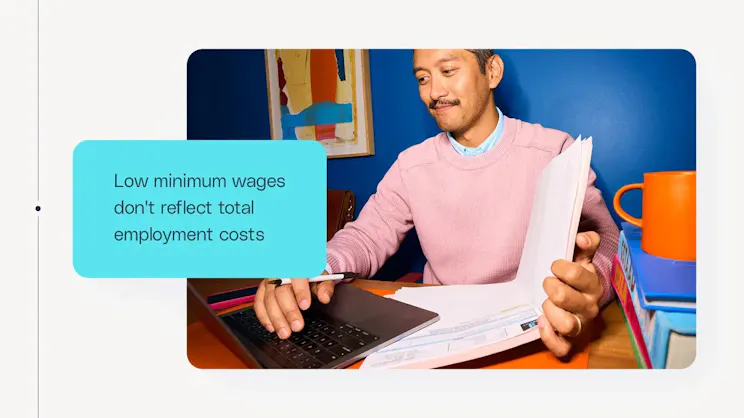
Os salários mínimos baixos não refletem os custos totais de emprego. Ao contratar globalmente, considere a conformidade, a produtividade e o risco operacional juntamente com esses salários.
Regiões com pisos salariais mais baixos
Aqui estão exemplos de países com o menor salário mínimo nacional, com números refletindo as linhas de base mensais ou horárias estatutárias. Esses números suportam apenas a modelagem de custos. Eles não refletem as despesas totais de emprego, benefícios, impostos e custos de conformidade, que podem exceder o salário-base:
-
Nigéria: o salário mínimo da Nigéria é de NGN 70,000 por mês (USD 49.32).
-
Etiópia: não há salário mínimo nacional, embora os funcionários públicos recebam um salário mínimo de ETB 1,500 por mês (USD 9.65).
-
Bangladesh: para trabalhadores do setor de vestuário, o salário mínimo é de BDT 12,500 por mês (USD 102.26). Outros setores têm salários mínimos específicos do setor definidos pelo quadro de salários mínimos. Não há tarifa nacional única.
-
Nepal: o salário mínimo do Nepal é NPR 19,550 por mês (USD 133.50).
-
Camboja: O salário mínimo é de US$ 210 por mês no setor de vestuário, calçados e produtos de viagem.
Regiões com pisos salariais mais baixos geralmente compartilham traços estruturais como grandes grupos de trabalho, emprego informal e desenvolvimento de infraestrutura.
O impacto da economia informal
A economia informal molda os dados salariais nos mercados em desenvolvimento. Muitos trabalhadores operam fora dos sistemas formais de folha de pagamento, o que significa que os salários mínimos oficiais não refletem os ganhos reais.
A aplicação limitada gera essa lacuna. Inspeções trabalhistas podem ser infrequentes ou os funcionários podem confiar em acordos verbais com pagamentos em dinheiro. Essa dinâmica distorce as estatísticas salariais, já que os mínimos publicados provavelmente ficarão abaixo do salário do mercado para funções qualificadas.
Empresas multinacionais dependem de contratos formais, folha de pagamento documentada e conformidade auditável para garantir transparência e responsabilidade. Nesses países, pagar acima dos mínimos legais é uma maneira certa de atrair talentos. Salários mais altos apoiam a retenção e a produtividade.
As leis de salário mínimo fornecem uma linha de base, portanto, o benchmarking de mercado ainda é importante. Nossa global employment platform s oferecem insights sobre remuneração competitiva e requisitos estatutários para funções e locais específicos. Como seu Employer of Record, oferecemos as ferramentas para gerar contratos de trabalho em conformidade, adaptados automaticamente às leis locais e padrões salariais, reduzindo a chance de erros ou penalidades.
Países sem salário mínimo nacional

Países como Brunei e Somália não têm salário mínimo nacional. No entanto, isso não significa que os mercados de trabalho não tenham regulamentação. A governança salarial pode vir de estruturas alternativas. Por exemplo:
-
Regiões nórdicas: Países como Dinamarca e Suécia dependem de negociação coletiva. Sindicatos e grupos de empregadores negociam acordos salariais vinculativos que abrangem a maioria dos trabalhadores e setores.
-
Cingapura: o Modelo de remuneração progressiva de Cingapura define as vias salariais com base na função, nível de habilidade e treinamento.
Em muitos casos, os salários negociados excedem os mínimos estatutários em outros lugares. Esses sistemas também se ajustam mais rapidamente às mudanças do mercado de trabalho, pois as regulamentações ocorrem no nível do setor.
Para empregadores globais, conformidade significa mapeamento e planejamento cuidadosos. As regras salariais dependem da função e da localização, portanto, a adivinhação pode ser cara.
Nossos produtos de emprego global usam tecnologia como nosso mecanismo de conformidade global e IA interagencial para avaliar requisitos salariais e contratuais em todos os mercados. Essas ferramentas oferecem condições de emprego, estruturas salariais e benefícios precisos que se alinham às regras locais.
Para onde estão indo os salários mínimos globais no futuro?
Globalmente, os salários mínimos provavelmente continuarão subindo, impulsionados por uma combinação de reformas políticas, status econômico e pressões do mercado de trabalho. Os salários mínimos reais aumentaram em muitos países nos últimos anos, com pisos estatutários subindo mais rápido do que os salários médios em muitas nações da Organização para a Cooperação e Desenvolvimento Econômico (OCDE). Esse aumento mostra como os governos estão ajustando os salários mínimos para cima à medida que a inflação e o custo de vida aumentam.
Muitos países estão planejando aumentos em 2026. Por exemplo, a Colômbia aumentou drasticamente seu salário mínimo de 2026 para reduzir a desigualdade. Os estados-membros da UE continuam reduzindo as disparidades salariais sob novas diretivas, enquanto muitos estados e regiões dos EUA planejam aumentos locais incrementais.
As ações da política mostram uma combinação de alvos. Alguns visam benchmarks de salários vivos, enquanto outros se concentram na inflação ou nos ganhos medianos. Discussões sobre aumentos do salário mínimo federal também estão em andamento em várias jurisdições.
O que esperar em 2026: O ritmo e a escala dos aumentos variam de acordo com o país, as condições econômicas, os custos trabalhistas e o consenso político. Esperar um crescimento gradual do salário mínimo, juntamente com atenção contínua à desigualdade salarial e pressões de custo em 2026.
Contratar e pagar equipes globais com G-P
Os requisitos de salário mínimo variam de acordo com o país, setor e função. Gerenciar essas regras manualmente é arriscado e pode levar a penalidades.
G-P O lida com atualizações salariais, alterações na folha de pagamento e requisitos locais para você. Com a gente, você pode criar sua equipe em mais de 180 países de forma rápida e em conformidade, sem configurar entidades locais. A plataforma oferece visibilidade dos custos totais de emprego com fluxos de trabalho automatizados para dar suporte à velocidade e à precisão.
“A tranquilidade que veio com a G-P lidando com as complexas leis trabalhistas, folha de pagamento e regulamentos fiscais do Japão foi inestimável. Isso nos liberou de uma enorme carga administrativa e nos permitiu focar puramente em nossas metas de negócios." Esther Kang, parceira de negócios de RH e líder de peças de aquisição de talentos na LivsMed.
Reserve uma demonstração hoje para ver nossos produtos de emprego global e soluções de Employer of Record em ação.