


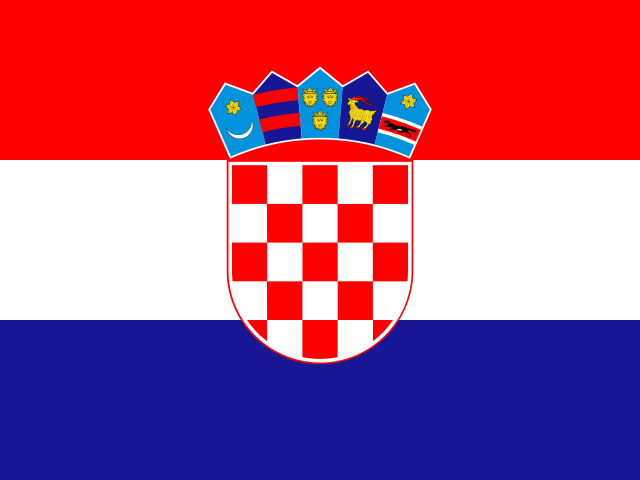
作為經濟成長和穩定的歐盟(歐盟)成員,克羅地亞對於公司和員工來說是一個很好的地方。如果您正在考慮擴展到克羅地亞,則需要知道如何為每位員工獲得克羅地亞工作簽證。如果沒有這些簽證,您可能會因不合規的員工而遭受罰款或延誤。​​ 

克羅埃西亞的工作簽證類型​​ 

Employees planning to work in Croatia will need a work permit and a residency permit. EU/EEA citizens can generally live and work in Croatia without a work visa or work permit. For longer stays, they typically must register their residence or temporary stay with Croatian authorities. If employees are from outside of the EU, they’ll need to obtain a work permit through their local Republic of Croatia diplomatic mission.​​ 

Most combined temporary residence and work permits for third-country nationals are issued for the employment period, up to 1 year. Longer stays usually require renewal or extension before expiry. However, Third-country nationals should apply to extend a work and residence permit at least 30 days before it expires if they need to continue working in the country. Croatia has adopted the EU Blue card directives, which is a type of work and residence permit applicable to highly-qualified third-country nationals. The EU Blue Card is generally valid for up to 2 years. If the employment contract is shorter, validity may be tied to the contract duration plus an additional period.​​ 

While the work and residence permit combination is the most common way for employees to obtain a work visa in Croatia, some may be eligible for a work registration certificate. These certificates are typically for consultants, performers, journalists, and members of a religious order. The work registration certificate is issued by the Ministry of Interior to perform contracted work for up to 90 days in a calendar year.​​ 

獲得克羅埃西亞工作簽證的要求​​ 

Previously, Croatia used a quota system for work and residence permits, which meant applicants could only get a work permit if the country was below its quota. The quota system was abolished as of January 1, 2021. It was replaced by a Foreigners Act framework generally based on a labour market test and employer-specific work and residence permit procedures.​​ 

Under a new Act, which regulates the entry, stay, and work of third-country nationals in Croatia, employers usually must first contact the country’s employment service (HZZ) for a labor market assessment to determine if there are suitable unemployed Croatian or other local labor market candidates for the position. This step may not be required for shortage occupations, statutory exemptions, or certain permit and worker-status categories. If the study does not find any qualified individuals, the employer can then proceed with applying for a work and residence permit for a non-EU national.​​ 

所有申請人都需要一些文件,包括:​​ 

  • 護照的副本​​ 
  • 適用於護照尺寸的相片​​ 
  • 在克羅埃西亞有能力養活自己的證據​​ 
  • 健康保險的憑証​​ 
  • 勞動契約​​ 
  • 學術資格和技能憑証​​ 
  • 公司註冊的憑証​​ 

希望取得歐盟藍卡的員工,必須來自歐盟以外的國家,並已完成學士學位課程。申請人還需要一份具有約束力的工作機會或有效的工作合約。 會員國通常會快速處理藍卡應徵程序,使其比傳統的工作和居留許可程序更快。​​ 

應徵流程​​ 

克羅地亞工作簽證應徵程序取決於特定的簽證類型和當地大使館的程序。 例如,有些大使館不需要預約,而是以先到先得的方式運作。​​ 

若要開始申請程序,應徵者需前往距離其克羅地亞居住地最近的行政警察局或其本國的大使館/領事館。 接下來,他們必須提交上述所有文件以及應徵。​​ 

Once the work and residence permit gets approved, the individual must pay EUR 75 for issuing the permit along with a separate biometric residence permit and administration fees. Croatia will order the residence permit once all the fees are paid, and the employee can typically pick it up at the police station about 3 weeks after paying the fees. Timing may vary by police station and case volume.​​ 

其他重要注意事項​​ 

歐盟藍卡持有人可攜帶配偶、子女及其他受養人等家庭成員前往克羅地亞。然而,持有定期工作和居留簽證的人需要申請家人來克羅地亞。此程序應在當地領事館進行,並包括有效旅行文件的副本、關係證明、足夠的財務證明和足夠的健康保險證明。​​ 

當僱主雇用第三國國民時,也必須考慮到必須維持克羅地亞、歐盟和瑞士國民在國際化僱員中的最低百分比,確保不會低於25% 。​​ 

探索 G-P 如何協助您管理全球團隊。​​ 

在G-P ,我們致力於打破全球業務的障礙,為世人打造求職機會均等的世界。並協助企業發掘勞動力的最大潛力。 無論您的團隊身在世界何處,我們都能幫助您完全符合當地法律,並確保從僱用、入職到支付薪資的一切流程都能快速簡便地完成。​​ 

進一步瞭解我們的 Global Growth Platform™ 如何協助您在全球發展團隊。​​ 

-​​ 

目前,G-P 不提供在該特定地點處理工作簽證或許可證的支持。​​