




الوجبات السريعة الرئيسية
-
الهيكل الفيدرالي، القواعد المحلية: في حين أن القوانين الفيدرالية (مثل قانون العمل وقانون الالتزامات) تحدد معايير التوظيف، فإن معدلات الضرائب المحددة والعطلات الرسمية والإجراءات الإدارية تختلف عبر كانتونات سويسرا 26 .
-
قواعد عمل صارمة تصريحية للشخص غير المنتمي للاتحاد الأوروبي أو EFTA موهوب: لتوظيف موظفين في سويسرا من غير أعضاء الاتحاد الأوروبي أو EFTA، عليك أن تظهر أولوية سوق العمل المحلية، وتحقق حصصا وطنية صارمة، وتحصل على موافقة تصاريح متعددة المستويات.
-
تتراوح نسبة عبء صاحب العمل بين 10%–20%: بالإضافة إلى الرواتب الأساسية، يتعين على أصحاب العمل وضع ميزانية للمساهمات الإلزامية والمعتادة عند التوظيف في سويسرا. يشمل ذلك التأمين ضد البطالة (AHV/IV/EO)، والتأمين ضد البطالة، والمعاشات التقاعدية المهنية (BVG)، والتأمين ضد الحوادث، ورواتب الشهر 13الثالث.
-
يحمل سوء التصنيف مكافآت بأثر رجعي لمدة خمس سنوات: يمكن أن يؤدي سوء تصنيف الموظفين كمقاولين عند التوظيف في سويسرا إلى فرض جزاءات مالية، بما في ذلك خمس سنوات من مدفوعات صاحب العمل بأثر رجعي ومدفوعات تأمين اجتماعي للموظفين، بالإضافة إلى الفائدة.
عدد سكان سويسرا 8.9 مليون عبارة عن مزيج من السويسرية والألمانية والفرنسية والإيطالية والبرتغالية وكوسوفو. يستخدم كل كانتون نفس العملة الوطنية - الفرنك السويسري. تشمل القطاعات الرئيسية التمويل والبنوك والمعدات الطبية والهندسة.
تُعد قوانين ضرائب الشركات المواتية وإمكانية الوصول الثقافي سببين لتوسع العديد من الشركات متعددة الجنسيات إلى سويسرا. سيخبرك دليلنا بكل ما تحتاج إلى معرفته عن التوظيف في سويسرا.
ما يجب معرفته قبل التوظيف في سويسرا
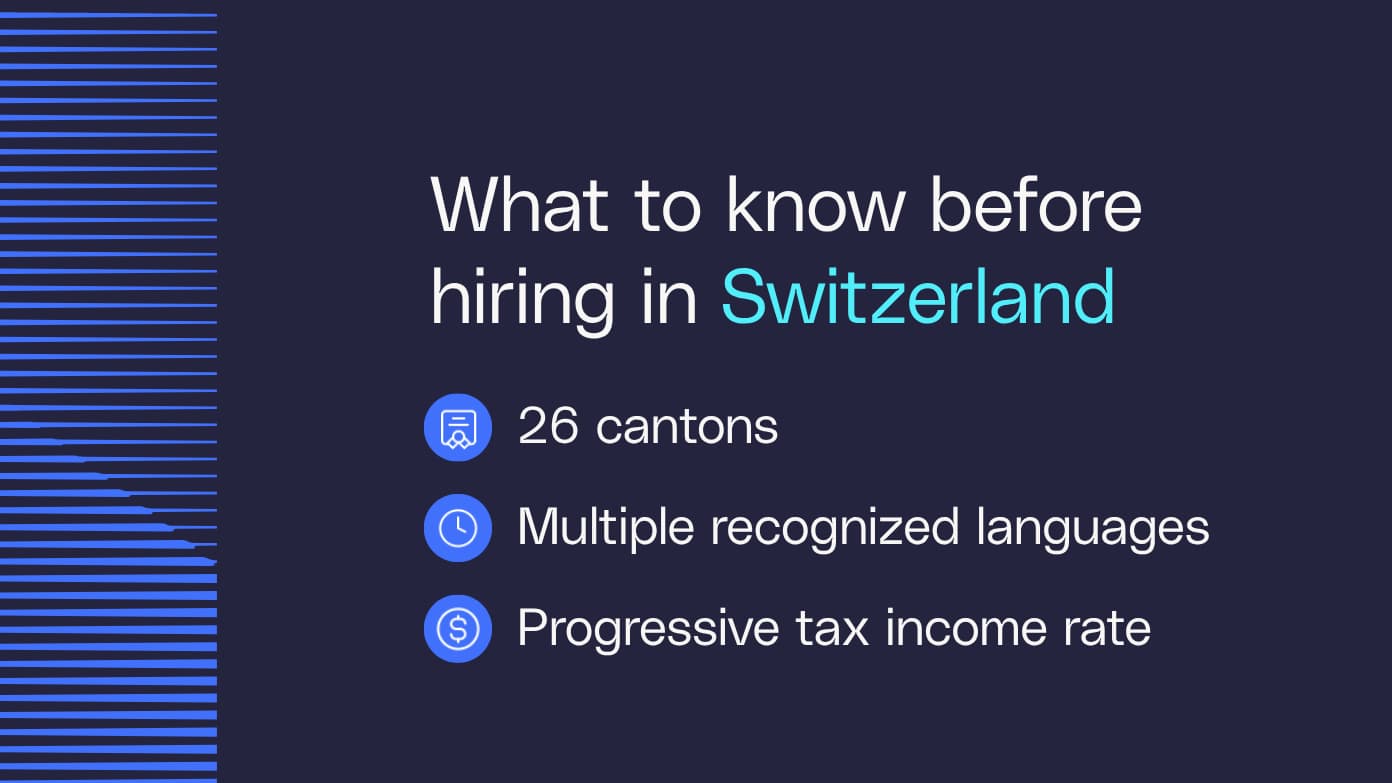
إذا كنت تقوم بتوسيع أعمالك إلى سويسرا لأول مرة، فهناك متطلبات قانونية مهمة يجب أن تكون على دراية بها. تؤثر هذه القواعد والقوانين على ممارسات التوظيف في سويسرا.
إذا لم تكن متأكدًا من أين تبدأ، فيمكن لـ G-P Gia™ ، وكيل الموارد البشرية العالمية المدعوم بالذكاء الاصطناعي (AI)، أن يجيب على أصعب أسئلتك ولابد عبر 50 دولة - بما في ذلك سويسرا - وجميع الولايات الأمريكية البالغ عددها 50 . قلل اعتمادك على محامين خارجيين وقلل من الوقت والتكلفة بنسبة تصل إلى 95٪ مع Gia.
دعونا نلقي نظرة على ثمانية أشياء يجب معرفتها عن التوظيف في سويسرا.
1. القوانين بين صاحب العمل والموظف
يجب أن تلتزم جميع العلاقات بين صاحب العمل والموظف بالقوانين التالية:
-
ريال سعودي 151.1 - القانون الاتحادي بشأن المساواة بين الجنسين
-
SR 220 - مدونة الالتزامات
-
SR 822.11 — قانون العمل
-
SR 822.14 — قانون مشاركة العمال
-
SR 823.11 — القانون الفيدرالي بشأن خدمات التوظيف وتوظيف الخدمات
-
SR 823.20 — قانون العمال المُنتدبين
تعترف سويسرا بالنقابات العمالية طالما أنها تلبي جميع المتطلبات القانونية.
2. كانتونات في سويسرا
تنقسم سويسرا إلى 26 كانتونات. على الرغم من أنها جميعاً تندرج تحت المظلة الوطنية السويسرية، إلا أنها كيانات قوية بحد ذاتها. لكل مقاطعة تقاليدها وثقافتها الفريدة. كما أن لديهم طرقهم الخاصة في الحكم الذاتي، بما في ذلك القوانين والدساتير والهيكل الحكومي.
عند توظيف موظفين في سويسرا، انتبه إلى الكانتون الذي تعلن فيه عن وظيفتك. ستمنحك معرفة كانتون إقامة المرشحين نظرة ثاقبة حول توقعات الترجمة، ومعدلات الضرائب التي يجب تضمينها في عقود العمل الخاصة بك، والاعتبارات المتعلقة بالإجازات التي يحق لهم الحصول عليها.
تحدد البلديات - الهيئات الحكومية الأصغر حجمًا الموجودة داخل كل إقليم - كيفية التوظيف في سويسرا.
3. سوق العمل في سويسرا
أكثر من 5 ملايين شخص يعملون في سوق العمل السويسري. معدل التوظيف هو 80 6 . للمقارنة، يبلغ معدل الاتحاد الأوروبي 75.8%. العمال يتمتعون بمهارات عالية ويحملون شهادات من مؤسسات التعليم العالي. فيما يتعلق بالتعليم في مرحلة الطفولة المبكرة والمدارس الثانوية، يختلف نظام التعليم السويسري بين الكانتونات. صنّف تصنيف المواهب العالمية الصادر عن المعهد الدولي للتنمية الإدارية (IMD) 2024 في المرتبة1 في العالم في مجال رعاية المواهب المحلية.
4. اللغات في سويسرا
تعد التعددية اللغوية عنصراً أساسياً في الثقافة السويسرية، ويعود ذلك إلى حد كبير إلى قانون اللغات. يعترف هذا القانون باللغات الألمانية والفرنسية والإيطالية والرومانشية كلغات وطنية. تُعد الألمانية والفرنسية والإيطالية أيضاً اللغات الرسمية للاتحاد. تُستخدم اللغة الرومانشية رسمياً في التواصل مع المتحدثين بها. يتحدث ما يقرب من ثلثي سكان الدولة أكثر من لغة واحدة. يتعلم الأطفال السويسريون لغتين وطنيتين على الأقل خلال سنوات تعليمهم المبكرة.
اللغة السويسرية الألمانية هي الأكثر انتشارًا عبر الكانتونات. الفرنسية شائعة في الكانتونات الغربية والإيطالية في الجنوب. الرومانش هي لغة أقل استخدامًا مشتقة من الشعب الرايتي، السكان الأوائل لمنطقة جبال الألب. بعض الكانتونات والديموغرافيات لها أيضًا لهجاتها وعامياتها الخاصة.
يجب أن تراعي جميع عقود العمل والمقابلات والمهام اللغة الأولى للشخص الذي تتم مقابلته أو الموظف. من الممارسات الجيدة ترجمة جميع المستندات وتعيين مترجم فوري عند الضرورة.
5. ساعات العمل والإجازات
ينظم قانون العمل السويسري ساعات العمل وقوانين أخرى. يبلغ الحد الأقصى لأسبوع العمل 4 45 ساعات للموظفين في المؤسسات الصناعية، وموظفي المكاتب، والفنيين، وموظفي المبيعات في شركات البيع بالتجزئة الكبيرة. أما بالنسبة لجميع الموظفين الآخرين، فهي 50 ساعات. يجب ألا تتجاوز ساعات العمل اليومية، بما في ذلك فترات الراحة والعمل الإضافي، 6 ساعات.14 في الواقع، يبلغ وقت العمل المعتاد في سويسرا 12.5 ساعات.
لا يُسمح بالعمل الإضافي إلا في ظل ظروف استثنائية. يجب تعويض ذلك بزيادة في الأجر 25% أو إجازة معادلة. يجب أن يحصل الموظفون على 11 ساعة متتالية من الراحة على الأقل كل يوم. يمكن تقليل هذا إلى 8 ساعة مرة واحدة في الأسبوع، طالما أن متوسط الراحة على مدى أسبوعين هو 11 ساعة على الأقل. يحصل العمال على استراحة مستمرة لا تقل عن 35 ساعة كل أسبوع، بما في ذلك يوم الأحد.
يحق للموظفين الحصول على إجازة مرضية لمدة ثلاثة أسابيع خلال السنة الأولى من العمل مع شركة. لكل كانتون إجازة مدفوعة الأجر وقيود مرضية خاصة به.
تحصل الموظفات الحوامل على 14 أسابيع من إجازة الأبوة المدفوعة الأجر ، ويحق للآباء الحصول على أسبوعين من إجازة الأبوة.
بغض النظر عن الكانتون الذي ينتمون إليه، يحصل كل موظف على أربعة أسابيع من الإجازة كل عام، أو خمسة أسابيع إذا كان عمر الموظف 20 أو أقل. يمكن للموظفين وأصحاب العمل التفاوض على بنود إضافية في عقودهم إذا رغبوا في ذلك.
تتمتع المقاطعات بأعيادها المحلية والرسمية الخاصة بها. اليوم الوطني في 1أغسطس هو العطلة الفيدرالية الوحيدة. إذا صادف اليوم الوطني يوم الثلاثاء أو الخميس، فمن الشائع منح الموظفين عطلة نهاية أسبوع طويلة. تحتفل سويسرا أيضاً برأس السنة الميلادية وعيد الفصح وعيد الميلاد، لكن اللوائح المحددة لتلك الأوقات تختلف بين أصحاب العمل. يمكن للموظفين اختيار الحصول على راتب إضافي بدلاً من أخذ إجازة مدفوعة الأجر.
6. عقود التوظيف
يمكن أن يكون الموظفون مؤقتين، أو يتم توفيرهم من قبل وكالة توظيف، أو بدوام جزئي، أو بدوام كامل. يُعتبر الشهر الأول من العمل فترة تجريبية. يمكنك تمديد ذلك بحد أقصى ثلاثة أشهر في عقدك. إذا اخترت في أي وقت إنهاء علاقة العمل، فيجب عليك تقديم إشعار قبل سبعة أيام على الأقل.
عقود العمل ليست مطلوبة ولكنها شائعة ويوصى بها بشدة لأن بعض الشروط لا يتم الاعتراف بها قانونًا إلا إذا كانت مكتوبة. العقود ملزمة. لا يمكن لأصحاب العمل مخالفة شروط العقد المتفق عليه. لدى سويسرا العديد من القوانين لحماية النقابات العمالية وبعض الموظفين، مثل النساء أو القصر. يُطلب من أصحاب العمل الحصول على خطاب مكتوب يوضح تاريخ بدء العمل، والوظيفة، والأجر، وعدد ساعات العمل التي سيعملها الموظفون كل أسبوع.
العقود غير المحددة المدة شائعة في سويسرا. تنظر المحاكم السويسرية إلى عقود "السلسلة" نظرة سلبية. عقود السلسلة هي سلسلة من العقود ذات المدة المحددة والتي يتم البدء فيها بالتعاقب مع نفس الموظف. يمكن اعتبار هذه الممارسة انتهاكاً للحقوق إذا تم استخدامها للتحايل على حماية التوظيف الدائم، مثل الأمن الوظيفي وفترات الإشعار. بمجرد انتهاء اليوم الأخير من العقد، تنتهي علاقة الموظف بصاحب العمل، دون الحاجة إلى أي إشعار.
يمكنك أنت وعضو فريقك الاتفاق على مدة متساوية لإعطاء إشعار المغادرة أو إشعار الإخطار. يجب ألا تقل مدة هذا الإشعار عن شهر واحد في السنة الأولى من العمل، وشهرين لكل مدة عمل تصل إلى تسع سنوات. ثلاثة أشهر هي المدة المعتادة بعد ذلك. لا يمكنك إنهاء خدمة الموظفين إذا كانوا حاملاً أو مريضين أو على إجازة رعاية طفل. لا تحتاج إلى دفع فصل عن العمل إلا إذا كان عمر الموظفين 50 أو أكبر وعملوا لديك لمدة 20سنوات أو أكثر.
G-P مؤسسة تُدير شؤون الموظفين مُنشئ جهات اتصال للتوظيف لمساعدتك في صياغة عقود العمل الممثَّلة عندما تقوم بتوظيف موظفين في سويسرا يستوفون جميع المتطلبات القانونية وأفضل الممارسات.
7. التعويض والميزات
ينص القانون الفيدرالي السويسري بشأن المساواة بين الجنسين (GEA) على إلزام جميع الشركات التي تضم 100 موظفين أو أكثر بإجراء تدقيق داخلي لضمان إنفاذ المساواة في الأجور.
ليس لدى سويسرا دولة فيدرالية واحدة. يمكن أن تأتي التزامات الحد الأدنى للأجور من الكانتونات أو البلديات، أو اتفاقيات العمل الجماعية، أو عقود العمل لقطاعات محددة. بخلاف ذلك، يتم تحديد الأجر بموجب العقد وممارسات السوق. يتقاضى الموظفون رواتبهم مرة واحدة في نهاية الشهر.
يشمل العمل الإضافي القانوني الوقت الذي يتم العمل فيه بما يتجاوز الحد الأقصى لساعات العمل القانونية. يختلف العمل الإضافي القانوني عن العمل الإضافي التعاقدي، ولا يُسمح به إلا خلال نوبات العمل النهارية أو المسائية في أيام العمل. يجب تعويض ذلك بزيادة لا تقل عن 254%.
يمكن للموظفين أيضًا اختيار الإجازة بدلاً من زيادة الأجر. يجب ألا يتجاوز العمل الإضافي القانوني أبدًا ساعتين في اليوم ولا يجوز أبدًا أن يتجاوز 170 ساعة لأسابيع 45أو 140 ساعة لأسابيع العمل 50ساعة. يمكن منح بعض الاستثناءات في حالات الطوارئ.
يدفع أصحاب العمل عادةً 80% - بحد أقصى سنوي - من راتب الموظف إذا تعرض لإصابة متعلقة بالعمل. قد يختلف المبلغ باختلاف القطاع أو خطة التأمين المحددة. أصحاب العمل مسؤولون عن إنشاء علاقة تأمين اجتماعي بين موظفيهم ومكتب التأمين الاجتماعي في كانتونهم. يشمل الضمان الاجتماعي المساهمات في تأمين إجازة الأمومة (MSE)، وتأمين العجز (DI)، وتأمين إعانات الطفل (FZ)، والمعاش التقاعدي، أو تأمين الشيخوخة والباقين على قيد الحياة (OASI). شؤون اجتماعية معدلات الأمان هي 6.4% 6بالنسبة4لصاحب العمل و 7.8% بالنسبة للموظف.
المكافآت وراتب الشهر13 ليسا إلزاميّين ولكنهما شائعان. يجوز لأصحاب العمل منح المكافآت بموجب عقد أو وفقًا لتقديرهم. تجدر الإشارة إلى أن سويسرا لديها مبادئ توجيهية صارمة بشأن المكافآت في القطاع المالي. يهدف هذا إلى منع المخاطرة المفرطة وضمان عدم تقويض ممارسات التعويض للاستقرار المالي.
إذا كان أحد الموظفين يعمل في شركتك لمدة تزيد عن ثلاثة أشهر، ويعمل ثماني ساعات على الأقل كل أسبوع، ويلبي متطلبات الدخل، فيمكنه المشاركة في صندوق المعاشات الذي يرعاه صاحب العمل. الحد الأدنى الحالي لمعاش AHV هو 1 ، 260 فرنك سويسري. يتحمل أصحاب العمل أيضاً مسؤولية التأمين ضد الحوادث.
يمكنك بسهولة إدارة خطط المزايا مع G-P مؤسسة تُدير شؤون الموظفين. تتابع خبراءنا داخليون باستمرار قوانين العمل لتلبية اللوائح والقواعد الخاصة بالدولة. ابن وقم بإدارة خطط المزايا من خلال منصتنا لتوفير تجربة موظف سلسة.
8. الضرائب
معدل ضريبة الدخل الفيدرالية في سويسرا تصاعدي، حيث 5 11 لأعلى شريحة دخل. من المهم ملاحظة أن الضرائب الكانتونية والبلدية تنطبق أيضاً. قد يؤثر هذا بشكل كبير على إجمالي مبلغ الضريبة المستحقة عليك، وذلك بحسب مكان إقامتك. معدل ضريبة القيمة المضافة الفيدرالية هو 8.1%.
9. المساواة، وخصوصية البيانات، وممارسات التوظيف
يجب أن تتوافق ممارسات التوظيف والتعيين مع قانون المساواة بين الجنسين الفيدرالي. يمنع هذا التمييز المباشر وغير المباشر القائم على النوع الاجتماعي طوال دورة حياة التوظيف، بما في ذلك:
-
التوظيف
-
الدفع
-
توزيع المهام
-
ترقية
-
التدريب
-
تحرش
-
الفصل من العمل.
يتعين على أصحاب العمل التأكد من المساواة في الأجور مقابل العمل ذي القيمة المتساوية. يجب تطبيق المعايير الموضوعية المتعلقة بالوظيفة فيما يتعلق بالتوظيف والتعويض والترقية وقرارات الترقية.
يتعين على أصحاب العمل الذين لديهم 100 موظف أو أكثر في سويسرا إجراء تحليل داخلي للمساواة في الأجور باستخدام طريقة علمية صالحة. يجب التحقق من التحليل بشكل مستقل وإبلاغ النتائج للموظفين في غضون الإطار الزمني المطلوب. هذا الأمر منفصل عن الالتزام العام بالمساواة في الأجور لجميع أصحاب العمل.
يجب جمع ومعالجة البيانات الشخصية للمرشحين وفقًا لمتطلبات حماية البيانات السويسرية. ويشمل ذلك القانون الاتحادي بشأن حماية البيانات والحدود الخاصة بالتوظيف في القانون المدني السويسري. يجب أن تكون بيانات التوظيف كالتالي:
-
يقتصر على ما هو ضروري لتقييم مدى ملاءمة الشخص للدور
-
تمت معالجتها بشفافية وأمان
-
يُحتفظ به فقط طالما دعت الحاجة.
لا يمكن إجراء فحوصات الخلفية إلا عندما تكون متناسبة وذات صلة بالوظيفة ومُفصح عنها بشكل صحيح.
نماذج التوظيف للشركات العالمية في سويسرا
يعتمد النموذج الأمثل عند اتخاذ قرار توظيف موظفين في سويسرا على أهداف عملك الشاملة.
| نموذج | الأفضل لـ | النقاط الرئيسية | المخاطر الرئيسية |
|---|---|---|---|
| التسجيل المباشر لصاحب العمل | التوظيف في سويسرا بدون وجود كيان محلي. | قم بالتسجيل مع التأمين الاجتماعي السويسري وسلطات الضرائب. إدارة نظام الرواتب السويسري. إدارة التصاريح والمزايا والتعاقد. | عبء إداري كبير. اختلافات العملية الكانتونية. مخاطر حدوث أخطاء في الرواتب أو الضرائب أو التصاريح. |
| مؤسسة تدير شؤون الموظفين، مثل G-P مؤسسة تدير شؤون الموظفين | عملية التوظيف سريعة في سويسرا دون إنشاء كيان خاص. | مؤسسة تُدير شؤون الموظفين هي صاحب العمل القانوني. يتولى مقدم الخدمة إدارة الرواتب والمزايا والعقود. يجب الحصول على ترخيص مناسب لتأجير الموظفين. | مخاطر مقدمي الخدمات غير المرخصين. سيطرة أقل مباشرة. لا يزال بإمكان العملاء القيام بواجبات في مكان العمل والإشراف. |
| شركة تابعة أو فرع | عمليات طويلة الأمد في سويسرا. | يخلق وجود محلي رسمي. يدعم التوظيف المباشر والإدارة المحلية. الأفضل للفرق الكبيرة أو الدائمة. | تكلفة إعداد وصيانة أعلى. المزيد من الشركات, كشوف المرتبات, والأشياء البشرية ولكن الواجبات. |
| مقاول مستقل | عمل قصير الأجل، متخصص، قائم على المشاريع. | يتعين على المقاولين العمل بشكل مستقل. استخدم مصطلحات تعتمد على المخرجات. تحقق من وضعك كعامل لحسابك الخاص كلما أمكن ذلك. | مخاطر التصنيف الخاطئ. العودة للتأمين الاجتماعي والتعرض للضرائب. يمكن تطبيق حقوق العمل بأثر رجعي. |
أفضل مراكز التوظيف في سويسرا
تشتهر بعض المدن السويسرية بصناعات معينة. إن معرفة ما تقدمه كل مدينة يمكن أن يساعدك في توجيه جهود التوظيف إلى المكان المناسب وملء الوظائف بشكل أسرع عند التوظيف في سويسرا.
أفضل مراكز المواهب في سويسرا هي:
-
زيورخ هي أكبر مدينة في سويسرا. يُعرف مركزها المالي والتجاري الرئيسي بخدماته المصرفية والتكنولوجية والمهنية. توجد هنا البنوك الرئيسية مثل يو بي إس، وجوليوس باير، وزد كيه بي.
-
جنيف مركز دولي يضم العديد من المنظمات غير الربحية العالمية والشركات في مجال المالية والتجارة. وهي موطن للمنظمات الدولية المهمة مثل المقر الأوروبي للأمم المتحدة، ومنظمة الصحة العالمية، ومنظمة التجارة العالمية، والصليب الأحمر.
-
تشتهر مدينة بازل بصناعاتها الدوائية والكيميائية وعلوم الحياة. تتمتع الشركة بحضور مالي قوي، وهي المقر الرئيسي لشركات كبرى مثل روش ونوفارتيس، بالإضافة إلى العديد من شركات التكنولوجيا الحيوية الصغيرة ومؤسسات البحث.
-
تُعد برن مركزاً للحكومة والإدارة وقطاعات الخدمات. تتمركز هنا العديد من الوظائف والأدوار الحكومية الفيدرالية في مجالات الرعاية الصحية والتعليم والتصنيع.
-
تشتهر لوزان بالتعليم والتكنولوجيا. تتفوق هذه المدينة الناطقة بالفرنسية في التدريس والبحث المتعلق بعلوم الحياة وتكنولوجيا المعلومات والإدارة الرياضية.
الصناعات الرئيسية في سويسرا
يساعدك فهم الصناعات الرئيسية في سويسرا على تحديد الرواتب والمزايا عند توظيف الموظفين في سويسرا. يمكنك استخدام هذه الرؤية لاتخاذ خيارات ذكية بشأن مكان استثمار وتنمية قدراتك.
تشمل الصناعات الرئيسية في سويسرا ما يلي:
-
الخدمات المالية: تشتهر سويسرا بخدماتها المصرفية والتأمين وإدارة الأصول. تجذب الاستقرار السياسي للدولة، وقوانين السرية، وخبرتها عملاء من جميع أنحاء العالم. تتخذ بنوك عالمية كبرى مثل بنك يو بي إس مقراتها الرئيسية هنا. تشمل المواهب المتخصصة المستشارين الماليين ومخططي الثروات ومحللي الاستثمار.
-
المستحضرات الصيدلانية وعلوم الحياة: تستضيف سويسرا العديد من الشركات الرائدة في مجال الأدوية والتكنولوجيا الحيوية والأجهزة الطبية. تتخذ شركات عالمية رائدة مثل روش ونوفارتيس من هذه المنطقة مقراً لها. يركز هذا القطاع على المنتجات ذات القيمة العالية، مثل اللقاحات والأدوية المتخصصة والأمصال. يشمل مصطلح "شخص متخصص" متخصصي البحث والتطوير والعلماء والمهندسين.
-
الآلات، والأجهزة الدقيقة، والهندسة: سويسرا تتصدر العالم في مجال الآلات والساعات والأجهزة عالية الدقة. تشمل المواهب المتخصصة العديد من المناصب الهندسية مثل المهندسين الميكانيكيين والكهربائيين ومهندسي التصنيع.
-
تكنولوجيا المعلومات والاتصالات: سويسرا رائدة في تكنولوجيا البلوك تشين والعملات المشفرة، مما يجذب الشركات الناشئة وشركات التمويل اللامركزي الراسخة. تشمل المواهب المتخصصة مطوري البرامج وعلماء البيانات ومهندسي السحابة.
-
المواد الكيميائية: تضم صناعة المواد الكيميائية شركات كبرى في قطاع العطور والروائح ، مثل جيفودان ودي إس إم فيرمينيتش. يشمل مصطلح "شخص متخصص" متخصصي البحث والتطوير والمهندسين والعلماء.
تكلفة توظيف موظف في سويسرا
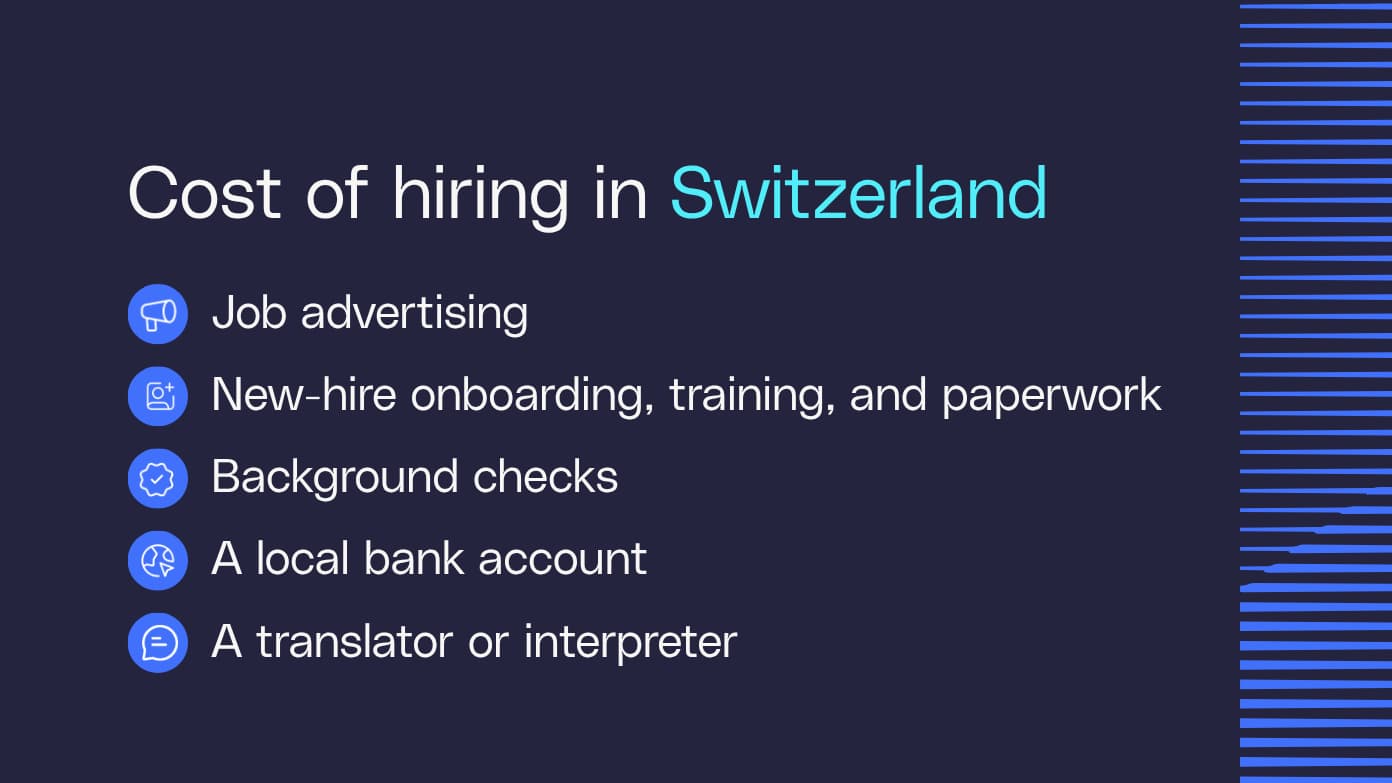
سواء كنت توظف موظفًا واحدًا أو فريقًا كاملاً، فإن عملية التوظيف في سويسرا تأتي مع نفقات لا مفر منها.
ضع ميزانية لما يلي:
-
الإعلان عن الوظائف
-
التأهيل والتدريب والأعمال الورقية
-
برنامج تتبع مقدم الطلب
-
فحص الخلفية
-
أي معدات خاصة للموظفين
-
مترجم أو مترجم فوري (إن وجد)
-
نفقات السفر للسفر من وإلى سويسرا، إذا لزم الأمر
-
AHV/IV/EO
-
تأمين البطالة
-
التأمين ضد حوادث العمل
-
مساهمات العائلة
-
تأمين بدل المرض اليومي
-
استحقاق إجازة الموظف
-
إجازة مدفوعة الأجر للموظف واستحقاق الوقت المرضي
وفقًا لـ Gia ، فإن إجمالي معدل عبء صاحب العمل السنوي في سويسرا، والذي يشمل التكاليف التي يتم تكبدها بالإضافة إلى الرواتب، يتراوح بين 10% و 20% من إجمالي الراتب. ستعتمد المعدلات على راتب الموظف، والقطاع الذي يعمل فيه، والكانتون الذي ينتمي إليه. تستفيد Gia من خبرة G-Pالتي تزيد عن 13سنوات في مجال التوظيف العالمي، إلى جانب رؤى مستقاة من ما يقرب من مليون سيناريو واقعي، لتقديم معلومات دقيقة ومحدثة حول قوانين التوظيف.
ما الذي تحتاجه الشركة لتوظيفه في سويسرا؟
الاتحاد الأوروبي/الرابطة الأوروبية للتجارة الحرة مقابل العمال من خارج الاتحاد الأوروبي/الرابطة الأوروبية للتجارة الحرة
بفضل اتفاقية حرية تنقل الأشخاص (AFMP) ، فإن توظيف مواطني الدول الأعضاء في الاتحاد الأوروبي/الرابطة الأوروبية للتجارة الحرة ينطوي على القليل من العقبات الإدارية. لا يحتاج أصحاب العمل إلى إعطاء الأولوية للعمال السويسريين المحليين أو تبرير سبب اختيار عامل من الاتحاد الأوروبي/الرابطة الأوروبية للتجارة الحرة. بالنسبة للعقود قصيرة الأجل (حتى 90 4 أيام في السنة التقويمية)، تحتاج الشركات فقط إلى تقديم إشعار عبر الإنترنت قبل أن يبدأ الموظف العمل. بالنسبة للإقامات الأطول، يقوم الموظف بالتسجيل لدى بلدية الإقامة السويسرية المحلية للحصول على تصريح إقامة/ تصريح عمل (مثل تصريح L أو B). وهذا يمنحهم إمكانية الوصول الفوري إلى سوق العمل السويسري.
مواطنو الدول غير الأعضاء في الاتحاد الأوروبي/الرابطة الأوروبية للتجارة الحرة
إن توظيف المرشحين من دول خارج الاتحاد الأوروبي/الرابطة الأوروبية للتجارة الحرة (بما في ذلك المملكة المتحدة والولايات المتحدة) يخضع لمزيد من التنظيم. بموجب القانون الاتحادي بشأن الأجانب والاندماج (FNIA) ، يتعين على أصحاب العمل إثبات فشل جهود التوظيف المحلية. تقتصر تصاريح العمل لغير مواطني الاتحاد الأوروبي/الرابطة الأوروبية للتجارة الحرة بشكل شبه حصري على موظفين مثل المديرين أو كبار المتخصصين أو خريجي الجامعات ذوي الخبرة المتخصصة.
حصص التصاريح والجدول الزمني الإداري
تفرض الحكومة السويسرية حصة وطنية سنوية صارمة على تصاريح العمل لغير مواطني الاتحاد الأوروبي/الرابطة الأوروبية للتجارة الحرة. يتطلب عقد العمل عملية موافقة متعددة المستويات تشمل سلطات العمل في الكانتونات وأمانة الدولة للهجرة (SEM). يجب على أصحاب العمل بدء طلب طلب التصريح مقدمًا. لا يمكن للموظف أن يبدأ العمل إلا بعد الحصول على تصريح رسمي.
من مصلحتك إقامة علاقة مع المكاتب الاقتصادية المحلية أو السفارة في الكانتون. لا تحتاج إلى كيان قانوني للتوظيف في سويسرا، ولكن إذا اخترت تأسيس شركة سويسرية، فيمكنك الاختيار بين:
-
ملكية فردية لمالك واحد
-
شراكة عامة
-
شراكة محدودة
-
شركة أو شركة مساهمة
-
شركة مساهمة محدودة
-
شركة تابعة
-
فرع محلي
تُعد الفروع مسارًا شائعًا للشركات الدولية، وتتطلب منك دفع الضرائب المحلية والحفاظ على مقيم سويسري واحد على الأقل يتمتع بسلطة قانونية. يجب عليك تجهيز جميع الوثائق القانونية والعقود والحسابات المالية القائمة.
قم بتوظيف موظفين في سويسرا دون إنشاء كيان خاص بك مع G-P مؤسسة تدير شؤون الموظفين. قم ببناء فريقك في سويسرا بتكلفة أقل وبراحة بال تامة بأنك تلتزم بالمتطلبات الفريدة لكل كانتون.
خطوات التوظيف في سويسرا
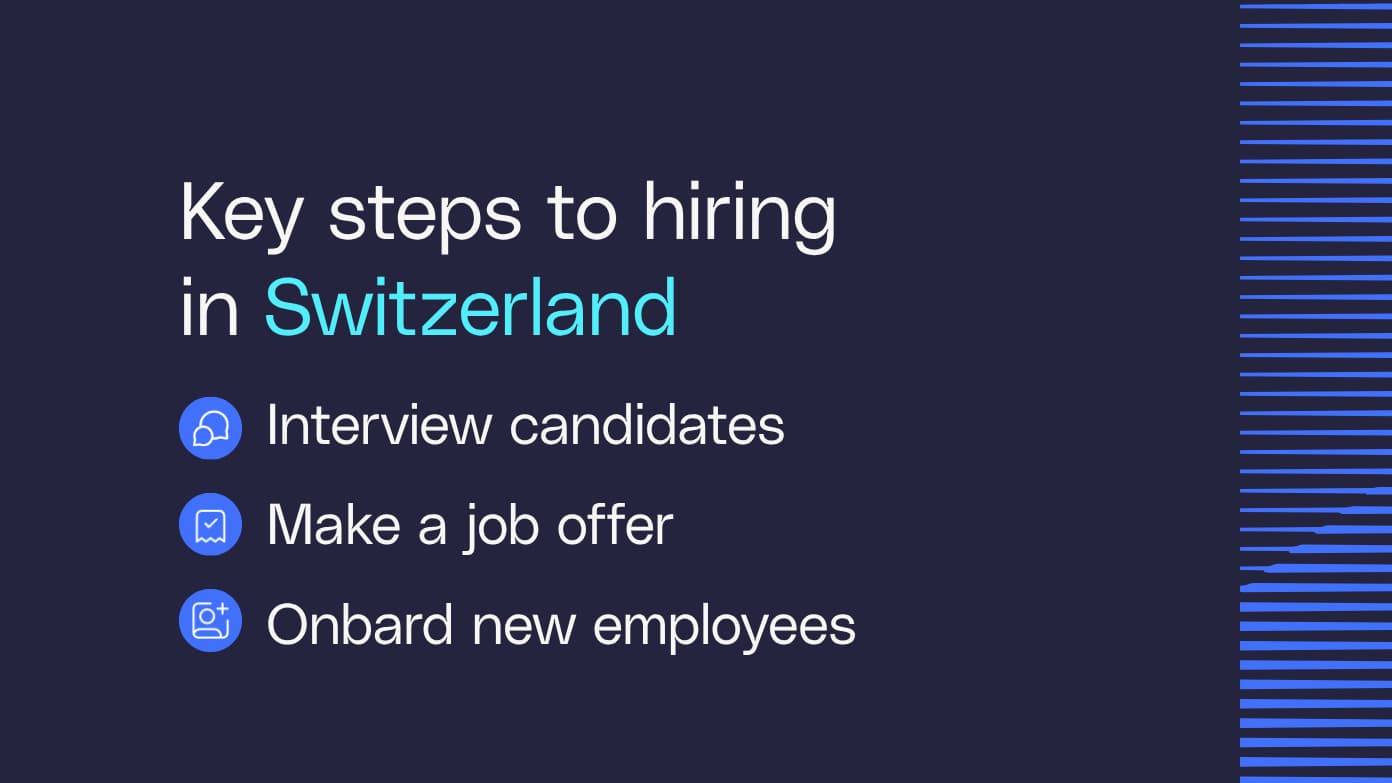
تتبع عملية التوظيف في سويسرا خمس خطوات أساسية: الإعلان عن الوظيفة، وتقييم الطلبات، وإجراء المقابلات مع المرشحين، وإرسال عروض العمل، وتعيين الموظفين الجدد.
1. الإعلان عن الوظائف الشاغرة
أولاً، قم بإنشاء وصف وظيفي مفصل. حدد الدور والمسؤوليات والمؤهلات التي تحتاجها. بالنسبة لبعض المهن ذات معدلات البطالة المرتفعة، يتعين على أصحاب العمل قانونًا إخطار مكاتب التوظيف المحلية بالوظائف الشاغرة قبل الإعلان عنها علنًا. وهذا يضمن أولوية الوصول للباحثين عن عمل المسجلين والامتثال للقانون الاتحادي بشأن خدمات التوظيف.
2. تقييم التطبيقات
بمجرد أن يتقدم الباحثون عن عمل بطلباتهم لشغل وظائفكم الجديدة، يمكنكم تقييم طلباتهم وتحديد المرشحين الأنسب للوظيفة. يحظر القانون السويسري التمييز على أساس الجنس أو العمر أو الأصل أو العرق أو الدين أو الإعاقة أو التوجه الجنسي أو غيرها من الخصائص المحمية في جميع مراحل التوظيف. تم توضيح ذلك في الدستور الفيدرالي السويسري وقانون المساواة بين الجنسين.
تحقق جيدًا من أن إعلانات الوظائف ومعايير الاختيار وأسئلة المقابلة خالية من التحيز.
3. مقابلة المُرشّحين
بعد ذلك، قم بإجراء مقابلات مع المرشحين الذين وصلوا إلى قائمتك المختصرة. استخدم معايير اختيار مناسبة للوظيفة ومقابلات منظمة لضمان العدالة والاتساق. يمكنGia مساعدتك في إنشاء أسئلة مقابلات تتبع قوانين مكافحة التمييز عند توظيف الموظفين في سويسرا، حتى تتمكن من العثور على الأنسب للوظيفة مع الالتزام باللوائح المحلية.
من أفضل الممارسات الاحتفاظ بتوثيق عملية التوظيف، بما في ذلك ملاحظات المقابلة وقرارات الاختيار، لمدة خمس سنوات على الأقل.
4. تقديم عروض العمل
حان الوقت الآن لإخطار المرشح الذي اخترته. صياغة عقد عمل مكتوب يتوافق مع قانون العمل السويسري. يجب أن يتضمن العقد شروطًا أساسية مثل المسمى الوظيفي والمهام والراتب وساعات العمل وفترات الإخطار وأي اتفاقيات مفاوضة جماعية (CBAs) معمول بها.
5. ضم موظفين جدد.
تسجيل الموظف الجديد في نظام الضمان الاجتماعي السويسري (AHV/AVS)، والتأمين ضد الحوادث، وصندوق التقاعد (BVG/LPP)، وعند الاقتضاء، لدى السلطات الضريبية ذات الصلة. إعداد كشوف الرواتب لضمان دفع الرواتب الصحيحة، وخصومات الضمان الاجتماعي، ومساهمات المعاش التقاعدي، والضرائب.
تعيين مقاولين في سويسرا
يمكن أن يكون العمل مع المقاولين المستقلين في سويسرا طريقة فعالة من حيث التكلفة لاختبار السوق وبناء حضور دون التزام الموظفين بدوام كامل. يفهم المقاولون المقيمون في سويسرا سلوك المستهلك المحلي وقواعده وممارساته التجارية. سيكونون مستعدين لبدء العمل بسرعة باستخدام معداتهم الخاصة وعمليات العمل المعمول بها.
يُتيح لك توظيف المقاولين تعديل قوة عاملتك بسهولة بناءً على احتياجات عملك، دون تعقيدات وتكاليف التوظيف.
قبل إبرام اتفاقية مع مقاول مستقل في سويسرا، ضع في اعتبارك ما يلي:
1. الموظفون مقابل المقاولين المستقلين
من المهم فهم الفرق بين الموظفين والمقاولين المستقلين. في سويسرا، غالباً ما تتضمن عقود العمل للموظفين بنوداً حصرية وتحدد ساعات العمل ومكان العمل والواجبات. تركز اتفاقيات الخدمات للمقاولين على المخرجات والنتائج، مع التأكيد على استقلالية العامل واستقلاليته.
تقوم الشركات بتعيين موظفين للقيام بالعمل، وفي المقابل، تدفع لهم راتبًا أو أجرًا منتظمًا. يجب على المقاولين ترتيب خطط الضمان الاجتماعي والتقاعد الخاصة بهم. على عكس الموظفين، يقوم المقاولون بتحديد جداولهم الزمنية، ويستخدمون معداتهم الخاصة، ويعملون على مشاريع محددة، بدلاً من أن يكون لهم دور مستمر.
2. جزاءات سوء تصنيف
تصنيف شخص كمقاول عندما لا يكون كذلك قد يؤدي إلى جزاءات خطيرة. إذا حدث تأخير أثناء جهودك للتوظيف في سويسرا، فقد تحتاج إلى:
-
دفع حصة صاحب العمل والموظف من مساهمات الضمان الاجتماعي بأثر رجعي لمدة تصل إلى خمس سنوات. ويشمل ذلك المساهمات في تأمين المسنين والناجين (OASI)، والتأمين ضد العجز، والتأمين ضد البطالة.
-
دفع رسوم الفائدة والغرامات المحسوبة بناءً على المبلغ المستحق ومدة التأخير.
-
عمليات تدقيق السلوك الوجهي ومراجعات الامتثال من السلطات السويسرية، مثل أمانة الدولة للشؤون الاقتصادية (SECO)، والتي يمكن أن تؤدي إلى مزيد من إجراءات الإنفاذ إذا تم اكتشاف سوء تصنيف.
3. كيفية الدفع للمقاولين في سويسرا
يُزيل G-P Contractor™ عملية التوظيف ودفع رواتب المقاولين المعقدة والمستهلكة للوقت. يمكنك إنشاء وإصدار العقود ودفع رواتب المقاولين ببضع نقرات فقط، مع ضمان عملية ممتثل.
تعيين الموظفين والمقاولين في سويسرا مع G-P
تساعد منتجاتنا التي تعمل بنظام SaaS والذكاء الاصطناعي (AI) - مؤسسة تُدير شؤون الموظفين و المقاولين و Gia - الشركات من جميع الأحجام على بناء فرق عالمية وإدارتها.
بفضل خبرتها التي تزيد عن عقد من الزمان، وأكبر فريق من الخبراء في الشؤون البشرية والقانونية، وقاعدة معرفية عالمية خاصة، تُعد G-P الشركة الرائدة المعترف بها في مجال التوظيف العالمي عندما تحتاج إلى توظيف موظفين في سويسرا.
اجعل توسعك إلى سويسرا أسهل مع G-P. تواصل معنا أو احجز عرضًا تجريبيًا اليوم.