









Key takeaways
-
Agility is the new ticket to the top: Successful entrepreneurs turn global complexity into a competitive advantage by automating administrative noise.
-
AI levels the playing field: AI-powered tools like G-P Gia™ allow startups to achieve enterprise-level growth without enterprise-level headcount.
-
Universalism in talent: Shifting from high-cost hubs to a borderless workforce helps startups compete with enterprise giants.
-
Human agency: The goal of AI is to let leaders focus on their business rather than tracking tax codes.
The World Economic Forum in Davos gathered leaders from every corner of the globe to discuss macro-economic shifts and the AI-native era. While global giants debated high-level policy, G-P Founder and CEO Nicole Sahin was on the ground talking to serial entrepreneurs and disruptors who are moving the needle.
Startups scaling today face two existential threats: the crushing weight of regulatory complexity and an intense competition for local tech talent. From Nicole’s conversations, a common thread connected every story. The most successful founders don't let global complexity slow them down. Instead, they use it to get ahead.
Protecting your business in the regulatory Wild West
Global regulations don't make exceptions. They don’t scale down for smaller players. Renat Heuberger, a serial entrepreneur, investor, and CEO of Terra Impact Ventures, noted this paradox during his sit-down with Nicole.
“The laws are the same, whether you’re a big, massive, multibillion company or you're a small startup. But [the giants] have whole teams of corporate labor lawyers. As a startup, we don't have that. So we need to be ultra-smart in having the right resources.”
Alex Bates, Founder of HelloSky, described the international landscape as a shifting frontier. “When you go international, it's the Wild West. For us as a software company, we run into GDPR, the EU AI Act — and they’re changing those regulations constantly, so it's too much for any company to keep up with.”
For a startup, burning energy on international mandates is a fatal mistake. The legacy approach is to hire an army of lawyers. The modern strategy is automation.
If you’re ready to begin your global journey, our guide on expanding a startup internationally gives you a step-by-step roadmap .
Rather than a manual "check-the-box" exercise or a one-time paperwork filing, compliance is a dynamic process. By using automated compliance technology, founders can ensure they follow local labor laws in real time. To see this in action, check out our employer of record for startups guide.
Winning the talent competition by switching up the rules
Companies that try to outbid legacy giants in traditional tech hubs struggle to keep pace. The founders that pull ahead are those that look beyond their own backyards for talent.
Thomas Serval, Founder and CEO of Baracoda, shared how he outmaneuvers giants by leaning into "universalism." This is the belief that talent is equally distributed globally, even if opportunity isn't. He identifies high-potential talent early rather than matching inflated salaries in saturated markets.
“Our competition is either a startup that will recruit and give full ownership or a large corporation like Google,” Thomas told Nicole. He emphasizes that retention is even more critical than the initial hire. Thomas describes turnover as “funding the learning curve to the benefit of another.”
Susan Hunt Stevens, Founder and CEO of WeSpire, attributed her success to being open to the world from day one. Embracing a borderless workforce is a resilience strategy.
“Our business ran because we could hire globally. We had people in Colombia. We had people in Poland. That gave us the ability to get the best talent for the best price. If we could do it, anyone can do it.”
Susan Hunt Stevens
Founder and CEO of WeSpire
Reclaiming your time and focus
Modern founders no longer build internal systems to fight these battles. Instead, they use proven infrastructure and expertise to bypass regulatory hurdles.
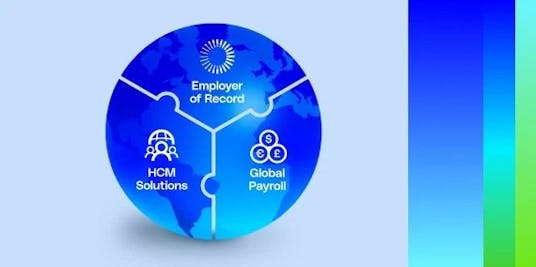
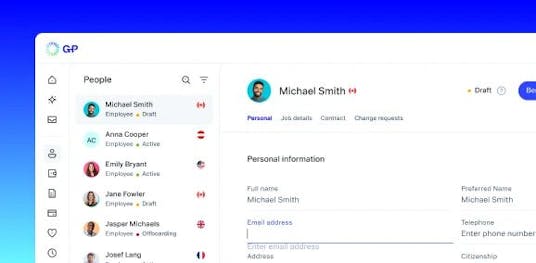
G-P simplifies global expansion so you can focus on your business. By using SaaS- and AI-powered global employment products like EOR, Contractor, and Gia, startups can achieve enterprise-level results without the headcount.
Make your next move a global one
The interviews conducted by Nicole Sahin at Davos made one thing clear: The gap between Goliaths and Davids is closing. You can tackle the complexities of global tax codes and labor laws with the right partner. That’s where G-P comes in.
Download our global hiring guide for startups and build your borderless workforce today.