





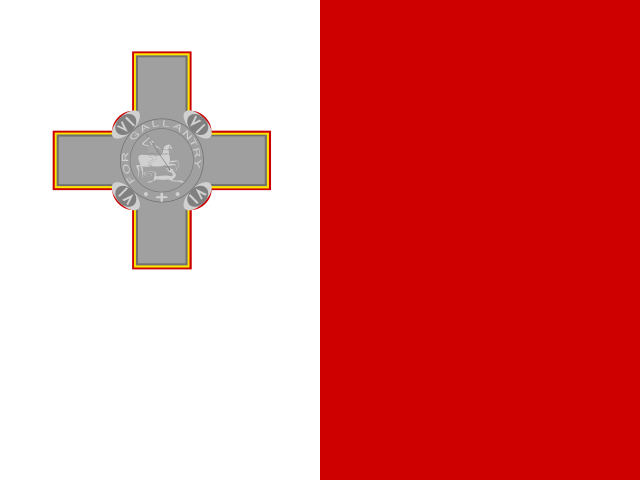
Malta is a small European country located between Sicily and the North African coast. The archipelago is only 122 square miles, which makes it one of the smallest but most densely populated countries in the world. Today, it’s known for its historic sites related to a long succession of rulers from different nations.
If your company wants to expand to Malta, you need the help of a global EOR such as G-P. Our team helps companies expand to countries around the world, including Malta. Through Malta payroll outsourcing and our solution, you can work in Malta quickly without worrying about meeting the country’s compliance laws.
Taxation Rules in Malta
Malta’s taxation laws will impact both your company and your employees. The corporate income tax rate is 35% of taxable profits. Malta’s shareholder tax refund system may reduce the effective tax burden for certain shareholders., and employees and employers must generally each contribute 10% of gross or basic salary to social security, subject to weekly contribution caps and applicable employee category rules. Employees also need to pay income taxes at progressive rates from 0% to 35%, depending on annual income and tax status. Malta applies different bands for single, married, parent, and non-resident taxpayers. Employers are required to deduct income tax from an employee’s paycheck through Malta’s PAYE-style withholding system, known as the Final Settlement System (FSS)., so you need to ensure that you’re following the right laws.
Malta Payroll Options for Companies
Companies expanding to Malta can take advantage of four different Malta payroll options:
- Internal: Establishing an internal payroll is one way to pay your employees right from your subsidiary. However, you’ll need to hire a large HR staff and make sure you have the budget to sustain the infrastructure.
- Remote: Many companies cannot support an internal payroll and need another option. Using your parent company’s remote payroll will ensure that your employees get paid, but you’ll need to follow different employment compliance laws per country.
- Malta payroll processing company: If you want to work with a Malta payroll processing company, we recommend choosing one with a great reputation. Your company will be responsible for this company’s actions, including any mistakes.
- Malta payroll outsourcing: Deciding on Malta payroll outsourcing with G-P will give you ultimate freedom and peace of mind. We will add your employees to our payroll and also handle compliance on your behalf.
How to Set Up a Payroll in Malta
You may want to start your payroll as soon as you decide to work in Malta, but you’ll need to bypass several restrictions first. The most important is your subsidiary. Malta generally requires a local legal presence or employer registration before you set up payroll or begin employing directly. This does not always have to be a registered subsidiary. A branch, other local registration, existing Maltese entity, or employer-of-record arrangement may be available depending on the setup. The only exception is working with a global EOR, such as G-P. Instead of establishing your own subsidiary, you can use our existing entity to work fast.
Entitlement/Termination Terms
Entitlement and termination terms are often more complicated in a foreign country like Malta. If you can create clear entitlement and termination terms before you set up your Malta payroll, you won’t have to worry about potential litigation. Employers are generally required to notify Jobsplus when an employee’s employment is terminated. Employees are usually entitled to compensation in lieu of notice when the employer ends employment and does not require them to work the notice period. If an employee resigns without working required notice, the employer may generally recover equivalent wages, subject to lawful deduction rules.
Payroll Processing Company in Malta
G-P wants to help you expand to Malta with ultimate peace of mind and security. Contact us today for more information about Malta payroll outsourcing.