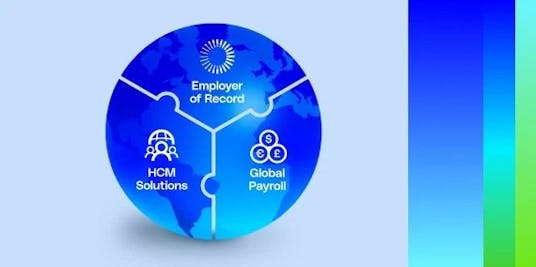




A Nigeria Employer of Record (EOR), like G-P EOR, allows your company to start hiring talent in minutes via a global entity infrastructure.
G-P's global employment products, including G-P EOR and G-P Contractor are backed by the largest team of HR and legal experts in the industry. We handle the growing complexities of compliant global expansion so you can focus on opportunities ahead.
As a global EOR expert, we manage payroll, employment contract best practices, statutory and market norm benefits, employee expenses, as well as severance and termination. You’ll have peace of mind knowing you have a team of dedicated employment experts assisting with every hire. G-P allows you to harness the talent of the brightest people in 180+ countries around the world, quickly and easily.
Hiring in Nigeria with an EOR
An Employer of Record (EOR) in Nigeria provides a streamlined solution for companies to hire and manage Nigerian talent without establishing a local entity. Below is a breakdown of the key responsibilities and benefits of using an EOR in Nigeria:
Role of the EOR:
-
Acts as the legal employer for talent in Nigeria.
-
Manages core employment administration.
-
Allows the client company to retain direct daily management and oversight of the work performance of supported employees.
Payroll management:
-
Calculates salaries for supported employees.
-
Processes payslips.
-
Withholds and remits Pay As You Earn (PAYE) tax.
-
Manages statutory contributions including pension and applicable health insurance obligations.
-
Handles other mandatory employer obligations.
-
Reduces payroll errors and helps reduce the risk of late statutory payments.
-
Mitigates risks associated with non-compliance.
HR administration
-
Manages initial setup and local documentation for supported employees.
-
Handles payroll registration details.
-
Oversees benefits enrollment and policy support.
-
Addresses employee questions and professional lifecycle changes.
-
Offers a centralized infrastructure for workforce management.
-
Enables companies to build a Nigerian workforce quickly and with lower risk.
-
Supports alignment with local labor, tax, payroll, and HR compliance regulations.
Employment compliance:
-
Provides support for compliant employment contracts.
-
Ensures statutory benefits are provided.
-
Maintains employment records and data protection.
-
Manages working-hour terms, leave administration, and termination procedures.
-
Navigates Nigeria-specific requirements such as:
-
Mandatory pension remittances.
-
Onboarding documentation.
-
Local notice periods.
-
Final pay calculations.
-
Compliant offboarding processes.
This structured approach by an EOR reduces operational burden and compliance risks while enabling companies to focus on managing employee performance effectively in Nigeria.
Employment contracts in Nigeria
Fixed-term contracts are permitted in Nigeria.
It is legally required to put a written employment contract in place in Nigeria, in the local language, which spells out the terms of the employee’s compensation, benefits, and termination requirements. An offer letter and employment contract in Nigeria should always state the salary and any compensation amounts in Nigerian naira rather than another currency.
Working hours in Nigeria
The labor law requires a 24-hour rest period every 7 days and 1-hour break per 6 hours of work.
Holidays in Nigeria
Nigeria celebrates the following public holidays:
- New Year’s Day
- Good Friday
- Easter Monday
- Labor Day
- Democracy Day
- Id el Fitri
- Id el Kabir
- National Day
- Id el Moulud
- Christmas Day
- Boxing Day
Vacation days in Nigeria
Employees in Nigeria are generally entitled to 6 days of paid annual leave after 1 year of employment.
Nigeria sick leave
In general, employees are entitled to 12 days of paid sick leave per year.
Maternity/paternity leave in Nigeria
Expecting employees are generally entitled to 12 weeks of maternity leave at 50% of pay.
Health insurance in Nigeria
It’s mandatory to provide healthcare to employees in Nigeria. Life insurance is also mandatory in Nigeria.
Nigeria supplementary benefits
Common benefits in Nigeria include:
- Pension plans
- Car allowance
- Mobile phone
- Private insurance
Bonuses
Some companies pay a 13th-month bonus, but it is not statutorily required. Annual bonuses and performance-based bonuses are common in Nigeria.
Termination/severance in Nigeria
In general, employers should provide written notice of dismissal and give the employee an opportunity for defense.
Probationary periods of up to 3 months, or longer if negotiated, are permitted. There is no statutory severance pay.
Paying taxes in Nigeria
Employees who make more than NGN 3,000 contribute 2.5% of their wages to the National Housing Fund.
Contributory pension scheme:
- Employers contribute at least 10% of employee monthly emolument.
- Employees contribute at least 8% of monthly emolument.
Use G-P EOR for global hiring
G-P EOR is the award-winning, AI-powered global hiring solution that empowers startups, SMB, and enterprise businesses to build global teams with ease. Onboard, manage, and pay top talent in over 180 countries in minutes, without the complexity of entity setup.
G-P EOR is the preferred partner for leading HCM, PEO, and payroll platforms. Bring your workforce data together in one place to maintain existing workflows while keeping consistent and accurate data across your integrated systems.
Request a proposal to start hiring today.
FAQs
What does an Employer of Record do in Nigeria?
A Nigeria Employer of Record (EOR) acts as the legal employer through its local employing entity, issuing employment contracts and administering payroll, PAYE withholding, pension contributions, statutory benefits, and employment records. The client company directs day-to-day work and performance. The EOR manages full employer compliance with Nigerian labor, tax, pension, payroll, and mandatory benefits requirements.
What should startups look for in EOR solutions?
Startups should look for EOR solutions with clear cost models. User-friendly platforms, dependable customer support, and proven track records of compliant hiring are also crucial.
What should you compare when evaluating Nigeria EOR providers?
When evaluating Nigeria EOR providers, compare their local compliance capability, payroll accuracy, and ability to manage statutory remittances such as PAYE, pension, and other required contributions on time. Companies should also review onboarding and offboarding support, transparent pricing, data protection controls, and service coverage across Nigerian states. This ensures the provider reliably supports hiring, payroll, and compliance needs for all worker types.
Is an EOR cost-effective for hiring a single employee?
An EOR provides a cost-effective alternative to managing global compliance through internal teams or external legal counsel. For a scaling company, setting up a legal entity often costs tens of thousands of dollars. G-P EOR offers flat-rate platform pricing starting at USD 599 per month for a single employee in 180+ countries.
Who is responsible for PAYE, pension, and payroll under an EOR?
Under an EOR arrangement, the provider operates as the legal employer in Nigeria. The EOR runs local payroll, withholds and remits PAYE, administers pension contributions, and manages statutory payroll obligations. Client companies should confirm the exact allocation of responsibilities, reporting timelines, data requirements, and documentary proof of remittances within the service agreement.