








Key takeaways
-
Entity setup, EOR, or contractors: Direct hiring in the UK requires complex HMRC registration and local payroll, while an Employer of Record (EOR) offers fast expansion without setting up a local entity. Engaging independent contractors gives quick flexibility for project-based work.
-
Key statutory requirements: Make sure minimum or living wages, 28 days of paid annual leave, 3% employer pension contributions, and statutory sick pay (SSP) when you hire in the UK.
-
Working time regulations: Employees are limited to an average of 48 working hours per week, calculated over a 17-week period. They can voluntarily sign a written opt-out agreement.
-
Upcoming legal changes: The Employment Rights Bill gives immediate unfair dismissal protection and tightens rules on flexible work and contract updates.
The United Kingdom has a rich talent pool to share with the world. But the country also has complex labor and employment laws that are tricky to navigate.
For companies hiring UK employees, managing these regulations is complex but necessary. This guide will walk you through everything you need to know about hiring employees in the UK.
What to know before hiring in the UK
If you want to hire employees in the UK, start with these 10 compliance basics.
1. Minimum wages
The UK has two wage levels:
-
The national minimum wage: This is the minimum hourly wage for UK employees aged 20 or younger. In 2025, rates range from GBP 7.55 to GBP 10, depending on the employee's age and whether they're an apprentice. Rates change every year on April 1.
-
The national living wage: This is a higher rate, applicable to employees aged 21 and over. The 2026 rate is GBP 12.71 per hour. For those aged between 18–20, the rate is GBP 8.00. Apprentices get GBP 8.00. Rates are also updated every year on April 1.
2. Work hour regulations
There’s no statutory standard full-time workweek in the UK. However, a 40-hour workweek is common. Employers can require workers to work longer hours where allowed by contract and applicable law. Pay for all hours worked has to comply with the national minimum wage or national living wage.
Under the Working Time Regulations, most adult workers can’t work more than an average of 48 hours per week. This is usually calculated over a 17-week reference period. 24-hour staffing requirements doesn’t automatically exempt a role from this limit. However, specific exceptions, special rules, longer reference periods, or compensatory rest arrangements can apply to certain industries.
Workers aged 18 and over can choose to exceed the 48-hour weekly average if they sign a voluntary, written opt-out agreement. Workers can cancel an opt-out agreement at any time. The default notice period is seven days. The agreement can specify a longer notice period of up to three months.
While many employers offer overtime pay, there’s no requirement to pay overtime at a premium rate unless agreed contractually or under a collective agreement.
3. Annual leave
Employees in the UK are entitled to at least 5.6 weeks (28 days) of paid annual leave. Employers decide whether to include the UK's 8-10 public and bank holidays (depending on jurisdiction) in the 28 days of paid annual leave. Part-time workers will have their 28 days' statutory annual leave prorated. For example, someone working 3 days a week will get 16.8 days off a year (3 days multiplied by 5.6 weeks is 16.8 days).
The ability to carry over leave depends on the type of leave and terms provided in the employee's contract. For example, if an employee was on statutory leave like paternity, maternity, adoption, or sick leave, they may carry over unused statutory holiday leave into the next year.
4. Family leave
Pregnant employees can take up to 52 weeks of maternity leave as a day-one right. This is paid for up to 39 weeks, if qualifying conditions are met. Paternity leave is 1-2 weeks. Those adopting or pursuing surrogacy can take up to 52 weeks of adoption leave. Shared parental leave can give up to 50 weeks’ leave with 37 weeks’ pay. In Great Britain, neonatal care leave of up to 12 weeks has applied since April 2025 (this isn’t yet in force in Northern Ireland).
5. Healthcare

The UK government provides residents with health insurance via the National Health Service. You can offer additional private insurance, including vision and dental benefits, but this isn't compulsory.
6. Statutory Sick Pay (SSP)
Employees earning at least GBP 125 per week are eligible for SSP if they've been sick for more than three days in a row. Employees must document their illness with a doctor's note or other evidence. For most employees, SSP is available at a flat rate of GBP 118.75 per week for up to 28 weeks. Check for annual updates to the SSP flat rate and eligibility.
7. Pay-as-you-earn (PAYE) system
Under the PAYE system, employers must withhold income tax and national insurance contributions (NICs) from employee wages. Employers remit these to HM Revenue and Customs (HMRC). The rates depend on the employee's earnings.
How PAYE payroll registration works for UK employers: UK employers have to register for PAYE with HMRC before their first payday. Once registered, HMRC gives the reference numbers needed to set up payroll software, report pay and deductions, and pay taxes.
After registering, employers have to use the real time information (RTI) system to calculate and report taxes and deductions by each payday. For new staff, collect a P45 or starter checklist to make sure of correct tax coding. You have to meet HMRC payment deadlines, give itemized payslips, and keep all payroll records.
8. Pensions
Employers must offer a pension scheme to UK employees aged 22-66 who earn GBP 10,000 or more annually. However, employees can opt out. The pension scheme is jointly funded by the employer and employee at minimum contribution rates of 3% for employers and 5% for employees. Employee pension contributions are deducted before calculating tax on their remaining salary.
9. Visas
Immigration rules change often, so it's crucial that your team members have the right to work in the UK. Under the EU Settlement Scheme, EU, EEA, and Swiss citizens can continue living, working, and studying in the UK following Brexit. Non-EU citizens need a work visa, such as a Skilled Worker visa or an Intra-Company Transfer visa.
10. The Employment Rights Bill
The Employment Rights Bill will likely become law in 2025. This bill contains amendments to further protect United Kingdom employees. These amendments will place new compliance requirements on employers looking to hire in the UK, including:
-
Eliminating the two-year service requirement for unfair dismissal claims
-
Consulting with employees and demonstrating reasonable cause when changing employment terms
-
Providing transparent, justifiable reasons for denying flexible work requests
-
Establishing clear policies for granting statutory bereavement leave
2026 employee expectations in the United Kingdom
Employees in the UK are concerned about their professional future. Our research found that 61% are worried about job loss and 59% think they lack the skills to thrive in an AI-powered workplace.
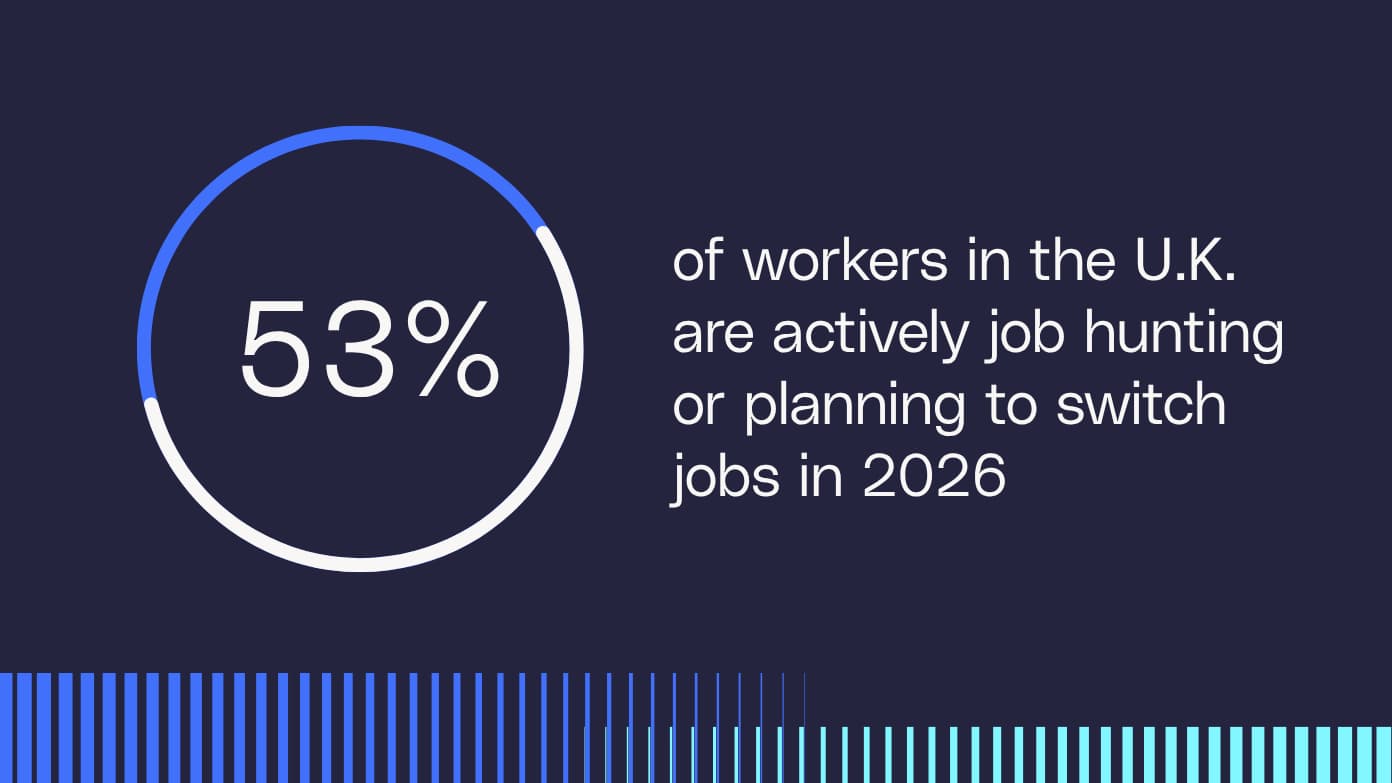
About 53% of workers in the UK are actively job hunting or planning to switch jobs in 2026. Businesses hiring in the UK should highlight career progression opportunities and investment efforts in employee upskilling to ease these concerns. Including training and development pathways in job descriptions can differentiate you from competitors and serve as a powerful counterpoint to employee anxiety about AI.
Hiring models for global companies looking to hire in the UK
The best model when you decide to hire employees in the UK depends on your overall business goals.
| Model | Known for | Key benefits | Main risks |
|---|---|---|---|
| Direct employer registration | Hire UK staff directly without a local entity via HMRC PAYE registration. | Allows direct hiring in the UK and control without a local entity. | Faces potential permanent establishment and corporate tax risks depending on the employee's role. |
| Employer of Record, like G-P EOR | A fast way to hire in the UK without a local entity. EOR manages all contracts, payroll, taxes, benefits, and compliance. | Helps fast, compliant market entry with minimal setup when hiring employees in the UK. | Risk of tax and health-and-safety liabilities if the client directs EOR workers like their real employer. |
| Subsidiary or branch | A subsidiary or branch creates a formal presence. | Offers maximum control, brand presence, scalability, and operational maturity. | High setup, maintenance, and compliance burdens, including entity creation and corporate tax. |
| Independent contractors, like G-P Contractor | Ideal for short-term projects or consulting without employer control. | Flexible access to specialized skills without a full-time commitment. | Misclassification risks for worker rights, unpaid taxes, and pension liabilities. |
Top hiring hubs in the UK
Some UK cities are known for particular industries. Knowing what each city has to offer can help you channel your hiring efforts to the right place and fill roles faster.
The top talent hubs in the UK include:
-
London is the UK's capital and largest city, and a global hub for finance, technology, retail, fashion, and pharmaceuticals. It's a leading financial exporter, attracting top talent in banking, insurance, and asset management.
-
Manchester is a major industrial hub in Northwest England. This city is a global leader in advanced manufacturing, including the aerospace and automotive sectors. It has a growing tech scene with strengths in digital media, e-commerce, and cybersecurity.
-
Birmingham has a diverse economy and houses business, professional, and financial services. The automotive and rail manufacturing industries also thrive in Birmingham.
-
Cambridge has a strong research and development ecosystem, driven by the University of Cambridge. The science and technology hub in and around Cambridge is nicknamed Silicon Fen for its cutting-edge software, electronics, and biotechnology industries.
-
Edinburgh is Scotland's capital and the UK's second-largest financial center after London. This city is a global leader in banking, insurance, and investment management, and has a growing software industry.
-
Belfast attracts specialized talent in fintech and cybersecurity investment. Creative industries such as film and television also thrive here.
-
Cardiff, the Welsh capital, has diverse strengths in finance, media, tourism, film, and fintech.
Key industries in the UK
Understanding the UK's main industries helps you benchmark salaries and benefits. You can use this insight to make smart choices about where to invest and grow your workforce. The main industries in the UK include:
-
Finance and insurance: The UK's financial and insurance services sector contributed GBP 208.2 billion to the economy in 2023, accounting for 8.8% of total economic output. Prominent names in this sector include Barclays and Lloyds Banking Group.
-
Technology: In 2023, the digital and technology sector contributed 7% of UK employment. The UK is home to semiconductor designer Arm, fintech leader Revolut, and software giant Sage Group.
-
Healthcare and life sciences: These UK sectors employ hundreds of thousands of people and include well-known pharmaceutical companies such as AstraZeneca.
-
Creative industries: From July 2023 to June 2024, the creative industry accounted for about 7% of UK jobs. Big names include the BBC, the global advertising and PR firm WPP, and Pinewood Studios.
-
Manufacturing: The manufacturing sector contributed around GBP 217 billion in gross value to the UK economy in 2024. Notable UK manufacturing brands include Rolls-Royce, Unilever, and BAE Systems.
UK hiring expenses
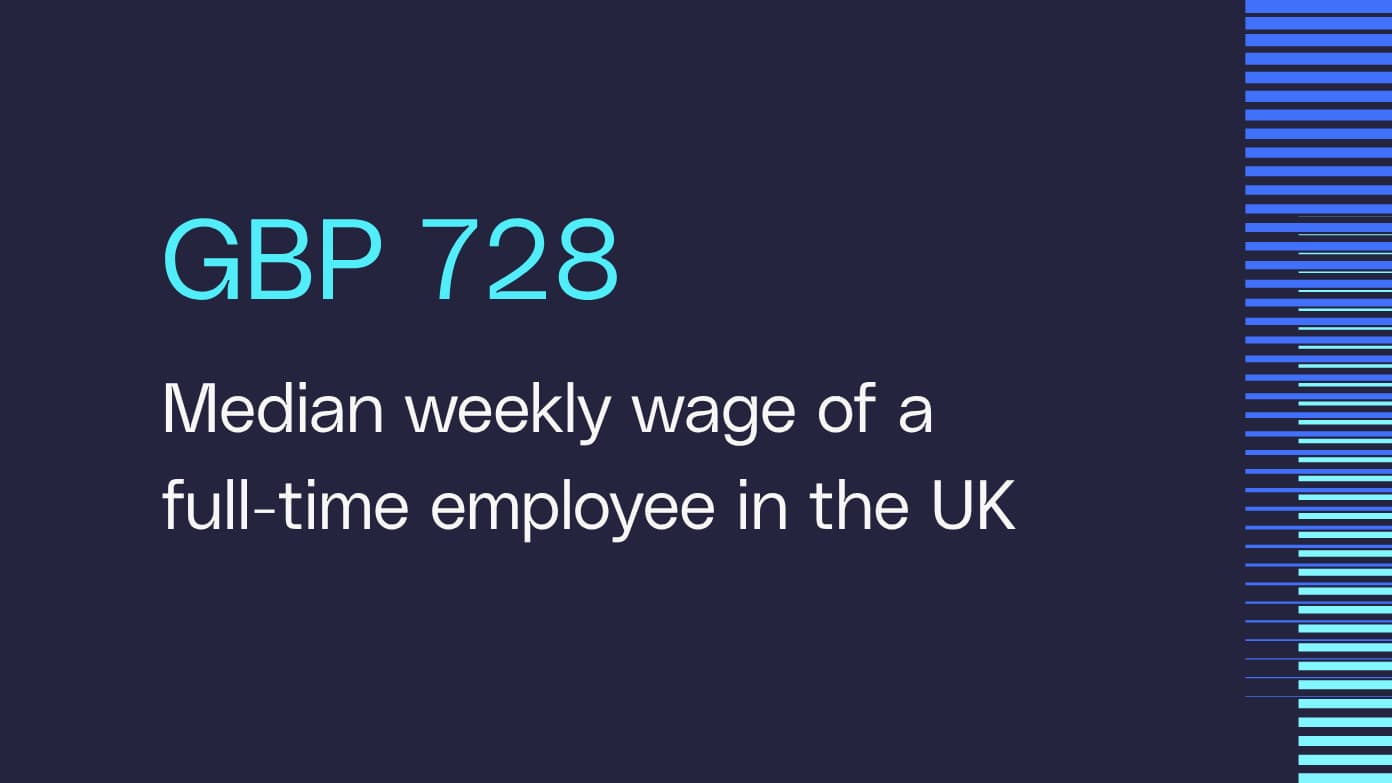
Salaries and benefits vary by occupation, but the median weekly wage of a full-time employee in the UK is around GBP 728. Hiring in the UK requires careful budgeting:
-
Research: Complying with laws and regulations requires extensive research, so you'll have to pay employees to do this or partner with external compliance experts.
-
Entity formation: You need a subsidiary or branch to hire in the UK, which can be costly and time-consuming. Or, you can partner with an Employer of Record (EOR) and skip this requirement.
-
Hiring solutions: EORs streamline hiring employees in the UK. Include their fees in your hiring budget.
-
Advertising: Posting job ads on popular UK job boards can help attract qualified applicants. Some of these platforms may charge a fee.
-
Legal checks: Verifying an applicant's right to work and other background checks take time and money.
-
Hiring committee: If you use an internal hiring committee, you'll pay for the working hours they spend writing the job ad, evaluating applications, and interviewing candidates.
-
Training: New hires require a training investment before they can start producing valuable work for your company.
The cost of hiring a contractor in the UK
Hiring full-time employees is great for long-term needs and core business functions. Contractors can be more cost-effective for short-term projects or when you need specialized skills for a limited time. Contractors typically have a higher hourly rate than employees, but allow you to save on several expenses, including training, NICs, pensions, holidays, SSP, and other benefits.
A contractor solution such as G-P Contractor™ can help you hire and pay contractors in the UK with ease.
What it takes to hire employees in the UK
To hire UK workers, you must have:
-
A legal entity: You need a registered subsidiary or branch to hire in the UK.
-
Employers' liability insurance: UK law mandates that companies have employers' liability insurance to protect employees in case of work-related sickness or injury.
-
Employer registration: Hiring UK employees requires registering as an employer with HMRC to manage tax obligations and withholdings.
-
Payroll: A compliant payroll system is crucial to calculate and remit taxes, NICs, and other deductions.
Partnering with an EOR streamlines all aspects of hiring in the UK. As a global EOR, we have entities worldwide. Instead of spending months setting up your own, you can use our EOR's UK subsidiary to hire employees in minutes.
6 steps to hiring in the UK
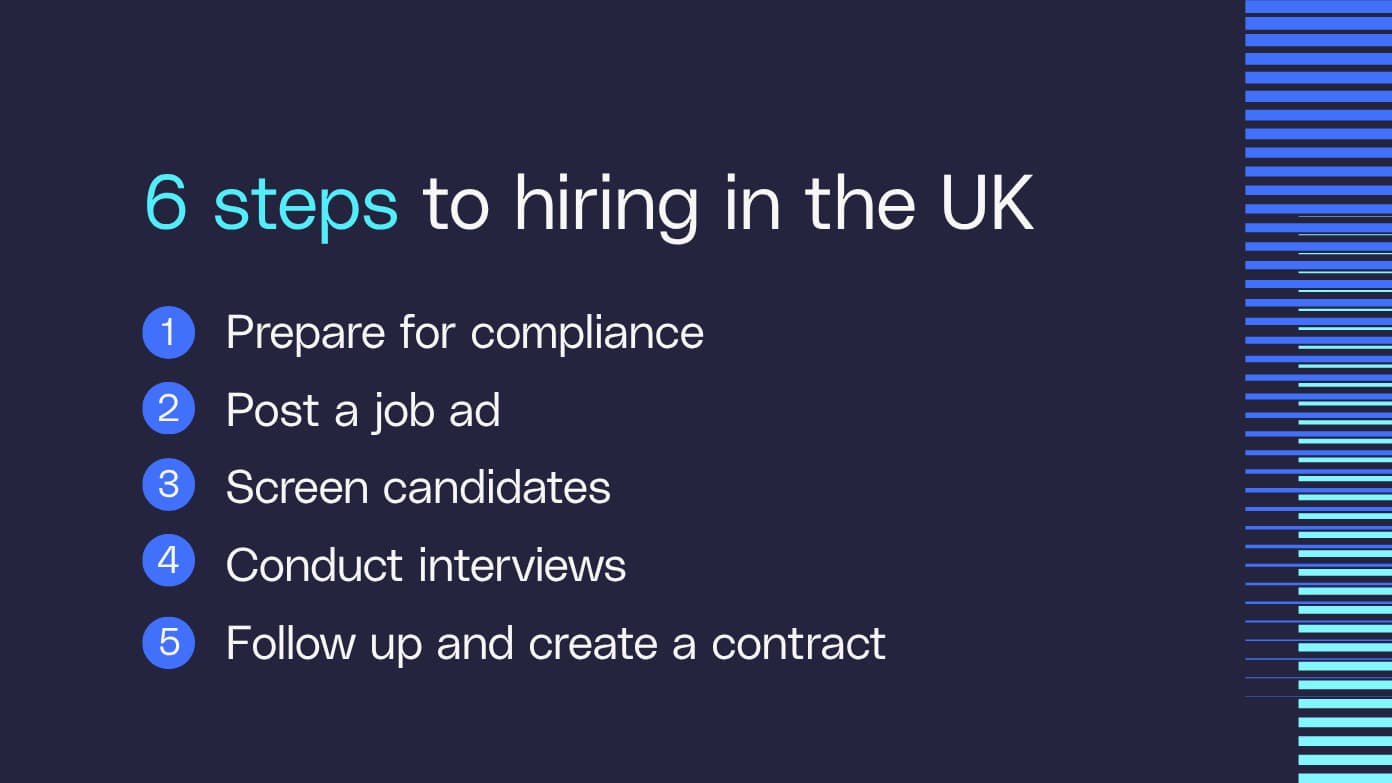
If you want to hire UK employees, follow these steps:
-
Prepare for compliance: Conduct research to make sure you understand all the relevant labor laws and practices for hiring in the UK, or use an EOR to access local expertise.
-
Post a job ad: Use G-P Gia™, our AI-powered global HR agent, to draft HR documents, including job descriptions that comply with the Equality Act of 2010 and the Data Protection Act of 2018.
-
Screen candidates: Screen applicants based on qualifications listed on their CVs and legal checks.
-
Conduct interviews: Interview shortlisted applicants and use Gia to craft relevant and nondiscriminatory interview questions.
-
Follow up and create a contract: Extend an offer to your chosen candidate, and draft a compliant contract outlining employment terms, rights, and responsibilities.
-
Onboard your new hire: Provide training and integrate new hires into your company culture.
Understanding UK employment contracts
UK employment agreements must be backed by a written statement of particulars or contract with key employment terms. These include a job title and description, employment start date, compensation rate, holiday entitlements, sick pay, working hours, and notice periods.
Include intellectual property and confidentiality clauses to protect your proprietary information. You may include a probationary period, typically six months or less, and reasonable noncompete clauses. Outlining the conditions and processes for contract termination can also protect you against unfair dismissal claims.
With Gia, you can draft contracts and other HR documents in seconds that comply with labor laws when hiring in the UK.
Other compliance and legal considerations
Some other considerations when hiring employees in the UK include:
-
Classification: Properly classifying UK workers is crucial to meet tax and benefits requirements and protect your company's reputation and financial stability.
-
Collective bargaining: UK employees have the right to join a trade union and, under certain conditions, employers must recognize these unions and enter into collective bargaining with them.
-
Data protection: Along with the Data Protection Act, you must adhere to the UK General Data Protection Regulation (GDPR). If you employ EU citizens working in the UK, you must also comply with the EU GDPR's requirements to protect their data.
Hiring contractors in the UK
Working with independent contractors in the UK can be a cost-effective way to test the market and build a presence without the commitment of full-time employees. Contractors based in the UK understand local consumer behavior, rules, and business practices. They'll be ready to start working quickly with their own equipment and established work processes.
Hiring contractors allows you to adjust your workforce in the UK easily based on your business needs, without the complexities and costs of employment.
Before you enter an agreement with an independent contractor in the UK, consider the following.
1. Employees vs. independent contractors
UK labor law recognizes three employment statuses — employee, independent contractor (self-employed), and worker:
-
Employees work under an employment contract, giving the employer control over their work in exchange for statutory rights, such as SSP and protection from unfair dismissal.
-
Independent contractors control their own work according to their service agreement. They're considered self-employed, so they're responsible for their own taxes. They have minimal statutory protections beyond their contract terms, but retain some rights.
Workers operate like contractors, but must perform the contracted work personally, whereas contractors may subcontract work to third parties. Workers receive basic employment rights, such as minimum wage and paid holidays.
2. Penalties for misclassification
Classifying someone as a contractor when they're not can lead to penalties. If misclassification occurs, you may need to:
-
Pay the full employer and employee portions of all outstanding income tax and NICs for the entire misclassification period, plus interest.
-
Provide back pay for entitlements the employee or worker was denied, including minimum wage arrears, accrued holiday pay, and backdated workplace pension contributions.
-
Face significant financial penalties from HMRC.
3. How to pay contractors in the UK
G-P Contractor takes away the messy, time-consuming process of hiring and paying international contractors. You can create and issue contracts and pay contractors with just a few clicks, all while ensuring a compliant process.
Hire employees and contractors in the UK with G-P
Our SaaS and AI-powered products – EOR, Contractor, and Gia – help companies of all sizes build and manage global teams.
With more than a decade of experience, the largest team of HR, legal, and compliance experts, and a global proprietary knowledge base, G-P is the recognized leader in global employment.
Make your expansion easier when you hire in the UK with G-P. Contact us or book a demo today.

FAQ
What is the difference between the UK GDPR and EU GDPR?
The UK GDPR is essentially the EU GDPR adapted for the UK after Brexit. UK GDPR operates as an independent framework post-Brexit. If you hire EU citizens working in the UK, you must comply with both laws.
Data transfers between the UK and the EU require compliant protections. These include adequacy decisions by the European Commission (under the EU GDPR), the UK government (under the UK GDPR), and Standard Contractual Clauses to protect data.
What are the limitations on employee background checks in the UK?
For most jobs, background checks are limited to verifying information provided by the applicant. For jobs entailing greater risk, you may conduct more detailed checks, including criminal record checks. But you must provide a privacy notice explaining what data you collect and why.
We recommend asking for consent before conducting the check. In most cases, you must use the Disclosure and Barring Service for criminal record checks.
What goes into a competitive UK employment benefits package?
Beyond the statutory minimum requirements, competitive UK benefits packages often include:
Private health insurance
Dental and vision coverage
Flexible working arrangements
Pension contributions above the minimum
Additional paid time off