








Key takeaways
-
What's an HR compliance audit?: It's a comprehensive review of HR policies and practices. Audits identify and mitigate potential risks.
-
Audit process: Key steps include creating country-specific checklists, gathering documentation, and analyzing findings against legal requirements. The end goal is to report the outcomes and implement corrective action plans.
-
How Gia simplifies compliance: Gia automates document review, generates localized templates, and cuts the time and cost of compliance by up to 95%.
One misstep in your employment documents can snowball into major legal disputes. For companies hiring globally, the risk multiplies with every new market. What’s legally sound in France might violate labor laws in Brazil. But most companies don’t realize their employment documents are noncompliant until it’s too late.
An HR compliance audit is the solution. This guide shows you how to conduct an audit using Gia and tips on how to ensure compliant documentation across your global locations.
What is an HR compliance audit?
An HR compliance audit is a complete review of your HR policies and procedures. It covers the entire employee lifecycle, from onboarding to offboarding, and checks for compliance with local employment laws.
An audit is a proactive step that helps you find risks before they turn into legal problems.
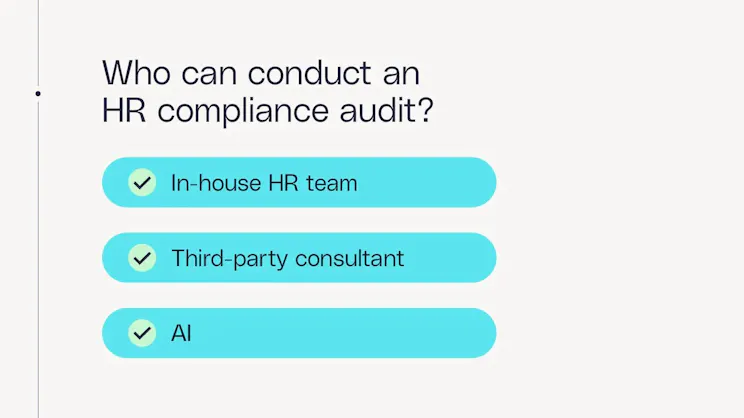
Who can conduct an HR compliance audit?
Your company can audit HR compliance in these ways:
-
In-house HR team: Internal audits are conducted by an experienced in-house HR team. This type of audit can be cost-effective, but internal biases or a lack of specialized legal knowledge can compromise your findings.
-
Third-party consultant: External audits involve hiring a third-party law firm or HR consultant. This type of audit can be expensive and time-consuming.
-
AI: Technology-assisted audits use agentic AI to automate document review. This approach offers a balance of expertise, speed, and cost-effectiveness.
Why are compliance audits important?
An audit is essential for the following reasons:
Mitigates legal and financial risk
An audit can help you identify compliance issues before they turn into fines or lawsuits.
Regular compliance audits ensure global companies follow the most current local labor laws. It also keeps you ready for an unexpected audit from regulatory bodies.
Improves operational efficiency
Audits reveal outdated or inefficient HR processes. Imagine an HR compliance audit shows a gap in your onboarding process that's causing inefficiency and delays. This prompts your company to create a standard onboarding workflow. The new workflow ensures every employee has what they need to be productive from day one.
Ensures consistent and fair practices
An audit makes sure your HR processes are fair, align with company values, and apply to everyone.
Let's say your company values work-life balance. An audit can show whether your time-off policies align with this value and meet or exceed local laws. This allows you to fix any inconsistencies and foster a positive work environment everywhere you hire.
Provides strategic insights
Your organization probably has strategic goals related to talent management and leadership succession.
If an audit reveals that external hires fill 80% of your leadership roles, it's time to revise your HR processes. You could create a policy requiring departments to consider internal candidates for promotion or begin a succession planning program. Ultimately, you can use the results of your audit to guide your HR processes and help achieve your company's goals.
How to conduct an HR compliance audit

Take the following steps to conduct an audit of your HR compliance:
Step 1. Determine the scope
Define the scope and geographical focus of your review. Channel your efforts to critical areas, including tax laws, wage and hour requirements, and employee classifications.
Since employment laws vary, it's easiest to audit one location at a time. For example, you might audit hiring practices in your Germany office one week and Brazil the next. Focusing on one region at a time makes the process easier, especially in countries with complex laws.
Step 2. Create checklists
Your checklist should include everything you want to review, like:
-
Employment contracts
-
Employee handbooks
-
Payroll records
-
Tax documents
-
Job descriptions
-
Hiring and onboarding processes
-
Termination and severance policies
-
Data privacy policies
Once you have a main checklist, create separate, country-specific checklists for each location you plan to audit. That way, you can check compliance with each country's unique labor laws and ensure you don't miss anything.
Step 3. Gather and review documents
Collecting all relevant documentation is the most time-consuming step, as it demands coordination across multiple departments. It might also mean reaching out to HR teams, accounting professionals, and payroll providers in other countries.
Step 4. Analyze your findings against legal requirements
Compare your company's practices against current laws for each location and look for gaps. For example, do your HR policies and procedures comply with EU pay transparency laws? This step requires up-to-date legal knowledge for every jurisdiction.
Step 5. Document your findings and create a report
Summarize your findings for leaders to review. Create separate sections for each country you audited, listing specific problems and areas of noncompliance. You can categorize issues by high, medium, and low priority to show which problems are the most urgent.
Step 6. Develop and implement a corrective action plan
Every issue will need an actionable plan to fix it. Each plan should have a clear timeline and be assigned to a specific person.
For example, you might give your Ontario HR manager a month to update the employee handbook with a policy on disconnecting from work. This final step turns your audit findings into positive changes.
How Gia can simplify HR compliance audits

An HR compliance audit can be time-consuming and tedious. Gia makes it simple.
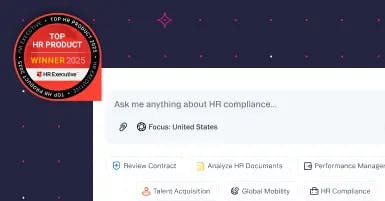
Gia is agentic AI for global HR compliance. Here's how Gia can help:
Automates document review and analysis
Instead of sorting through hundreds of documents manually, you can upload your employment contracts, handbooks, and policies to Gia. It'll analyze them against our proprietary knowledge base of global labor laws to instantly flag potential compliance gaps.
Gia is built with robust data security measures, so your documents are safe and private. We've implemented comprehensive security controls based on SOC 2 Type II principles, and all data is encrypted at rest and in transit. Unlike other AI tools, we don't use your data to train Gia.
Provides instant answers to complex compliance questions
You'll probably have questions during your audit. Instead of waiting days for a legal consultant to reply, you can ask Gia and get an instant answer.
Use Gia's conversational interface to ask questions like, "What are the mandatory overtime pay requirements in Germany?" Gia gives you expert-vetted answers in minutes, saving hours of legal research to keep your audit moving.
Generates compliant document templates
If an audit reveals an outdated or noncompliant policy, you don't have to create a new one. Gia can generate a fully compliant template for that specific country, which you can then customize.
You can use Gia to generate contracts, job descriptions, employee handbooks, offer letters, policies, and more. Gia turns a multi-day task into minutes.
Acts as a proactive compliance monitor
Employment laws are always changing and need constant monitoring. Gia tracks global employment laws in real-time so your documents always meet current regulations. Transform compliance from a once-a-year event into an ongoing, automated process.
Cuts the time and cost of compliance
Traditional audits are expensive. You have to pay consultants or lawyers to analyze your documents, which translates to many billable hours. Gia cuts the time and cost of compliance by up to 95%.
Tips for collecting and analyzing audit data
During your audit, you'll see a lot of data. You need a way to manage this data to stay organized and focused. Consider these tips:
-
Use a centralized system: Maintain all audit-related documents in a single platform. This keeps your audit organized and prevents you from losing track of important details. Gia can be your central hub, storing all your questions and document reviews in one place.
-
Prioritize high-risk areas: Focusing on high-risk areas, like worker classification, lets you put resources toward potential issues with the biggest consequences. If you're not sure what compliance problems have the greatest risk, ask Gia.
-
Take a balanced approach: Audits should uncover both risks and opportunities. Document what your company is doing right to create best practices. For example, maybe you discover your onboarding process is highly effective in a specific region. Determine why this is, and then apply that best practice to every country you hire in.
Tips for presenting findings and implementing improvements
You've completed your audit and discovered compliance gaps. Now it's time to take action. The following steps help you share your findings so you can get leadership approval:
-
Make it easy to understand: Present your report in an easy-to-understand format. Use bulleted lists and visuals to highlight key risk areas. You can also use Gia's summarization feature to translate complex information into simple overviews.
-
Focus on solutions: Present a recommendation for every issue you identified. Include specific timelines to create a clear path forward. The goal is to show leaders that the problems are manageable. This makes it easier for them to approve your plan and provide the resources needed for corrective action.
-
Emphasize the value: Gain executive buy-in by framing your recommendations around risk mitigation and adding business value. That way, you can address leaders' top concerns, like financial outcomes, and get their support.
-
Follow up regularly: Ensure the corrective action plan is being implemented on schedule. Use a project management tool to assign tasks and track them. Hold regular meetings to monitor progress. You can conduct a mini-audit a few months after implementing changes to ensure new processes are being followed.
HR compliance audits? With Gia, it's done.
Conducting an HR compliance audit is crucial for global companies. But it requires deep legal expertise and resources.
Gia can streamline your audit and ensure your HR documents are compliant across your global locations. As an AI-powered global HR agent, Gia makes compliance easy.