






The world offers incredible talent opportunities, but each country has its own employment rules to navigate. Italy is a gateway to European markets and an attractive hiring destination. At the same time, the country’s union culture and labor regulations add complexity.
An Italy employer of record (EOR) enables you to hire without setting up a local entity. An EOR in Italy acts as the legal employer, handling payroll, benefits, taxes, and HR compliance, so you can focus on your business.
As a global EOR, G-P manages all the admin and regulatory requirements, allowing you to easily access global talent in over 180 countries, including Italy.
Simplify hiring in Italy with an employer of record
Employment in Italy is heavily regulated by collective bargaining agreements (CBAs), or Contratti Collettivi Nazionali di Lavoro (CCNL). These agreements between trade unions and employer associations exist in all sectors and set employment terms such as minimum wages, notice periods, and leave entitlements.
Navigating CBAs is complex but critical for compliance. An EOR in Italy, like G-P, does this for you. We manage the employee lifecycle, from onboarding to offboarding, so you can build your team with confidence.
The EOR hiring process in Italy:
- Partner with a global employment expert. Choose an EOR with deep expertise in Italy, as they’ll guide you through the local legal landscape.
- Source your ideal candidate. You find the best talent for your needs, and the EOR handles the rest.
- Generate a compliant employment contract. Your EOR drafts a locally compliant contract that reflects all mandatory terms under Italy’s labor laws, including salary, working hours, and notice periods.
- Onboard and manage your team. The EOR manages all aspects of the employment lifecycle. This includes registering the employee with Italy’s tax authorities and social security system, managing payroll, and administering benefits.
Employment contracts in Italy
Most employment contracts must be in writing to be valid. There are exceptions, depending on the employment type and certain clauses, but we recommend putting a written contract in place for every engagement. According to a European Union directive, called the “Transparency Decree,” employers must give detailed written information on all essential employment terms.
A compliant contract clearly outlines the employee's compensation, job level, benefits, paid time off, notice period, and termination requirements. The contract must state the salary and any compensation amounts in gross euros (EUR).
Many terms depend on the applicable CBA. An Italy employer of record ensures all contracts meet national and CBA-specific legal standards.
Leave entitlements in Italy
Working hours in Italy
The standard workweek is 40 hours. Any hours worked beyond this are overtime and are compensated based on the relevant CBA.
For example, under the widely used Commerce CBA (Contratto Collettivo Nazionale di Lavoro per i dipendenti da aziende del Terziario, della Distribuzione e dei Servizi), overtime rates are typically 15% for hours 41–48 and 20% for hours above 48 per week. Rates vary with CBA updates.
Executives (dirigenti) are usually not eligible for overtime pay.
Employees who work a shift longer than six hours get a rest break of at least 10 minutes.
Public holidays in Italy
Employees in Italy get 11 paid public holidays, plus a holiday for the local patron saint's day, which varies by municipality.
- New Year's Day
- Epiphany
- Easter Monday
- Liberation Day
- International Workers' Day/Labor Day
- Republic Day
- Assumption Day (Ferragosto)
- All Saints' Day
- Immaculate Conception
- Christmas Day
- Saint Stephen's Day
Easter Sunday is a religious holiday. Most employees already have the day off as it falls on a Sunday, but it’s not an additional paid day off. Easter Monday (Lunedì dell’Angelo or Pasquetta) is a public holiday.
Vacation days in Italy
Italian law mandates four weeks’ paid annual leave (ferie). Most CBAs give more generous terms, often granting 22–26 days per year. Employees must take at least two weeks’ annual vacation in a row.
Unused annual leave must be taken during employment and is only paid out on termination. Along with ferie, many CBAs provide extra hours of paid leave (permessi retribuiti or ROL). The rules for using or cashing out these hours are CBA-specific.
Sick leave in Italy
Employees need a medical certificate to claim sick leave. The first three days of illness (periodo di carenza) are typically paid in full by the employer, but this depends on the CBA. From the fourth day, sick pay is covered by the National Social Security Institute (Nazionale della Previdenza Sociale, or INPS) for up to 180 days per calendar year. The INPS pays 50% of the employee's average daily salary for days 4–20 and 66.66% for days 21–180.
Most CBAs require employers to supplement the INPS payment, bringing employee sick pay up to 100% of their normal salary. The top-up amount and period vary by CBA and seniority.
Maternity, paternity, and parental leave in Italy
Pregnant employees get five months’ maternity leave. The INPS pays 80% of their salary. This leave can be taken flexibly. For example, two months before and three after the birth, or all five months after the birth (subject to medical approval).
Fathers are entitled to 10 days’ paternity leave, also paid at 80% by the INPS, to be taken within five months of the birth.
Parents can also take optional parental leave (congedo parentale) until the child turns 12. For 2025, the first two months of parental leave are paid at 80% of the employee's salary, with subsequent leave paid at 30%. The total length and pay rates depend on annual budget legislation.
How an employer of record in Italy helps manage leave entitlements
Partnering with an Italy EOR reduces the risk and complexity of leave management. An EOR in Italy takes on the admin burden, making sure your business complies with various CBA requirements. Your team won’t need to calculate working hours, vacation days, sick leave, or parental leave.
Health insurance in Italy
Italy's public healthcare system, the National Health Service (Servizio Sanitario Nazionale, or SSN), gives all residents access to low-cost or free medical treatment. It’s funded through general taxation and payroll-based social security contributions.
Supplementary benefits and bonuses in Italy
While the SSN is comprehensive, many companies offer private health insurance as a supplementary benefit, often with tax-efficient group policies. This lets employees access private doctors and hospitals, avoiding public system waiting lists.
You can offer an allowance so employees can purchase their own policies. An Italy EOR can manage this process.
Many employers offer extra perks to attract and retain talent. Common benefits include company cars, mobile phones, laptops, and tax-friendly meal vouchers (buoni pasto).
How an employer of record helps with benefits in Italy
An Italy EOR manages employee benefits and compensation on your behalf. This includes handling supplementary benefits like private health insurance allowances.
Termination and severance in Italy
CBAs set probation periods, which can’t be longer than six months for executives and middle managers. You need a valid reason to terminate a permanent employment contract, such as a serious breach of contract.
Employers must follow a strict, legally defined procedure for dismissal, including written notice and, in some cases, a conciliation process. Notice periods are also set by CBAs and vary depending on the employee's seniority and how long they’ve worked for you.
With any termination, including resignation, employees get a severance payment called trattamento di fine rapporto (TFR). During employment, employers reserve about 7.4% of the employee's annual gross compensation. This is paid to the employee at the end of the working relationship.
An Italy EOR guides you through termination, resignation, and severance processes.
Payroll and payroll taxes in Italy
IRPEF (Imposta sul Reddito delle Persone Fisiche) is Italy’s personal income tax. This tax is progressive — it depends on how much you earn. The following tax brackets apply in 2026:
- Up to EUR 28,000: 23%
- EUR 28,001–50,000: 33%
- Over EUR 50,000: 43%
Employers and employees make social security contributions, totaling 37–42% of an employee’s gross salary. The amount varies depending on the industry and employee level.
The employer typically pays 28–32%, while the employee contributes 9–10%.
An employer of record in Italy manages payroll and payroll taxes to ensure compliance with the country’s tax system and social security requirements.
Choosing an EOR in Italy
When partnering with an employer of record in Italy, consider the following for a compliant and hassle-free global hiring:
- Compliance expertise: The EOR should have in-depth knowledge of Italian labor laws, including the Workers' Statute, CBAs, and tax regulations. This keeps employment practices, from contracts to termination, compliant.
- Comprehensive service offering: A best-in-class EOR should manage all aspects of employment, including payroll, tax, benefits, leave, and offboarding.
- Local market understanding: Market norms and cultural nuances impact employee relations. Look for an EOR with a strong local presence or proven experience in Italy. Scalability and flexibility: The EOR should accommodate your hiring needs, whether you're hiring a single employee or a global team, and scale with your global hiring strategy.
- Technology and integration: Check that the EOR integrates with your existing HCM, PEO, or payroll systems to avoid operational delays.
- Transparent, flat-rate pricing: Evaluate total cost predictability rather than low base rates. Look for standard, clear pricing models. Compare pricing structures carefully, as some EORs use percentage-of-payroll models that penalize high earners. Flat-rate pricing ensures long-term operating budget accuracy. The G-P EOR starting price of USD $599 monthly gives you full access to the G-P Global Employment Platform. We use a flat platform fee rather than charging a percentage of payroll
- Reputation and references: Research the EOR's reputation. G-P is the recognized leader in global employment and is ranked #1 according to all industry analyst reports. Customer testimonials and case studies are also important when choosing an EOR.
- Data security and compliance. Ensure your EOR follows strict data security protocols like GDPR. This is critical for protecting sensitive employee information and maintaining compliance.
Use G-P EOR for global hiring in Italy
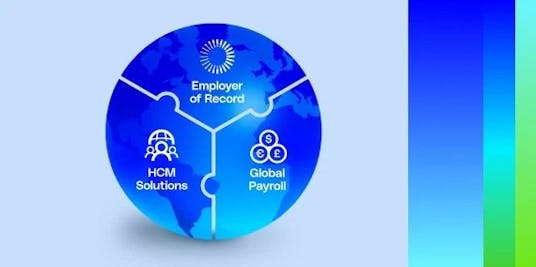
G-P EOR is the award-winning, AI-enabled global hiring solution that empowers startups, SMBs, and enterprise businesses to build global teams with ease. Onboard, manage, and pay top talent in over 180 countries in minutes, without the complexity of entity setup.
G-P EOR is the preferred partner for leading HCM, PEO, and payroll platforms. Bring your workforce data together in one place to maintain existing workflows while keeping consistent and accurate data across your integrated systems.
Request a proposal to start hiring in Italy today.
FAQS
What is an employer of record in Italy?
An employer of record (EOR) in Italy acts as the legal employer for international talent. G-P EOR manages payroll, taxes, and HR compliance under Italian law. Our platform ensures full alignment with local employment regulations, collective bargaining agreements (CBAs), and statutory benefits. This allows companies to hire in Italy without establishing a local entity.
Is an EOR cost-effective for a startup hiring one or two team members?
An EOR provides a far more cost-effective path than managing global compliance through internal teams or expensive external counsel. For a scaling company, setting up a legal entity often costs tens of thousands of dollars. G-P EOR offers flat-rate platform pricing starting at USD 599 per month.
Use our EOR vs. entity cost calculator to see how much your business can save.
What should startups look for in EOR solutions?
Startups should look for EOR solutions with clear cost models. User-friendly platforms, dependable customer support, and proven track records of compliant hiring are also crucial.
How can an Italy EOR hire talent without an Italian entity?
An Italy EOR acts as the legal employer. This allows companies to hire and pay talent in Italy without setting up a local subsidiary. The EOR manages employment contracts, payroll, benefits, and compliance. This structure drives rapid, compliant market capture.
How do INPS and INAIL contributions work through an Italy EOR?
An Italy EOR registers talent with the National Social Security Institute (INPS) and the National Workplace Accident Insurance Institute (INAIL). The EOR calculates and remits all employer and employee contributions. It also files mandatory monthly reports to maintain compliance with payroll, pension, and workplace safety laws.


