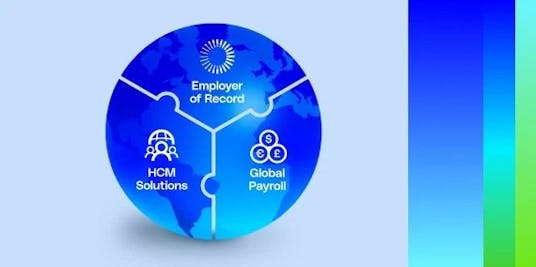



In China, employer of record (EOR) products and services play a crucial role in complying with the country’s complex employment regulations. China EOR products and services are essential for any business aiming to establish a firm presence in the country. They ensure that employment processes, from hiring to termination, meet local legal requirements. This includes adhering to both national and regional regulations. AI-powered EOR services cover every aspect from legal employment contracts and managing payroll taxes to other compliance duties, thus ensuring seamless business operations.
By leveraging the expertise of an employer of record China, companies can successfully navigate diverse regulatory requirements, reducing legal risks. EOR support reduces the risk of non-compliance, enabling businesses to concentrate on their core activities and freeing them from the complexities of local legal and tax requirements. Additionally, hiring through a China EOR helps businesses ensure compliance.
Why use an employer of record (EOR) in China?
China's employment landscape is governed by a robust national framework, but the implementation of labor laws, social security contributions, and leave entitlements varies significantly by province and even city. This regional variation creates a complex compliance environment for foreign companies.
An EOR provider in China, such as G-P, simplifies this complexity. We provide a legally compliant entity to hire employees on your behalf, managing all local HR tasks from drafting compliant employment contracts and processing payroll to administering benefits and navigating intricate termination procedures. Using an EOR allows you to access Chinese talent without establishing a local subsidiary, saving significant time and resources while ensuring full compliance with all regional regulations.
Employment contracts in China
A written employment contract is mandatory for all full-time employees. Employers should have it signed on or before the start date where possible, and no later than 1 month after commencement. Failure to do so may result in statutory consequences, including double wages for the period of non-compliance. Failure to conclude a written employment contract within one month after the employee starts work requires the employer to pay twice the employee’s monthly wage for the non-compliant period, capped at 11 months. If no written contract is provided within one year from the employee’s start date, the relationship is generally deemed an open-ended employment contract.
It is legally required for employment contracts to include:
-
Employer and employee identification details
-
Contract term (fixed-term, open-ended, or project-based)
-
Job description and work location
-
Working hours, rest periods, and leave
-
Compensation details
-
Social insurance information
-
Workplace safety and health protection
It is best practice for both the offer letter and the employment contract to state all salary and compensation amounts in Chinese yuan (CNY).
Working hours in China
Under the Labor Law of the People's Republic of China, working hours are capped at 8 hours per day and an average of 44 hours per week. Current standard working-hours rules generally use a 40-hour week, typically 5 days per week. While office hours vary, a common schedule is 9 a.m. to 6 p.m. with a lunch break.
Public holidays in China
China observes 7 official public holiday periods, which amount to 11 national paid holidays each year. The government often adjusts the surrounding weekends to create longer holiday blocks.
-
New Year's Day: 1 day
-
Spring Festival (Chinese New Year): 3 days
-
Tomb-Sweeping Festival: 1 day
-
Labor Day: 1 day
-
Dragon Boat Festival: 1 day
-
Mid-Autumn Festival: 1 day
-
National Day: 3 days
It is a market norm to offer additional flexibility around the Spring Festival to accommodate employee travel.
Paying taxes in China
Understanding the Chinese tax system is necessary for any company investing in the region. Statutory benefits in China include 5 insurances for medical insurance, pension, workers’ compensation, unemployment insurance, and parental benefits. Contribution amounts differ by region. Contribution amounts vary by province and by the employee’s income bracket.
Leave entitlements in China
Vacation days in China
Statutory paid annual leave is based on an employee's cumulative years of service with all employers, not just the current one. Employees generally qualify after 12 months of continuous work.
-
1 to <10 years of service: 5 days
-
10 to <20 years of service: 10 days
-
20+ years of service: 15 days
If an employer fails to arrange statutory annual leave, they must pay 300% of the employee’s daily wage for each unused annual leave day. In practice, many multinational companies offer 2 to 4 weeks of paid vacation to attract and retain professional talent.
China sick leave
Managing sick leave efficiently is fundamental in maintaining workforce morale. Employees are entitled to paid sick leave for non-work-related illnesses or injuries. The leave period ranges from 3 to 24 months, determined by their years of service with the current employer and their total cumulative service. During this leave, employees receive a percentage of their salary (typically 60% to 100%) based on local regulations and their length of service.
Parental leave in China
Parental leave entitlements in China vary significantly by province. Adhering to these provincial differences is key to smooth HR operations. Utilizing an EOR can assist businesses in understanding provincial differences.
-
Maternity leave: The national standard is 98 days of paid leave. Provinces and municipalities commonly add extra maternity leave, so total entitlement often varies by work location. Leave is extended by 15 days for each additional child in a multiple birth.
-
Paternity leave: Varies by location, typically ranging from 7 to 30 days.
-
Parental leave: Most provinces offer 5 to 15 days of leave per year for each parent until the child is 3 years old.
Compensation and benefits in China
Social security and housing fund
Employers and employees must contribute to the mandatory social security system, known as the "Five Social Insurances and One Housing Fund" (五险一金). Employer and employee portions vary by city or province. Contribution rates and the salary base caps are set locally and vary by city. The system includes:
-
Pension fund
-
Medical insurance
-
Unemployment insurance
-
Work-related injury insurance
-
Maternity insurance
-
Housing fund (to subsidize rent or property purchase)
Employer contributions for mandatory social security and housing fund benefits commonly add approximately 30% to 45% to employment costs on top of gross salary. Actual costs vary by city or province, the employee’s salary, local contribution bases, and the applicable housing fund rate.
Health insurance in China
Basic health and pension insurance is provided through the national system. However, some employers provide supplementary health insurance to their employees.
Bonuses in China
While not generally required by national law, a 13th-month salary or annual performance bonus is a common market practice for professional employees. It may become legally enforceable if promised in a contract, policy, offer letter, collective agreement, or consistent employer practice. Commission plans are also common for sales roles.
Termination and severance in China
Terminating employment in China is complex and requires a legally permissible cause. Unilateral termination by an employer is extremely difficult and carries a high risk of legal challenges. An agreed probation period can be established in the employment contract, with a maximum length of 6 months for an open-ended contract. It may be agreed only once with the same employee and cannot be set in a standalone probation-only contract. During probation, employer termination does not have a statutory advance notice period, but it must have a lawful ground and the employer must explain the reason. After probation, 30 days’ prior written notice, or one month’s salary in lieu, is required only for statutory notice-based termination grounds.
Employees are protected from ordinary unilateral termination and economic redundancy during pregnancy, maternity leave, and the breastfeeding period, generally until the child turns one. If a fixed-term contract expires during this time, it generally must be extended until the protected period ends. Termination may still be possible for serious statutory misconduct. Severance pay is required for most terminations and is calculated based on the employee's length of service with the employer.
Why G-P?
G-P EOR is the award-winning, AI-powered SaaS platform that empowers ambitious companies to build global teams. Onboard, manage, and pay top talent in over 180 countries in minutes, bypassing the typical time, cost, and complexity of local entity setup. G-P EOR is the preferred partner for leading HCM, PEO, and payroll platforms. Bring your workforce data together in one place to maintain existing workflows while guaranteeing consistent and accurate data across your integrated systems.
Request a proposal today to learn more.
FAQs
What payroll tasks does a China EOR handle in China?
A China EOR manages all statutory payroll tasks, including calculating and paying salaries, withholding and remitting individual income tax, and registering and contributing to mandatory social insurance and housing funds. The EOR also issues payslips, maintains payroll records, and ensures compliance with local labor laws.
Is an EOR cost-effective for hiring a single employee?
An EOR provides a cost-effective alternative to managing global compliance through internal teams or external legal counsel. For a scaling company, setting up a legal entity often costs tens of thousands of dollars. G-P EOR offers flat-rate platform pricing starting at USD 599 per month for a single employee in 180+ countries.
What should startups look for in EOR solutions?
Startups should look for EOR solutions with clear cost models. User-friendly platforms, dependable customer support, and proven track records of compliant hiring are also crucial.
Does a China EOR support work visas and residence permits?
A China EOR can sponsor and process work visas and residence permits for foreign employees if it is a licensed local employer and meets government requirements. The EOR handles the full application process, but eligibility depends on the EOR’s local entity status and compliance with strict regulatory criteria.
What are the key limitations and risks of using a China EOR?
China does not formally recognize the EOR model, and authorities may treat EOR arrangements as labor dispatch, which is limited to temporary, auxiliary, or substitute roles and capped at 10% of the workforce. Key risks include joint liability for employment violations, misclassification penalties, and the need for the EOR to hold a valid labor dispatch license.