






Expanding your company internationally is a great opportunity to enter new markets and hire global talent. You’ll face a few challenges, though. Successfully establishing your company in a new country involves complying with that country’s employment laws and business regulations.
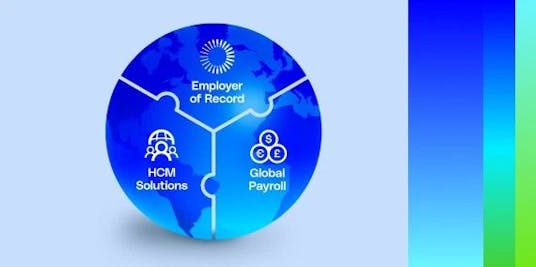
When you work with a global professional employer organization (PEO) like G-P, our Employer of Record services simplify compliance and take the burden off of your shoulders. As an Employer of Record, we act as your in-country entity. This solution lets your company hire globally without launching a subsidiary of your own. What’s more, our skilled lawyers and HR experts are at your disposal.
We also offer convenient payroll services that compensate your employees accurately and on time. Search for talent and generate competitive benefits packages for candidates worldwide. We nestle your hiring and payroll operations under our subsidiary, which means that we take responsibility for any legal risks.
We understand the nuances of expanding to new countries. Below, we’ll cover the most important elements of your global expansion in Haiti.
Hiring in Haiti
While the 2010 earthquake impacted Haiti’s economy, the country’s laws encourage international entities to bring business into their borders. The nation’s economy has several sectors, many of which are actively seeking international investments. Plus, international companies enjoy the same protections and incentives as local companies. Fair import and export policies are another benefit of doing business in Haiti.
Employment Contracts in Haiti
To hire workers legally, you must draft and sign a comprehensive employment contract. Three types of employment contracts are valid:
- Fixed-term or temporary contracts
- Open-ended or permanent contracts
- Apprenticeship contracts
A compliant contract must contain the contractor’s personal information, including their identity card number and work book number. All contracts must outline agreed-upon details, including compensation, entitlement to leave, and other terms of employment.
Your company must distribute an original copy of the contract to the contracted party in French or Creole.
Working Hours in Haiti
The standard workweek is six days long, for a total of 48 hours. Night work and working overtime during the night are common practices. Employees who work over 48 hours per week or work at night receive higher wages for those hours. Most employees receive overtime pay 50 percent higher than standard wages.
Holidays in Haiti
Haiti observes both legal and national holidays. Employees receive standard pay for each of these resting days:
- Haitian Independence Day/New Year’s
- Heroes’ Day/Ancestors’ Day
- Mardi Gras
- Good Friday
- Labour and Agriculture Day
- Haitian Flag and University Day
- Corpus Christi
- The Assumption
- Death of Dessalines
- All Souls’ Day
- Battle of Vertières Day
- Christmas Day
These holidays do not count against employees’ vacation leave.
Vacation Days in Haiti
After one year of service, employees with a permanent contract are entitled to at least 15 consecutive days of paid leave. Of those 15 days, two must be Sundays and the others must be working days. These employees are entitled to take 1.25 days of paid leave monthly.
Employees with less than one year at their company are entitled to vacation days that equal 1.25 times the number of months they’ve worked at your company.
Public holidays, sick leave, and maternity leave do not count as paid vacation leave.
Haiti Sick Leave
Workers may take up to 15 days of annual sick leave without experiencing a reduction in pay. To receive pay for sick leave, employees must present a medical certificate from the Public Health Service or a company doctor.
Maternity/Paternity Leave in Haiti
Pregnant women are entitled to 12 weeks of paid maternity leave. They must begin their leave no more than six weeks before delivery. However, the starting date of the maternity leave must be at least four weeks before delivery. If the leave taken before delivery is less than six weeks, mothers can compound that time with the allotted six weeks after delivery.
The employee must register with the Office of Occupational Accident Insurance, Sickness, and Maternity (OFATMA) for maternity insurance, which will pay for six weeks of the leave when it becomes available. The employer is responsible for paying standard wages for the other six weeks.
Haiti Supplementary Benefits
Employees receive a compulsory bonus between December 24 and the end of the year. The bonus must equal at least one month of the worker’s annual wages. All employees are entitled to this bonus regardless of the length of their employment.
All employers must register with OFATMA within 15 days of launch. Employers must contribute six percent of each worker’s monthly salary to this insurance. You’re also responsible for registering with the National Old Age Insurance Office to make pension contributions.
Termination/Severance in Haiti
Under a valid employment contract, employers must have a lawful reason to rescind employment. Companies can terminate employment contracts legally on the following grounds:
- An employee assaults or verbally threatens others in the workplace, destroys the employer’s property, or causes major disturbances.
- An employee misses work without cause or permission four times during one month or for three consecutive days.
- An employee refuses to comply with safety measures or other procedures after one written warning or a verbal warning with two witnesses.
- An employee with fewer than four months of service is unable to perform operations for which they’ve falsified references or certifications.
- An employee is sentenced to prison for over one month.
- An employee breaches their contract.
Employees can sign a Temporary Suspension of Labor contract to suspend the employment contract if the employer lacks the materials to continue working or imposes immediate but temporary work stoppage.
Termination notices are only required for workers with over three months of service. Notice periods vary by duration of employment. If the termination is effective immediately, you must pay the employee severance equaling the wages they would have earned during the notice period.
Paying Taxes in Haiti
Employees pay income tax based on their wages. Regardless, employers are responsible for withholding two percent of a worker’s wages for payroll taxes. Companies also contribute to their workers’ pensions.
Simplify global hiring with G-P EOR
With G-P EOR, startups, SMBs, and enterprises can hire, manage, and pay professionals in 180+ countries, without setting up local entities. Our platform combines vetted employment expertise with intuitive AI and human support – so you can operate globally with ease.
G-P EOR is engineered to adapt entirely to you. Bring your workforce data together in one place to maintain existing workflows while keeping consistent and accurate data across your integrated systems.
Book a demo to hire globally without the delays, risks, or overhead of local entities.