


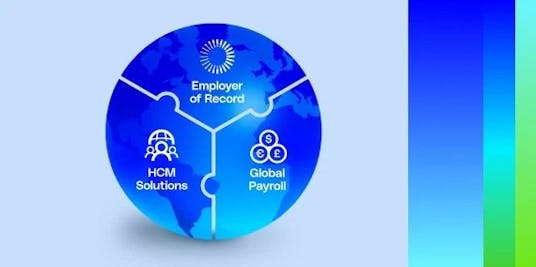



G-P’s employer of record (EOR) model allows your company to start hiring talent in minutes via our global entity infrastructure.
Our global employment products are backed by the largest team of HR and legal experts in the industry. We handle the growing complexities of compliant global expansion — so you can focus on opportunities ahead.
As a global EOR expert, we manage payroll, employment contract best practices, statutory and market norm benefits, employee expenses, as well as severance and termination. You’ll have peace of mind knowing you have a team of dedicated employment experts assisting with every hire. G-P allows you to harness the talent of the brightest people in 180+ countries around the world, quickly and easily.
Hiring in Peru
When negotiating terms of an employment contract with employees in Peru, make sure to keep the following in mind.
Employment contracts in Peru
As a general rule, employment contracts are for an indefinite term. Fixed-term contracts are only permitted under certain circumstances, for a maximum period of 5 years, and must be in writing and registered with the Labor Ministry.
Legally, employment contracts in Peru can be written or verbal, but it is best practice to put a written employment contract in place in Peru, in the local language, which spells out the terms and conditions of the employment relationship, including the employee’s compensation, benefits, and termination requirements. An employment contract in Peru should always state the salary and any compensation amounts in Peruvian soles rather than another currency.
Working hours in Peru
The standard workweek is 8 hours per day with a maximum of 48 hours per week.
Holidays in Peru
Peru celebrates 15 national holidays (16 days off, with a 2-day Independence Day):
- New Year’s Day
- Maundy Thursday
- Good Friday
- Easter Day
- International Workers’ Day
- Feasts of Saint Peter and Saint Paul
- Airforce Day
- Peruvian Independence Day (2-day holiday)
- Battle of Junin
- Saint Rose of Lima Day
- Battle of Angamos
- All Saints’ Day
- Immaculate Conception
- Battle of Ayacucho
- Christmas Day
Vacation days in Peru
In general, employees are entitled to 30 calendar days of paid leave each year.
Peru sick leave
Employees are entitled to 20 paid days off for sickness or temporary disability. For the first 20 days of illness, the employer must pay 100% of the salary, and the employee must provide a general medical certificate.
Starting on the 21st day of medical leave, the employer will pay the employee’s salary for up to 11 months and 10 days of consecutive sick leave and request reimbursement from the social security health institution (EsSalud).
Parental leave in Peru
Pregnant employees are generally entitled to 14 weeks of paid maternity leave, 7 to be taken before the birth and 7 after. Spouses of pregnant employees are entitled to 10 consecutive days of paid leave.
Health insurance in Peru
Peru has a decentralized healthcare system that provides public and private coverage.
Many people in Peru take advantage of the country’s public healthcare, which is offered through 2 main departments — the Ministry of Health of Peru (MINSA) and EsSalud.
MINSA offers free basic healthcare, called “Seguro Integral de Salud.” EsSalud supplies a low-cost healthcare option and is supported by payroll taxes, which employers pay. EsSalud is mandatory for all employees as the state-sponsored public health service.
In addition to public health insurance, some employers offer supplemental healthcare options to remain competitive.
Peru supplementary benefits
Employers are required by law to provide employees with life insurance or Vida Ley. An additional risk insurance — Seguro Complementario de Trabajo de Riesgo (SCTR) — might be applicable for employees required to work at physical facilities where there is increased potential for work-associated risks.
Bonuses
Employees must receive 2 statutory bonuses (Gratificación) every year — a bonus in July and a bonus in December, each of which should be equivalent to a month’s salary.
Additionally, employees receive Compensation for Length of Services (CTS), a benefit that is usually equivalent to 1.16 of an employee’s monthly salary, 50% to be paid in May and 50% in November of the same year.
Finally, employers with more than 20 employees must share profits among their employees.
Termination and severance in Peru
The standard probationary period is 3 months. However, this can be extended up to 6 months or 1 year for management/trust positions. During the probationary period, an employer may terminate an employee without reason, so long as it is not prohibited by the constitution.
Following a probationary period, employees may be terminated with just cause, with documentation, or by mutual agreement. In general, an employer must send the employee a pre-notice letter of dismissal, and the employee has 6 calendar days to respond, or , in the case of capability, 30 calendar days to prove their capability. The employer must also provide in writing to the employee, and trade union if applicable, the dismissal decision and the reason for the dismissal.
Dismissed employees are entitled to severance pay in the amount of ½ the regular monthly salaries for each full year of employment capped at a maximum of 12 salaries. In case of a non-completed year, this is prorated accordingly.
Paying taxes in Peru
Employers contribute:
- 9% of payroll to the National Health System (RPS) — although, if they provide supplemental health plans to their employees, they can get a credit for some of that expense.
- An average of 11.5% of gross salary to ASPs, which are private entities that manage pension funds that provide employees’ retirement and disability pensions and funeral expenses.
Employees contribute 13% of their salaries to the National Pensions System, but they may switch to a Private Pension System.
Use G-P EOR for global hiring in Peru
G-P EOR is the award-winning, AI-enabled global hiring solution that empowers startups, SMBs, and enterprise businesses to build global teams with ease. Onboard, manage, and pay top talent in over 180 countries in minutes, without the complexity of entity setup.
G-P EOR is the preferred partner for leading HCM, PEO, and payroll platforms. Bring your workforce data together in one place to maintain existing workflows while keeping consistent and accurate data across your integrated systems.
Request a proposal to start hiring in Peru today.
FAQs
What factors should you consider when choosing a Peru EOR provider?
Select a Peru EOR provider with deep local expertise in employment contracts and SUNAT payroll filings. The provider must manage local requirements seamlessly.
Assess providers using these critical operational criteria:
Evaluate onboarding speed and in-country support channels.
Review pricing transparency and data security protocols.
Confirm the provider monitors Peruvian labor law updates in real time.
Verify management of EsSalud, pension deductions, CTS, gratificaciones, and vacation compliance.
When should you use a Peru EOR instead of setting up a local entity?
Use a Peru EOR to hire talent in Peru quickly. This model bypasses local company formation, official registrations, and in-house payroll infrastructure.
An EOR optimizes operational agility during specific business phases:
Enter new international markets rapidly.
Manage limited headcounts or remote hiring initiatives.
Test business operations before committing to full entity setup.
What should startups look for in EOR solutions?
Startups should look for EOR solutions with clear cost models. User-friendly platforms, dependable customer support, and proven track records of compliant hiring are also crucial.
Is an EOR cost-effective for hiring a single employee?
An EOR provides a cost-effective alternative to managing global compliance through internal teams or external legal counsel. For a scaling company, setting up a legal entity often costs tens of thousands of dollars. G-P EOR offers flat-rate platform pricing starting at USD 599 per month for a single employee in 180+ countries.
How are payroll and salary payments handled in Peru (PEN) via an EOR?
A Peru EOR executes local payroll in Peruvian sol (PEN) and calculates gross-to-net pay. The provider withholds talent income tax and pension contributions while managing employer contributions like EsSalud.
The platform delivers regular administrative support:
Issue compliant payslips to supported talent.
Submit monthly payroll reports through electronic payroll systems.