



Poland offers access to a skilled, cost-competitive workforce in one of Europe’s fastest-growing economies. At the same time, labor laws and regulatory requirements mean you’ll need to plan carefully to stay compliant.
A Poland employer of record (EOR) like G-P can help. We manage everything from contract generation to severance and offboarding. With G-P, you'll have a dedicated team with local expertise supporting every hire. That way, you can build your team in Poland, without setting up a local entity or worrying about red tape.
Simplify hiring in Poland with an employer of record
Employers in Poland follow the labor code and several European Union (EU) directives, which have strict employment requirements.
Poland is an EU member, but it’s not part of the EU's Monetary Union. The local currency is the Polish zloty (PLN), not the euro (EUR), which impacts contracts and compensation.
Using an employer of record Poland ensures you meet local and EU regulations without managing them yourself.
The EOR hiring process in Poland
- Partner with a global employment expert. Choose a Poland EOR with deep, in-country expertise as they’ll guide you through the local legal landscape.
- Source your ideal candidate. You find the best talent for your needs, and the EOR handles the rest of the employment process.
- Generate a compliant employment contract. Your EOR drafts a locally compliant contract that reflects all mandatory terms under Polish labor law, including salary, working hours, and notice periods.
- Onboard and manage your team. The EOR manages all aspects of the employment lifecycle. This includes registering the employee with the state’s Social Security Institution (zakład ubezpieczeń społecznych, or ZUS), processing payroll, and administering benefits.
Watch how an EOR works
Employment contracts in Poland
Employment contracts must be in writing and signed before or on your team member’s first day of work.
Contracts must state compensation in PLN and be written in Polish if the employee lives and works in Poland. You can draft a bilingual version if an employee asks for one. In this case, inform the employee that the Polish version is the legally binding one.
A standard employment contract includes:
- Employer and employee details
- Type of contract
- Date of execution
- Terms and conditions, including job duties, place of work, working hours, start date, and compensation
The main types of employment contracts are:
- Fixed-term, which are valid for up to 33 months and renewable up to three times
- Indefinite (open-ended), which offer the most employee protections
In Poland, probation length is set at the start of employment to see if the employer and employee are a good fit. When offering a probationary contract, the employer must specify what type of contract will follow if the employment continues. If it’s a fixed-term contract, the employer must also specify its intended duration. After probation ends, the new contract, called the “subsequent contract,” is signed.
The probation length depends on the type of subsequent contract:
- One month for a new fixed-term contract less than six months
- Two months for a new fixed-term contract between 6–12 months
- Three months for all other cases, including indefinite contracts
You don’t have to be an expert in Polish contract law to hire in Poland. An EOR Poland drafts contracts that comply with the Polish labor code and EU directives for you.
Leave entitlements in Poland
Working hours in Poland
Working hours can’t exceed eight hours per day or an average of 40 hours over five days. Work over these limits is overtime. Employees can’t work more than 150 hours of overtime in a calendar year. A collective bargaining agreement (CBA) or contract can extend this, but employees can’t work more than 48 hours a week.
Overtime on normal workdays is paid at 50% more than an employee’s gross salary. Overtime and work at night, on Sundays, or on public holidays is paid at 100% more than their salary, or they can be given time off instead.
Public holidays in Poland
Poland-based employees get 14 paid public holidays:
- New Year's Day
- Epiphany
- Easter Sunday
- Easter Monday
- Labor Day/May Day
- Constitution Day
- Pentecost Sunday (Whit Sunday)
- Corpus Christi
- Polish Army Day/Assumption of Mary
- All Saints' Day
- Independence Day
- Christmas Eve
- Christmas Day
- Second Day of Christmas
If a public holiday falls on a Saturday or a non-working day, employers must give an alternative day off.
Vacation days in Poland
Annual paid leave is based on an employee's length of service, including all previous employment and education:
- Employees with less than 10 years’ service get 20 days
- Employees with 10 or more years’ service get 26 days
Annual paid leave includes four “on-demand” days that can be taken with short notice.
If leave isn’t used in a calendar year, employers must make sure it’s granted by September 30 of the next year. Employees can claim unused leave for three years after the September 30 deadline. Employers face penalties if they don’t grant leave within these timeframes.
Other types of leave include:
- Caregiver's leave: This is five days’ unpaid leave per year for personal care or supporting a family or household member with a serious medical condition.
- Force majeure leave: This is two days or 16 hours per year for urgent family matters. During this leave, employees get 50% of their regular pay.
CBAs can affect employee annual leave if one is in place.
Sick leave
Employees typically get 80% of their salary when they have a medical certificate stating they can’t work. This income support is paid by the employer or ZUS, depending on how long the employee is sick for.
|
Days off work |
Benefit paid by |
|
|---|---|---|
|
Employee under 50 |
Days 1–33 |
Employer |
|
Days 33–182* |
ZUS |
|
|
Employee over 50 |
Days 1–14 |
Employer |
|
Days 14–182* |
ZUS |
*Extends to 270 days if the employee can’t work because of tuberculosis or pregnancy.
Employers must keep accurate records and submit documents on time to avoid penalties.
Maternity, paternity, and parental leave
Poland provides extensive, ZUS-funded maternity, paternity, and parental leave.
All employees, regardless of their contract type or length of service, are entitled to 20 weeks’ maternity leave for the birth of a child. Up to six weeks can be taken before the expected due date, and 14 weeks must be taken after childbirth. Employees are protected from dismissal during maternity leave. When they return to work, they must return to their previous or a similar position.
Fathers get two weeks’ paternity leave which can be taken as a single block or in two one-week periods.
In addition to maternity and paternity leave, parents get 41 weeks of parental leave after the birth or adoption of a child. Each parent must take nine weeks of leave, and the remaining 23 weeks can be split between them.
How an employer of record helps manage leave entitlements in Poland
There’s no need for you to manage employee working hours and leave in line with Polish law. A Poland EOR will handle it for you. EORs also deal with the complexities of parental leave and ZUS requirements.
Health insurance in Poland
Employers register employees with ZUS within seven days of starting work.
The National Health Fund (NFZ) administers the public health insurance system which gives employees and eligible dependents access to a range of services. Employers withhold 9% of an employee’s gross salary and remit it to ZUS.
Employers must arrange and pay for occupational health examinations, including pre-employment, periodic, and return-to-work medical check-ups. This is separate from general health insurance and isn’t a taxable benefit.
If employers provide private health insurance, this is generally treated as a taxable benefit for the employee.
Supplementary benefits and bonuses in Poland
Common supplementary benefits
Many employers offer supplementary benefits to attract and retain talent, including:
- Private medical insurance: Access to private healthcare services beyond the public system
- Group life insurance: Additional life coverage
- Multisport or fitness cards: Subsidized access to gyms, sports facilities, and wellness programs
- Meal vouchers or lunch cards: Prepaid cards or vouchers for meals
- Language courses and professional development: Funding for language lessons or job-related training
- Company car or transport allowance: For roles requiring travel or as a perk
- Holiday subsidies or “wczasy pod gruszą”: Financial support for vacations, often through the Company Social Benefits Fund (ZFŚS)
- Childcare support: Contributions toward childcare costs or on-site facilities
Employee bonuses in Poland
Bonuses aren’t required unless outlined in a contract or CBA. Employers provide incentives to to stay competitive in the hiring market, such as:
- Annual bonus (premia roczna or premia świąteczna): Often paid at year-end or around Christmas
- Performance bonus: Linked to individual, team, or company performance targets
- Seniority bonus: Sometimes awarded for long service, especially in larger or traditional companies
- Discretionary bonus: Paid at the employer’s discretion, not contractually guaranteed
- Project or task completion bonus: For successful completion of specific projects or tasks
- Referral bonus: For recommending successful candidates for employment
How an employer of record helps with benefits in Poland
An EOR like G-P simplifies benefits management in Poland by acting as the legal employer on your behalf. With in-country expertise and centralized support, G-P reduces compliance risk, streamlines administration, and provides a single point of contact for managing your workforce in line with Polish regulations.
See our compensation and benefits in Poland page for more details.
Termination and severance in Poland
Termination requires strict notice periods outlined in the Polish labor code or an applicable CBA.
Employers need a valid, legal reason for terminating indefinite contracts.
Fixed-term contracts have different rules. A legal reason is only needed if the contract includes termination with notice.
Employers can’t offer payment in lieu of notice. However, employers can “release” employees from work during the notice period while still paying them.
Statutory notice periods for fixed-term and indefinite contracts are:
- Two weeks for employment of less than six months
- One month for employment of at least six months
- Three months for employment of at least 3 years
Severance pay is a benefit for employees whose jobs are terminated for reasons beyond their control, such as redundancies, restructuring, or company closure. Employers with fewer than 20 employees don’t need to pay severance.
An EOR Poland ensures a smooth offboarding process for your team members. EORs manage everything from notice periods to severance — so you don’t have to.
Payroll and payroll taxes in Poland
Employers must withhold and remit all social security contributions and income taxes.
This includes contributions to several state-run funds within ZUS, the Labor Fund (fundusz pracy), and the Employee Guaranteed Benefits Fund (fundusz gwarantowanych świadczeń sracowniczych, or FGŚP).
The Labor Fund finances unemployment benefits, and supports maternity and parental benefits in certain cases. The FGŚP protects employees if their employer becomes insolvent or bankrupt.
- Employer social security contributions: About 21% of the employee’s gross salary, covering pensions, disability, accident insurance, and other funds.
- Employee social security contributions: About 13.7% of gross salary.
- Contribution cap: An annual maximum amount applies to pension and disability contributions. For 2025, this is PLN 253,350.
Supplementary private medical insurance has become a common benefit to attract and retain talent. These benefits are considered taxable income for the employee.
An EOR Poland simplifies global employment by handling all aspects of payroll and tax compliance. This includes managing social security contributions and taxable benefits.
How to choose the right EOR in Poland
Consider these factors when selecting an EOR in Poland:
- Compliance expertise: Your Poland EOR must have a deep understanding of Polish labor laws and CBA requirements. A partner with a dedicated team of local HR and legal professionals can proactively manage changes to ensure you’re always compliant.
- Comprehensive service offering: The right partner offers a range of global employment products and EOR solutions. Our global employment platform delivers everything you need to manage the employee lifecycle, from drafting compliant employment contracts and managing payroll to administering benefits and offboarding.
- Technological capabilities: Confirm that the EOR integrates with your existing HCM, PEO, or payroll systems to avoid operational delays.
- Transparent, flat-rate pricing: Evaluate total cost predictability rather than low base rates. Look for standard, clear pricing models. Compare pricing structures carefully, as some EORs use percentage-of-payroll models that penalize high earners. Flat-rate pricing ensures long-term operating budget accuracy. The G-P EOR starting price of USD $599 monthly gives you full access to the G-P Global Employment Platform. We use a flat platform fee rather than charging a percentage of payroll.
- Data security and compliance. Ensure your EOR follows strict data security protocols like GDPR. This is critical for protecting sensitive employee information and maintaining compliance.
- Reputation and industry leadership: Research the EOR's market reputation. G-P is the recognized leader in global employment and is ranked #1 according to all industry analyst reports. Customer testimonials and case studies are also important when choosing an EOR.
Use G-P EOR for global hiring in Poland
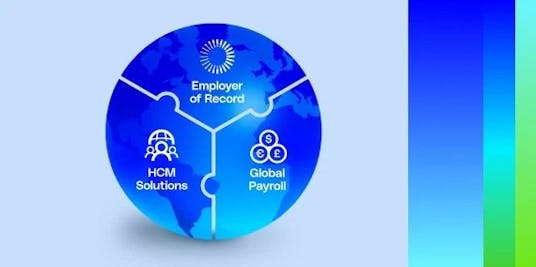
G-P EOR is the award-winning, AI-enabled global hiring solution that empowers startups, SMBs, and enterprise businesses to build global teams with ease. G-P EOR handles everything from onboarding to paying top talent in over 180 countries. With us, you bypass the complexity of local entity setup.
G-P EOR is the preferred partner for leading HCM, PEO, and payroll platforms. Bring your workforce data together in one place to maintain existing workflows while keeping consistent and accurate data across your integrated systems.
Request a proposal to start hiring in Poland today.
When does using a Poland EOR make the most sense?
A Poland EOR helps you hire talent quickly without setting up a local legal entity. The G-P Global Employment Platform maintains compliance with Polish employment laws while eliminating worker misclassification risks. This solution also streamlines local payroll and benefits administration.
How does an EOR help with Polish Labour Code compliance?
A Poland EOR manages employment contracts, working hours, leave, and termination processes under local labor laws. This system protects your business from legal pitfalls and satisfies all statutory requirements.
Is an EOR cost-effective for hiring a single employee?
An EOR provides a cost-effective alternative to managing global compliance through internal teams or external legal counsel. For a scaling company, setting up a legal entity often costs tens of thousands of dollars. G-P EOR offers flat-rate platform pricing starting at USD 599 per month for a single employee in 180+ countries.
What should startups look for in EOR solutions?
Startups should look for EOR solutions with clear cost models. User-friendly platforms, dependable customer support, and proven track records of compliant hiring are also crucial.
EOR vs B2B contractors in Poland: what are the risks?
Misclassifying professionals as B2B contractors in Poland triggers fines, back payments, and legal disputes under the Polish Labour Code. A Poland EOR establishes proper worker classification to eliminate compliance risks and protect your business from penalties.