







One of the most challenging aspects of expanding operations to the United States is finding and hiring the right employees while navigating a complex web of federal, state, and local laws. Hiring employees in the USA involves understanding key employment regulations to ensure successful onboarding of workers. The hiring process requires knowledge of employment laws, employee benefits, and hiring employees compliance.
Recruiting and non-discrimination laws in the U.S.
Recruitment in the USA requires adherence to both federal and state laws to avoid legal complications. This includes knowing how the Department of Labor governs recruitment and hiring practices. The foundation of fair hiring in the U.S. is the principle of equal employment opportunity. The Equal Employment Opportunity Commission (EEOC) is the primary federal agency enforcing laws making it illegal to discriminate against an employee, job applicant, or independent contractor. Federal law prohibits discrimination based on:
-
Race
-
Color
-
Religion
-
Sex (including pregnancy, childbirth, sexual orientation, and gender identity)
-
National origin
-
Age (40 or older)
-
Disability
-
Genetic information
Many states and cities provide additional protections, prohibiting discrimination based on factors like marital status or political affiliation. To avoid claims of discrimination, employers should ensure job descriptions are neutral and avoid interview questions about protected characteristics. Additionally, companies must ensure their hiring practices remain compliant with the Immigration and Nationality Act (INA).
When expanding to new regions, G-P Gia offers instant, expert guidance on compliance assessing risk and outlining employment laws—saving valuable time to focus on hiring the right talent. Gia also provides real-time, multi-jurisdiction compliance checks on employment contracts — no more waiting days for legal counsel or accumulating costly billable hours.
USA recruitment
To attract a global workforce, companies should implement recruitment plans that emphasize cultural diversity and comply with international labor laws. Digital platforms such as LinkedIn can expand the talent pool by accessing a global workforce. Comprehending the intricacies of global labor laws, taxes, and regulations is crucial for developing inclusive recruitment strategies, thereby positioning companies as appealing employers for international talent.
Background checks and pre-employment screening
Employers who conduct background checks must comply with the federal Fair Credit Reporting Act (FCRA) and manage the security of personal information. This law regulates how employers can obtain and use consumer reports, which include criminal history and credit reports. Employers must get a candidate’s written permission before conducting a background check.
It is crucial to be aware of state and local laws that may impose stricter rules. For example, numerous jurisdictions have enacted “ban-the-box” laws that limit when an employer can inquire about a candidate’s criminal history. Similarly, many states and cities have passed laws prohibiting employers from asking candidates about their salary history.
How to hire employees: At-will employment and offer letters
The U.S. operates primarily under the principle of “at-will” employment. This means that, in the absence of a specific contract stating otherwise, either the employer or the employee can terminate the employment relationship at any time, for any lawful reason, without notice. Montana is the only state that is not fully at-will, making it essential to understand state-specific employment laws.
While formal, fixed-term employment contracts are uncommon, providing a written offer letter is a standard best practice. A comprehensive offer letter helps prevent future misunderstandings and should be signed by the new hire. Key terms to include are:
-
Position title, duties, and reporting structure
-
Start date
-
Compensation and pay schedule
-
Statement of at-will employment
-
Contingencies, such as successful completion of a background check
-
An overview of benefits and eligibility
-
Confidentiality requirements and any restrictive covenants (subject to state law)
Understanding employee benefits in the USA
Understanding U.S. employee benefits is important for companies aiming to hire and retain skilled employees in the United States. Offering a robust benefits package, including health insurance, retirement plans, and paid leave, can significantly improve employee retention. Ensuring compliance with federal mandates such as Social Security contributions and tax regulations is imperative for structuring employee benefits correctly. By meeting these requirements, companies secure organizational stability and satisfaction among their workforce.
Key employment law considerations
While employment laws vary significantly by state, all companies must adhere to federal standards:
-
- Employee or independent contractor classification: Before applying wage-and-hour, payroll tax, benefits, or other employment rules, employers must determine whether a worker is an employee or an independent contractor under the applicable legal standard. The actual working relationship matters more than the title used in a contract, the label chosen by the parties, or the worker’s preferred classification.
- Wage and hour laws: The federal minimum wage is USD 7.25 per hour for non-exempt employees. However, the majority of states, and many cities, have higher minimum wage rates. The federal salary threshold for most exempt (salaried) employees is USD 35,568 per year. Non-exempt employees are generally entitled to overtime pay for hours worked over 40 in a workweek. Employers must pay attention to both federal and state wage regulations.
- Employment eligibility verification: Form I-9 is required for every new hire who works in the United States. The employee must complete Section 1 no later than the first day of employment, while the employer must complete Section 2 within three business days of the employee’s start date. Employers must examine acceptable documents, record the information on Form I-9, and retain the completed form for the longer of three years after the employee’s hire date or one year after employment ends.
- Federal payroll tax reporting and withholdings:
- Form W-4: Employers should also complete required federal payroll tax withholding and reporting, including collecting Form W-4, withholding federal income and FICA taxes, depositing those taxes on schedule, and filing the applicable payroll tax returns.
- Federal income tax withholdings: Employers are required to withhold federal income tax and the employee share of Social Security and Medicare taxes from wages, while also paying the employer share of Social Security and Medicare taxes. Most employers must pay Federal Unemployment Tax Act (FUTA) tax as well. U.S. payroll responsibilities generally include timely federal tax deposits, quarterly Form 941 filings, annual Form 940 reporting, Form W-2 delivery to employees, and applicable state payroll filings.
- Employer Identification Number (EIN): Before the first employee starts work, employers should obtain an Employer Identification Number (EIN) from the IRS and establish a federal payroll tax process. The EIN identifies the business on employment tax returns and other filings. Employers should also register for electronic federal tax payments, collect
- State registration and tax withholdings: Before hiring a new employee, employers commonly need to register with the state for payroll withholding and state unemployment insurance accounts. Requirements depend on where the employee performs work, not only where the business is incorporated. Employers should also confirm workers’ compensation coverage, new-hire reporting, and any local registrations or notices required by the state, county, or city.
Onboarding new hires in the U.S.
A structured onboarding process is essential for setting up new employees for success. Beyond introducing company culture and job responsibilities, a compliant onboarding process must include completing required new hire paperwork. On their first day, employees should complete essential documents, including:
-
Form I-9 (as mentioned above)
-
Form W-4 (Employee's Withholding Certificate) for federal tax purposes
-
Any required state tax withholding forms
-
Benefits enrollment forms and policy acknowledgments
Providing a clear schedule for the first week helps create an engaging and positive experience, integrating the new team member efficiently.
Simplifying hiring with employer of record (EOR) solutions
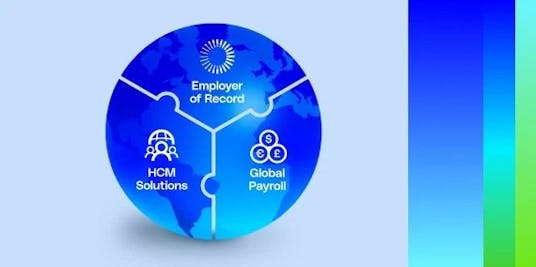
A United States Employer of Record (EOR) approach eases the hiring process for companies looking to expand globally or manage remote teams. An EOR manages critical employment tasks like payroll and compliance with local labor laws, ensuring companies meet tax and employment law requirements. The EOR model is especially advantageous for businesses hiring in new international markets without the expense of establishing a local entity.
Grow globally with G-P.
G-P EOR makes hiring global teams in a matter of minutes simple, risk free and compliant. All without the need to set up entities or spend time, money and resources engaging consultants and local experts in HR, law and taxes. With G-P you get simple work flows, integrations, and AI-powered features that transform the way you onboard, manage, and pay contractors in more than 130 currencies and over 190 countries. Saving you hours of manual work.
Contact us today to learn more about how we can help you recruit, hire, and onboard anyone, anywhere.
FAQs
When must Form I-9 Sections 1 and 2 be completed?
Supported employees must complete Form I-9 Section 1 no later than the first day of work for pay, after accepting the job offer. Employers must complete Section 2 within three business days after the first day. If employment lasts fewer than three business days, complete Section 2 by day one.
Why do new hires complete Form W-4, and how is it used?
New hires complete Form W-4 so U.S. employers can calculate federal income tax withholding from wages. Payroll processes the filing status and adjustments alongside withholding tables. Without a valid Form W-4, employers withhold taxes at the single or married filing separately rate without adjustments.
What is new-hire reporting, and do all states demand it?
New-hire reporting obligates employers to report newly hired and rehired talent to state directories for child support enforcement and fraud prevention. Federal law covers all U.S. employers with a baseline deadline of 20 days from hire. States can mandate faster reporting or mandate extra talent and employer data.
How long must employers retain completed Form I-9 records?
U.S. employers must retain each Form I-9 for three years after hire or one year after employment ends, whichever occurs later, keeping records ready for inspection.
How do you set up as an employer with the IRS before hiring?
Before running U.S. payroll, obtain an Employer Identification Number (EIN) from the IRS to identify the business for tax deposits, returns, and wage reporting. Foreign applicants apply using Form SS-4 rather than the online portal. Use the same EIN consistently across all payroll deposits and filings.
How do you decide if a worker is an employee or a contractor?
Worker classification depends on a facts-and-circumstances review, not contract labels. Assess IRS behavioral control, financial control, and relationship factors — including instructions, training, investment, profit or loss, benefits, and permanency. Apply the FLSA economic reality test and state guidelines. Misclassification triggers back taxes, unpaid wages, penalties, and benefits claims. The G-P Contractor misclassification engine automates worker status reviews to prevent these regulatory fines.
What payroll taxes and filings apply when hiring U.S. talent?
U.S. employers withhold federal income tax and the employee share of FICA while paying the employer share of Social Security and Medicare. Employers pay FUTA, make federal tax deposits, and report employment taxes quarterly on Form 941 and annually on Form 940. At year-end, issue Forms W-2 to talent and file Forms W-2 and W-3 with the SSA. State and local withholdings, unemployment taxes, and paid leave contributions can also apply.
What state registrations are necessary before hiring U.S. talent?
Work location drives state employer registrations, including remote work locations, not just the state of incorporation. Before payroll starts, companies need authority to conduct business in that state, income-tax withholding registration, unemployment insurance accounts, and workers’ compensation coverage. Some states also mandate paid family leave, disability insurance, or local payroll tax accounts.
Can a foreign company hire a U.S.-based team member without a U.S. entity?
Yes. A foreign company can directly employ a U.S.-based worker without forming a U.S. subsidiary by completing federal and state registrations while complying with payroll, tax withholding, Form I-9, and wage obligations. Because U.S.-based talent can create permanent-establishment risks, many organizations partner with G-P EOR to hire talent quickly without setting up local entities.
What should a U.S. job offer include to support compliance?
A U.S. job offer must state the employer name, job title, core duties, start date, work location, schedule, compensation, pay frequency, FLSA status, benefits summary, contingencies, acceptance deadline, and at-will language. Employers must check state wage notice, pay transparency, fair-chance, and background-check rules. Provide FCRA background-check authorizations in a standalone disclosure rather than embedding them in the offer letter.