






Viktiga takeaways
- EOR:er möjliggör global rekrytering: En Employer of Record (EOR) låter dig anställa långtidsanställda globalt utan att öppna enheter eller hantera förmåner och efterlevnad av lokala lagar.
- Paraplyföretag fokuserar på löner: Ett paraplyföretag fungerar som mellanhand för entreprenörer och hanterar skatt och fakturering inom ett enda land.
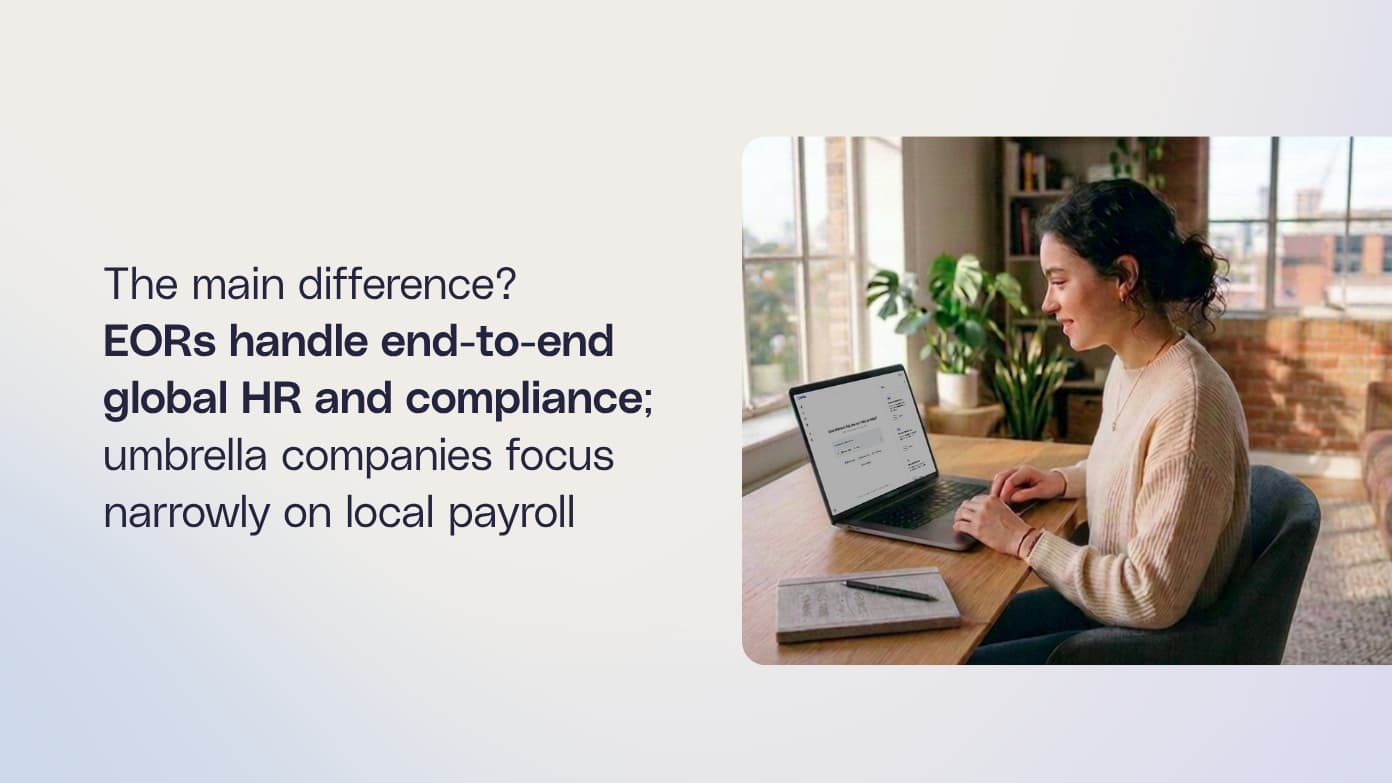
- Den största skillnaden är omfattningen: EOR:er hanterar totala juridiska och anställningsrisker över gränserna. Paraplyföretag fokuserar snävt på lönehantering för tillfälligt anställda.
Att balansera efterlevnad med affärsprioriteringar blir mer komplext i takt med att du expanderar in på nya marknader och utökar ditt team. Arbetsgivare med register (EOR) och paraplybolag kan förena arbetskraftsförvaltningen, men var och en har sina egna användningsområden och fördelar.
Den här guiden förklarar skillnaderna mellan en arbetsgivares registreringsform och en paraplyföretagsform, så att du kan hitta rätt metod för ditt företag.
Vad är en EOR?
En registrerad arbetsgivare agerar som juridisk arbetsgivare för ett annat företags räkning. En arbetsgivare med registrerad arbetsgivare låter dig anställa anställda över hela världen utan att etablera en lokal enhet i varje land.
Medan du behåller kontrollen över de anställdas dagliga arbete, hanterar den registrerade arbetsgivaren efterlevnad, löner, skatter, förmåner och andra HR funktioner. Att samarbeta med en registrerad arbetsgivare hjälper dig att:
- Anlita anställda var som helst i världen.
- Effektivisera löneprocesser, skatteavdrag och förmånsadministration.
- Minimera efterlevnadsrisker genom att anförtro regelefterlevnad till en expertpartner.
Vad är ett paraplyföretag? ?
Betydelsen av paraplyföretag syftar på en enhet som underlättar entreprenadarbete. Paraplyföretag är också kända som skatt-paraplyer, vilket innebär att de använder skatt-systemet för att dra av skatt. De är mellanhänder mellan företag och tillfälligt anställda eller entreprenörer.
En paraplyföretag är en lagstadgad arbetsgivare, men hanterar endast avdrag och bidrag samt fördelar betalningar från företaget eller myndigheten till entreprenören. Samtidigt är företaget eller byrån fortfarande ansvarig för att övervaka arbetsinriktningen, hantera förväntningar och leveranser samt säkerställa efterlevnad.
Viktiga skillnader mellan EOR kontra paraplyföretag
EOR och paraplyföretag fungerar som lagliga arbetsgivare och mellanhänder mellan företag och arbetstagare. Båda kan hjälpa till med lönehantering, stödja efterlevnad och ta ett visst arbetsgivareansvar. Omfattningen av stöd och ansvar som varje tillvägagångssätt erbjuder är dock annorlunda:
- Tjänsteomfattning: EOR:er effektiviserar ett komplett utbud av HR-uppgifter, inklusive onboarding, avtal, lön och förmåner. Paraplyföretag fokuserar på lönehantering och grundläggande administrativa uppgifter.
- Anställningstyp: EOR:er fokuserar på långsiktig anställning, även om vissa leverantörer som G-P Employer of Record också stöder entreprenörer och visstidsanställda. Paraplyföretag arbetar med entreprenörer och tillfälligt anställda.
- Efterlevnadsstöd: EOR:er ger omfattande stöd för efterlevnad av lokala arbetsrättsliga lagar. Paraplybolag stöder efterlevnad av löneregler, inklusive skatter och avgifter, men tillhandahåller inte nödvändigtvis annat juridiskt stöd eller tjänster.
- Räckvidd: EOR:er har globala dotterbolag och expertis i landet för att stödja långsiktig skalning till nya platser. Paraplyföretag har ett snävare fokus och begränsad internationell expertis och verkar vanligtvis inom ett enda land. De är vanliga i Storbritannien och Frankrike. I Frankrike regleras tidsbegränsade anställningsavtal och de företag som underlättar dem enligt modellen för entreprise de portage salarial .
- Kontroll och flexibilitet: EOR:er erbjuder tillgång till globala kompetenspooler och anställer den kandidat du väljer. Paraplyföretag, ofta knutna till rekryteringsföretag, kan begränsa tillgången till kompetens och skapa en mer distanserad relation.
- Riskreducering: EOR:er hanterar alla aspekter av efterlevnad Paraplyföretag lägger en större börda på kunderna för efterlevnad och ger ett snävare supportomfång.
- Avgiftsstruktur: Ledande EOR:er, som G-P Employer of Record, har en tydlig och förutsägbar avgiftsstruktur. Prissättningen G-P Employer of Record börjar på 599 USD per månad (per anställd) och debiterar ingen procentandel av lönen. Med tanke på paraplyföretag kan avgifter ibland vara mer komplexa, vilket kan påverka de företag och entreprenörer som arbetar med dem.
| Funktion | Employer of Record | Paraplyföretag |
|---|---|---|
| Tjänsternas omfattning | Anställningsavtal, onboarding, lön, förmåner och lokal anställningsadministration | Lönehantering, skatteavdrag, fakturering, lönespecifikationer och relaterad anställningsadministration för tillfälliga uppdrag |
| Anställningstyp | Vanligtvis används för anställda, inklusive långtids- eller heltidsanställningar | Vanligtvis används för tillfälliga, bemannings- eller uppdragsbaserade anställda |
| Efterlevnadsstöd | Stöder bredare lokal laglig anställning men eliminerar inte alla klientrisker | Stödjer efterlevnad av löneskatt och relaterad anställningsadministration. Bredare risker för sysselsättning och leveranskedjan kan kvarstå |
| Geografisk räckvidd | Täckning i flera länder eller global täckning beroende på leverantör | Vanligtvis lands- eller marknadsspecifik |
| Tillgång till kompetens | Hjälper till att anställa kandidater som valts ut av klienten i länder som stöds, i enlighet med lokala krav | Rekrytera inte arbetskraft. Arbetar tillsammans med rekryterings- eller bemanningsföretag |
| Riskreducering | Tar på sig många juridiska arbetsgivaruppgifter, med visst klientansvar behållet | Hanterar löne-/arbetsgivareadministration för uppdraget, men byråer eller slutkunder kan behålla juridisk, skattemässig och operativ exponering. |
| Avgiftsstruktur | Ofta prenumerationsbaserad prissättning eller prissättning per anställd. G-P Employer of Record börjar på USD 599 per månad (per anställd). | Inkluderar en paraplymarginal eller administrativ avgift |
Hur fungerar ett paraplyföretag, löneutbetalning (skatt-stil)
Umbrella payroll kan förenkla betalningar för tillfälligt anställda eller entreprenörer samtidigt som det stöder skatt efter skatt, särskilt på marknader som Storbritannien. Så här fungerar processen:
- Du godkänner förlovningsvillkoren. Du godkänner arbetarens uppdragsvillkor, lönesats och projektdetaljer med paraplyföretaget.
- Arbetaren skickar in tidrapporter. Arbetaren registrerar sina arbetade timmar eller dagar. Den godkända tidrapporten används sedan för att beräkna uppdragsbetalningen.
- Du får en faktura. Paraplyföretagen, fakturor för arbetarens tid, tillsammans med eventuell överenskommen marginal eller administrationsarvode.
- Löneavdrag beräknas. Efter att betalningen har mottagits behandlar paraplyföretagen löneutbetalningen.
- Arbetaren får betalt. Paraplyföretagen betalar arbetaren deras nettolön och utfärdar en lönespecifikation som visar bruttolön, avdrag och nettolön.
Att använda Skatt paraplylön sparar tid. Du slipper det administrativa arbetet med att hantera en separat löneutbetalning för tillfälligt anställda, och du minskar risken för kostsamma klassificeringsavgifter.
Är en paraplyföretag, samma sak som en bemanningsbyrå?
Nej. Även om båda arbetar med tillfälliga anställda, hanterar de helt olika delar av processen.
En bemanningsbyrå hittar och placerar kompetens för dina lediga tjänster. De hittar kandidater, granskar CV:n och matchar entreprenörer med just dina projektbehov.
Ett paraplyföretag, fungerar som juridisk arbetsgivare och lönehandläggare. De rekryterar inte arbetare. Istället ingriper de efter att du hittat en entreprenör och hanterar deras löner, skatteavdrag och anställningsadministration.
Att förstå skillnaden hjälper dig att bygga rätt upplägg för ditt företag:
| Funktion | Bemanningsbyrå | Paraplyföretag |
|---|---|---|
| Primärt fokus | Inköp och placering av kompetens | Anställa tillfällig arbetskraft och hantera löneavdrag/skatteavdrag |
| Rekryteringsstöd | Ja | Nej |
| Rättslig arbetsgivarestatus | Varierar (placerar ofta arbetare) | Ofta är det arbetstagarens arbetsgivare i brittiska paraplyavtal |
| När man ska använda | Du behöver hjälp med att hitta tillfälliga anställda eller entreprenörer | Du har hittat en arbetare och behöver en korrekt struktur för löne-/anställningsadministration |
För- och nackdelar med att använda en paraplyföretag,
Ett paraplyföretag kan förenkla entreprenörs- eller vikarbetalningar men det kanske inte passar alla anställningssituationer. Att väga för- och nackdelar hjälper dig att avgöra om den här modellen passar din nuvarande uppställning.
Fördelar
- Sparar administrativ tid. Du kan undvika att köra löneutbetalningar direkt för visstidsanställda eller att själv hantera skatteskatt och avdrag för nationell försäkring, beroende på strukturen.
- Minskar risken för efterlevnad. Paraplyföretaget hanterar skatteinnehåll som skatt och nationell försäkringsavgift, vilket minskar din risk för felklassificeringsavgifter.
- Erbjuder snabb onboarding. Du kan hjälpa arbetare att komma igång och få betalt snabbt där modellen är upprättad och lagenlig.
- Förenklar fakturering. Du får en enda faktura från paraplyföretaget, istället för att hantera betalningar till flera enskilda entreprenörer.
Nackdelar
- Begränsat juridiskt och HR-stöd. Paraplyföretag fokuserar främst på lönehantering. De är inte en ersättning för stöd med långsiktig laglig anställning, förmånsstrategi, immigration, arbetskraftsplanering eller relationer till anställda.
- Smal geografisk räckvidd. Paraplyföretag verkar vanligtvis inom ett enda land, vilket gör dem mindre lämpade för att anställa ett globalt team.
- Högre avgifter för entreprenörer. Paraplyföretagen tar en serviceavgift från entreprenörens lön eller lägger till avgifter på din faktura.
- Mindre kontroll över medarbetarupplevelsen. Att lägga till en mellanhand mellan dig och din entreprenör kan skapa avstånd och komplicera kommunikationen.
Att välja mellan en registrerad arbetsgivare och en paraplyföretag,
Med tanke på skillnaderna mellan alternativen mellan en registrerad arbetsgivare och en paraplyföretag, beror rätt val för ditt företag på dina behov och prioriteringar.
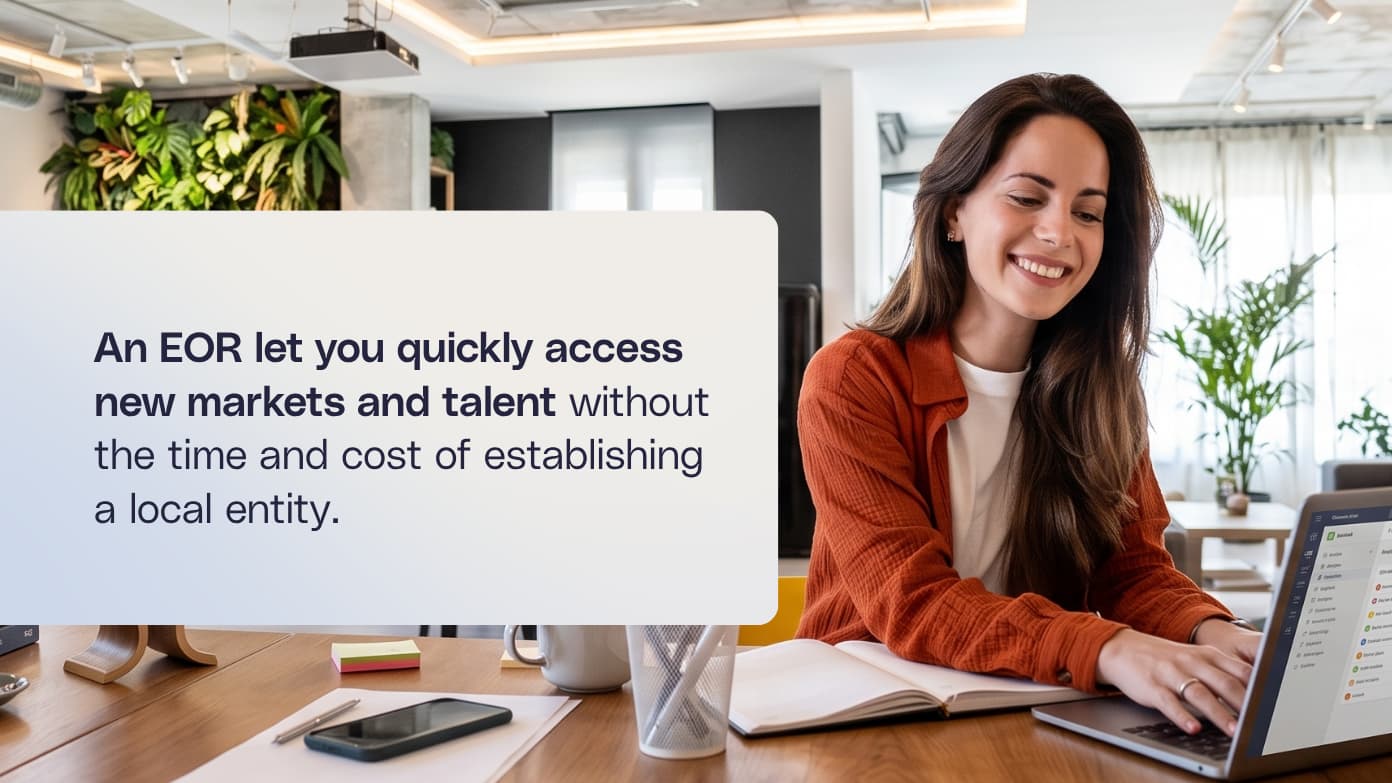
Om du vill expandera till en ny marknad eller bygga ett distribuerat team, välj en registrerad arbetsgivare. EOR:er har den infrastruktur och expertis som krävs för att stödja lagen global rekrytering. En registrerad arbetsgivare ger dig snabb tillgång till nya marknader och kompetenser utan tiden och kostnaden att etablera en lokal gemenskap. Du kan också njuta av flexibilitet och efterlevnadssäkerhet när du anställer och hanterar heltidsanställda, deltidsanställda eller entreprenörer.
Om du bara vill ha hjälp med entreprenörsbetalning på en plats där du redan har en enhet, kan ett paraplyföretag passa dina behov.
Vad man bör kontrollera innan man väljer en paraplyföretag,
Att välja rätt paraplypartner kan bidra till att minska löne- och leveranskedjerisker, men det eliminerar inte ansvar.
Innan du skriver under ett avtal, kontrollera att leverantören har erkända branschackrediteringar och följer lokala skattelagar. Denna verifiering kan rädda dig från oväntade löneskatteavgifter längre fram.
Titta sedan noga på hur de tar betalt. Transparenta paraplyföretag, avgifter och tydliga betalningstider säkerställer att det inte finns några dolda kostnader för snabba överföringar eller avtalsupprättningar. Du bör också bekräfta hur snabbt de betalar dina entreprenörer efter att de fått din faktura, eftersom förseningar kan anstränga din relation med toppkompetenserna.
Slutligen, granska deras avtalsvillkor och försäkringsskydd. Se till att leverantören erbjuder säkert försäkringsskydd och inkluderar nödvändig täckning, som ansvarsförsäkring och ansvarsförsäkring. Att kontrollera dessa detaljer i förväg säkerställer ett problemfritt partnerskap och håller din verksamhet igång smidigt.
Vad du bör kontrollera innan du väljer en registrerad arbetsgivare
Att hitta rätt arbetsgivare kan hjälpa dig att snabbt och lagligt expandera till nya globala marknader.
Börja med att fråga om leverantören äger lokala enheter i dina målländer. EOR:er med egen lokal infrastruktur kan ge er striktare datasäkerhet, direkt operativ kontroll och snabbare onboarding för era kandidater.
Utvärdera sedan deras efterlevnadsdjup och prissättningstransparens. Leta efter leverantörer, som G-P Employer of Record, med juridiska experter i landet som bygger lagliga avtal, hanterar lokala förmånspaket och skyddar din immateriella egendom. Se till att deras avgiftsstruktur är förutsägbar så att du undviker överraskande onboarding , valutapåslag eller dolda uppsägningsavgifter längre fram.
Slutligen, testa teknikplattformen och anställdupplevelsen. Välj en leverantör med intuitiv programvara som förenklar löneadministration, tidrapportering och avtalsuppdateringar i en central instrumentpanel. Stark lokal support håller dina internationella medarbetare engagerade och stöttade från dag ett.
Den ökande efterfrågan på EOR
World Economic Forum förutspår att 2030 jobb som kan utföras på distans förväntas växa till över 90 miljoner roller. I takt med att mer arbete sker i digitala miljöer blir distribuerad arbetskraft mer genomförbar och vanlig. Samtidigt använder företag av alla storlekar EOR:er för att skala upp sin verksamhet till nya globala platser, utan kostnaden och komplexiteten med att etablera en enhet.
Dessa faktorer driver den växande efterfrågan på EOR:er, vilka erbjuder snabba, flexibla och enkla lösningar för global rekrytering och expansion.
Anställ globalt med G-P
Som den erkända ledaren inom global sysselsättning hjälper G-P företag av alla storlekar att anställa, onboarda och hantera globala team i fler än 180länder. Våra branschledande globala anställningsprodukter och Employer of Record-lösningar stöds av det största team av experter i landet.
Kontakta oss idag för att upptäcka hur vi kan hjälpa dig att anställa var som helst, snabbt och i enlighet med gällande regler.
Vanliga frågor
Vad är skillnaden mellan ett paraplyföretag och ett limited företag?
Ett paraplyföretag anlitar entreprenörer som tar på sig tillfälliga arbeten, ofta via rekryteringsföretag. Paraplyföretaget hanterar skatter och efterlevnad i betalningsprocessen.
Ett begränsat företag är en separat juridisk enhet som ägs av minst en aktieägare. Ett företag eller entreprenör kan etablera ett begränsat företag, vilket ger dem mer kontroll över sin ekonomi och affärsverksamhet. De ansvarar för att hantera sina egna skatter, redovisning och efterlevnad av lagar och förordningar. Denna struktur är skatteeffektiv, men kräver mer administrativt ansvar.
Hur säkerställer EOR:er och paraplybolag arbetarklassificering?
En registrerad arbetsgivare agerar som juridisk arbetsgivare och säkerställer efterlevnad med lokal arbetslagstiftning, inklusive skatteskyldigheter och arbetstagares rättigheter. Oavsett om du anställer en anställd eller en entreprenör, minskar EOR:er riskerna för felklassificering av arbetare.
Paraplyföretag effektiviserar löne- och skatteavdrag. Entreprenörer anlitade av ett paraplyföretag arbetar på tillfällig basis eller projektbasis för kundföretag. Detta kan förenkla skatteskyldigheter för entreprenörer och bidra till att tydliggöra skillnaderna mellan anställda och entreprenörer. Men paraplyföretag saknar den expertis som EOR:er har inom arbetsklassificeringsregler för anställda och entreprenörer, och kan inte erbjuda samma nivå av vägledning.
Erbjuder en registrerad arbetsgivare fler förmåner än en paraplyföretagare?
Ja, en Employer of Record kan vara mer fördelaktigt än ett paraplyföretag om du vill skala upp globalt utan att etablera en lokal enhet. EORs säkerställer efterlevnad med lokal arbetslagstiftning och hanterar löner, skatteplikter och anställda förmåner.
En arbetsgivare med registrerad arbetsgivare erbjuder mer stabilitet och tillsyn än en paraplyföretag, som är avsedd för kortsiktiga entreprenörsarrangemang. Dessutom kan en registrerad arbetsgivare vara en strategisk partner i jurisdiktioner med komplexa regelverk, vilket minskar juridiska och finansiella risker.
Hur effektiviserar EOR:er och paraplybolag uppsägning av avtal?
Som juridisk arbetsgivare sköter EOR uppsägning i strikt efterlevnad med lokal arbetslagstiftning. Detta inkluderar att ge korrekt uppsägningstid, hantera avgångsvederlag och uppfylla alla lagkrav. Uppsägningar genomförs rättvist för att skydda både dig och arbetaren.
Att arbeta med paraplybolag är ofta tillfälligt eller projektbaserat, så uppsägning och avgångsvederlag beror på avtalsvillkoren och lokala bestämmelser.
Vilka är nackdelarna med ett paraplyföretag?
Medan paraplyföretag hjälper till att effektivisera relationerna mellan företag och entreprenörer, har de betydande begränsningar, till exempel:
HR-stödet är huvudsakligen begränsat till lönehantering.
Företag som samarbetar med paraplyföretag kan hållas ansvariga för leverantörens efterlevnadsfel.
Att arbeta med ett paraplyföretag är mindre skatteeffektivt för entreprenören än att driva ett eget aktiebolag.
Vissa paraplyföretag är långsamma med att betala eller gör för stora avdrag från entreprenörers betalningar.