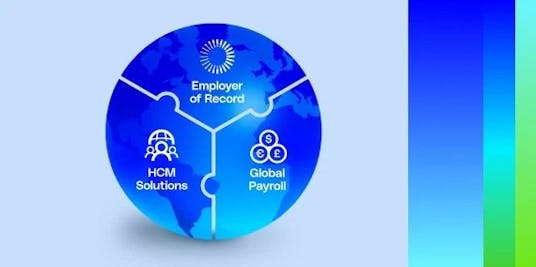



Embaucher des salariés en Allemagne implique de s'y retrouver dans la complexité du droit du travail local, des règles de paie et des exigences fiscales. En faisant appel à un portage salarial (EOR), les entreprises peuvent facilement gérer les réglementations relatives aux employés en Allemagne. Le modèle de Portage salarial (Employer of Record, EOR) simplifie ce processus, permettant à votre entreprise d'embaucher des talents en quelques minutes.
En tant qu'expert mondial du portage salarial (EOR) en Allemagne, G-P gère la paie, les meilleures pratiques en matière de contrat de travail, les avantages statutaires et conformes aux normes du marché, les dépenses des employés, et plus encore via notre infrastructure d'entité internationale. Vous pouvez compter sur notre équipe d’experts en emploi dévoués pour fournir un accompagnement complet à chaque employeur.
Avec les solutions de portage salarial (EOR), vous pouvez vous concentrer sur votre expansion sans les obstacles liés à la conformité international . Cette approche international améliore la portée et la scalabilité de l’entreprise en permettant le recrutement mondial sans entité locale.
Naviguer dans les réglementations relatives à la location de personnel en Allemagne (licence AUG)
L'Allemagne a des lois strictes régissant le leasing de salariés, réglementées par la loi allemande sur le leasing de salariés (Arbeitnehmerüberlassungsgesetz – AÜG). Toute entreprise qui embauche des personnes pour travailler pour une autre entreprise doit être titulaire d'une licence AÜG. L’exercice d’une activité sans cette licence peut entraîner des sanctions importantes, notamment des amendes et la requalification de la relation de travail directement avec le client final.
Recrutement en Allemagne avec un portage salarial (EOR)
En tant que salaire de portage (EOR) en Allemagne, G-P détient la licence AÜG nécessaire, garantissant que votre embauche est conforme dès le premier jour. Nous assumons la responsabilité juridique en tant qu’employeurs, vous permettant de diriger le travail quotidien de votre équipe allemande sans porter la charge juridique et administrative directe du droit du travail allemand. De plus, un salaire de portage (EOR) gère des aspects cruciaux de l’emploi tels que le traitement de la paie , la gestion des congés, l’administration des prestations, la supervision des procédures de gestion du département et le versement des taxes sur les salaires. Cela réduit considérablement la charge administrative pour les entreprises, éliminant ainsi la nécessité pour elles d’établir une entité juridique en Allemagne.
Observez le fonctionnement d'un portage salarial (EOR)
Contrats de travail en Allemagne
Si les accords oraux peuvent être juridiquement contraignants, le droit allemand exige des employeurs qu'ils fournissent un résumé écrit des conditions essentielles d'emploi, comme le stipule la loi sur la preuve des conditions contractuelles essentielles(Nachweisgesetz). La meilleure pratique consiste à mettre en place un contrat de travail solide et conforme à la législation locale avant la date d'entrée en fonction de l'employé.
Le contrat doit détailler le salaire, les avantages sociaux et les exigences de licence Masse de l’employé. Tous les montants monétaires doivent être exprimés en euros (EUR).
Un portage salarial (EOR) en Allemagne rédige des contrats de travail conformes à la législation locale qui reflètent toutes les conditions obligatoires prévues par le droit du travail allemand. Ces conditions comprennent le salaire, les heures de travail et les périodes de préavis, en veillant à ce que le contrat soit conforme aux réglementations locales.
Temps de travail en Allemagne
La semaine de travail standard en Allemagne est généralement de36 à 40 heures. La loi allemande sur le temps de travail (Arbeitszeitgesetz) limite strictement les heures de travail quotidiennes à huit heures. Cela peut être étendu à 10 heures si la moyenne quotidienne ne dépasse pas huit heures sur une période de six mois ou 24semaines. Tout travail au-delà de ce délai est considéré comme des heures supplémentaires et est fortement réglementé.
Congés en Allemagne
Un portage salarial (EOR) en Allemagne veille au respect du droit du travail en ce qui concerne les jours fériés, les vacances, les congés de maladie et les congé maternité ou paternité. Ils s'occupent des congés payés, du calcul et du suivi des vacances, de la gestion des certificats de congé maladie et des prestations, et veillent au respect des durées de congé de maternité et de congé maternité ou paternité, y compris la protection contre le licenciement. Cette surveillance administrative permet aux entreprises d'éviter les pénalités et de garantir les droits des employés.
Jours fériés en Allemagne
L'Allemagne observe 9 jours fériés nationaux, avec des jours fériés supplémentaires variant selon les Länder :
- Jour de l'an (janv. 1)
- Vendredi saint
- Lundi de Pâques
- Fête du travail ( 1)
- Le jour de l'Ascension
- Lundi de Pentecôte
- Journée de l'unité allemande (oct. 3)
- Jour de Noël (déc. 25)
- Deuxième jour de Noël (déc. 26)
Congés payés en Allemagne
Le congé payé minimum légal est de20 jours pour une semaine de travail standard de 5 jours et de 24 jours pour une semaine de travail de 6jours. Cependant, il est courant que la plupart des employés à temps plein reçoivent 25 à 30 jours de congés payés par an. Ce droit est distinct des jours fériés et du congé maladie.
Congé légal en Allemagne
Congé maladie en Allemagne
Les employés ont droit à jusqu’à six semaines de congé maladie à pleine salaire, à condition de soumettre un certificat médical. Bien que cela soit souvent demandé après trois jours d’absence, un employeur peut légalement exiger un certificat dès le premier jour. Après six semaines, les employés reçoivent des prestations maladie (Krankengeld) de leur assureur maladie, généralement à 70% de leur salaire brut (jusqu’au plafond de la sécurité sociale), mais sans dépasser 90% de leur salaire net.
Allemagne congé de maternité et congé maternité ou paternité
Les employées enceintes ont droit à un congé maternité entièrement payé (Mutterschutz) pendant six semaines avant la naissance et huit semaines après. Ce congé post-partum s’étend à 12 semaines pour les naissances prématurées ou multiples. Après congé maternité, l’un ou l’autre parent peut prendre congé maternité ou paternité (Elternzeit) jusqu’au troisième anniversaire de l’enfant. Pendant cette période, ils peuvent choisir de travailler à temps partiel jusqu’à 32 heures par semaine. De plus, une subvention fédérale (Elterngeld) est disponible pour les nouveaux parents, remplaçant une partie de leurs revenus pendant jusqu’à 14 mois.
Salaires et charges sociales en Allemagne
Un employeur responsable en Allemagne gère les cotisations sur les salaires et les cotisations en gérant les cotisations obligatoires à l’assurance maladie nationale tant pour les employeurs que pour les employés via la sécurité sociale. Ils veillent également au respect du système progressif d’impôt sur le revenu allemand. Le salaire de portage (EOR) gère les cotisations des employés et les contributions des employeurs.
Sécurité sociale en Allemagne
Le système allemand de sécurité sociale repose sur cinq piliers. Les cotisations sont obligatoires pour les employeurs et les employés et sont généralement réparties à parts égales, à quelques exceptions près.
- Assurance pension (Rentenversicherung)
- Assurance maladie (Krankenversicherung)
- Assurance chômage (Arbeitslosenversicherung)
- Assurance dépendance (Pflegeversicherung)
- Assurance accidents (Unfallversicherung) - couverte uniquement par l'employeur.
Les employeurs prennent également en charge les cotisations pour l'assurance maternité et l'assurance insolvabilité. Au total, les employeurs peuvent s'attendre à verser une contribution d'environ 21% en plus du salaire brut d'un employé, jusqu'à un certain seuil.
Ces cotisations de sécurité sociale sont plafonnées à un niveau de revenu maximum(Beitragsbemessungsgrenze). Pour 2025, les plafonds mensuels sont les suivants :
- Pension et assurance chômage : EUR 7,750
- Assurance maladie et soins de santé obligatoire : EUR 5,362.50
Depuis le janvier 1, 2025, les plafonds de cotisation pour l'assurance retraite et l'assurance chômage ont été unifiés dans toute l'Allemagne, supprimant ainsi l'ancienne distinction entre l'Est et l'Ouest.
Licenciement et indemnités de départ en Allemagne
Le licenciement en Allemagne est fortement réglementé par la loi sur la protection contre le licenciement(Kündigungsschutzgesetz), qui s'applique aux employés ayant plus de six mois d'ancienneté dans les entreprises de plus de 10 employés. Dans le cas d'un licenciement ordinaire, les périodes de préavis minimums légaux s'appliquent et augmentent en fonction de l'ancienneté :
- Pendant une période d'essai (jusqu'à 6 mois) : 2 semaines de préavis.
- 0-2 années de service : 4 semaines de préavis, à 15e ou à la fin du mois.
- Après 2 ans d'ancienneté : 1 mois de préavis, jusqu'à la fin du mois.
- Après 5 ans de service : 2 mois de préavis, jusqu'à la fin du mois.
- Après 8 ans de service : 3 mois de préavis, jusqu'à la fin du mois.
- Après 10 ans de service : 4 mois de préavis, jusqu'à la fin du mois.
- Après 12 ans de service : 5 mois de préavis, jusqu'à la fin du mois.
- Après 15 ans de service : 6 mois de préavis, jusqu'à la fin du mois.
- Après 20 ans de service : 7 mois de préavis, jusqu'à la fin du mois.
Bien qu'il n'existe pas de droit légal à une indemnité de licenciement dans le cas d'un licenciement individuel, les employés peuvent contester le licenciement devant les tribunaux. En raison de la lourde charge de la preuve qui pèse sur les employeurs, la plupart des affaires de licenciement sont réglées, l'employé recevant une indemnité de licenciement. Une ligne directrice commune et non contraignante pour ce paiement est la suivante : 0.5 mois de salaire par année de service.
Simplifier la gestion du départ en Allemagne avec un portage salarial (EOR)
Naviguer dans les procédures complexes de licenciement de l’Allemagne représente un risque important pour les entreprises étrangères, en particulier lorsqu’elles ne connaissent pas les lois allemandes du travail. Le salaire de portage (EOR) deG-P's Intelligence Artificielle fournit des conseils d’experts et gère le processus afin d’assurer la conformité et d’atténuer les défis juridiques.
Comment choisir le meilleur portage salarial (EOR) en Allemagne ?
Lors de la sélection d'un portage salarial (EOR) en Allemagne, il est important de prendre en compte plusieurs facteurs clés pour garantir un partenariat fructueux qui soutienne vos objectifs commerciaux et garantisse la conformité.
Considérations clés pour la sélection d'un portage salarial (EOR) en Allemagne :
- Expertise en matière de conformité : Votre portage salarial (EOR) doit avoir une connaissance approfondie du droit du travail allemand, de la réglementation fiscale et des cotisations de sécurité sociale. Un partenaire disposant d'une large équipe d'experts en RESSOURCES HUMAINES et experts juridiques sur le marché local peut gérer les changements de manière proactive afin de garantir une conformité continue.
- Une offre de services complète : Les meilleurs partenaires proposent une gamme complète de produits d'emploi et de solutions de portage salarial (EOR). La plateforme mondiale d'emploi de G-P offre tout ce dont vous avez besoin pour gérer le cycle de vie complet des employés, de l'administration des salaires et des avantages sociaux à la gestion des frais professionnels et à la gestion du départ conforme.
- Soutien local et compréhension culturelle : Même si un portage salarial (EOR) est un fournisseur mondial, il est essentiel qu'il dispose d'experts spécialisés qui comprennent les nuances du marché allemand. Cette connaissance du terrain est essentielle pour établir des relations de travail et s'orienter dans les pratiques régionales.
- Capacités technologiques : Un portage salarial (EOR) qui utilise une technologie avancée, comme la plateforme d'emploi mondiale de G-P alimentée par l'intelligence artificielle, peut rationaliser les processus d'intégration, de gestion et de paiement. Cela garantit une gestion sûre et efficace des données des employés, de la paie et de la conformité.
-
Tarification transparente et forfait: Évaluez la prévisibilité totale du coût plutôt que les taux de base bas. Cherchez des modèles de tarification standards et clairs. Comparez soigneusement les structures tarifaires, car certains EOR utilisent des modèles de pourcentage de la masse salariale qui pénalisent les hauts revenus. La tarification à tarif forfaitaire garantit une précision budget d’exploitation à long terme. Le prix de départ du G-P portage salarial (EOR) de USD $599 mensuel vous donne un accès complet à la plateforme d’embauche internationale de l' G-P Global Employment™. Nous utilisons des frais fixes sur la plateforme plutôt que de facturer un pourcentage de la masse salariale.
- Réputation et leadership dans le secteur : Renseignez-vous sur la réputation du salaire de portage (EOR) dans le marché. G-P est reconnu comme leader de l’emploi mondial et est classé 1 dans tous les rapports d’analystes du secteur. Les témoignages de clients et les études de cas sont également importants lors du choix d’un salaire de portage (EOR).
- Évolutivité et flexibilité : Le portage salarial (EOR) doit répondre à vos besoins actuels en matière de recrutement et s'adapter au développement futur. Leur plateforme et leurs services doivent être évolutifs pour s'adapter à la trajectoire d'expansion de votre entreprise, que vous embauchiez un seul employé ou une équipe entière.
Pourquoi G-P portage salarial (EOR) pour l'embauche en Allemagne ?
G-P Portage Salarial (EOR) est le leader reconnu en matière d'emploi mondial, classé n° 1 dans tous les rapports d'analystes du secteur. G-P's Plateforme d’embauche internationale offre tout ce dont les entreprises de toutes tailles ont besoin pour gérer l’ensemble du cycle de vie des employés grâce à ses produits de confiance Global RESSOURCES HUMAINES Agent, G-P Giaet Portage (Employer of Record, EOR) et Contractor alimentés par l’intelligence artificielle. G-P soutient des équipes dans 180+ pays disposant de plus d’une décennie d’expérience professionnelle mondiale, la plus grande équipe de RESSOURCES HUMAINES locales, des experts juridiques et conformité, ainsi que sa base de connaissances propriétaire inégalée.
G-P est également le partenaire privilégié pour la gestion du capital humain, l’entreprise d’externalisation des ressources humaines et les plateformes de paie. Rassemblez les données de votre personnel en un seul endroit pour maintenir les flux de travail existants tout en garantissant des données cohérentes et précises à travers vos systèmes intégrés.
Demandez un devis dès aujourd'hui pour commencer à recruter en Allemagne.
Un prestataire de services de portage salarial (EOR) allemand a-t-il besoin d'une licence AÜG ?
Oui. Les prestataires de portage salaire (EOR) qui louent des talent à des clients en Allemagne doivent détenir une licence valide Arbeitnehmerüberlassungsgesetz (AÜG). L’Agence fédérale pour l’emploi délivre cette autorisation. Exercer sans cette licence viole la loi locale et entraîne de lourdes sanctions pour les deux parties.
Un salaire de portage (EOR) est-il rentable pour embaucher un seul employé ?
Un salaire de portage (EOR) offre une alternative rentable à la gestion de la conformité mondiale via des équipes internes ou des conseils juridiques externes. Pour une entreprise de mise en expansion, créer une entité juridique coûte souvent des dizaines de milliers de dollars. G-P portage salaire (EOR) propose des tarifs forfait à partir de 599 USD par mois pour un seul employé dans 180+ pays.
Que devraient rechercher les startups dans les solutions de portage salarial (EOR) ?
Les startups devraient rechercher des solutions de portage salarial (EOR) avec des modèles de coûts clairs. Des plateformes conviviales, un support client fiable et des antécédents éprouvés de conformité au recrutement sont également essentiels.
Pourquoi utiliser un portage salarial allemand (EOR) au lieu de créer une entité allemande ?
Un employeur de portage (EOR) en Allemagne aide les employeurs à talent conformément sans créer d’entité juridique locale. Cette approche permet de gagner du temps et de réduire les charges administratives. Elle garantit le respect total des lois allemandes sur le travail, les impôts et la sécurité sociale.
Quelles sont les responsabilités salariales typiques de portage (EOR) en Allemagne pour la conformité ?
Un salaire de portage allemand (EOR) gère les contrats de travail, la paie, la retenue fiscale et les cotisations à la sécurité sociale. Le prestataire veille au respect des lois allemandes du travail, y compris l’égalité salariale et les avantages légaux. Le salaire de portage (EOR) s’occupe également des rapports légaux et tient à jour les dossiers d’emploi nécessaires.
Existe-t-il une limite de mission de 18mois en vertu de l'AÜG pour les embauches salariales de portage (EOR) ?
Oui. Selon l’AÜG, un prestataire ne peut pas assigner un professionnel au même client pour plus de 18 mois consécutifs. Un collectif de convention pertinent (collectif de convention) peut autoriser une prolongation. Le dépassement de cette limite entraîne l'embauche automatique chez le client et des sanctions légales.
Comment la location des employés allemands (AÜG) influence-t-elle les arrangements salariaux de portage (EOR) ?
L’AÜG régule les arrangements salariaux de portage (EOR) allemands comme location d’employés. Ce cadre exige une licence valide, des termes contractuels stricts, ainsi que le respect des durées des affectations ainsi que des règles d’égalité salariale. Le non-respect entraîne de lourdes amendes et crée une relation professionnelle directe avec le client.
Quels impôts sur les salaires et la sécurité sociale un salaire de portage allemand (EOR) gère ?
Un portage salarial allemand (EOR) calcule et verse toutes les taxes salariales légales et les cotisations de sécurité sociale. Ces cotisations comprennent l'assurance retraite, l'assurance maladie, l'assurance chômage et l'assurance dépendance. Le portage salarial (EOR) gère également la retenue d'impôt sur le salaire et les déclarations obligatoires aux autorités allemandes.
Quels sont les risques de non-conformité liés à l'utilisation d'un portage salarial non agréé (EOR) en Allemagne ?
Engager un salaire de portage non agréé (EOR) enfreint la loi. Cette action entraîne des amendes allant jusqu’à 500EUR ,000 et une responsabilité solidaire pour la sécurité sociale impayée. Cela crée également automatiquement une relation d’emploi directe entre le travailleur et le client. Les deux parties font face à une forte exposition juridique et financière.