









L'Indonesia è la più grande economia del sud-est asiatico e un mercato chiave per le aziende globali che desiderano accedere a un pool di talenti qualificati. Il PIL del paese è superiore a 1.4T di dollari. Il mercato interno dei consumi e il settore manifatturiero indonesiano sono i principali pilastri economici. Ciò include esportazioni come parti automobilistiche, elettronica e tessuti.
Il governo elabora risorse minerali come nichel e rame per indirizzare la catena di approvvigionamento globale delle batterie per veicoli elettrici.
Prima di espanderti in Indonesia, dovrai comprendere contratti, tasse, salari, benefit e altre leggi sul lavoro. La nostra guida ti dirà tutto ciò che devi sapere sulle assunzioni in Indonesia.
Cosa sapere prima di assumere in Indonesia

Se stai espandendo la tua attività in Indonesia per la prima volta, ci sono importanti requisiti legali di cui essere a conoscenza. Queste norme e leggi influenzano le pratiche di assunzione in Indonesia e molti aspetti del rapporto datore di lavoro-dipendente, tra cui retribuzione e benefit.
G-P Gia™, il nostro agente HR globale basato sull’intelligenza artificiale, può rispondere alle tue domande di conformità più difficili in 50 Paesi, tra cui l’Indonesia, e in 50 stati degli Stati Uniti. Riduci la tua dipendenza da consulenti esterni e riduci i tempi e i costi di conformità fino al 95% con Gia.
Ecco cinque cose da sapere sull'assunzione in Indonesia.
1. Contratti e rescissioni in Indonesia
Tutti i rapporti di lavoro richiedono un contratto a tempo indeterminato (PKWTT) o un contratto a tempo determinato (PKWT). I contratti a tempo determinato possono essere eseguiti per un totale massimo di cinque anni, comprese le estensioni. I contratti a tempo indeterminato non hanno una data di scadenza prestabilita. Tutti i contratti a tempo determinato devono essere scritti in indonesiano. I contratti bilingue sono consentiti, ma se c'è qualche incoerenza, prevale la versione indonesiana. I contratti devono menzionare le mansioni lavorative, la retribuzione, i benefit e i requisiti di risoluzione.
Il periodo di prova è consentito solo per i contratti a tempo indeterminato. Il periodo massimo di prova è di tre mesi.
2. Buste paga e tasse in Indonesia
I datori di lavoro devono registrare i dipendenti e versare contributi ai sistemi di previdenza sociale indonesiani: BPJS Kesehatan (assicurazione sanitaria) e BPJS Ketenagakerjaan (infortunio sul lavoro, risparmi per anzianità/pensionamento, pensione e prestazioni di morte). I tassi di contribuzione sono:
-
Assicurazione sanitaria: 1% dal dipendente e 4% dal datore di lavoro (sulla retribuzione fino a 12M IDR al mese)
-
Lesioni sul lavoro: 0.24–1.74% dal datore di lavoro, a seconda della classificazione del rischio
-
Risparmio pensionistico (JHT): 2% dal dipendente e 3.7% dal datore di lavoro
-
Prestazioni pensionistiche (JP): 1% dal dipendente e 2% dal datore di lavoro (sulla retribuzione fino a 10,5 milioni di IDR al mese)
-
Benefici per la morte: 0.3% dal datore di lavoro
I dipendenti sono soggetti all’imposta sul reddito annuale su scala progressiva. Per le buste paga, l’aliquota fiscale effettiva media (TER) viene utilizzata per le trattenute mensili (gennaio-novembre). Un calcolo annuale finale utilizza tassi progressivi a dicembre. I tassi progressivi per 2025 sono:
-
5% per reddito annuo fino a 60M IDR
-
15% per IDR 60–250M
-
25% per IDR 250–500M
-
30% per IDR 500M–5B
-
35% per un reddito superiore a 5B IDR
3. Retribuzioni e orario di lavoro in Indonesia
La settimana lavorativa è di 40 ore. Si tratta di sette ore al giorno per sei giorni o otto ore al giorno per cinque giorni. Gli straordinari sono consentiti fino a quattro ore al giorno e 18 ore alla settimana. Il salario straordinario è il 150% del salario orario regolare per la prima ora e il 200% per le ore successive. Per gli straordinari è necessario il consenso scritto dei dipendenti.
I dipendenti ricevono un minimo di 12 giorni di ferie annuali retribuite dopo 12 mesi di servizio. Le vacanze in Indonesia sono fissate dal governo ogni anno. Nel 2025, ci sono stati 17 giorni festivi nazionali.
Non c’è un limite nei giorni di malattia. I dipendenti ottengono:
-
100% del loro stipendio per i primi quattro mesi di malattia
-
75% per i prossimi quattro mesi
-
50% per i successivi quattro mesi
-
25% dopo di che fino alla cessazione del rapporto di lavoro
Il congedo di maternità è di tre mesi interamente retribuito, con la possibilità di proroga fino a sei mesi se richiesto dal punto di vista medico. I primi tre mesi sono al 100% e gli ultimi tre mesi sono al 75%. I padri ricevono due giorni di congedo di paternità retribuito, con un massimo di tre giorni extra di concerto con il datore di lavoro.
Il congedo retribuito per eventi familiari come il matrimonio o il battesimo non è un requisito, ma può essere fornito dalla politica aziendale.
4. Mercato del lavoro e forza lavoro in Indonesia
La forza lavoro indonesiana è una delle più grandi al mondo. Le stime recenti lo mettono a 140 milioni di persone su una popolazione totale di 277 milioni. Ciò rende l’Indonesia la quarta forza lavoro a livello globale, dopo Cina, India e Stati Uniti.
L'Indonesia è un membro attivo del G20, partecipando a discussioni e iniziative economiche internazionali.
Circa il 16–18% dei giovani adulti in Indonesia ha una laurea post-secondaria.
5. Riforme del diritto del lavoro in corso in Indonesia
La legge omnibus sulla creazione di posti di lavoro è stata approvata nel 2020 e modificata nel 2023. La legge ha introdotto riforme del lavoro per rendere l'Indonesia più attraente per gli investimenti. Ha semplificato le assunzioni, aumentato la flessibilità negli straordinari e alleggerito le restrizioni sull'outsourcing e sull'assunzione di espatriati.
Il regolamento governativo n. 35/2021 (GR35) ha istituito molti dei cambiamenti della legge omnibus. Richiede ai datori di lavoro di pagare un compenso ai dipendenti su contratti a tempo determinato quando il contratto termina o viene esteso, ma non per dimissioni volontarie.
I principali centri di assunzione in Indonesia
Alcune città in Indonesia sono conosciute per particolari industrie. Conoscere ciò che ogni regione ha da offrire ti consente di concentrare i tuoi sforzi di assunzione nel posto giusto e di ricoprire i ruoli più velocemente.
I principali centri per i talenti in Indonesia sono:
-
Jakarta è la capitale e la città più grande. È la città più popolosa del mondo. Jakarta è il principale centro commerciale, finanziario e tecnologico del paese, che ospita la sede di molte aziende multinazionali e locali.
-
Surabaya è sede del porto di Tanjung Perak. La città è il secondo porto marittimo più trafficato dell'Indonesia e gestisce oltre 3 milioni di TEU (l'unità di misura standardizzata nel trasporto marittimo e logistico globale, basata sul volume di un container di spedizione standard da 20-foot) ogni anno. È il gateway principale per la Giava orientale e la più ampia regione dell'Indonesia orientale.
-
Bandung è conosciuta per le sue università e industrie creative. È stata chiamata la Parigi di Giava. 56% dell’attività economica di Bandung è legata al design.
-
Medan è la città più grande di Sumatra. È un gateway chiave per lo stretto di Malacca. Medan è un centro per l'agroalimentare, il commercio e la produzione. È un hub di esportazione per l'olio di palma e la gomma dell'Indonesia.
-
Bekasi è una grande area industriale e manifatturiera con molte fabbriche e società di logistica. Ospita oltre 10.000 aziende manifatturiere.
Settori chiave in Indonesia
Comprendere i principali settori dell'Indonesia ti consente di confrontare stipendi e benefici. Puoi utilizzare questa intuizione per fare scelte intelligenti su dove investire e far crescere il tuo pool di talenti.
I principali settori in Indonesia includono:
-
Produzione: l'Indonesia ha un forte settore manifatturiero, in particolare nel settore automobilistico, dell'elettronica, dei tessuti, delle calzature e dei beni di consumo. Molte aziende multinazionali hanno creato fabbriche e catene di approvvigionamento qui. Il settore manifatturiero contribuisce per il 20% al PIL dell'Indonesia. Questa è la quota più alta tra le nazioni dell’ASEAN.
-
Servizi IT e digitali: il settore tecnologico del paese sta crescendo, con un ecosistema di startup in forte espansione a Jakarta e Bandung. La loro economia digitale è guidata dall'e-commerce e dalla tecnologia fintech.
-
Servizi bancari e finanziari: il settore finanziario indonesiano si sta espandendo, con opportunità nel settore bancario, assicurativo, fintech e dei servizi di investimento. I pagamenti digitali sono la principale fonte di entrate fintech nel paese (73.44% in 2024).
-
Agricoltura e agroalimentare: l’Indonesia è uno dei maggiori produttori al mondo di olio di palma, gomma, caffè e cacao. Il settore agricolo del paese offre esperienza nella produzione, trasformazione ed esportazione.
-
Energia e miniere: l'Indonesia è ricca di risorse naturali, tra cui petrolio, gas, carbone e minerali. Il paese detiene le riserve di nichel più grandi del mondo ed è un produttore mondiale di latta, bauxite e cobalto. Ci sono opportunità nell'estrazione, nella lavorazione e nei servizi di supporto.
Il costo dell'assunzione di un dipendente in Indonesia
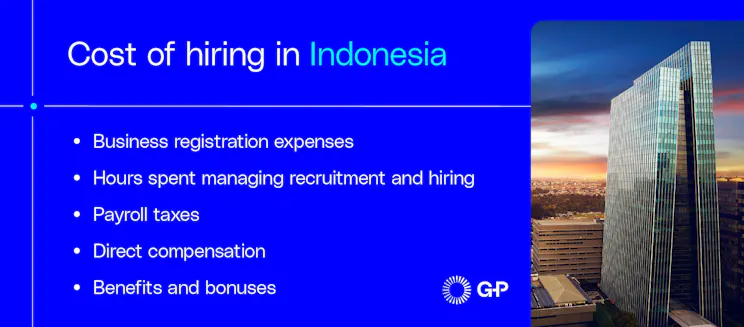
Che tu stia assumendo un dipendente o un intero team in Indonesia, le spese sono inevitabili. Budget per quanto segue:
-
Creazione di un'entità (a meno che non si collabori con un datore di lavoro registrato)
-
Pubblicizzare i posti di lavoro;
-
Pagare bonus di segnalazione ai dipendenti con collegamenti in Indonesia
-
Pagare una commissione per le assunzioni interna
-
Viaggi da e per l'Indonesia, inclusi soggiorni in hotel, pasti e trasporti
-
Collaborare con un traduttore per redigere documenti o facilitare conversazioni (se pertinente)
-
Utilizzo di un servizio di controllo dei precedenti per lo screening dei candidati
-
Redazione di contratti di lavoro, revisione legale e consultazione con le Risorse Umane e gli esperti legali
-
Costi per la fornitura di licenze per computer, telefoni e software
-
Materiali per l’onboarding e formazione iniziale
-
Costi per il mantenimento dei registri e della documentazione fiscale e di libro paga richiesti
Secondo G-P Verified Sources di Gia, il tasso di onere del datore di lavoro in Indonesia, che include i costi innescati in cima agli stipendi, è di circa 10–12%, esclusa l'assicurazione contro gli infortuni che può variare.
Di cosa ha bisogno un’azienda per assumere dipendenti in Indonesia?
Assicurati di coprire questi elementi essenziali prima di espandere il tuo team in Indonesia:
-
Ottenere un atto di costituzione, l'approvazione del Ministero della legge e dei diritti umani, e un certificato di registrazione della società.
-
Registrati per un documento d'identità fiscale aziendale presso l'ufficio fiscale indonesiano.
-
Ottieni un NIB attraverso l'OSS, che funge da codice di registrazione aziendale univoco.
-
Apri un conto bancario locale a nome della tua azienda per il pagamento delle buste paga e dei pagamenti legali.
-
Iscrivete la vostra azienda e i vostri dipendenti a BPJS Kesehatan e BPJS Ketenagakerjaan.
-
Preparare contratti di lavoro in indonesiano.
-
Garantire la conformità al salario minimo, all’orario di lavoro e ai benefit.
-
A seconda del settore di attività, possono essere richieste licenze o permessi extra.
La costituzione di una società sussidiaria in Indonesia può richiedere settimane o mesi. Usa G-P EOR per assumere dipendenti a tempo pieno in Indonesia senza costituire la tua entità. Costruisci il tuo team a un costo inferiore e con la tranquillità di farlo in modo conforme.
I passi per assumere dipendenti in Indonesia
Il processo di assunzione in Indonesia è simile a quello che probabilmente conosci nel tuo paese. Il processo di assunzione segue cinque fasi fondamentali: pubblicizzare il lavoro, valutare le candidature, intervistare i candidati, inviare offerte di lavoro e inserire nuovi dipendenti.
1. Pubblicità delle offerte di lavoro in Indonesia
Prepara una descrizione chiara del lavoro che descriva le responsabilità, le qualifiche e la retribuzione. Pubblica l'annuncio di lavoro su bacheche di lavoro locali e internazionali.
Jobstreet, Indeed Indonesia, Glints, KitaLulus e Karir sono bacheche di lavoro popolari in Indonesia.
2. Valutazione delle domande di lavoro in Indonesia
Esaminare i CV e le lettere di presentazione per selezionare i candidati che soddisfano i requisiti.
3. Intervistare i candidati in Indonesia
Condurre interviste iniziali per telefono, video o di persona. Gia può aiutarti a creare domande che seguono le leggi anti-discriminazione in Thailandia, in modo da poter trovare la soluzione migliore per il ruolo nel rispetto delle normative locali.
Organizzare ulteriori colloqui o valutazioni secondo necessità. Verificare la storia lavorativa, l’istruzione e, se necessario, condurre controlli dei precedenti personali.
4. Fare offerte di lavoro in Indonesia
Preparare un contratto di lavoro conforme in indonesiano (bilingue se necessario). Indicare chiaramente stipendio, benefit, mansioni lavorative e termini di cessazione del rapporto di lavoro.
5. Inserimento di nuovi dipendenti in Indonesia
Ora puoi inserire nuovi dipendenti. Registra il tuo nuovo assunto presso BPJS Kesehatan e BPJS Ketenagakerjaan. Imposta il libro paga, fornisci orientamento e assicurati che il dipendente comprenda le politiche della tua azienda. Conserva registri accurati sull’occupazione e rispetta le leggi indonesiane sull’occupazione.
Se stai lavorando con un Employer of Record come G-PP, non dovrai preoccuparti dell’onere amministrativo dell’onboarding. Semplificheremo il processo, in modo che tu possa concentrarti sulla formazione del tuo nuovo assunto e integrarlo nella cultura della tua azienda.
Assumere appaltatori in Indonesia
Lavorare con appaltatori indipendenti in Indonesia può essere un modo conveniente per testare il mercato e costruire una presenza senza l'impegno di dipendenti a tempo pieno. Gli appaltatori con sede in Indonesia comprendono il comportamento dei consumatori locali, le regole e le pratiche commerciali. Saranno pronti a iniziare a lavorare rapidamente con le proprie attrezzature e i processi di lavoro stabiliti.
Assumere appaltatori ti consente di adeguare facilmente il tuo pool di talenti in base alle tue esigenze aziendali, senza le complessità e i costi del lavoro.
Prima di stipulare un accordo con un appaltatore indipendente in Indonesia, considera quanto segue:
1. Dipendenti vs. appaltatori indipendenti in Indonesia
I dipendenti lavorano sotto la supervisione e il controllo del datore di lavoro, seguono orari prestabiliti, sono integrati nell’organizzazione e ricevono uno stipendio e benefici regolari (come la previdenza sociale BPJS, il congedo retribuito e le protezioni salariali minime).
Gli appaltatori forniscono servizi in modo indipendente, impostano i propri programmi, utilizzano le proprie attrezzature e sono impegnati per progetti o periodi specifici. Non ottengono benefici per i dipendenti e servono più clienti. La legge indonesiana utilizza una valutazione qualitativa basata su fattori quali il grado di controllo, la dipendenza economica, la fornitura di risorse e la natura dell'impegno. Il rapporto di lavoro, non solo il contratto, determina la classificazione.
2. Sanzioni per errata classificazione in Indonesia
Classificare qualcuno come appaltatore quando non lo è può portare a severe sanzioni. Se si verifica una classificazione errata, dovrai:
-
Restituire i salari arretrati, gli straordinari, i contributi previdenziali, i congedi retribuiti e altri benefit che il lavoratore avrebbe dovuto ricevere come dipendente.
-
Possono essere imposte sanzioni amministrative per non conformità alle leggi sul lavoro, sulle tasse e sulla previdenza sociale.
-
Pagare le ritenute d’imposta sul reddito non pagate e le relative sanzioni.
3. Come pagare gli appaltatori in Indonesia
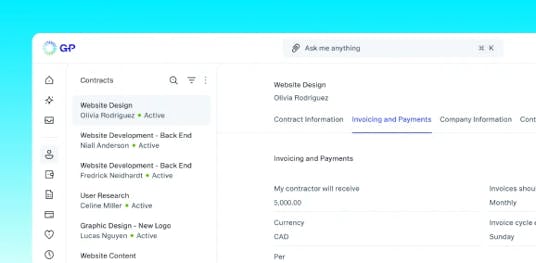
G-P Contractor elimina il disordinato e dispendioso processo di assunzione e pagamento di appaltatori internazionali. Puoi creare ed emettere contratti e pagare appaltatori con pochi clic, il tutto garantendo al contempo un processo conforme.
Assumi dipendenti e appaltatori in Indonesia con G-P
I nostri prodotti basati su SaaS e IA - EOR, Contractore Gia - supportano le aziende nella creazione e nella gestione di team globali.
G-P è il leader riconosciuto nel mondo del lavoro con oltre un decennio di esperienza, il più grande team di esperti in materia di risorse umane, legale e conformità e una base di conoscenze proprietaria globale.
Semplifica la tua espansione in Indonesia con G-P. Contattaci o prenota una demo oggi stesso.