





Principaux enseignements
-
Création d'entité, portage salarial (EOR) ou sous-traitants : L'embauche directe au Royaume-Uni nécessite un enregistrement complexe auprès du HMRC et une gestion de la paie locale, tandis qu'un portage salarial (Employer of Record, EOR) offre une expansion rapide sans créer d'entité locale. Le recours à des travailleurs indépendants offre une grande flexibilité pour les travaux ponctuels.
-
Exigences législatives clés : Assurez-vous d’avoir un salaire minimum ou décent, 28 jours de congé annuel payé, 3% de cotisations à la retraite de l’employeur et des indemnités maladie légales (SSP) lorsque vous êtes embaucheur au Royaume-Uni.
-
Réglementation sur le temps de travail : Les employés sont limités à une moyenne de 48 heures de travail par semaine, calculées sur une période de 17semaines. Ils peuvent signer volontairement un accord écrit de dérogation.
-
Changements juridiques à venir : Le projet de loi sur les droits de l’emploi offre une protection immédiate contre le licenciement abusif et renforce les règles sur le travail flexible et les mises à jour des contrats.
Le Royaume-Uni possède un riche vivier de talents à partager avec le monde. Mais le pays possède également une législation complexe en matière de travail et d'emploi, difficile à appréhender.
Pour les entreprises qui embauchent des salariés britanniques, la gestion de ces réglementations est complexe mais nécessaire. Ce guide vous expliquera tout ce que vous devez savoir sur l'embauche de salariés au Royaume-Uni.
Que savoir avant d’embaucher au Royaume-Uni
Si vous souhaitez embaucher des employés au Royaume-Uni, commencez par ces 10 bases de la conformité.
1. salaire minimum
Au Royaume-Uni, il existe deux niveaux de salaire :
-
Le salaire minimum national: Il s'agit du salaire horaire minimum pour les employés britanniques âgés 20 ou moins. En 2025, les taux varient de GBP 7.55 à GBP 10, selon l'âge de l'employé et s'il est apprenti. Les taux changent chaque année le 1 avril.
-
Le salaire minimum national: Il s'agit d'un taux plus élevé, applicable aux employés âgés de 21 et plus. Le taux 2026 est de 12,71 GBP par heure. Pour les personnes âgées de 18à20, le taux est de 8,00 GBP. Les apprentis reçoivent GBP 8.00. Les tarifs sont également mis à jour chaque année le 11 1 avril.
2. Réglementation des heures de travail
Il n’existe pas de semaine de travail à temps plein standard au Royaume-Uni. Cependant, une semaine de travail de 40heures est courante. Les employeurs peuvent exiger des travailleurs qu’ils travaillent plus longtemps lorsque le contrat et la loi applicable le permettent. La rémunération pour toutes les heures travaillées doit respecter le salaire minimum national ou le salaire décent national.
Selon le règlement sur le temps de travail, la plupart des travailleurs adultes ne peuvent pas travailler plus de 48 heures par semaine en moyenne. Cela est généralement calculé sur une période de référence de 17semaines. Les exigences de recrutement de 24heures n’exemptent pas automatiquement un poste de cette limite. Cependant, des exceptions spécifiques, des règles spéciales, des périodes de référence plus longues ou des arrangements de repos compensatoires peuvent s’appliquer à certains secteurs.
Les travailleurs âgés de 18 ans et plus peuvent choisir de dépasser la moyenne hebdomadaire de48heures s’ils signent un accord volontaire et écrit de dérogation. Les travailleurs peuvent annuler un accord de dérogation à tout moment. La période de préavis par défaut est de sept jours. L’accord peut prévoir une période de préavis plus longue pouvant aller jusqu’à trois mois.
Bien que de nombreux employeurs proposent une rémunération des heures supplémentaires, il n’est pas nécessaire de payer les heures supplémentaires à un tarif premium, sauf convenu contractuellement ou en vertu d’un accord collectif.
3. congé annuel
Les employés au Royaume-Uni ont droit à au moins 56 semaines (28 jours) de congé annuel payé. Les employeurs décident s’ils incluent les 8du Royaume-Uni,10 les jours fériés publics et les jours fériés bancaires (selon la juridiction) dans les 28 jours de congé annuel payé. Les travailleurs à temps partiel verront leurs 28 jours de congé annuel statutaires proratiés. Par exemple, quelqu’un qui travaille 3 jours par semaine recevra 16.8 Jours de congé par an (3 jours multipliés par 56 Weeks est 16.8 des jours).
La possibilité de reporter des congés dépend du type de congé et des conditions prévues dans le contrat de l'employé. Par exemple, si un employé a bénéficié d'un congé légal (paternité, maternité, adoption ou congé maladie), il peut reporter les congés légaux non utilisés sur l'année suivante.
4. Congé familial
Les employées enceintes peuvent prendre jusqu’à 52 semaines de congé maternité en tant que droit du premier jour. Cette demande est payée jusqu’à 39 semaines, si les conditions d’éligibilité sont remplies. Le congé paternité dure 1à2 semaines. Les personnes qui adoptent ou envisagent une gestation pour autrui peuvent prendre jusqu’à52 semaines de congé d’adoption. Le congé maternité ou paternité partagé peut accorder jusqu’à 50 semaines de congé avec 37 semaines de salaire. En Grande-Bretagne, un congé de soins néonatals allant jusqu’à 12 semaines s’applique depuis avril 2025 (ce n’est pas encore en vigueur en Irlande du Nord).
5. Soins de santé

Le gouvernement britannique fournit aux résidents une assurance maladie par le biais du Service national de santé (NHS). Vous pouvez proposer une assurance privée supplémentaire, incluant des prestations de vue et dentaires, mais ce n’est pas obligatoire.
6. Indemnité légale de maladie (IMS)
Les employés gagnant au moins 125 GBP par semaine sont éligibles au SSP s’ils ont été malades plus de trois jours consécutifs. Les employés doivent documenter leur maladie par un certificat médical ou d’autres preuves. Pour la plupart des employés, le SSP est disponible à un forfait de 118GBP.75 par semaine pendant jusqu’à 28 semaines. Vérifiez les mises à jour annuelles du forfait et de l’éligibilité du SSP.
7. Système de prélèvement à la source
Dans le système du prélèvement à la source, les employeurs doivent retenir les cotisations de l’impôt sur le revenu et de l’assurance nationale (NIC) sur les salaires des employés. Les employeurs les remet à HM Revenue and Customs (HMRC). Les tarifs dépendent des revenus de l’employé.
Comment fonctionne l’enregistrement prélèvement à la source pour les employeurs britanniques: les employeurs britanniques doivent s’inscrire au prélèvement à la source auprès de HMRC avant leur premier jour de paie. Une fois enregistré, HMRC fournit les numéros de référence nécessaires pour configurer le logiciel de paie, déclarer les salaires et déductions, ainsi que payer les impôts.
Après l’inscription, les employeurs doivent utiliser le système d’information en temps réel (RTI) pour calculer et déclarer les impôts et déductions à chaque jour de paie. Pour les nouveaux employés, rassemblez un45 P ou une liste de contrôle de démarrage pour vérifier la bonne classification fiscale. Vous devez respecter les délais de paiement de HMRC, fournir des fiches de paie détaillées et conserver tous les dossiers de paie.
8. Pensions
Les employeurs doivent proposer un régime de retraite aux employés britanniques âgés de 22à66 qui gagnent 10GBP par an,000 ou plus. Cependant, les employés peuvent se désinscrire. Le régime de retraite est financé conjointement par l’employeur et l’employé à des taux de contribution minimum de 3% pour les employeurs et de 5% pour les salariés. Les cotisations de pension des employés sont déduites avant de calculer l’impôt sur leur salaire restant.
9. Visas
Les règles d'immigration changent souvent, il est donc crucial que les membres de votre équipe aient le droit de travailler au Royaume-Uni. Dans le cadre du programme d'établissement de l'UE, les citoyens de l'UE, de l'EEE et de la Suisse peuvent continuer à vivre, travailler et étudier au Royaume-Uni après le Brexit. Les citoyens non européens ont besoin d'un visa de travail, tel qu'un visa de travailleur qualifié ou un visa de transfert intra-entreprise.
10. Le projet de loi sur les droits de l’emploi
Le projet de loi sur les droits de l’emploi deviendra probablement une loi en 2025. Cette facture contient des amendements visant à protéger davantage les employés du Royaume-Uni. Ces amendements imposeront de nouvelles exigences de conformité aux employeurs souhaitant embaucher au Royaume-Uni, notamment :
-
Suppression de la condition d'ancienneté de deux ans pour les plaintes pour licenciement abusif
-
Consulter les employés et démontrer l'existence d'un motif raisonnable lors de la modification des conditions d'emploi
-
Fournir des raisons transparentes et justifiables pour refuser les demandes de travail flexible
-
Établir des politiques claires pour l'octroi de congés de décès légaux
2026 attentes des employés au Royaume-Uni
Les employés au Royaume-Uni s’inquiètent de leur avenir professionnel. Notre étude a révélé que 61% s'inquiètent de la perte de leur emploi et que 59% pensent ne pas posséder les compétences nécessaires pour réussir dans un environnement de travail basé sur l'intelligence artificielle.
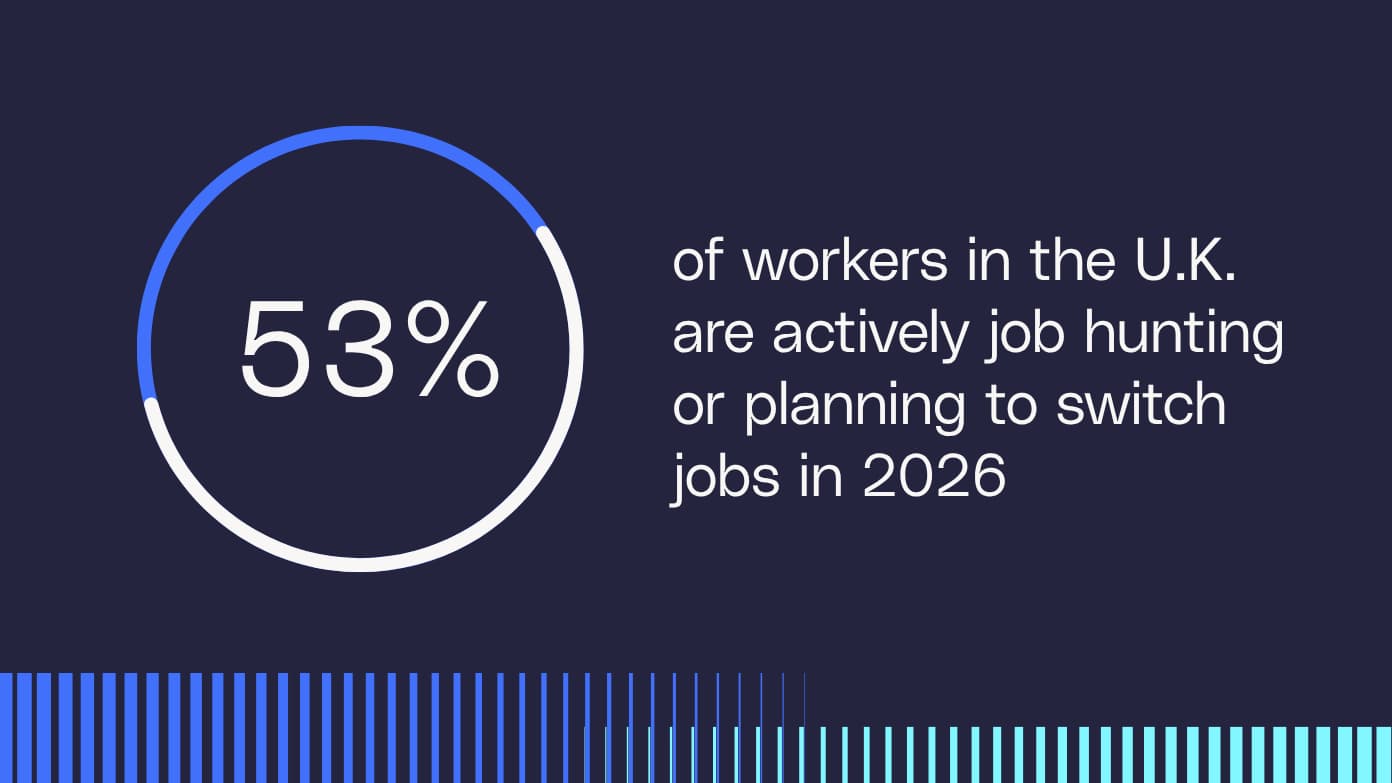
Environ 53% des travailleurs au Royaume-Uni cherchent activement un emploi ou prévoient de changer d’emploi en 2026. Les entreprises qui recrutent au Royaume-Uni devraient mettre en avant les opportunités d’évolution de carrière et les efforts d’investissement dans le développement des compétences des employés afin d’atténuer ces préoccupations. Inclure des parcours de formation et de développement dans les descriptions de poste peut vous différencier de vos concurrents et servir de contrepoint puissant à l’anxiété professionnelle liée à l’intelligence artificielle.
Modèles d’embauche pour les entreprises mondiales souhaitant embaucher au Royaume-Uni
Le meilleur modèle lorsque vous décidez d’embaucher des employés au Royaume-Uni dépend de vos objectifs commerciaux globaux.
| Modèle | Connu pour | Principaux avantages | Principaux risques |
|---|---|---|---|
| Enregistrement direct de l’employeur | Embauchez directement du personnel britannique sans entité locale via l’enregistrement prélèvement à la source de HMRC. | Permet l’embauche directe au Royaume-Uni et le contrôle sans entité locale. | Fait face à d'éventuels risques liés à l'établissement stable et aux impôts sur les sociétés en fonction du rôle de l'employé. |
| portage salarial (EOR), comme G-P portage salarial (EOR) | Un moyen rapide d'embaucher au Royaume-Uni sans passer par une entité locale. Portage Salarial (EOR) gère tous les contrats, la paie, les impôts, les avantages sociaux et la conformité. | Aide à accélérer, conformité pénétration du marché avec un minimum de configuration lors du recrutement de salariés au Royaume-Uni. | Risque de responsabilité fiscale et en matière de santé et de sécurité si le client fait porter des travailleurs salariés (EOR) comme leur véritable employeur. |
| Filiale ou succursale | Une filiale ou une succursale crée une présence formelle. | Offre un contrôle maximal, une présence de marque, une scalabilité et une maturité opérationnelle. | Des charges élevées d’installation, d’entretien et de conformité, incluant la création d’entités et les impôts sur les sociétés. |
| Les travailleurs indépendants, comme G-P Contractor | Idéal pour des projets à court terme ou du conseil sans contrôle de l’employeur. | Accès flexible à des compétences spécialisées sans engagement à temps plein. | Risques de mauvaise classification pour les droits des travailleurs, impôts impayés et obligations de retraite. |
Les principaux centres d'embauche au Royaume-Uni
Certaines villes britanniques sont connues pour leurs industries particulières. Connaître les atouts de chaque ville peut vous aider à canaliser vos efforts de recrutement au bon endroit et à pourvoir les postes plus rapidement.
Les principaux centres talent au Royaume-Uni sont les suivants
-
Londres est la capitale du Royaume-Uni et la plus grande ville, ainsi qu’un centre mondial de la finance, de la technologie, du commerce de détail, de la mode et de la pharmacie. C’est un exportateur financier de premier plan, attirant des talent de premier plan dans les secteurs bancaire, d’assurance et de gestion d’actifs.
-
Manchester est un important pôle industriel du nord-ouest de l'Angleterre. Cette ville est un leader mondial dans le domaine de la fabrication de pointe, notamment dans les secteurs de l'aérospatiale et de l'automobile. Elle possède un secteur technologique en pleine expansion, avec des atouts majeurs dans les médias numériques, le commerce électronique et la cybersécurité.
-
Birmingham possède une économie diversifiée et abrite des entreprises, des services professionnels et financiers. Les industries de la fabrication automobile et ferroviaire sont également florissantes à Birmingham.
-
Cambridge possède un écosystème de recherche et développement solide, piloté par l'Université de Cambridge. Le pôle scientifique et technologique de Cambridge et de ses environs est surnommé Silicon Fen en raison de ses industries de pointe dans les domaines des logiciels, de l'électronique et des biotechnologies.
-
Édimbourg est la capitale de l’Écosse et le deuxième plus grand centre financier du Royaume-Uni après Londres. Cette ville est un leader mondial dans les domaines de la banque, de l’assurance et de la gestion d’investissements, et possède une industrie du logiciel en pleine croissance.
-
Belfast attire des talent spécialisés dans la technologie financière et l’investissement en cybersécurité. Des industries créatives comme le cinéma et la télévision prospérent également ici.
-
Cardiff, la capitale galloise, possède des atouts variés dans la finance, les médias, le tourisme, le cinéma et la technologie financière.
Principaux secteurs d'activité au Royaume-Uni
Comprendre les principaux secteurs d'activité du Royaume-Uni vous permet de référencer les salaires et les avantages sociaux. Vous pouvez utiliser ces informations pour faire des choix judicieux en matière d'investissement et de développement de votre personnel. Les principales industries du Royaume-Uni sont les suivantes
-
Finance et assurance: Le secteur des services financiers et d'assurance du Royaume-Uni a contribué à hauteur de 208.2 milliards de livres sterling à l'économie en 2023, représentant 8.8% de la production économique totale. Parmi les acteurs majeurs de ce secteur figurent Barclays et Lloyds Banking Group.
-
Technologie: En 2023, le secteur numérique et technologique a contribué à7% de l’emploi au Royaume-Uni. Le Royaume-Uni abrite le concepteur de semi-conducteurs Arm, le leader de la technologie financière Revolut, et le géant du logiciel Sage Group.
-
Santé et sciences de la vie : Ces secteurs britanniques emploient des centaines de milliers de personnes et incluent des entreprises pharmaceutiques reconnues telles qu’AstraZeneca.
-
Industries créatives: De juillet 2023 à juin 2024, l’industrie créative représentait environ 7% des emplois au Royaume-Uni. Parmi les grands noms figurent la BBC, la société mondiale de publicité et de relations publiques WPP, et Pinewood Studios.
-
Industrie manufacturière: Le secteur manufacturier a contribué à hauteur d'environ 217 milliards de livres sterling en valeur brute à l'économie britannique en 2024. Parmi les marques manufacturières britanniques les plus importantes, on peut citer Rolls-Royce, Unilever et BAE Systems.
Frais d'embauche au Royaume-Uni
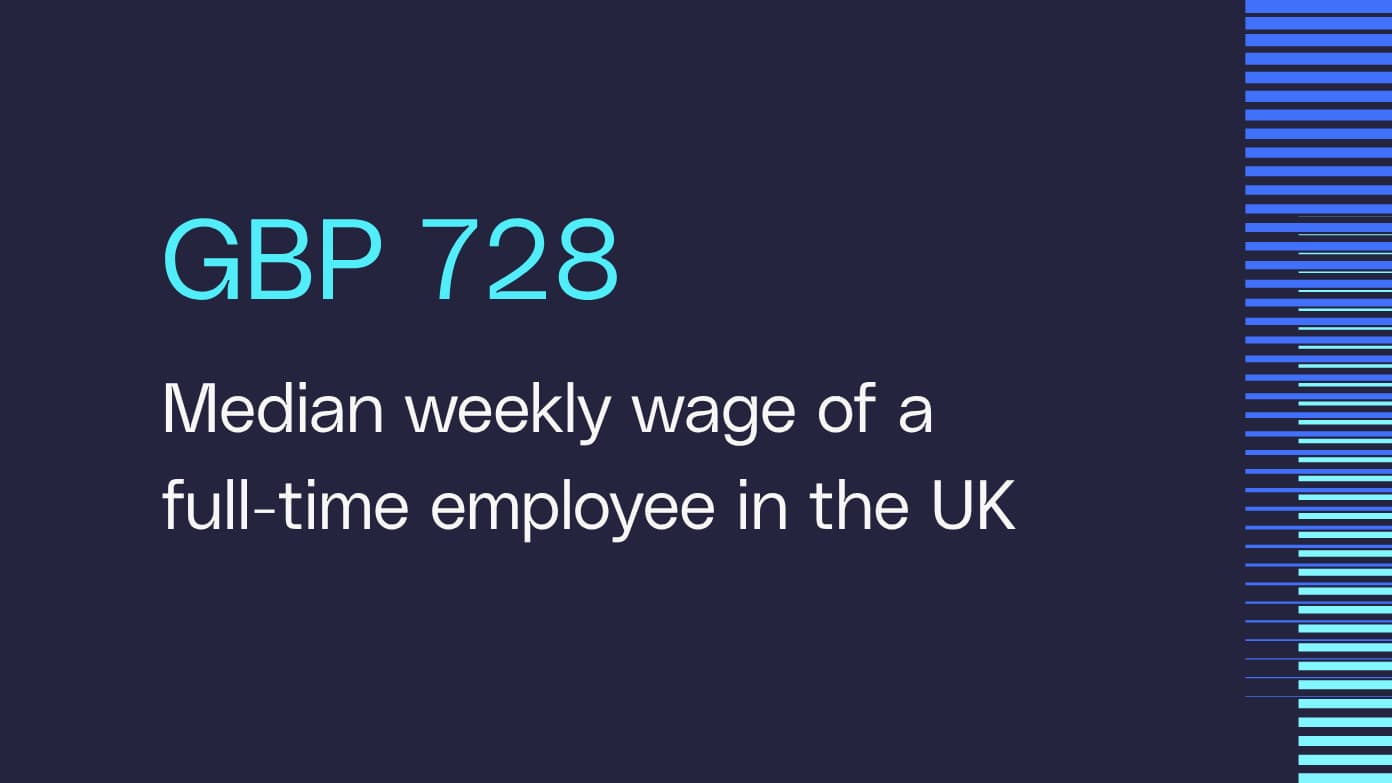
Les salaires et avantages varient selon la profession, mais le salaire hebdomadaire médian d’un employé à temps plein au Royaume-Uni est d’environ GBP 728. Recruter au Royaume-Uni nécessite une budgétisation minutieuse :
-
Recherche: Se conformer aux lois et réglementations nécessite des recherches approfondies, vous devrez donc payer des employés pour cela ou collaborer avecdes experts externes en conformité à la réglementation.
-
Création d'une entité: Vous avez besoin d'une filiale ou d'une succursale pour embaucher au Royaume-Uni, ce qui peut s'avérer coûteux et chronophage. Ou bien, vous pouvez vous associer à un portage salarial (EOR) (portage salarial (EOR)) et éviter cette exigence.
-
Solutions d’embauche: Les EOR simplifient l’embauche de salariés au Royaume-Uni. Incluez leurs honoraires dans votre budget de recrutement.
-
Publicité : Publier des offres d’emploi sur des sites d’emploi populaires au Royaume-Uni peut aider à attirer des candidats qualifiés. Certaines de ces plateformes peuvent facturer des frais.
-
Vérifications légales : Vérifier le droit au travail d'un candidat et effectuer d'autres vérifications d'antécédents prennent du temps et de l'argent.
-
Comité de recrutement : Si vous utilisez un comité de recrutement interne, vous paierez les heures de travail qu'il consacre à la rédaction de l'annonce d'emploi, à l'évaluation des candidatures et aux entretiens avec les candidats.
-
Formation : Les nouvelles recrues nécessitent un investissement en formation avant de pouvoir commencer à produire des travaux précieux pour votre entreprise.
Coût de la location d'un prestataire au Royaume-Uni
L'embauche de salariés à temps plein est idéale pour les besoins à long terme et les fonctions essentielles de l'entreprise. Les entrepreneurs peuvent être plus rentables pour les projets à court terme ou lorsque vous avez besoin de compétences spécialisées pour une durée limitée. Les contractants ont généralement un taux horaire plus élevé que les employés, mais ils vous permettent d'économiser sur plusieurs dépenses, notamment la formation, les cotisations sociales, les retraites, les congés, le PAS et d'autres avantages.
Un solution prestataire comme G-P Contractor peut vous aider à embaucher et à rémunérer des entrepreneurs au Royaume-Uni sans difficulté.
Les conditions requises pour embaucher des employés au Royaume-Uni
Pour embaucher des travailleurs britanniques, vous devez avoir
-
Une entité juridique: Vous avez besoin d’une filiale ou d’une agence enregistrée pour embaucher au Royaume-Uni.
-
Assurance responsabilité civile de l'employeur : la législation britannique impose aux entreprises de souscrire une assurance responsabilité civile de l'employeur afin de protéger leurs employés en cas de maladie ou de blessure liée au travail.
-
Inscription de l'employeur : L'embauche de salariés au Royaume-Uni nécessite l'inscription en tant qu'employeur auprès du HMRC afin de gérer les obligations fiscales et les retenues à la source.
-
Paie: Un système de paie de conformité est crucial pour calculer et verser les impôts, les cartes réseau et autres déductions.
Le partenariat avec un service de portage salarial (EOR) simplifie tous les aspects de l'embauche au Royaume-Uni. En tant que société de portage salarial mondiale (EOR), nous avons des entités dans le monde entier. Au lieu de passer des mois à mettre en place votre propre système, vous pouvez utiliser la filiale britannique de notre société de portage salarial (EOR) pour embaucher des employés en quelques minutes.
6 les étapes de l'embauche au Royaume-Uni

Si vous souhaitez embaucher des salariés britanniques, suivez les étapes suivantes :
-
Préparez-vous à la conformité: effectuez des recherches pour vous assurer de comprendre toutes les lois et pratiques de travail pertinentes pour l'embauche au Royaume-Uni, ou utilisez un portage salarial (EOR) pour accéder à une expertise locale.
-
Publiez une annonce d’emploi: Utilisez G-P Gia™, notre agent mondial RESSOURCES HUMAINES alimenté par l’intelligence artificielle, pour rédiger des documents RESSOURCES HUMAINES, y compris des descriptions de poste conformes à l’Equality Act de 2010 et à la Data Protection Act de 2018.
-
Candidats sélectionnés : Sélectionnez les candidats en fonction des qualifications inscrites sur leur CV et des vérifications légales.
-
Mener des entretiens : interviewer les candidats présélectionnés et utiliser Gia pour élaborer des questions d’entretien pertinentes et non discriminatoires.
-
Faites un suivi et créez un contrat : Faites une offre à votre candidat choisi et rédigez un contrat de conformité détaillant les termes, droits et responsabilités du travail.
-
Intégrez votre candidat à l'embauche : assurez sa formation et intégrez les nouvelles recrues à la culture de votre entreprise.
Comprendre les contrats de travail au Royaume-Uni
Les contrats de travail au Royaume-Uni doivent être appuyés par une déclaration écrite des particularités ou un contrat contenant des clauses clés du travail. Cela inclut un titre et une description du poste, la date de début d’emploi, le taux salarial Masse, les droits aux congés, les congés maladie, les heures de travail et les délais de préavis.
Incluez des clauses de propriété intellectuelle et de confidentialité pour protéger vos informations exclusives. Vous pouvez prévoir une période d'essai, généralement de six mois ou moins, et des clauses raisonnables de non-concurrence. La définition des conditions et des procédures de résiliation du contrat peut également vous protéger contre les plaintes pour licenciement abusif.
Avec Gia, vous pouvez rédiger en quelques secondes des contrats et autres documents RESSOURCES HUMAINES conformes aux lois du travail lors de l’embauche au Royaume-Uni.
Autres considérations de conformité et juridiques
Parmi les autres considérations lors de l’embauche de salariés au Royaume-Uni, on trouve :
-
Classification: Classer correctement les travailleurs britanniques est crucial pour répondre aux exigences fiscales et d’avantages sociaux et protéger la réputation et la stabilité financière de votre entreprise .
-
Négociation collective: Les employés britanniques ont le droit d’adhérer à un syndicat et, dans certaines conditions, les employeurs doivent reconnaître ces syndicats et engager des négociations collectives avec eux.
-
Protection des données: En plus du Data Protection Act, vous devez respecter le Règlement général sur la protection des données du Royaume-Uni. Si vous employez des citoyens de l’UE travaillant au Royaume-Uni, vous devez également respecter les exigences du Règlement général sur la protection des données de l’UE concernant la protection de leurs données.
Embaucher des contractants au Royaume-Uni
Travailler avec des entrepreneurs indépendants au Royaume-Uni peut être un moyen rentable de tester le marché et d'établir une présence sans l'engagement d'employés à temps plein. Les entrepreneurs basés au Royaume-Uni comprennent le comportement des consommateurs, les règles et les pratiques commerciales locales. Ils seront prêts à commencer à travailler rapidement avec leur propre équipement et des processus de travail établis.
Le recours à des contractuels vous permet d'adapter facilement votre personnel au Royaume-Uni en fonction des besoins de votre entreprise, sans les complexités et les coûts liés à l'embauche.
Avant de conclure un accord avec un prestataire indépendant au Royaume-Uni, considérez ce qui suit.
1. Employés vs. prestataires indépendants
Le droit du travail britannique reconnaît trois statuts d’emploi — employé, prestataire indépendant (travailleur indépendant) et travailleur :
-
Les employés travaillent sous contrat de travail, ce qui donne à l'employeur le contrôle de leur travail en échange de droits légaux, tels que les indemnités journalières de maladie et la protection contre le licenciement abusif.
-
Les travailleurs indépendants contrôlent leur propre travail conformément à leur contrat de service. Ils sont considérés comme des travailleurs indépendants et sont donc responsables de leurs propres impôts. Ils bénéficient de protections légales minimales au-delà des termes de leur contrat, mais conservent certains droits.
Les travailleurs indépendants fonctionnent comme des entrepreneurs, mais doivent exécuter personnellement le travail contractuel, alors que les entrepreneurs peuvent sous-traiter le travail à des tiers. Les travailleurs bénéficient de droits fondamentaux en matière d'emploi, tels que le salaire minimum et les congés payés.
2. Pénalités en cas d'erreur de classification
Classer quelqu’un comme prestataire alors qu’il ne l’est pas peut entraîner des pénalités. En cas d’erreur de classification , il se peut que vous deviez :
-
Payer à l'employeur et à l'employé l'intégralité de l'impôt sur le revenu et des cotisations sociales non acquittées pour toute la période d'erreur de classement, plus les intérêts.
-
verser des arriérés de salaire pour les droits que l'employé ou le travailleur s'est vu refuser, y compris les arriérés de salaire minimum, les congés payés accumulés et les cotisations rétroactives au régime de pension du travail.
-
Faites face à des sanctions financières importantes de la part du HMRC.
3. Comment rémunérer les entrepreneurs au Royaume-Uni
G-P Contractor supprime le processus chaotique et chronophage d’embauche et de paiement des entrepreneurs international. Vous pouvez créer et délivrer des contrats et payer des entrepreneurs en seulement quelques clics, tout en assurant un processus de conformité.
Embauchez des employés et des sous-traitants au Royaume-Uni avec G-P
Nos produits SaaS et basés sur l'intelligence artificielle – portage salarial (EOR), Contractor et Gia – aident les entreprises de toutes tailles à constituer et à gérer des équipes mondiales.
Avec plus d'une décennie d'expérience, la plus grande équipe d'experts en ressources humaines, juridiques et de conformité, et une base de connaissances exclusive mondiale, G-P est le leader reconnu de l'emploi mondial.
Facilitez votre expansion lorsque vous êtes embauché au Royaume-Uni avec G-P. Contactez-nous ou réservez une démonstration dès aujourd’hui.

FAQ
Quelle est la différence entre le Règlement général britannique sur la protection des données et le Règlement général européen sur la protection des données ?
Le Règlement général sur la protection des données du Royaume-Uni est essentiellement le Règlement général sur la protection des données de l'UE adapté au Royaume-Uni après le Brexit. Le règlement général sur la protection des données du Royaume-Uni fonctionne en tant que cadre indépendant après le Brexit. Si vous embauchez des citoyens de l'UE travaillant au Royaume-Uni, vous devez vous conformer aux deux lois.
Les transferts de données entre le Royaume-Uni et l'UE nécessitent des mesures de conformité. Il s'agit notamment des décisions d'adéquation prises par la Commission européenne (en vertu du règlement général de l'UE sur la protection des données), par le gouvernement britannique (en vertu du règlement général du Royaume-Uni sur la protection des données) et des clauses contractuelles types visant à protéger les données.
Quelles sont les limites des vérifications des antécédents des employés au Royaume-Uni ?
Pour la plupart des emplois, le contrôle des antécédents se limite à la vérification des informations fournies par le candidat. Pour les emplois présentant un risque plus élevé, vous pouvez procéder à des vérifications plus approfondies, y compris des vérifications du casier judiciaire. Mais vous devez fournir un avis de confidentialité expliquant quelles données vous collectez et pourquoi.
Nous vous recommandons de demander votre consentement avant de procéder au contrôle. Dans la plupart des cas, vous devez utiliser le Disclosure and Barring Service pour la vérification du casier judiciaire.
Qu'est-ce qui entre dans la composition d'un ensemble d'avantages sociaux compétitif en matière d'emploi au Royaume-Uni ?
Au-delà des exigences minimales prévues par la loi, les avantages sociaux compétitifs offerts par le Royaume-Uni comprennent souvent les éléments suivants
Assurance maladie privée
Dentaire et couverture des soins ophtalmologiques
Modalités de travail flexibles
Cotisations de pension supérieures au minimum
Congé payé supplémentaire