






Key takeaways
-
Choosing the right method: The choice between Automated Clearing House (ACH) and wire transfer depends on the transaction volume, destination country, urgency, cost, speed, security, and compliance requirements. ACH payments are only used within the U.S.
-
Complexity of global payroll: Managing global payroll requires a solution that accounts for various regulations, currency exchange, and reporting requirements.
-
Employer of record (EOR) benefits: Partnering with an EOR like G-P streamlines payment processes, ensures compliance with local regulations, and gives you expert guidance on selecting the best payment methods for international teams.
Paying local employees is simple math. But hiring globally adds multiple currencies, regulations, and banking systems to the equation. And any misstep can hurt employee productivity and trust. Two common payment methods are Automated Clearing House (ACH) transfers and wire transfers.
Understanding the difference between ACH transfer and wire transfer helps you build a compliant global payroll process for your team. While both move money electronically, their purposes, reach, and costs differ significantly.
What is an ACH transfer?
An ACH transfer uses the ACH Network, an electronic payment system, to move funds between U.S. bank accounts. The National Automated Clearing House Association (Nacha) manages the ACH Network. Nacha processes large volumes of transactions in batches, making it one of the most common domestic payment methods for payroll, bill payments, and direct deposits. Since Nacha only operates in the U.S., ACH transfers can't be used for international payroll.
ACH lets you pay directly into employees' bank accounts through an automated system. Instead of printing and mailing checks, you send payroll instructions to your bank or payroll provider, which routes the payment through the ACH Network. Once processed, the funds are transferred from your account and deposited into the employees' bank accounts. This deposit often takes no more than a day to settle.
There are two main types of ACH payments:
-
ACH credit: With ACH credit, the payer pushes funds into the recipient's account. In payroll, this is how employers deposit salaries.
-
ACH debit: In an ACH debit payment, the recipient pulls funds from the payer's account. This method is mostly used for recurring payments such as utilities or insurance.
What is a wire transfer?
A wire transfer is an electronic payment method that moves funds directly between bank accounts, in real time. Its speed and ability to reach banks worldwide make wire transfers a preferred option for international payroll.
Wire transfers rely on a secure network of banks and financial institutions. When you start a transfer, your bank verifies account details, routes the payment through intermediary banks if needed, and sends funds directly to the recipient's account. Once processed, the transfer can't be reversed.
In payroll, wire transfers let you quickly pay employees or contractors across borders. Companies use them for international teams, one-time payments, or urgent salary connections. While faster than other methods, wire transfers usually come with higher transaction fees.
Wire transfers can be domestic or international:
-
Domestic wire transfers: Domestic wire transfers move funds between two bank accounts in the same country. These are processed through local banking networks and typically settle the same day.
-
International wire transfers: International wire transfers move money between banks in different countries. These payments use secure global networks such as the Society for Worldwide Interbank Financial Telecommunication (SWIFT). They also use currency conversion and intermediary fees with compliance checks to meet regulations that prevent money laundering.
ACH vs. wire transfer
ACH and wire transfers offer unique benefits. The right choice depends on your priorities for speed, cost, and coverage. Both are proven tools for moving money electronically, but they differ in terms of where they can be used and how they operate. Understanding these differences helps you decide which option best aligns with your payroll strategy.
Companies with U.S. and international employees can combine both methods to control costs while having global coverage.
Here are some of the similarities between these payment methods:
-
Electronic transfer: Both methods use electronic transfer to move money between bank accounts, removing the need for cash handling or physical checks.
-
Security: ACH and wire transfers are both secure. They use encryption alongside banking protocols to protect personal and financial information.
-
Direct account access: To initiate money transfers, both methods need access to employee banking details, which link the transactions to their bank accounts.
-
Regulation: Financial laws and guidelines regulate both methods. These dictate how transactions are completed, reported, and protected.
Pros and cons of ACH vs. wire transfer payments
Both ACH and wire transfers support reliable payroll delivery. The choice depends on your company's structure, payment frequency, and global footprint. When paired strategically, these methods can create a globally responsive, cost-effective payroll system.
ACH payments
ACH transfers are highly efficient for recurring payroll within the U.S. Payments move securely through the ACH Network. Nacha regulates and standardizes the ACH Network by setting operating rules and overseeing the payment processing between financial institutions. ACH is automated, so it reduces manual errors and administrative effort.
For example, a U.S.-based company paying local employees can use ACH to deliver direct deposits reliably and at scale. The system's batch processing keeps operations smooth and cost-effective.
ACH payments are limited to U.S. transactions. This method may not align with companies that have international teams or urgent payment needs.
Wire transfers
Wire transfers are great when you need speed and reach. They move funds directly between international banks, often within hours, and support multiple currencies. Wire transfers are a go-to for paying remote employees, international contractors, or one-time bonuses. Each transfer includes confirmation and traceability, so both the payer and recipient have clear confirmation.
Wire transfers have higher transaction fees. Each transfer also needs exact banking details with SWIFT codes to prevent delays. While they may not be ideal for recurring local payroll, they're an effective solution for cross-border payments that need speed and accuracy.
How to choose the right option for your business
Choose a payment method that supports your operations and your team — wherever they work.
Define your payroll operational scope
Consider where your employees are located, how frequently you pay them, and whether payments are regular or one-offs.
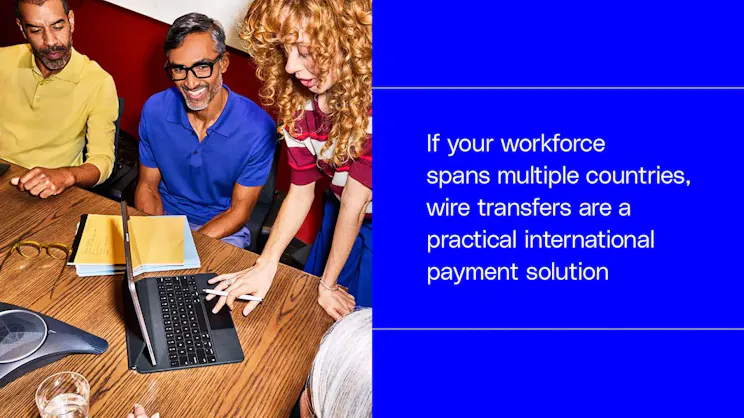
Workforces primarily based in the U.S. can use ACH payments for reliability and low transaction costs. These support recurring payroll cycles and simplify reconciliation within domestic banking systems. If your workforce spans multiple countries, wire transfers are a practical international payment solution.
Find a balance between efficiency and cost
A blended approach is effective for businesses with U.S. and global teams. The balance depends on where your workforce is located and how frequently you pay them.
Choosing the right method means balancing some trade-offs with your company's financial and compliance goals. For example, if payroll speed matters more than cost within the U.S., wire transfers may better align with your priorities. However, if efficiency and automation are more important, ACH is likely the better fit.
Evaluate your administrative capacity
Think about the internal effort to manage each payment method. ACH payments are automated, while wire transfers need more manual input.
As payroll regulations vary across jurisdictions, managing these processes internally can strain your HR and finance teams. Even with robust systems, coordinating compliance, taxes, and exchange rates can be tricky.
Streamline payroll with a trusted partner
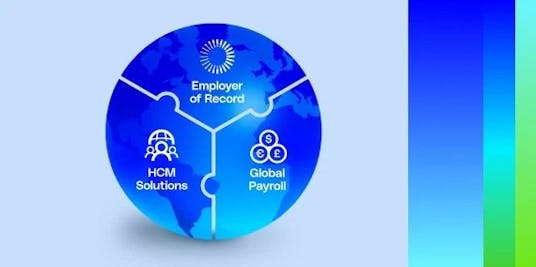
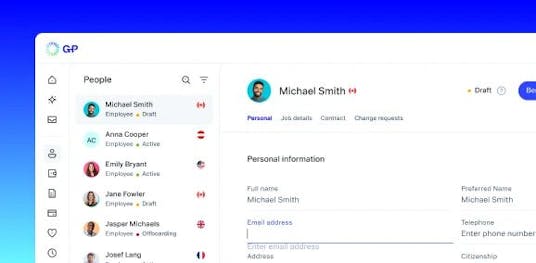
Partnering with an EOR simplifies payroll management across regions. G-P acts as a legal employer in 180+ countries, employing your team members in each country on your behalf. Using an EOR lets you hire and pay employees in their local currencies without the need to establish local entities.
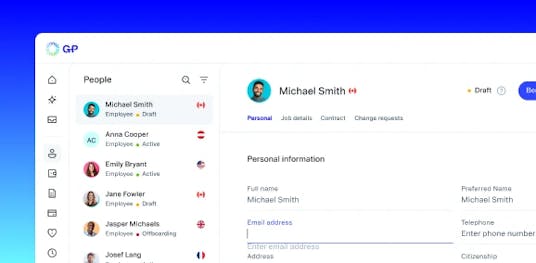
G-P EOR simplifies all aspects of payroll, including tax withholdings, benefits, and currency conversion. You still have control and visibility through a single dashboard, while we ensure every employee is paid accurately and on time, in full compliance with local laws.
Factors to consider when choosing a payment method
A strong payroll foundation starts with consistency. Choose a payroll system that minimizes manual steps, enhances transparency, and simplifies record-keeping. Here are key factors to consider when choosing a payment method:
-
Geographic reach: Where are your employees located?
-
Payment frequency: Do you run payroll weekly, biweekly, or monthly? How many employees do you pay during these cycles?
-
Speed of delivery: How quickly do you want payments to arrive?
-
Cost per transaction: Transaction fees matter, especially at scale. Picking a cost-effective method can impact your bottom line.
-
Compliance needs: The payment method must align with jurisdictional tax rules, labor laws, and payroll regulations.
-
Growth potential: As your workforce expands, your payment methods need to scale without creating bottlenecks or risk.
EOR solutions remove the need to choose between ACH and wire transfers for global payroll. Instead, your payments automatically run through localized systems designed to meet each country's financial and legal requirements.
Hire and pay global teams with G-P
Choosing the right payment method, whether it's ACH or wire transfers, is a strategic decision that impacts your team's experience and operational compliance. While ACH is useful for U.S. payroll, wire transfers offer speed and international reach. By combining technology, local expertise, and compliant global payments from G-P, you can better support your workforce.
G-P simplifies every stage of payroll management. Our global employment products and EOR solutions make it easy to hire, manage, and pay global teams without setting up new entities. Pay your team confidently anywhere in the world, in 150+ currencies, backed by a 99% payroll accuracy.
Book a demo today.
FAQs