




Hal-hal penting yang dapat diambil
-
Struktur federal, aturan lokal: Meskipun undang-undang federal (seperti Undang-Undang Tenaga Kerja dan Kode Kewajiban) menetapkan standar dasar ketenagakerjaan, tarif pajak spesifik, hari libur nasional, dan proses administratif berbeda-beda di antara kanton 26 Swiss.
-
Aturan ketat izin kerja untuk talenta non-UE/EFTA: Untuk mempekerjakan karyawan di Swiss dari pekerja non-UE/EFTA, Anda harus menunjukkan prioritas bursa tenaga kerja lokal, memenuhi kuota nasional yang ketat, dan mendapatkan persetujuan izin bertingkat.
-
Tingkat beban pemberi kerja 10%–20%: Selain gaji pokok, pemberi kerja harus menganggaran untuk kontribusi wajib dan lazim saat mempekerjakan di Swiss. Ini mencakup jaminan sosial (AHV/IV/EO), asuransi pengangguran, pensiun kerja (BVG), asuransi kecelakaan, dan gaji bulanan 13.
-
Salah klasifikasi membawa hukuman retroaktif lima tahun: Salah mengklasifikasikan karyawan sebagai kontraktor saat merekrut di Swiss dapat memicu denda finansial, termasuk lima tahun pembayaran jaminan sosial perusahaan dan karyawan yang tertunda, plus bunga.
Populasi Swiss 8.9 juta adalah kombinasi dari Swiss, Jerman, Prancis, Italia, Portugis, dan Kosovo. Setiap kanton menggunakan mata uang nasional yang sama - franc Swiss. Sektor-sektor utama termasuk keuangan dan perbankan, peralatan medis, dan teknik.
Peraturan pajak perusahaan yang menguntungkan dan aksesibilitas budaya adalah dua alasan mengapa banyak perusahaan multinasional berekspansi ke Swiss. Panduan kami akan memberi tahu Anda semua yang perlu Anda ketahui tentang perekrutan di Swiss.
Apa yang perlu diketahui sebelum merekrut di Swiss
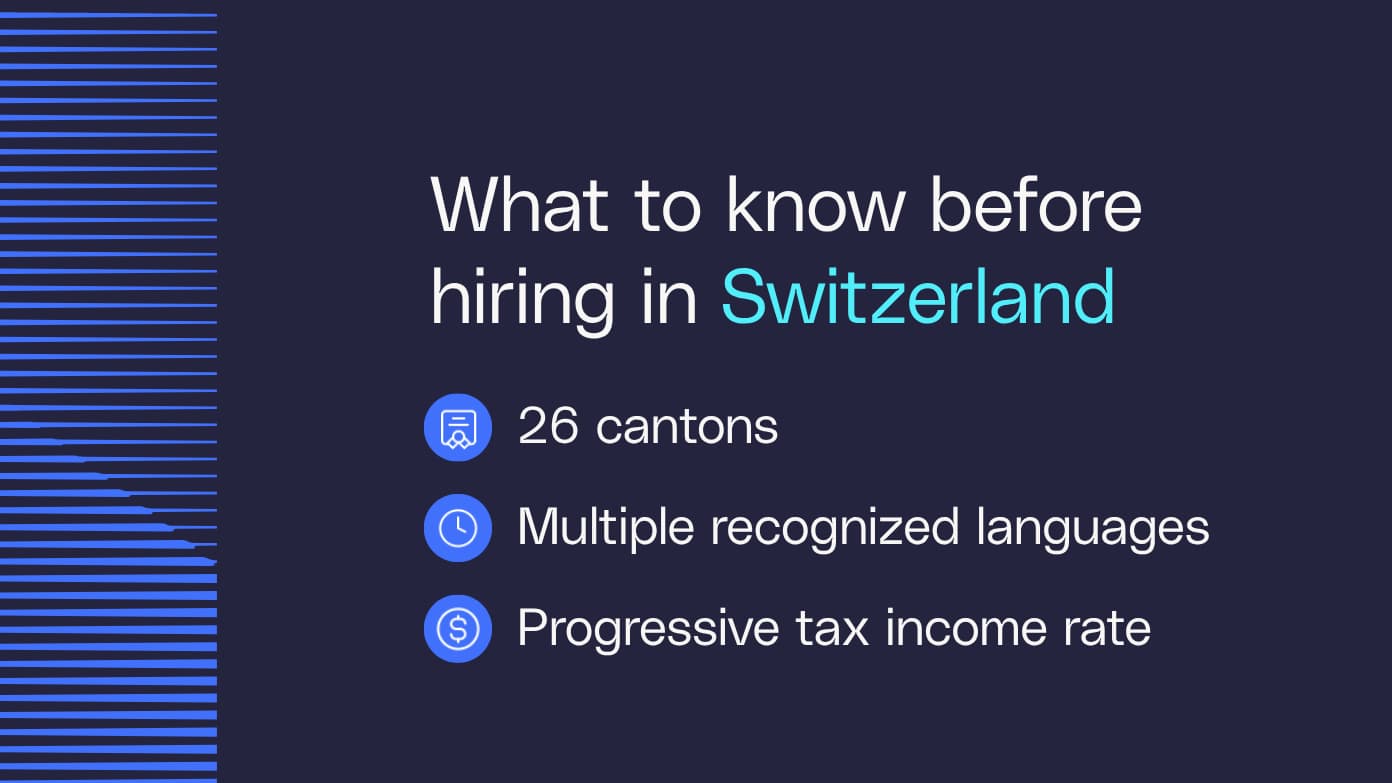
Jika Anda pertama kali berekspansi ke Swiss, ada persyaratan hukum penting yang perlu Anda ketahui. Norma dan hukum ini memengaruhi praktik perekrutan di Swiss.
Jika Anda belum yakin harus mulai dari mana, G-P Gia™, agen global kami yang didukung AISUMBER DAYA MANUSIA, dapat menjawab pertanyaan kepatuhan tersulit Anda di 50 negara — termasuk Swiss — dan semua negara bagian 50 AS. Kurangi ketergantungan Anda pada penasihat luar dan kurangi waktu serta biaya kepatuhan hingga 95% dengan Gia.
Mari kita lihat delapan hal yang perlu diketahui tentang perekrutan di Swiss.
1. Undang-undang tentang hubungan majikan dan karyawan
Semua hubungan perusahaan-karyawan harus mematuhi ketetapan berikut:
-
SR 151.1 — Undang-Undang Federal tentang Kesetaraan Gender
-
SR 220 - Kode Etik Kewajiban
-
SR 822.11 - Undang-Undang Perburuhan
-
SR 822.14 - Undang-Undang Partisipasi Pekerja
-
SR 823.11 - Undang-Undang Federal tentang Layanan Ketenagakerjaan dan Perekrutan Layanan
-
SR 823.20 - Undang-Undang Pekerja yang Diposting
Swiss mengakui serikat pekerja selama mereka memenuhi semua persyaratan hukum.
2. Kanton di Swiss
Swiss dibagi menjadi kanton26. Meskipun mereka semua berada di bawah payung nasional Swiss, mereka adalah entitas yang kuat sendiri. Setiap kanton memiliki tradisi dan budaya yang unik. Mereka juga memiliki cara pemerintahan sendiri, termasuk hukum, konstitusi, dan struktur pemerintahan.
Saat merekrut karyawan di Swiss, perhatikan kanton tempat Anda mengiklankan posisi Anda. Kanton tempat tinggal kandidat akan memberikan wawasan tentang ekspektasi terjemahan, tarif pajak yang harus dimasukkan dalam kontrak kerja Anda, dan pertimbangan tentang cuti apa yang berhak mereka dapatkan.
Komune — badan pemerintahan yang lebih kecil yang berada di dalam setiap kanton — menentukan bagaimana cara mengelola di Swiss.
3. Bursa tenaga kerja di Swiss
Lebih dari 5 juta orang aktif dalam bursa tenaga kerja Swiss. Tingkat pekerjaan 80.6%. Sebagai perbandingan, tarif Uni Eropa adalah 75.8%. Para pekerja memiliki keterampilan tinggi dan memiliki gelar dari institusi pendidikan tinggi. Dalam hal pendidikan anak usia dini dan sekolah menengah, sistem pendidikan Swiss bervariasi antar kanton. IMD World Talent Ranking 2024 menobatkan Swiss sebagai negara #1 dalam pengembangan talenta lokal di dunia.
4. Bahasa di Swiss
Multilingualisme adalah komponen inti dari budaya Swiss, sebagian besar karena Undang-Undang Bahasa. Undang-undang ini mengakui bahasa Jerman, Prancis, Italia, dan Romawi sebagai bahasa nasional. Jerman, Prancis, dan Italia juga merupakan bahasa resmi Konfederasi. Romansh digunakan secara resmi dalam komunikasi dengan pembicara bahasa Romansh. Sekitar dua pertiga penduduk negara itu berbicara lebih dari satu bahasa. Anak-anak Swiss belajar setidaknya dua bahasa nasional selama tahun-tahun pendidikan awal mereka.
Bahasa Jerman Swiss adalah bahasa yang paling banyak digunakan di seluruh kanton. Bahasa Prancis umum digunakan di kanton-kanton bagian barat, sedangkan bahasa Italia di bagian selatan. Romansh adalah bahasa yang kurang umum digunakan dan berasal dari suku Rhaetian, penduduk awal wilayah Alpen. Beberapa kanton dan kelompok demografis juga memiliki dialek dan bahasa sehari-hari mereka sendiri.
Semua kontrak kerja, wawancara, dan penugasan harus mempertimbangkan orang yang di atau bahasa pertama karyawan. Sebaiknya semua dokumen diterjemahkan dan menggunakan jasa penerjemah jika diperlukan.
5. Jam kerja dan waktu libur
Undang-Undang Tenaga Kerja Swiss mengatur jam kerja dan hukum waktu libur. Minggu kerja maksimum adalah 45 jam untuk karyawan di perusahaan industri, staf kantor, personel teknis, dan staf penjualan di perusahaan ritel besar. Untuk karyawan lain, jam kerjanya 50 . Jam kerja harian, termasuk istirahat dan lembur, tidak boleh melebihi 14 jam. Dalam praktiknya, waktu kerja tipikal di Swiss adalah 12.5 jam.
Lembur hanya diperbolehkan dalam keadaan luar biasa. Hal itu harus dikompensasi dengan upah premium 25% atau waktu libur yang setara. Karyawan harus memiliki setidaknya 11 jam istirahat berturut-turut setiap hari. Ini dapat dikurangi menjadi 8 jam seminggu sekali, selama rata-rata istirahat selama dua minggu setidaknya 11 jam. Pekerja mendapatkan waktu istirahat terus menerus setidaknya 35 jam setiap minggu, termasuk hari Minggu.
Karyawan berhak mendapatkan cuti sakit selama tiga minggu dalam tahun pertama bekerja di perusahaan. Setiap kanton memiliki pembatasan waktu libur dan cuti sakit berbayar sendiri.
Karyawan hamil mendapatkan cuti hamil bergaji14 minggu, dan ayah berhak mendapatkan cuti ayah selama dua minggu.
Terlepas dari kanton mereka, setiap karyawan mendapatkan empat minggu cuti setiap tahun, atau lima minggu jika karyawan berusia 20 atau lebih muda. Karyawan dan pemberi kerja dapat menegosiasikan tambahan waktu libur dalam kontrak mereka jika diinginkan.
Kanton memiliki hari libur lokal dan hari libur nasional mereka sendiri. Hari Nasional pada tanggal 1Agustus adalah satu-satunya hari libur federal. Jika Hari Nasional jatuh pada hari Selasa atau Kamis, biasanya karyawan diberi akhir pekan panjang. Swiss juga merayakan Hari Tahun Baru, Paskah, dan Hari Natal, tetapi regulasi khusus untuk waktu-waktu tersebut berbeda-beda di setiap pemberi kerja. Karyawan dapat memilih gaji tambahan daripada mengambil cuti berbayar.
6. Perjanjian Kerja
Karyawan dapat bersifat sementara, disediakan oleh agensi, paruh waktu, atau penuh waktu. Bulan pertama bekerja dianggap sebagai masa percobaan. Anda dapat memperpanjang ini hingga maksimal tiga bulan dalam perjanjian kerja Anda. Jika pada suatu saat Anda memutuskan untuk mengakhiri hubungan kerja, Anda harus memberikan pemberitahuan setidaknya tujuh hari.
Kontrak kerja tidak diwajibkan, tetapi umum dan sangat disarankan karena beberapa ketentuan hanya diakui secara hukum jika dibuat secara tertulis. Kontrak bersifat mengikat. Pemberi kerja tidak dapat melanggar ketentuan kontrak yang telah disepakati. Swiss memiliki beberapa undang-undang untuk melindungi serikat pekerja dan karyawan tertentu, seperti wanita atau anak di bawah umur. Pihak pemberi kerja diwajibkan memiliki surat tertulis yang merinci tanggal mulai kerja, fungsi pekerjaan, upah, dan jumlah jam kerja karyawan setiap minggu.
Kontrak tanpa batas waktu umum terjadi di Swiss. Kontrak "rantai" dipandang negatif oleh pengadilan Swiss. Kontrak rantai adalah serangkaian kontrak jangka waktu tertentu yang dimulai secara berurutan dengan karyawan yang sama. Praktik ini dapat dianggap sebagai penyalahgunaan hak jika digunakan untuk menghindari perlindungan pekerjaan tetap, seperti jaminan kerja dan masa pemberitahuan. Setelah hari terakhir kontrak selesai, hubungan karyawan-perusahaan berakhir tanpa perlu pemberitahuan.
Anda dan anggota tim dapat menyepakati durasi yang sama untuk pemberitahuan keberangkatan atau pemutusan hubungan. Pemberitahuan ini tidak boleh kurang dari satu bulan pada tahun pertama bekerja, dan dua bulan untuk setiap lama masa kerja hingga sembilan tahun. Tiga bulan adalah kebiasaan lebih dari itu. Anda tidak bisa memberhentikan karyawan jika mereka sedang hamil, sakit, atau sedang minum cuti hamil. Anda hanya perlu membayar Pemutusan jika karyawan berusia 50 tahun atau lebih dan telah bekerja untuk Anda selama 20+ tahun.
G-P Employer of Record memiliki Generator Kontak Ketenagakerjaan untuk membantu Anda menyusun kontrak kerja patuh saat mempekerjakan karyawan di Swiss yang memenuhi semua persyaratan hukum dan praktik terbaik.
7. Kompensasi dan manfaat
Undang-Undang Federal Swiss tentang Kesetaraan Gender (GEA) mewajibkan semua perusahaan dengan karyawan100 atau lebih untuk melakukan audit internal untuk memastikan kesetaraan gaji ditegakkan.
Swiss tidak memiliki satu pun upah minimum federal. Kewajiban upah minimum dapat berasal dari kanton atau kotamadya, CBA, atau kontrak kerja untuk sektor tertentu. Selain itu, gaji ditetapkan oleh kontrak dan praktik pasar. Karyawan dibayar sekali di akhir bulan.
Lembur wajib mencakup waktu kerja melebihi jumlah jam kerja legal maksimum. Lembur wajib berbeda dengan lembur kontrak dan hanya diperbolehkan pada shift siang atau malam pada hari kerja. Harus diberi kompensasi dengan tambahan upah minimal 25%.
Karyawan juga dapat memilih waktu libur sebagai pengganti kenaikan upah. Lembur wajib tidak boleh melebihi dua jam per hari dan tidak boleh melebihi 170 jam untuk 45-jam seminggu atau 140 jam untuk 50-jam kerja seminggu. Beberapa pengecualian dapat diberikan dalam keadaan darurat.
Pemberi kerja biasanya membayar 80% — dengan batas tahunan — dari gaji karyawan jika mereka mengalami cedera terkait pekerjaan. Jumlahnya dapat berbeda tergantung pada industri atau rencana asuransi spesifik. Pengusaha bertanggung jawab untuk membangun hubungan jaminan sosial antara karyawan mereka dan kantor jaminan sosial kanton mereka. Jaminan sosial mencakup kontribusi untuk Asuransi Cuti Melahirkan (MSE), Asuransi Disabilitas (DI), Asuransi Tunjangan Anak (FZ), dan pensiun, atau Asuransi Usia Lanjut dan Ahli Waris (OASI). Tingkat keamanan sosial 6.4% untuk perusahaan dan 6.4% untuk karyawan.
Bonus dan gaji bulan13tidak diwajibkan tetapi umum. Pemberi kerja dapat memberikan bonus secara kontraktual atau atas kebijakan mereka. Perlu dicatat bahwa Swiss memiliki pedoman bonus yang ketat untuk industri keuangan. Ini untuk mencegah pengambilan risiko berlebihan dan memastikan praktik kompensasi tidak merusak stabilitas keuangan.
Jika seorang karyawan telah bekerja di perusahaan Anda lebih dari tiga bulan, bekerja setidaknya delapan jam setiap minggu, dan memenuhi persyaratan pendapatan, mereka dapat berpartisipasi dalam dana pensiun yang disponsori perusahaan. Minimum saat ini untuk pensiun AHV adalah CHF 1,260. Pemberi kerja juga bertanggung jawab atas asuransi kecelakaan.
Anda dapat dengan mudah mengelola rencana manfaat dengan G-P Employer of Record. Pakar internal kami terus memantau hukum ketenagakerjaan untuk memenuhi regulasi dan norma spesifik negara. Bangun dan kelola rencana manfaat melalui platform kami untuk memberikan pengalaman karyawan yang lancar.
8. Pajak
Tarif pajak pendapatan federal Swiss bersifat progresif, dengan tingkat maksimum 11.5% untuk golongan penghasilan tertinggi. Penting untuk dicatat bahwa pajak kantonal dan kota juga berlaku. Hal ini dapat sangat memengaruhi jumlah pajak total Anda, tergantung di mana Anda berada. Tarif PPN federal adalah 8.1%.
9. Kesetaraan, privasi data, dan praktik rekrutmen
Praktik perekrutan dan ketenagakerjaan harus mematuhi Undang-Und ang Kesetaraan Gender Federal. Ini mencegah diskriminasi berbasis gender langsung dan tidak langsung di seluruh siklus hidup pekerjaan, termasuk:
-
Mempekerjakan
-
Pembayaran
-
Alokasi tugas
-
Promosi
-
Pelatihan
-
Pelecehan
-
Pemberhentian.
Pemberi kerja harus memastikan upah yang sama untuk pekerjaan dengan nilai yang sama. Kriteria objektif yang terkait pekerjaan untuk keputusan rekrutmen, kompensasi, promosi, dan pemutusan harus diterapkan.
Pengusaha dengan karyawan 100 atau lebih di Swiss perlu melakukan analisis upah yang sama internal menggunakan metode yang valid secara ilmiah. Analisis harus diverifikasi secara independen dan hasilnya dikomunikasikan kepada karyawan dalam jangka waktu yang diperlukan. Ini terpisah dari kewajiban upah yang sama umum untuk semua pengusaha.
Data pribadi kandidat harus dikumpulkan dan diproses sesuai dengan persyaratan perlindungan data Swiss. Ini termasuk Undang-Undang Federal tentang Perlindungan Data dan batasan khusus ketenagakerjaan dalam Kode Kewajiban Swiss. Data rekrutmen harus:
-
Terbatas pada apa yang diperlukan untuk menilai kesesuaian untuk peran
-
Ditangani secara transparan dan aman
-
Disimpan hanya selama dibutuhkan.
Pemeriksaan latar belakang hanya dapat dilakukan jika proporsional, relevan dengan pekerjaan, dan diungkapkan dengan benar.
Model perekrutan untuk perusahaan global di Swiss
Model terbaik saat Anda memutuskan untuk mempekerjakan karyawan di Swiss bergantung pada tujuan bisnis Anda secara keseluruhan.
| Model | Terbaik untuk | Poin kunci | Risiko utama |
|---|---|---|---|
| Pendaftaran perusahaan langsung | Mempekerjakan di Swiss tanpa entitas lokal. | Daftar ke otoritas jaminan sosial dan pajak Swiss. Jalankan penggajian Swiss. Kelola izin, tunjangan, dan kepatuhan ketenagakerjaan. | Beban admin yang tinggi. Perbedaan proses kantonal. Risiko kesalahan penggajian, pajak, atau izin. |
| Employer of Record, seperti G-P Pemberi Kerja Tercatat | Proses mempekerjakan di Swiss cepat tanpa perlu membentuk entitas. | Employer of Record adalah perusahaan hukum. Penyedia mengelola penggajian, tunjangan, dan kontrak. Harus memiliki lisensi yang benar untuk penyewaan staf. | Risiko penyedia tanpa lisensi. Kurang kontrol langsung. Klien masih dapat memiliki tugas tempat kerja dan pengawasan. |
| Anak perusahaan atau cabang | Operasi jangka panjang di Swiss. | Membuat kantor setempat formal. Mendukung perekrutan langsung dan manajemen lokal. Terbaik untuk tim besar atau permanen. | Biaya pemasangan dan perawatan lebih tinggi. Lebih banyak pajak perusahaan, payroll, dan SUMBER DAYA MANUSIA kepatuhan duties. |
| Kontraktor independen | Pekerjaan jangka pendek, spesialis, berbasis proyek. | Kontraktor harus bekerja secara mandiri. Gunakan istilah berbasis pengiriman. Verifikasi status wiraswasta jika memungkinkan. | Risiko salah klasifikasi. Jaminan sosial dan eksposur pajak. Hak ketenagakerjaan dapat berlaku secara retroaktif. |
Pusat perekrutan terbaik di Swiss
Beberapa kota di Swiss dikenal dengan industri-industri tertentu. Mengetahui apa yang ditawarkan setiap kota dapat membantu Anda mengarahkan upaya perekrutan ke tempat yang tepat dan mengisi posisi lebih cepat saat Anda mempekerjakan di Swiss.
Pusat-pusat pengembangan talenta terkemuka di Swiss adalah:
-
Zurich adalah kota terbesar di Swiss. Pusat keuangan dan bisnis utamanya dikenal dengan perbankan, teknologi, dan layanan profesional. Bank-bank besar seperti UBS, Julius Baer, dan ZKB berlokasi di sini.
-
Jenewa adalah pusat internasional dengan banyak organisasi nirlaba global dan perusahaan di bidang keuangan dan perdagangan. Ini adalah rumah bagi organisasi internasional penting seperti Markas Besar Eropa Perserikatan Bangsa-Bangsa, WHO, WTO, dan Palang Merah.
-
Basel terkenal dengan industri farmasi, kimia, dan ilmu hayatnya. Ini memiliki kehadiran keuangan yang kuat dan merupakan kantor pusat untuk perusahaan besar seperti Roche dan Novartis dan banyak perusahaan bioteknologi kecil dan lembaga penelitian.
-
Bern adalah pusat industri pemerintah, administrasi, dan jasa. Banyak pekerjaan dan peran pemerintah federal di bidang perawatan kesehatan, pendidikan, dan manufaktur berbasis di sini.
-
Lausanne terkenal dengan pendidikan dan teknologi. Kota berbahasa Prancis ini unggul dalam pengajaran dan penelitian yang berkaitan dengan ilmu kehidupan, TI, dan manajemen olahraga.
Industri utama di Swiss
Memahami industri utama Swiss membantu Anda menentukan gaji dan tunjangan saat merekrut karyawan di Swiss. Anda dapat menggunakan wawasan ini untuk membuat pilihan cerdas tentang di mana harus berinvestasi dan mengembangkan tenaga kerja Anda.
Industri utama di Swiss meliputi:
-
Layanan keuangan: Swiss terkenal dengan perbankan, asuransi, dan manajemen asetnya. Stabilitas politik negara, undang-undang kerahasiaan, dan keahlian menarik klien di seluruh dunia. Bank-bank global besar seperti UBS memiliki kantor pusat di sini. Talenta spesialis termasuk penasihat keuangan, perencana kekayaan, dan analis investasi.
-
Farmasi dan ilmu kehidupan: Swiss menjadi tuan rumah bagi banyak perusahaan farmasi, bioteknologi, dan alat medis terkemuka. Pemimpin global seperti Roche dan Novartis berbasis di sana. Sektor ini berfokus pada produk bernilai tinggi, seperti vaksin, obat khusus, dan serum. Talenta spesialis meliputi profesional R&D, ilmuwan, dan insinyur.
-
Mesin, instrumen presisi, dan teknik: Swiss memimpin dunia dalam mesin, jam tangan, dan instrumen presisi tinggi. Bakat spesialis mencakup berbagai posisi teknik seperti insinyur mekanik, listrik, dan manufaktur.
-
Teknologi informasi dan komunikasi: Swiss adalah pemimpin dalam teknologi blockchain dan cryptocurrency, menarik startup dan perusahaan keuangan terdesentralisasi yang mapan. Bakat spesialis termasuk pengembang perangkat lunak, ilmuwan data, dan arsitek cloud.
-
Bahan kimia: Industri kimia menampilkan perusahaan-perusahaan besar di sektor aroma dan pewangi, seperti Givaudan dan DSM-Firmenich. Talenta spesialis meliputi profesional R&D, insinyur, dan ilmuwan.
Biaya mempekerjakan karyawan di Swiss
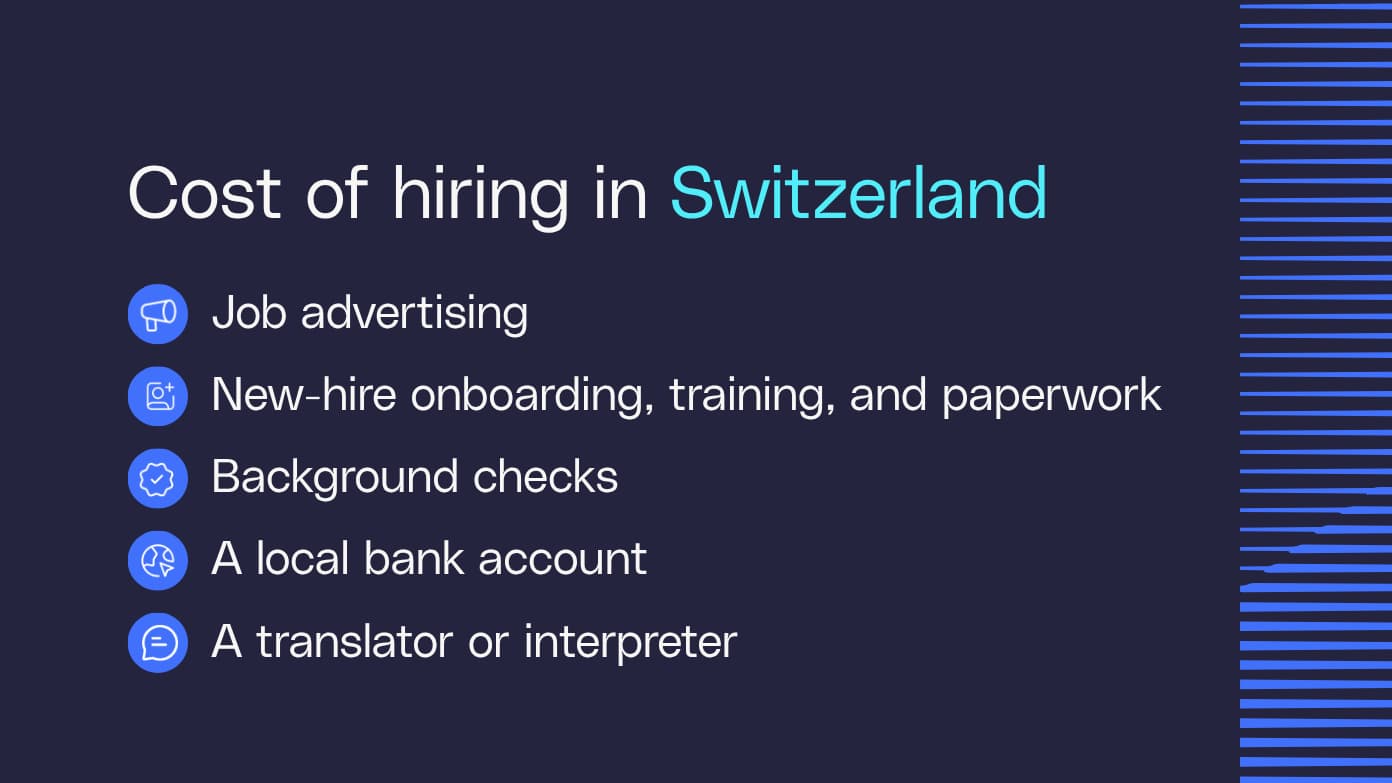
Apakah Anda mempekerjakan satu karyawan atau seluruh TIM, proses perekrutan di Swiss pasti akan menimbulkan biaya.
Anggaran untuk hal-hal berikut:
-
Iklan pekerjaan
-
Orientasi, pelatihan, dan dokumen
-
Perangkat lunak pelacakan pelamar
-
pemeriksaan latar belakang
-
Peralatan khusus untuk karyawan
-
Penerjemah atau juru bahasa (jika diperlukan)
-
Biaya perjalanan untuk bepergian ke dan dari Swiss, jika perlu
-
AHV/IV/EO
-
Asuransi pengangguran
-
Asuransi kecelakaan kerja
-
Kontribusi tunjangan keluarga
-
Asuransi tunjangan harian sakit
-
Hak liburan karyawan
-
Karyawan dibayar hak cuti dan hak cuti sakit
Menurut Gia, total tingkat beban perusahaan tahunan di Swiss, yang mencakup biaya yang dipicu di atas gaji, berkisar antara 10% hingga 20% dari gaji bruto. Tarif akan bergantung pada gaji karyawan, industri, dan kanton. Gia memanfaatkan pengalaman kerja global G-P 13+ tahun, bersama dengan wawasan dari hampir satu juta skenario dunia nyata, untuk menyediakan informasi undang-undang ketenagakerjaan yang akurat dan terbaru.
Apa yang dibutuhkan perusahaan untuk mempekerjakan di Swiss?
Pekerja UE/EFTA vs pekerja non-EU/EFTA
Berkat Perjanjian tentang Pergerakan Bebas Orang (AFMP), mempekerjakan warga dari negara anggota UE/EFTA melibatkan sedikit hambatan administratif. Pengusaha tidak perlu memprioritaskan pekerja lokal Swiss atau membenarkan alasan mengapa kandidat UE/EFTA dipilih. Untuk kontrak jangka pendek (hingga 90 hari per tahun kalender), perusahaan hanya perlu mengirimkan pemberitahuan online sebelum karyawan mulai bekerja. Untuk pengaturan yang lebih lama, karyawan mendaftar di komune lokal Swiss mereka, Kependudukan, untuk mendapatkan kependudukan/izin kerja (seperti izin L atau B). Ini memberi mereka akses langsung ke bursa tenaga kerja Swiss.
Warga negara non-EU/EFTA
Mempekerjakan kandidat dari negara-negara non-EU/EFTA (termasuk Inggris dan AS) lebih diatur. Di bawah Un dang-Undang Federal tentang Warga Negara Asing dan Integrasi (FNIA), pengusaha harus membuktikan bahwa upaya perekrutan lokal gagal. Izin non-EU/EFTA dibatasi hampir secara eksklusif untuk personel seperti manajer, spesialis senior, atau lulusan universitas dengan pengalaman khusus.
Kuota izin dan garis waktu administrasi
Pemerintah Swiss memiliki kuota nasional tahunan yang ketat untuk izin kerja bagi warga non-UE/EFTA. Izin kerja membutuhkan proses persetujuan bertingkat yang melibatkan otoritas tenaga kerja kanton dan Sekretariat Negara untuk Migrasi (SEM). Pemberi kerja harus memulai izin lamaran kerja sebelumnya. Karyawan tidak dapat mulai bekerja sampai mendapat otorisasi resmi.
Demi kepentingan terbaik Anda, Anda membangun hubungan dengan kantor ekonomi lokal atau kedutaan besar di kanton. Anda tidak memerlukan badan hukum untuk mempekerjakan di Swiss, tetapi jika Anda memilih untuk memulai perusahaan Swiss, Anda dapat memilih antara:
-
Usaha perseorangan yang dimiliki oleh satu orang
-
Persekutuan umum
-
Kemitraan terbatas
-
Perusahaan atau perseroan terbatas
-
Perusahaan perseroan terbatas
-
Anak perusahaan
-
Cabang lokal
Cabang adalah jalur umum bagi perusahaan internasional, dan mengharuskan Anda membayar pajak lokal serta mempertahankan setidaknya satu penduduk Swiss dengan otoritas hukum. Anda harus menyiapkan semua dokumen hukum, kontrak, dan akun keuangan yang sudah mapan.
Mempekerjakan karyawan di Swiss tanpa harus mendirikan entitas sendiri dengan G-P Employer of Record. Bangun TIM Anda di Swiss dengan biaya lebih rendah dan dengan ketenangan pikiran bahwa Anda memenuhi persyaratan unik setiap kanton.
Langkah-langkah perekrutan di Swiss
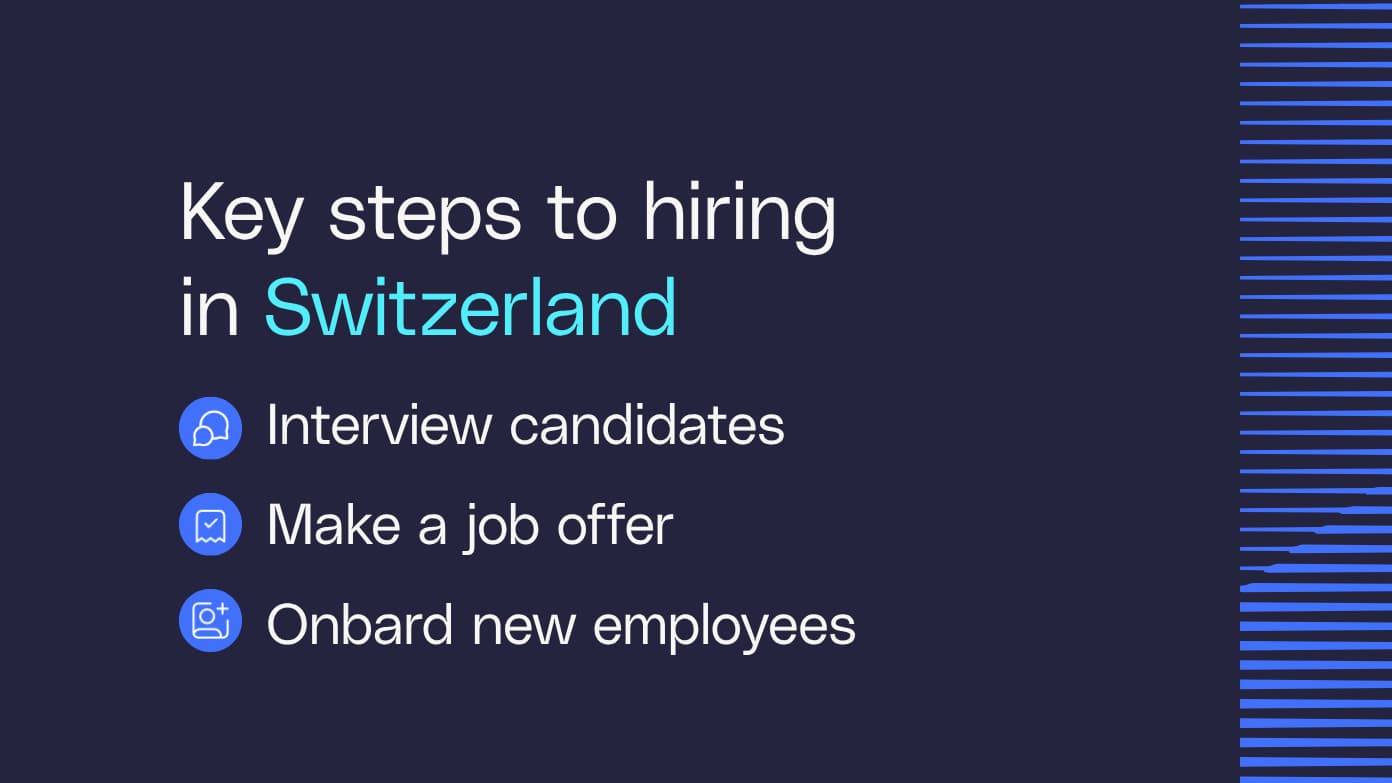
Proses perekrutan di Swiss mengikuti lima langkah dasar: mengiklankan pekerjaan, mengevaluasi lamaran, mewawancarai kandidat, mengirim tawaran pekerjaan, dan Orientasi karyawan baru.
1. Mengiklankan lowongan pekerjaan
Pertama, buatlah deskripsi pekerjaan yang terperinci. Tentukan peran, tanggung jawab, dan kualifikasi yang Anda butuhkan. Untuk profesi tertentu dengan tingkat pengangguran yang lebih tinggi, pemberi kerja secara hukum diwajibkan untuk memberi tahu kantor ketenagakerjaan setempat tentang lowongan pekerjaan sebelum mengiklankannya secara publik. Hal ini menjamin akses prioritas bagi pencari kerja yang terdaftar dan kepatuhan terhadap Undang-Undang Federal tentang Layanan Ketenagakerjaan.
2. Mengevaluasi lamaran kerja
Setelah para pencari kerja melamar posisi baru Anda, Anda dapat mengevaluasi lamaran mereka dan menentukan kandidat mana yang paling cocok untuk posisi tersebut. Hukum Swiss melarang diskriminasi berdasarkan jenis kelamin, usia, asal, ras, agama, disabilitas, orientasi seksual, atau karakteristik lain yang dilindungi pada semua tahapan perekrutan. Hal ini diuraikan dalam Konstitusi Federal Swiss dan Undang-Undang Kesetaraan Gender.
Periksa kembali apakah iklan lowongan kerja, kriteria seleksi, dan pertanyaan wawancara bebas dari bias.
3. Wawancara kandidat
Selanjutnya, wawancarai kandidat yang masuk daftar pendek Anda. Gunakan kriteria seleksi yang relevan dengan pekerjaan dan wawancara terstruktur untuk memastikan keadilan dan konsistensi. Gia dapat membantu Anda membuat pertanyaan wawancara yang sesuai dengan undang-undang anti-diskriminasi saat merekrut karyawan di Swiss, sehingga Anda dapat menemukan yang paling cocok untuk peran tersebut sambil mematuhi peraturan setempat.
Merupakan praktik terbaik untuk menyimpan dokumentasi proses rekrutmen, termasuk catatan wawancara dan keputusan seleksi, setidaknya selama lima tahun.
4. Buat penawaran kerja
Sekarang saatnya memberi tahu kandidat pilihan Anda. Menyusun perjanjian kerja tertulis yang mematuhi hukum tenaga kerja Swiss. Kontrak tersebut harus mencakup ketentuan-ketentuan penting seperti jabatan, tugas, gaji, jam kerja, masa pemberitahuan, dan setiap Perjanjian Perundingan Kolektif (CBA) yang berlaku.
5. Orientasi karyawan baru
Daftarkan karyawan baru tersebut ke dalam sistem jaminan sosial Swiss (AHV/AVS), asuransi kecelakaan, dana pensiun (BVG/LPP), dan, jika berlaku, ke otoritas pajak terkait. Siapkan sistem penggajian untuk memastikan pembayaran gaji yang benar, potongan untuk jaminan sosial, kontribusi pensiun, dan pajak.
Mempekerjakan kontraktor di Swiss
Bekerja dengan kontraktor independen di Swiss dapat menjadi cara yang hemat biaya untuk menguji pasar dan membangun kehadiran tanpa komitmen karyawan penuh waktu. Kontraktor yang berbasis di Swiss memahami perilaku konsumen lokal, aturan, dan praktik bisnis. Mereka akan siap untuk mulai bekerja dengan cepat dengan peralatan mereka sendiri dan proses kerja yang telah ditetapkan.
Menyewa kontraktor memungkinkan Anda dengan mudah menyesuaikan tenaga kerja berdasarkan kebutuhan bisnis Anda, tanpa kompleksitas dan biaya pekerjaan.
Sebelum Anda membuat perjanjian dengan kontraktor independen di Swiss, pertimbangkan hal-hal berikut:
1. Karyawan vs. kontraktor independen
Penting untuk memahami perbedaan antara karyawan dan kontraktor independen. Di Swiss, kontrak kerja untuk karyawan sering menyertakan klausul eksklusivitas dan menentukan jam kerja, lokasi, dan tugas. Perjanjian layanan untuk kontraktor berfokus pada hasil dan hasil, menekankan otonomi dan kemandirian pekerja.
Perusahaan mempekerjakan karyawan untuk melakukan pekerjaan dan, sebagai imbalannya, membayar mereka gaji atau upah tetap. Para kontraktor harus mengatur sendiri jaminan sosial dan rencana pensiun mereka. Tidak seperti karyawan, kontraktor mengatur jadwal mereka sendiri, menggunakan peralatan mereka sendiri, dan mengerjakan proyek tertentu, daripada memiliki peran yang berkelanjutan.
2. Penalti untuk kekeliruan klasifikasi
Mengklasifikasikan seseorang sebagai kontraktor padahal bukan, bisa berakibat penalti berat. Jika kekeliruan klasifikasi terjadi selama upaya Anda merekrut di Swiss, Anda mungkin perlu:
-
Membayarkan iuran jaminan sosial baik bagian perusahaan maupun bagian karyawan secara retroaktif hingga lima tahun. Ini termasuk kontribusi untuk Asuransi Hari Tua dan Korban (OASI), asuransi disabilitas, dan asuransi pengangguran.
-
Bayar biaya bunga dan denda yang dihitung berdasarkan jumlah hutang dan lamanya keterlambatan.
-
Face melakukan audit dan peninjauan kepatuhan dari otoritas Swiss, seperti Sekretariat Negara untuk Urusan Ekonomi (SECO), yang dapat menyebabkan tindakan penegakan hukum lebih lanjut jika ditemukan kekeliruan klasifikasi.
3. Cara membayar kontraktor di Swiss
G-P Contractor™ menghilangkan proses yang rumit dan memakan waktu dalam merekrut dan membayar kontraktor internasional. Anda dapat membuat dan menerbitkan kontrak serta membayar kontraktor hanya dengan beberapa klik, sambil memastikan proses patuh berjalan lancar.
Rekrut karyawan dan kontraktor di Swiss dengan G-P
Produk kami yang didukung SaaS dan AI– Employer of Record, Contractor, dan Gia – membantu perusahaan dari berbagai ukuran membangun dan mengelola tim global.
Dengan pengalaman lebih dari satu dekade, TIM terbesar dari SUMBER DAYA MANUSIA, ahli hukum dan kepatuhan, serta basis pengetahuan global yang eksklusif, G-P diakui sebagai pemimpin dalam ketenagakerjaan global ketika Anda membutuhkan mempekerjakan karyawan di Swiss.
Permudah ekspansi Anda ke Swiss dengan G-P. Hubungi kami atau pesan demo hari ini.