




Principais conclusões
-
Estrutura federal, regras locais: Embora as leis federais (como a Lei do Trabalho e o Código das Obrigações) estabeleçam padrões básicos de emprego, as taxas de impostos específicas, os feriados públicos e os processos administrativos variam entre os cantões da Suíça 26 .
-
Regras rigorosas para autorizações de trabalho para profissionais não pertencentes à UE/EFTA: Para contratar funcionários na Suíça que não sejam da UE/EFTA, é necessário demonstrar prioridade no mercado de trabalho local, cumprir quotas nacionais rigorosas e obter aprovação de autorização em várias etapas.
-
A taxa de encargos do empregador varia entre 10% e20%: além dos salários base, os empregadores têm de orçamentar as contribuições obrigatórias e habituais quando contratam na Suíça. Isso inclui a segurança social (AHV/IV/EO), o seguro de desemprego, as pensões profissionais (BVG), o seguro contra acidentes e o terceiro 13salário.
-
A classificação incorreta acarreta penalidades retroativas de cinco anos: Classificar erroneamente funcionários como contratados no momento da contratação na Suíça pode gerar penalidades financeiras, incluindo cinco anos de contribuições retroativas para a seguridade social do empregador e do empregado, além de juros.
A população da Suíça de 8.9 milhões é uma combinação de suíços, alemães, franceses, italianos, portugueses e kosovanos. Cada cantão utiliza a mesma moeda nacional — o franco suíço. Os principais setores incluem finanças e bancos, equipamentos médicos e engenharia.
Leis fiscais corporativas favoráveis e acessibilidade cultural são dois motivos pelos quais muitas multinacionais se expandem para a Suíça. Nosso guia lhe dirá tudo o que você precisa saber sobre contratação na Suíça.
O que você precisa saber antes de contratar alguém na Suíça.
Se você está expandindo seus negócios para a Suíça pela primeira vez, há importantes requisitos legais que você precisa conhecer. Essas normas e leis influenciam as práticas de contratação na Suíça.
Se você não sabe por onde começar, GP Gia ™ , nossa agente global de RH com inteligência artificial, pode responder às suas perguntas mais difíceis sobre conformidade em 50 países — incluindo a Suíça — e em todos os 50 estados dos EUA. Reduza sua dependência de consultores externos e diminua o tempo e o custo de conformidade em até 956% com a Gia.
Vamos analisar oito coisas que você precisa saber sobre contratação na Suíça.
1. Estatutos relativos às relações entre empregadores e empregados
Todas as relações entre empregador e empregado devem obedecer às seguintes leis:
-
SR 151.1 — A Lei Federal sobre Igualdade de Gênero
-
SR 220 — O Código das Obrigações
-
SR 822.11 — A Lei do Trabalho
-
SR 822.14 — Lei de Participação dos Trabalhadores
-
SR 823.11 — Lei Federal sobre Serviços de Emprego e Contratação de Serviços
-
SR 823.20 — Lei dos Trabalhadores Destacados
A Suíça reconhece os sindicatos desde que estes cumpram todos os requisitos legais.
2. Cantões na Suíça
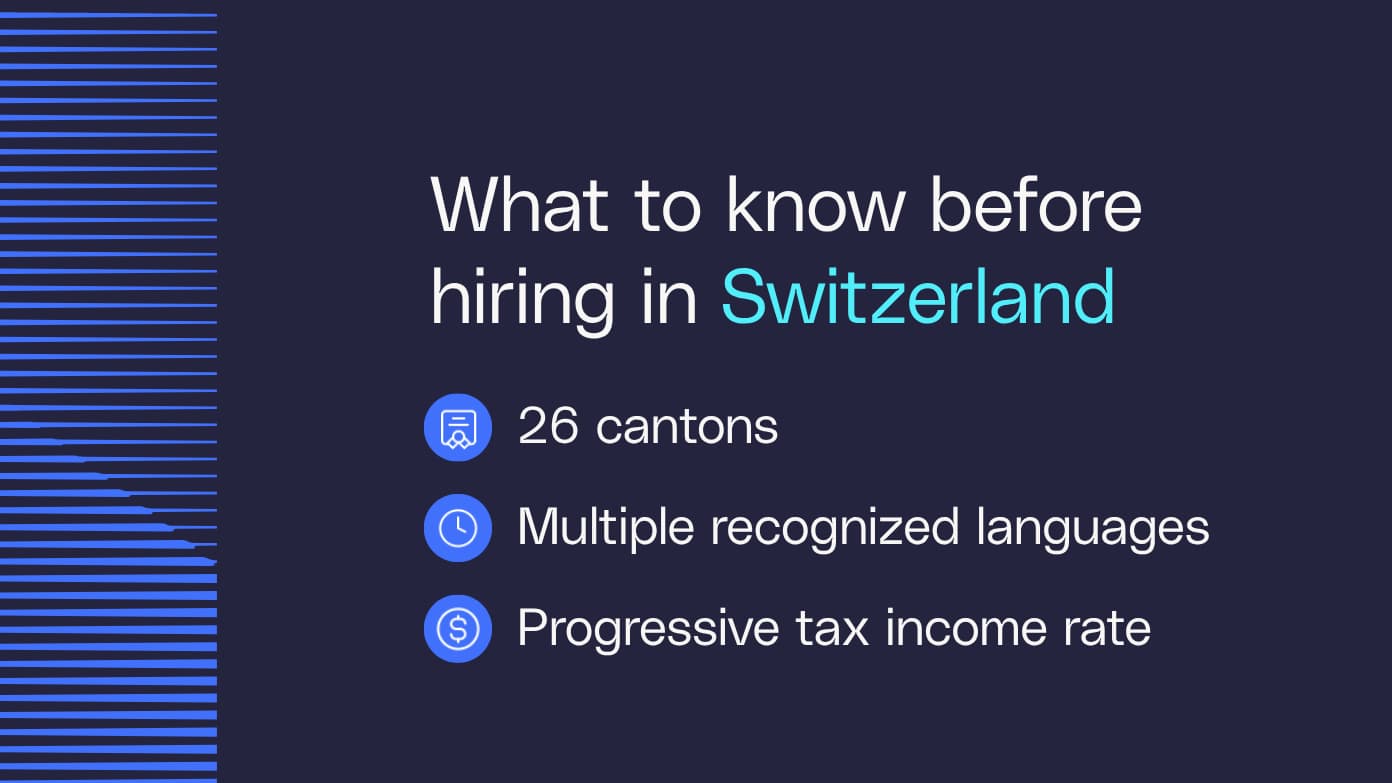
A Suíça está dividida em 26 cantões. Embora todas estejam sob a égide do Estado suíço, são entidades poderosas por si só. Cada cantão possui tradições e cultura únicas. Eles também possuem suas próprias formas de autogoverno, incluindo leis, constituições e estrutura governamental.
Ao contratar funcionários na Suíça, esteja ciente do cantão em que está anunciando a vaga. O cantão de residência dos candidatos fornecerá informações sobre as expectativas de tradução, as taxas de impostos a serem incluídas nos contratos de trabalho e as considerações sobre os feriados a que eles têm direito.
As comunas — órgãos governamentais menores localizados dentro de cada cantão — determinam como as contratações são feitas na Suíça.
3. O mercado de trabalho na Suíça
Mais de 5 milhões de pessoas estão ativas no mercado de trabalho suíço. A taxa de emprego é 80.6%. Para comparação, a taxa da UE é 8 75. Os trabalhadores são altamente qualificados e possuem diplomas de instituições de ensino superior. Em termos de educação infantil e ensino secundário, o sistema educacional suíço varia entre os cantões. O Ranking Mundial de Talentos do IMD 2024 classificou a Suíça como o país nº1 no mundo para fomentar talentos locais.
4. Línguas na Suíça
O multilinguismo é um componente central da cultura suíça, em grande parte devido à Lei das Línguas. Esta lei reconhece o alemão, o francês, o italiano e o romanche como línguas nacionais. O alemão, o francês e o italiano também são línguas oficiais da Confederação. O romanche é usado oficialmente nas comunicações com falantes de romanche. Aproximadamente dois terços dos habitantes do país falam mais de um idioma. As crianças suíças aprendem pelo menos duas das línguas nacionais durante os primeiros anos de sua educação.
O alemão suíço é a língua mais falada em todos os cantões. O francês é comum nos cantões ocidentais e o italiano no sul. O romanche é uma língua menos falada que deriva do povo rético, antigos habitantes da região dos Alpes. Alguns cantões e grupos demográficos também possuem seus próprios dialetos e expressões coloquiais.
Todos os contratos de trabalho, entrevistas e atribuições devem levar em consideração o idioma nativo do entrevistado ou do funcionário. É uma boa prática traduzir todos os documentos e contratar um intérprete quando necessário.
5. Horário de trabalho e períodos de descanso
A legislação trabalhista suíça regulamenta o horário de trabalho e as normas relativas ao tempo de folga. A semana de trabalho máxima é de 45 4 horas para funcionários de empresas industriais, funcionários de escritório, pessoal técnico e funcionários de vendas em grandes empresas de varejo. Para todos os outros funcionários, são 50 horas. A jornada de trabalho diária, incluindo pausas e horas extras, não deve exceder 14 6 horas. Na prática, o horário de trabalho típico na Suíça é de 7,8 12 horas.5 horas.
Horas extras só são permitidas em circunstâncias extraordinárias. Deve ser compensado com um acréscimo salarial 25% ou tempo de folga equivalente. Os funcionários devem ter pelo menos 11 horas consecutivas de descanso por dia. Isso pode ser reduzido para 8 horas uma vez por semana, desde que o descanso médio ao longo de duas semanas seja de pelo menos 11 horas. Os trabalhadores têm direito a uma pausa contínua de pelo menos 35 horas por semana, incluindo o domingo.
Os funcionários têm direito a três semanas de licença médica durante o primeiro ano de emprego na empresa. Cada cantão possui suas próprias restrições quanto a férias remuneradas e licença médica.
As funcionárias grávidas têm direito 14 semanas de licença-maternidade remunerada e os pais têm direito a duas semanas de licença-paternidade.
Independentemente do seu cantão, todos os funcionários têm direito a quatro semanas de férias por ano, ou cinco se o funcionário tiver 20 ou menos. Empregados e empregadores podem negociar períodos adicionais de folga em seus contratos, se desejarem.
Os cantões têm seus próprios feriados locais e públicos. O Dia Nacional em 1de agosto é o único feriado federal. Se o Dia Nacional cair numa terça ou quinta-feira, é comum dar aos funcionários um fim de semana prolongado. A Suíça também celebra o Dia de Ano Novo, a Páscoa e o Natal, mas as normas específicas para essas datas variam de empregador para empregador. Os funcionários podem optar por receber um salário extra em vez de tirar férias remuneradas.
6. Contratos de trabalho
Os funcionários podem ser temporários, fornecidos por agências, de meio período ou de tempo integral. O primeiro mês de emprego é considerado o período probatório. Você pode estender esse prazo por um máximo de três meses em seu contrato de trabalho. Caso decida, em algum momento, encerrar a relação de trabalho, deverá notificar o cliente com pelo menos sete dias de antecedência.
Os contratos de trabalho não são obrigatórios, mas são comuns e altamente recomendados, visto que alguns termos só têm validade legal se estiverem por escrito. Os contratos são vinculativos. Os empregadores não podem descumprir os termos do contrato acordado. A Suíça possui diversas leis para proteger os sindicatos e certos trabalhadores, como mulheres e menores de idade. Os empregadores são obrigados a ter uma carta por escrito detalhando a data de início, a função do cargo, o salário e o número de horas que os funcionários trabalharão por semana.
Contratos por tempo indeterminado são comuns na Suíça. Os contratos em cadeia são vistos com desaprovação pelos tribunais suíços. Contratos em cadeia são uma série de contratos por prazo determinado, iniciados consecutivamente com o mesmo funcionário. Essa prática pode ser considerada um abuso de direitos se usada para burlar as proteções do emprego permanente, como a estabilidade no emprego e os prazos de aviso prévio. Ao término do último dia do contrato, a relação empregado-empregador se encerra, sem necessidade de aviso prévio.
Você e seu colega de equipe podem concordar com um prazo igual para o aviso prévio de saída ou rescisão. Este aviso prévio não deve ser inferior a um mês no primeiro ano de emprego e a dois meses para cada período de emprego subsequente, até um máximo de nove anos. Três meses é o prazo habitual a partir daí. Você não pode demitir funcionárias se elas estiverem grávidas, doentes ou em licença-maternidade. Você só precisa pagar indenização por rescisão se os funcionários tiverem 50 anos ou mais e trabalharem para você por 20+ anos.
A GP EOR possui um Gerador de Contratos de Trabalho para ajudá-lo a elaborar contratos de trabalho em conformidade com a legislação suíça ao contratar funcionários.
7. Remuneração e benefícios
A Lei Federal Suíça sobre Igualdade de Género (GEA) exige que todas as empresas com 100 ou mais funcionários realizem uma auditoria interna para garantir que a igualdade salarial seja cumprida.
A Suíça não possui um salário mínimo federal único. As obrigações de salário mínimo podem advir de cantões ou municípios, de convenções coletivas de trabalho ou de contratos de trabalho para setores específicos. Caso contrário, a remuneração é definida por contrato e pelas práticas de mercado. Os funcionários recebem o pagamento uma única vez, no final do mês.
O termo "horas extraordinárias legais" inclui o tempo trabalhado além do número máximo de horas de trabalho permitidas por lei. O trabalho extraordinário legal difere do trabalho extraordinário contratual e só é permitido durante os turnos diurnos ou noturnos em dias úteis. Deve ser compensado com um suplemento salarial de pelo menos 25%.
Os funcionários também podem optar por tirar um período de folga em vez de receber o aumento salarial. O trabalho extraordinário legal nunca deve exceder duas horas por dia e nunca pode exceder 170 horas para semanas 45horas ou 140 horas para semanas de trabalho 50horas. Algumas exceções podem ser concedidas em casos de emergência.
Os empregadores normalmente pagam 800% — com um limite anual — do salário de um funcionário se este tiver sofrido uma lesão relacionada com o trabalho. O valor pode variar dependendo do setor ou do plano de seguro específico. Os empregadores são responsáveis por estabelecer um vínculo de segurança social entre seus funcionários e o escritório de segurança social de seu cantão. A segurança social inclui contribuições para o Seguro de Licença-Maternidade (MSE), Seguro de Invalidez (DI), Seguro de Benefícios para Crianças (FZ) e pensão, ou Seguro de Velhice e Sobrevivência (OASI). As taxas da previdência social são de 6.4% para o empregador e 6 47,8% para o empregado.
Bônus e o13salário não são obrigatórios, mas são comuns. Os empregadores podem conceder bônus por força de contrato ou a seu critério. Note que a Suíça possui diretrizes rigorosas para bônus no setor financeiro. Isso visa evitar a tomada de riscos excessivos e garantir que as práticas de remuneração não comprometam a estabilidade financeira.
Se um funcionário estiver na sua empresa há mais de três meses, trabalhar pelo menos oito horas por semana e atender aos requisitos de renda, ele poderá participar de um fundo de pensão patrocinado pelo empregador. O valor mínimo atual para a pensão AHV é de CHF 1,260. Os empregadores também são responsáveis pelo seguro contra acidentes.
Com o GP EOR, você pode administrar planos de benefícios com facilidade. Nossos especialistas internos monitoram continuamente as leis trabalhistas para garantir o cumprimento das normas e regulamentações específicas de cada país. Crie e gerencie planos de benefícios por meio de nossa plataforma para proporcionar uma experiência tranquila aos funcionários.
8. Impostos
5 taxa de imposto de renda federal da Suíça é progressiva, com uma taxa máxima de 11 % para a faixa de renda mais alta. É importante ressaltar que também se aplicam impostos cantonais e municipais. Isso pode afetar significativamente o valor total do seu imposto, dependendo de onde você reside. A taxa federal de IVA é 1 8.
9. Igualdade, privacidade de dados e práticas de recrutamento
As práticas de recrutamento e emprego devem estar em conformidade com a Lei Federal de Igualdade de Gênero. Isso previne a discriminação direta e indireta baseada em gênero ao longo de todo o ciclo de vida do emprego, incluindo:
-
Contratando
-
Pagamento
-
Atribuição de tarefas
-
Promoção
-
treinamento
-
Assédio
-
Demissão.
Os empregadores devem garantir igualdade salarial para trabalho de igual valor. Critérios objetivos e relacionados ao trabalho devem ser aplicados para decisões de recrutamento, remuneração, promoção e demissão.
Os empregadores com 100 ou mais funcionários na Suíça precisam fazer uma análise interna de igualdade salarial usando um método cientificamente válido. A análise deve ser verificada de forma independente e os resultados devem ser comunicados aos funcionários dentro do prazo estipulado. Isto é diferente da obrigação geral de igualdade salarial para todos os empregadores.
Os dados pessoais dos candidatos devem ser coletados e processados de acordo com os requisitos suíços de proteção de dados. Isso inclui a Lei Federal de Proteção de Dados e os limites específicos para o emprego previstos no Código Suíço de Obrigações. Os dados de recrutamento devem ser:
-
Limitado ao necessário para avaliar a adequação ao cargo.
-
Tratado de forma transparente e segura.
-
Conservado apenas pelo tempo necessário.
A verificação de antecedentes só pode ser realizada quando for proporcional, pertinente ao cargo e devidamente divulgada.
Modelos de contratação para empresas globais na Suíça
O melhor modelo para contratar funcionários na Suíça depende dos seus objetivos comerciais gerais.
| Modelo | Ideal para | Pontos principais | Principais riscos |
|---|---|---|---|
| Registro direto do empregador | Contratação na Suíça sem uma entidade local. | Registre-se junto às autoridades suíças de segurança social e fiscais. Processar a folha de pagamento suíça. Gerenciar licenças, benefícios e conformidade trabalhista. | Alta carga administrativa. Diferenças nos processos cantonais. Risco de erros na folha de pagamento, nos impostos ou nas licenças. |
| Empregador Registrado, como a G-P EOR | Processo de contratação rápido na Suíça sem necessidade de constituir uma empresa. | A EOR é a empregadora legal. O prestador de serviços gerencia a folha de pagamento, os benefícios e os contratos. É necessário possuir a licença adequada para terceirização de pessoal. | Risco associado a prestadores de serviços sem licença. Menos controle direto. Os clientes ainda podem ter obrigações no local de trabalho e de supervisão. |
| Subsidiária ou filial | Operações de longo prazo na Suíça. | Cria uma presença local formal. Apoia a contratação direta e a gestão local. Ideal para equipes maiores ou permanentes. | Custo de instalação e manutenção mais elevado. Mais responsabilidades corporativas, fiscais, de folha de pagamento e de conformidade com os recursos humanos. |
| Contratado independente | Trabalho especializado de curta duração, baseado em projetos. | Os contratados têm que trabalhar de forma independente. Utilize termos baseados em entregáveis. Verificar, sempre que possível, o estatuto de trabalhador independente. | Risco de classificação incorreta. Apoie a previdência social e a exposição tributária. Os direitos trabalhistas podem ser aplicados retroativamente. |
Principais polos de contratação na Suíça
Algumas cidades suíças são conhecidas por indústrias específicas. Conhecer as ofertas de cada cidade pode ajudar você a direcionar seus esforços de recrutamento para o local certo e preencher vagas mais rapidamente ao contratar na Suíça.
Os principais polos de talento na Suíça são:
-
Zurique é a maior cidade da Suíça. Seu principal centro financeiro e comercial é conhecido por seus serviços bancários, tecnológicos e profissionais. Grandes bancos como UBS, Julius Baer e ZKB estão localizados aqui.
-
Genebra é um centro internacional com muitas organizações sem fins lucrativos e empresas globais nas áreas de finanças e comércio. É sede de importantes organizações internacionais, como a sede europeia das Nações Unidas, a OMS, a OMC e a Cruz Vermelha.
-
Basileia é famosa por suas indústrias farmacêuticas, químicas e de ciências da vida. Possui forte presença financeira e é a sede de grandes empresas como Roche e Novartis, além de muitas empresas de biotecnologia e instituições de pesquisa menores.
-
Berna é um centro importante para o governo, a administração pública e o setor de serviços. Muitos empregos e funções do governo federal nas áreas de saúde, educação e indústria estão localizados aqui.
-
Lausanne é conhecida pela sua educação e tecnologia. Esta cidade francófona destaca-se no ensino e na pesquisa relacionados às ciências da vida, TI e gestão esportiva.
Principais setores industriais na Suíça
Compreender os principais setores da indústria suíça ajuda a comparar salários e benefícios ao contratar funcionários na Suíça. Você pode usar essa informação para tomar decisões inteligentes sobre onde investir e expandir sua força de trabalho.
Os principais setores industriais da Suíça incluem:
-
Serviços financeiros: A Suíça é bem conhecida pelos seus serviços bancários, de seguros e de gestão de ativos. A estabilidade política do país, as leis de confidencialidade e a experiência atraem clientes do mundo todo. Grandes bancos globais, como o UBS, têm suas sedes aqui. O talento especializado inclui consultores financeiros, planejadores patrimoniais e analistas de investimento.
-
Indústria farmacêutica e ciências da vida: A Suíça abriga muitas empresas líderes nos setores farmacêutico, biotecnológico e de dispositivos médicos. Líderes globais como a Roche e a Novartis têm sede lá. O setor concentra-se em produtos de alto valor agregado, como vacinas, medicamentos especializados e soros. O talento especializado inclui profissionais de P&D, cientistas e engenheiros.
-
Máquinas, instrumentos de precisão e engenharia: a Suíça é líder mundial em máquinas, relógios e instrumentos de alta precisão. O talento especializado abrange diversas funções na área de engenharia, como engenheiros mecânicos, elétricos e de produção.
-
Tecnologia da informação e comunicações: A Suíça é líder em tecnologia blockchain e criptomoedas, atraindo startups e empresas consolidadas de finanças descentralizadas. O talento especializado inclui desenvolvedores de software, cientistas de dados e arquitetos de nuvem.
-
Produtos químicos: A indústria química conta com grandes empresas no setor de aromas e fragrâncias, como a Givaudan e a DSM-Firmenich. O talento especializado inclui profissionais de P&D, engenheiros e cientistas.
Custo de contratação de um funcionário na Suíça
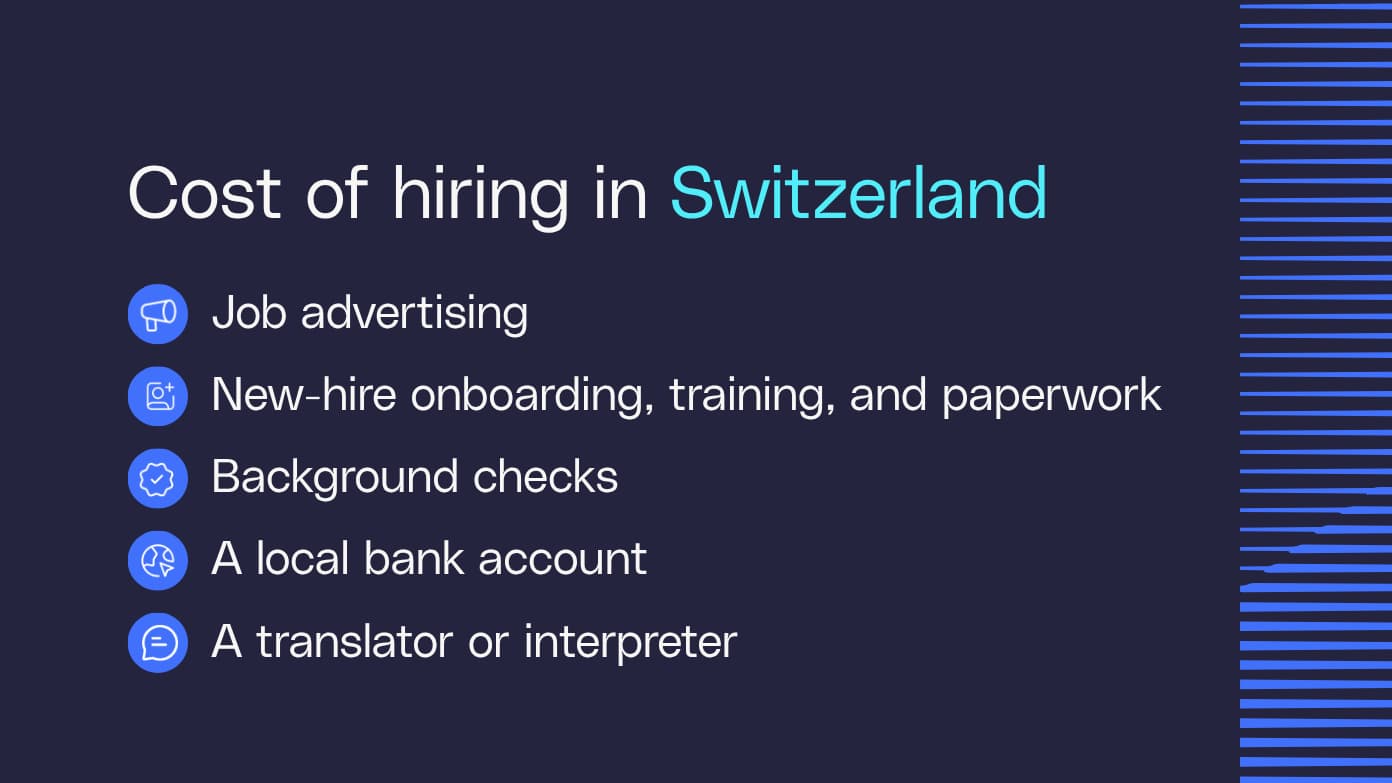
Quer esteja a contratar um único funcionário ou uma equipa inteira, o processo de recrutamento na Suíça acarreta despesas inevitáveis.
Orçamento para o seguinte:
-
Anúncio de emprego
-
Integração, treinamento e documentação.
-
software de rastreamento de candidatos
-
Verificação de antecedentes
-
Qualquer equipamento especial para funcionários
-
Um tradutor ou intérprete (se aplicável)
-
Despesas de viagem de ida e volta para a Suíça, se necessário.
-
AHV/IV/EO
-
Seguro-desemprego
-
seguro contra acidentes de trabalho
-
contribuições para o abono de família
-
seguro de auxílio-doença diário
-
Direito de férias do funcionário
-
Direito do funcionário a férias remuneradas e licença médica.
Segundo Gia, a taxa anual total de encargos do empregador na Suíça, que inclui custos adicionais aos salários, situa-se entre 10% e 20% do salário bruto. Os valores dependerão do salário do funcionário, do setor de atividade e do cantão. Gia aproveita os 13mais de 6 anos de experiência global da G-P em direito trabalhista, juntamente com insights de quase um milhão de cenários reais, para fornecer informações precisas e atualizadas sobre legislação trabalhista.
Que tipo de contratação uma empresa precisa fazer na Suíça?
Trabalhadores da UE/EFTA vs. trabalhadores de países terceiros/EFTA
Graças ao Acordo sobre a Livre Circulação de Pessoas (ALCP), a contratação de cidadãos de Estados-Membros da UE/EFTA envolve poucos obstáculos administrativos. Os empregadores não precisam dar prioridade aos trabalhadores suíços locais nem justificar por que um candidato da UE/EFTA foi selecionado. Para contratos de curta duração (até 4 90 dias por ano civil), as empresas só precisam enviar uma notificação online antes do início do trabalho do funcionário. Para contratos de longa duração, o funcionário se registra na comuna suíça de sua área de residência para obter uma autorização de residência/trabalho (como uma autorização L ou B). Isso lhes dá acesso imediato ao mercado de trabalho suíço.
Nacionais não pertencentes à UE/EFTA
A contratação de candidatos de países não pertencentes à UE/EFTA (incluindo o Reino Unido e os EUA) é mais regulamentada. De acordo com a Lei Federal sobre Estrangeiros e Integração (FNIA), os empregadores precisam comprovar que os esforços de recrutamento local falharam. As autorizações para cidadãos de fora da UE/EFTA são restritas quase exclusivamente a pessoal como gerentes, especialistas seniores ou graduados universitários com experiência especializada.
Cotas de licenças e cronograma administrativo
O governo suíço possui uma quota nacional anual rigorosa para autorizações de trabalho destinadas a cidadãos de países não pertencentes à UE/EFTA. A autorização de trabalho exige um processo de aprovação em várias etapas, envolvendo as autoridades trabalhistas cantonais e a Secretaria de Estado para as Migrações (SEM). Os empregadores devem iniciar o processo de solicitação da licença com antecedência. O funcionário não poderá iniciar o trabalho sem autorização formal.
É do seu interesse estabelecer um relacionamento com os escritórios econômicos locais ou com a embaixada de um cantão. Não é necessário ter uma pessoa jurídica para contratar na Suíça, mas se optar por abrir uma empresa suíça, poderá escolher entre:
-
Uma empresa individual de um único proprietário
-
Uma sociedade em nome coletivo
-
Uma sociedade limitada
-
Uma corporação ou sociedade anônima
-
Uma empresa de responsabilidade limitada
-
Uma subsidiária
-
Uma filial local
A abertura de filiais é uma prática comum para empresas internacionais e exige o pagamento de impostos locais e a manutenção de pelo menos um residente suíço com poderes legais. Você deve ter toda a documentação legal, contratos e demonstrações financeiras estabelecidas em mãos.
Contrate funcionários na Suíça sem precisar abrir sua própria empresa com a GP EOR. Monte sua equipe na Suíça a um custo menor e com a tranquilidade de saber que você está cumprindo os requisitos específicos de cada cantão.
Etapas para contratar na Suíça

O processo de contratação na Suíça segue cinco etapas básicas: anunciar a vaga, avaliar as candidaturas, entrevistar os candidatos, enviar as propostas de emprego e integrar os novos funcionários.
1. Anuncie vagas de emprego
Primeiro, crie uma descrição de cargo detalhada. Defina a função, as responsabilidades e as qualificações necessárias. Para certas profissões com taxas de desemprego mais elevadas, os empregadores são legalmente obrigados a notificar os serviços de emprego cantonais sobre as vagas antes de as anunciarem publicamente. Isso garante acesso prioritário para candidatos a emprego cadastrados e conformidade com a Lei Federal de Serviços de Emprego.
2. Avaliar candidaturas
Assim que os candidatos se inscreverem para as suas novas vagas, você poderá avaliar as candidaturas e determinar quais são os mais adequados para a posição. A legislação suíça proíbe a discriminação com base em gênero, idade, origem, raça, religião, deficiência, orientação sexual ou outras características protegidas em todas as etapas do processo de recrutamento. Isso está previsto na Constituição Federal Suíça e na Lei da Igualdade de Gênero.
Verifique cuidadosamente se os anúncios de emprego, os critérios de seleção e as perguntas da entrevista estão isentos de preconceitos.
3. Entrevistar candidatos
Em seguida, entreviste os candidatos que chegaram à sua lista final. Utilize critérios de seleção relevantes para o cargo e entrevistas estruturadas para garantir imparcialidade e consistência. Gia pode ajudar você a criar perguntas de entrevista que estejam em conformidade com as leis antidiscriminatórias para contratação de funcionários na Suíça, permitindo que você encontre o candidato ideal para a vaga, respeitando as regulamentações locais.
É uma boa prática manter a documentação do processo de recrutamento, incluindo anotações de entrevistas e decisões de seleção, por pelo menos cinco anos.
4. Faça ofertas de emprego
Agora é hora de notificar o candidato escolhido. Elabore um contrato de trabalho por escrito que esteja em conformidade com a legislação trabalhista suíça. O contrato deve incluir termos essenciais como cargo, atribuições, salário, horário de trabalho, prazos de aviso prévio e quaisquer Acordos Coletivos de Trabalho (ACTs) aplicáveis.
5. Admissão dos novos funcionários
Registre o novo funcionário no sistema suíço de segurança social (AHV/AVS), no seguro contra acidentes, no fundo de pensões (BVG/LPP) e, se aplicável, junto das autoridades fiscais competentes. Configure a folha de pagamento para garantir o pagamento correto dos salários, as deduções para a previdência social, as contribuições para a aposentadoria e os impostos.
Contratação de empreiteiros na Suíça
Trabalhar com prestadores de serviços independentes na Suíça pode ser uma forma econômica de testar o mercado e construir uma presença sem o compromisso de funcionários em tempo integral. Os prestadores de serviços sediados na Suíça compreendem o comportamento do consumidor local, as regras e as práticas comerciais. Eles estarão prontos para começar a trabalhar rapidamente com seus próprios equipamentos e processos de trabalho já estabelecidos.
Contratar prestadores de serviços permite ajustar facilmente a sua força de trabalho de acordo com as necessidades do seu negócio, sem as complexidades e os custos da contratação de funcionários.
Antes de celebrar um contrato com um trabalhador independente na Suíça, considere o seguinte:
1. Empregados versus trabalhadores independentes
É importante entender a diferença entre funcionários e trabalhadores autônomos. Na Suíça, os contratos de trabalho para funcionários geralmente incluem cláusulas de exclusividade e especificam o horário de trabalho, o local e as funções. Os contratos de prestação de serviços para contratados focam-se em entregáveis e resultados, enfatizando a autonomia e a independência do trabalhador.
As empresas contratam funcionários para realizar trabalhos e, em troca, pagam-lhes um salário ou remuneração regular. Os contratados devem providenciar seus próprios planos de previdência social e aposentadoria. Diferentemente dos funcionários, os contratados definem seus próprios horários, usam seus próprios equipamentos e trabalham em projetos específicos, em vez de terem um contrato contínuo.
2. Penalidades por classificação incorreta
Classificar alguém como contratado quando não o é pode acarretar penalidades severas. Caso ocorra uma classificação incorreta durante o processo de contratação na Suíça, você poderá precisar:
-
Pagar retroativamente a parte das contribuições para a segurança social do empregador e do empregado, por um período máximo de cinco anos. Isso inclui contribuições para o Seguro de Velhice e Sobrevivência (OASI), seguro por invalidez e seguro-desemprego.
-
Pagar juros e multas calculados com base no valor devido e na duração do atraso.
-
Os funcionários estão sujeitos a auditorias de conduta e revisões de conformidade por parte das autoridades suíças, como a Secretaria de Estado para Assuntos Econômicos (SECO), o que pode levar a medidas coercitivas adicionais caso seja detectada classificação incorreta.
3. Como pagar empreiteiros na Suíça
A GP Contractor™ simplifica o processo complicado e demorado de contratar e pagar prestadores de serviços internacionais. Você pode criar e emitir contratos e pagar contratados com apenas alguns cliques, garantindo ao mesmo tempo um processo em conformidade com a lei.
Contrate funcionários e prestadores de serviços na Suíça com a GP
Nossos produtos SaaS e com inteligência artificial – EOR, Contractor e Gia – ajudam empresas de todos os portes a construir e gerenciar equipes globais.
Com mais de uma década de experiência, a maior equipe de especialistas em RH, direito e compliance, e uma base de conhecimento proprietária global, a GP é líder reconhecida em recrutamento internacional quando você precisa contratar funcionários na Suíça.
Facilite a sua expansão para a Suíça com a G-P. Entre em contato conosco ou agende uma demonstração hoje mesmo.