








Headlines are dominated by one acronym: AI. You’re told it’ll source talent, set salaries, and optimize workflows. But if you caught our recent webinar Global Workforce Trends North America edition, there was a recurring theme that had nothing to do with code and everything to do with people.
Laura Maffucci, VP and Head of HR at G-P, and Veronique Le Maire, Global Head of HR and Payroll Client Solutions at TMF Group, sat down to share the HR trends surfacing in 2026.
1. Stop sourcing talent with keywords. Search for the unteachable traits.
In 2026, the four-year degree requirement is a relic of the past. Between the rising cost of education and the quick evolution of skills, a diploma is a lagging indicator of capability.
AI can scan thousands of resumes for keywords in the blink of an eye, but speed doesn't always equal quality. If we allow algorithms to be the sole gatekeeper, we risk auto-rejecting people that could redefine our teams.
Laura shared a story about one of her all-time greatest hires. On paper, the candidate wasn’t the best fit. In fact, for the first 10 minutes of the interview, Laura found herself wondering why they were even talking. But the conversation continued because a human recruiter saw something the resume couldn't capture. As the candidate spoke, the unteachable traits began to shine through, and that mismatch on paper turned into a star employee.
Vero expanded on this by referencing the concept of the "purple squirrel" — a candidate who might not check every box in the job description but has all the base skills and experience the company needs. For example, a nurse trained in Brazil already has the foundation of clinical care. While they may need to learn specific health protocols to work in the U.S., they already have the fundamental competencies.
The human move: Use AI to widen your talent funnel to emerging markets. Never let a machine have the final say. Use the tech to find candidates, but use your human intuition to read between the lines of their resume.
5 unteachable traits to look for in 2026
-
Adaptability to shifting objectives
-
Curiosity and situational awareness
-
Sound judgment
-
Ability to inspire trust
-
Conflict resolution
2. Total rewards: Data provides the baseline. Humans provide the care.
AI can give you real-time pay transparency data. It can tell you the average salary of a software engineer in Massachusetts or Delaware. But it doesn't know what your team needs to feel supported.
Vero noted that while companies want to give a similar experience to employees worldwide, the package of care has to be regional. A 22-year old employee in the U.S. might be desperate for student loan repayment or crypto education, while a more senior team member in Sweden or Norway may value parental leave and work-life balance above all else. AI can track compliance, but it can't feel the cultural nuance.
The human move: Use AI data to stay compliant, but use your human sensibility to stay competitive. Whether it’s a Diwali bonus or a subscription to a wellness app, the best perks are the ones that recognize the human behind the employee.
3. Ditch AI anxiety for AI awesomeness
In our World at Work survey, 92% of employees said they’re excited about AI. But, 27% said they’re hesitant to use AI in their work because their company doesn’t provide proper training resources. To break this cycle, leadership needs to move away from rigid instructions and embrace a culture of experimentation.
Vero shared how she initially didn't think AI was for her. She felt her role wasn't "repetitive" enough to benefit from automation — no long Excel lists or manual reporting to hand off. But her perspective shifted when she decided to stop overthinking and just "ask" the tool. She described her daily tasks to the AI and asked, "How can you make my life easier?" The result? A realization that we need to approach these tools like kids — less overthinking and simply give it a go.
Laura also added how G-P reinforced this by launching AI awesomeness awards and dedicated Slack channels, turning AI from a threat into a playground.
"We implemented an AI awesomeness award. People can submit themselves or others for cool things they're doing with AI. It benefits everyone. There's so much critical thinking that needs to be amped up."
Laura Maffucci
VP, Head of Human Resources at G-P
The human move: Reward the creativity of your humans and celebrate it publicly. Build a culture that is anchored on mastering the machine with a sense of play rather than a sense of dread.
4. Global mobility: Geography is a logistics problem, not a human one
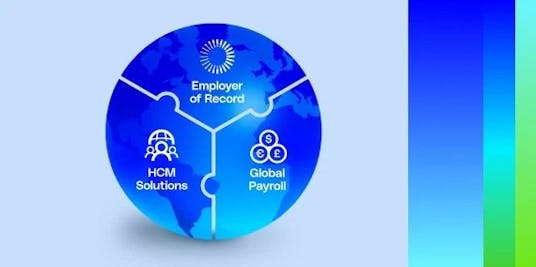
Employer of record (EOR) technology makes it possible to hire around the world quickly and easily. But technology doesn't build a team — people do.
Vero and Laura discussed how global mobility is becoming a major retention tool. It allows a great employee to move back to their hometown in Thailand or follow a spouse to Argentina without losing their job. The EOR handles the back-end of global employment, so you can keep your star employees, regardless of location.
The human move: Use technology to handle the administrative burden (tax, compliance, payroll) of global mobility so you can focus on the human connection. A teammate in Spain should feel just as heard as the one in your HQ location.
Get more regional HR insights
While the tools are changing, the heartbeat of a successful company hasn't. AI is a powerful compass, but it doesn’t know where your company wants to go — only you do.
Workforce trends shift as quickly as time zones, so we’ve captured insights from across the globe to help you keep up. Watch the full on-demand recordings of our regional 2026 Global Workforce Trends series:
-
North America edition – Deeper dives into U.S./Canada pay transparency and local talent shortages.
-
EMEA edition – Nuances of EU AI governance and regional packages of care.
-
APAC edition – Insights on the rapid digital transformation and talent mobility across Asia-Pacific.