





Wichtigste Erkenntnisse
- EORs ermöglichen globale Einstellungen: Ein Employer of Record (EOR)) ermöglicht es Ihnen, langfristige Mitarbeiter weltweit zu Einstellung, ohne Unternehmen zu gründen oder sich um Leistungen und lokale Gesetzeskonformität kümmern zu müssen.
- Schirmunternehmen konzentrieren sich auf die Lohnabrechnung: Eine Dachgesellschaft fungiert als Vermittler für Auftragnehmer, verwaltet die Lohnsteuerabzugsverfahren (Pay-as-you-earn)-Steuern und die Rechnungsstellung innerhalb eines einzelnen Landes.
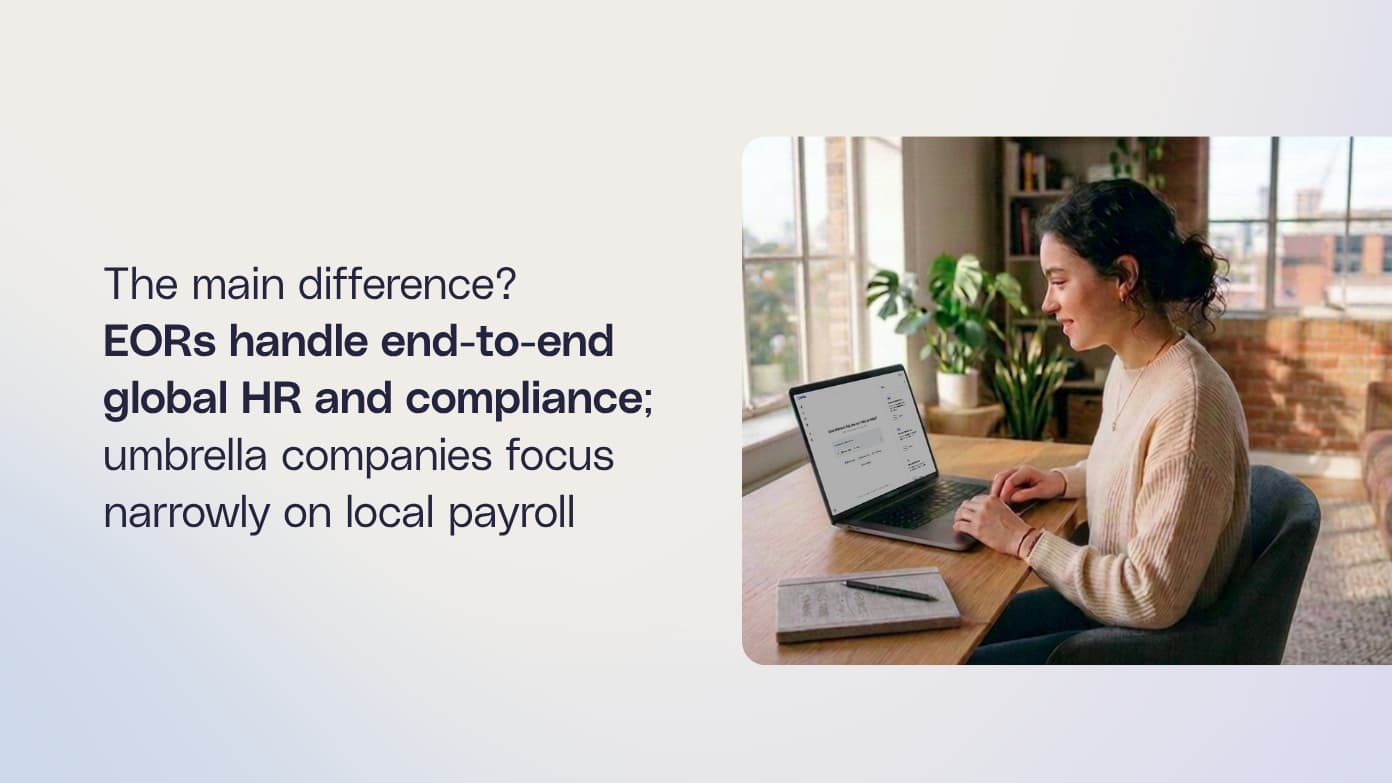
- Der Hauptunterschied ist der Umfang: EORs verwalten das gesamte gesamte Rechts- und Beschäftigungsrisiko über Grenzen hinweg. Schirmunternehmen konzentrieren sich eng auf die Lohnabrechnung für Zeitarbeiter.
Die Balance zwischen Compliance und Geschäftsprioritäten zu finden, wird immer komplexer, wenn Sie in neue Märkte expandieren und Ihr Team vergrößern. Arbeitgeber der eigenen Belegschaft (Employer of Record, EOR) und Umbrella-Gesellschaften können die Belegschaftsverwaltung vereinfachen, aber jede hat ihren eigenen Anwendungsfall und ihre eigenen Vorteile.
Dieser Leitfaden erklärt die Unterschiede zwischen Employer of Record und Dachgesellschaft-Setups, damit Sie den richtigen Ansatz für Ihr Unternehmen finden können.
Was ist ein EOR?
Ein Employer of Record agiert als rechtlicher Arbeitgeber im Auftrag eines anderen Unternehmens. Ein Employer of Record ermöglicht es Ihnen, Mitarbeiter weltweit zu Einstellung, ohne in jedem Land eine lokale Organisation gründen zu müssen.
Während Sie die Kontrolle über die tägliche Arbeit der Mitarbeiter behalten, übernimmt der Arbeitgeber die Einhaltung der Vorschriften, die Lohn- und Gehaltsabrechnung, die Steuern, die Sozialleistungen und andere Personalangelegenheiten. Die Zusammenarbeit mit einem Employer of Record (Arbeitgeber der Wahl) hilft Ihnen dabei:
- Stellen Sie Mitarbeiter überall auf der Welt ein.
- Optimierung der Lohnabrechnungsprozesse, der Steuerabzüge und der Verwaltung der Sozialleistungen.
- Minimieren Sie Compliance-Risiken, indem Sie die Einhaltung gesetzlicher Vorschriften einem erfahrenen Partner anvertrauen.
Was ist eine Dachgesellschaft ?
Die Bedeutung von Dachgesellschaft bezieht sich auf eine Einheit, die Vertragsarbeit erleichtert. Dachgesellschaften sind auch als Pay-as-you-earn-Umbrellas (Lohnsteuerabzugsverfahren) bekannt, das heißt, sie nutzen das Lohnsteuerabzugsverfahren zur Steuerabziehung. Sie sind Vermittler zwischen Unternehmen und Zeitarbeitern oder Auftragnehmern.
Eine Dachgesellschaft ist ein rechtmäßiger Arbeitgeber, verwaltet jedoch lediglich Abzüge und Beiträge und verteilt Zahlungen vom Unternehmen oder der Agentur an den Auftragnehmer. Gleichzeitig bleibt das Unternehmen bzw. die Agentur für die Überwachung der Arbeitsrichtung, das Management der Erwartungen und Ergebnisse sowie die Sicherstellung der Einhaltung verantwortlich.
Wesentliche Unterschiede zwischen EORs und Umbrella-Unternehmen
EORs und Umbrella-Gesellschaften fungieren als rechtliche Arbeitgeber und Vermittler zwischen Unternehmen und Arbeitnehmern. Beide können bei der Lohnabrechnung helfen, die Einhaltung von Vorschriften unterstützen und einen Teil der Arbeitgeberverantwortung übernehmen. Der Umfang der Unterstützung und der Verantwortung, die die einzelnen Ansätze bieten, ist jedoch unterschiedlich:
- Leistungsumfang: EORs straffen ein vollständiges Spektrum an PERSONAL-AUFGABEN, einschließlich Einarbeitung, Verträgen, Gehalt und Sozialleistungen. Schirmunternehmen konzentrieren sich auf die Lohnabrechnung und grundlegende Verwaltungsaufgaben.
- Beschäftigungsart: EORs konzentrieren sich auf langfristige Beschäftigung, obwohl einige Anbieter wie G-P Employer of Record auch Auftragnehmer und Zeitarbeiter unterstützen. Schirmunternehmen arbeiten mit Auftragnehmern und Zeitarbeitern zusammen.
- Unterstützung bei der Einhaltung von Vorschriften: EORs bieten umfassende Unterstützung bei der Einhaltung lokaler Arbeitsgesetze. Umbrella-Unternehmen unterstützen die Einhaltung der Vorschriften bei der Lohnabrechnung, einschließlich Steuern und Sozialabgaben, bieten aber nicht unbedingt weitere rechtliche Unterstützung oder Dienstleistungen an.
- Reichweite: EORs verfügen über globale Tochtergesellschaften und inländische Expertise, um die Compliance-Skalierung an neuen Standorten zu unterstützen. Dachgesellschaften haben einen engeren Fokus und begrenzte international Fachwissen und operieren typischerweise in einem einzigen Land. Sie sind im Vereinigten Königreich und Frankreich verbreitet. In Frankreich werden befristete Arbeitsverträge und die Unternehmen, die sie ermöglichen, nach dem entreprise de portage-Gehaltsmodell geregelt.
- Kontrolle und Flexibilität: EORs bieten Zugang zu globalen Talentpools und Einstellung zu dem von Ihnen gewählten Bewerber. Schirmunternehmen, die oft mit Personalvermittlungsfirmen verbunden sind, können den Zugang zu Talenten einschränken und eine distanziertere Beziehung schaffen.
- Risikominderung: EORs verwalten alle Aspekte der Compliance. Schirmunternehmen überlassen den Kunden eine größere Compliance-Last und bieten einen engeren Unterstützungsbereich.
- Gebührenstruktur: Führende EORs, wie G-P Employer of Record, haben eine klare und vorhersehbare Gebührenstruktur. G-P Employer of Record-Preise beginnen bei 599 USD pro Monat (pro Mitarbeiter) und verlangen keinen Prozentsatz der Gehaltsabrechnung. Das Verständnis der Dachgesellschaftsgebühren kann manchmal komplexer sein, was die Unternehmen und Auftragnehmer betreffen kann, die mit ihnen zusammenarbeiten.
| Besonderheit | Employer of Record | Umbrella Unternehmen |
|---|---|---|
| Leistungsumfang | Arbeitsverträge, Einarbeitung, Gehaltsabrechnung, Sozialleistungen und lokale Beschäftigungsverwaltung | Gehaltsabrechnung, Steuerabzüge im Lohnsteuerabzugsverfahren-Stil, Rechnungsabrechnungen, Gehaltsabrechnungen und damit verbundene Arbeitsverwaltung für temporäre Einsätze |
| Beschäftigungsart | Üblicherweise für Mitarbeiter, einschließlich Langzeit- oder Vollzeiteinstellungen, verwendet | Üblicherweise für Zeitarbeiter, Agentur- oder Auftragsarbeitskräfte verwendet |
| Unterstützung bei der Einhaltung von Vorschriften | Unterstützt umfassendere lokale Einhaltung von arbeitsrechtlicher Vorschriften, beseitigt aber nicht alle Kundenrisiken | Unterstützt die Einhaltung der Lohnsteuer und die damit verbundene Beschäftigungsverwaltung. Breitere Beschäftigungs- und Lieferkettenrisiken können bestehen bleiben |
| Geografische Reichweite | Mehrländer- oder globale Abdeckung, je nach Anbieter | In der Regel länder- oder marktspezifisch |
| Zugang zu Talenten | Hilft dabei, vom Kunden ausgewählte Kandidaten in unterstützten Ländern einzustellen, vorbehaltlich der lokalen Anforderungen | Suchen Sie keine Arbeitskräfte. Arbeitet zusammen mit Personalvermittlungs- oder Personalbeschaffenden Agenturen |
| Risikominimierung | Übernimmt viele rechtliche Arbeitgeber-Verantwortlichkeiten, wobei einige Kundenverantwortungen erhalten bleiben | Kümmert sich um die Lohn- und Arbeitgeberverwaltung für den Auftrag, aber Agenturen oder Endkunden können rechtliche, steuerliche und operative Risiken behalten |
| Gebührenstruktur | Oft abonniert oder pro Mitarbeiter. G-P Employer of Record beginnt bei 599 USD pro Monat (pro Mitarbeiter). | Beinhaltet eine Schirmmarge oder Verwaltungsgebühr |
Wie funktioniert eine Lohnabrechnung der Dachgesellschaft? (Lohnsteuerabzugsverfahren-Stil)
Umbrella Payroll kann Zahlungen für Zeitarbeiter oder Auftragnehmer vereinfachen und gleichzeitig die Steuerkonformität nach Lohnsteuerabzugsverfahren unterstützen, insbesondere in Märkten wie dem Vereinigten Königreich. So funktioniert der Prozess:
- Du stimmst den Bedingungen des Beschäftigungsverhältnis zu. Sie vereinbaren mit der Dachgesellschaft die Zuweisungsbedingungen, den Satz und die Projektdetails des Arbeitnehmers.
- Der Mitarbeiter reicht Stundenzettel ein. Der Arbeitnehmer verzeichnet seine Arbeitsstunden oder -tage. Der genehmigte Stundenzettel wird dann verwendet, um die Zuweisungszahlung zu berechnen.
- Sie erhalten eine Rechnung. Die Dachgesellschaft stellt die Zeit des Arbeitnehmers zusammen mit der vereinbarten Marge oder Managementgebühr in Rechnung.
- Lohnabzüge werden berechnet. Nach Eingang der Zahlung bearbeitet die Dachgesellschaft die Gehaltsabrechnung.
- Der Arbeiter wird bezahlt. Die Dachgesellschaft zahlt dem Arbeitnehmer ihren Nettolohn und stellt eine Gehaltsabrechnung aus, die Bruttogehalt, Abzüge und Nettogehalt zeigt.
Die Nutzung des Lohnsteuerabzugsverfahren-Umbrella-Payroll spart Ihnen Zeit. Man vermeidet die Verwaltungsarbeit, eine separate Gehaltsabrechnung für Zeitarbeiter zu führen, und verringert das Risiko teurer, falscher Klassifizierungsstrafen.
Ist ein Dachgesellschaft Dasselbe wie eine Personalbeschaffung Agentur?
Nein. Obwohl beide mit Zeitarbeitern arbeiten, übernehmen sie völlig unterschiedliche Teile des Prozesses.
Eine Personalbeschaffung Agentur findet und platziert Talente für Ihre offenen Stellen. Sie suchen Kandidaten, prüfen Lebensläufe und bringen Auftragnehmer auf Ihre spezifischen Projektbedürfnisse zu.
Eine Dachgesellschaft fungiert als rechtmäßiger Arbeitgeber und Gehaltsabrechnungsverarbeiter. Sie rekrutieren keine Arbeitskräfte. Stattdessen greifen sie ein, nachdem Sie einen Auftragnehmer gefunden haben, und kümmern sich um deren Gehaltsabrechnung, Steuerabzüge und Beschäftigungsverwaltung.
Das Verständnis des Unterschieds hilft Ihnen, das richtige Setup für Ihr Unternehmen zu schaffen:
| Besonderheit | Personalvermittlungsagentur | Umbrella Unternehmen |
|---|---|---|
| Hauptfokus | Suche und Vermittlung von Talenten | Beschäftigung von Zeitarbeitern und Lohnsteuerabzugsverfahren |
| Rekrutierungsunterstützung | Ja | Nein |
| Rechtlicher Arbeitgeberstatus | Variiert (oft stellt er Arbeiter ein). | Oft ist der Arbeitgeber des Arbeitnehmers in britischen Umbrella-Vereinbarungen |
| Wann man sie einsetzen sollte | Sie benötigen Hilfe bei der Suche nach Zeitarbeitern oder Auftragnehmern | Du hast den Mitarbeiter gefunden und brauchst eine Compliance-Struktur für Gehaltsabrechnung/Beschäftigungsverwaltung |
Vor- und Nachteile der Verwendung eines Dachgesellschaft
Eine Dachgesellschaft kann Vereinfachen Auftragnehmer oder temporäre Arbeitnehmerzahlungen anbieten, aber das ist nicht für jede Einstellungssituation geeignet. Das Abwägen der Vor- und Nachteile hilft dir zu entscheiden, ob dieses Modell zu deinem aktuellen Setup passt.
Vorteile
- Spart Verwaltungszeit. Je nach Struktur können Sie vermeiden, die Gehaltsabrechnung direkt für Zeitarbeiter zu betreiben oder Steuer- und Sozialversicherungsabzüge selbst zu verwalten.
- Verringert das Compliance-Risiko. Die Dachgesellschaft verwaltet Steuerabzüge wie Lohnsteuerabzugsverfahren und Sozialversicherungsbeiträge, wodurch Ihr Risiko falscher Klassifizierungsgebühren verringert wird.
- Bietet schnelle Einarbeitung. Sie können den Mitarbeitern helfen, schnell dort zu starten und bezahlt zu werden, wo das Modell eingerichtet ist und Compliance ist.
- Das vereinfacht die Rechnungsstellung. Sie erhalten eine einzelne Rechnung von der Dachgesellschaft, anstatt Zahlungen an mehrere einzelne Auftragnehmer zu verwalten.
Nachteile
- Begrenzte rechtliche und personelle Unterstützung. Schirmgesellschaften konzentrieren sich hauptsächlich auf die Gehaltsabrechnung. Sie ersetzen keine Unterstützung bei langfristigen Einhaltung arbeitsrechtlicher Vorschriften, Leistungsstrategie, Einwanderung, Belegschaftsplanung oder Mitarbeiterbeziehung.
- Enge geografische Reichweite. Schirmunternehmen sind in der Regel in einem einzigen Land tätig, was sie weniger geeignet macht, ein weltweites TEAM einzustellen.
- Höhere Gebühren für Auftragnehmer. Die Dachgesellschaft erhebt eine Servicegebühr vom Gehalt des Auftragnehmers oder legt Gebühren auf Ihre Rechnung.
- Weniger Kontrolle über die Arbeitserfahrung. Die Hinzufügung eines Vermittlers zwischen Ihnen und Ihrem Auftragnehmer kann Distanz schaffen und die Kommunikation erschweren.
Wahl zwischen einem Employer of Record und einem Dachgesellschaft
Angesichts der Unterschiede beim Vergleich von Employer of Record vs. Dachgesellschaft hängt die richtige Wahl für Ihr Unternehmen von Ihren Bedürfnissen und Prioritäten ab.
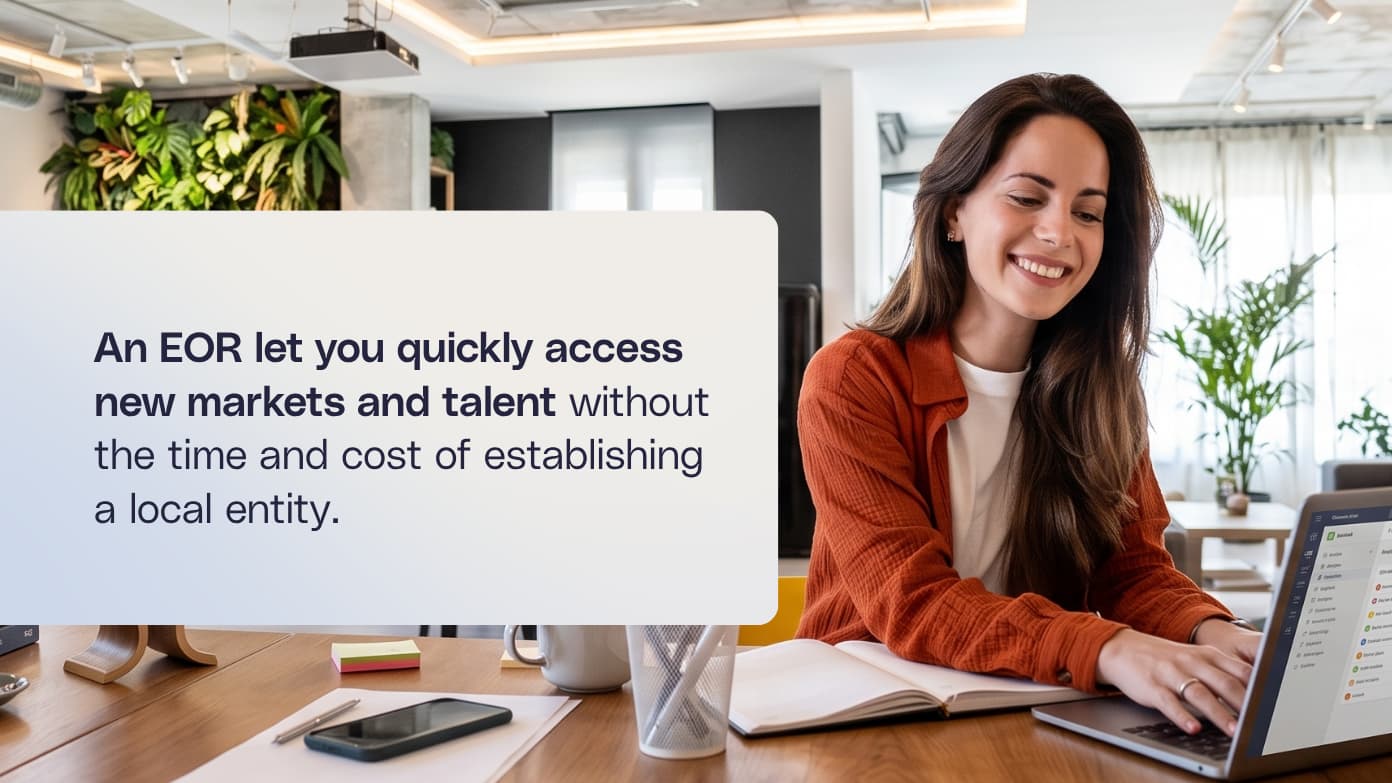
Wenn Sie in einen neuen Markt expandieren oder ein verteiltes TEAM aufbauen möchten, wählen Sie einen Employer of Record. EORs verfügen über die Infrastruktur und das Fachwissen, um Compliance-Einstellungen weltweit zu unterstützen. Ein Employer of Record ermöglicht es Ihnen, schnell neue Märkte und Talente zu erschließen, ohne Zeit und Kosten für die Gründung einer lokalen Einrichtung. Sie können auch Flexibilität und Compliance-Garantie genießen, wenn Sie Vollzeit-, Teilzeit- oder Auftragnehmer einstellen und leiten.
Wenn Sie nur Hilfe bei Zahlungen an einem Ort benötigen, an dem Sie bereits eine Niederlassung haben, kann eine Dachgesellschaft Ihren Bedürfnissen entsprechen.
Was man vor der Wahl eines prüfen sollte Dachgesellschaft
Die Wahl des richtigen Umbrella-Partners kann dazu beitragen, das Lohn- und Lieferkettenrisiko zu reduzieren, aber sie beseitigt nicht die Haftung.
Bevor Sie eine Vereinbarung unterschreiben, prüfen Sie, ob der Anbieter anerkannte Branchenakkreditierungen besitzt und die örtlichen Steuergesetze einhält. Diese Verifizierung kann Sie später vor unerwarteten Lohnsteuer-Strafen bewahren.
Schau dir als Nächstes genau an, wie sie laden. Transparente Dachgesellschaftsgebühren und klare Zahlungszeiten sorgen dafür, dass keine versteckten Kosten für schnelle Überweisungen oder Vertragsabwicklungen entstehen. Sie sollten auch überprüfen, wie schnell sie Ihre Auftragnehmer nach Erhalt Ihrer Rechnung bezahlen, da Verzögerungen Ihre Beziehung zu Top-Talenten belasten können.
Prüfen Sie schließlich die Vertragsbedingungen und den Versicherungsschutz. Stellen Sie sicher, dass der Anbieter angemessene Frist-Frist-Fristen anbietet und eine grundlegende Versicherung wie Haftpflicht- und Berufsversicherung beinhaltet. Diese Details im Voraus zu überprüfen, sorgt für eine unkomplizierte Partnerschaft und sorgt dafür, dass Ihr Betrieb reibungslos läuft.
Was Sie vor der Auswahl eines offiziellen Arbeitgebers prüfen sollten
Die Suche nach dem richtigen Employer of Record kann Ihnen helfen, schnell und legal in neue globale Märkte zu expandieren.
Beginnen Sie damit, zu fragen, ob der Anbieter lokale Unternehmen in Ihren Zielländern besitzt. EORs mit eigener lokaler Infrastruktur können Ihnen eine strengere Datensicherheit, direkte operative Kontrolle und schnellere Einarbeitungszeiten für Ihre Kandidaten bieten.
Bewerten Sie anschließend deren Compliance-Tiefe und Preistransparenz. Suchen Sie nach Anbietern wie G-P Employer of Record, mit lokalen Rechtsexperten, die Compliance-Verträge erstellen, lokale Leistungspakete bearbeiten und Ihr geistiges Eigentum schützen. Stellen Sie sicher, dass deren Gebührenstruktur vorhersehbar ist, damit Sie unerwartete Einarbeitungsgebühren, Währungsaufschläge oder versteckte Kündigungsgebühren später vermeiden.
Schließlich solltest du die Technologieplattform und das Mitarbeiter-Erlebnis testen. Wählen Sie einen Anbieter mit intuitiver Software, die die Lohnabrechnungsverwaltung, Zeiterfassung und Vertragsupdates in einem zentralen Dashboard vereinfacht. Starke, lokale Unterstützung hält Ihre international Mitarbeiter von Anfang an engagiert und unterstützt.
Die wachsende Nachfrage nach EORs
Das Weltwirtschaftsforum prognostiziert, dass bis 2030digitale Jobs, die remote ausgeübt werden können, voraussichtlich auf über 90 Millionen Rollen anwachsen werden. Da mehr Arbeit in digitalen Räumen stattfindet, sind verteilte Arbeitskräfte praktikabler und häufiger. Gleichzeitig nutzen Unternehmen jeder Größe EORs, um ihr Geschäft auf neue globale Standorte auszuweiten, ohne die Kosten und Komplexität einer Unternehmensgründung.
Diese Faktoren treiben die wachsende Nachfrage nach EORs an, die schnelle, flexible und Compliance-konforme Lösungen für die globale Personalbeschaffung und Expansion bieten.
Stellen Sie weltweit mit G-P ein
Als anerkannter Marktführer im Bereich der globalen Beschäftigung unterstützt G-P Unternehmen jeder Größe bei der Einstellung, Onboarding und Verwaltung globaler Teams in 180+ Ländern. Unsere branchenführenden globalen Beschäftigungsprodukte und Employer of Record-Lösungen werden vom größten TEAM lokaler Experten unterstützt.
Kontaktieren Sie uns noch heute , um herauszufinden, wie wir Ihnen überall – schnell und konform helfen können.
FAQ
Was ist der Unterschied zwischen einer Dachgesellschaft und einer GmbH?
Eine Dachgesellschaft beauftragt Auftragnehmer, die befristete Arbeiten übernehmen, oft über Zeitarbeitsagenturen. Die Dachgesellschaft übernimmt die Steuer- und Compliance-Prüfung im Zahlungsprozess.
Eine Gesellschaft mit beschränkter Haftung ist eine eigenständige juristische Person, die mindestens einem Gesellschafter gehört. Ein Unternehmen oder Auftragnehmer kann ein Unternehmen mit beschränkter Haftung gründen, was ihm mehr Kontrolle über seine Finanzen und seinen Geschäftsbetrieb gibt. Sie sind selbst für die Verwaltung ihrer Steuern, ihrer Buchhaltung und die Einhaltung gesetzlicher Bestimmungen verantwortlich. Diese Struktur ist steuerlich vorteilhaft, erfordert aber einen höheren Verwaltungsaufwand.
Wie stellen EORs und Dachgesellschaften die Mitarbeitereinstufung sicher?
Ein Employer of Record fungiert als rechtlicher Arbeitgeber und gewährleistet die Einhaltung des Arbeitsrechts vor Ort, einschließlich der Steuerpflichten und der Ansprüche der Arbeitnehmer. Unabhängig davon, ob Sie einen Mitarbeiter oder einen Auftragnehmer einstellen, mindern EORs das Risiko einer falschen Klassifizierung von Arbeitnehmern.
Umbrella-Unternehmen vereinfachen die Lohn- und Gehaltsabrechnung sowie den Steuerabzug. Von einer Dachgesellschaft beauftragte Auftragnehmer arbeiten temporär oder projektbezogen für Kundenunternehmen. Dies kann die Steuerpflichten für Auftragnehmer vereinfachen und dazu beitragen, die Unterschiede zwischen Angestellten und Auftragnehmern klar zu halten. Umbrella-Gesellschaften verfügen jedoch nicht über die Expertise von EORs im Bereich der Mitarbeitereinstufungsvorschriften für Angestellte und Auftragnehmer und können daher nicht das gleiche Maß an Beratung bieten.
Bietet ein Employer of Record mehr Vorteile als eine Dachgesellschaft?
Ja, ein Employer of Record kann vorteilhafter sein als eine Dachgesellschaft, wenn Sie global expandieren möchten, ohne eine lokale Niederlassung zu gründen. EORs stellen die Einhaltung des Arbeitsrechts vor Ort sicher und verwalten die Lohn- und Gehaltsabrechnung, Steuerpflichten und Sozialleistungen für Mitarbeiter.
Ein Employer of Record bietet mehr Stabilität und Kontrolle als eine Dachgesellschaft, die für kurzfristige Betreibervereinbarungen gedacht ist. Darüber hinaus kann ein Employer of Record in Jurisdiktionen mit komplexen regulatorischen Rahmenbedingungen ein strategischer Partner sein und so rechtliche und finanzielle Risiken reduzieren.
Wie vereinfachen EORs und Umbrella-Unternehmen die Vertragsbeendigung?
Als gesetzlicher Arbeitgeber verwalten EORs die Kündigung unter strikter Einhaltung des Arbeitsrechts vor Ort. Dies umfasst die ordnungsgemäße Benachrichtigung, die Verwaltung der Abfindungszahlung und die Einhaltung aller gesetzlichen Anforderungen. Kündigungen werden fair durchgeführt, um sowohl Sie als auch den Arbeitnehmer zu schützen.
Die Zusammenarbeit mit Umbrella-Unternehmen ist oft zeitlich befristet oder projektbezogen, daher hängen Kündigung und Abfindung von den Vertragsbedingungen und den lokalen Vorschriften ab.
Was sind die Nachteile einer Dachgesellschaft?
Obwohl Umbrella-Unternehmen die Beziehungen zwischen Unternehmen und Auftragnehmern vereinfachen, weisen sie erhebliche Einschränkungen auf, wie zum Beispiel:
Die Unterstützung durch die Personalabteilung beschränkt sich hauptsächlich auf die Lohn- und Gehaltsabrechnung.
Unternehmen, die mit Umbrella-Gesellschaften zusammenarbeiten, können für Compliance-Verstöße des Anbieters haftbar gemacht werden.
Die Zusammenarbeit mit einer Dachgesellschaft ist für den Auftragnehmer weniger steuereffizient als der Betrieb einer eigenen GmbH.
Manche Umbrella-Firmen zahlen nur langsam oder nehmen überhöhte Abzüge von den Zahlungen an Auftragnehmer vor.