





ประเด็นสำคัญ
- เข้าถึงกลุ่มบุคลากรผู้มีความเชี่ยวชาญของอินเดีย: ประเทศนี้มีแรงงานขนาดใหญ่ที่มีทักษะที่เกี่ยวข้องกับหลายภาคส่วน รวมถึงเทคโนโลยี การเงิน การผลิต ปัญญาประดิษฐ์ การเรียนรู้ของเครื่อง และคลาวด์คอมพิวติ้ง
- นําทางข้อกําหนดของรัฐบาลกลางและรัฐ: มีทั้งกฎของรัฐบาลกลางและเฉพาะรัฐที่มีผลต่อค่าตอบแทน สวัสดิการ และการลา
- เตรียมความพร้อมสําหรับประมวลกฎหมายแรงงานของอินเดีย: อินเดียได้ปรับปรุงและรวมกฎหมายแรงงานกลางที่มีอยู่ให้ทันสมัยและรวม 29 ไว้ในสี่ประมวลกฎหมายแรงงานเพื่อสร้างกรอบงานที่เป็นหนึ่งเดียวสําหรับข้อกําหนดด้านการจ้างงาน
- เส้นทางสู่การจ้างงานในอินเดีย: บริษัทมีทางเลือกในการจัดตั้งหลายรูปแบบ รวมถึงการร่วมมือกับนายจ้างตามกฎหมาย (บริการตัวแทนนายจ้าง) การจ้างผู้รับเหมา การจัดตั้งบริษัทย่อย หรือการลงทะเบียนโดยตรงกับนายจ้าง
อินเดียเป็นหนึ่งในประเทศที่เป็นที่ต้องการมากที่สุดสําหรับบริษัทระดับโลกที่ต้องการขยายและจ้างงาน บริษัทมีแรงงานจํานวนมากในภาคเทคโนโลยี การเงิน การผลิต และอีกหลายภาคส่วนที่เป็นที่ต้องการ
ถ้าคุณกําลังมองหาการจ้างงานใน อินเดีย มีโอกาสมากมาย อย่างไรก็ตาม คุณจําเป็นต้องรู้วิธีจัดการกับกฎหมายและแนวทางเฉพาะของประเทศ รวมถึงกฎท้องถิ่นเกี่ยวกับสัญญาจ้างงาน ค่าตอบแทน ภาษี สวัสดิการ และการสมทบตามกฎหมาย
คู่มือนี้ครอบคลุมทุกสิ่งที่คุณจําเป็นต้องรู้เกี่ยวกับการจ้างงานในอินเดีย ตั้งแต่การเลือกรูปแบบการจ้างงานไปจนถึงการสร้างและบริหารทีมของคุณ
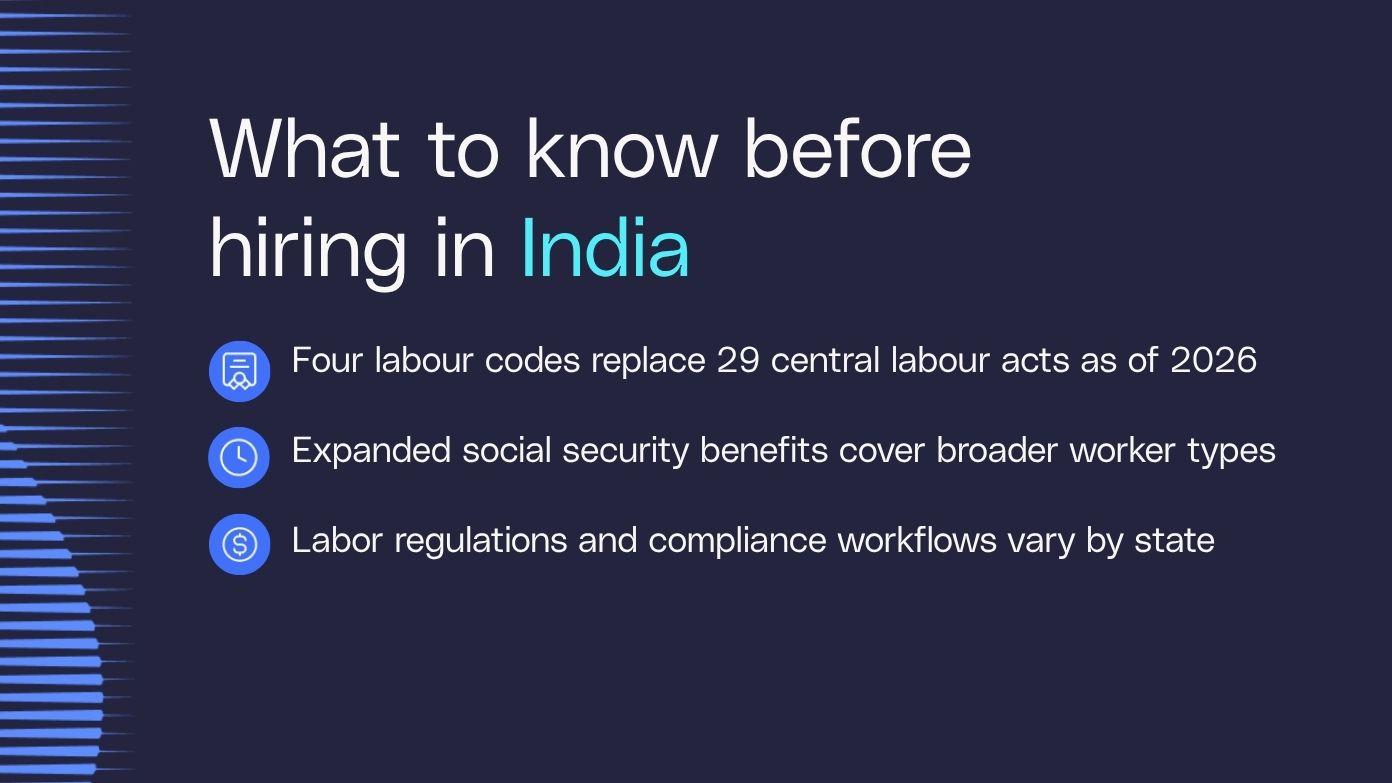
สิ่งที่ควรรู้ก่อนจ้างงานในอินเดีย
มีข้อกําหนดทางกฎหมายหลายประการที่คุณต้องปฏิบัติตามเมื่อจ้างพนักงานในอินเดีย กรอบการจ้างงานของประเทศครอบคลุมทั้งกฎหมายระดับกลางและระดับรัฐที่มีอิทธิพลต่อความสัมพันธ์ระหว่างนายจ้างกับพนักงาน ซึ่งรวมถึง ค่าตอบแทนและสวัสดิการด้วย
หากคุณไม่แน่ใจว่าจะเริ่มต้นตรงไหน G-P Gia™ตัวแทน ทรัพยากรบุคคลระดับโลกที่ขับเคลื่อนด้วยปัญญาประดิษฐ์ของเรา สามารถตอบคําถามที่ยากที่สุดเกี่ยวกับการปฏิบัติตามกฎระเบียบใน 50 ประเทศ — รวมถึงอินเดีย — และทุก 50 รัฐในสหรัฐอเมริกา ลดการพึ่งพาทนายภายนอกและลดเวลาและค่าใช้จ่ายในการปฏิบัติตามกฎระเบียบได้สูงสุดถึง 95% กับ Gia
มาดู 6 สิ่งที่ควรรู้เกี่ยวกับการจ้างงานในอินเดียกัน:
ประมวลกฎหมายแรงงานของอินเดียและการปรับปรุงกฎระเบียบ 2026
อินเดียได้ผ่านการปฏิรูปกฎหมายแรงงานครั้งใหญ่ ประมวลกฎหมายแรงงาน ฉบับใหม่เป็นกฎหมายครบสี่ฉบับที่ปรับปรุงและรวม 29 พระราชบัญญัติแรงงานกลางที่มีอยู่ การเปลี่ยนแปลงหลายอย่างทําให้ธุรกิจทั้งในประเทศและต่างประเทศสามารถจ้างงานในอินเดียได้ง่ายขึ้น พร้อมทั้งขยายสิทธิประโยชน์ไปยังแรงงานประเภทใหม่
ตั้งแต่ 2026รหัสเหล่านี้มีผลบังคับใช้แล้ว:
- การปฏิบัติตามกฎระเบียบที่เกี่ยวข้องกับค่าจ้างและค่าจ้าง: การเปลี่ยนแปลงส่งผลต่อวิธีที่นายจ้างกําหนด คํานวณ และบันทึกค่าจ้าง หนึ่งในรหัสนี้กําหนดกฎเกณฑ์สําหรับค่าจ้างขั้นต่ํา การจ่ายเงินเดือนตรงเวลา และอื่น ๆ พร้อมทั้งทําให้คํานิยามโดยรวมของค่าจ้างทั่วอินเดียเป็นมาตรฐานเดียวกัน
- สังคมความมั่นคงและการสมทบตามกฎหมาย: บริษัทที่ต้องการจ้างพนักงานในอินเดียต้องเข้าใจระบบกฎหมายที่เกี่ยวข้อง ข้อกําหนดการรายงาน และการเก็บบันทึกข้อมูล การเปลี่ยนแปลงขยายสิทธิประโยชน์ประกันสังคมและครอบคลุมแรงงานประเภทต่าง ๆ มากขึ้น
- ความสัมพันธ์แรงงานและกระบวนการข้อพิพาท: รหัสที่ครอบคลุมความสัมพันธ์แรงงานจะรวบรวมกฎเกณฑ์ที่ควบคุมสหภาพแรงงาน การเลิกจ้างพนักงาน และอื่น ๆ มีขั้นตอนใหม่สําหรับการแจ้งเตือน คําสั่งประจํา และกระบวนการทํางานบางอย่างสําหรับการปฏิบัติตามกฎระเบียบบางอย่างที่ใช้สําหรับพนักงานสัมพันธ์
- สุขภาพและความปลอดภัยในการทํางาน: กฎใหม่สําหรับการตรวจสุขภาพและมาตรฐานความปลอดภัยโดยรวมอาจส่งผลต่อนโยบายในสถานที่ทํางาน การฝึกอบรม และการรายงานเหตุการณ์
กฎที่ใช้บังคับอาจแตกต่างกันไปตามแต่ละรัฐ พิจารณาว่าทีมใหม่ของคุณจะทํางานที่ไหนหลังจากที่คุณจ้างงานในอินเดีย และปรับสัญญาจ้างงาน นโยบายทรัพยากรบุคคล และกระบวนการจ่ายเงินเดือนให้สอดคล้องกัน
2 แรงงานที่เน้นเทคโนโลยีและมนุษย์ของอินเดีย
แรงงานของอินเดียมีจํานวนมากและยังคงเติบโตอย่างต่อเนื่อง และประเทศนี้ยังเป็น มหาอํานาจด้านเทคโนโลยีระดับโลก แรงงานจํานวนมากในประเทศมีทักษะด้านปัญญาประดิษฐ์ การเรียนรู้ของเครื่อง ความปลอดภัยทางไซเบอร์ คลาวด์คอมพิวติ้ง และการวิเคราะห์ข้อมูล การจ้างงานในอินเดียช่วยให้คุณเข้าถึงกลุ่มบุคลากรขนาดใหญ่ที่มีทักษะเฉพาะทางและเกี่ยวข้องกับงาน
3 การเคลื่อนย้ายและการรักษาพนักงานในอินเดีย
เมื่อคุณจ้างงานในอินเดีย การสรรหาเป็นเพียงครึ่งหนึ่งของการต่อสู้ ตาม การศึกษาของ ACCA เมื่อวันที่ 2026กุมภาพันธ์ ประมาณครึ่งหนึ่งของแรงงานที่อยู่ในอินเดียต้องการย้ายไปทํางานใหม่ภายในปีหน้า การศึกษาอีกชิ้น จาก AON พบว่าอัตราการลาออกลดลงเหลือประมาณ 162%
การก้าวหน้าในอาชีพและการพัฒนาทักษะยังคงมีความสําคัญต่อแรงงานของประเทศ การเคลื่อนย้ายงานเป็นโอกาสในการขยายทักษะและได้รับประสบการณ์ข้ามสายงาน อย่างไรก็ตาม สําหรับผู้ที่รับสมัครงานในอินเดีย งานวิจัยเหล่านี้แสดงให้เห็นว่าการรักษาพนักงานควรเป็นลําดับความสําคัญสูงสุดในการสร้างทีม ค่าตอบแทนที่แข่งขันได้ การพัฒนาอาชีพ และโอกาสในการก้าวหน้าในอาชีพ สามารถช่วยให้คุณดึงดูดและรักษามืออาชีพที่มีทักษะไว้ได้
4. แพ็คเกจเงินเดือนในอินเดีย
การเจรจา แพ็คเกจค่าตอบแทน เป็นกระบวนการที่ซับซ้อนในอินเดีย เนื่องจากพนักงานได้รับเบี้ยเลี้ยงมากมายนอกเหนือจากค่าจ้างพื้นฐาน แพ็กเกจเงินเดือนอาจรวมถึงค่าตอบแทนพื้นฐาน โบนัสตามผลงาน สวัสดิการ เบี้ยเลี้ยงเด็ก และรูปแบบค่าตอบแทนอื่น ๆ ค่าชดเชยสามารถเป็นส่วนสําคัญของแพ็กเกจค่าชดเชยของพนักงาน
โครงสร้างค่าตอบแทนที่คุณใช้มีความสําคัญ เพราะกฎหมายแรงงานของอินเดียได้เปลี่ยนวิธีการกําหนดค่าจ้างตามกฎหมายของประเทศ ภายใต้คํานิยามใหม่ ค่าจ้างพื้นฐาน เบี้ยเลี้ยงค่าเบี้ยเลี้ยง (ซึ่งเป็นประเภทหนึ่งของ COLA) และเบี้ยเลี้ยงเงินสํารอง เป็นองค์ประกอบหลักของค่าจ้างหลัก หากเบี้ยเลี้ยงอื่น ๆ เกิน 50% ของค่าตอบแทนรวม ส่วนเกินจะถูกนํากลับไปคํานวณค่าจ้างใหม่ตามกฎหมาย อย่างไรก็ตาม แรงจูงใจบางอย่างที่อิงกับผลงาน เช่น พนักงาน สิทธิ์ในการซื้อหุ้น สวัสดิการ และการจ่ายเงินตามการชดเชย ไม่ถือเป็นค่าจ้าง
อย่าลืมคํานึงถึงกฎเหล่านี้เมื่อคํานวณเงินสมทบและสวัสดิการตามกฎหมาย นอกจากนี้ยังสําคัญที่จะต้องพิจารณาว่าเบี้ยเลี้ยงและสวัสดิการที่ต้องเสียภาษีส่งผลต่อรายได้สุทธิของพนักงานอย่างไร
5. ภาษีและเงินสมทบประกันสังคมในอินเดีย
อินเดียใช้ระบบภาษีก้าวหน้าสองระบบ หมายความว่าอัตราภาษีจะเพิ่มขึ้นตามรายได้ที่เพิ่มขึ้น นายจ้างหักภาษีโดยตรงจากเงินเดือนตามระบบที่สมาชิกแต่ละคนในทีมเลือกสําหรับ ปีการประเมิน 2026-2027ระบบใหม่จะยกเว้นภาษีรายได้สูงสุดถึง INR 4,00,000 ระบบเดิมยังคงมีเกณฑ์ปลอดภาษีที่ INR 250000 สําหรับผู้เสียภาษีที่อายุต่ํากว่า 60ปี
ระบบเก่ายังคง 2INR50000 เกณฑ์สําหรับผู้ที่มีอายุต่ํากว่า 60ปี แม้ว่าระบบใหม่จะเป็นค่าเริ่มต้น แต่แรงงานที่มีสิทธิ์สามารถเลือกใช้ระบบเดิมได้
เมื่อคุณจ้างพนักงานในอินเดีย กระบวนการเงินเดือน ของคุณต้องคํานึงถึงภาษีหัก ณ ที่จ่ายและเงินสมทบตามกฎหมายที่เกี่ยวข้อง โดยทั่วไป นายจ้างจะหักภาษี ณ ที่จ่ายจากเงินเดือนที่ต้องเสียภาษีและส่งให้รัฐบาล
อีกเรื่องที่ควรพิจารณาคือระบบประกันสังคมของอินเดีย ทั้งนายจ้างและลูกจ้างมีส่วนร่วมในโครงการออมเงินเพื่อการเกษียณที่เรียกว่า กองทุนสํารองเลี้ยงชีพพนักงาน (EPF) อัตราการสมทบมาตรฐานคือ 12% ของค่าจ้าง EPF ที่ใช้บังคับ อย่างไรก็ตาม อัตรานี้อยู่ภายใต้เพดานค่าจ้างและกฎระเบียบอื่น ๆ โครงการประกันเงินฝากพนักงานยังให้สิทธิประโยชน์การประกันชีวิตแก่สมาชิก EPFO ที่มีคุณสมบัติเหมาะสม
เมื่อคุณจ้างงานในอินเดีย ระบบเงินเดือนของคุณควรคํานึงถึงข้อกําหนดเหล่านี้ตั้งแต่เริ่มต้น กฎเกณฑ์ที่แน่นอนจะแตกต่างกันไปตามแพ็คเกจค่าตอบแทนของพนักงาน ข้อกําหนดของรัฐและส่วนกลางก็มีบทบาทเช่นกัน
6. สวัสดิการพนักงานที่รับประกันในอินเดีย
อินเดียไม่มีรายชื่อสวัสดิการตามกฎหมายที่ครอบคลุมแรงงานทุกคน แต่ผลประโยชน์จะถูกกําหนดโดยกฎหมายของรัฐบาลกลางและกฎหมายเฉพาะของแต่ละรัฐ กฎเกณฑ์ขึ้นอยู่กับภาคอุตสาหกรรมและรัฐที่พนักงานทํางาน
รหัสแรงงานใหม่ได้เปลี่ยนแปลงวิธีที่นายจ้างจัดการกับหลายด้านของสวัสดิการพนักงานและประกันสังคม ยกตัวอย่างเช่น วันหยุดประจําปี ภายใต้รหัสแรงงานใหม่ บุคคลที่ทํางานอย่างน้อย 180 วันในหนึ่งปีปฏิทิน มักจะได้รับวันลาหยุดหนึ่งวันต่อทุก ๆ 20 วันที่ทํางาน แรงงานที่มีสิทธิ์สามารถโอนวันลาได้สูงสุด 30 วัน และการลาที่ขอแต่ถูกปฏิเสธสามารถโอนต่อได้โดยไม่มีข้อจํากัดนี้ กฎของรัฐอาจให้ประโยชน์ที่ดีกว่าได้อีกด้วย
เมื่อคุณจ้างพนักงานงานในอินเดีย คุณยังต้องพิจารณาวันหยุดราชการสามวันของประเทศ ได้แก่ วันสาธารณรัฐ วันประกาศอิสรภาพ และวันเกิดของมหาตมะ คานธี โปรดทราบว่าอาจมีวันหยุดเฉพาะรัฐด้วย
สิทธิประโยชน์การคลอดบุตรก็สมควรได้รับการพิจารณาเป็นพิเศษเมื่อคุณจ้างงานในอินเดีย C พนักงานที่มีสิทธิ์มีสิทธิ์ได้รับ 26 สัปดาห์ของการลาคลอดสําหรับบุตรสองคนแรก และ 12 สัปดาห์เมื่อมี 2+ บุตร
สิทธิประโยชน์ตามกฎหมายอื่น ๆ อาจรวมถึงการคุ้มครองประกันสังคมและการคุ้มครองสุขภาพและความปลอดภัยในที่ทํางาน อย่างไรก็ตาม ข้อกําหนดอาจแตกต่างกันไปตามค่าจ้างของพนักงาน ประเภทของสถานประกอบการที่พวกเขาทํางาน และกฎระเบียบเฉพาะของรัฐที่ใช้บังคับ พนักงานที่มีสิทธิ์สามารถได้รับความคุ้มครองสุขภาพผ่านโครงการประกันสุขภาพของรัฐพนักงาน (ESI) ของอินเดีย นายจ้างหลายรายยังมีประกันสุขภาพกลุ่มเอกชนเพื่อเสริมสวัสดิการตามกฎหมาย
ก่อนจ้างงานและสร้างทีมในอินเดีย ให้แน่ใจว่าค่าตอบแทน สวัสดิการ การลา และนโยบายสถานที่ทํางานของคุณครอบคลุมข้อกําหนดที่เกี่ยวข้องทั้งหมด
การจ้างงานโมเดลสําหรับบริษัทระดับโลกในอินเดีย
บริษัทระดับโลกของคุณมีหลายวิธีในการรับพนักงานในอินเดีย แนวทางที่เหมาะสมจะขึ้นอยู่กับเป้าหมายการจ้างงาน ขนาดแรงงานที่ต้องการ กิจกรรมทางธุรกิจ และว่าคุณมีสถานะที่มั่นคงในประเทศนั้นอยู่แล้วหรือไม่ นี่คือรูปแบบการจ้างงานที่พบได้บ่อยที่สุดบางส่วน
- การจดทะเบียนกับนายจ้างโดยตรง: การจดทะเบียนบริษัทของคุณกับหน่วยงานแรงงานของอินเดียจะช่วยให้คุณควบคุมการดําเนินงานในพื้นที่ได้ดียิ่งขึ้น ข้อเสียคือคุณต้องจัดการกับการจัดตั้งนิติบุคคลและข้อกําหนดการจ้างงานอย่างต่อเนื่อง เช่น เงินเดือน สวัสดิการ และการปฏิบัติตามกฎระเบียบ
- นายจ้างตามกฎหมาย: นายจ้างตามกฎหมาย (บริการตัวแทนนายจ้าง) ให้คุณจ้างงานในอินเดียโดยไม่ต้องตั้งหน่วยงานท้องถิ่น เส้นทางนี้ช่วยให้เข้าสู่ตลาดได้ง่ายขึ้น และคุณสามารถสร้างทีมได้โดยไม่ต้องเสียค่าใช้จ่ายและเวลาในการก่อตั้งองค์กร G-P บริการตัวแทนนายจ้าง สนับสนุนการจ้างงานในอินเดียผ่านโครงสร้างพื้นฐานหน่วยงานทั่วโลก
- บริษัทย่อยหรือสาขา: การก่อตั้งบริษัทย่อยหรือสาขาใหม่ในอินเดีย ช่วยให้คุณสร้างฐานที่มั่นในประเทศเพื่อสนับสนุนการดําเนินงานระยะยาวมากขึ้น มันดําเนินงานเหมือนบริษัทอินเดีย และเหมือนเป็นส่วนหนึ่งของบริษัทของคุณที่บ้านเกิด
ข้อกําหนดของนิติบุคคล การจดทะเบียน และกิจกรรมที่ได้รับอนุญาตจะแตกต่างกันไปตามโครงสร้างและการดําเนินงานของธุรกิจคุณ
- ผู้รับเหมาอิสระ: เมื่อคุณต้องการความยืดหยุ่นในการจ้างงานมากขึ้น ผู้รับเหมาอิสระ เป็นตัวเลือกที่ควรพิจารณา อย่างไรก็ตาม การจําแนกผิดว่าใครเป็นผู้รับจ้างทั้งที่จริง ๆ แล้วเป็นพนักงาน อาจสร้างปัญหาทางการเงินและการปฏิบัติตามกฎระเบียบอย่างรุนแรง
ก่อนเลือกโมเดลนี้ ให้ตรวจสอบบทบาท ระดับการควบคุม และรูปแบบการทํางานของพนักงานใหม่ กรอบกฎหมายของอินเดียไม่ได้พึ่งพาการทดสอบสากลเพื่อแยกแยะผู้รับจ้างอิสระจากพนักงาน ดังนั้นควรประเมินความสัมพันธ์ในการทํางานอย่างรอบคอบ
ศูนย์กลางการจ้างงานชั้นนำในอินเดีย
อินเดียมีเมืองใหญ่หลายแห่งที่บริษัทระดับโลกอย่างบริษัทของคุณสามารถหาบุคลากรผู้มีความเชี่ยวชาญในหลากหลายภาคส่วน บางเมืองมีชื่อเสียงในด้านอุตสาหกรรมเฉพาะทาง การรู้ว่าแต่ละเมืองมีอะไรให้บ้าง จะช่วยให้คุณมุ่งเน้นการจ้างงานในที่ที่เหมาะสม
ศูนย์กลางของผู้ที่เป็นศูนย์กลางชั้นนำในอินเดีย ได้แก่:
- เบงกาลูรู (บังกาลอร์) เป็นหนึ่งในศูนย์กลางการจ้างงานชั้นนําของประเทศสําหรับเทคโนโลยี บริการไอที สตาร์ทอัพ และศูนย์วิจัยและพัฒนา บริษัทมีบทบาทสําคัญในเทคโนโลยีชีวภาพ อวกาศ และเทคโนโลยีทางการเงิน (ฟินเทค)
- ไฮเดอราบัด เป็นศูนย์ไอทีและกระบวนการทางธุรกิจที่สําคัญ การจ้างบุคคลภายนอก (BPO) ไฮเดอราบัดเป็นที่ตั้งของบริษัทเทคโนโลยีระดับโลก
- เดลี NCR (ภูมิภาคเมืองหลวงแห่งชาติ) ประกอบด้วยเดลี, กูร์กอน (กูรูแกรม) และโนอิดา NCR เป็นศูนย์กลางการจ้างงานสําหรับด้านไอที การเงิน ที่ปรึกษา อีคอมเมิร์ซ การผลิต และสื่อ ที่นี่ยังเป็นที่ตั้งของบริษัทข้ามชาติหลายแห่ง
- มุมไบ เป็นเมืองหลวงทางการเงินของอินเดีย มุมไบเป็นศูนย์กลางการธนาคารการเงินการประกันภัยสื่อความบันเทิงและสํานักงานใหญ่ของบริษัทข้ามชาติ
- ปูเน่ มีฐานที่แข็งแกร่งในด้านไอที การผลิตยานยนต์ วิศวกรรม และการวิจัย มีมหาวิทยาลัยและสถาบันการศึกษาหลายแห่งที่ช่วยส่งเสริมแรงงานที่มีทักษะของเมือง
อุตสาหกรรมหลักในอินเดีย
อินเดียมีเศรษฐกิจที่หลากหลาย มีอุตสาหกรรมที่มั่นคงหลายแห่งและภาคส่วนใหม่ที่เติบโตอย่างรวดเร็ว เมื่อจ้างพนักงานในอินเดีย การเข้าใจอุตสาหกรรมชั้นนําของประเทศจะช่วยให้คุณ เกณฑ์มาตรฐานเงินเดือน และสวัสดิการได้ คุณสามารถใช้ข้อมูลเชิงลึกนี้เพื่อตัดสินใจอย่างชาญฉลาดเกี่ยวกับการลงทุนและขยายกลุ่มบุคลากรผู้มีความสามารถ.
อุตสาหกรรมหลักในอินเดีย ได้แก่:
- บริการด้านไอทีและบริการด้านไอที: อินเดียเป็นผู้นำระดับโลกด้านการพัฒนาซอฟต์แวร์ บริการด้านไอที กระบวนการทางธุรกิจ การจ้างบุคคลภายนอก (BPO) และการเปลี่ยนแปลงทางดิจิทัล
- การผลิต: ภาคส่วนนี้รวมถึงยานยนต์ อิเล็กทรอนิกส์ สิ่งทอ เคมีภัณฑ์ เครื่องจักร และสินค้าอุปโภคบริโภค โครงการ "Make in India" ได้ช่วยส่งเสริมภาคส่วนนี้ในช่วงไม่กี่ปีที่ผ่านมา
- เภสัชกรรมและเทคโนโลยีชีวภาพ: อินเดียเป็นหนึ่งใน ผู้ผลิตยาสามัญรายใหญ่ที่สุดของโลก และมีภาคเทคโนโลยีชีวภาพและวิทยาศาสตร์ชีวภาพที่แข็งแกร่ง
- บริการทางการเงิน: ภาคส่วนนี้รวมถึงการธนาคาร ประกันภัย เทคโนโลยีทางการเงิน (ฟินเทค) และตลาดทุน โดยมีมุมไบเป็นเมืองหลวงทางการเงิน
- โทรคมนาคม: อินเดียมีตลาดโทรคมนาคมที่ใหญ่ที่สุดแห่งหนึ่งของโลก โดยเฉพาะอย่างยิ่งด้วยการเข้าถึงมือถือและอินเทอร์เน็ตที่รวดเร็ว
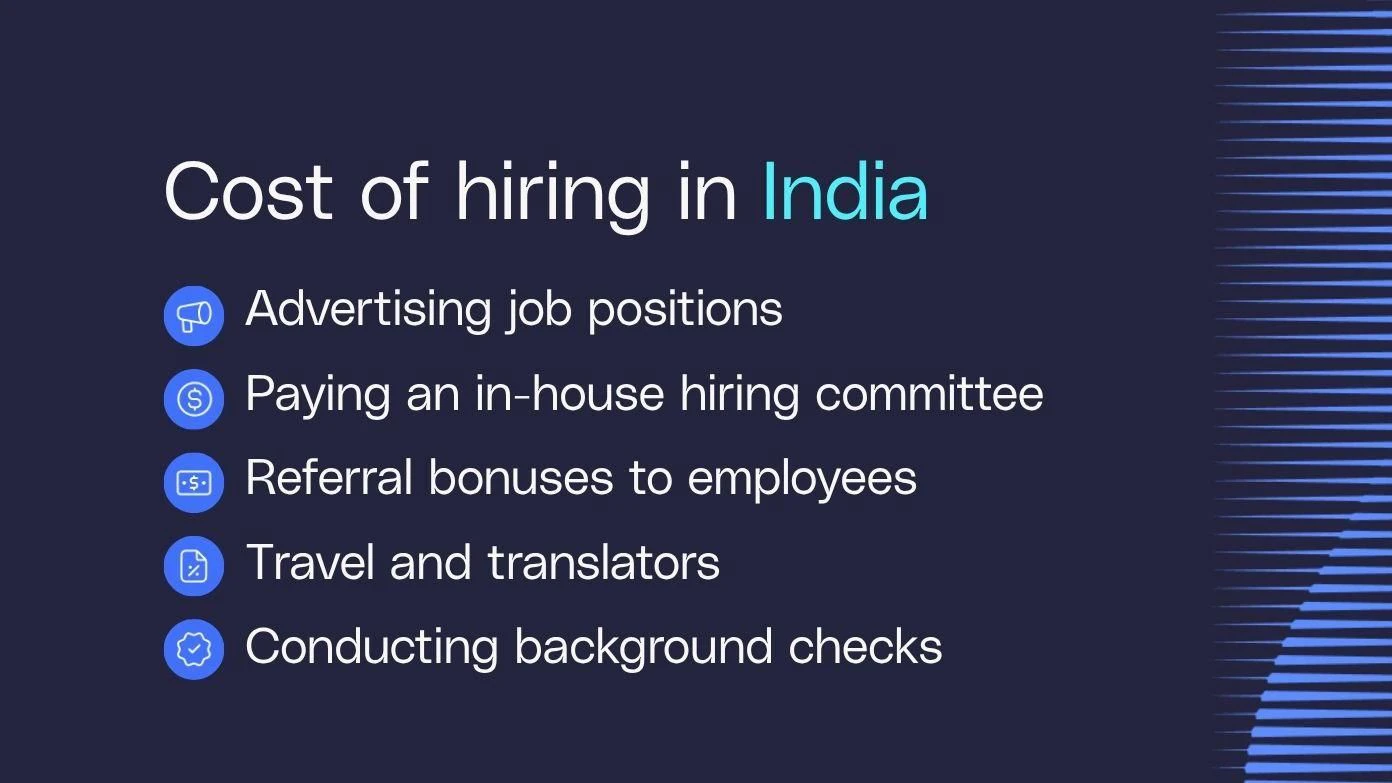
ค่าใช้จ่ายในการจ้างพนักงานในอินเดีย
ไม่ว่าคุณจะจ้างพนักงานคนเดียวหรือทั้งทีม คุณจะต้องรับผิดชอบค่าใช้จ่ายหลายอย่าง งบประมาณสําหรับสิ่งต่อไปนี้:
- การจัดตั้งนิติบุคคล (เว้นแต่คุณจะร่วมมือกับ นายจ้างที่จดทะเบียน)
- โฆษณางาน
- ค่าใช้จ่ายในการสรรหาและตรวจสอบผู้สมัครงาน
- เงินเดือน
- ภาษี
- เงินเดือน
- ประโยชน์
- โบนัส
- เบี้ยเลี้ยง
- ประกันภัย
- การท่องเที่ยว
- ผู้แปล (ถ้ามี)
คุณควรคํานึงถึงเงินสมทบจากนายจ้างและสวัสดิการตามกฎหมายด้วย ซึ่งอาจรวมถึงการสมทบเงินให้กับโครงการประกันสังคม กองทุนสํารอง และอื่น ๆ
ตามแหล่งข้อมูลที่ได้รับการยืนยันจาก G-P Gia ประมาณภาระงานตามกฎหมายที่สมเหตุสมผลในอินเดียอยู่ที่ประมาณ 7–12% ของยอดเงินเดือนรวม แต่เปอร์เซ็นต์จริงขึ้นอยู่กับโครงสร้างเงินเดือน คุณสมบัติ และสถานะการทํางาน
บริษัทจำเป็นต้องมีอะไรบ้างในการจ้างพนักงานในอินเดีย?
หากคุณวางแผนจะก่อตั้งองค์กรของตัวเองเพื่อจ้างพนักงานงานในอินเดียโดยตรง คุณจะต้องครอบคลุมสิ่งจําเป็นหลายประการ
- จัดตั้งนิติบุคคล
- จดทะเบียนบริษัทของคุณกับ กระทรวงกิจการบริษัท (MCA) ผ่านพอร์ทัล SPICe+ (Proforma แบบง่ายสําหรับการจดทะเบียนบริษัททางอิเล็กทรอนิกส์ Plus)
- รับใบรับรองการสอบสวนของบริษัท
- ขอหมายเลขบัญชีถาวร (PAN)
- ขอหมายเลขบัญชีหักภาษีและเก็บภาษี (TAN) เพื่อหักและส่งภาษีที่เกี่ยวข้อง
- ลงทะเบียนสําหรับโครงการประกันสังคมตามกฎหมาย เช่น ที่บริหารโดยองค์กรกองทุนสํารองเลี้ยงชีพพนักงาน (EPFO) และบริษัทประกันสังคมของรัฐพนักงาน (ESIC)
- เตรียมถูกกฎระเบียบ สัญญาจ้างงาน จดหมายเสนองาน และนโยบายทรัพยากรบุคคลให้สอดคล้องกับกฎหมายแรงงานของอินเดียและข้อกําหนดเฉพาะของแต่ละรัฐ
- จัดตั้งระบบการจ่ายเงินเดือนเพื่อคำนวณเงินเดือน หักภาษี และส่งเงินสมทบตามกฎหมาย (EPF, ESI, ภาษีวิชาชีพ, TDS)
การจัดตั้ง บริษัทย่อยในอินเดีย อาจใช้เวลาหลายสัปดาห์ ด้วย บริการตัวแทนนายจ้างG-P คุณสามารถจ้างพนักงานประจําในอินเดียได้โดยไม่ต้องตั้งองค์กรของตัวเอง G-P ดูแลการจ้างงาน เงินเดือน สวัสดิการ และการปฏิบัติตามกฎระเบียบท้องถิ่น ขณะที่คุณดูแลงานประจําวันของทีม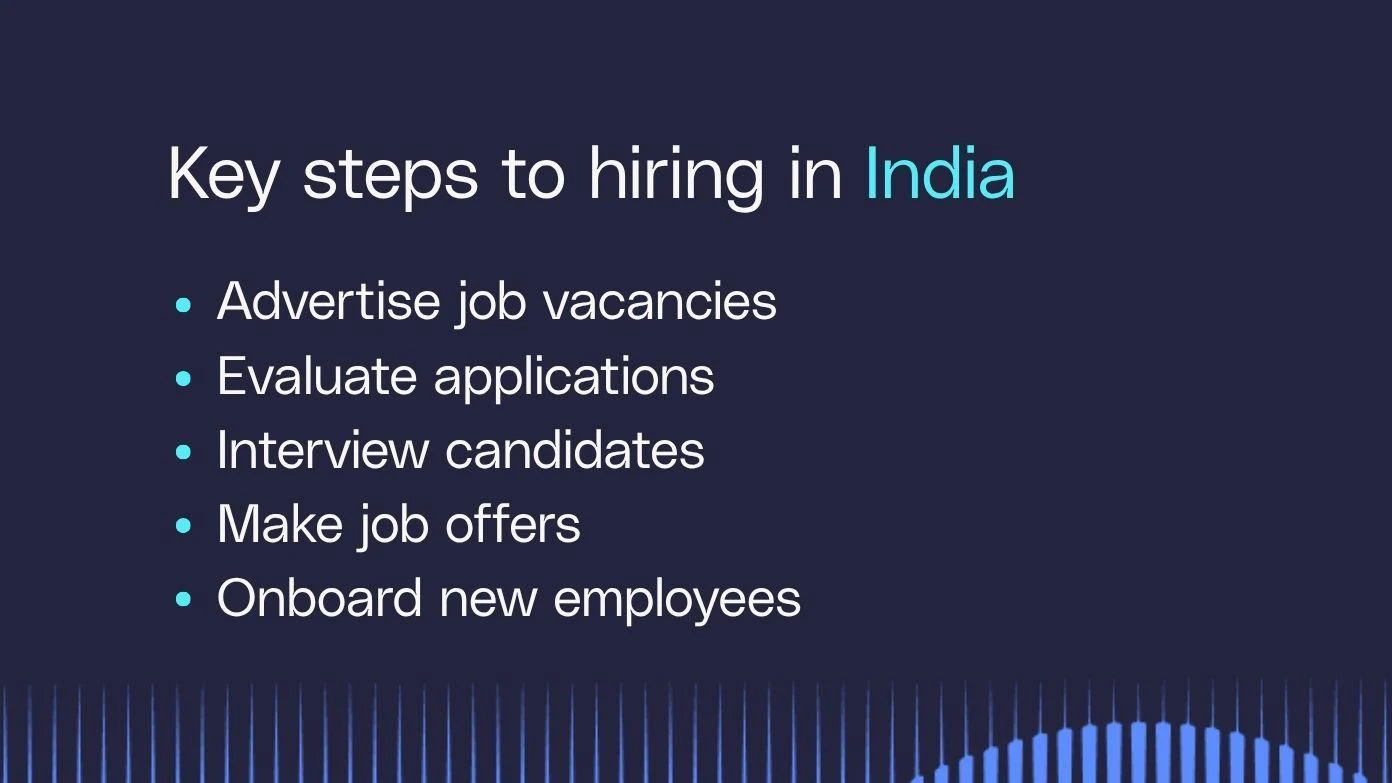
ขั้นตอนการจ้างงานในอินเดีย
เมื่อคุณพร้อม ที่จะจ้างงานในอินเดีย คุณจะได้พบกับกระบวนการที่คล้ายกับที่คุณคุ้นเคยในประเทศของคุณเอง มีขั้นตอนพื้นฐาน 5 ขั้นตอน: การประกาศรับสมัครงาน การประเมินใบสมัคร การสัมภาษณ์ผู้สมัคร การส่งข้อเสนองาน และกระบวนการเริ่มงานของพนักงานใหม่
1. ลงโฆษณาตำแหน่งงานว่างในอินเดีย
สร้างคําอธิบายงานอย่างละเอียดและกําหนดบทบาทตามความรับผิดชอบและคุณสมบัติ บางสถานประกอบการเอกชนที่มีพนักงาน 25 คนขึ้นไปจําเป็นต้องรายงานตําแหน่งงานว่างต่อสถาบันจัดหางานที่เกี่ยวข้องก่อนที่จะเติมเต็มตําแหน่งเหล่านั้น ข้อกําหนดเหล่านี้เป็นส่วนหนึ่งของกรอบประกันสังคมปัจจุบันของอินเดีย
หากไม่ปฏิบัติตามข้อกําหนดการแจ้งเตือน อาจนําไปสู่บทลงโทษและปัญหากฎระเบียบ ตรวจสอบข้อกําหนดที่เกี่ยวข้องกับบริษัทของคุณก่อนโพสต์ประกาศและครอบคลุมตําแหน่งงาน
เมื่อพูดถึงการเชื่อมต่อกับผู้สมัครงานที่มีศักยภาพ Naukri, LinkedIn, Indeed และ Monster ล้วนเป็นเว็บไซต์หางานยอดนิยมในอินเดีย
2. การประเมินใบสมัครงานในอินเดีย
รวบรวมใบสมัครและตรวจสอบประวัติย่อ คัดกรองผู้สมัครตามคุณสมบัติ ประสบการณ์ และความเหมาะสมกับตําแหน่งงาน ให้คําถามที่คัดกรองเน้นไปที่งานที่ทําและข้อกําหนดของตําแหน่ง หลีกเลี่ยงคําถามหรือการคัดเลือกที่อาจเลือกปฏิบัติ
3. การสัมภาษณ์ผู้สมัครงานในอินเดีย
ต่อไป สัมภาษณ์ผู้สมัครที่ติดอันดับสุดท้ายของคุณ คุณสามารถสัมภาษณ์งานได้ทั้งแบบพบหน้าหรือออนไลน์จากทุกที่ในโลก ใช้คําถามที่มีโครงสร้างซึ่งเน้นคุณสมบัติและความสามารถโดยรวมของผู้สมัครในการรับตําแหน่ง
G-P Gia™ ก็สามารถช่วยคุณในกระบวนการนี้ได้เช่นกัน ใช้มันเพื่อสร้างคําถามสัมภาษณ์ที่สอดคล้องกับกฎระเบียบการจ้างงานที่เกี่ยวข้องทั้งหมดในอินเดีย
4. การเสนอตำแหน่งงานในอินเดีย
เมื่อคุณเลือกผู้สมัครแล้ว คุณสามารถเสนออย่างเป็นทางการและจัดเตรียมเอกสารพนักงานที่เหมาะสมได้ คุณจะต้องติดต่อ ร่างข้อตกลงการจ้างงาน และรวบรวมเอกสารหลักหลายฉบับเพื่อเริ่มต้นความสัมพันธ์ในการทํางานอย่างเป็นทางการ
เอกสารที่คุณจะต้องใช้ในการจ้างงานพนักงานในอินเดีย
ขั้นตอนถัดไปคือการรวบรวมเอกสารที่ถูกต้องเพื่อจัดการเรื่องเงินเดือนและการลงทะเบียนตามกฎหมาย ประเภทของเอกสารที่คุณต้องการ และสิ่งที่ควรขอจากผู้สมัครงาน อาจแตกต่างกันไปตามตําแหน่งงาน บริษัทของคุณ และข้อบังคับที่เกี่ยวข้อง
- จดหมายเสนองานที่ลงนาม/ข้อตกลงการจ้างงาน: เอกสารนี้ระบุเงื่อนไขการจ้างงานเฉพาะ สัญญาที่ลงนามควรสะท้อนค่าตอบแทน สวัสดิการ ระยะเวลาแจ้งล่วงหน้า และข้อกําหนดอื่น ๆ ที่เกี่ยวข้อง
- หลักฐานยืนยันตัวตนและที่อยู่: คุณจะต้องรวบรวมบัตรประชาชนที่ออกโดยรัฐบาลและหลักฐานที่อยู่ปัจจุบันสําหรับกระบวนการจ้างงานและเงินเดือนหลายอย่าง ข้อกําหนดเฉพาะอาจแตกต่างกันไปตามรัฐและนายจ้าง
- PAN และรายละเอียดบัญชีธนาคาร: ข้อมูล PAN จําเป็นสําหรับวัตถุประสงค์ด้านภาษีและเงินเดือน ข้อมูลบัญชีธนาคารช่วยให้สามารถจ่ายเงินเดือนได้
- ข้อมูลเงินเดือนและการลงทะเบียนตามกฎหมาย: รายละเอียดเหล่านี้จําเป็นสําหรับการลงทะเบียนพนักงานใหม่สําหรับโครงการที่จําเป็น เช่น EPF และ ESI และเพื่อสนับสนุนการบริหารเงินเดือน
- คุณสมบัติและบันทึกการทํางานที่ขึ้นอยู่กับบทบาท: หากจําเป็น คุณสามารถขอเอกสารที่รับรองการศึกษา ประสบการณ์ด้านการทํางาน และใบรับรองเฉพาะตําแหน่งของผู้สมัคร
5. การปฐมนิเทศพนักงานใหม่ในอินเดีย
ตอนนี้คุณสามารถ รับพนักงานใหม่เข้ามาทํางานได้แล้ว กรอกแบบฟอร์มจดทะเบียนตามกฎหมายที่จําเป็น (EPF, ESI, ภาษีวิชาชีพ (ถ้ามี) และจัดการฝึกอบรมเบื้องต้น นโยบายบริษัท และการฝึกอบรมเบื้องต้น
ถ้าคุณใช้บริการ G-P ตัวแทนนายจ้าง คุณก็ไม่ต้องกังวลเรื่องงานเอกสารของกระบวนการเริ่มงานของพนักงานใหม่ เราทําให้กระบวนการเป็นไปอย่างราบรื่น เพื่อให้คุณสามารถมุ่งเน้นไปที่การฝึกอบรมพนักงานใหม่และบูรณาการพวกเขาเข้ากับวัฒนธรรมของบริษัทของคุณ
การว่าจ้างผู้รับเหมาในอินเดีย
การทํางานกับ ผู้รับเหมาอิสระในอินเดีย จะช่วยให้คุณมีความยืดหยุ่นมากขึ้นเมื่อเข้าสู่ตลาดหรือจ้างบุคลากรผู้มีความสามารถ สําหรับงานที่เน้นโครงการ คุณสามารถสร้างตัวตนในอินเดีย ทํางานกับมืออาชีพที่มีทักษะเฉพาะทาง และขยายธุรกิจของคุณโดยไม่ต้องพึ่งพาพนักงานประจํา ผู้รับเหมาในอินเดียอาจนําความรู้เกี่ยวกับพฤติกรรมผู้บริโภค กฎระเบียบ และแนวปฏิบัติทางธุรกิจในท้องถิ่นมาให้ด้วย
การจ้างผู้รับเหมาช่วยให้คุณมีความยืดหยุ่นในการปรับแรงงานตามความต้องการทางธุรกิจของคุณได้อย่างง่ายดาย อย่างไรก็ตาม ผู้รับเหมาไม่สามารถทดแทนพนักงานได้ในทุกสถานการณ์ ความสัมพันธ์ในการทํางานต้องสะท้อนถึงการจัดการผู้รับจ้างที่เป็นอิสระอย่างแท้จริงตามกฎหมายอินเดีย
ก่อนที่คุณจะทำข้อตกลงกับผู้จ้างงานอิสระในอินเดีย ให้พิจารณาสิ่งต่อไปนี้:
1. พนักงานประจำกับผู้รับเหมาอิสระในอินเดีย
สิ่งสําคัญคือต้องเข้าใจความแตกต่างระหว่างพนักงานกับผู้รับเหมาอิสระ พนักงานมักทํางานภายใต้ความสัมพันธ์การจ้างงาน พวกเขาได้รับค่าตอบแทนและสวัสดิการที่เกี่ยวข้องเป็นการแลกเปลี่ยนกับงานของตน ขณะเดียวกัน ผู้รับเหมาอิสระให้บริการภายใต้ข้อตกลงสัญญาแยกต่างหาก พวกเขามักจะมีความเป็นอิสระมากขึ้นในการทํางาน
ความแตกต่างมีความสําคัญ การจัดประเภทผู้รับจ้างผิด เช่น พนักงาน อาจสร้างความเสี่ยงทางการเงินและการปฏิบัติตามกฎระเบียบอย่างมากสําหรับธุรกิจของคุณ
2. วิธีการชำระเงินให้ผู้รับเหมาในอินเดีย
G-P Contractor™ ช่วยขจัดกระบวนการที่ยุ่งยากและใช้เวลานานในการจ้างและจ่ายค่าจ้างผู้รับเหมาระหว่างประเทศ คุณสามารถสร้างและออกสัญญา รวมถึงจ่ายเงินให้กับผู้รับเหมาได้เพียงไม่กี่คลิก พร้อมสนับสนุนกระบวนการบริหารจัดการที่ถูกกฎระเบียบ ผู้รับจ้าง
จ้างพนักงานและผู้รับเหมาในอินเดียกับ G-P
การจ้างงานในอินเดียไม่จําเป็นต้องยาก แม้ว่าจะมีกฎเกณฑ์และข้อกําหนดทางกฎหมายเฉพาะที่ต้องจัดการ แต่เราสามารถช่วยให้คุณเข้าถึงกลุ่มมืออาชีพที่มีความสามารถจํานวนมากได้อย่างมั่นใจ
แพลตฟอร์ม™การจ้างงานระดับโลกของเราและผลิตภัณฑ์ที่ขับเคลื่อนด้วยปัญญาประดิษฐ์ บริการตัวแทนนายจ้าง ผู้รับเหมา และ Giaช่วยให้บริษัททุกขนาดสามารถสร้างและบริหารทีมงานระดับโลกได้
G-P เป็น ผู้นําที่ได้รับการยอมรับในด้านการจ้างงานระดับโลก ด้วยประสบการณ์มากกว่าทศวรรษ ทีมผู้เชี่ยวชาญด้านทรัพยากรบุคคล กฎหมาย และการปฏิบัติตามกฎระเบียบที่ใหญ่ที่สุด และมีฐานความรู้เฉพาะทางระดับโลก
ทําให้การขยายไปอินเดียของคุณง่ายขึ้นด้วย G-P ติดต่อเรา หรือ จองการสาธิต วันนี้
คำถามที่พบบ่อย (FAQs)
หน้าที่หลักของนายจ้างในอินเดียคืออะไร?
ในฐานะนายจ้างใหม่ที่รับสมัครงานในอินเดีย คุณต้องปฏิบัติตามข้อกําหนดที่เกี่ยวข้องเกี่ยวกับสัญญาจ้างงาน ค่าจ้าง ภาษี ประกันสังคม สวัสดิการ และเงื่อนไขการทํางาน คุณอาจต้องลงทะเบียนและปฏิบัติตามข้อกําหนดต่าง ๆ เช่น กองทุนสํารองเลี้ยงชีพพนักงาน (EPF), ประกันสุขภาพของรัฐพนักงาน (ESI), ภาษีวิชาชีพ (ในรัฐที่เกี่ยวข้อง) และพระราชบัญญัติร้านค้าและสถานประกอบการ (หรือพระราชบัญญัติโรงงานสําหรับการผลิต)
กฎระเบียบเกี่ยวกับชั่วโมงทำงานมาตรฐานและการทำงานล่วงเวลาในอินเดียเป็นอย่างไร?
มาตรฐานภายใต้รหัสความปลอดภัย สุขภาพ และสภาพการทํางานของอินเดียคือ 8 ชั่วโมงต่อวัน และ 48 ชั่วโมงต่อสัปดาห์ บางรูปแบบสามารถอนุญาตให้ทํางานได้นานขึ้นในแต่ละวัน แต่การจ้างงานต้องเป็นไปตามเงื่อนไขบางประการ โดยทั่วไป การทํางานล่วงเวลาจะสูงกว่าค่าจ้างปกติถึงสองเท่า
คุณต้องใช้เอกสารอะไรบ้างในการจ้างงานพนักงานในอินเดีย?
เอกสารที่ใช้ร่วมกันได้แก่ ข้อตกลงการจ้างงาน ข้อมูลตัวตนและที่อยู่ รายละเอียด PAN และธนาคาร ข้อมูลการลงทะเบียนตามกฎหมาย และคุณสมบัติหรือบันทึกการทํางานเฉพาะตําแหน่ง ข้อกําหนดเอกสารที่แน่นอนจะแตกต่างกันไปตามพนักงาน สถานที่ตั้ง บทบาท และข้อบังคับที่เกี่ยวข้อง
ในอินเดีย การประกันสุขภาพเป็นสิ่งจำเป็นสำหรับพนักงานหรือไม่?
พนักงานสามารถมีสิทธิ์ได้รับความคุ้มครองค่ารักษาพยาบาล และสวัสดิการประกันสังคมอื่น ๆ ผ่านโครงการประกันสุขภาพของรัฐพนักงาน (ESI) ของอินเดีย อย่างไรก็ตาม หลายบริษัทยังมีประกันสุขภาพกลุ่มเอกชนเป็นสวัสดิการเสริม
ระยะเวลาแจ้งล่วงหน้าสําหรับการเลิกจ้างในอินเดียคือเท่าไร?
ระยะเวลาแจ้งล่วงหน้าในอินเดียขึ้นอยู่กับสัญญาจ้างงาน บทบาทของพนักงาน กฎหมายแรงงานที่ใช้บังคับ และข้อกําหนดเฉพาะของแต่ละรัฐ โดยทั่วไปจะเป็นเวลา 30 วัน แต่คุณต้องตรวจสอบข้อกําหนดและข้อบังคับที่เกี่ยวข้องกับบริษัทของคุณก่อนเลิกจ้างพนักงาน
กฎเกณฑ์สําหรับช่วงทดลองงานในอินเดียเป็นอย่างไร?
ไม่มีช่วงทดลองงานที่เป็นสากลในอินเดีย สัญญาจ้างงานมักจะกําหนดเงื่อนไขไว้