



อินโดนีเซียเป็นประเทศที่มีขนาดเศรษฐกิจที่ใหญ่ที่สุดในเอเชียตะวันออกเฉียงใต้ และเป็นตลาดสำคัญสำหรับธุรกิจระดับโลกที่ต้องการเข้าถึงกลุ่มที่มีทักษะการดำเนินการที่ผู้ดำเนินการ ผลิตภัณฑ์มวลรวมของประเทศมีมูลค่ามากกว่า USD 1 4ต. ตลาดผู้บริโภคภายในประเทศและภาคการผลิตของอินโดนีเซียเป็นเสาหลักทางเศรษฐกิจที่สำคัญ ซึ่งรวมถึงสินค้าส่งออก เช่น ชิ้นส่วนยานยนต์ อุปกรณ์อิเล็กทรอนิกส์ และสิ่งทอ
รัฐบาลดำเนินการแปรรูปทรัพยากรแร่ธาตุ เช่น นิกเกลและทองแดง เพื่อตอบสนองความต้องการของห่วงโซ่อุปทานแบตเตอรี่รถยนต์ไฟฟ้าทั่วโลก
ก่อนที่จะขยายธุรกิจไปอินโดนีเซีย คุณจำเป็นต้องเข้าใจเรื่องสัญญา ภาษี ค่าจ้าง สวัสดิการ และกฎหมายแรงงานอื่นๆ ไกด์ของเราจะบอกทุกสิ่งที่คุณจำเป็นต้องรู้เกี่ยวกับการจ้างงานในอินโดนีเซีย
สิ่งที่ควรรู้ก่อนจ้างงานในอินโดนีเซีย

หากคุณกำลังขยายธุรกิจของคุณไปยังอินโดนีเซียเป็นครั้งแรก มีข้อกำหนดทางกฎหมายที่สำคัญที่ต้องระวัง บรรทัดฐานและกฎหมายเหล่านี้มีอิทธิพลต่อแนวปฏิบัติในการจ้างงานในอินโดนีเซียและความสัมพันธ์ระหว่างนายจ้าง-พนักงานในหลายๆ ด้าน รวมถึง ระบบและสิทธิประโยชน์
ตัวแทนทรัพยากรบุคคลระดับโลกที่ขับเคลื่อนด้วยปัญญาประดิษฐ์ของเราสามารถตอบคําถามการปฏิบัติตามกฎระเบียบที่ยากที่สุดของคุณในG-P Gia™ ประเทศ รวมถึงอินโดนีเซีย และทุก รัฐของสหรัฐฯ 50 50 ลดการพึ่งพาที่ปรึกษาภายนอกและลดเวลาและค่าใช้จ่ายในการปฏิบัติตามกฎระเบียบได้ถึง 95% ด้วย Gia
ต่อไปนี้คือ 5 สิ่งที่คุณควรรู้เกี่ยวกับการจ้างงานในอินโดนีเซีย
1. สัญญาและการเลิกสัญญาในอินโดนีเซีย
ความสัมพันธ์ในการจ้างงานทั้งหมดจำเป็นต้อง มีสัญญาไม่มีกำหนด (PKWTT) หรือสัญญาจ้างแน่นอน (PKWT) สัญญาระยะเวลาคงที่สามารถใช้งานได้สูงสุดห้าปี รวมถึงการต่ออายุ สัญญาระยะเวลาที่ไม่มีกำหนดไม่มีวันสิ้นสุด ที่กำหนด สัญญาทั้งหมดจะต้องเขียนเป็นภาษาอินโดนีเซีย อนุญาตให้ทำสัญญาสองภาษา แต่หากมีความไม่สอดคล้องกันเวอร์ชันภาษาอินโดนีเซียมีอำนาจ สัญญาจ้างงานต้องระบุหน้าที่การงาน ค่าตอบแทน สวัสดิการ และข้อกำหนดในการเลิกจ้าง
การคุมประพฤติจะอนุญาตเฉพาะสัญญาที่ไม่อนุญาตเท่านั้น ระยะเวลาทดลองงานสูงสุดคือสามเดือน
2. เงินเดือนและภาษีในอินโดนีเซีย
นายจ้างต้องลงทะเบียนพนักงานและส่งเงินสมทบเข้า ระบบประกันสังคมของอินโดนีเซีย: BPJS Kesehatan (ประกันสุขภาพ) และ BPJS Ketenagakerjaan (การบาดเจ็บจากการทํางาน เงินออมชราภาพ/เกษียณอายุ เงินบํานาญ และผลประโยชน์การเสียชีวิต) อัตราการบริจาคคือ:
- ประกันสุขภาพ: 1% จากพนักงาน และ 4% จากนายจ้าง (เงินเดือนสูงสุดถึง IDR 12ล้านต่อเดือน)
- อุบัติเหตุจากการทํางาน: 0.24%–174% จากนายจ้าง ขึ้นอยู่กับการจัดประเภทความเสี่ยง
- เงินออมเพื่อการเกษียณ (JHT): 2% จากพนักงานและ 3.7% จากนายจ้าง
- ผลประโยชน์บํานาญ (JP): 1% จากพนักงาน และ 2% จากนายจ้าง (สําหรับเงินเดือนสูงสุดถึง IDR 105M+ ต่อเดือน)
- ผลประโยชน์กรณีเสียชีวิต: 0.3% จากนายจ้าง
พนักงานต้องเสียภาษีเงินได้ประจำปีตามอัตราก้าวหน้า สำหรับการจ่ายเงินเดือน จะใช้ค่าอัตราภาษีเฉลี่ย (TER) ในการหักภาษีรายเดือน (มกราคม–พฤศจิกายน) การคำนวณประจำปีสุดท้ายใช้อัตราก้าวหน้าในเดือนธันวาคม อัตราโปรเกรสซีฟสำหรับ 2025 คือ:
- 5% สำหรับรายได้ต่อปีไม่เกิน 60ล้านรูเปียห์
- 15% สำหรับ IDR 60–250ล้าน
- 25% สำหรับ IDR 250–500ล้าน
- 30% สำหรับ IDR 500M–5B
- 35% สำหรับรายได้ที่สูงกว่า 5ล้านรูเปียห์
3. ค่าจ้างและชั่วโมงทำงานในอินโดนีเซีย
ชั่วโมงทํางานในหนึ่งสัปดาห์คือ 40 ชั่วโมง นี่คือเจ็ดชั่วโมงต่อวันเป็นเวลาหกวันหรือแปดชั่วโมงต่อวันเป็นเวลาห้าวัน อนุญาตให้ทํางานล่วงเวลาได้สูงสุดสี่ชั่วโมงต่อวันและ 18 ชั่วโมงต่อสัปดาห์ ค่าล่วงเวลา คือ 150% ของค่าจ้างรายชั่วโมงปกติสําหรับชั่วโมงแรก และ 200% สําหรับชั่วโมงต่อๆ ไป ต้องได้รับความยินยอมเป็นลายลักษณ์อักษรจากพนักงานสําหรับการทํางานล่วงเวลา
พนักงานจะได้รับค่าจ้างขั้นต่ำ 12 วันประจำปี หลังจากทำงานครบ 12 เดือน วันหยุดในอินโดนีเซียถูกกำหนดโดยรัฐบาลในแต่ละปี ใน 2025 มีวันหยุดราชการระดับชาติ 17 วัน
ไม่มีขีดจํากัดใน วันป่วย พนักงานจะได้รับ:
- 100% ของเงินเดือนในช่วงสี่เดือนแรกของการเจ็บป่วย
- 75% ในอีกสี่เดือนข้างหน้า
- 50% สำหรับสี่เดือนถัดไป
- 25% หลังจากนั้นจนกว่าจะสิ้นสุดการจ้างงาน
การลาคลอด บุตรได้รับค่าจ้างเต็มจํานวนสามเดือน โดยมีความเป็นไปได้ที่จะขยายเวลาได้ถึงหกเดือนหากจําเป็นทางการแพทย์ สามเดือนแรกมีค่าจ้าง 100% และสามเดือนสุดท้ายอยู่ที่ 75% พ่อจะได้รับค่าจ้างลาคลอดบุตรสองวัน โดยเพิ่มอีกสามวันตามข้อตกลงกับนายจ้าง
การลาโดยได้รับค่าจ้างสำหรับเหตุการณ์ในครอบครัว เช่น การแต่งงานหรือพิธีรับศีลล้างบาป ไม่ใช่ข้อบังคับ แต่สามารถจัดให้ได้ตามนโยบายของบริษัท
4. ตลาดแรงงานและกำลังแรงงานในอินโดนีเซีย
ลองทำงานของอินโดนีเซียเป็นหนึ่งในบริษัทที่ใหญ่ที่สุดในโลก การประเมินล่าสุดระบุว่ามีผู้เสียชีวิต 140 ล้านคนจากประชากรทั้งหมด 277 ล้านคน ด้วยเหตุนี้ อินโดนีเซียจึงเป็นประเทศที่มีแรงงานมากเป็นอันดับสี่ของโลก รองจากจีน อินเดีย และสหรัฐอเมริกา
อินโดนีเซียเป็นสมาชิกที่กระตือรือร้นของกลุ่ม G20 โดยมีส่วนร่วมในการอภิปรายและริเริ่มทางเศรษฐกิจระหว่างประเทศ
ประมาณ 16–18% ของคนหนุ่มสาวในอินโดนีเซียมีวุฒิการศึกษาระดับสูงกว่ามัธยมศึกษา
5. การปฏิรูปกฎหมายแรงงานที่กำลังดำเนินอยู่ในอินโดนีเซีย
กฎหมายรวมเกี่ยวกับการสร้างงานได้รับการผ่านใน 2020 และแก้ไขใน 2023 กฎหมายดังกล่าวได้นำมาซึ่งการปฏิรูปแรงงานเพื่อทำให้ประเทศอินโดนีเซียเป็นที่น่าดึงดูดใจสำหรับการลงทุนมากขึ้น ช่วยลดความยุ่งยากในการจ้างงาน เพิ่มความยืดหยุ่นในการทำงานล่วงเวลา และผ่อนคลายข้อจำกัดในการจ้างงานบุคคลภายนอกและพนักงานที่ขาติในการจ้างงาน
ระเบียบรัฐบาลฉบับที่ 35/2021 (GR35) ได้กำหนดการเปลี่ยนแปลงหลายประการของกฎหมายรวม กำหนดให้นายจ้างต้องจ่ายเงิน ให้กับลูกจ้างตามสัญญาจ้างแน่นอนเมื่อสัญญาสิ้นสุดลงหรือขยายออกไป แต่ไม่ใช่สำหรับการออกโดยสมัครใจ
ศูนย์กลางการจ้างงานชั้นนำในอินโดนีเซีย
บางเมืองในอินโดนีเซียมีชื่อเสียงในด้านอุตสาหกรรมเฉพาะด้าน การรู้ว่าแต่ละภูมิภาคมีอะไรให้บ้าง จะช่วยให้คุณมุ่งเน้นการสรรหาบุคลากรไปยังจุดที่เหมาะสมและเติมเต็มตำแหน่งงานได้เร็วขึ้น
ศูนย์กลางดังกล่าวของผู้ที่เป็นฮับชั้นนำในอินโดนีเซีย ได้แก่:
- จาการ์ตา เป็นเมืองหลวงและเมืองที่ใหญ่ที่สุด เป็น เมืองที่มีประชากรมากที่สุดในโลก จาการ์ตาเป็นศูนย์กลางธุรกิจการเงินและเทคโนโลยีหลักของประเทศซึ่งเป็นที่ตั้งของสํานักงานใหญ่ของบริษัทข้ามชาติและท้องถิ่นหลายแห่ง
- สุราบายา เป็นที่ตั้งของท่าเรือตันจุงเปรัก เมืองนี้เป็นท่าเรือที่คึกคักเป็นอันดับสองของอินโดนีเซีย และรองรับตู้คอนเทนเนอร์มาตรฐานขนาด 20ฟุตมากกว่า 3 ล้านหน่วยต่อปี เป็นประตูหลักของชวาตะวันออกและภูมิภาคอินโดนีเซียตะวันออกที่กว้างขึ้น
- บันดุงเป็นที่ รู้จักในด้านมหาวิทยาลัยและอุตสาหกรรมสร้างสรรค์ มันถูกเรียกว่าปารีสแห่งชวา ประมาณ 56% ของกิจกรรมทางเศรษฐกิจของบันดุงเกี่ยวข้องกับการออกแบบ
- เมดาน เป็นเมืองที่ใหญ่ที่สุดในสุมาตรา เป็นประตูสำคัญสู่ช่องแคบมะละกา เมดาน เป็นศูนย์กลางธุรกิจการเกษตร การค้า และการผลิต เป็นศูนย์กลางการส่งออกน้ำมันปาล์มและยางของอินโดนีเซีย
- เบกาซี เป็นพื้นที่อุตสาหกรรมและการผลิตขนาดใหญ่ที่มีโรงงานและบริษัทโลจิสติกส์มากมาย ที่นี่ มีบริษัทผู้ผลิตมากกว่า 10000 แห่ง
อุตสาหกรรมหลักในอินโดนีเซีย
การทำความเข้าใจอุตสาหกรรมชั้นนำของอินโดนีเซียช่วยให้คุณได้รับเงินเดือนและผลประโยชน์ที่สูงเกินมาตรฐาน คุณสามารถใช้ข้อมูลเชิงลึกนี้ในการตัดสินใจอย่างชาญฉลาดว่าจะลงทุนและขยายกลุ่มข้อมูลของคุณที่ใดในโดเมนของคุณ
อุตสาหกรรมชั้นนำในอินโดนีเซีย ได้แก่:
- การผลิต: อินโดนีเซียมีภาคการผลิตที่แข็งแกร่ง โดยเฉพาะในอุตสาหกรรมยานยนต์ อิเล็กทรอนิกส์ สิ่งทอ รองเท้า และสินค้าอุปโภคบริโภค บริษัทข้ามชาติหลายแห่งได้ตั้งโรงงานและห่วงโซ่อุปทานที่นี่ ภาคการผลิตมีส่วนแบ่ง 20% ของผลิตภัณฑ์มวลรวมของอินโดนีเซีย นี่เป็นสัดส่วนสูงสุดในบรรดาประเทศอาเซียน
- บริการด้านไอทีและดิจิทัล: ภาคเทคโนโลยีของประเทศกําลังเติบโต โดยมีระบบนิเวศสตาร์ทอัพที่เฟื่องฟูในจาการ์ตาและบันดุง เศรษฐกิจดิจิทัลของพวกเขาขับเคลื่อนโดยอีคอมเมิร์ซและเทคโนโลยีทางการเงิน (ฟินเทค)
- บริการธนาคารและการเงิน: ภาคการเงินของอินโดนีเซียกําลังขยายตัว โดยมีโอกาสในด้านธนาคาร ประกันภัย เทคโนโลยีทางการเงิน (ฟินเทค) และบริการด้านการลงทุน การชําระเงินดิจิทัลเป็นแหล่งรายได้หลักของเทคโนโลยีทางการเงิน (ฟินเทค) ในประเทศ (7344% ในปี 2024)
- เกษตรกรรมและธุรกิจเกษตร: อินโดนีเซียเป็นหนึ่งใน ผู้ผลิตน้ํามันปาล์ม ยางพารา กาแฟ และโกโก้ที่ใหญ่ที่สุดในโลก ภาคเกษตรกรรมของประเทศมีความเชี่ยวชาญในด้านการผลิต การแปรรูป และการส่งออก
- พลังงานและการขุด: อินโดนีเซียอุดมไปด้วยทรัพยากรธรรมชาติ รวมถึงน้ำมันก๊าซถ่านหินและแร่ธาตุ ประเทศนี้มีสำรองนิกเกิลที่ใหญ่ที่สุดในโลกและเป็นผู้ผลิตดีบุกบ๊อกไซต์และโคบอลต์ชั้นนำระดับโลก มีโอกาสในการสกัดแปรรูปและบริการสนับสนุน
ค่าใช้จ่ายในการจ้างพนักงานในอินโดนีเซีย
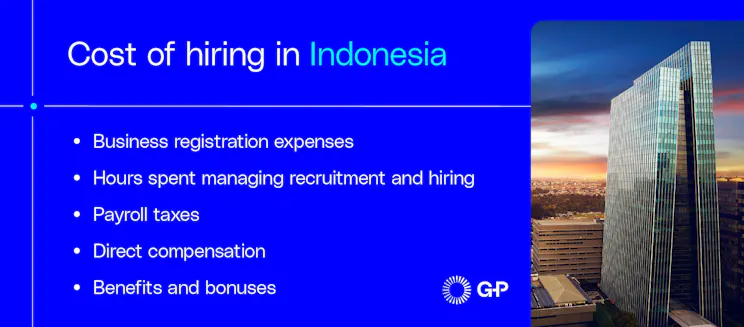
ไม่ว่าคุณจะจ้างพนักงานเพียงคนเดียวหรือทั้งทีมในอินโดนีเซีย ค่าใช้จ่ายก็เป็นสิ่งที่หลีกเลี่ยงไม่ได้ จัดสรรงบประมาณสำหรับรายการต่อไปนี้:
- การจัดตั้งนิติบุคคล (เว้นแต่คุณจะเป็นพันธมิตรกับ นายจ้างที่มีประวัติ)
- การลงโฆษณาตำแหน่งใหม่
- จ่ายโบนัสแนะนำพนักงานที่มีเครือข่ายในอินโดนีเซีย
- การจ่ายค่าจ้างคณะกรรมการจ้างงานในองค์กร
- การเดินทางไปและกลับจากอินโดนีเซีย รวมถึงที่พักโรงแรม อาหาร และการเดินทาง
- ร่วมมือกับนักแปลในการร่างเอกสารหรืออำนวยความสะดวกในการสนทนา (หากจำเป็น)
- การใช้บริการตรวจสอบประวัติเพื่อคัดกรองผู้สมัคร
- ร่าง สัญญาจ้างงาน ทบทวนกฎหมาย และปรึกษาหารือกับทรัพยากรบุคคลและผู้เชี่ยวชาญด้านกฎหมาย
- ค่าใช้จ่ายในการจัดหาคอมพิวเตอร์ โทรศัพท์ และใบอนุญาตซอฟต์แวร์
- เอกสารแนะนำตัวและการฝึกอบรมเบื้องต้น
- ค่าใช้จ่ายในการดูแลรักษาบันทึกและเอกสารด้านภาษีและเงินเดือนที่จำเป็น
ตามแหล่งข่าวที่ได้รับการตรวจสอบจาก G-P Verified Sources จาก Gia อัตราภาระในอินโดนีเซีย ซึ่งรวมถึงค่าใช้จ่ายที่เกิดขึ้นนอกเหนือจากเงินเดือน อยู่ที่ประมาณ 10–12% ไม่รวมประกันอุบัติเหตุซึ่งอาจแตกต่างกันไป
บริษัท จำเป็นต้องมีอะไรในการจ้างพนักงานในอินโดนีเซีย?
โปรดตรวจสอบให้แน่ใจว่าคุณได้เตรียมสิ่งสำคัญเหล่านี้ครบถ้วนก่อนที่จะขยายทีมของคุณในอินโดนีเซีย:
- ต้องขอเอกสารจัดตั้งบริษัท หนังสืออนุมัติจากกระทรวงกฎหมายและสิทธิมนุษยชน และใบรับรองการจดทะเบียนบริษัท
- ลงทะเบียนขอหมายเลขประจำตัวผู้เสียภาษีนิติบุคคลกับสำนักงานสรรพากรของอินโดนีเซีย
- รับหมายเลข NIB ผ่านระบบ OSS ซึ่งทำหน้าที่เป็นรหัสลงทะเบียนธุรกิจที่ไม่ซ้ำกัน
- เปิดบัญชีธนาคารในประเทศในชื่อบริษัทของคุณเพื่อใช้ในการจ่ายเงินเดือนและชำระภาษีตามกฎหมาย
- ลงทะเบียนบริษัทและพนักงานของคุณกับ BPJS Kesehatan และ BPJS Ketenagakerjaan
- จัดทำสัญญาจ้างงานเป็นภาษาอินโดนีเซีย
- ตรวจสอบให้แน่ใจว่าปฏิบัติตามกฎระเบียบด้วยค่าแรงขั้นต่ำ ชั่วโมงการทำงาน และผลประโยชน์
- ขึ้นอยู่กับประเภทธุรกิจ อาจจำเป็นต้องมีใบอนุญาตหรือเอกสารอนุญาตเพิ่มเติม
การจัดตั้งบริษัทในอินโดนีเซียอาจใช้เวลาหลายสัปดาห์หรือหลายเดือน ใช้ G-P ให้บริการตัวแทนนายจ้าง เพื่อจ้างงานพนักงานเต็มเวลาในอินโดนีเซียโดยไม่ต้องจัดตั้งองค์กรของคุณเอง สร้างทีมของคุณด้วยต้นทุนที่ต่ําลงและอุ่นใจได้ว่าคุณทําตามข้อกําหนด
ขั้นตอนการจ้างพนักงานในอินโดนีเซีย
ขั้นตอนการทำงานในอินโดนีเซียนั้นคล้ายคลึงกับสิ่งที่คุณน่าจะคุ้นเคยในประเทศของคุณเอง แนวทางการปฏิบัติงานมีขั้นตอนพื้นฐาน 5 ขั้นตอน ได้แก่ การโฆษณางาน การประเมินใบสมัคร การสัมภาษณ์ผู้สมัคร การส่งข้อเสนองาน และระบบเริ่มงานของพนักงานใหม่ พนักงานใหม่
1. ลงโฆษณาตำแหน่งงานว่างในอินโดนีเซีย
จัดทำรายละเอียดงานที่ชัดเจน โดยระบุความรับผิดชอบ คุณสมบัติ และค่าตอบแทน ลงประกาศรับสมัครงานในเว็บไซต์หางานทั้งในประเทศและต่างประเทศ
Jobstreet, Indeed Indonesia, Glints, KitaLulus และ Karir เป็นบอร์ดรับสมัครงานยอดนิยมในอินโดนีเซีย
2. การประเมินใบสมัครงานในอินโดนีเซีย
ตรวจสอบประวัติย่อและจดหมายสมัครงานเพื่อคัดเลือกผู้สมัครที่ตรงตามคุณสมบัติที่กำหนด
3. การสัมภาษณ์ผู้สมัครงานในอินโดนีเซีย
ดำเนินการสัมภาษณ์เบื้องต้นผ่านทางโทรศัพท์ วิดีโอ หรือการสัมภาษณ์แบบตัวต่อตัว Gia สามารถช่วยคุณสร้างคำถามที่สอดคล้องกับกฎหมายต่อต้านการเลือกปฏิบัติในประเทศไทย เพื่อให้คุณสามารถค้นหาคนที่เหมาะสมที่สุดสำหรับตำแหน่งงานนั้นๆ พร้อมทั้งปฏิบัติตามกฎระเบียบท้องถิ่นได้
จัดกำหนดการสัมภาษณ์หรือการประเมินเพิ่มเติมตามความจำเป็น ตรวจสอบประวัติการทำงาน การศึกษา และตรวจสอบประวัติส่วนตัวหากจำเป็น
4. การเสนอตำแหน่งงานในอินโดนีเซีย
เตรียมกฎระเบียบข้อบังคับการจ้างงานเป็นภาษาอินโดนีเซีย (สองภาษาหากจำเป็น) ระบุเงินเดือน สวัสดิการ หน้าที่การงาน และเงื่อนไขการเลิกจ้างให้ชัดเจน
5. การปฐมนิเทศพนักงานใหม่ในอินโดนีเซีย
ตอนนี้คุณสามารถ เตรียมความพร้อมพนักงานใหม่ได้แล้ว ลงทะเบียนพนักงานใหม่ของคุณกับ BPJS Kesehatan และ BPJS Ketenagakerjaan ตั้งค่าบัญชีเงินเดือน ให้การปฐมนิเทศ และตรวจสอบให้แน่ใจว่าพนักงานเข้าใจนโยบายของบริษัทของคุณ เก็บบันทึกการจ้างงานที่ถูกต้องและอยู่ภายใต้กฎหมายการจ้างงานของอินโดนีเซีย
หากคุณทำงานร่วมกับ ผู้ให้บริการตัวแทนนายจ้าง เช่น G-P คุณจะไม่ต้องกังวลกับภาระด้านธุรการของบริษัทเริ่มงานของพนักงานใหม่ เราจะปรับปรุงกระบวนการ เพื่อให้คุณสามารถมุ่งเน้นไปที่การฝึกอบรมพนักงานใหม่ของคุณและบูรณาการเข้ากับวัฒนธรรมบริษัทของคุณ
การว่าจ้างผู้รับเหมาในอินโดนีเซีย
การทำงานร่วมกับ ผู้รับเหมาอิสระในอินโดนีเซีย อาจเป็นวิธีที่ประหยัดต้นทุนในการทดสอบตลาดและสร้างฐานธุรกิจโดยไม่ต้องผูกมัดกับพนักงานประจำ ผู้รับเหมาที่อยู่ในอินโดนีเซียเข้าใจพฤติกรรมกฎและแนวทางปฏิบัติทางธุรกิจของผู้บริโภคในท้องถิ่น พวกเขาจะพร้อมที่จะเริ่มทํางานอย่างรวดเร็วด้วยอุปกรณ์ของตนเองและกระบวนการทํางานที่จัดตั้งขึ้น
การว่าจ้างผู้รับเหมาช่วยให้คุณปรับเปลี่ยนบุคลากรตามความต้องการทางธุรกิจได้อย่างง่ายดาย โดยไม่ต้องเผชิญกับความยุ่งยากและค่าใช้จ่ายในการจ้างพนักงานประจำ
ก่อนที่คุณจะทำข้อตกลงกับผู้จ้างงานอิสระในอินโดนีเซีย โปรดพิจารณาสิ่งต่อไปนี้:
1. พนักงานประจำกับผู้รับเหมาอิสระในอินโดนีเซีย
พนักงานทำงานภายใต้การกำกับดูแลและการควบคุมของนายจ้าง ปฏิบัติตามตารางเวลาที่กำหนด และบูรณาการเข้ากับองค์กร และได้รับเงินเดือนและผลประโยชน์อย่างสม่ำเสมอ (เช่น BPJS ประกันสังคม การลาแบบได้รับความคุ้มครอง และค่าแรงขั้นต่ำการคุ้มครอง)
ผู้รับเหมาให้บริการอย่างอิสระ กำหนดตารางเวลาของตนเอง ใช้เครื่องมือและอุปกรณ์ของตนเอง และได้รับการว่าจ้างสำหรับโครงการหรือช่วงเวลาที่กำหนดเท่านั้น พวกเขาไม่ได้รับสวัสดิการพนักงานและต้องให้บริการลูกค้าหลายราย กฎหมายอินโดนีเซียใช้การประเมินเชิงคุณภาพโดยพิจารณาจากปัจจัยต่างๆ เช่น ระดับการควบคุม การพึ่งพาทางเศรษฐกิจ การจัดหาทรัพยากร และลักษณะของความสัมพันธ์ ความสัมพันธ์ในการทำงานต่างหากที่เป็นตัวกำหนดการจัดประเภท ไม่ใช่แค่สัญญาจ้างงาน
2. บทลงโทษสำหรับประเภทอื่นๆ ในประเทศอินโดนีเซีย
การจําแนกใครบางคนเป็นผู้รับจ้างเมื่อพวกเขาไม่ได้เป็นเช่นนั้นอาจนําไปสู่บทลงโทษที่รุนแรง หาก มีอะไร เกิดขึ้น คุณจะต้อง:
- จ่ายค่าจ้าง ค่าล่วงเวลา เงินสมทบประกันสังคม การลาแบบได้รับรางวัล และสวัสดิการอื่นๆ ที่พนักงานควรได้รับในฐานะพนักงาน
- อาจมีการเรียกเก็บค่าปรับทางปกครองสำหรับการไม่ปฏิบัติตามกฎหมายแรงงาน ภาษี และประกันสังคม
- ชำระภาษีเงินได้หัก ณ ที่จ่าย และบทลงโทษที่เกี่ยวข้อง
3. วิธีการชำระเงินให้ผู้รับเหมาในอินโดนีเซีย
G-P Contractor™ ขจัดกระบวนการจ้างและจ่ายเงินให้กับผู้รับเหมาระหว่างประเทศที่ยุ่งเหยิงและใช้เวลานาน คุณสามารถสร้างและออกสัญญาและจ่ายเงินให้ผู้รับเหมาได้ด้วยการคลิกเพียงไม่กี่ครั้ง ทั้งหมดนี้ในขณะเดียวกันก็มั่นใจได้ว่ากระบวนการเป็นไปตามกฎระเบียบ
จ้างพนักงานและผู้รับเหมาในอินโดนีเซียกับ G-P
ผลิตภัณฑ์ที่ขับเคลื่อนโดย SaaS และปัญญาประดิษฐ์ของเรา – บริการตัวแทนนายจ้าง, ผู้รับจ้าง และ Gia – สนับสนุนบริษัทต่างๆ ในขณะที่พวกเขาสร้างและจัดการทีมระดับโลก
G-P เป็น ผู้นําที่ได้รับการยอมรับในด้านการจ้างงานระดับโลก ด้วยประสบการณ์มากกว่าทศวรรษทีมผู้เชี่ยวชาญด้านทรัพยากรบุคคลกฎหมายและการปฏิบัติตามกฎระเบียบที่ใหญ่ที่สุดและฐานความรู้ที่เป็นกรรมสิทธิ์ระดับโลก
ทําให้การขยายธุรกิจของคุณไปยังอินโดนีเซียง่ายขึ้นด้วย G-P ติดต่อเรา หรือ จองการสาธิต วันนี้

คำถามที่พบบ่อย
สัญญาจ้างงานหลักๆ ในอินโดนีเซียมีอะไรบ้าง?
สัญญาจ้างงานประเภทหลักๆ ในอินโดนีเซีย ได้แก่ สัญญาจ้างงานและสัญญาจ้างแน่นอน สัญญาไม่มีกำหนดระยะเวลาไม่มีวันสิ้นสุด ในขณะที่สัญญามีระยะเวลาหรือโครงการ และอยู่ภายใต้ข้อกำหนดทางกฎหมายที่เข้มงวด
ค่าแรงขั้นต่ำในอินโดนีเซียคือเท่าไหร่?
ค่าแรงขั้นต่ำในอินโดนีเซียแตกต่างกันไปในแต่ละจังหวัด และกำหนดโดยรัฐบาลท้องถิ่นเป็นรายปี โดยปกติแล้ว จาการ์ตาจะมีอัตราสูงสุด คุณต้องปฏิบัติตามกฎหมายค่าแรงขั้นต่ำของภูมิภาคที่พนักงานทำงานอยู่
กฎระเบียบเกี่ยวกับการทำงานล่วงเวลาในอินโดนีเซียเป็นอย่างไร?
อนุญาตให้ทำงานล่วงเวลาได้สูงสุดสี่ชั่วโมงต่อวัน และ 18 ชั่วโมงต่อสัปดาห์ พนักงานจะได้รับค่าจ้าง 150% ของค่าจ้างปกติสำหรับชั่วโมงแรก และ 200% สำหรับชั่วโมงถัดไปแต่ละชั่วโมง การทำงานล่วงเวลาต้องตกลงกันเป็นลายลักษณ์อักษร
พนักงานมีสิทธิได้รับวันหยุดในอินโดนีเซียจำนวนเท่าใด
พนักงานในอินโดนีเซียจะได้รับค่าจ้างขั้นต่ำ 12 วันประจำปีหลังจากทำงานครบ 12 เดือนติดต่อกัน นอกจากนี้ยังมีวันหยุดราชการซึ่งรัฐบาลกำหนดขึ้นในแต่ละปีอีกด้วย
ขั้นตอนการเลิกจ้างพนักงานในอินโดนีเซียมีอะไรบ้าง?
การเลิกจ้างพนักงานในอินโดนีเซียต้องปฏิบัติตามขั้นตอนทางกฎหมายอย่างเคร่งครัด ซึ่งรวมถึงการแจ้งเป็นลายลักษณ์อักษร การระบุเหตุผลในการเลิกจ้าง และในกรณีส่วนใหญ่ การขออนุมัติจากศาลแรงงาน หรือการบรรลุข้อตกลงร่วมกัน