




Wichtigste Erkenntnisse
-
Föderale Struktur, lokale Regelungen: Während Bundesgesetze (wie das Arbeitsgesetz und das Obligationenrecht) die Beschäftigungsstandards der Ausgangslage festlegen, variieren die spezifischen Steuersätze, gesetzlichen Feiertage und Verwaltungsverfahren in den einzelnen Kantonen der Schweiz 26 .
-
Strenge Arbeitserlaubnisregeln für Nicht-EU/EFTA-Talente: Um Mitarbeiter in der Schweiz von Nicht-EU/EFTA-Arbeitskräften einzustellen, müssen Sie die Priorität des lokalen Arbeitsmarkts nachweisen, strenge nationale Quoten erfüllen und eine mehrstufige Genehmigung einholen.
-
Der Arbeitgeberbeitragssatz beträgt 10%–20%: Zusätzlich zum Grundgehalt müssen Arbeitgeber bei einer Einstellung in der Schweiz obligatorische und übliche Beiträge einplanen. Dies umfasst die Sozialversicherung (AHV/IV/EO), die Arbeitslosenversicherung, die betriebliche Altersversorgung (BVG), die Unfallversicherung und das 133. Monatsgehalt.
-
Falsche Einstufung zieht rückwirkende Strafen für fünf Jahre nach sich: Die falsche Einstufung von Arbeitnehmern als Auftragnehmer bei der Einstellung in der Schweiz kann finanzielle Strafen nach sich ziehen, darunter fünf Jahre rückwirkende Arbeitgeber- und Arbeitnehmer-Sozialversicherungsbeiträge zuzüglich Zinsen.
Die Bevölkerung der Schweiz von 8.9 Millionen setzt sich aus Schweizern, Deutschen, Franzosen, Italienern, Portugiesen und Kosovoern zusammen. In jedem Kanton wird die gleiche nationale Währung verwendet – der Schweizer Franken. Zu den wichtigsten Branchen zählen Finanz- und Bankwesen, Medizintechnik und Ingenieurwesen.
Günstige Unternehmenssteuergesetze und kulturelle Zugänglichkeit sind zwei Gründe, warum viele multinationale Unternehmen in die Schweiz expandieren. Unser Leitfaden verrät Ihnen alles, was Sie über die Anstellung von Mitarbeitern in der Schweiz wissen müssen.
Was Sie vor der Einstellung in der Schweiz wissen sollten
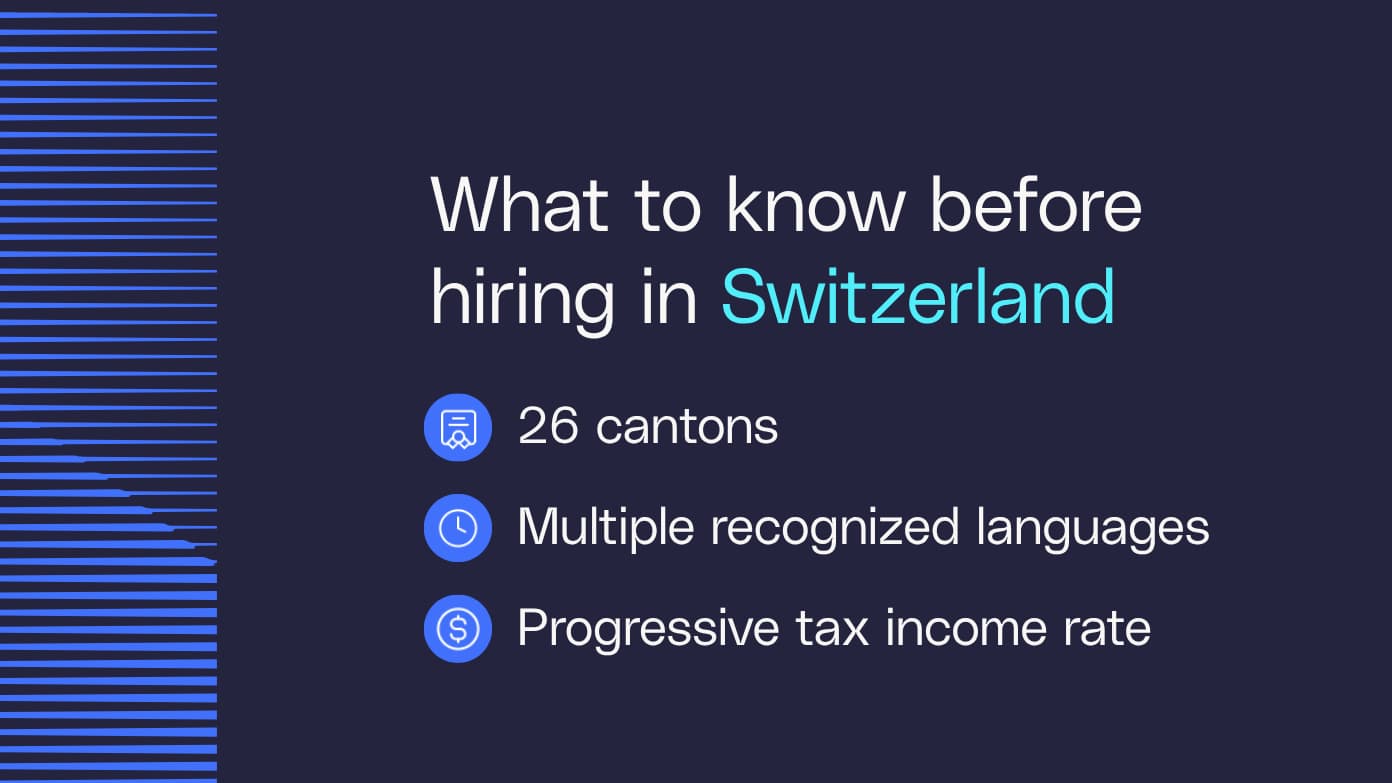
Wenn Sie Ihr Unternehmen zum ersten Mal in die Schweiz ausweiten, müssen Sie wichtige rechtliche Anforderungen beachten. Diese Normen und Gesetze beeinflussen die Einstellungspraxis in der Schweiz.
Wenn Sie nicht sicher sind, wo Sie anfangen sollen, kann G-P Gia™, unser KI-gestützter globaler Personalmanager, Ihre schwierigsten Compliance-Fragen in 50 Ländern – einschließlich der Schweiz – und allen 50 US-Bundesstaaten beantworten. Reduzieren Sie Ihre Abhängigkeit von externen Anwälten und reduzieren Sie die Zeit und Kosten für die Einhaltung von Gia um bis zu 95%.
Werfen wir einen Blick auf acht Dinge, die man über die Personalbeschaffung in der Schweiz wissen sollte.
1. Gesetzliche Bestimmungen zum Verhältnis zwischen Arbeitgeber und Arbeitnehmer
Für alle Arbeitgeber-Mitarbeiter-Beziehungen gelten folgende Regeln:
-
SR 151.1 — Bundesgesetz zur Gleichstellung der Geschlechter
-
SR 220 — Das Obligationenrecht
-
SR 822.11 — Das Arbeitsgesetz
-
SR 822.14 — Das Arbeitnehmerbeteiligungsgesetz
-
SR 823.11 — Bundesgesetz über Arbeitsvermittlungsdienste und die Inanspruchnahme von Dienstleistungen
-
SR 823.20 — Gesetz über entsandte Arbeitnehmer
Die Schweiz erkennt Gewerkschaften an, sofern diese alle gesetzlichen Anforderungen erfüllen.
2. Kantone in der Schweiz
Die Schweiz ist in 26 Kantone unterteilt. Obwohl sie alle unter dem Dach der Schweizer Nationalgesellschaft stehen, sind sie für sich genommen mächtige Institutionen. Jeder Kanton hat einzigartige Traditionen und eine eigene Kultur. Sie verfügen außerdem über eigene Formen der Selbstverwaltung, darunter Gesetze, Verfassungen und Regierungsstrukturen.
Bei der Einstellung von Mitarbeitern in der Schweiz sollten Sie darauf achten, in welchem Kanton Sie die Stelle ausschreiben. Der Wohnsitzkanton der Kandidaten gibt Ihnen Aufschluss über die Übersetzungserwartungen, die in den Arbeitsverträgen anzugebenden Steuersätze und die zustehenden Urlaubsansprüche.
Die Gemeinden – kleinere staatliche Körperschaften innerhalb jedes Kantons – bestimmen, wie die Einstellung in der Schweiz erfolgt.
3. Der Arbeitsmarkt in der Schweiz
Mehr als 5 Millionen Menschen sind auf dem Schweizer Arbeitsmarkt aktiv. Die Beschäftigungsquote beträgt 80.6%. Zum Vergleich: Der EU-Satz beträgt 75.8%. Die Arbeiter sind hochqualifiziert und verfügen über Hochschulabschlüsse. Im Bereich der frühkindlichen Bildung und der Sekundarstufe variiert das Schweizer Bildungssystem zwischen den Kantonen. Im IMD World Talent Ranking 2024 wurde die Schweiz als das Land Nr. 1 für die Förderung einheimischer Talente weltweit eingestuft.
4. Sprachen in der Schweiz
Mehrsprachigkeit ist ein zentraler Bestandteil der Schweizer Kultur, vor allem aufgrund des Sprachengesetzes. Dieses Gesetz erkennt Deutsch, Französisch, Italienisch und Rätoromanisch als nationale Sprachen an. Deutsch, Französisch und Italienisch sind ebenfalls offizielle Sprachen der Eidgenossenschaft. Rätoromanisch wird offiziell in der Kommunikation mit Rätoromanischsprachigen verwendet. Rund zwei Drittel der Einwohner des Landes sprechen mehr als eine Sprache. Schweizer Kinder lernen in ihrer frühen Schulzeit mindestens zwei der Landessprachen.
Schweizerdeutsch ist die am weitesten verbreitete Sprache in den Kantonen. Französisch ist in den westlichen Kantonen verbreitet, Italienisch im Süden. Rätoromanisch ist eine weniger verbreitete Sprache, die von den Rhätern, den frühen Bewohnern der Alpenregion, abstammt. Manche Kantone und Bevölkerungsgruppen haben auch ihre eigenen Dialekte und umgangssprachlichen Ausdrücke.
Bei allen Arbeitsverträgen, Vorstellungsgesprächen und Aufgabenstellungen sollte die Muttersprache des Interviewers bzw. des Mitarbeiters berücksichtigt werden. Es ist ratsam, alle Dokumente übersetzen zu lassen und bei Bedarf einen Dolmetscher hinzuzuziehen.
5. Arbeitszeiten und arbeitsfreie Zeiten
Das Schweizer Arbeitsgesetz regelt die Arbeitszeit- und arbeitsfreien Zeitengesetze. Die maximale Arbeitswoche beträgt 45 Stunden für Angestellte in Industrieunternehmen, Büroangestellte, technisches Personal und Verkaufspersonal in großen Einzelhandelsunternehmen. Für alle anderen Angestellten beträgt die Stundenzahl 50. Die tägliche Arbeitszeit, einschließlich Pausen und Überstunden, sollte 14 Stunden nicht überschreiten. In der Praxis beträgt die typische Arbeitszeit in der Schweiz 12.5 Std.
Überstunden sind nur in Ausnahmefällen zulässig. Es muss mit einer Lohnprämie 25% oder gleichwertigen arbeitsfreien Zeiten abgegolten werden. Die Mitarbeiter müssen täglich mindestens 11 Stunden ununterbrochene Ruhezeit haben. Dies kann auf 8 Stunden einmal pro Woche reduziert werden, sofern die durchschnittliche Ruhezeit über zwei Wochen mindestens 11 Stunden beträgt. Die Arbeitnehmer erhalten jede Woche eine ununterbrochene Pause von mindestens 35 Stunden, einschließlich Sonntag.
Arbeitnehmer haben innerhalb des ersten Beschäftigungsjahres bei einem Unternehmen Anspruch auf drei Wochen Genesungsurlaub . Jeder Kanton hat seine eigenen Beschränkungen für bezahlte arbeitsfreie Zeiten und Genesungsurlaub.
Schwangere Mitarbeiterinnen erhalten 14 Wochen bezahlten Mutterschutzurlaub, Väter haben Anspruch auf zwei Wochen Vaterschaftsurlaub.
Ungeachtet ihres Kantons erhält jeder Mitarbeiter vier Wochen Urlaub pro Jahr, fünf Wochen, wenn der Mitarbeiter 20 oder jünger ist. Arbeitnehmer und Arbeitgeber können auf Wunsch zusätzliche arbeitsfreie Zeiten in ihren Verträgen aushandeln.
Kantone haben ihre eigenen lokalen und gesetzlichen Feiertage. Der Nationalfeiertag am 1August ist der einzige bundesweite Feiertag. Fällt der Nationalfeiertag auf einen Dienstag oder Donnerstag, ist es üblich, den Mitarbeitern ein verlängertes Wochenende zu gewähren. Auch in der Schweiz werden Neujahr, Ostern und Weihnachten gefeiert, die konkreten Regelungen für diese Anlässe variieren jedoch je nach Arbeitgeber. Die Mitarbeiter können anstelle eines bezahlten Urlaubs eine zusätzliche Vergütung wählen.
6. Arbeitsverträge
Mitarbeiter können befristet, von einer Zeitarbeitsfirma gestellt, in Teilzeit oder Vollzeit beschäftigt sein. Der erste Monat der Beschäftigung gilt als Probezeit. Sie können dies in Ihrem Arbeitsvertrag auf maximal drei Monate verlängern. Wenn Sie zu irgendeinem Zeitpunkt die Arbeitsbeziehung beenden möchten, müssen Sie dies mindestens sieben Tage im Voraus ankündigen.
Arbeitsverträge sind zwar nicht vorgeschrieben, aber üblich und dringend zu empfehlen, da manche Vertragsbedingungen nur dann rechtlich anerkannt werden, wenn sie schriftlich festgehalten sind. Verträge sind bindend. Arbeitgeber dürfen nicht gegen die Bestimmungen des vereinbarten Vertrags verstoßen. In der Schweiz gibt es mehrere Gesetze zum Schutz von Gewerkschaften und bestimmten Arbeitnehmergruppen, wie Frauen oder Minderjährigen. Arbeitgeber sind verpflichtet, ein schriftliches Schreiben zu führen, in dem das Startdatum, die Funktion, der Lohn und die Anzahl der Stunden, die die Arbeitnehmer wöchentlich arbeiten werden, detailliert aufgeführt sind.
In der Schweiz sind unbefristete Verträge üblich. „Kettenverträge“ werden von Schweizer Gerichten negativ bewertet. Kettenverträge sind eine Reihe von Befristetverträgen, die nacheinander mit demselben Mitarbeiter abgeschlossen werden. Diese Praxis kann als Rechtsmissbrauch angesehen werden, wenn sie dazu genutzt wird, die Schutzmechanismen einer unbefristeten Anstellung, wie beispielsweise Arbeitsplatzsicherheit und Kündigungsfristen, zu umgehen. Mit Ablauf des letzten Arbeitstages endet das Mitarbeiter-Arbeitgeber-Verhältnis ohne Kündigungsfrist.
Sie und Ihr Teammitglied können eine gleich lange Frist für die Kündigungsfrist vereinbaren. Diese Kündigungsfrist sollte im ersten Beschäftigungsjahr mindestens einen Monat und danach bei jeder weiteren Beschäftigungsdauer bis zu neun Jahren mindestens zwei Monate betragen. Üblicherweise dauert es darüber hinaus drei Monate. Sie dürfen Mitarbeiterinnen nicht kündigen, wenn sie schwanger, krank oder im Mutterschutzurlaub sind. Eine Abfindung ist nur dann zu zahlen, wenn die Mitarbeiter 50 Jahre oder älter sind und seit 20+ Jahren für Sie gearbeitet haben.
G-P Employer of Record verfügt über einen Employment Contract Generator , der Ihnen bei der Erstellung von Compliance-Arbeitsverträgen hilft, wenn Sie Mitarbeiter in der Schweiz einstellen, die allen gesetzlichen Anforderungen und Best Practices entsprechen.
7. Vergütung und Leistungen im Irak
Das Schweizer Bundesgesetz über die Gleichstellung der Geschlechter (GEG) verpflichtet alle Unternehmen mit 100 oder mehr Beschäftigten, eine interne Prüfung durchzuführen, um die Einhaltung der Lohngleichheit sicherzustellen.
In der Schweiz gibt es keinen einheitlichen bundesweiten Mindestlohn. Mindestlohnverpflichtungen können sich aus Kantonen oder Gemeinden, Tarifverträgen oder Arbeitsverträgen für bestimmte Branchen ergeben. Ansonsten richtet sich die Vergütung nach Vertrag und Marktgepflogenheiten. Die Mitarbeiter werden einmalig am Ende des Monats bezahlt.
Zu den gesetzlichen Überstunden zählt auch die Zeit, die über die maximal zulässige Arbeitszeit hinaus geleistet wird. Gesetzliche Überstunden unterscheiden sich von vertraglichen Überstunden und sind nur während der Tag- oder Abendschicht an Werktagen zulässig. Dies muss mit einem Lohnzuschlag von mindestens 25% kompensiert werden.
Anstelle der Lohnerhöhung können Arbeitnehmer auch arbeitsfreie Zeiten wählen. Die gesetzliche Überstundenregelung darf zwei Stunden pro Tag nicht überschreiten und darf 170 Stunden bei 45-Stunden-Wochen bzw. 140 Stunden bei 50-Stunden-Wochen nicht überschreiten. In Notfällen können Ausnahmen gewährt werden.
Arbeitgeber zahlen in der Regel 80% – mit einer jährlichen Höchstgrenze – der Arbeitnehmerentschädigung, wenn diese einen Arbeitsunfall erlitten haben. Die Höhe des Betrags kann je nach Branche oder konkretem Versicherungstarif variieren. Der Arbeitgeber ist für die Einrichtung eines Sozialversicherungsverhältnisses zwischen seinen Arbeitnehmern und der Sozialversicherungsstelle seines Kantons verantwortlich. Zur Social gehören Beiträge zur Mutterschaftsversicherung (MSE), zur Erwerbsunfähigkeitsversicherung (DI), zur Kindergeldversicherung (FZ) und zur Rente bzw. Alters- und Hinterbliebenenversicherung (OASI). DieSocial betragen 6.4% für den Arbeitgeber und 6,4% für den Mitarbeiter.
Boni und eine Prämie im13Monat sind nicht verpflichtend, aber üblich. Arbeitgeber können Boni vertraglich oder nach eigenem Ermessen gewähren. Beachten Sie, dass in der Schweiz strenge Bonusrichtlinien für die Finanzbranche gelten. Dies dient dazu, übermäßige Risikobereitschaft zu verhindern und sicherzustellen, dass die Abfindungspraktiken die finanzielle Stabilität nicht untergraben.
Wenn ein Mitarbeiter länger als drei Monate bei Ihrem Unternehmen beschäftigt ist, mindestens acht Stunden pro Woche arbeitet und die Einkommensvoraussetzungen erfüllt, kann er an einer vom Arbeitgeber geförderten Pensionskasse teilnehmen. Der aktuelle Mindestbetrag für die AHV-Rente beträgt CHF 1,260. Arbeitgeber sind auch für die Unfallversicherung verantwortlich.
Mit G-P Employer of Record können Sie Sozialleistungen ganz einfach verwalten. Unsere Praktikanten-Experten überwachen kontinuierlich die Arbeitsgesetze, um länderspezifische Vorschriften und Normen einzuhalten. Erstellen und verwalten Sie Leistungspläne über unsere Plattform, um ein reibungsloses Mitarbeitererlebnis zu gewährleisten.
8. Steuern
Der Einkommensteuersatz auf Bundesebene in der Schweiz ist progressiv, mit einem Höchstsatz von 11.5% für die höchste Einkommensklasse. Wichtig zu beachten ist, dass auch kantonale und kommunale Steuern anfallen. Dies kann sich je nach Ihrem Wohnsitz erheblich auf Ihre Gesamtsteuerbelastung auswirken. Der Bundesmehrwertsteuersatz beträgt 8.1%.
9. Gleichstellung, Datenschutz und Rekrutierungspraktiken
Die Rekrutierungs- und Beschäftigungspraktiken müssen dem Bundesgesetz zur Gleichstellung der Geschlechter entsprechen. Dies verhindert direkte und indirekte geschlechtsspezifische Diskriminierung während des gesamten Beschäftigungszyklus, einschließlich:
-
Einstellung
-
Zahlung
-
Aufgabenverteilung
-
Förderung
-
Schulung
-
Belästigung
-
Entlassung.
Arbeitgeber müssen sicherstellen, dass gleichwertige Arbeit gleich bezahlt wird. Für Entscheidungen über Einstellung, Abfindung, Beförderung und Kündigung müssen objektive, berufsbezogene Kriterien gelten.
Arbeitgeber mit 100 oder mehr Beschäftigten in der Schweiz müssen eine interne Analyse der Lohngleichheit unter Anwendung einer wissenschaftlich validen Methode durchführen. Die Analyse muss unabhängig überprüft werden, und die Ergebnisse müssen den Mitarbeitern innerhalb des vorgegebenen Zeitrahmens mitgeteilt werden. Dies ist unabhängig von der allgemeinen Verpflichtung zur gleichen Bezahlung aller Arbeitgeber.
Die Erhebung und Verarbeitung personenbezogener Daten von Kandidaten muss im Einklang mit den schweizerischen Datenschutzbestimmungen erfolgen. Dies umfasst das Bundesgesetz über den Datenschutz und die beschäftigungsspezifischen Beschränkungen im Schweizerischen Obligationenrecht. Die Rekrutierungsdaten müssen folgende Kriterien erfüllen:
-
Beschränkt auf das, was zur Beurteilung der Eignung für die Rolle erforderlich ist.
-
Transparent und sicher abgewickelt
-
Wird nur so lange aufbewahrt, wie nötig.
Hintergrundüberprüfungen sind nur zulässig, wenn sie verhältnismäßig, berufsbezogen und ordnungsgemäß offengelegt werden.
Einstellungsmodelle für globale Unternehmen in der Schweiz
Welches Modell sich am besten eignet, wenn Sie sich für die Einstellung von Mitarbeitern in der Schweiz entscheiden, hängt von Ihren übergeordneten Geschäftszielen ab.
| Modell | Am besten geeignet für | Wichtigste Punkte | Hauptrisiken |
|---|---|---|---|
| Direkte Arbeitgeberregistrierung | Personalbeschaffung in der Schweiz ohne lokale Niederlassung. | Melden Sie sich bei der Schweizerischen Sozialversicherung und den Steuerbehörden an. Führen Sie die Schweizer Lohnabrechnung durch. Verwalten Sie Genehmigungen, Leistungen und die Einhaltung arbeitsrechtlicher Vorschriften. | Hoher Verwaltungsaufwand. Kantonale Prozessunterschiede. Risiko von Fehlern bei der Lohn-, Steuer- oder Genehmigungsabrechnung. |
| Employer of Record, wie G-P Arbeitgeber der Arbeitsstelle | Schneller Prozess zur Niederlassung in der Schweiz ohne Gründung einer Gesellschaft. | Der eingetragene Arbeitgeber ist der gesetzliche Arbeitgeber. Der Anbieter übernimmt die Lohn- und Gehaltsabrechnung, die Sozialleistungen und die Verträge. Für die Personalüberlassung ist eine entsprechende Lizenz erforderlich. | Risiko durch nicht lizenzierte Anbieter. Weniger direkte Kontrolle. Klienten können weiterhin Arbeitsplatz- und Aufsichtspflichten wahrnehmen. |
| Tochtergesellschaft oder Zweigstelle | Langfristige Geschäftstätigkeit in der Schweiz. | Schafft eine formelle Präsenz vor Ort. Unterstützt Direkteinstellung und lokales Management. Am besten geeignet für größere oder feste Teams. | Höhere Einrichtungs- und Wartungskosten. Weitere Compliance-Aufgaben im Bereich Unternehmenssteuer, Lohn- und Gehaltsabrechnung sowie Personalwesen. |
| Unabhängiger Auftragnehmer | Kurzfristige, spezialisierte, projektbezogene Arbeit. | Auftragnehmer müssen selbstständig arbeiten. Verwenden Sie leistungsbezogene Vertragsbedingungen. Prüfen Sie nach Möglichkeit den Status als Selbstständiger. | Risiko der Fehlklassifizierung. Zurück Sozialversicherung und Steuerexposition. Arbeitnehmerrechte können rückwirkend gelten. |
Die wichtigsten Rekrutierungszentren in der Schweiz
Einige Schweizer Städte sind für bestimmte Industriezweige bekannt. Wenn Sie wissen, was jede Stadt zu bieten hat, können Sie Ihre Einstellungsbemühungen auf den richtigen Ort konzentrieren und Stellen schneller besetzen, wenn Sie in der Schweiz einstellen.
Die wichtigsten Talentzentren der Schweiz sind:
-
Zürich ist die größte Stadt der Schweiz. Das wichtigste Finanz- und Geschäftszentrum ist bekannt für Bankwesen, Technologie und professionelle Dienstleistungen. Große Banken wie UBS, Julius Baer und ZKB sind hier ansässig.
-
Genf ist ein international Zentrum mit vielen globalen gemeinnützigen Organisationen und Unternehmen aus den Bereichen Finanzen und Handel. Hier haben wichtige international Organisationen wie das Europäische Hauptquartier der Vereinten Nationen, die WHO, die WTO und das Rote Kreuz ihren Sitz.
-
Basel ist berühmt für seine pharmazeutische, chemische und biowissenschaftliche Industrie. Es verfügt über eine starke Finanzpräsenz und ist Sitz von Großunternehmen wie Roche und Novartis sowie vieler kleinerer Biotech-Firmen und Forschungseinrichtungen.
-
Bern ist ein Zentrum für Regierung, Verwaltung und Dienstleistungsbranchen. Viele Arbeitsplätze und Positionen der Bundesregierung in den Bereichen Gesundheitswesen, Bildung und Produktion sind hier angesiedelt.
-
Lausanne ist bekannt für Bildung und Technologie. Diese französischsprachige Stadt zeichnet sich durch Lehre und Forschung in den Bereichen Life Sciences, IT und Sportmanagement aus.
Schlüsselindustrien in der Schweiz
Kenntnisse über die wichtigsten Branchen der Schweiz helfen Ihnen , Gehälter und Sozialleistungen bei der Einstellung von Mitarbeitern in der Schweiz zu vergleichen . Sie können diese Erkenntnisse nutzen, um kluge Entscheidungen darüber zu treffen, wo Sie investieren und Ihre Belegschaft ausbauen sollten.
Zu den wichtigsten Wirtschaftszweigen in der Schweiz gehören:
-
Finanzdienstleistungen: Die Schweiz ist bekannt für ihr Bankwesen, Versicherungen und Vermögensverwaltung. Die politische Stabilität, die Vertraulichkeitsgesetze und die Expertise des Landes ziehen Kunden weltweit an. Große globale Banken wie UBS haben ihren Hauptsitz hier. Specialist Talent umfasst Finanzberater, Vermögensplaner und Anlageanalysten.
-
Pharmazeutika und Biowissenschaften: Die Schweiz beherbergt viele führende Pharma-, Biotechnologie- und Medizintechnikunternehmen. Dort haben globale Marktführer wie Roche und Novartis ihren Sitz. Der Sektor konzentriert sich auf hochwertige Produkte wie Impfstoffe, Spezialmedikamente und Seren. Zu den Spezialisten gehören F&E-Fachkräfte, Wissenschaftler und Ingenieure.
-
Maschinenbau, Präzisionsinstrumente und Ingenieurwesen: Die Schweiz ist weltweit führend in der Herstellung von hochpräzisen Maschinen, Uhren und Instrumenten. Zu den Spezialisten gehören verschiedene Ingenieurpositionen wie Maschinenbau-, Elektro- und Fertigungsingenieure.
-
Informationstechnologie und Kommunikation: Die Schweiz ist führend in der Blockchain-Technologie und Kryptowährung und zieht Startups und etablierte dezentrale Finanzunternehmen an. Zu den Spezialisten gehören Softwareentwickler, Datenwissenschaftler und Cloud-Architekten.
-
Chemikalien: Die chemische Industrie umfasst große Unternehmen im Bereich der Aromen und Duftstoffe, wie zum Beispiel Givaudan und DSM-Firmenich. Zu den Spezialisten gehören F&E-Fachkräfte, Ingenieure und Wissenschaftler.
Kosten für die Einstellung eines Mitarbeiters in der Schweiz
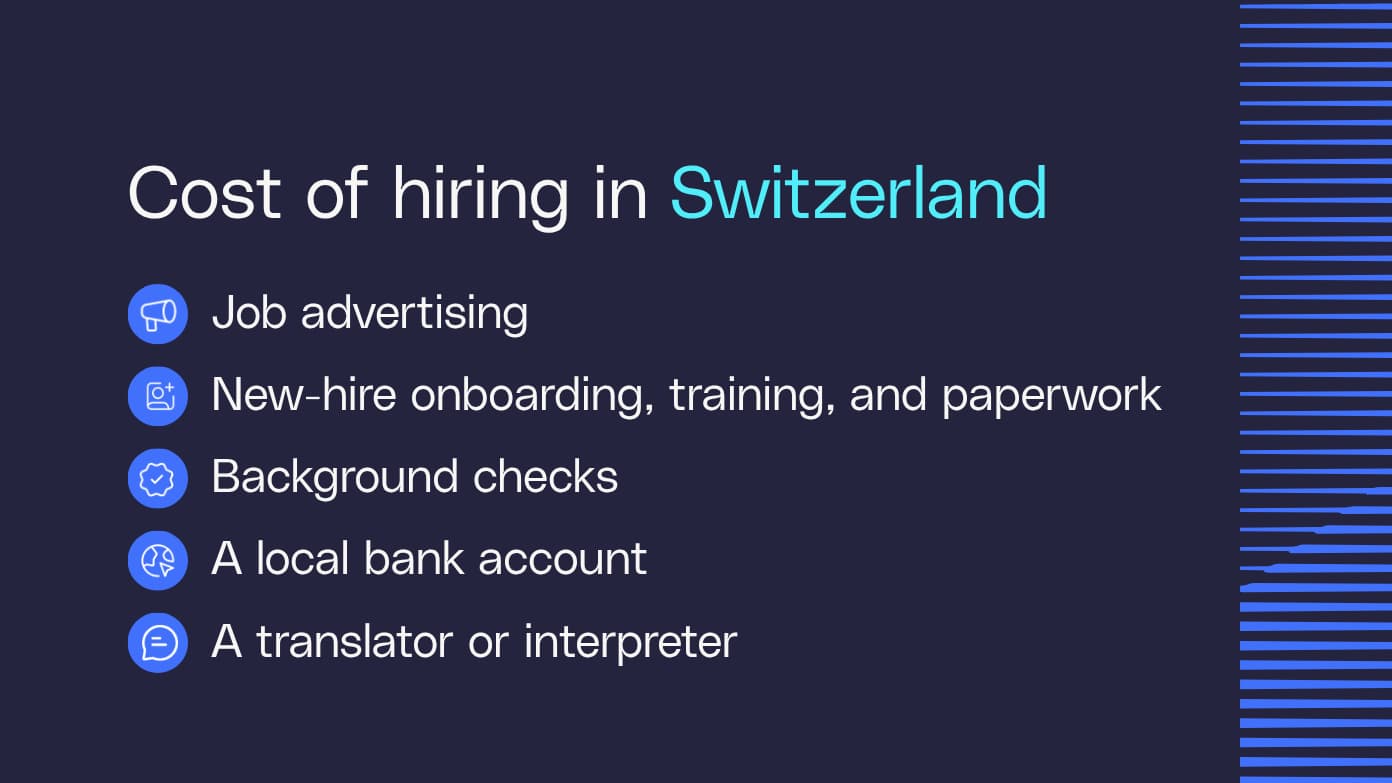
Ob Sie einen Mitarbeiter oder ein ganzes Team einstellen, der Einstellungsprozess in der Schweiz ist unweigerlich mit Kosten verbunden.
Budget für Folgendes:
-
Stellenanzeige
-
Einarbeitung, Schulung und Papierkram
-
Bewerberverfolgungssoftware
-
Leumundsprüfung
-
Spezielle Ausrüstung für Mitarbeiter
-
Ein Übersetzer oder Dolmetscher (falls erforderlich)
-
Reisekosten für die An- und Abreise in die Schweiz, falls erforderlich
-
AHV/IV/EO
-
Arbeitslosenversicherung
-
Arbeitsunfallversicherung
-
Beiträge der Familie Zulage
-
Krankentagegeldversicherung
-
Urlaubsanspruch des Arbeitnehmers
-
Arbeitnehmer erhalten arbeitsfreie Zeiten und Anspruch auf Krankheitszeit
Laut Gia beträgt der gesamte jährliche Arbeitgeberbelastungssatz in der Schweiz, der auch Kosten umfasst, die zusätzlich zu den Gehältern anfallen, zwischen 10% und 20% der Bruttovergütung. Die Sätze hängen von der Vergütung des Mitarbeiters, der Branche und dem Kanton ab. Gia nutzt die 13mehr als sechsjährige globale Beschäftigungserfahrung von G-P sowie Erkenntnisse aus fast einer Million realer Szenarien, um genaue und aktuelle Informationen zum Arbeitsrecht bereitzustellen.
Was braucht ein Unternehmen zur Einstellung in der Schweiz?
EU/EFTA vs. Nicht-EU/EFTA-Arbeitnehmer
Dank des Abkommens über die Freizügigkeit von Personen (AFMP) ist die Einstellung von Bürgern aus EU-/EFTA-Mitgliedstaaten mit wenigen administrativen Hürden verbunden. Arbeitgeber müssen einheimischen Schweizer Arbeitskräften keinen Vorrang einräumen oder begründen, warum ein Bewerber aus der EU/EFTA ausgewählt wurde. Bei Kurzzeitverträgen (bis zu 90 Tage pro Kalenderjahr) müssen Unternehmen lediglich eine Online-Mitteilung einreichen, bevor der Mitarbeiter die Arbeit aufnimmt. Bei längerfristigen Anstellungen meldet sich der Mitarbeiter bei seiner zuständigen Schweizer Wohngemeinde an, um eine Aufenthalts-/Arbeitserlaubnis (z. B. eine L- oder B-Bewilligung) zu erhalten. Dies ermöglicht ihnen den sofortigen Zugang zum Schweizer Arbeitsmarkt.
Staatsangehörige von Nicht-EU/EFTA
Die Einstellung von Kandidaten aus Nicht-EU/EFTA-Ländern (einschließlich Großbritannien und den USA) ist stärker reguliert. Nach dem Bundesgesetz über ausländische Staatsangehörige und Integration (FNIA) müssen Arbeitgeber nachweisen, dass die lokalen Rekrutierungsbemühungen gescheitert sind. Genehmigungen für Nicht-EU/EFTA-Staaten sind fast ausschließlich auf Personal wie Manager, leitende Spezialisten oder Hochschulabsolventen mit entsprechender Berufserfahrung beschränkt.
Genehmigungsquoten und administrativer Zeitplan
Die Schweizer Regierung hat eine strenge jährliche nationale Quote für Arbeitsgenehmigungen für Nicht-EU/EFTA-Bürger. Für die Erteilung der Arbeitserlaubnis ist ein mehrstufiges Genehmigungsverfahren erforderlich, an dem die kantonalen Arbeitsbehörden und das Staatssekretariat für Migration (SEM) beteiligt sind. Arbeitgeber müssen den Genehmigungsantrag im Voraus stellen. Der Mitarbeiter kann seine Arbeit erst nach formeller Genehmigung aufnehmen.
Es liegt in Ihrem besten Interesse, eine Beziehung zu den örtlichen Wirtschaftsabteilungen oder der Botschaft eines Kantons aufzubauen. Für eine Unternehmensgründung in der Schweiz ist keine juristische Person erforderlich. Wenn Sie sich jedoch für die Gründung eines Schweizer Unternehmens entscheiden, haben Sie folgende Möglichkeiten:
-
Ein Einzelunternehmen mit einem einzigen Inhaber
-
Eine offene Handelsgesellschaft
-
Eine Kommanditgesellschaft
-
Eine Kapitalgesellschaft oder Aktiengesellschaft
-
Eine Gesellschaft mit beschränkter Haftung
-
Eine Tochtergesellschaft
-
Eine örtliche Filiale
Niederlassungen sind ein gängiger Weg für international Unternehmen und erfordern die Zahlung lokaler Steuern sowie die Beschäftigung von mindestens einem Schweizer Einwohner mit entsprechender Befugnis. Sie müssen alle rechtlichen Dokumente, Verträge und bestehenden Finanzkonten vorbereitet haben.
Mit G-P Employer of Record können Sie Mitarbeiter in der Schweiz einstellen, ohne eine eigene Niederlassung zu gründen. Stellen Sie Ihr Team in der Schweiz kostengünstiger zusammen und mit der Gewissheit, dass Sie die jeweiligen kantonalen Anforderungen erfüllen.
Schritte zur Einstellung in der Schweiz
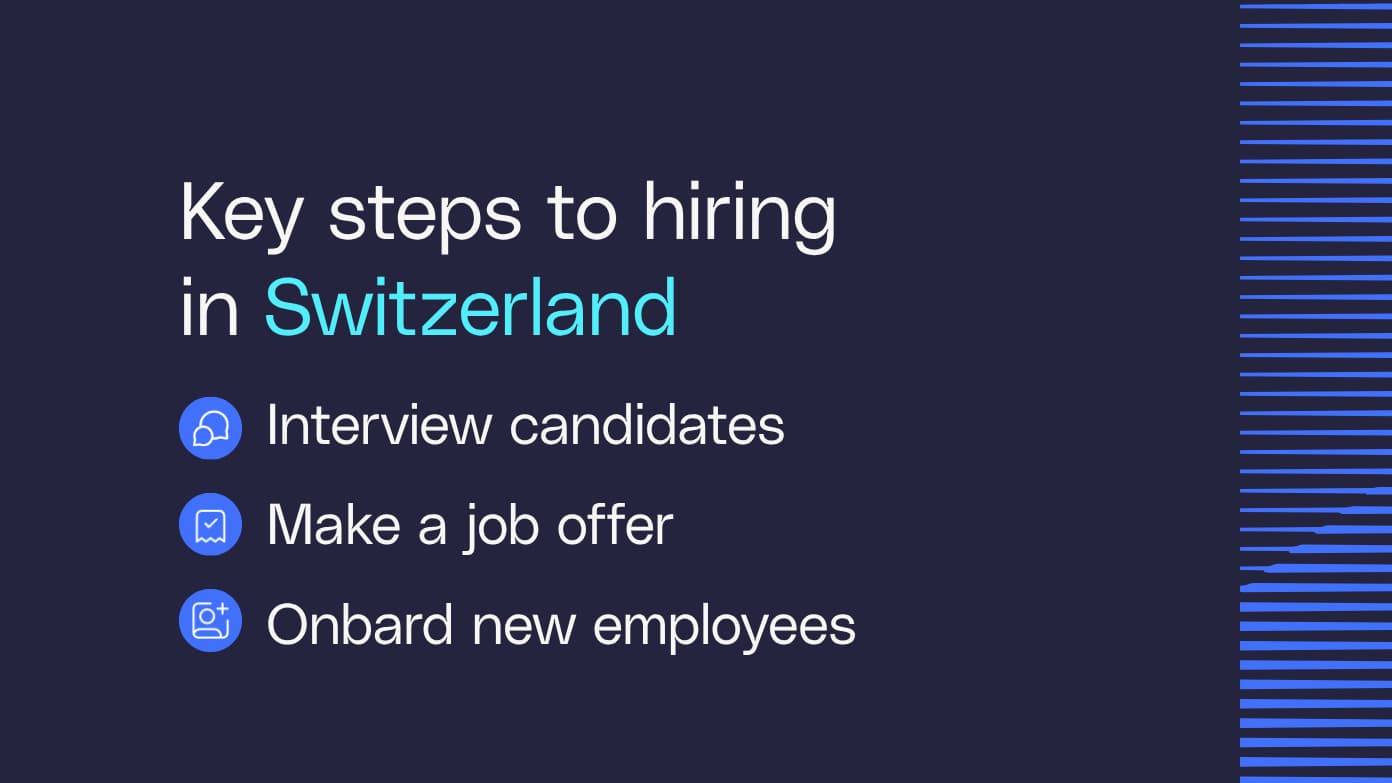
Der Einstellungsprozess in der Schweiz umfasst fünf grundlegende Schritte: die Veröffentlichung der Stellenanzeige, die Auswertung der Bewerbungen, die Durchführung von Vorstellungsgesprächen, das Versenden von Stellenangeboten und die Einarbeitung neuer Mitarbeiter.
1. Stellenausschreibungen ausschreiben
Erstellen Sie zunächst eine detaillierte Stellenbeschreibung. Definieren Sie die Rolle, die Verantwortlichkeiten und die erforderlichen Qualifikationen. Bei bestimmten Berufen mit höherer Arbeitslosenquote sind Arbeitgeber gesetzlich verpflichtet, die kantonalen Arbeitsämter über freie Stellen zu informieren, bevor sie diese öffentlich ausschreiben. Dies gewährleistet vorrangigen Zugang für registrierte Arbeitssuchende und die Einhaltung des Bundesgesetzes über Arbeitsvermittlungsdienste.
2. Bewerbungen auswerten
Sobald sich Arbeitssuchende auf Ihre neuen Stellen bewerben, können Sie deren Bewerbungen auswerten und feststellen, welche Kandidaten am besten für die jeweilige Position geeignet sind. Das Schweizer Recht verbietet Diskriminierung aufgrund des Geschlechts, des Alters, der Herkunft, der Rasse, der Religion, einer Behinderung, der sexuellen Orientierung oder anderer geschützter Merkmale in allen Phasen des Einstellungsverfahrens. Dies ist in der Schweizer Bundesverfassung und im Gleichstellungsgesetz so festgelegt.
Prüfen Sie unbedingt, ob Stellenanzeigen, Auswahlkriterien und Interviewfragen frei von Vorurteilen sind.
3. Interviews mit Bewerbern
Als Nächstes führen Sie Vorstellungsgespräche mit den Kandidaten, die es auf Ihre Auswahlliste geschafft haben. Um Fairness und Einheitlichkeit zu gewährleisten, sollten berufsrelevante Auswahlkriterien und strukturierte Interviews eingesetzt werden. Gia kann Ihnen dabei helfen, Interviewfragen zu erstellen, die den Antidiskriminierungsgesetzen bei der Einstellung von Mitarbeitern in der Schweiz entsprechen, sodass Sie die am besten geeignete Person für die Stelle finden und gleichzeitig die lokalen Vorschriften einhalten können.
Es empfiehlt sich, die Dokumentation des Rekrutierungsprozesses, einschließlich Interviewnotizen und Auswahlentscheidungen, mindestens fünf Jahre lang aufzubewahren.
4. Jobangebote machen
Nun ist es an der Zeit, den ausgewählten Bewerber zu benachrichtigen. Erstellen Sie einen schriftlichen Arbeitsvertrag, der dem schweizerischen Arbeitsrecht entspricht. Der Vertrag sollte wesentliche Bestimmungen wie Stellenbezeichnung, Aufgaben, Vergütung, Arbeitszeiten, Kündigungsfristen und alle anwendbaren Tarifverträge enthalten.
5. Neue Mitarbeiter einstellen
Melden Sie den neuen Mitarbeiter bei der Schweizerischen Sozialversicherung (AHV/AVS), der Unfallversicherung, dem Pensionsfonds (BVG/LPP) und gegebenenfalls bei den zuständigen Steuerbehörden an. Richten Sie die Lohnbuchhaltung ein, um korrekte Vergütungszahlungen, Abzüge für Sozialversicherung, Rentenbeiträge und Steuern sicherzustellen.
Auftragnehmer in der Schweiz einstellen
Die Zusammenarbeit mit unabhängigen Auftragnehmern in der Schweiz kann eine kostengünstige Möglichkeit sein, den Markt zu testen und eine Präsenz aufzubauen, ohne die Verpflichtung von Vollzeitbeschäftigten. In der Schweiz ansässige Auftragnehmer kennen das lokale Konsumverhalten, die Regeln und die Geschäftspraktiken. Sie werden mit ihrer eigenen Ausrüstung und ihren etablierten Arbeitsprozessen schnell einsatzbereit sein.
Durch die Beauftragung von Auftragnehmern können Sie Ihre Belegschaft einfach an Ihre Geschäftsbedürfnisse anpassen, ohne die Komplexität und die Kosten einer Festanstellung.
Bevor Sie einen Vertrag mit einem unabhängigen Auftragnehmer in der Schweiz abschließen, sollten Sie Folgendes beachten:
1. Mitarbeiter im Vergleich zu unabhängigen Auftragnehmern
Es ist wichtig, den Unterschied zwischen Angestellten und unabhängigen Auftragnehmern zu verstehen. In der Schweiz enthalten Arbeitsverträge für Arbeitnehmer häufig Exklusivitätsklauseln und legen Arbeitszeiten, Arbeitsort und Aufgaben fest. Dienstleistungsverträge für Auftragnehmer konzentrieren sich auf die zu erbringenden Leistungen und Ergebnisse und betonen die Autonomie und Unabhängigkeit des Auftragnehmers.
Unternehmen stellen Mitarbeiter ein, um Arbeit zu verrichten und zahlen ihnen im Gegenzug eine regelmäßige Vergütung oder einen Lohn. Auftragnehmer müssen ihre eigene Sozialversicherung und Altersvorsorge abschließen. Im Gegensatz zu Angestellten legen Auftragnehmer ihre Arbeitszeiten selbst fest, verwenden ihre eigene Ausrüstung und arbeiten an spezifischen Projekten, anstatt eine dauerhafte Rolle zu haben.
2. Strafen für falsche Klassifizierung
Jemanden als Auftragnehmer einzustufen, obwohl er es nicht ist, kann zu schweren Strafen führen. Sollte es bei Ihren Einstellungsbemühungen in der Schweiz zu einer Fehlklassifizierung kommen, müssen Sie möglicherweise Folgendes tun:
-
Zahlen Sie sowohl den Arbeitgeber- als auch den Mitarbeiteranteil der Sozialversicherungsbeiträge rückwirkend für einen Zeitraum von bis zu fünf Jahren. Dies umfasst Beiträge zur Alters- und Hinterbliebenenversicherung (OASI), zur Invalidenversicherung und zur Arbeitslosenversicherung.
-
Es fallen Zinsen und Strafen an, die sich nach dem geschuldeten Betrag und der Dauer des Zahlungsverzugs richten.
-
Face unterliegt Audits und Compliance-Prüfungen durch Schweizer Behörden, wie beispielsweise das Staatssekretariat für Wirtschaft (SECO), die bei Feststellung einer falschen Klassifizierung zu weiteren Durchsetzungsmaßnahmen führen können.
3. Wie man Auftragnehmer in der Schweiz bezahlt
G-P Contractor™ beseitigt den umständlichen und zeitaufwändigen Prozess der Anstellung und Bezahlung international Auftragnehmer. Sie können Verträge erstellen und ausstellen sowie Auftragnehmer mit nur wenigen Klicks bezahlen – und dabei einen Compliance-Prozess sicherstellen.
Stellen Sie Mitarbeiter und Auftragnehmer in der Schweiz mit G-Pein.
Unsere Software-as-a-Service- und KI-gestützten Produkte – Employer of Record, Contractor und Gia – helfen Unternehmen jeder Größe beim Aufbau und der Verwaltung globaler Teams.
Mit mehr als einem Jahrzehnt Erfahrung, dem größten Team von Personal-, Rechts- und Compliance-Experten und einer globalen, firmeneigenen Wissensdatenbank ist G-P der anerkannte Marktführer im Bereich der globalen Personalvermittlung, wenn Sie Mitarbeiter in der Schweiz einstellen müssen.
Erleichtern Sie Ihre Expansion in die Schweiz mit G-P. Kontaktieren Sie uns oder buchen Sie noch heute eine Demo .