







給予各地各人享有的權利。人手在這裡。 但要掌握各國具體的勞動法規可能很困難。這是24 / 7承諾。合適的雇主解決方案和先進的人力資源;人力資源人工智慧工具可以減輕負擔。
雇主可協助您降低風險並確保遵守國際僱傭法。 讓我們探討什麼是國際僱傭法以及它如何影響您的全球人力。
什麼是國際僱傭法?
勞動法是規範員工與其雇主之間關係的法律架構。 每個國家都有一套適用於僱傭關係的法律和法規。不存在適用於每個國家的通用法律架構。
勞動法涵蓋工作場所安全、工資、福利、退休金、工作時間、休假權利、反歧視保護、終止規定和遣散費。
這些規定要求雇主除其他事項外,提供安全的工作場所,確保公平的工資和工作條件,並管理員工工時。 勞動法不適用於獨立承包商。承包商受服務或諮詢協議的約束,這意味著他們無法獲得與員工相同的福利、保護或權利。然而,一些國家已將某些保護措施擴展到受僱承包商,並嚴格執行分類規則。
勞動法明確規定員工與雇主的權利與義務。雇主的一些不當行為範例包括:
- 拒絕家庭和醫療假
- 不當解僱或終止僱傭關係
- 就業方面的年齡歧視
- 未支付強制性加班費
誰負責監理國際勞動法?

沒有單一機構監理國際僱傭法。 相反,國際組織、區域實體和各國政府共同製定規則。
- 國際勞工組織(ILO):國際勞工組織制定公約和建議,為公平工作、勞動權利和工作場所保護設定最低標準。只有經各國採納後,這些條款才具有約束力。
- 聯合國(UN):聯合國制定人權原則,影響全球就業實踐。
- 世界貿易組織(WTO): WTO 致力於解決勞工和貿易政策的交叉問題,但它並沒有直接監管勞工法。
有些團體(例如歐盟)會對成員國發出指令,在各國之間建立更統一的標準。其他地區則透過經濟或政治聯盟使用框架,但執行的程度各有不同。國家政府是主要的立法者和監管者。他們在國家層面上制定、執行並解釋就業法律。
國際條約、公約和雙邊協定會影響這些法律,但就業事宜主要是國內事務。遵守僱傭法取決於您的團隊所在的特定司法管轄區。
G-P Gia™是了解國際勞動法的首選資源。 Gia 是一款智慧型人工智慧,可審查文件是否合規,識別潛在風險,提出管轄權建議,並為您提供最新的合規資訊。
為什麼僱傭法很重要?
雇用法規範雇主和雇員之間的關係。他們確保公平待遇、平等,以及健康且具生產力的工作環境。
雇用法涵蓋一系列問題,包括:
- 工作條件:勞動法確保員工享有安全的工作場所、公平的待遇和適當的報酬。
- 為雇主提供明確的指導方針:制定法規是為了促進為雇主管理其員工建立結構化、合法的框架。 強而有力的指導方針還可以降低法律糾紛的風險,並為工作場所提供穩定性。
- 員工保護:法律為員工提供保護,使其免受基於種族、膚色、宗教、性別、性取向或其他特徵的工作場所歧視或騷擾。
- 員工福利:勞動法要求雇主提供員工某些福利,包括健康保險、退休計畫和帶薪年假。
- 合規與問責:勞動法也確保員工和公司都尊重勞動合約和規章制度的條款,有助於建立問責文化。
國際僱傭法涵蓋哪些內容?
雇用法律因國家而異。然而,世界各地的就業法律都涵蓋了基本要素,這些要素對於不論在何處進行全球擴張的企業來說都至關重要。主要領域包括
僱傭合約
每個國家都有自己的法律要求、文化規範和法定保護,這些都會影響僱傭合約的結構、內容和可執行性。例如,美國不要求簽訂僱傭合同,僱傭關係屬於隨意僱傭,允許雇主無需通知或說明理由即可終止僱傭關係。在大多數國家,例如義大利,永久合約不能無正當理由終止,也為員工提供更廣泛的保障福利,例如國家健康保險。

工資和工時
最低工資和工作時間因地區而異。例如,法國有35小時五天工作制;週間工作制,而日本則有40小時五天工作制;週間工作制。
歧視和騷擾
許多國家都有針對工作場所中基於種族、年齡、性別、宗教、殘障或其他受保護特性的歧視提供保護。何謂受保護的特徵可能因國家而異。
資料隱私
資料隱私對於國際僱傭法至關重要。 隨著人力資源流程在工作場所不斷數位化,您需要強而有力的資料保護措施和程序。 一些國家(例如歐盟國家)制定了全面的資料保護法,例如一般資料保障條例(一般資料保障條例),賦予個人對其個人資料的強大權利。
您的企業必須嚴格遵守各國的相關法規,以保護員工的隱私權。
員工福利
勞動法也涵蓋有關健康保險、退休計畫和其他重要福利的規定。
裁員、解僱和其他人員減少
就業法管轄終止,包括允許的解僱原因、強制性程序、錯誤終止、遣散費套餐和通知期。 在大多數國家,雇主有義務提前通知僱員終止僱傭關係,並且需要有正當理由才能終止僱傭關係。
休假政策
當地就業法也規定了假期、帶薪休息時間、陪產假和產假。 例如,挪威提供12的產假,而美國則沒有帶薪產假或陪產假的國家法律。
各國不同的法規和複雜的國內就業法律,讓我們很難追蹤合規情況。有了Gia,你就不必這麼做了。我們的智能體人工智慧可以:
- 在您的目標市場中,為您提供有關就業法律、強制性福利、薪資要求和當地勞工慣例的最新資訊。
- 就新國家僱用員工或承包商的人力資源、法律和合規要求提供建議。
- 指導您獲得有競爭力的福利、補償金和福利套餐的最佳實踐。
- 就簽證、工作許可證和搬遷提供建議;重新調整人才跨境流動的安置要求。
全球僱傭法有哪些常見挑戰?
管理全球人手涉及克服法律、文化和營運方面的障礙。 常見的挑戰包括
- 地方法律法規瞬息萬變:不同司法管轄區的法規各不相同,而且經常變化,使得合規變得複雜。
- 語言障礙:僱傭合約、政策和法律要求必須有準確的翻譯,以避免誤解。
- Worker 分類:將員工視為承包商,無論是有意或無意,都可能導致法律糾紛和罰款。
- 薪資與福利管理:每個國家都有其獨特的稅制、繳款和福利義務。
- 資料隱私與合規性:跨境用工涉及敏感的員工數據,受到一般資料規範等保護。
- 文化差異:不同的工作場所規範和期望會影響政策的適用方式以及員工與雇主的互動方式。
- 一致的公司政策:使全球標準與當地實踐保持一致意味著遵守法規;合規而不失去凝聚力。
- 成本高且複雜:履行多個國家的法律義務需要資源和專業知識。
掌握國際僱傭法
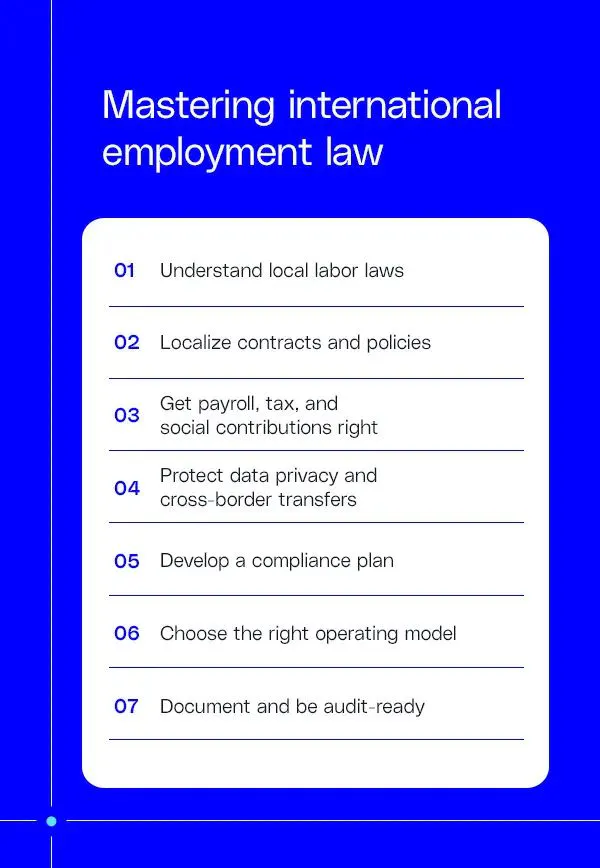
完善的策略可以幫助您在整個擴張過程中管理當地的勞動法合規性。你需要一個能夠預見當地需求、快速適應並隨著你的員工人數成長而擴展的計劃。 請記住這些提示:
- 了解當地勞工法。對於每個地點,記錄基本信息,例如僱員與承包商規則、錯誤分類懲處、強制性福利、最低工資和加班要求、終止和遣散費。 Globalpedia提供有關不同地區勞動法律和監管要求的寶貴資訊。
- 合約和政策本地化。使用當地法規;遵守適用語言的僱傭合同,並附有特定國家/地區的條款。 使公司手冊符合當地法律。一份集中化的全球勞工政策手冊可以確保整個組織對勞工政策的理解和實踐保持一致。使用 Gia 審核或起草僱傭合約、員工手冊和公司政策,以確保其符合當地法律標準。
- 正確處理工資、稅金和社會繳款。確認登記需求、支付頻率、薪資支付方式、法定扣款和雇主繳款。在適用情況下,追蹤同工同酬和薪資透明度義務。核實福利金和登記時間表,避免出現缺口。
- 保護資料隱私和跨境傳輸。追蹤人力資源資料流,選擇適當的法律依據進行處理,並應用轉移機制。實施符合國家規章制度和框架的資料保留計劃、存取控制和安全措施。
- 制定合規計劃。根據新出台的法規和現有規則的變更,及時更新您的合規計畫。指定國家“負責人”,制定續期和備案的合規日曆,並關注法律更新。對管理人員進行本地規章制度的培訓,並安排定期審核合約、薪資和福利供應商。使用 Gia 在您制定計劃時獲取準確、最新、特定轄區的改進建議。
- 選擇合適的營運模式。決定何時設立本地實體,何時與名義雇主合作。名義僱主負責處理國內僱主義務,跟上法律變化的步伐,加快招聘速度,同時降低風險。
- 做好記錄並接受審計。以當地語言保存完整的員工檔案、工時和工資記錄以及政策確認書,以支援合規性。全球招募專家和合規工具可以幫助您提前應對各種問題。
使用Gia遵守法規;符合國際就業法
使用 Gia 隨時掌握不斷變化的勞動法規。Gia 是一款基於專有知識庫構建的智能體人工智慧,該知識庫包含數百名法律專業人士的專業知識、超過100 、 000經過審查的文件以及超過1 、 500政府來源,可為您提供值得信賴的答案。使用 Gia,您可以:
- 存取50 國家和美國各州50 雇用法律和法規的最新資訊。
- 取得有關僱傭法即將發生的變化的提醒,這些變化可能會影響您的全球員工。
- 針對您最棘手的法規遵循問題,取得特定情境的答案。
- 產生遵守法規;合規人力資源;人力資源文件。
- 檢查僱傭合約是否有缺少條款和合規風險。
- 解決日常和複雜的人力資源挑戰。
預測潛在的法規遵循風險從未如此簡單。
常見問題
如何處理國際員工的薪資?
與雇主提供者合作。 名義雇主充當合法的雇主,使您的業務完全遵守法規;符合當地法規。 這包括管理工資稅和福利管理,並遵守當地勞工法。 雇主簡化了國際薪資的複雜性。
不合規的風險有哪些?
不遵守規定可能會導致罰款、處分、名譽損害、法律糾紛,在某些司法管轄區,甚至可能被禁止入境。 保持知情並遵守法規;遵守國際就業法對於避免這些後果至關重要。
人工智慧如何幫助全球人力資源;人力資源合規?
人工智慧工具,例如Gia ,可以透過審查人力資源文件以確保合規性、識別潛在風險和問題以及提供特定司法管轄區的建議來幫助您的業務。
我的公司資料在Gia上安全嗎?
資料安全是我們的首要任務。GP已獲得ISO 27001認證。 我們的產品採用嚴格的安全協定,例如存取控制和加密。


