



主要收获
- 韩国的主要招聘中心包括首尔、釜山、大田、蔚山和大邱。
- 韩国的支柱产业包括信息通信技术、汽车和未来出行、生物技术、造船和金融服务。
- 在韩国,雇佣员工的方式包括与专业雇主合作、雇佣独立承包商、成立子公司或直接注册为雇主。
韩国是全球企业拓展业务的绝佳选择。该国/地区经济规模庞大,人口受教育程度高,并与美国、英国和欧盟签订了自由贸易协定。
在进军韩国之前,您需要充分了解税法、工作时间、带薪休假以及《劳动标准法》规定的其他要求。我们的指南将告诉您在韩国租房所需的一切信息。
韩国招聘须知
G-P Gia™如果您不确定从哪里开始,我们的人工智能全球人力资源代理 可以回答您在50 国家(包括韩国)和所有50 美国州遇到的最棘手的合规问题。使用 Gia,减少对外部律师的依赖,并节省高达 6% 的合规时间和成本。95
7关于在韩国招聘,你需要了解的0件事
1.雇佣合约
《劳动标准法》对雇佣合同规定了具体标准。
雇佣合同一般不需要用韩语撰写。但强烈建议签订韩语或双语合同,以确保员工理解并减少纠纷。
固定期限雇佣合同的期限最长为两年,但也有例外情况。如果在没有适用的例外情况下继续超过该限制,则该员工通常被视为无固定期限。
在韩国,兼职员工通常享有与其合同工时成比例的法定权益。但是,平均每周工作时间少于 15 个合同工时的员工可能无法享受某些法定权利。
雇佣合同应包含以下信息:
- 工作职责和工作地点
- 工资,包括构成要素、计算方法和支付时间
- 合同规定的工作时间,包括上下班时间和休息时间
- 法定节假日
- 年度带薪休假
无论合同中是否体现,有关终止雇佣和通知的法定要求均适用。但是,无论如何,最好还是加入这些条款。
G-P专业雇主提供雇佣合同生成器,帮助您在韩国招聘时起草符合所有法律要求的合规雇佣合同。
2.工资税
韩国的工资扣除项包括所得税和四大社会保险项目。对于2026,一般利率为:
| Item | 员工股份 | 雇主份额 |
|---|---|---|
| 国民养老金 | 4.75% | 4.75% |
| 国民健康保险 | 3.595% | 3.595% |
| 长期护理保险 | 1314健康保险费的0.1% | 相同的 |
| 就业保险 | 0.9% | 1151750.1–2.3%全部的 |
| 工人赔偿保险 | 无 | 行业费率 |
在考虑这些扣款时,请记住,您可以借助G-P Professional 雇主简化您在韩国的团队成员的整个员工生命周期(包括工资单)。 只需点击几下,即可用 150 种货币向您的全球团队支付工资,并轻松添加奖金、佣金和例外情况。
3。最低工资和工作时间
韩国员工平均每年工作1 , 877小时。在经合组织国家中,韩国平均工作时间排名第六。
对于拥有五名或以上员工的工作场所,员工每周最多可以工作 52 小时——40 个标准工时和最多 12 个加班工时。某些行业、经批准的紧急加班、弹性工作时间制度以及定义明确的豁免职位可能适用例外情况。
加班工资按员工正常小时工资的至少150%支付。韩国法律还要求公司每周至少给员工一天带薪休假,通常是星期日。
截至 1 月1日, 2026 ,韩国的全国最低工资为每小时10韩元, 320美元,按每月2韩元、 156美元、 880美元计算,每月工作209小时。
4。带薪假期
五月1日——劳动节——是韩国的法定带薪假期。实际上,大多数雇主都将其他国家法定假日视为带薪假期。这些节日包括:
- 元旦
- 春节(农历新年)——前一天、春节当天以及春节后的第二天
- 独立运动日
- 儿童节
- 佛诞日——农历四月初八
- 清明节
- 解放日
- 中秋节——前一天、节日当天以及后一天
- 建国纪念日
- 韩文日
- 圣诞节
- 某些全国性选举日,包括定期举行的总统选举、国民议会选举和地方选举
每年工作天数少于 80 天的员工,在服务满一年后,可以享受 15 天带薪年假。员工每连续工作两年,即可获得一天额外假期,最多可获得25天。
5。带薪病假
韩国法律没有强制规定非工伤疾病或受伤必须带薪病假,但雇主可以根据合同或工作场所政策提供病假。与工作相关的伤害和疾病享有单独的法定保护和福利,主要通过工伤事故赔偿保险制度来实现。
6。产假和陪产假
韩国员工享有产假:
- 单胎分娩需在90个日历日内完成,且产后至少需45天。
- 多胞胎分娩需等待120个日历日,且产后至少需等待60天。
- 符合条件的早产儿可获得100天
支付责任由雇主和就业保险共同承担,具体取决于雇主的分类和雇员的资格。
自2月2025起,父亲有权享受20天带薪陪产假。该假期可在孩子出生后的 120 天内休,并可分为三个阶段以满足需要。雇主必须支付雇员的工资。
标准的育儿假权利是每位父母每个孩子最多可享受12月。仅在以下情况下增加至 18 个月:
- 父母双方为同一个孩子休至少三个月的育儿假。
- 该员工是单亲家长。
- 该员工有一个患有符合条件的严重残疾的孩子。
政府会在休假期间提供经济支持,福利金标准会根据休假期间的长短而有所不同。
7.雇佣结束雇佣用
韩国不是自由雇佣国家/地区。 终止员工合同需要正当理由。公司可以选择提前30天通知员工,或者支付员工至少30天的正常工资作为通知补偿。
员工工作满一年后有权获得遣散费。遣散费的标准为每服务一年一个月的工资。
认为自己被不公平解雇的员工可以向劳资关系委员会提出申诉。如果成功,他们可能会被恢复原职或获得金钱补偿。
韩国跨国公司招聘模式
将业务拓展到韩国有几种选择,每种选择都有其自身独特的优缺点。这些选项包括:
- 直接雇主注册:向韩国政府注册您的公司,同时独立处理工资和其他服务。
- 记录雇主(专业雇主) :韩国专业雇主代表您的公司处理所有行政和工资流程。
- 子公司或分公司:在韩国设立实体,该实体将根据当地法律作为独立实体运作。
- 独立合同工:在韩国雇用独立承包商不需要设立当地实体或分支机构。 对错误分类的工人会有严重的经济损失,因此在雇用他们时必须遵循严格的指导方针。
韩国主要招聘中心
韩国的一些城市以特殊行业而闻名。了解每个城市能提供什么,可以帮助您将招聘工作引向正确的地方,更快地填补职位空缺。
韩国顶尖人才中心包括:
- 首尔是韩国最大的城市和首都。它是国家/地区的主要商业、金融和技术中心。 三星、SK海力士和现代摩比斯等大型公司总部都设在这里。这为半导体、电子和软件开发等行业创造了庞大的人才库。
- 釜山是韩国最大的港口城市,也是世界第六大集装箱港口(按吞吐量计)。它是造船、航运和物流的重要中心。这里的劳动力包括船舶设计师、海洋工程师、物流专家和供应链专家。
- 大田常被称为韩国的硅谷。这里有韩国科学技术院 (KAIST) 、众多政府研究机构,以及科学技术中心大德科技城。
- 蔚山是韩国的主要工业城市。它在石油化工、钢铁、造船和汽车制造等行业表现出色。
- 大邱是机器人、汽车零部件制造和纺织品领域的顶级中心。
韩国的主要产业
了解韩国的主要产业有助于你了解薪资和福利。 您可以利用这一洞察力,在投资和发展劳动力方面做出明智的选择。 韩国的主要产业包括
- 信息通信技术:韩国是全球高科技制造业和数字技术领域的领导者。三星、LG、SK等大型企业总部都设在这里。国家/地区提供高速互联网接入、高科技产业人才发展计划以及国际化专家激励措施。 专业人才包括网络安全专家、机器学习工程师和软件开发人员。
- 汽车与未来出行:韩国是领先的汽车生产国,现代和起亚是其主要品牌。该行业正在迅速向电动汽车 (EV)、自动驾驶汽车和城市空中交通 (UAM) 转型。专业人才包括电动汽车和电池工程师、自动驾驶工程师和机器人工程师。
- 生物技术和生物健康:政府和私营企业的大力投资正在推动行业增长。该行业主要集中于药品、生物制药、医疗器械和健康技术。大田等城市是该产业的关键中心。专业人才包括生物工艺工程师、科研人员和临床研究专业人员。
- 造船和海事:韩国是世界领先的造船国家之一。该地区以拥有众多造船厂而闻名,其中包括现代重工和三星重工。该行业的重点是高价值船舶、智能船舶和环保技术。专业人才包括焊工、物流和供应链专家以及船舶设计师。
- 金融服务:韩国拥有发达的金融市场。虽然大型地方银行历来占据主导地位,但政府正在鼓励金融科技领域的数字化和创新。专业人才包括金融科技开发人员、网络安全专家和金融风险专业人员。
在韩国招聘员工的成本
- 实体设立(除非您与法定雇主合作)
- 招聘广告
- 审核求职者的人工成本
- 往返韩国的旅行费用,包括酒店住宿、餐饮和交通(如适用)
- 与翻译人员合作起草文件或促进对话(如果适用)
- 起草符合规定的雇佣合同、进行法律审查以及与人力资源和法律专家进行咨询
- 提供电脑、电话和软件许可证的费用
- 入职材料和初始培训的费用
- 维护必要的税务和工资记录及文件的费用
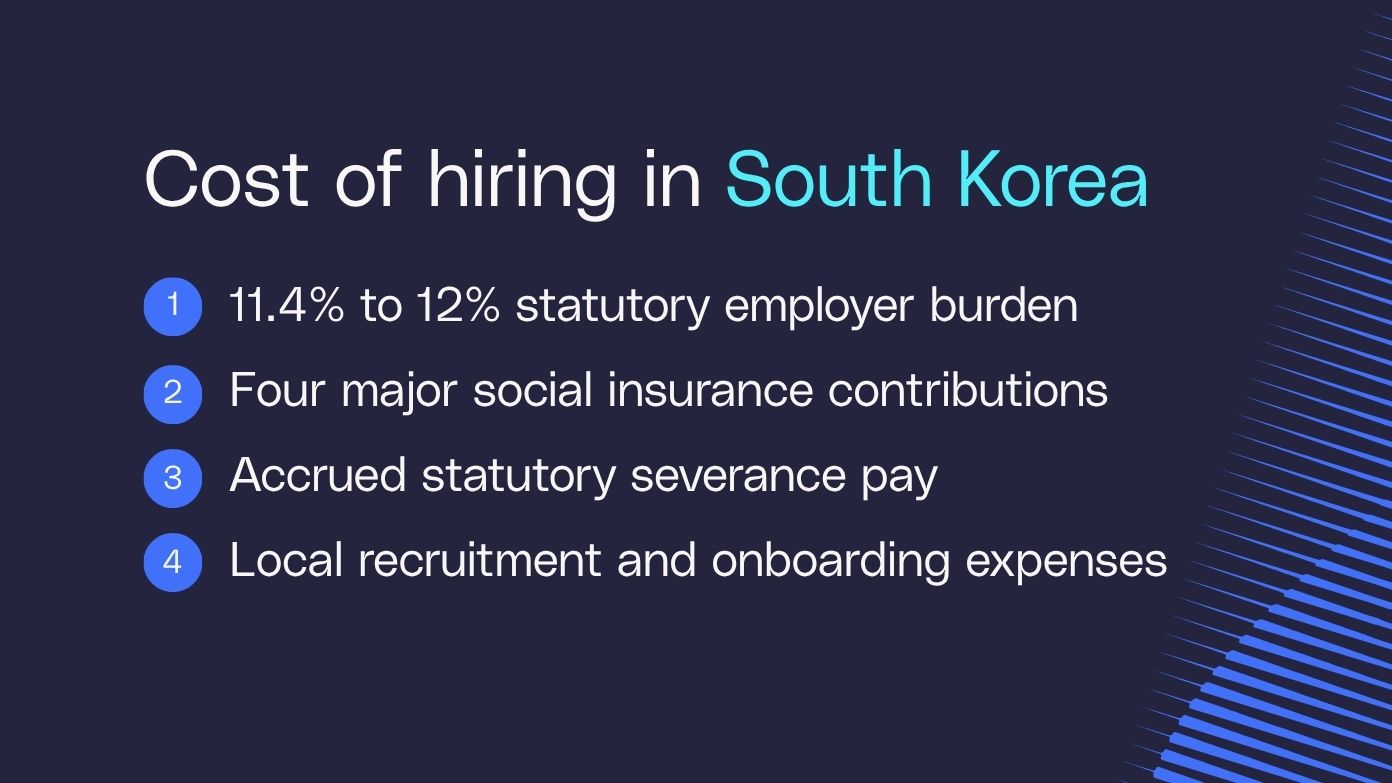
根据G-P Verified Sources from Gia的数据,韩国年度雇主总负担率(包括工资以外的成本)在11 4至12 % 之间。 由于不同行业的薪酬溢价不同,这种情况在高风险行业可能会更加明显。
公司在韩国招聘员工需要哪些条件?
- 选择公司注册方法。
- 设计公司印章。
- 开设银行账户。
- 注册您的公司。
- 登记参加社会保险。
- 选择并开设办公室(如适用)。
- 文件雇佣规则(如果工作场所定期雇用10名或更多员工)
在韩国设立子公司可能需要数周或数月的时间。使用韩国的专业雇主来招聘员工,而无需建立自己的实体。 以更低的成本组建您的团队,并安心地确保您所做的一切都符合规定。
在韩国招聘的步骤
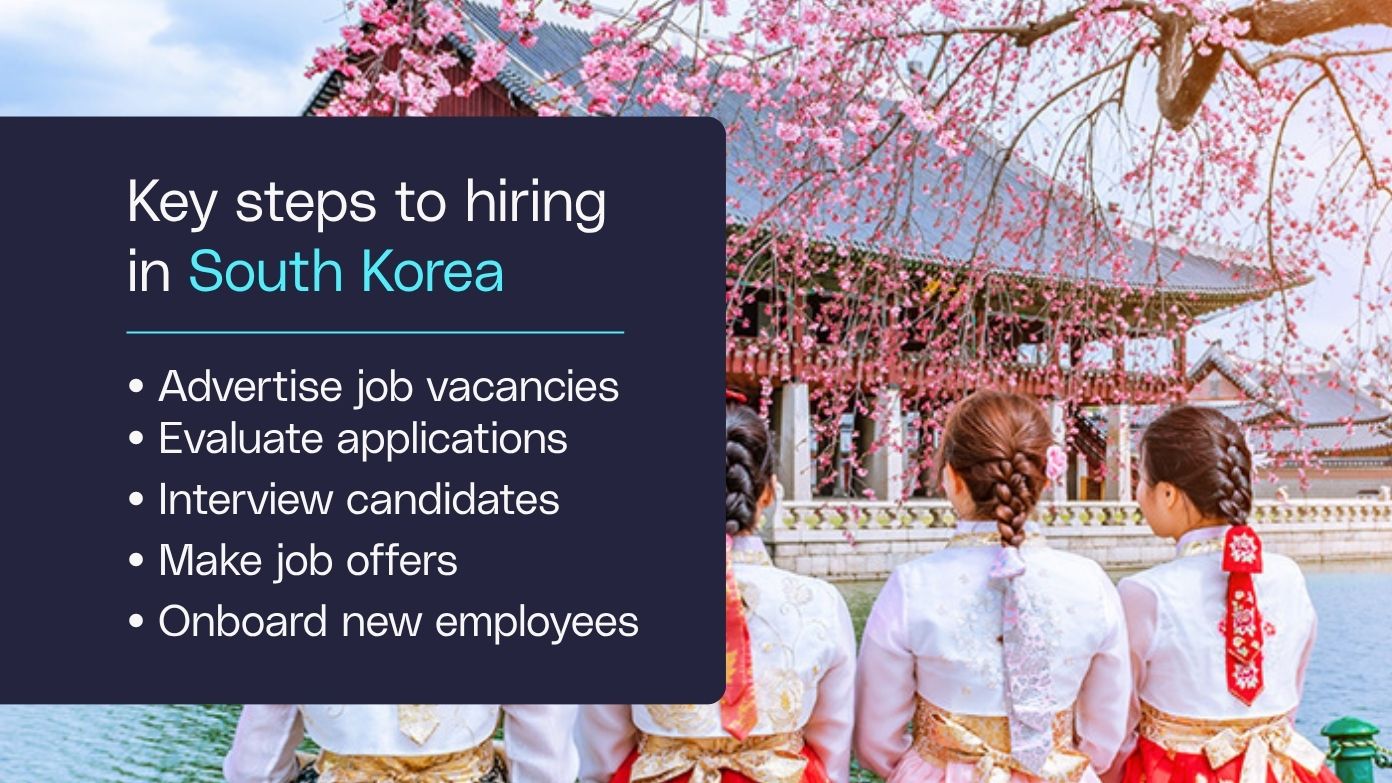
韩国的聘用流程与您在自己的国家/地区可能熟悉的流程类似。 以下是五个基本步骤:
1.招聘广告
韩国的反歧视法律,如《劳动标准法》和《平等就业机会和工作家庭平衡援助法》,在招聘过程中保护求职者的权益。 雇主不得基于性别、年龄、国籍、宗教、社会地位、婚姻状况、怀孕、残疾或就业状况进行歧视。确保招聘信息只关注与工作相关的资格要求。
韩国通过了一项“盲聘法”,限制公司在招聘面试中可以提出的问题。拥有30名以上员工的潜在雇主必须避免询问以下话题,否则将面临最高5百万韩元的罚款:
- 国籍
- 婚姻状况
- 家庭成员
- 财产所有权状况
- 外表,包括体重和身高,除非与工作职责有关
2.评估求职申请
按照反歧视法律筛选申请并进行面试。
雇主在处理求职者数据时必须遵守《个人信息保护法》(PIPA),并在适用情况下遵守《公平招聘程序法》。
主要要求:
- 只收集与工作相关的信息。
- 向申请人提供隐私声明,解释收集哪些数据、为什么需要这些数据、数据将保留多长时间以及是否会共享这些数据。
- 必要时,取得有效同意。
- 除非法律有明确授权,否则应避免收集韩国居民登记号码。
- 限制背景调查。犯罪记录、信用记录、健康状况和其他敏感信息核查需要有明确、适度、与工作相关的依据和适当的授权。一般而言,犯罪记录核查并非例行程序。
- 限制内部访问权限,仅允许真正需要该信息的招聘人员和决策者访问。
- 招聘目的和规定的保存期限结束后,删除或退还未被录用的申请人的文件。《公平招聘程序法》还赋予申请人有关退还某些已提交文件的权利。
- 确保所有决定都与工作相关。面试记录应记录客观的甄选标准,而不是主观的或受保护的个人特征。
3.面试候选人
面试入围候选人名单。你可以选择亲自面试或线上面试。使用结构化、非歧视性的面试问题。Gia可以帮助您创建符合韩国反歧视法律的问题,以便您在遵守当地法规的同时,找到最适合该职位的人选。
4。发出工作邀请
联系你选定的候选人,向他/她提供贵公司的职位。录用通知书应明确列明用人单位、职位、职责、工作地点、雇佣类型、开始日期、薪酬、工作时间、试用期、福利和接受流程。
务必明确区分固定工资与酌情发放的奖金、佣金和股权。
5.安排新员工入职
现在你可以为新员工办理入职手续了。满足以下要求可以简化流程:
- 在非本国公民从事任何工作之前,必须核实其工作许可。
- 在开始之前或开始时交付强制性书面雇佣合同。
- 请提供完整的工资、工时、节假日、休假、工作场所和职责信息。
- 添加固定期限和兼职员工所需的详细信息。
- 为员工办理适用的社会保险和工资预扣。
- 每个发薪日都出具符合规定的详细工资单。
- 对员工数据应用PIPA控制措施。
- 提供适用的安全、工作场所政策、骚扰、安保和岗位职责培训。
- 避免随意或自动试用结束聘用语言。
有了G-P专业雇主,您无需担心入职的行政负担。 我们将简化流程,以便您可以专注于培训潜在的新员工并将他们融入您的公司文化。
在韩国雇用独立承包商
在韩国,雇用独立承包商是一种经济高效的方式,可以在不雇用全职员工的情况下测试市场并建立业务。
总部位于韩国的承包商了解当地的消费者行为、规则和商业惯例。他们将做好准备,利用自己的设备和既定的工作流程迅速投入工作。
在韩国雇用承包商,您可以根据业务需求轻松调整劳动力,而无需承担雇佣的复杂性和成本。在与韩国的独立合同工签订协议之前,请考虑以下事项:
1.员工与独立合同工
了解雇员和独立承包商之间的区别很重要。在韩国,雇员受《当地服务代理法》管辖。 当地劳务派遣为员工提供法定的保障和福利,包括遣散费、带薪休假、参加社会保险等。 承包商依据《民法典》开展业务。
员工分类取决于关系的实质。当局和法院会考虑以下因素:
- 对工作方法、工时和工作地点拥有控制权。
- 能够接受或拒绝任务
- 提供工具和设备
- 能够委托或分包
- 付款方式
- 财务风险和盈利机会
- 融入客户业务
- 排他性、连续性和经济依赖性
2.对误分类的罚款
当某人不是合同工时将其归类为合同工可能会导致严重的惩罚。 如果出现错误分类,您可能需要:
- 补发员工福利,包括社会保险缴款、遣散费、带薪休假和健康保险。
- 面临行政罚款和税务处罚。
- 处理可能损害你吸引人才能力的声誉损害。
3.如何向韩国承包商支付款项
G-P Contractor ™简化了雇用和支付国际化承包商的繁琐、耗时的过程。 只需点击几下鼠标,即可创建和发布合同并向承包商付款,同时确保流程合规。
通过G-P在韩国雇佣员工和承包商
我们的全球雇佣平台™ (全球雇佣平台)及其人工智能驱动的产品——专业雇主、承包商和Gia使各种规模的公司能够建立和管理全球团队。
G-P是全球就业领域公认的领导者,拥有十多年的经验、规模最大的人力资源、法律和合规专家团队以及全球专有知识库。
使用 G-P,让您更轻松地拓展韩国市场。立即联系我们或预约演示。
 常见问题
常见问题
在韩国,雇佣合同应包括哪些内容?
根据韩国《劳动基准法》,韩国雇主必须向所有雇员提供书面劳动合同,其中应详细说明:
工作职责和工作地点
工资,包括构成要素、计算方法和支付时间
合同规定的工作时间,包括上下班时间和休息时间
法定节假日
年度带薪休假
面试时禁止问哪些问题?
为遵守反歧视法,除非与工作直接相关,否则应避免询问性别、年龄、婚姻状况、家庭背景和外貌等个人信息。
韩国的最低工资是多少?
截至 1 月 1、2026 日,韩国的全国最低工资为每小时 10、320 韩元,按每月 209 小时计算,相当于每月 2、156、880 韩元。
在韩国,雇用国际化员工有哪些要求?
所有国际化工人必须遵守就业许可制度,并获得相应的工作签证、签证签发确认证明(CCVI)及其他文件。
雇主在招聘过程中应如何处理数据隐私?
雇主在处理求职者数据时必须遵守《个人信息保护法》(PIPA),并在适用情况下遵守《公平招聘程序法》。