







Viktiga takeaways
- Skriftliga avtal är obligatoriska: Arbetsgivare måste tillhandahålla ett skriftligt anställningsavtal när anställningen börjar eller inom en månad från det att anställningen påbörjats.
- Obligatoriska lagstadgade förmåner och hög arbetsgivarebörda: Kina har ett "5+1" förmånssystem, som omfattar fem typer av socialförsäkringar (pension, sjukförsäkring, arbetslöshetsersättning, arbetsskadeersättning, föräldraförsäkring) och bostadsfonden. Den totala kostnaden, eller arbetsgivarens börda, för dessa obligatoriska avgifter och andra kostnader är cirka 30–40% utöver anställdas löner.
-
Arbetstiderna är reglerade: Kina har strikta regler för standardarbetstider, betald ledighet och övertid.
- Effektiviserad anställning via arbetsgivare of record (Employer of Record): Att etablera en enhet (som ett China dotterbolag) kan ta månader och innebär många steg (företagslicens, skatteregistrering, bankkonto, etc.). Du kan anställa heltidsanställda snabbare och på ett smidigt sätt utan att skapa en enhet genom att använda en arbetsgivares registerlösning, till exempel G-P Employer of Record.
Kina har världens näst största ekonomi och en befolkning på över 1 4 miljarder människor. Landets växande medelklass är en viktig konsumtionsdrivare. Kinas välutvecklade infrastruktur, inklusive sju av världens största containerhamnar och ett omfattande höghastighetsjärnvägsnät, stöder inhemsk distribution och global export. Detta integrerade ekosystem gör det attraktivt för globala företag.
Innan du expanderar till Kina behöver du förstå avtal, skatter, löner, förmåner och andra arbetsrättslagar. Vår guide tar upp vad du behöver veta om att anställa i Kina.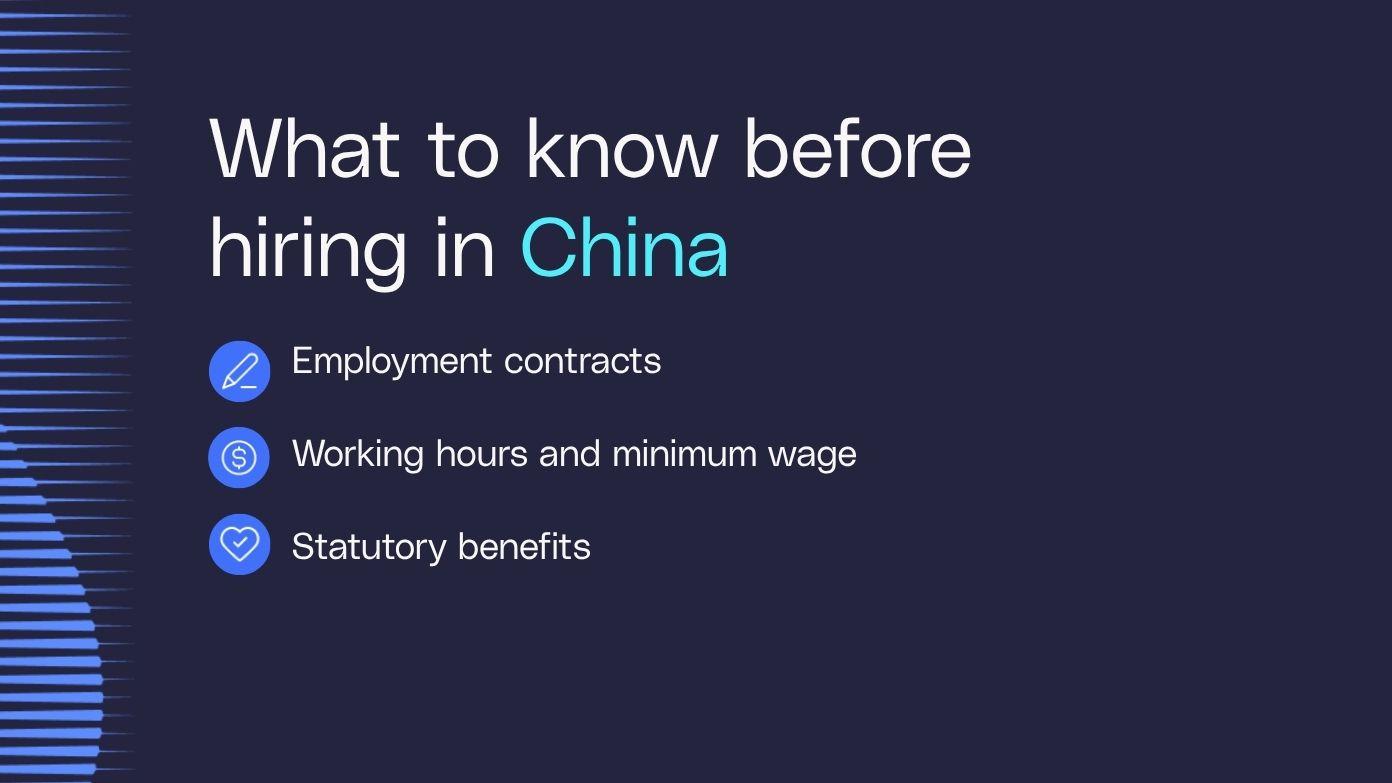
Vad du ska veta innan du anställer i Kina
Om du expanderar din verksamhet till Kina för första gången måste du förstå flera viktiga juridiska krav. Dessa normer och lagar påverkar anställningspraxis i Kina och många aspekter av relationen mellan arbetsgivare och anställd, inklusive ersättning och förmåner.
G-P Gia™, vår globala HR agent baserad på artificiell intelligens, kan svara på dina tuffaste efterlevnadsfrågor i 50 länder – inklusive Kina – och alla 50 amerikanska delstater. Minska ditt beroende av extern rådgivning och minska tiden och kostnaden för efterlevnad med upp till 95% med Gia.
Här är fem saker att veta om att anställa i Kina.
1. Språk i Kina
Kina erkänner 56 etniska grupper, och det finns nära 300 levande språk i hela landet. Denna mångfald är en grundläggande aspekt av kinesisk kultur och samhälle. Standard Mandarin är det officiella språket som talas av över 1.1 miljarder människor i världen. Detta gör det till det näst mest talade språket globalt. Dess användning i affärer, regering, och utbildning är utbredd över fastlandet Kina.
Omkring 10–25 miljoner människor i Kina talar engelska med någon viss nivå av kunskaper. Engelskakunskaper är högre i större städer som Shanghai och Peking.
När du anställer i en specifik stad, ta reda på vilka lokala anställningskrav som gäller innan du lägger ett erbjudande. Lokala regler kommer att påverka minimilöner, övertid, avgifter och förmåner.
2. Anställningsavtal i Kina
Arbetsgivare i Kina måste tillhandahålla ett skriftligt anställningsavtal till varje anställd. Arbetsgivare ska ingå ett skriftligt anställningsavtal när anställningen påbörjas eller inom en månad från det att anställd påbörjat arbetet. Om kontraktet inte undertecknas inom en månad från det att anställningen startat, ska arbetsgivaren betala dubbelt så mycket som anställningens månadslön för varje månad som kontraktet är osignerat (upp till ett år).
Ett lagligt anställningsavtal i Kina måste innehålla:
- Arbetsgivarens fullständiga namn, registrerade adress och juridiska ombud eller huvudansvarig person
- Arbetstagarens fullständiga namn, adress och giltigt identifikationsnummer
- Typ av kontrakt (tidsbestämt, tillsvidare eller projektbaserat)
- Arbetsbeskrivning och arbetsplats
- Arbetstid, vila och ledighet
- Kompensationsuppgifter (lön i kinesiska yuan renminbi, utbetalningsfrekvens och eventuella bonusar)
- Social (både arbetsgivare och anställda avgifter)
- Yrkesskydd, arbetsförhållanden och skydd mot arbetsrisker
- Villkor och förfaranden för uppsägning
- Andra saker som krävs enligt lag eller ömsesidigt överenskomna
Utkast till kontrakt på mandarin. Om du använder ett tvåspråkigt kontrakt, se till att den kinesiska versionen listar alla villkor korrekt ifall det finns avvikelser.
3. Löner och arbetstid i Kina
Standardarbetsveckan i Kina är åtta timmar per dag och 40 timmar per vecka. Detta anges i arbetslagen och statsrådets föreskrifter om anställdas arbetstid. Anställda får minst en hel vilodag per vecka.
Övertidslönen i Kina delas upp enligt följande:
- Övertid påWorkday : Minst 150% av normal lön för extra arbetade timmar
- Övertid på vilodag: Minst 200% av den normala lönen om kompensationstid inte kan tillhandahållas
- Lagstadgad helgdagsövertid: Minst 300% av normal lön. Kompenserande ledighet är inte tillåten som ersättning.
Övertid bör inte överstiga en timme per dag, eller tre timmar under särskilda omständigheter, och får inte överstiga 36 timmar per månad.
Det finns ingen nationell minimilön i Kina. Provinser, kommuner och autonoma regioner fastställer sina egna minimilöner. Till exempel, från och med juli 2025, Shanghais minimilön är 25 yuan per timme och 2 740 yuan per månad.
Kina erbjuder ingen 13månads- eller årsbonus. Det är dock en vanlig praxis, och många anställda förväntar sig det som en del av sin totala ersättning.
4. Lagstadgade förmåner i Kina
Anställda i Kina får följande fem typer av socialförsäkringar, plus bostadsfonden.
- Pensionsförsäkring: Ger tryggad pensionsinkomst
- Sjukförsäkring: Täcker icke-yrkesmässiga medicinska kostnader, inklusive öppenvård och sjukhusvistelse
- Arbetslöshetsförsäkring: Erbjuder ekonomiskt stöd till anställda som är ofrivilligt arbetslösa
- Arbetsskadeförsäkring: Täcker arbetsskador eller yrkessjukdomar som drabbats under anställningen.
- Föräldraförsäkring: Täcker sjukvårdskostnader i samband med förlossning och ger inkomstersättning i samband med förlossning (numera ofta sammanslagna med sjukförsäkring, men fortfarande en lagstadgade förmåner)
- Bostadsfond: Ett obligatoriskt sparprogram för att hjälpa anställda med bostadsrelaterade utgifter, såsom att köpa eller renovera ett hem eller betala tillbaka ett bolån.
Både arbetsgivare och anställda bidrar till dessa fonder, med undantag för arbetsrelaterad skadeförsäkring och mödravårdsförsäkring, som arbetsgivaren finansierar. Lokala myndigheter fastställer bidragssatser, vilka varierar beroende på stad och region. Varje ort fastställer minimi- och maximigränser för lön för beräkning av bidrag, vilka justeras årligen.
Arbetsgivare ansvarar för att registrera anställda och betala in både arbetsgivare- och anställdsavgifter till berörda myndigheter varje månad. De lagstadgade förmånerna "5+1 " är obligatoriska. Många arbetsgivare erbjuder tilläggsförmåner (som högre bostadsfondavgifter, tilläggssjukförsäkring eller tilläggsbidrag) för att attrahera och behålla spetskompetens. Detta är en vanlig och effektiv strategi på konkurrensutsatta arbetsmarknader.
5. Semester och obligatorisk ledighet i Kina
Kina har 13 nationella helgdagar. Dessa inkluderar nyårsdagen, vårfestivalen (månnyåret), Qingmingfestivalen, arbetarnas dag, drakbåtsfestivalen, midhöstfestivalen och nationaldagen. Vissa helgdagar sträcker sig över flera dagar (t.ex. vårfestivalen och nationaldagen). Regeringen publicerar ett årligt schema för helgdagar och eventuella justerade arbetsdagar.
Årlig ledighet baseras på tjänsteår (för alla arbetsgivare):
- 1-10 år: 5 dagar
- 10-20 år: 10 dagar
- 20+ år: 15 dagar
När en arbetsgivare inte ordnar obligatorisk årstermin måste den i allmänhet betala 300% av anställdes dagliga lön för den outnyttjade lagstadgade ledigheten. Outnyttjad ledighet kan överföras till nästa år med anställds samtycke, men måste användas inom det året.
Rätt till sjukledighet och lön fastställs i lokala bestämmelser och beror på anställdes anställningstid och arbetslivserfarenhet. Sjukfrånvaron kan vara allt från några månader upp till två år. Sjukersättningen varierar från 60–100% av anställds ordinarie lön men kan inte understiga 80% av det lokala minimilönet.
Rekrytering av modeller för globala företag i Kina
Du har flera alternativ när du anställer personal i Kina.
- Direktanställning genom din egen enhet: Om du etablerar en lokal enhet i Kina tar du ansvar för alla anställningsförpliktelser. Detta inkluderar lokal efterlevnad, löner, skatter, anställningsavtal, HR-register, bidrag till bostadsfonder och socialförsäkringar. Att etablera en lokal enhet kan vara vettigt när målet är att bygga en långsiktig verksamhet i Kina.
- Anställa via en arbetsgivare: En kinesisk arbetsgivare (Employer of Record) låter dig anställa anställda i ett land där du inte har en lokal arbetsgivare. Den registrerade arbetsgivaren är i huvudsak den "juridiska arbetsgivaren" och hanterar anställningsskyldigheterna medan du sköter det dagliga arbetet. G-P Employer of Record låter företag anställa, onboarda och hantera anställda i fler än 180länder utan att etablera egna enheter. Om du anställer i Kina minskar den här metoden ditt administrativa arbete.
- Etablering av dotterbolag eller filial: Ett dotterbolag är en separat juridisk enhet som kan anställa anställda direkt i Kina samtidigt som det fortfarande är en del av din verksamhet. En filial är en förlängning av ditt moderbolag snarare än en separat juridisk enhet. I båda fallen måste du upprätthålla en lokal närvaro och följa kinesiska anställningsförpliktelser. Dessa alternativ är vettiga för företag som planerar en långsiktig närvaro i Kina.
- Anlita oberoende entreprenörer: En oberoende entreprenör tillhandahåller tjänster snarare än att arbeta som anställd. Kina bestämmer inte en arbetares status baserat på en etikett. Snarare granskar kinesiska domstolar och arbetsrättsmyndigheter arbetsrelationen, inklusive vilket arbete de utför för ditt företag och hur de passar in i din verksamhet. Om personen arbetar som anställd riskerar du att felklassificera dem. Granska din arbetares klassificering innan anställningen påbörjas och se till att din klassificering matchar den faktiska arbetsrelationen.
De bästa anställningscentrumen i Kina
Vissa städer i Kina är kända för särskilda industrier. Genom att veta vad varje stad har att erbjuda kan du fokusera dina anställningsinsatser på rätt plats och fylla roller snabbare.
De främsta kompetenscentren i Kina är:
- Peking är huvudstaden och ett viktigt centrum för regering, teknologi, finans, utbildning och media. Det är hem för många multinationella huvudkontor, statligt ägda företag och en växande startup-scen.
- Shanghai är Kinas största stad och ett globalt finanscentrum. Det är känt för sina finans-, teknologi-, handels- och professionella tjänstesektorer och lockar till sig stora globala investeringar och kompetenser.
- Shenzhen är ett ledande teknik- och innovationscentrum, ofta kallat Kinas Silicon Valley. Shenzhen är hem för stora teknikföretag som Huawei och Tencent. Den är stark inom elektronik, tillverkning och finansiella tjänster.
- Guangzhou är huvudstad i Guangdong-provinsen och ett centrum för tillverkning och handel. Det är hem för stora industrier, inklusive fordonsindustrin, elektronik och logistik.
- Chengdu är västra Kinas ekonomiska och tekniska centrum. Staden är ett växande centrum för IT-, finans- och fordonssektorn. Det är även populärt för teknikstartups och FoU-centra.
Nyckelindustrier i Kina
Att förstå Kinas huvudindustrier gör att du kan jämföra löner och förmåner. Du kan använda denna insikt för att göra smarta val om var du ska investera och expandera din arbetskraft.
De viktigaste industrierna i Kina inkluderar:
- Tillverkning: Kina är känt som"världens fabrik" och producerar elektronik, maskiner, textilier, bilar, stål och konsumtionsvaror.
- Teknik och elektronik: Viktiga sektorer inkluderar IT, telekommunikation, halvledare och konsumentelektronik. Kina är hem för globala teknikjättar som Huawei, Tencent, Alibaba och Xiaomi.
- Fordon: Kina är världens största fordonsmarknad, med starka inhemska varumärken och stora globala investeringar. Elfordon och batteritillverkning är snabbt växande områden.
- Finans och bank: Shanghai och Shenzhen är viktiga finanscentra. Sektorn omfattar bank, försäkring, kapitalförvaltning och fintech.
- E-handel och detaljhandel: Kina är världsledande inom e-handel, med plattformar som Alibaba, JD.com och Pinduoduo. Det finns en snabb tillväxt inom onlinehandel, logistik och digitala betalningar.
Kostnad för att anställa en medarbetare i Kina
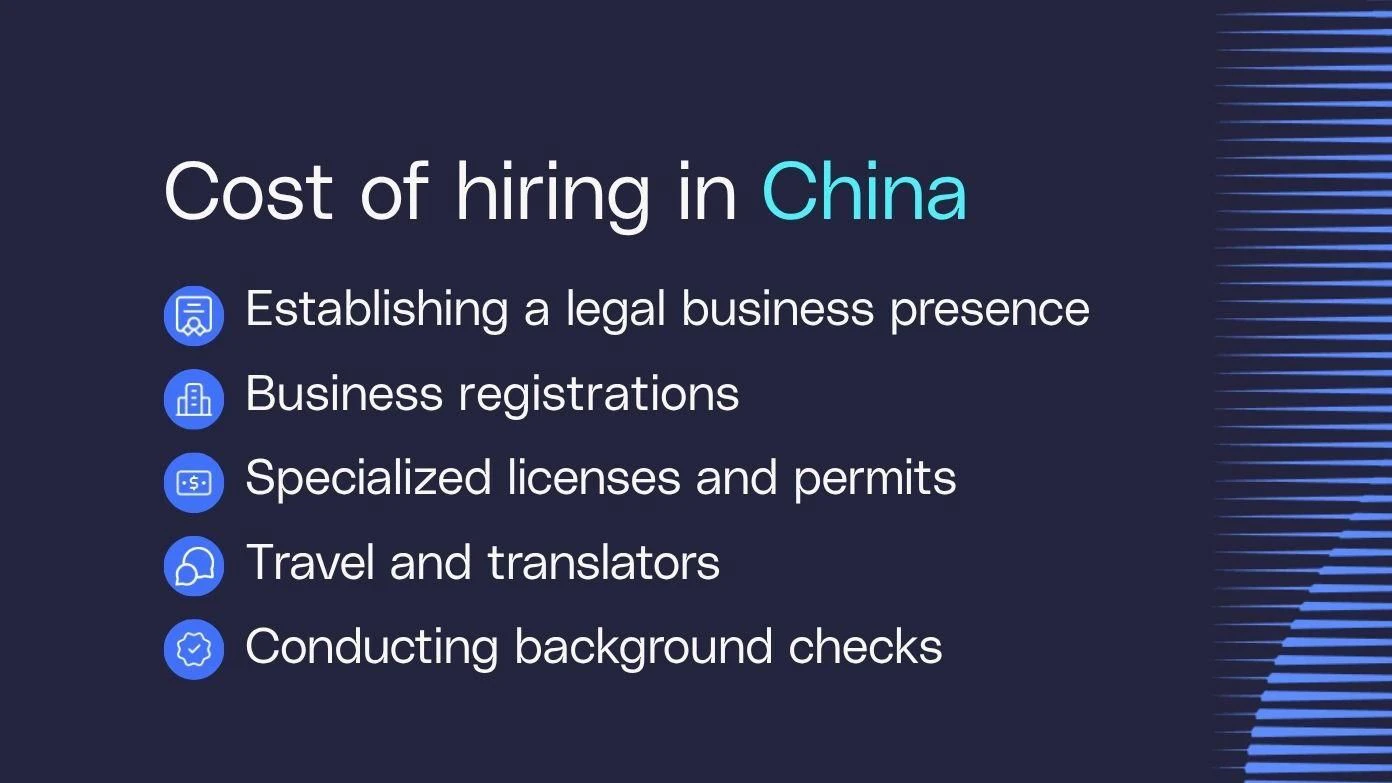
Oavsett om du anställer en anställd eller ett helt team i Kina är utgifter oundvikliga, och du kommer att behöva täcka mer än bara lön. Budget för följande:
- Enhetsinrättning (såvida du inte samarbetar med en registrerad arbetsgivare)
- Platsannonser
- arbetskraftskostnader för granskning av arbetssökande
- Löner
- Skatt
- löner
- Fördelar
- Bonusar
- traktamenten,
- försäkring
- Resa
- Översättare (om tillämpligt)
Enligt G-P verifierade källor från Gia 40 30 .
Vad behöver ett företag för att anställa personal i Kina?
Se till att du har täckt dessa viktiga saker innan du utökar ditt team i Kina:
- Skaffa en företagslicens från din lokala administration för marknadsreglering (AMR).
- Registrera dig hos den lokala skattebyrån för att få ditt skattebetalarens identifikationsnummer (TIN).
- Ställ in skattekonton för mervärdesskatt, företagsskatt och andra tillämpliga skatter.
- Öppna ett lokalt bankkonto.
- Registrera ditt företag och dina anställda hos den lokala Social och bostadsfondens förvaltningscentral.
- Inrätta ett lagligt lönesystem för att beräkna och innehålla skatter, socialförsäkringsavgifter och bostadsfondavgifter.
- Registrera dig för andra lokala krav (t.ex. registrering av utländsk valuta, tullregistrering för import-/exportföretag).
- För korrekt HR register och följ lokala arbetsrättsliga rapporterings- och inlämningsskyldigheter.
Att etablera ett kinesiskt dotterbolag kan ta veckor eller månader. Använd G-P Employer of Record för att anställa heltidsanställda i Kina utan att skapa en egen enhet. Bygg ditt team i Kina till en lägre kostnad och med sinnesro i vetskapen om att du gör det i enlighet med gällande lagar.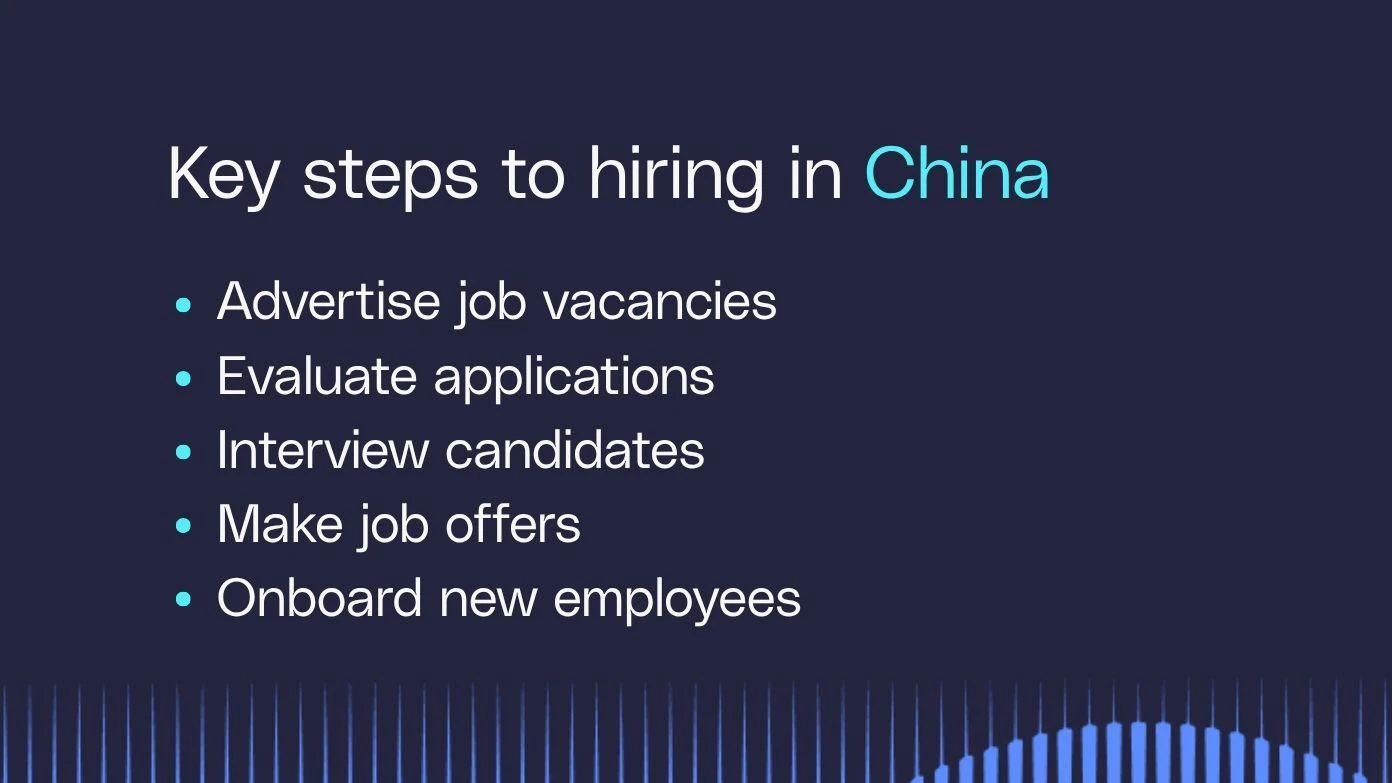
Steg för att anställa i Kina
Anställningsprocessen i Kina liknar den du förmodligen känner till i ditt eget land. Anställningsprocessen följer fem grundläggande steg: annonsera tjänsten, utvärdera ansökningar, intervjua kandidater, skicka jobberbjudanden och onboarding nya medarbetare.
1. Annonsera lediga jobb i Kina
Definiera roll, ansvar, kvalifikationer och kompensationspaket. Se till att arbetsbeskrivningen är i enlighet med kinesisk arbetslagstiftning. 51jobb, Zhaopin och Liepin är populära jobbsajter i Kina.
2. Utvärdera jobbansökningar i Kina
Samla in ansökningar och granska CV. Screenskandidater baserat på deras kvalifikationer, erfarenhet och lämplighet för rollen.
3. Intervjuar kandidater i Kina
Intervjua kandidater som kom med på din lista. Du kan göra dessa intervjuer personligen eller virtuellt. Gia kan hjälpa dig att skapa frågor som följer antidiskrimineringslagar i Kina, så att du kan hitta den bästa personen för rollen samtidigt som du följer lokala bestämmelser. Använd färdighetsbedömningar, tekniska tester eller psykometriska utvärderingar om det är relevant för rollen. Kontrollera referenser och verifiera kvalifikationer.
4. Göra jobberbjudanden i Kina
Kontakta din valda kandidat för att erbjuda dem en Befattning med ditt företag. Utarbeta ett lagligt, skriftligt anställningsavtal på kinesiska (tvåspråkigt vid behov), inklusive alla obligatoriska klausuler (tjänstetitel, ersättning, förmåner, arbetstider etc.). Anställningsavtalet bör undertecknas när anställningen påbörjas eller inom en månad från det att anställd påbörjat arbetet.
5. Onboarding av nya anställda i Kina
Nu kan du onboarda nya medarbetare. Registrera din potentiella kandidat hos de lokala socialförsäkrings- och bostadsfondbyråerna. Samla in nödvändiga dokument (ID, examensbevis, bankkontouppgifter etc.) och ge introduktion, utbildning och tillgång till företagssystem.
Se till att löneutbetalningar, socialförsäkringar och skatteavdrag är korrekt upprättade och för noggranna HR-register.
Om du arbetar med G-P Employer of Record behöver du inte oroa dig för den administrativa bördan med onboarding. Vi effektiviserar processen så att du kan fokusera på att utbilda potentiella kandidater och integrera dem i din företagskultur.
Anställa entreprenörer i Kina
Att arbeta med oberoende entreprenörer i Kina kan vara ett kostnadseffektivt sätt att testa marknaden och bygga upp en närvaro utan att anställa heltidsanställda. Beroende på sin erfarenhet kan lokala entreprenörer bidra med kunskap om konsumentbeteende och affärsmetoder till specifika projekt. De kan också ha etablerade arbetsprocesser som hjälper dem att komma igång snabbt.
Att anlita entreprenörer gör att du enkelt kan anpassa din arbetskraft baserat på dina affärsbehov, utan de komplexiteter och kostnader som en anställning medför.
Innan du ingår ett avtal med en oberoende entreprenör i Kina, tänk på följande:
1. Anställda kontra oberoende entreprenörer i Kina
Det är viktigt att förstå skillnaden mellan anställda och oberoende entreprenörer. I Kina anställer arbetsgivare anställda att utföra arbete och betalar dem i gengäld ett regelbundet lön och förmåner. Oberoende entreprenörer tillhandahåller tjänster. Till skillnad från anställda sätter entreprenörer sina scheman, använder sin egen utrustning och arbetar med specifika projekt snarare än att ha en löpande roll.
2. Hur man betalar entreprenörer i Kina
G-P Contractor tar bort den röriga och tidskrävande processen att anlita och betala internationella entreprenörer. Du kan skapa och utfärda avtal och betala entreprenörer med bara några få klick, samtidigt som du stöder en lagenlig process.
Anställ anställda och entreprenörer i Kina med G-P
Våra Mjukvara som en service och AI-drivna produkter – G-P- Employer of Record, G‑P Contractor och Gia – stödjer företag när de bygger och hanterar globala team. G-P är den erkända ledaren inom global sysselsättning med mer än ett decennium av erfarenhet, det största team av HR, juridik- och efterlevnadsexperter, samt en global, egenutvecklad kunskapsbas.
Gör din expansion till Kina enklare med G-P. Kontakta oss eller boka en demo idag.
Vanliga frågor
Vilka är de obligatoriska delarna av ett anställningsavtal i Kina?
Anställningsavtal måste vara skriftliga och innehålla tjänstetitel, arbetsuppgifter, ersättning, arbetstider, förmåner, socialförsäkring och uppsättningsvillkor.
Vilka är de fem typerna av socialförsäkring i Kina?
Pension, medicinsk, arbetslöshet, arbetsskada och moderskap. Bidragssatserna varierar beroende på stad.
Vilka är reglerna för arbetstid och övertid i Kina?
Standardarbetstiden i Kina är åtta timmar per dag och 40 timmar per vecka. Övertidsersättningen är 150% på en arbetsdag, 200% på en vilodag och 300% på en helgdag.
Hur beräknas årlig semester i Kina?
Årlig semester baseras på ackumulerade tjänsteår: fem, 10 eller 15 dagar. Outnyttjad lagstadgad ledighet ersätts med 300% av anställds dagliga ledighet.
Finns det at-will employment i Kina?
Nej. Uppsägning måste följa lagstadgade förfaranden och grunder. Avgångsvederlag krävs vanligtvis såvida det inte är allvarligt fel.

