






主なポイント
-
連邦構造、地方規則:連邦法(労働法や債務法典など)は雇用基準を定めていますが、具体的な税率、祝日、行政手続きはスイスの26によって異なります。
-
EU/EFTA圏外の人材に対する厳格な就労許可規則:スイスでEU/EFTA圏外の労働者を雇用するには、現地の労働市場における優先権を証明し、厳格な国の割り当て基準を満たし、複数段階の許可承認を得る必要があります。
-
雇用主負担率は 10%から20%までです: 基本給に加えて、スイスでの採用時に雇用主は義務的かつ慣習的な拠出金の予算を立てなければなりません。これには社会保障(AHV/IV/EO)、失業保険、職業年金(BVG)、事故保険、 13月給が含まれます。
-
誤分類には5年間遡及する誤約金が発生する:スイスで雇用する際に従業員を請負業者として誤分類すると、過去5年間の雇用主と従業員社会保障の支払いと利息を含む金銭的誤約金が発生する可能性がある。
スイスの人口は8 . 9百万人で、スイス人、ドイツ人、フランス人、イタリア人、ポルトガル人、コソボ人の合計です。各州は同じ国家通貨であるスイスフランを使用している。主要セクターとしては、金融・銀行業、医療機器、エンジニアリングなどが挙げられる。
有利な法人税制と文化的なアクセスの良さは、多くの多国籍企業がスイスに進出する2つの理由である。このガイドでは、スイスでの雇用について知っておくべきことをすべてご説明します。
スイスで雇用する前に知っておくべきこと
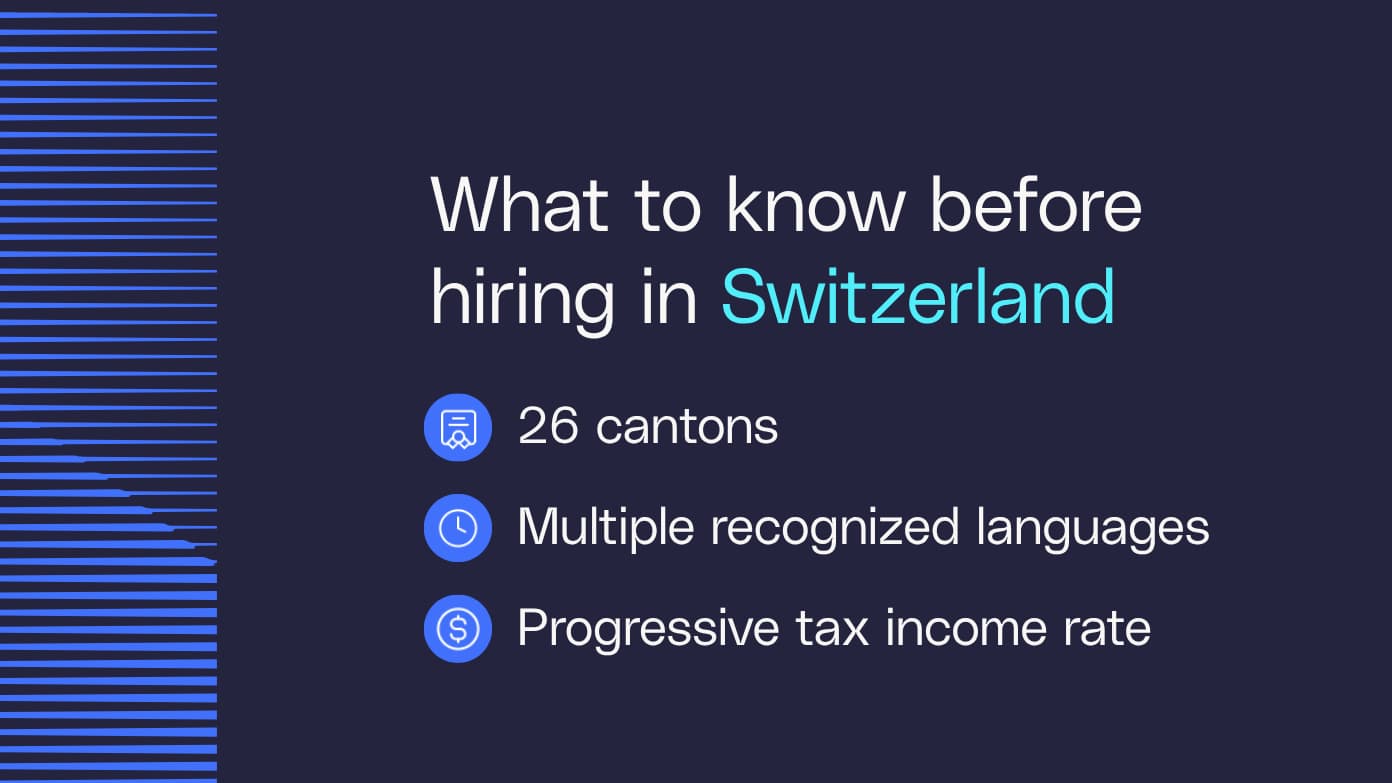
初めてスイスに事業を拡大する場合、留意すべき重要な法的要件がいくつかあります。これらの規範と法律は、スイスにおける雇用慣行に影響を与えている。
どこから始めればよいかわからない場合は、当社の人工知能 (AI) を活用したグローバル人事、人事部エージェントであるG-P Gia™ 、スイスを含む50国および米国のすべての50州にわたるコンプライアンスの最も難しい質問に答えることができます。 外部弁護士への依存を減らし、Giaと協力すればコンプライアンスの時間とコストを最大 95%削減できます。
スイスでの採用に関して知っておくべき8つのポイントを見ていきましょう。
1 。雇用主と従業員に関する法令
すべての雇用主と従業員の関係は、次の法令を遵守する必要があります。
-
SR 151 . 1 — 男女平等に関する連邦法
-
SR 220 — 債務法典
-
SR 822.11 — 労働法
-
SR 822.14 — 労働者参加法
-
SR 823.11 — 雇用サービスおよびサービス雇用に関する連邦法
-
SR 823.20 — 派遣労働者法
スイスは、労働組合がすべての法的要件を満たしている限り、その存在を承認する。
2 。スイスの州
スイスは26州に分かれています。これらは全てスイスという国家の傘下にあるものの、それぞれが独立した強力な組織である。各州には独自の伝統と文化がある。彼らはまた、法律、憲法、政府機構など、独自の自治方法を持っている。
スイスで従業員を雇用する際は、求人広告を掲載する州に注意してください。候補者の居住州を知ることで、翻訳に関する期待値、雇用契約に含めるべき税率、そして候補者が取得できる休暇の種類などについて理解を深めることができます。
スイスでは、各州内に存在する小規模な行政機関であるコミューンが、雇用方法を決定する。
3 。スイスの労働市場
スイスの労働市場には5万人以上が従事している。雇用率は80 . 6 %です。比較のために、 EUのレートは75 . 8 %です。従業員は高度なスキルを持ち、高等教育機関の学位を取得している。幼児教育と中等教育に関して言えば、スイスの教育制度は州によって異なっている。IMD世界人材ランキング2024は、スイスを世界で自国の人材育成において第1国に選出した。
4 。スイスの言語
多言語主義はスイス文化の中核をなす要素であり、それは主に言語法によるものである。この法律は、ドイツ語、フランス語、イタリア語、およびロマンシュ語を国語として認めるものである。ドイツ語、フランス語、イタリア語も連邦の公用語である。ロマンシュ語は、ロマンシュ語話者とのコミュニケーションにおいて公式に使用されています。同国の住民のおよそ3分の2が複数の言語を話す。スイスの子どもたちは、幼児教育の期間中に少なくとも2つの公用語を学ぶ。
スイスドイツ語は、各州で最も広く話されている言語である。フランス語は西部の州で、イタリア語は南部の州でよく使われている。ロマンシュ語は、アルプス地方の初期の住民であったレーティア人に由来する、あまり使われていない言語である。州や地域によっては、独自の訛りや口語表現が存在する場合もある。
すべての雇用契約、面接、任務では、面談を受ける人または従業員の第一言語を考慮する必要があります。 すべての文書を翻訳し、必要に応じて通訳を利用することは良い習慣です。
5 。就業時間と休暇
スイス労働法は、労働時間と休暇に関する法律を規定している。工業企業の従業員、事務スタッフ、技術スタッフ、大規模小売企業の営業スタッフの場合、最大週間労働時間は 45 時間です。 その他の従業員の場合は、50時間です。14休憩時間と残業時間を含めた1日の労働時間は、6時間を超えてはならない。実際には、スイスの一般的な労働時間は12.5です。時間。
残業は、特別な事情がある場合にのみ認められます。これは、 25 %の賃金割増または同等の休暇によって補償されなければならない。従業員は毎日少なくとも11の連続した休息を取る必要があります。2週間の平均休息時間が少なくとも11時間であれば、週に1回、これを8時間に短縮することができます。労働者は、日曜日を含め、毎週少なくとも35時間の連続休憩を取ることができます。
従業員は会社に入社してから1 年以内に 3 週間の病気休暇を取得する権利があります。 各州には、独自の有給休暇および病気休暇に関する規定がある。
妊娠中の従業員は14週間の有給産休を取得でき、父親は2週間の育児休暇を取得できます。
州に関係なく、すべての従業員は毎年4週間の休暇を取得できます。従業員が20以下の場合は5週間です。従業員と雇用主は、希望に応じて契約書の中で追加の休暇について交渉することができる。
各州には独自の地方祝日と公休日がある。8月1の建国記念日は唯一の連邦祝日です。建国記念日が火曜日または木曜日に当たる場合、従業員に連休を与えるのが一般的です。スイスでは元日、イースター、クリスマスも祝われるが、これらの祝日に関する具体的な規則は雇用主によって異なる。従業員は、有給休暇を取得する代わりに、追加の給与を受け取ることを選択できる。
6 。雇用契約
従業員は、派遣社員、人材派遣会社からの派遣社員、パートタイム、フルタイムなど、様々な形態をとることができます。入社後最初の1ヶ月は試用期間とみなされます。雇用契約書で、これを最長3ヶ月まで延長することができます。雇用関係を終了させることを選択した場合、少なくとも7日前までに通知する必要があります。
雇用契約は必須ではありませんが、一般的であり、強く推奨されます。なぜなら、契約条件の中には、書面に記載されていないと法的に認められないものがあるからです。契約は拘束力を持つ。雇用主は、合意された契約条件に反することはできない。スイスには、労働組合や、女性や未成年者といった特定の従業員を保護するための法律がいくつか存在する。雇用主は、従業員の雇用開始日、職務内容、賃金、および週あたりの労働時間数を詳細に記載した書面を用意することが義務付けられています。
スイスでは無期雇用契約が一般的だ。スイスの裁判所は、「連鎖契約」を好ましくないものとみなしている。連鎖契約とは、同一の従業員に対して連続して締結される一連の有期雇用契約のことである。この行為は、雇用保障や解雇予告期間といった正社員雇用の保護を回避するために用いられる場合、権利の濫用とみなされる可能性がある。契約の最終日が終了すると、通知の必要もなく、従業員と雇用主の関係は終了します。
あなたとチームメンバーは、退職または解雇の通知期間について、同等の期間で合意することができます。この通知期間は、雇用初年度は最低1ヶ月、9年までの雇用期間ごとに最低2ヶ月とするべきである。それ以降は通常3ヶ月かかる。妊娠中、病気、または産休中の従業員を解雇することはできません。退職金を支払う必要があるのは、従業員が50歳以上で、20年以上勤務している場合のみです。
G-P雇用代行業者(EOR)は、スイスで従業員を雇用する際に、すべての法的要件とベストプラクティスを満たした法令遵守雇用契約書を作成するのに役立つ雇用連絡先ジェネレーターを備えています。
7 。報酬と福利厚生
スイス連邦男女平等法(GEA)は、従業員が100以上のすべての企業に対し、賃金平等が確実に実施されるよう内部監査を実施することを義務付けています。
スイスには連邦最低賃金制度がない。最低賃金に関する義務は、州や市町村、労働協約、または特定の業種向けの雇用契約によって定められる場合がある。それ以外の場合、給与は契約と市場慣行によって決定されます。従業員への給与支払いは月末に一度行われます。
法定残業とは、法定労働時間の最大時間を超えて働いた時間を指します。法定残業は契約上の残業とは異なり、勤務日の昼間または夜間のシフトでのみ認められます。25少なくとも4%の賃金補助で補償されなければならない。
従業員は、心拍数の増加の代わりに休暇を選択することもできます。 法定残業時間は1日あたり2時間を超えてはならず、 45時間労働週の場合は0時間、 140 50労働週の場合は170時間を超えてはなりません。緊急時には例外が認められる場合がある。
雇用主は通常、従業員が業務上の負傷を負った場合、その従業員の給与の80%(年間上限あり)を支払います。金額は、業界や特定の保険プランによって異なる場合があります。雇用主は、従業員と所属する州の社会保障事務所との間で社会保障関係を確立する責任を負います。保障には、産休保険(MSE)、障害保険(DI)、児童手当保険(FZ)、年金、または老齢・遺族年金保険(OASI)への拠出金が含まれます。ソーシャル セキュリティの料金は6です。 4 % 雇用主にとっては6.4%、従業員にとっては.%です。
ボーナスと13ヶ月目の給与は必須ではありませんが、一般的です。雇用主は、契約に基づいて、または独自の裁量でボーナスを支給することができる。スイスでは金融業界に対するボーナスに関する厳格な規制が設けられていることに注意してください。これは、過度なリスクテイクを防止し、報酬制度が財政の安定性を損なわないようにするためである。
従業員があなたの会社に3か月以上勤務し、週に少なくとも8時間働いていて、収入要件を満たしている場合、雇用主がスポンサーした年金に参加できます。 AHV年金の現在の最低額はCHF 1 、 260です。雇用主は、労災保険についても責任を負う。
G-P雇用代行業者(EOR)を利用すると福利厚生を簡単に管理できます。 当社の社内専門家は、国ごとの規制や規範を満たすため、雇用法を継続的に監視しています。当社プラットフォームを通じて福利厚生プランを構築し管理し、スムーズな従業員体験を提供します。
8 。税金
スイスの連邦所得税率は累進課税で、最高所得層の税率は11 % 5 。州税と市町村税も適用されることに注意が必要です。これは、居住地によっては、総納税額に大きな影響を与える可能性があります。連邦付加価値税率は8 . 1 %です。
9 。平等、データプライバシー、および採用慣行
採用および雇用慣行は、連邦男女平等法を遵守しなければならない。これにより、雇用ライフサイクル全体にわたる直接的および間接的な性別に基づく差別が防止されます。具体的には以下のとおりです。
-
雇用
-
支払い
-
職務の割り当て
-
プロモーション
-
研修
-
嫌がらせ
-
解任。
雇用主は、同等の価値のある仕事に対して同等の賃金を支払うことを保証しなければならない。採用、報酬、昇進、解雇の決定には、客観的で職務に関連した基準が適用されなければならない。
スイス国内に100人以上の従業員を抱える雇用主は、科学的に妥当な方法を用いて社内での同一賃金分析を実施する必要があります。分析結果は独立した機関によって検証され、その結果は定められた期間内に従業員に伝えられなければならない。これは、すべての雇用主に課せられる一般的な同一賃金義務とは別個のものです。
応募者の個人データは、スイスのデータ保護要件に従って収集および処理されなければならない。これには、連邦データ保護法およびスイス債務法典における雇用に関する制限が含まれます。採用データは以下の条件を満たす必要があります。
-
職務への適性を評価するために必要な範囲に限定する
-
透明性と安全性を確保して取り扱います
-
必要な期間だけ保管する。
身元調査は、適切かつ職務に関連があり、かつ適切に開示された場合にのみ実施できる。
スイスでグローバル企業向けにモデルを雇用する
スイスで従業員を雇用する際の最適なモデルは、貴社の全体的なビジネス目標によって異なります。
| モデル | 最適 | 要点 | 主なリスク |
|---|---|---|---|
| 直接雇用主登録 | 現地法人を持たずにスイスで人材を採用する。 | スイスの社会保障当局および税務当局に登録してください。スイスの給与計算システムを導入する。許可、福利厚生、雇用関連の法令順守を管理します。 | 管理業務の負担が大きい。州ごとの手続きの違い。給与計算、税務処理、または許可証に関する誤りのリスク。 |
| 雇用代行業者(EOR)、 G-P雇用代行業者(EOR)と同様 | 法人設立をせずにスイスで迅速に人材を雇用できるプロセス。 | 雇用代行業者(EOR)は法的な雇用主です。 プロバイダーは、給与計算、福利厚生、契約を管理します。人材派遣には適切な許可が必要です。 | 無許可の医療提供者によるリスク。直接的な制御は少なくなる。顧客は引き続き職場での職務や監督業務を担うことができる。 |
| 子会社または支店 | スイスにおける長期事業展開。 | 正式な現地での事業運営を設立。 直接雇用と現地管理を支援する。大規模チームや常勤チームに最適です。 | 初期費用と維持費用が高くなる。法人税、給与計算、人事、人事部のコンプライアンス業務が増えます。 |
| 独立請負人 | 短期的な専門職、プロジェクトベースの業務。 | 請負業者は独立して業務を行う必要がある。成果物に基づく契約条件を使用してください。可能な場合は、自営業者であることを確認してください。 | 誤分類リスク。社会保障費と税金のリスクを背負う。雇用に関する権利は遡及的に適用される場合がある。 |
スイスの主要採用拠点
スイスの都市の中には、特定の産業で知られているものがある。各都市が何を提供しているかを知ることは、採用活動を適切な場所に集中させ、より迅速に職務を埋めるのに役立ちます。 スイスで。
スイスの主要な人材拠点は以下の通りです。
-
チューリッヒはスイス最大の都市です。その主要な金融・ビジネスの中心地は、銀行業、テクノロジー、専門サービスで知られている。UBS、ユリウス・ベア、ZKBといった大手銀行がここに拠点を置いている。
-
ジュネーブは、多くの国際的な非営利団体や金融・貿易関連企業が集まる国際的な拠点です。ここは、国連欧州本部、WHO、WTO、赤十字社といった重要な国際機関の本拠地です。
-
バーゼルは、製薬、化学、ライフサイエンス産業で有名です。この地域は金融面で強い存在感を示しており、ロシュやノバルティスといった大手企業の本社に加え、多くの小規模なバイオテクノロジー企業や研究機関の本拠地となっている。
-
ベルンは、政府機関、行政機関、サービス産業の中心地である。連邦政府の多くの職務や、医療、教育、製造業における役割がここに集中している。
-
ローザンヌは教育とテクノロジーで知られています。このフランス語圏の都市は、生命科学、IT、スポーツマネジメントに関する教育と研究において卓越した実績を誇っている。
スイスの主要産業
スイスの主要産業を理解することは、 スイスで従業員を雇用する際の給与と福利厚生に役立ちます。 この知見を活用することで、どこに投資し、労働力を成長させるかについて賢明な選択をすることができます。
スイスの主要産業は以下のとおりです。
-
金融サービス:スイスは銀行、保険、資産運用でよく知られています。同国の政治的安定性、機密保持に関する法律、そして専門知識は、世界中の顧客を惹きつけている。UBSのような世界的な大手銀行の本社がここにあります。専門的な人材には、ファイナンシャルアドバイザー、ウェルスプランナー、投資アナリストが含まれます。
-
医薬品およびライフサイエンス:スイスには、多くのトップクラスの製薬会社、バイオテクノロジー企業、医療機器メーカーが集まっている。ロシュやノバルティスといった世界的な大手企業がそこに拠点を置いている。この分野は、ワクチン、特殊医薬品、血清などの高付加価値製品に重点を置いている。専門人材には、研究開発担当者、科学者、エンジニアなどが含まれます。
-
機械、精密機器、そしてエンジニアリング:スイスは高精度機械、時計、そして計測機器の分野で世界をリードしている。専門人材には、機械エンジニア、電気エンジニア、製造エンジニアなど、さまざまなエンジニアリング職が含まれます。
-
情報技術と通信:スイスはブロックチェーン技術と暗号通貨の分野で世界をリードしており、スタートアップ企業や既存の分散型金融企業を惹きつけている。専門人材には、ソフトウェア開発者、データサイエンティスト、クラウドアーキテクトなどが含まれます。
-
化学品:化学産業には、ジボダンやDSM-フィルメニッヒといった、香料・香水分野の大手企業が含まれる。専門人材には、研究開発担当者、エンジニア、科学者などが含まれます。
スイスで従業員を雇用する費用
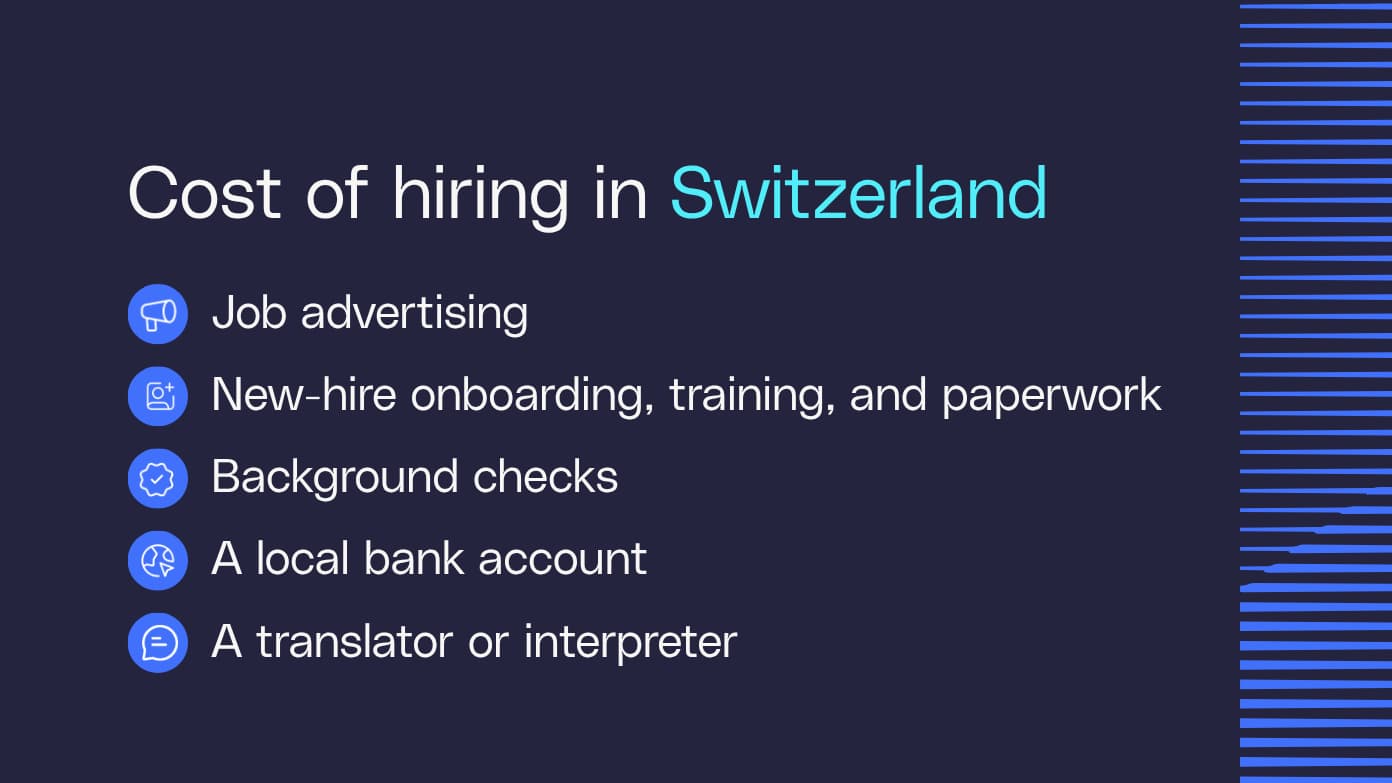
スイスで従業員を一人雇用する場合でも、チーム全体を雇用する場合でも、採用プロセスには避けられない費用が発生します。
以下の項目について予算を組んでください。
-
求人広告
-
入社手続き、研修、および書類作成
-
応募者追跡ソフトウェア
-
身元調査
-
従業員向けの特別な装備
-
翻訳者または通訳者(該当する場合)
-
必要に応じて、スイスへの往復の旅費
-
AHV/IV/EO
-
失業保険
-
労働災害保険
-
家族手当の拠出
-
病気手当保険
-
従業員の休暇取得資格
-
従業員の有給休暇および病気休暇の権利
Giaによると、スイスにおける雇用主の年間総負担率は、給与に加えて発生する費用を含めて、総給与の10 %から20 %の間である。料金は、従業員の給与、業界、および州によって異なります。Gia 、 G-Pの13年以上にわたる世界的な雇用経験と、約 100 万件の実際のシナリオからの洞察を活用して、正確な最新の雇用補償情報を提供します。
スイスで会社を雇用するには何が必要ですか?
EU/EFTA 労働者と EU/EFTA 以外の労働者
人の自由移動に関する協定(AFMP)のおかげで、EU/EFTA加盟国の市民を雇用する際に必要な行政上の障害はほとんどありません。雇用主は、スイス国内の労働者を優先する義務はなく、EU/EFTA加盟国の候補者を選んだ理由を説明する必要もない。90短期契約(暦年あたり最大4日間)の場合、企業は従業員が勤務を開始する前にオンラインで通知を提出するだけで済みます。長期滞在の場合、従業員は居住地のスイスの自治体に登録し、居住許可証または就労許可証(L許可証やB許可証など)を取得します。これにより、彼らはスイスの労働市場に即座にアクセスできるようになる。
EU/EFTA加盟国以外の国民
EU/EFTA加盟国以外の国(英国や米国を含む)からの候補者の採用は、より厳しい規制を受ける。外国人統合に関する連邦法(FNIA)に基づき、雇用主は現地での採用活動が失敗したことを証明しなければならない。EU/EFTA圏外の許可は、管理職、上級専門家、または専門的な経験を持つ大学卒業生といった人材にほぼ限定されている。
許可枠と行政手続きスケジュール
スイス政府は、EU/EFTA加盟国以外の国民に対する就労許可について、厳格な年間発給枠を設けている。就労許可証の取得には、州の労働当局と国家移民事務局(SEM)が関与する多段階の承認プロセスが必要となる。雇用主は事前に許可求人応募を開始しなければなりません。 従業員は正式な許可が下りるまで業務を開始できない。
州の地方経済事務所や大使館との関係を築いておくことは、あなたにとって最善の策です。スイスで雇用を行うのに法人格は必須ではありませんが、スイスで会社を設立する場合は、以下の選択肢があります。
-
個人事業主
-
一般パートナーシップ
-
有限責任組合
-
法人または合資会社
-
有限責任会社
-
子会社
-
地元の支店
支店は国際企業にとって一般的な形態であり、現地の税金を納め、法的権限を持つスイス居住者を少なくとも1名維持する必要があります。 必要な法的文書、契約書、および確立された財務口座をすべて準備しておく必要があります。
G-P雇用代行業者(EOR)を利用すれば、独自の法人を設立せずにスイスで従業員を雇用できます。 スイスでチームを構築する際は、コストを抑えつつ、各州固有の要件を確実に遵守できるという安心感を得られます。
スイスで人材を採用するための手順
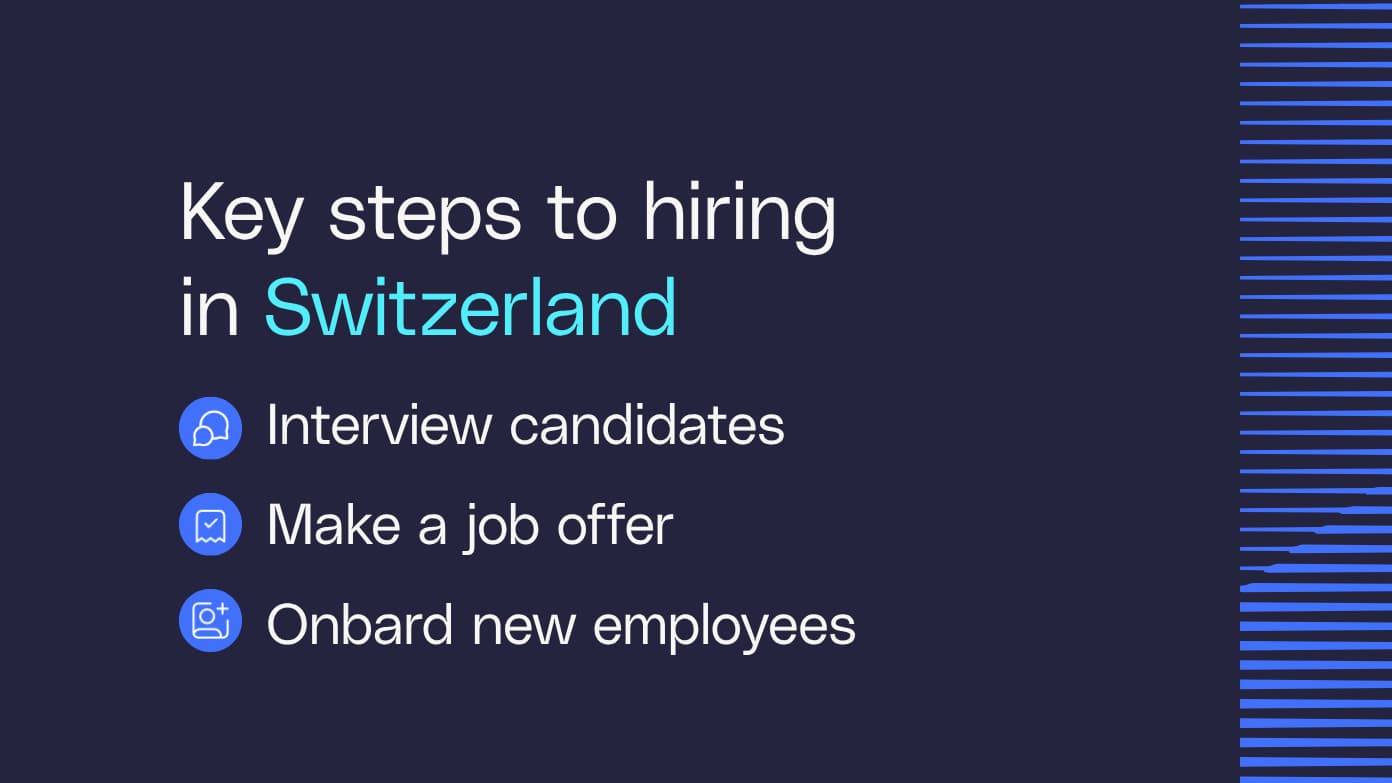
スイスでの採用プロセスは、求人広告の掲載、応募書類の評価、候補者との面接、採用オファーの送付、そして 新しい従業員の採用という5つの基本的なステップに従います。
1 。欠員を広告する
まず、詳細な職務記述書を作成してください。必要な役割、責任、資格を明確に定義してください。失業率の高い特定の職業については、雇用主は求人広告を公表する前に、州の職業安定所に欠員状況を通知することが法律で義務付けられている。これにより、登録済みの求職者に対する優先的なアクセスが確保され、連邦雇用サービス法への準拠が保証されます。
2 。求人応募を評価する
求職者が新しい職に応募したら、応募書類を評価して、どの候補者がポストに最適かを判断できます。 スイスの法律は、性別、年齢、出身地、人種、宗教、障害、性的指向、その他の保護対象となる特性に基づく差別を、採用のあらゆる段階で禁止している。これはスイス連邦憲法および男女平等法に明記されている。
求人広告、選考基準、面接の質問に偏りがないことを再度確認してください。
3 。候補者との面接を実施する
次に、最終候補者リストに残った候補者と面接を行います。公平性と一貫性を確保するため、職務に関連した選考基準と構造化された面接を用いる。Giaは、スイスで従業員を採用する際に、差別禁止法に準拠した面接質問を作成するお手伝いをします。これにより、現地の規制を遵守しながら、職務に最適な人材を見つけることができます。
採用プロセスに関する文書(面接メモや選考結果など)は、少なくとも5年間保管しておくのが最善策です。
4 。採用オファーを出す
さあ、いよいよ選考した候補者に通知する時です。スイスの労働法に準拠した雇用契約書を作成してください。契約書には、役職名、職務内容、給与、労働時間、解雇予告期間、および適用される団体交渉協定(CBA)などの重要な条項を含める必要があります。
5 。新規従業員の入社プロセスを行う
新規従業員をスイス社会保障制度(AHV/AVS)、労災保険、年金基金(BVG/LPP)、および該当する場合は関連する税務当局に登録する。給与計算システムを設定し、給与の支払い、社会保障費、年金拠出金、税金の控除が正しく行われるようにします。
スイスで請負業者を雇う
スイスで独立請負業者と協力することは、正社員を雇用する負担なしに市場をテストし、存在感を築くための費用対効果の高い方法となり得る。スイスに拠点を置く請負業者は、現地の消費者の行動、規則、商慣習を理解している。彼らは、自分たちの設備と確立された作業手順を用いて、すぐに作業を開始できる準備ができているでしょう。
請負業者を雇用することで、雇用に伴う複雑さやコストをかけずに、事業ニーズに応じて労働力を容易に調整できます。
スイスの独立請負人と契約を結ぶ前に、以下の点を考慮してください。
1 。従業員と独立請負業者
従業員と独立請負業者の違いを理解することが重要です。スイスでは、従業員の雇用契約には、多くの場合、独占条項が含まれており、勤務時間、勤務地、職務内容が明記されている。請負業者向けのサービス契約は、成果物と結果に焦点を当て、労働者の自律性と独立性を強調する。
企業は従業員を雇用して仕事をさせ、その見返りとして定期的な給与や賃金を支払う。請負業者は、各自で社会保障制度と退職年金制度を手配しなければならない。従業員とは異なり、請負業者は自分のスケジュールを設定し、自分の機材を使用し、継続的な役割ではなく特定のプロジェクトに取り組みます。
2 。誤分類に対する罰則
請負人でないのに負人と分類すると、重度の違約金につながる可能性があります。 スイスでの採用活動中に誤分類が発生した場合は、以下の対応が必要になる場合があります。
-
雇用主負担分と従業員負担分の両方の社会保障拠出金を、最大5年間遡って支払う。これには、老齢・遺族年金(OASI)、障害保険、失業保険への拠出金が含まれます。
-
未払い金額と遅延期間に基づいて計算された利息と違約金をお支払いください。
-
スイス当局(例えば、経済省経済事務局(SECO))による行動監査やコンプライアンス審査を受ける可能性があり、誤分類が発覚した場合は、さらなる執行措置につながる可能性がある。
3 。スイスで請負業者に支払う方法
G-P Contractor ™は、国際的な請負業者を雇用し、支払うという煩雑で時間のかかるプロセスをなくします。 契約を作成・発行し、契約者に支払いを数回クリックするだけで、法令遵守のプロセスを確実に確保できます。
G-Pを利用してスイスで従業員や契約社員を雇用しましょう
当社のSaaSおよび人工知能 (AI) を活用した製品 –雇用代行業者(EOR) 、 Contractor 、およびGia – は、あらゆる規模の企業がグローバル チームを構築および管理するのに役立ちます。
10 年以上の経験、人事、人事部、法務、コンプライアンスの専門家からなる最大のチーム、および世界的な独自の知識ベースを備えたG-Pは、スイスで従業員を雇用する必要がある場合の世界的な雇用のリーダーとして認められています。
G-Pを利用すれば、スイスへの事業拡大がより簡単になります。お問い合わせいただくか、デモをご予約ください。