





Punti chiave
- Accedi al bacino di talenti qualificati dell'India: Il paese dispone di una vasta forza lavoro con competenze rilevanti per molti settori, tra cui tecnologia, finanza, manifattura, intelligenza artificiale, machine learning e cloud computing.
- Naviga tra i requisiti centrali e statali: Esistono sia regole centrali che specifiche per lo stato che influenzano la retribuzione, i benefici e il congedo.
- Prepararsi ai codici del lavoro indiani: L'India ha modernizzato e consolidato 29 attuali Central Labor Acts in quattro codici del lavoro per creare un quadro più unificato per i requisiti occupazionali.
- Percorsi per l'assunzione in India: Le aziende hanno varie opzioni di creazione, tra cui collaborare con un datore di lavoro of record (Employer of Record), assumere appaltatori, istituire una società sussidiaria o registrare direttamente il datore di lavoro.
L'India è uno dei paesi più richiesti dalle aziende globali che desiderano espandersi e assumere. Vanta una forza lavoro enorme nei settori tecnologico, finanziario, manifatturiero e in diversi altri settori richiesti.
Se vuoi assumere in India, ci sono molte opportunità. Tuttavia, è necessario sapere come orientarsi tra le leggi e le linee guida uniche del paese, comprese le regole locali per contratti di lavoro, remunerazione, tasse, benefici e contributi statutari.
Questa guida copre tutto ciò che devi sapere sulle assunzioni in India, dalla scelta dei modelli di assunzione alla costruzione e gestione del tuo team.
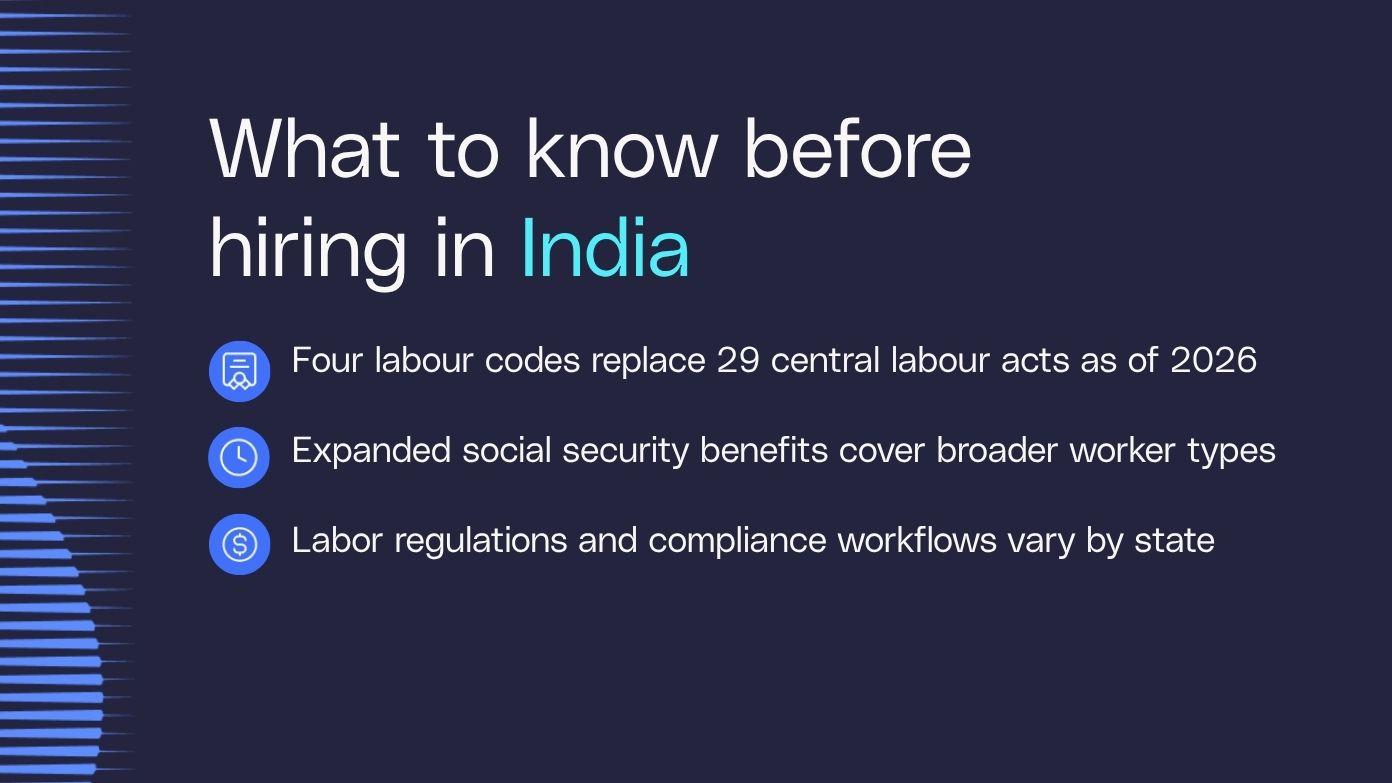
Cosa sapere prima di assumere in India
Ci sono diversi requisiti legali che devi seguire quando assumi dipendenti in India. Il quadro lavorativo del paese include sia leggi a livello centrale che statale che influenzano il rapporto datore di lavoro e dipendente. Questo include remunerazione e benefit.
Se non sai da dove cominciare, G-P Gia™, il nostro agente globale Risorse umane alimentato artificialmente con intelligenza, può rispondere alle tue domande più difficili sulla conformità in 50 paesi — inclusa l'India — e in tutti 50 stati USA. Riduci la tua dipendenza da consulenti esterni e riduci il tempo e i costi di conformità fino al 95% con Gia.
Diamo un'occhiata a sei cose da sapere sull'assunzione in India:
I codici del lavoro indiani e gli aggiornamenti normativi 2026
L'India ha subito una grande revisione della legge sul lavoro. I nuovicodici dell'abour sono quattro leggi complete che modernizzano e consolidano 29 attuali Central Labor Acts. Molti di questi cambiamenti rendono più facile sia per le aziende locali che globali assumere in India, estendendo al contempo i benefici a nuovi tipi di lavoratori.
A partire dal 2026, questicodici l abor sono ora in vigore:
- Conformità a salari e stipendio: i cambiamenti influenzano il modo in cui i datori di lavoro definiscono, calcolano e documentano i salari. Uno dei codici stabilisce regole per salari minimi, pagamenti tempestivi dello stipendio e altro ancora, standardizzando al contempo la definizione complessiva di salario in tutta l'India.
- Sicurezza sociale e contributi statutari: Le aziende che desiderano assumere dipendenti in India devono comprendere gli schemi statutari applicabili, i requisiti di rendicontazione e di tenuta dei registri. I cambiamenti ampliano i benefici della previdenza sociale e coprono più tipi di lavoratori.
- Relazioni industriali e processi di contenzioso: Il codice che riguarda le relazioni industriali consolida le regole che regolano i sindacati, i licenziamenti del personale e altro ancora. Sono state presentate nuove procedure per avvisi, ordini permanenti e alcuni flussi di lavoro di conformità utilizzati per le relazioni con i dipendenti.
- Salute e sicurezza sul lavoro: Nuove regole per i controlli sanitari e gli standard generali di sicurezza possono influenzare le politiche sul posto di lavoro, la formazione e la segnalazione degli incidenti.
Le regole applicabili possono variare a seconda dello stato. Considera dove lavorerà il tuo nuovo team dopo aver assunto l'assunzione in India e allinea di conseguenza i tuoi contratti di lavoro, le politiche di risorse umane e i processi di gestione delle buste paga.
2. La forza lavoro indiana incentrata sulla tecnologia e sulle persone
La forza lavoro indiana è numerosa e continua a crescere, e il paese è una potenza globale nel settore tecnologico. Molti dei lavoratori del paese possiedono competenze in intelligenza artificiale, machine learning, cybersecurity, cloud computing e data analytics. Assumere in India ti permette di accedere a un enorme talento di persone con competenze specializzate e rilevanti.
3. Mobilità e fidelizzazione dei dipendenti in India
Quando si assume in India, il reclutamento è solo metà della battaglia. Secondo uno studio ACCA del 2026febbraio, circa la metà dei lavoratori con base in India desidera passare a un nuovo ruolo entro il prossimo anno. Un altro studio di AON ha rilevato che i tassi di abbandono sono scesi a circa 16.2%.
La progressione professionale e il miglioramento delle competenze sono ancora importanti per la forza lavoro del paese. La mobilità lavorativa è un'opportunità per ampliare le competenze e acquisire un'esposizione trasversale. Tuttavia, per chi assume in India, questi studi dimostrano che la fidelizzazione dovrebbe essere una priorità assoluta nella costruzione dei team. Retribuzioni competitive, sviluppo professionale e possibilità di avanzamento possono aiutarti ad attrarre e trattenere professionisti qualificati.
4. Pacchetti salariali in India
Negoziare i pacchetti remunerazione è un processo complesso in India a causa delle numerose indennità che i dipendenti ricevono oltre alla paga base. I pacchetti salariali possono includere retribuzione di base, bonus basati sulla performance, benefici, indennità per l'assistenza all'infanzia e altre forme di remunerazione. Le indennità possono costituire una parte significativa del pacchetto remunerazione totale di un dipendente.
La struttura remunerazione che usi conta perché i codici del lavoro indiani hanno cambiato il modo in cui il paese definisce i salari per i calcoli statutari. Secondo la nuova definizione, la retribuzione base, la carità indennità (che è un tipo di COLA) e il mantenimento dell'indennità costituiscono i componenti principali dello stipendio. Se altre indennità superano il 50% della retribuzione totale, l'eccesso viene aggiunto nuovamente ai salari per nuovi calcoli statutari. Tuttavia, alcuni incentivi basati sulla performance, benefici dipendente opzione su azioni e pagamenti basati su rimborso non sono considerati salari.
Assicurati di tenere conto di queste regole quando calcoli i contributi e i benefici statutari. È anche importante considerare come le dedotte e i benefici imponibili influenzino lo stipendio netto di un dipendente.
5. Contributi fiscali e di previdenza sociale in India
L'India utilizza due sistemi fiscali progressivi, il che significa che le aliquote aumentano con l'aumento del reddito. I datori di lavoro detragono direttamente le tasse dagli stipendi in base al sistema scelto da ogni membro del team. Per l'anno di valutazione 2026-2027, il nuovo sistema esenta l'imposta sul reddito fino a INR 4,00000. Il vecchio sistema mantiene una soglia esentasse di INR 2,50000 per i contribuenti sotto l'età 60.
Il vecchio sistema mantiene la soglia INR 2,50000 per chi ha meno di 60anni. Sebbene il nuovo regime sia quello predefinito, i lavoratori idonei possono scegliere quello precedente.
Quando assumi dipendenti in India, i tuoi processi di gestione delle buste paga devono tenere conto della tratttenuta fiscale e di eventuali contributi statutari applicabili. Generalmente, i datori di lavoro detraggono le tasse alla fonte dallo stipendio tassabile e le inviano al governo.
Un'altra cosa da considerare è il sistema di previdenza sociale indiano. Sia il datore di lavoro che il dipendente contribuiscono a un piano di risparmio pensionistico chiamato Fondo di Previdenza dei Dipendenti (EPF). L'aliquota di contribuzione standard è del 12% dei salari applicabili dell'EPF. Tuttavia, questa tariffa è soggetta a limiti di stipendio e altre regole. Il sistema Employees Deposit Linked Insurance offre anche benefici di assicurazione sulla vita ai membri idonei dell'EPFO.
Quando assumi in India, la tua configurazione di busti paga dovrebbe tenere conto di questi requisiti fin dall'inizio. Le regole esatte variano in base al pacchetto remunerazione del destinatario. Entrano in gioco anche i requisiti statali e centrali.
6. Benefici garantiti e indipendenti in India
L'India non ha una lista universale di benefici statutari che si applichi a tutti i lavoratori. Invece, i benefici sono determinati da leggi federali e da legislazioni specifiche per stato. Le regole dipendono dal settore industriale e dallo stato in cui lavora il dipendente.
I nuovi codici del lavoro hanno cambiato il modo in cui i datori di lavoro affrontano diverse aree di benefici dipendenti e previdenza sociale. Prendiamo, ad esempio, le ferie annuali. Secondo i nuovi codici del lavoro, le persone che lavorano almeno 180 giorni in un anno solare guadagnano tipicamente un giorno di congedo ogni 20 giorni lavorati. I lavoratori idonei possono essere trasferiti fino a 30 giorni di congedo, e qualsiasi congedo richiesto ma negato può essere trasferito senza tale limite. Le regole statali possono anche offrire benefici più favorevoli.
Quando assumi dipendenti in India, devi anche considerare le tre festività nazionali del paese, ovvero il Giorno della Repubblica, il Giorno dell'Indipendenza e il compleanno di Mahatma Gandhi. Tieni presente che potrebbero valere anche festività specifiche per stato.
Anche i benefici di maternità meritano una considerazione particolare quando si è in India. C I dipendenti idonei hanno diritto a 26 settimane di congedo per maternità per i primi due figli e a 12 settimane quando hanno 2+ figli.
Altri benefici statutari possono includere la copertura della previdenza sociale e le tutele per la salute e sicurezza sul lavoro. Tuttavia, i requisiti possono variare in base ai salari dipendenti, al tipo di struttura in cui lavorano e alle regole specifiche dello stato applicabili. I dipendenti idonei possono anche ricevere copertura sanitaria tramite il programma Indiano di Assicurazione Statale per i Dipendenti (ESI). Molti datori di lavoro offrono anche assicurazione medica privata di gruppo per integrare eventuali benefici statutari.
Prima di assumere e costruire la tua team in India, assicurati che la tua retribuzione, benefici, congedo e politiche aziendali tengano conto di tutti i requisiti applicabili.
Modelli di assunzione per aziende globali in India
La tua azienda globale offre diversi modi per inserire lavoratori in India. L'approccio corretto dipenderà dai tuoi obiettivi di assumzione, dalla dimensione desiderata della forza lavoro, dalle attività aziendali e dal fatto che tu abbia già una presenza consolidata nel paese. Ecco alcuni dei modelli di assunzione più comuni.
- Registrazione diretta del datore di lavoro: Registrare la tua azienda presso le autorità del lavoro indiane ti dà un maggiore controllo sulle tue operazioni locali. Lo svantaggio è che devi gestire la creazione dell'entità e i requisiti di impiego continuo come busti paga, benefit e conformità.
- Datore di lavoro di registro: Un datore di lavoro di record (Datore di lavoro di registro) ti permette di assumere in India senza creare un'entità locale. Questo percorso offre un ingresso sul mercato più semplice, e puoi costruire un team senza i costi e il tempo necessari per costituire un'entità. G-P Employer of Record supporta le assunzioni in India tramite un'infrastruttura entità globale.
- Filiale o filiale: Istituire una nuova società sussidiaria o filiale in India ti permette di stabilire una presenza nel paese per supportare operazioni più a lungo termine. Opera come un'azienda indiana, ed è come un'estensione della tua azienda di casa.
I requisiti dell'entità, la registrazione e le attività autorizzate variano in base alla struttura aziendale e alle operazioni della tua azienda.
- Lavoratori autonomi: Quando hai bisogno di maggiore flessibilità nel settore delle assunzioni, i lavoratori autonomi sono un'opzione da prendere in considerazione. Detto ciò, classificare erroneamente qualcuno come lavoratore a contratto quando in realtà è un dipendente può creare problemi finanziari e di conformità significativi.
Prima di scegliere questo modello, esamina il ruolo del candidato potenziale, il livello di controllo e l'organizzazione lavorativa. Il quadro giuridico indiano non si basa su un test universale per distinguere un lavoratore a contratto indipendente da un dipendente, quindi valuta attentamente il rapporto di lavoro.
Principali centri di reclutamento in India
L'India ha diverse grandi città dove aziende globali come la vostra possono trovare talenti specializzati in molti settori diversi. Alcune città sono ben note per settori specifici. Sapere cosa ha da offrire ogni città ti permette di concentrare i tuoi sforzi di assunzione nel posto giusto.
I principali centri di talento in India sono:
- Bengaluru (Bangalore) è uno dei principali centri di assunzione del paese per tecnologia, servizi IT, startup e centri di ricerca e sviluppo. Ha una forte presenza nel settore biotecnologie, aerospaziale e fintech.
- Hyderabad è un importante centro di gestione IT e di processi aziendali (BPO). Hyderabad ospita molte aziende tecnologiche globali, aziende farmaceutiche e un ecosistema startup in crescita.
- Delhi NCR (Regione della Capitale Nazionale) comprende Delhi, Gurgaon (Gurugram) e Noida. La NCR è un centro di assunzione per IT, finanza, consulenza, e-commerce, manifattura e media. È anche la sede di molte multinazionali.
- Mumbai è la capitale finanziaria dell'India. Mumbai è un centro per banche, finanza, assicurazioni, media, intrattenimento e sede aziendali multinazionali.
- Pune vanta una solida base di talenti per IT, produzione automobilistica, ingegneria e ricerca. Ci sono diverse università e istituti scolastici che contribuiscono alla forza lavoro qualificata della città.
Settori chiave in India
L'India ha un'economia diversificata con diverse industrie consolidate e settori più recenti in rapida crescita. Quando assumi dipendenti in India, comprendere i principali settori del paese ti permette di fare riferimento a stipendi e benefit. Puoi usare questa intuizione per fare scelte intelligenti su dove investire e coltivare la tua rosa di talenti.
I principali settori industriali in India includono:
- Servizi IT e servizi abilitati dall'IT: l'India è leader mondiale nello sviluppo di software, nei servizi IT, nell'esternalizzazione dei processi aziendali (BPO) e nella trasformazione digitale.
- Manifattura: Questo settore comprende automobilistica, elettronica, tessile, prodotti chimici, macchinari e beni di consumo. L'iniziativa "Make in India" ha rafforzato questo settore negli ultimi anni.
- Farmaceutica e biotecnologia: L'India è uno dei maggiori produttori mondiali di medicinali generici e possiede un forte settore biotecnologico e delle scienze della vita.
- Servizi finanziari: questo settore comprende servizi bancari, assicurativi, fintech e mercati dei capitali, con Mumbai come capitale finanziaria.
- Telecomunicazioni: L'India ha uno dei più grandi mercati delle telecomunicazioni a livello globale, soprattutto grazie alla rapida penetrazione di dispositivi mobili e internet.
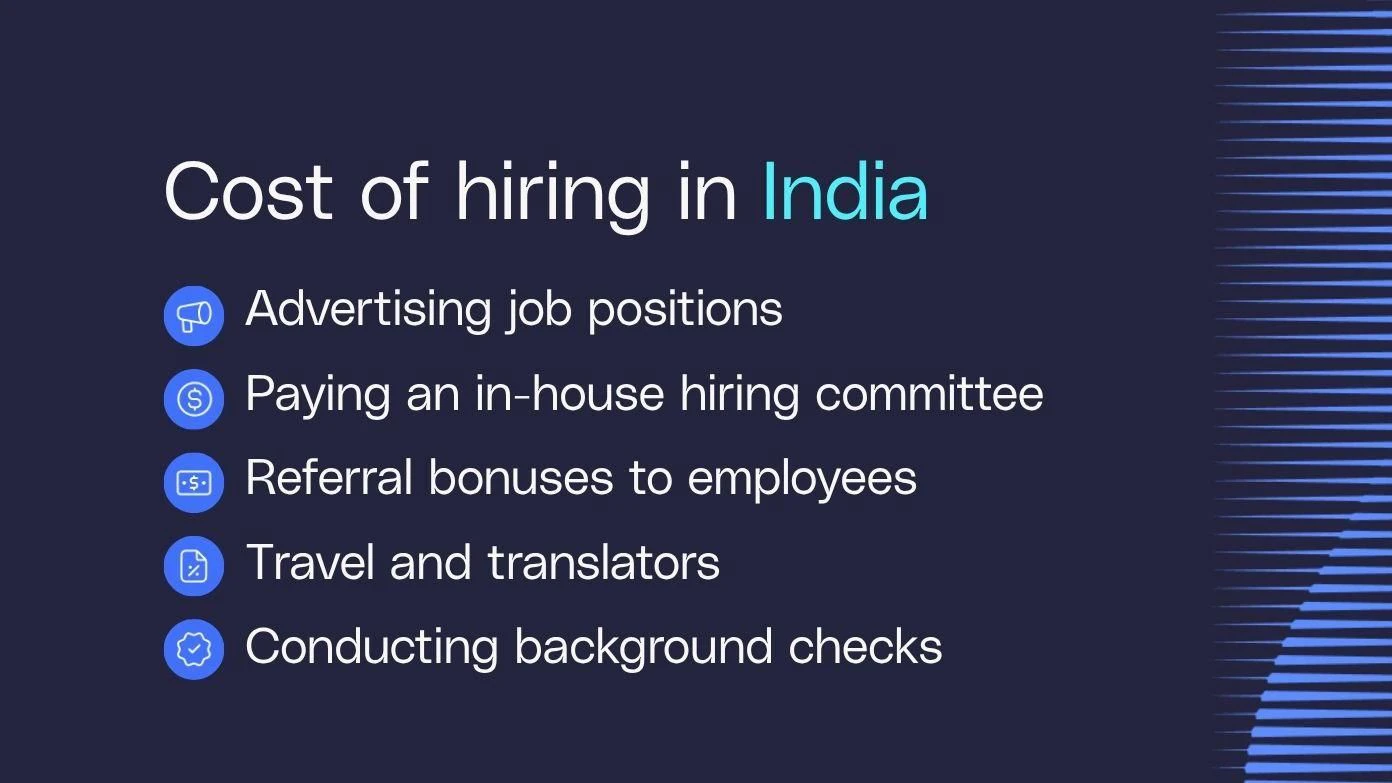
Costo dell'assunzione di un dipendente in India
Che tu stia assumendo un dipendente o un intero team, dovrai coprire diversi costi. Budget per quanto segue:
- Costituzione dell'entità (a meno che tu non collabori con un datore di lavoro registrato)
- Annunci di lavoro
- Costi di reclutamento e valutazione dei candidati
- Busti paga
- Tasse
- Retribuzioni
- Benefici
- Bonus
- Indennità
- Infortuni
- Viaggio
- Traduttore (se applicabile)
Dovresti anche tenere conto dei contributi e dei benefici statutari applicabili del datore di lavoro. Questi possono includere contributi a programmi di previdenza sociale, fondi di previdenza e altro ancora.
Secondo G-P Verified Sources from Gia, una stima ragionevole dell'onere legale in India è approssimativamente 7–12% dello stipendio lordo, ma la percentuale effettiva dipende dalla struttura dello stipendio, dall'idoneità e dallo stato lavorativo.
Cosa deve fare a un'azienda per assumere dipendenti in India?
Se prevedi di creare una propria entità per assumere direttamente dipendenti in India, dovrai coprire diversi aspetti essenziali.
- Costituire un'entità giuridica.
- Registra la tua azienda presso il Ministero degli Affari Societari (MCA) tramite il portale SPICe+ (Proforma semplificato per incorporare la società elettronicamente Plus).
- Richiedi un certificato di incorporazione.
- Richiedi un codice fiscale permanente (PAN).
- Richiedi un Numero di Conto Detrazione e Recupero Tasse (TAN) da detrarre e versare le tasse applicabili.
- Registrarsi per i programmi di previdenza sociale statutari, come quelli amministrati dall'Employees' Provident Fund Organisation (EPFO) e dalla Employees' State Insurance Corporation (ESIC).
- Rediga contratti di lavoro conformità, lettere di offerta e politiche Risorse umane in linea con le leggi sul lavoro indiane e i requisiti specifici dello stato.
- Istituire un sistema di busti paga per calcolare gli stipendi, detrarre le tasse e versare i contributi statutari (EPF, ESI, tasse professionali, TDS).
L'istituzione di una società sussidiaria in India può richiedere diverse settimane. Con G-P Employer of Record, puoi assumere dipendenti a tempo pieno in India senza creare una tua entità. G-P gestisce occupazione, busti paga, benefici e conformità locale mentre tu gestisci il lavoro quotidiano del tuo team.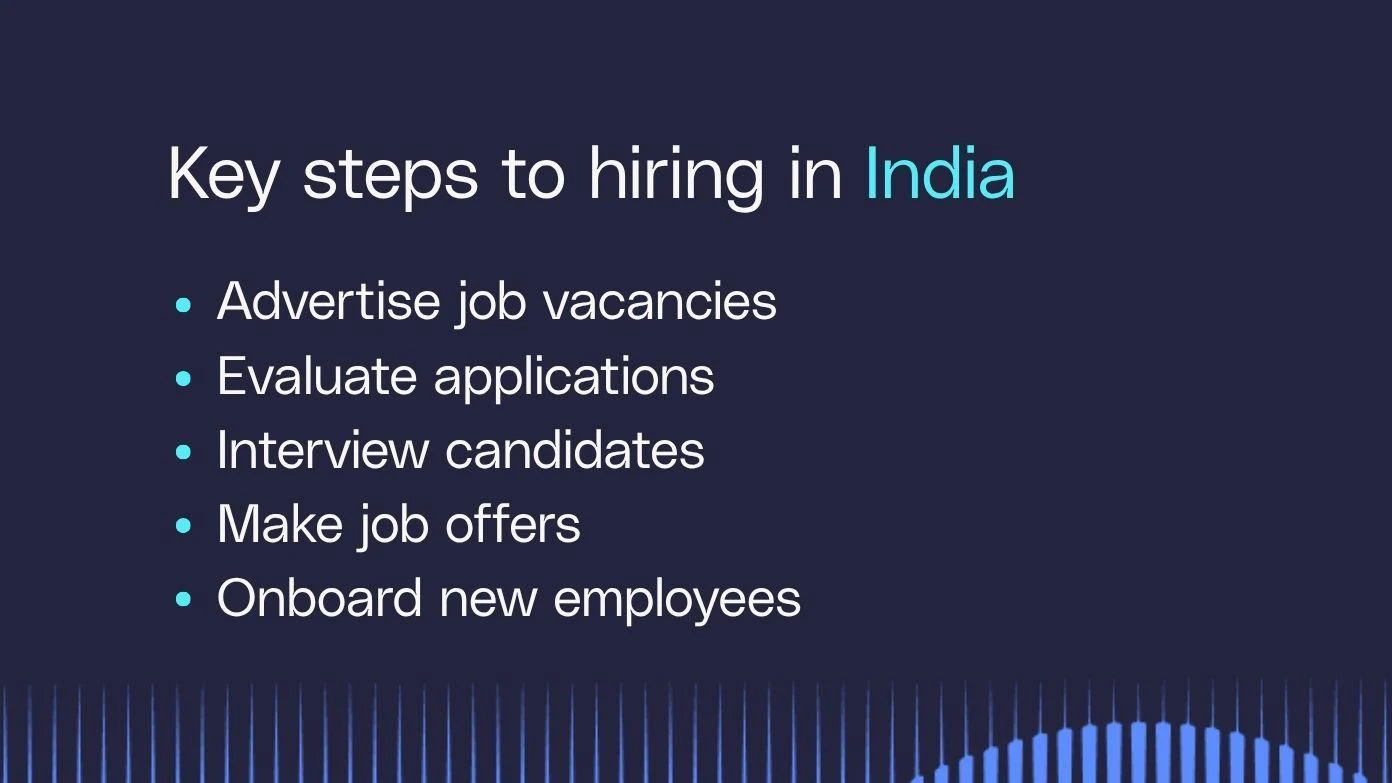
Procedura di assunzione in India
Quando sarai pronto ad assumere in India, puoi aspettarti un processo simile a quello che probabilmente conosci nel tuo paese. Ci sono cinque passaggi fondamentali: pubblicizzare il lavoro, valutare le candidature, intervistare candidati, inviare offerte di lavoro e inserire nuovi dipendenti.
1. Pubblicizza offerte di lavoro in India
Crea una descrizione dettagliata del lavoro e definisci il ruolo in base a responsabilità e qualifiche. Alcune attività private con 25 o più dipendenti devono segnalare le offerte di lavoro agli uffici di lavoro competenti prima di compilarle. Questi requisiti fanno parte dell'attuale quadro di previdenza sociale dell'India.
Il mancato rispetto dei requisiti di notifica potrebbe comportare sanzioni e problemi di conformità. Controlla eventuali requisiti che si applicano alla tua azienda prima di pubblicare un annuncio e di fare un posto.
Quando si tratta di entrare in contatto con potenziali assunzioni, Naukri, LinkedIn, Indeed e Monster sono tutti siti di lavoro molto popolari in India.
2. Valutazione delle candidature di lavoro in India
Raccogli le candidature e rivedi i curriculum. Seleziona i candidati in base alle loro qualifiche, esperienza e idoneità al ruolo. Mantieni le domande di selezione focalizzate sul lavoro in corso e sui requisiti del posto. Evita domande potenzialmente discriminatorie o pratiche di selezione.
3. Intervistare i candidati in India
Successivamente, intervista i candidati che entrano nella tua lista ristretta. Puoi condurre colloqui di persona o virtualmente da qualsiasi parte del mondo. Usa domande strutturate che si concentrino sulle qualifiche del candidato e sulla capacità complessiva di ricoprire il ruolo.
G-P Gia™ può anche aiutarti durante questo processo. Usalo per creare domande di colloquio che siano in linea con tutte le normative lavorative applicabili in India.
4. Fare offerte di lavoro in India
Una volta selezionato un candidato, puoi fare un'offerta formale e preparare i documenti adeguati per il dipendente. Dovrai contattarti, redigere un contratto di lavoro e raccogliere diversi documenti fondamentali per iniziare ufficialmente il rapporto di lavoro.
Documenti di cui avrai bisogno per assumere un dipendente in India
Il passo successivo è raccogliere la documentazione giusta per impostare la gestione delle buste paga e l'iscrizione statutaria. I tipi di documenti di cui avrai bisogno e cosa dovresti richiedere ai potenziali assunti possono variare in base al ruolo, alla tua azienda e alle normative applicabili.
- Lettera di offerta firmata/contratto di lavoro: Questo documento descrive i termini specifici del lavoro. Un contratto firmato deve riflettere la remunerazione, i benefici, il periodo di preavviso e altri termini rilevanti concordati.
- Prova di identità e indirizzo: Dovrai raccogliere un documento d'identità rilasciato dal governo e una prova dell'indirizzo attuale per diversi processi di assunzione e busta paga. I requisiti specifici possono variare a seconda dello stato e del datore di lavoro.
- Dati PAN e bancari: Le informazioni PAN sono richieste per tasse e busti paga. Le informazioni dei conti bancari permettono pagamenti salario.
- Informazioni sulla busta paga e sull'iscrizione statutaria: Questi dettagli sono necessari per registrare il nuovo dipendente ai programmi richiesti, come EPF ed ESI, e per supportare l'amministrazione delle buste paga.
- Qualifiche dipendenti dal ruolo e i precedenti lavorativi: Se necessario, puoi richiedere documenti che convalidino l'istruzione, l'esperienza professionale e qualsiasi certificazione specifica per il ruolo del candidato.
5. Inserimento di nuovi dipendenti in India
Ora puoi inserire nuovi dipendenti. Completare eventuali registrazioni statutarie necessarie (EPF, ESI, fiscalità professionale, se applicabile) e fornire l'introduzione, le politiche aziendali e la formazione iniziale.
Se usi G-P Employer of Record, non dovrai preoccuparti dell'onere amministrativo dell'inserimento. Semplifichiamo il processo, così puoi concentrarti sulla formazione dei candidato potenziale e sull'integrazione nella tua cultura azienda.
Assunzione di appaltatori in India
Lavorare con lavoratori autonomi in India può offrirti maggiore flessibilità quando entri nel mercato o assumi talento per lavori basati su progetti. Puoi creare una presenza in India, lavorare con professionisti con competenze specializzate e far crescere la tua azienda senza l'impegno di dipendenti a tempo pieno. Gli appaltatori con sede in India possono anche portare conoscenze sul comportamento dei consumatori locali, sulle regole e sulle pratiche commerciali.
Assumere appaltatori ti dà la flessibilità di adattare facilmente la forza lavoro in base alle esigenze della tua azienda. Tuttavia, i collaboratori non sono un sostituto dei dipendenti in ogni situazione. Il rapporto di lavoro deve riflettere un vero lavoratore indipendente a contratto secondo la legge indiana.
Prima di stipulare un accordo con un lavoratore a contratto indipendente in India, considera quanto segue:
1. Dipendenti contro lavoratori autonomi in India
È importante comprendere la differenza tra dipendenti e lavoratori autonomi. I dipendenti generalmente lavorano con un rapporto di lavoro. Ricevono remunerazione e benefici applicabili in cambio del loro lavoro. Nel frattempo, i lavoratori autonomi forniscono servizi tramite accordi contrattuali separati. Spesso hanno maggiore indipendenza nel modo in cui svolgono il loro lavoro.
La distinzione conta. Classificare erroneamente un lavoratore a contratto come un dipendente può creare rischi significativi di conformità e finanziari per la tua azienda.
2. Come pagare gli appaltatori in India
G-P Appaltatore elimina il processo disordinato e dispendioso di tempo di assunzione e pagamento di appaltatori internazionali. Puoi creare e emettere contratti e pagare appaltatori con pochi clic, il tutto supportando un processo di conformità lavoratore a contratto management.
Assumi dipendenti e appaltatori in India con G-P
Assumere dipendenti in India non deve essere difficile. Anche se ci sono regole e requisiti legali unici da affrontare, possiamo aiutarti a raggiungere con fiducia un vasto bacino di professionisti di talento.
La nostra Piattaforma™ Globale di Occupazione (Piattaforma di occupazione globale) e i suoi prodotti artificiali intelligenza, Employer of Record, Contractor e Gia, permettono alle aziende di tutte le dimensioni di costruire e gestire team globali.
G-P è il leader riconosciuto nell'occupazione globale con oltre un decennio di esperienza, il più grande team di esperti di Risorse umane, legali e di compliance, e una base di conoscenze proprietaria a livello globale.
Rendi più facile la tua espansione in India con G-P. Contattaci o prenota una demo oggi stesso.
Domande frequenti (FAQ)
Quali sono i principali obblighi di datore di lavoro in India?
Come nuovo datore di lavoro che assume in India, devi soddisfare i requisiti applicabili per contratti di lavoro, salari, tasse, previdenza sociale, benefit e condizioni di lavoro. Potresti anche dover registrarti e rispettare requisiti come il Workers' Provident Fund (EPF), l'Employees' State Insurance (ESI), la Professional Tax (negli stati applicabili) e il Shops and Establishments Act (o il Factories Act per la produzione).
Quali sono le regole standard sugli orari di lavoro e sugli straordinari in India?
Lo standard previsto dal Codice indiano per la Sicurezza, la Salute e le Condizioni di Lavoro è di otto ore al giorno e 48 ore a settimana. Alcuni accordi possono consentire orari giornalieri più lunghi, ma l'impiego deve soddisfare determinate condizioni. Generalmente, gli straordinari sono il doppio rispetto alla normale stipendio.
Quali documenti servono per assumere un dipendente in India?
La documentazione comune include un contratto di lavoro, informazioni sull'identità e sull'indirizzo, dati PAN e bancari, informazioni sull'iscrizione statutaria e qualifiche o registri lavorativi specifici per ruolo. I requisiti esatti dei documenti variano in base al dipendente, all'istituto, al ruolo e alle normative applicabili.
L'assicurazione medica è obbligatoria per i dipendenti in India?
I dipendenti possono diventare idonei a una copertura medica e ad altri benefici di assicurazione sociale tramite il programma Indiano di Assicurazione Statale per i Dipendenti (ESI). Tuttavia, molte aziende offrono anche come beneficio supplementare l'assicurazione medica di gruppo privato.
Qual è il periodo di preavviso per i licenziamenti in India?
I periodi di preavviso in India dipendono dal contratto di assunzione, dal ruolo del destinatario, dalle leggi sul lavoro applicabili e dai requisiti specifici dello stato. Generalmente sono 30 giorni, ma devi rivedere i termini e le normative di impiego che si applicano alla tua azienda prima di licenziare un dipendente.
Quali sono le regole per i periodi di prova in India?
In India non esiste un periodo di prova universale. Il contratto di assunzione di solito stabilisce i termini.