







Kluczowe wnioski
- Kolumbia ma rosnącą liczbę dwujęzycznych pracowników:centra technologiczne S trong oraz prężnie rozwijający się sektor BPO czynią Kolumbię atrakcyjnym miejscem zatrudnienia.
- Zwróć uwagę na unikalne przepisy dotyczące zatrudnienia w kraju: Pracodawcy muszą korzystać z umów w języku hiszpańskim, przestrzegać zasad tydzień roboczy 42godzin, zapewniać urlop ustawowy oraz opłacać obowiązkową opłatę 13miesiąc (Prima de Servicios).
- Koszty zatrudnienia wykraczają poza płacę: Składki emerytalne, ubezpieczenie zdrowotne, programy opieki społecznej, zobowiązania odprawne oraz dotacje transportowe zwiększają całkowite koszty zatrudnienia.
- Klasyfikacja pracowników jest priorytetem: Wszelkie oznaki podporządkowania mogą wywołać problemy prawne i finansowe.
Zatrudnienie w Kolumbii daje dostęp do wysoko wykształconego personelu, rozwijających się dwujęzycznych pracowników oraz prężnie rozwijających się centrów technologii i usług biznesowych.
Najnowsze reformy pracy zmieniają sposób, w jaki organizujecie zatrudnienia i zarządzacie Utalentowani pracownicy. Minimalne zwyżki zarobki oraz stopniowe przejście na tydzień roboczy na42godzin wpływają na koszty zatrudnienia i planowanie personelu.
Dzięki odpowiedniej strategii możesz zamienić te wyzwania w szanse i rozwijać swój ZESPÓŁ na jednym z najsilniejszych rynków Utalentowani pracownicy w Ameryce Łacińskiej.
Nasz przewodnik obejmuje wszystko, co musisz wiedzieć o zatrudnianiu w Kolumbii, w tym umowy o pracę, podatki od wynagrodzeń, obowiązkowe świadczenia oraz zasady klasyfikacji wykonawców.
Co warto wiedzieć przed podjęciem pracy w Kolumbii
Lokalne przepisy dotyczące zatrudnienia kształtują sposób, w jaki organizujesz zatrudnienia, wynagrodzenie i zarządzanie Utalentowani pracownicy w Kolumbii.
Oto pięć najważniejszych rzeczy, które warto wiedzieć:
1. Umowy o pracę
Kolumbia uznaje ustne umowy o pracę na mocy Código Sustantivo del Trabajo. Jednakże umowy pisemne zapewniają silniejszą ochronę zgodności i zmniejszają ryzyko.
Cała dokumentacja zatrudnienia musi być w języku hiszpańskim, a wynagrodzenie musi być negocjowane i podane w pesos kolumbijskich (COP).
Istnieją dwa najpopularniejsze rodzaje umów:
- Umowy na czas nieokreślony (término indefinido) dotyczące trwających stosunków pracy.
- Umowy na czas określony (término fijo) z określoną datą zakończenia.
2. Okresy próbne
Okresy próbne obowiązują wyłącznie po ich pisemnym uzgodnieniu. Czas trwania zależy od rodzaju umowy:
Umowy na czas nieokreślony | Okres próbny nie może trwać dłużej niż dwa miesiące |
Umowy na czas określony | Okres próbny nie może przekroczyć jednej piątej okresu obowiązywania umowy ani trwać dłużej niż dwa miesiące. |
3. Godziny pracy i nadgodziny
Na 15lipca 2026roku standardowy tydzień roboczy w Kolumbii wynosi 42 godzin.
Ta zmiana kończy stopniową redukcję tydzień roboczy wprowadzoną w ramach Ley 2101 de 2021. Ustawa obniżyła maksymalną liczbę tydzień roboczy z 48 do 42 godzin, nie obniżając przy tym wynagrodzeń pracowników ani ustawowych świadczeń.
Stałe stawki wynagrodzenia za nadgodziny
Typ nadgodzin | Wyższa niż standardowe zarobki |
|---|---|
Dzień | 25% |
Nocna pora | 75% |
Niedziele | 75% |
Dni ustawowo wolne od pracy | 75% |
4. Urlopy ustawowe i wakacje
Pracownicy otrzymują 15 kolejnych dni roboczych płatnego urlopu wypoczynkowego po roku pracy.
Kolumbia oferuje również hojne urlopy dla przyszłych rodziców. Pracownicy mogą podjąć:
- 18 tygodni płatnego urlopu macierzyńskiego
- Dwa tygodnie płatnego urlopu ojcowskiego
5. Prima de servicios
Kolumbia wymaga od pracodawców obowiązkowej opłaty 13miesiąc zwanej prima de servicios. To świadczenie odpowiada miesięcznej płacie rocznie. Prima de servicios jest płatna w dwóch ratach:
- Pierwsza połowa w ciągu pierwszych 15 dni czerwca
- Druga połowa w ciągu pierwszych 20 dni grudnia

Najpopularniejsze centra rekrutacyjne w Kolumbii
Główne miasta Kolumbii oferują wyjątkowe korzyści dla pracowników utalentowanych. Zrozumienie każdego rynku pomoże Ci szybciej znaleźć odpowiednich Utalentowani pracowników.
Największymi ośrodkami zatrudnienia w Kolumbii są:
- Bogota jest centrum gospodarczym i największym miastem Kolumbii. Oferuje największe w kraju Zaplecze kadrowe, dojrzały sektor usług finansowych oraz szybko rozwijający się ekosystem technologiczny.
- Medellín jest jednym z wiodących ośrodków technologicznych Ameryki Łacińskiej. Miasto słynie z rozwoju oprogramowania, innowacji cyfrowych oraz wysoko wykwalifikowanego personelu technicznego.
- Kalifornia stała się silnym miejscem wsparcia klientów, wielojęzycznych outsourcing procesów biznesowych (BPO) oraz produkcji.
- Barranquilla jest ważnym węzłem logistycznym i handlowym. Silne umiejętności językowe oraz dostęp do rynków międzynarodowych napędzały rozwój w zakresie wsparcia klientów, BPO, logistyki i produkcji.
Kluczowe gałęzie przemysłu w Kolumbii
W Kolumbii wciąż rośnie zapotrzebowanie na pracowników w kilku branżach.
- Rozwój technologii i oprogramowania: Sektor technologiczny w Kolumbii szybko się rozwija. Kraj przyciąga znaczące outsourcing IT Międzynarodowy i oferuje dużą pulę programistów, inżynierów oraz specjalistów technologicznych. Zgodność strefy czasowej z Ameryką Północną umożliwia także współpracę w czasie rzeczywistym.
- Doświadczenie klienta i outsourcing procesów biznesowych (BPO): Kolumbia jest wiodącym miejscem wsparcia klienta i usług biznesowych. Sektor korzysta z dużego, wysoko wykształconego i coraz bardziej dwujęzycznego personelu.
- Usługi profesjonalne i finanse: Kolumbia dysponuje silną regionalną wiedzą specjalistyczną w zakresie zarządzania, bankowości, księgowości i doradztwa zawodowego. Bogota pozostaje głównym ośrodkiem usług finansowych i działalności korporacyjnej kraju.
Koszty zatrudnienia pracowników w Kolumbii
Minimalna podwyżka wynagrodzenia o 237% weszła w życie 1stycznia 2026roku. Podwyżka podniosła ustawowe minimalne miesięczne zarobki do COP 1,750,905.
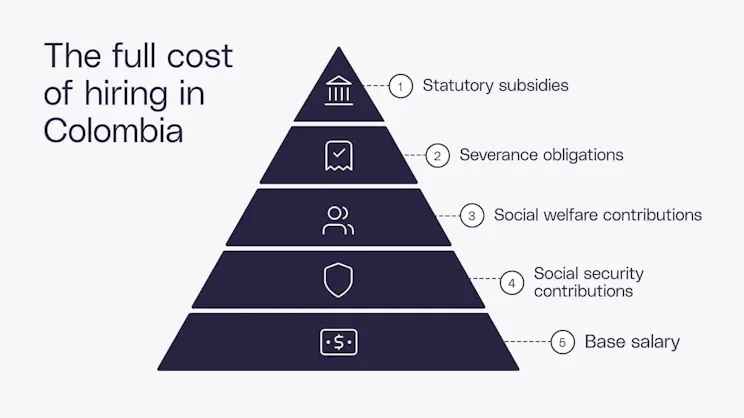
Oprócz płacy, pracodawcy powinni budżetować na obowiązkowe składki na listy płac, programy socjalne, zobowiązania odprawa oraz świadczenia ustawowe przy obliczaniu całkowitych kosztów zatrudnienia.
Obowiązkowe składki na wynagrodzenia
Pracodawcy wnoszą wkład do kolumbijskiego ubezpieczenia społecznego i systemu opieki społecznej.
Rodzaj funduszu | Składka pracodawcy | Wkład pracownika |
|---|---|---|
Pensjonat | 12% | 4% |
Ubezpieczenie zdrowotne (EPS) | 8.5%* | 4% |
Ubezpieczenie od ryzyka zawodowego (ARL) | 0.522% do 6.96% | - |
Fundusz rodzinny wynagrodzenie (Cajas de Compensación Familiar) | 4% | - |
Instituto colombiano de bienestar familiar (ICBF) | 3%* | - |
Servicio nacional de aprendizaje (SENA) | 2%* | - |
*Wyjątki:
- Pracodawcy są zwolnieni z tego 8.5% składek ubezpieczenia zdrowotne dla pracowników zarabiających mniej niż 10 razy ustawowe minimum miesięczne zarobki (SMMLV).
- Pracodawcy są zwolnieni z wpłat na ICBF i SENA dla pracowników zarabiających mniej niż 10 razy minimalne wynagrodzenie.
Odprawa ( Cesantías )
Pracodawcy w Kolumbii przekazują środki na fundusz odprawa w imieniu pracowników.
Każdego roku musisz wpłacić jedną miesięczną płatę do zatwierdzonego funduszu odprawy. Będziesz również musiał płacić roczne odprawa odsetki w wysokości 12% salda odprawa bezpośrednio pracownikowi.
Dotacja transportowa
Pracownicy zarabiający mniej niż dwukrotność minimalnej legalnej zarobki mają prawo do obowiązkowej miesięcznej dotacji na transport.
Co firma powinna zrobić wobec pracowników Organizacji zatrudnienia w Kolumbii?
Możesz załatwić zatrudnienie pracowników w Kolumbii za pośrednictwem lokalnej jednostki lub pracodawca formalny.
Tradycyjna trasa | Zwinna trasa |
|---|---|
Utworzenie lokalnej jednostki | Użyj an pracodawca formalny |
Bezpośrednie zatrudnienie musi wiązać się z legalną obecnością w Kolumbii. Zazwyczaj musisz: Załóż lokalny podmiot, na przykład uproszczoną spółkę akcyjną (SAS) Otworzyć firmowe konto bankowe Register with the Dirección de Impuestos y Aduanas Nacionales (DIAN) Uzyskaj numer identyfikacji podatkowej Rejestracja pracowników w kolumbijskim systemie ubezpieczenia społecznego Zarządzaj listą płac, sprawozdawczością podatkową i bieżącymi wymogami zgodności Te kroki są czasochłonne i wymagają stałego administrowania. | Pracodawca formalnie eliminuje potrzebę zakładania lokalnej jednostki. Pracodawca formalnie zarządza: Lista płac Sprawozdawczość podatkowa świadczenie ustawowe Zgodność z przepisami dotyczącymi zatrudnienia Kierujesz codziennymi czynnościami pracownika, podczas gdy pracodawca formalnie zarządza prawnym stosunkiem pracy. Model ten zapewnia szybszą ścieżkę do zatrudnienia w Kolumbii i zmniejsza koszty operacyjne. |
Kluczowe kroki w procesie rekrutacji w Kolumbii
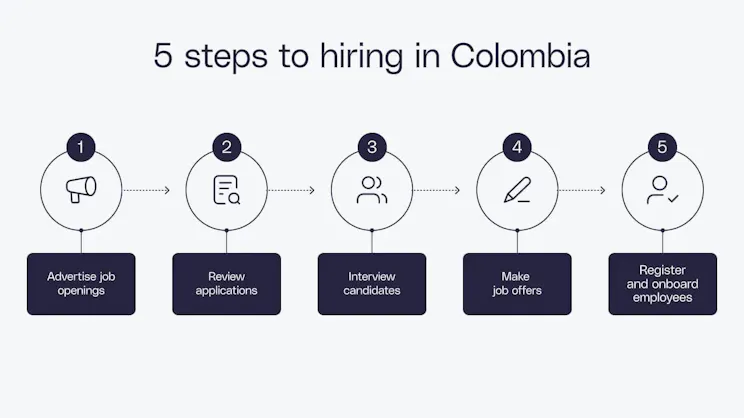
Proces zatrudniania w Kolumbii jest podobny do innych rynków. Oto, czego możesz się spodziewać:
1. Ogłoszenia o pracę
Stwórz jasne opisy stanowisk, które określają obowiązki, kwalifikacje i wynagrodzenie.
Oferty pracy muszą być zgodne z kolumbijskimi przepisami antydyskryminacyjnymi. Pracodawcy nie mogą odwoływać się do wieku, płci ani innych chronionych cech. Popularne platformy rekrutacyjne to Indeed, JobStreet i LinkedIn.
2. Przeglądanie wniosków i przeprowadzanie kontroli
Dokonaj oceny kandydatów na podstawie obiektywnych kwalifikacji i kryteriów związanych ze stanowiskiem.
Weryfikacja przeszłości jest powszechna, jednak kolumbijskie prawo dotyczące ochrony prywatności nakłada na obywateli ścisłe ograniczenia. Pracodawcy nie mogą żądać testów na obecność wirusa HIV, testów ciążowych ani informacji o przynależności do związku zawodowego.
3. Przeprowadź rozmowy kwalifikacyjne z kandydatami
Przeprowadź wywiady z wybranymi kandydatami wirtualnie lub osobiście.
Na tym etapie możesz ocenić swoje umiejętności techniczne, doświadczenie i ogólne dopasowanie do roli.
4. Proszę składać oferty pracy
Dostarcz pisemną umowę o pracę po hiszpańsku. Odszkodowanie musi być określone w COP. Umowa powinna również określać okres próbny.
5. Wdróż nowych pracowników
Pracodawcy muszą zarejestrować pracowników w kolumbijskim systemie ubezpieczenia społeczne przed rozpoczęciem pracy. Rejestracja musi zostać ukończona co najmniej 24 godzin przed rozpoczęciem pracy pracownika. Z G-P pracodawca formalny nie musisz martwić się o administracyjne obciążenia związane z Wdrażaniem pracowników. Nasza Globalna Platforma™ Zatrudnienia (Global Platforma zatrudniania) usprawnia proces, dzięki czemu możesz skupić się na szkoleniu potencjalnego pracownika i integracji go z kulturą firmy.
Zatrudnianie niezależnych wykonawców w Kolumbii
Zatrudniając niezależnych wykonawców zyskujesz elastyczność i szybszy dostęp do specjalistycznych umiejętności. Jednak należy starannie strukturyzować relacje z wykonawcami, aby uniknąć ryzyka zgodności.
1. Skorzystaj z umowy o świadczenie usług
Podwykonawcy działają w ramach relacji B2B.
Firmy współpracują z kontrahentami w ramach umowy o świadczenie usług, która określa wymagania dotyczące dostarczanych produktów, harmonogramy i warunki płatności.
2. Unikaj pracownika Nieprawidłowa klasyfikacja
Kolumbijskie władze pracy dokładnie analizują relacje wykonawca.
Wykonawca może zostać przeklasyfikowany na pracownika, jeśli relacja wykazuje oznaki podporządkowania. Typowe przykłady obejmują:
- Stałe harmonogramy pracy
- Narzędzia lub sprzęt kontrolowany przez firmę
- Bezpośredni nadzór codzienny
- Zarządzanie ciągłe podobne do relacji pracownika
Błędna klasyfikacja może skutkować zaległymi płatnościami za ubezpieczenie społeczne, świadczenia ustawowe, zobowiązania odprawa oraz finansowe zobowiązania.
3. Stosuj jasno określone umowy o świadczenie usług
Przejrzyste parametry usługi zmniejszają ryzyko braku zgodności. Stosuj jasno określone umowy o świadczenie usług, oddzielne procesy płatności i udokumentowane wyniki projektów.
Zatrudniaj pracowników przez G-P pracodawca formalnie i wypłać wykonawcom przez G-P Contractor — bez zakładania lokalnej jednostki. Możesz zarządzać zgodnością, umowami i płatnościami w jednym miejscu dzięki Globalnej Platformie™ Zatrudnienia (Globalna platforma zatrudniania) G-P.
Zatrudniaj pracowników i wykonawców w Kolumbii z G-P
G-P jest uznanym liderem w globalnym zatrudnieniu z ponad dziesięcioletnim doświadczeniem, największym zespołem ekspertów KADRY, prawnych i zgodności oraz globalną, autorską bazą wiedzy.
Nasza Globalna Platforma™ Zatrudnienia (Globalna platforma zatrudniania) zapewnia Ci infrastrukturę potrzebną do Organizowania zatrudnienia w Kolumbii bez konieczności zakładania lokalnej instytucji:
- Używaj G-P pracodawca formalny to Organizacja zatrudnienia employees zgodnie z przepisami.
- Skorzystaj z G-P Contractor do Organizacji zatrudnienia i wynagrodzenia wykonawców.
- Korzystaj z G-P Gia™ , aby otrzymać natychmiastowe, sprawdzone przez ekspertów wskazówki KADRY na każdym etapie życia zatrudnienia.
Ułatwi zatrudnienie w Kolumbii dzięki G-P. Umów się na demo już dziś.

Czy mogę płacić pracownikom w Kolumbii w innych walutach, np. USD?
Nie. Umowy o pracę i wypłaty wynagrodzeń muszą być sporządzane i rejestrowane w peso kolumbijskich (COP).
Jaki jest standardowy cykl płac w Kolumbii?
Większość pracowników otrzymuje wynagrodzenie co miesiąc, zazwyczaj ostatniego dnia miesiąca kalendarzowego.
Pracodawcy mogą również stosować dwutygodniowe cykle wypłaty, pod warunkiem że spełniają lokalne wymogi dotyczące zatrudnienia.
Co się stanie, jeśli pracodawca błędnie zaklasyfikuje pracownika jako wykonawcę?
Pracodawca może stać się odpowiedzialny za:
Kosztowne prawne Kary
Obowiązkowe zaległe płatności za ubezpieczenie społeczne
Należne świadczenia ustawowe, takie jak 13miesięczna płaca i odprawa