




ประเด็นสำคัญ
-
โครงสร้างของรัฐบาลกลาง กฎท้องถิ่น: ในขณะที่กฎหมายของรัฐบาลกลาง (เช่น พระราชบัญญัติแรงงานและประมวลกฎหมายแพ่ง) กำหนดมาตรฐานการจ้างงาน อัตราภาษี วันหยุดราชการ และกระบวนการบริหารเฉพาะเจาะจงจะแตกต่างกันไปในแต่ละรัฐของสวิตเซอร์แลนด์ 26
-
กฎใบอนุญาตทํางานที่เข้มงวดสําหรับบุคลากรที่ไม่ใช่สมาชิกสหภาพยุโรป/EFTA มีความสามารถ: หากต้องการจ้างงานในสวิตเซอร์แลนด์จากแรงงานนอกสหภาพยุโรป/EFTA คุณต้องแสดงให้เห็นถึงความสําคัญของตลาดแรงงานท้องถิ่น ทําตามโควต้าระดับชาติอย่างเข้มงวด และได้รับการอนุมัติใบอนุญาตหลายระดับ
-
อัตราภาระของนายจ้างอยู่ที่ 10%–20%: นอกเหนือจากเงินเดือนพื้นฐานแล้ว นายจ้างต้องวางแผนงบประมาณสําหรับการสมทบที่บังคับและตามธรรมเนียมเมื่อคุณจ้างงานในสวิตเซอร์แลนด์ ซึ่งรวมถึงประกันสังคม (AHV/IV/EO), ประกันการว่างงาน, บํานาญจากการทํางาน (BVG), ประกันอุบัติเหตุ และเงินเดือนรายเดือน 13
-
การจำแนกประเภทพนักงาน ผิดพลาดมีบทลงโทษย้อนหลังห้าปี: การจำแนกประเภทพนักงานผิดพลาดว่าเป็นผู้รับเหมาอิสระเมื่อทำการจ้างงานในสวิตเซอร์แลนด์อาจทำให้เกิดบทลงโทษทางการเงิน ซึ่งรวมถึงการจ่ายเงินประกันสังคมของนายจ้างและลูกจ้างย้อนหลังห้าปี พร้อมดอกเบี้ย
ประชากรของสวิตเซอร์แลนด์จำนวน 8.9 ล้านคน เป็นการรวมกันของชาวสวิส ชาวเยอรมัน ชาวฝรั่งเศส ชาวอิตาลี ชาวโปรตุเกส และชาวโคโซโว แต่ละรัฐใช้สกุลเงินประจำชาติเดียวกัน คือ ฟรังก์สวิส ภาคอุตสาหกรรมชั้นนำ ได้แก่ การเงินและการธนาคาร อุปกรณ์ทางการแพทย์ และวิศวกรรม
กฎหมายที่น่าพึงพอใจและการเข้าถึงวัฒนธรรมเป็นสองเหตุผลที่บริษัทข้ามชาติจำนวนมากขยายไปยังสวิตเซอร์แลนด์ ไกด์ของเราจะบอกทุกสิ่งที่คุณจำเป็นต้องรู้เกี่ยวกับการจ้างงานในสวิตเซอร์แลนด์
สิ่งที่ควรรู้ก่อนจ้างงานในสวิตเซอร์แลนด์
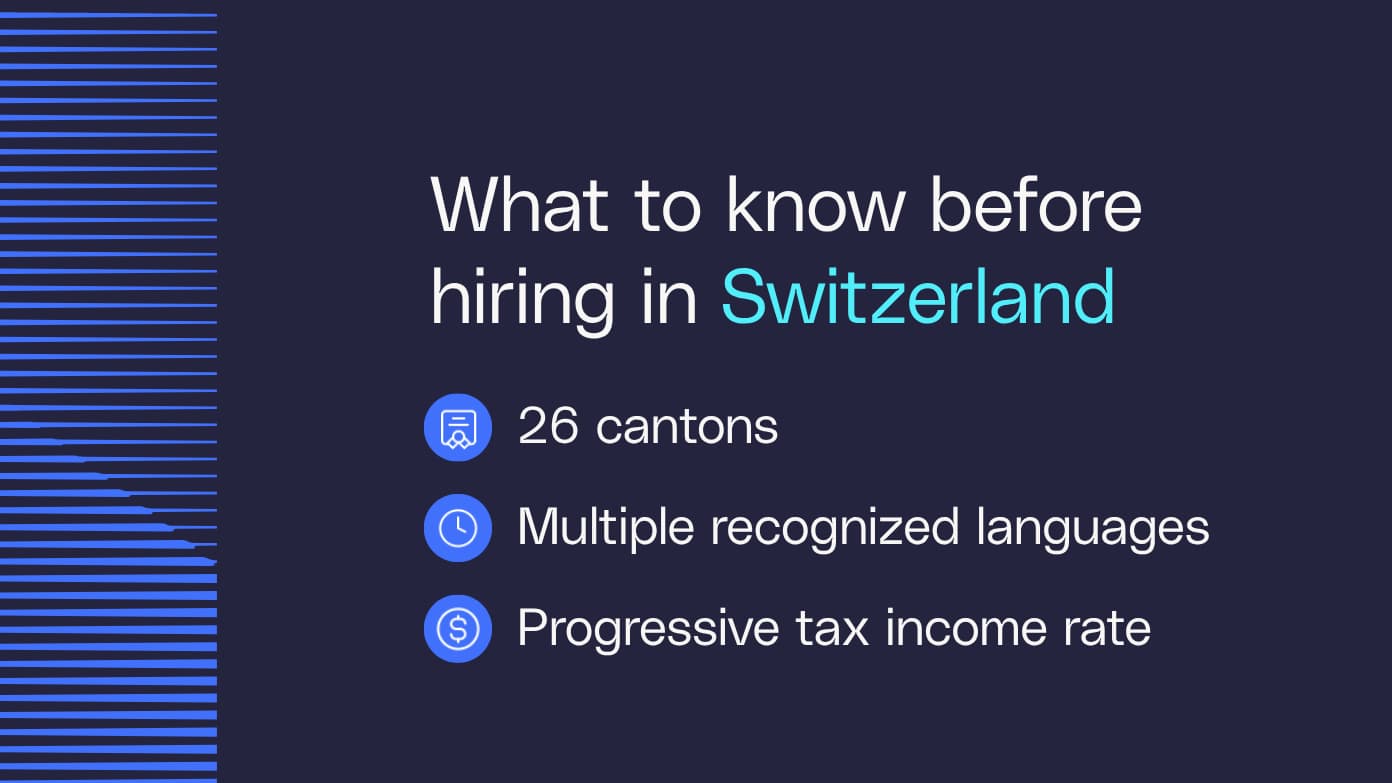
หากคุณกำลังขยายธุรกิจไปยังประเทศสวิตเซอร์แลนด์เป็นครั้งแรก มีข้อกำหนดทางกฎหมายที่สำคัญที่คุณควรทราบ บรรทัดฐานและกฎหมายเหล่านี้มีอิทธิพลต่อแนวทางการจ้างงานในสวิตเซอร์แลนด์
หากคุณไม่แน่ใจว่าจะเริ่มต้นจากตรงไหน G-P Gia™ ซึ่ง เป็นตัวแทนระดับโลกที่ขับเคลื่อนโดยปัญญาประดิษฐ์ของเรา สามารถตอบคำถามที่ยากที่สุดของคุณได้ใน 50 ประเทศ — รวมถึงสวิตเซอร์แลนด์ — และทุก 50 รัฐของสหรัฐอเมริกา ลดการพึ่งพาทนายภายนอกและลดเวลาและค่าใช้จ่ายในการปฏิบัติตามกฎระเบียบได้สูงสุดถึง 95% กับ Gia
มาดูกันว่ามี 8 สิ่งที่ควรรู้เกี่ยวกับการจ้างงานในสวิตเซอร์แลนด์
1. กฎเกณฑ์นายจ้าง-ลูกจ้าง
ความสัมพันธ์ระหว่างนายจ้าง-พนักงานทั้งหมดจะต้องปฏิบัติตามกฎเกณฑ์ต่อไปนี้:
-
SR 151.1 — พระราชบัญญัติสหพันธรัฐว่าด้วยความเสมอภาคทางเพศ
-
SR 220 — ประมวลกฎหมายแพ่งและพาณิชย์
-
เอสไอเออร์ 82211 - พระราชบัญญัติแรงงาน
-
เอสไอเออร์ 82214 - พระราชบัญญัติการมีส่วนร่วมของคนงาน
-
เอสไอเออร์ 82311 - พระราชบัญญัติของรัฐบาลกลางเกี่ยวกับบริการจัดหางานและการจ้างบริการ
-
SR 82320 — พระราชบัญญัติแรงงานที่ถูกส่งไปทํางาน
ประเทศสวิตเซอร์แลนด์ให้การรับรองสหภาพแรงงานตราบใดที่สหภาพแรงงานนั้นปฏิบัติตามข้อกำหนดทางกฎหมายทุกประการ
2. รัฐต่างๆ ในสวิตเซอร์แลนด์
ประเทศสวิตเซอร์แลนด์แบ่ง ออกเป็น26 แคนตัน แม้ว่าพวกเขาทั้งหมดจะตกอยู่ภายใต้ร่มแห่งชาติสวิส แต่พวกเขาก็เป็นหน่วยงานที่มีอำนาจด้วยตัวเอง แต่ละแคนตันมีประเพณีและวัฒนธรรมที่เป็นเอกลักษณ์ พวกเขายังมีวิธีการปกครองตนเองรวมถึงกฎหมาย รัฐธรรมนูญ และโครงสร้างรัฐบาล
เมื่อจ้างพนักงานในสวิตเซอร์แลนด์ โปรดคำนึงถึงเขตปกครอง (canton) ที่คุณลงโฆษณาตำแหน่งงานด้วย ที่พักอาศัยของผู้สมัครจะให้ข้อมูลเชิงลึกเกี่ยวกับความคาดหวังในการแปล อัตราภาษีที่จะรวมไว้ในสัญญาจ้างงานของคุณ และการพิจารณาเกี่ยวกับวันหยุดที่พวกเขาได้รับสิทธิ์
เทศบาล ซึ่งเป็นหน่วยงานปกครองส่วนท้องถิ่นขนาดเล็กที่ตั้งอยู่ภายในแต่ละรัฐ จะเป็นผู้กำหนดวิธีการจ้างงานในสวิตเซอร์แลนด์
3. ตลาดแรงงานในสวิตเซอร์แลนด์
มีผู้คนมากกว่า 5 ล้าน คนที่ทํางานในตลาดแรงงานสวิตเซอร์แลนด์ อัตราการจ้างงาน อยู่ที่ 806% เพื่อเปรียบเทียบ อัตราของสหภาพยุโรป คือ 758% แรงงานมีทักษะสูงและสําเร็จการศึกษาจากสถาบันอุดมศึกษา ในด้านการศึกษาปฐมวัยและโรงเรียนมัธยม ระบบการศึกษาของสวิตเซอร์แลนด์แตกต่างกันไปในแต่ละแคนตัน การจัดอันดับบุคลากร โลกของ IMD 2024 ตั้งให้สวิตเซอร์แลนด์เป็นประเทศที่ #1 ในการส่งเสริมบุคลากรผู้มีความสามารถ
4. ภาษาต่างๆ ในสวิตเซอร์แลนด์
การพูดหลายภาษาเป็นองค์ประกอบหลักของวัฒนธรรมสวิสซึ่งส่วนใหญ่เกิดจากพระราชบัญญัติ ภาษา การกระทำนี้ยอมรับภาษาเยอรมันฝรั่งเศสอิตาลีและโรมันชเป็นภาษาประจำชาติ เยอรมัน ฝรั่งเศส และอิตาลียังเป็นภาษาทางการของสมาพันธ์ Romansh ถูกใช้อย่างเป็นทางการในการสื่อสารกับผู้พูด Romansh ประมาณ สองในสามของผู้อยู่อาศัย ในประเทศพูดมากกว่าหนึ่งภาษา เด็กชาวสวิสเรียนรู้ภาษาประจำชาติอย่างน้อยสองภาษาในช่วงปีการศึกษาระดับแรก
ภาษาเยอรมันแบบสวิสเป็นภาษาที่ใช้กันอย่างแพร่หลายที่สุดในบรรดารัฐต่างๆ ของสวิตเซอร์แลนด์ ภาษาฝรั่งเศสใช้กันทั่วไปในเขตปกครองทางตะวันตก และภาษาอิตาลีใช้กันทั่วไปทางตอนใต้ ภาษาโรมันช์เป็นภาษาที่มีการใช้งานน้อยกว่า ซึ่งมีที่มาจากชนเผ่าราเอเทียน ผู้เป็นชนพื้นเมืองดั้งเดิมของภูมิภาคเทือกเขาแอลป์ บางมณฑลและกลุ่มประชากรก็มีภาษาถิ่นและสำนวนเฉพาะถิ่นของตนเองด้วย
สัญญาจ้างงาน การสัมภาษณ์ และการมอบหมายงานทั้งหมดควรพิจารณาถึงภาษาแรกของพนักงานหรือพนักงาน ควรแปลเอกสารทั้งหมดและจ้างล่ามเมื่อจำเป็น
5. เวลาทำการและเวลาวันหยุด
พระราชบัญญัติแรงงานสวิส ควบคุมชั่วโมงการทำงานและกฎหมายวันหยุด ชั่วโมงการทำงานสูงสุดหนึ่งสัปดาห์คือ 45 ชั่วโมงสำหรับพนักงานในสถานประกอบการอุตสาหกรรม พนักงานสำนักงาน เจ้าหน้าที่ด้านเทคนิค และพนักงานขายในบริษัทค้าปลีกขนาดใหญ่ สำหรับพนักงานคนอื่น ๆ มันคือ 50 ชั่วโมง ชั่วโมงการทำงานรายวัน รวมถึงการหยุดพักและล่วงเวลาไม่ควรเกิน 14 ชั่วโมง ในทางปฏิบัติเวลาทำงานทั่วไปในสวิตเซอร์แลนด์คือ 125 ชั่วโมง
อนุญาตให้ทำงานล่วงเวลาได้เฉพาะในกรณีพิเศษเท่านั้น จะต้องได้รับการชดเชยด้วยเบี้ยประกันภัย 25% หรือเทียบเท่า พนักงานต้องพักผ่อนติดต่อกันอย่างน้อย 11 ชั่วโมงในแต่ละวัน สามารถลดเวลาพักผ่อนนี้เหลือ 8 ชั่วโมง สัปดาห์ละครั้งได้ ตราบใดที่เวลาพักผ่อนเฉลี่ยในช่วงสองสัปดาห์มีอย่างน้อย 11 ชั่วโมง พนักงานจะได้รับเวลาพักต่อเนื่องอย่างน้อย 35 ชั่วโมงในแต่ละสัปดาห์ รวมทั้งวันอาทิตย์ด้วย
พนักงานมีสิทธิ ลาป่วยได้ 3 สัปดาห์ภายในปีแรก ของการจ้างงานกับบริษัท แต่ละตำบลมีข้อจำกัดการจ่ายค่าจ้างและข้อจำกัดการป่วยของตนเอง
พนักงานที่ตั้งครรภ์จะได้รับ วันลาคลอดแบบมีค่าจ้าง14 สัปดาห์ และพ่อมีสิทธิ์ได้รับวันลาเพื่อดูแลบุตร 2 สัปดาห์
ไม่ว่าจะอยู่ในเขตปกครองใด พนักงานทุกคนจะได้รับ วันหยุดพักผ่อนสี่สัปดาห์ ต่อปี หรือห้าสัปดาห์หากพนักงานมีอายุ 20 หรือน้อยกว่า พนักงานและนายจ้างสามารถเจรจาขอวันหยุดเพิ่มเติมในสัญญาได้หากต้องการ
กวางตุ้งมีวันหยุดท้องถิ่นและวันหยุดราชการของตัวเอง วันชาติในเดือนสิงหาคม 1เป็น วันหยุดของรัฐบาลกลางเพียงแห่งเดียว หากวันชาติตรงกับวันอังคารหรือวันพฤหัสบดีเป็นเรื่องปกติที่จะให้พนักงานวันหยุดสุดสัปดาห์ที่ยาวนาน สวิตเซอร์แลนด์ยังเฉลิมฉลองวันปีใหม่อีสเตอร์และวันคริสต์มาส แต่กฎระเบียบเฉพาะสำหรับช่วงเวลานั้นแตกต่างกันไปในแต่ละนายจ้าง พนักงานสามารถเลือกรับ เงินเดือนเพิ่ม แทนการลาพักร้อนแบบมีค่าจ้างได้
6. สัญญาจ้างงาน
พนักงานสามารถทำงานชั่วคราว จัดหาหน่วยงาน พาร์ทไทม์ หรือเต็มเวลา เดือนแรกของการจ้างงานถือเป็นระยะเวลาทดลอง คุณสามารถขยายระยะเวลาดังกล่าวได้สูงสุดถึงสามเดือนตามที่ระบุไว้ใน สัญญาจ้างงาน ของคุณ หากคุณเลือกที่จะยุติความสัมพันธ์ในการทำงานคุณต้องแจ้งให้ทราบล่วงหน้าอย่างน้อยเจ็ดวัน
สัญญาจ้างงานไม่ใช่ข้อบังคับ แต่เป็นเรื่องปกติและแนะนำเป็นอย่างยิ่ง เนื่องจากข้อกำหนดบางประการจะได้รับการยอมรับทางกฎหมายก็ต่อเมื่อทำเป็นลายลักษณ์อักษรเท่านั้น สัญญามีผลผูกพันทางกฎหมาย นายจ้างไม่สามารถฝ่าฝืนเงื่อนไขของสัญญาที่ตกลงกันไว้ได้ ประเทศสวิตเซอร์แลนด์มีกฎหมายหลายฉบับเพื่อคุ้มครองสหภาพแรงงานและพนักงานบางกลุ่ม เช่น ผู้หญิงหรือผู้เยาว์ นายจ้างต้องมีหนังสือเป็นลายลักษณ์อักษรระบุรายละเอียดวันเริ่มงาน หน้าที่การงาน ค่าจ้าง และจำนวนชั่วโมงที่พนักงานจะทำงานในแต่ละสัปดาห์
สัญญาไม่มีกำหนดเป็นเรื่องปกติในสวิตเซอร์แลนด์ สัญญา “โซ่” ถูกมองไม่ดีโดยศาลสวิส สัญญาลูกโซ่คือ สัญญา แบบต่อเนื่องที่เริ่มต้นติดต่อกันโดยมีพนักงานคนเดียวกัน การปฏิบัตินี้ถือได้ว่าเป็นการละเมิดสิทธิหากใช้เพื่อหลีกเลี่ยงการคุ้มครองการจ้างงานถาวร เช่น ความมั่นคงของงานและระยะเวลาแจ้งให้ทราบ เมื่อวันสุดท้ายของสัญญาเสร็จสิ้น ความสัมพันธ์ของพนักงาน-นายจ้างจะสิ้นสุดลงโดยไม่ต้องแจ้งให้ทราบล่วงหน้า
คุณและสมาชิกในทีมสามารถตกลงกันกำหนดระยะเวลาที่เท่ากันสำหรับการแจ้งล่วงหน้าเกี่ยวกับการลาออกหรือการเลิกจ้างได้ ประกาศนี้ไม่ควรน้อยกว่า หนึ่งเดือน ในปีแรกของการจ้างงาน และสองเดือนสำหรับทุกระยะเวลาของการจ้างงานนานถึงเก้าปี สามเดือนเป็นประเพณีนอกเหนือจากนั้น คุณไม่สามารถเลิกจ้างพนักงานได้หากพวกเขากำลังตั้งครรภ์ ป่วย หรืออยู่ในการลาคลอด คุณต้องจ่ายเงินเดือนพนักงานเฉพาะในกรณีที่พนักงานมีอายุ 50 ปีขึ้นไปและทำงานกับคุณมาแล้ว 20ปีขึ้นไปเท่านั้น
G-P ให้บริการตัวแทนนายจ้างมี โปรแกรมสร้างข้อมูลติดต่อการจ้างงาน เพื่อช่วยคุณร่างกฎระเบียบการจ้างงานเมื่อคุณจ้างงานพนักงานในสวิตเซอร์แลนด์ที่ตรงตามข้อกำหนดทางกฎหมายและแนวปฏิบัติที่ดีที่สุดทั้งหมด
7. ค่าตอบแทนและสวัสดิการ
พระราชบัญญัติแห่งสหพันธรัฐสวิสเกี่ยวกับความเท่าเทียมกันทางเพศ (GEA) กำหนดให้ บริษัท ทั้งหมดที่มีพนัก งาน100 ขึ้น ไปดำเนินการตรวจสอบภายในเพื่อให้แน่ใจว่ามีการบังคับใช้ความเท่าเทียมกันของค่าจ้าง
ประเทศสวิตเซอร์แลนด์ไม่มีค่าแรงขั้นต่ำระดับรัฐบาลกลางที่กำหนดไว้ตายตัว ภาระผูกพันค่าจ้างขั้นต่ำอาจมาจากกวางตุ้งหรือเทศบาล CBA หรือสัญญาจ้างงานสำหรับภาคส่วนเฉพาะ นอกเหนือจากนั้น ค่าจ้างจะถูกกำหนดโดยสัญญาและแนวปฏิบัติในตลาด พนักงานจะได้รับเงินเพียงครั้งเดียวในตอนท้ายของเดือน
การทำงานล่วงเวลา ตามกฎหมายรวมถึงเวลาทำงานเกินจำนวนชั่วโมงทำงานตามกฎหมายสูงสุด การทำงานล่วงเวลาตามกฎหมายแตกต่างจากงานล่วงเวลาตามสัญญา และอนุญาตเฉพาะในช่วงกลางวันหรือยามเย็นในวันทำงานเท่านั้น จะต้องชดเชยด้วยค่าจ้างเพิ่มเติมอย่างน้อย 254%
พนักงานยังสามารถเลือกวันหยุดแทนการเพิ่มขึ้นได้ การทำงานล่วงเวลาตามกฎหมายไม่ควรเกินสองชั่วโมงต่อวัน และไม่ควรเกิน 170 ชั่วโมงสำหรับสัปดาห์ทำงาน 45ชั่วโมง หรือ 140 ชั่วโมงสำหรับสัปดาห์ทำงาน 50ชั่วโมง อาจมีการยกเว้นในบางกรณีฉุกเฉินได้
โดยทั่วไปนายจ้างจะจ่ายเงินชดเชย 800% ของเงินเดือนพนักงาน (โดยมีวงเงินสูงสุดต่อปี) หากพนักงานได้รับบาดเจ็บจากการทำงาน จำนวนเงินอาจแตกต่างกันขึ้นอยู่กับอุตสาหกรรมหรือแผนประกันที่เฉพาะเจาะจง นายจ้างมีหน้าที่รับผิดชอบในการสร้างความสัมพันธ์ด้านประกันสังคมระหว่างลูกจ้างกับสำนักงานประกันสังคมของเขตปกครองตนเอง ระบบประกันสังคมประกอบด้วยเงินสมทบเข้าประกันการลาคลอด (MSE), ประกันทุพพลภาพ (DI), ประกันสวัสดิการบุตร (FZ) และเงินบำนาญ หรือประกันชราภาพและผู้รอดชีวิต (OASI) อัตราประกันสังคม คือ 6.4% สำหรับนายจ้างและ 6.4% สำหรับพนักงาน
โบนัสและ เงินเดือนเดือน13 ๆ ไม่จําเป็นต้องมี แต่เป็นเรื่องปกติ นายจ้างอาจมอบโบนัสตามสัญญาหรือตามดุลยพินิจของตนเอง โปรดทราบว่าสวิตเซอร์แลนด์มีแนวทางโบนัสที่เข้มงวดสําหรับอุตสาหกรรมการเงิน เพื่อป้องกันการรับความเสี่ยงเกินควรและเพื่อให้แน่ใจว่า การปฏิบัติ เหล่านี้จะไม่ทําลายเสถียรภาพทางการเงิน
หากพนักงานทำงานกับบริษัทของคุณมานานกว่าสามเดือน ทำงานอย่างน้อยแปดชั่วโมงต่อสัปดาห์ และมีคุณสมบัติตรงตามข้อกำหนดด้านรายได้ พวกเขาสามารถเข้าร่วมกองทุนบำเหน็จบำนาญที่นายจ้างสนับสนุนได้ ค่าเงินบำ นาญ AHV ขั้นต่ำใน ปัจจุบันคือ CHF 1,260 นายจ้างยังรับผิดชอบในการประกันอุบัติเหตุ
คุณสามารถจัดการแผนสวัสดิการได้อย่างง่ายดายด้วย บริการG-P ตัวแทนนายจ้าง ผู้เชี่ยวชาญของเราในองค์กรติดตามกฎหมายแรงงานอย่างต่อเนื่องเพื่อให้สอดคล้องกับกฎระเบียบและมาตรฐานเฉพาะของแต่ละประเทศ สร้างและจัดการแผนสวัสดิการผ่านแพลตฟอร์มของเราเพื่อมอบประสบการณ์ที่ราบรื่นให้กับพนักงาน
8. ภาษี
อัตราภาษีเงินได้ของรัฐบาลกลาง ของสวิตเซอร์แลนด์เป็นแบบก้าวหน้า โดยมีอัตราสูงสุดที่ 11.5% สำหรับกลุ่มรายได้สูงสุด สิ่งสำคัญคือต้องทราบว่าภาษีกวางตุ้งและเทศบาลก็มีผลบังคับใช้ สิ่งนี้อาจส่งผลกระทบอย่างมากต่อจำนวนภาษีทั้งหมดของคุณขึ้นอยู่กับตำแหน่งที่คุณอาศัยอยู่ อัตราภาษีมูลค่าเพิ่มของ รัฐบาลกลางคือ 81%
9. ความเท่าเทียมกัน ความเป็นส่วนตัวของข้อมูล และแนวปฏิบัติในการสรรหาบุคลากร
แนวทางปฏิบัติในการสรรหาและการจ้างงานต้องปฏิบัติตามพระราชบัญญัติความ เท่าเทียมทางเพศของรัฐ บาลกลาง วิธีนี้ป้องกันการเลือกปฏิบัติตามเพศโดยตรงและทางอ้อมตลอดวงจรชีวิตการจ้างงาน รวมถึง:
-
กำลังรับสมัครงาน
-
การจ่ายเงิน
-
การจัดสรรหน้าที่
-
โปรโมชั่น
-
การฝึกอบรม
-
ล่วงละเมิด
-
การเลิกจ้าง
นายจ้างต้องตรวจสอบให้แน่ใจว่าค่าจ้างเท่ากันสำหรับงานที่มีมูลค่าเท่ากัน เกณฑ์ที่เป็นกลางและเกี่ยวข้องกับงานจะต้องนำมาใช้ในการตัดสินใจเกี่ยวกับการสรรหา ค่าตอบแทน การเลื่อนตำแหน่ง และการเลิกจ้าง
นายจ้างที่มีพนักงาน 100 ขึ้นไปในสวิตเซอร์แลนด์จำเป็นต้องทำการวิเคราะห์ค่าจ้างเท่ากันภายในโดยใช้วิธีการที่ถูกต้องทางวิทยาศาสตร์ การวิเคราะห์จะต้องได้รับการตรวจสอบอย่างอิสระและแจ้งผลลัพธ์ให้กับพนักงานภายในกรอบเวลาที่กำหนด สิ่งนี้แยกจากภาระผูกพันค่าจ้างเท่ากันทั่วไปสำหรับนายจ้างทุกคน
ข้อมูลส่วนบุคคลของผู้สมัครจะต้องได้รับการเก็บรวบรวมและประมวลผลตามข้อกำหนดด้านการคุ้มครองข้อมูลของสวิตเซอร์แลนด์ ซึ่งรวมถึงพระราชบัญญั ติแห่งรัฐบาลกลางเกี่ยวกับการคุ้มครองข้อมูล และขีด จำกัด เฉพาะการจ้างงานในประมวลกฎหมายภาระผูกพันของ สวิส ข้อมูลการสรรหาจะต้องเป็น:
-
จำกัดเฉพาะสิ่งที่จำเป็นในการประเมินความเหมาะสมสำหรับบทบาท
-
จัดการอย่างโปร่งใสและปลอดภัย
-
เก็บไว้ตราบเท่าที่จำเป็น
การตรวจสอบพื้นหลัง สามารถทำได้เฉพาะเมื่อมีสัดส่วน เกี่ยวข้องกับงาน และเปิดเผยอย่างเหมาะสมเท่านั้น
โมเดลการจ้างสำหรับ บริษัท ทั่วโลกในสวิตเซอร์แลนด์
รูปแบบที่ดีที่สุดเมื่อคุณตัดสินใจจ้างพนักงานในสวิตเซอร์แลนด์นั้นขึ้นอยู่กับเป้าหมายทางธุรกิจโดยรวมของคุณ
| รุ่น | เหมาะที่สุดสำหรับ | ประเด็นสำคัญ | ความเสี่ยงหลัก |
|---|---|---|---|
| การลงทะเบียนนายจ้างโดยตรง | การจ้างงานในสวิตเซอร์แลนด์โดยไม่มีหน่วยงานท้องถิ่น | ลงทะเบียนกับหน่วยงานประกันสังคมและภาษีของสวิตเซอร์แลนด์ เรียกใช้เงินเดือนของสวิส จัดการใบอนุญาต สิทธิประโยชน์ และเอกสารประกอบการจ้างงาน | ภาระผู้ดูแลระบบสูง ความแตกต่างของกระบวนการกวางตุ้ง ความเสี่ยงของข้อผิดพลาดของเงินเดือน ภาษี หรือใบอนุญาต |
| ให้บริการตัวแทนนายจ้าง เช่น G-P ให้บริการตัวแทนนายจ้าง | กระบวนการจ้างงานในสวิตเซอร์แลนด์รวดเร็วทันใจ โดยไม่ต้องจัดตั้งนิติบุคคล | ให้บริการตัวแทนนายจ้างเป็นนายจ้างที่ถูกกฎหมาย ผู้ให้บริการจัดการเงินเดือน ผลประโยชน์ และสัญญา ต้องได้รับใบอนุญาตให้เช่าพนักงานอย่างเหมาะสม | ความเสี่ยงของผู้ให้บริการที่ไม่มีใบอนุญาต การควบคุมโดยตรงน้อยลง ลูกค้ายังสามารถมีหน้าที่ทำงานและการกำกับดูแล |
| บริษัทย่อยหรือสาขา | การดําเนินงานระยะยาวในสวิตเซอร์แลนด์ | สร้างสำนักงานอย่างเป็นทางการ. สนับสนุนการจ้างงานโดยตรงและการจัดการในท้องถิ่น ดีที่สุดสำหรับทีมใหญ่หรือทีมถาวร | ค่าติดตั้งและบำรุงรักษาที่สูงขึ้น เพิ่มเติม ภาษีอย่างต่อเนื่อง บัญชีเงินเดือน และทรัพยากรส่วนบุคคลตามกฎหมายว่าด้วยหน้าที่ |
| ผู้รับเหมาอิสระ | งานระยะสั้นผู้เชี่ยวชาญตามโครงการ | ผู้รับเหมาต้องทำงานอย่างอิสระ ใช้เงื่อนไขตามการส่งมอบได้ ตรวจสอบสถานะการประกอบอาชีพอิสระหากเป็นไปได้ | การจำแนกความเสี่ยงผิดปกติ ความเสี่ยงด้านประกันสังคมและภาษี สิทธิในการจ้างงานสามารถนำไปใช้ย้อนหลัง |
ศูนย์กลางการจ้างงานชั้นนำในสวิตเซอร์แลนด์
บางเมืองในสวิสเป็นที่รู้จักในด้านอุตสาหกรรมเฉพาะ การรู้ว่าแต่ละเมืองมีอะไรให้บ้าง จะช่วยให้คุณสามารถวางแผนการสรรหาบุคลากรได้อย่างเหมาะสมและรวดเร็วยิ่งขึ้นเมื่อคุณจ้างงานในสวิตเซอร์แลนด์
ฮับหลักของผู้ที่ดำเนินการในสวิตเซอร์แลนด์ ได้แก่:
-
ซูริก เป็นเมืองที่ใหญ่ที่สุดในสวิตเซอร์แลนด์ ศูนย์กลางการเงินและธุรกิจหลักเป็นที่รู้จักในด้านการธนาคาร เทคโนโลยี และบริการระดับมืออาชีพ ธนาคารรายใหญ่เช่น UBS, Julius Baer และ ZKB ตั้งอยู่ที่นี่
-
เจนีวา เป็นศูนย์กลางของการเดินทางที่มีองค์กรไม่แสวงผลกำไรระดับโลกและบริษัทด้านการเงินและการค้าหลายแห่ง ที่นี่เป็นที่ตั้งขององค์กรระหว่างประเทศที่สำคัญหลายแห่ง เช่น สำนักงานใหญ่สหประชาชาติประจำยุโรป องค์การอนามัยโลก องค์การการค้าโลก และสภากาชาดสากล
-
บาเซ ิลมีชื่อเสียงในด้านอุตสาหกรรมยา เคมี และวิทยาศาสตร์ชีวภาพ มีฐานะทางการเงินที่แข็งแกร่งและเป็นสำนักงานใหญ่ของ บริษัท ใหญ่เช่น Roche และ Novartis และบริษัทเทคโนโลยีชีวภาพขนาดเล็กและสถาบันวิจัยจำนวนมาก
-
เบิร์ นเป็นศูนย์กลางของรัฐบาลการบริหารและอุตสาหกรรมบริการ งานและบทบาทของรัฐบาลกลางจำนวนมากในด้านการดูแลสุขภาพ การศึกษา และการผลิตตั้งอยู่ที่นี่
-
โลซานเป็นที่ รู้จักในด้านการศึกษาและเทคโนโลยี เมืองที่พูดภาษาฝรั่งเศสแห่งนี้มีความโดดเด่นในการสอนและการวิจัยที่เกี่ยวข้องกับวิทยาศาสตร์ชีวภาพไอทีและการจัดการกีฬา
อุตสาหกรรมหลักในสวิตเซอร์แลนด์
การทำความเข้าใจอุตสาหกรรมหลักของสวิตเซอร์แลนด์จะช่วยให้คุณ สามารถกำหนดเกณฑ์มาตรฐานด้านเงินเดือน และสวัสดิการเมื่อจ้างพนักงานในสวิตเซอร์แลนด์ได้ คุณสามารถใช้ข้อมูลเชิงลึกนี้เพื่อตัดสินใจอย่างชาญฉลาดเกี่ยวกับการลงทุนและขยายธุรกิจของคุณ
อุตสาหกรรมหลักในสวิตเซอร์แลนด์ ได้แก่:
-
บริการทางการเงิน: สวิตเซอร์แลนด์เป็นที่รู้จักกันดีในด้านการธนาคาร ประกันภัย และการจัดการสินทรัพย์ เสถียรภาพทางการเมือง กฎหมายการรักษาความลับ และความเชี่ยวชาญของประเทศดึงดูดลูกค้าทั่วโลก ธนาคารระดับโลกรายใหญ่อย่าง UBS มีสํานักงานใหญ่อยู่ที่นี่ บุคลากรผู้เชี่ยวชาญผู้มีความสามารถ ได้แก่ ที่ปรึกษาทางการเงิน นักวางแผนความมั่งคั่ง และนักวิเคราะห์การลงทุน
-
เภสัชกรรมและวิทยาศาสตร์ชีวิต: สวิตเซอร์แลนด์เป็นเจ้าภาพของ บริษัท ยา เทคโนโลยีชีวภาพ และอุปกรณ์ทางการแพทย์ชั้นนำมากมาย ผู้นำระดับโลกเช่น Roche และ Novartis ตั้งอยู่ที่นั ่น ภาคนี้มุ่งเน้นไปที่ผลิตภัณฑ์ที่มีมูลค่าสูงเช่นวัคซีนยาเฉพาะและเซรั่ม ผู้เชี่ยวชาญโดยตรงที่ผู้รับประทานอาหารรวมถึงผู้เชี่ยวชาญด้านการวิจัยและพัฒนา นักวิทยาศาสตร์ และวิศวกร
-
เครื่องจักร เครื่องมือที่มีความแม่นยำ และวิศวกรรม: สวิ ตเซอร์แลนด์เป็นผู้นำระดับโลกในด้านเครื่องจักร นาฬิกา และเครื่องมือที่มีความแม่นยำสูง ผู้เชี่ยวชาญโดยตรงที่ผู้รับประทานอาหารรวมถึงตำแหน่งวิศวกรรมต่างๆ เช่น วิศวกรเครื่องกล ไฟฟ้า และวิศวกรการผลิต
-
เทคโนโลยีสารสนเทศและการสื่อสาร: สวิ ตเซอร์แลนด์เป็นผู้นำด้านเทคโนโลยีบล็อกเชนและสกุลเงินดิจิทัลดึงดูดสตาร์ทอัพและก่อตั้งบริษัททางการเงินแบบกระจ ผู้เชี่ยวชาญโดยตรงที่ผู้รับประทานอาหารรวมถึงนักพัฒนาซอฟต์แวร์ นักวิทยาศาสตร์ข้อมูล และสถาปนิกระบบคลาวด์
-
เคมีภัณฑ์: อุตสาหกรรมเคมีมีบริษัทหลักในภาค กลิ่นหอมและน้ำหอม เช่น Givaudan และ DSM-Firmenich ผู้เชี่ยวชาญโดยตรงที่ผู้รับประทานอาหารรวมถึงผู้เชี่ยวชาญด้านการวิจัยและพัฒนา วิศวกร และนักวิทยาศาสตร์
ค่าใช้จ่ายในการจ้างพนักงานในสวิตเซอร์แลนด์
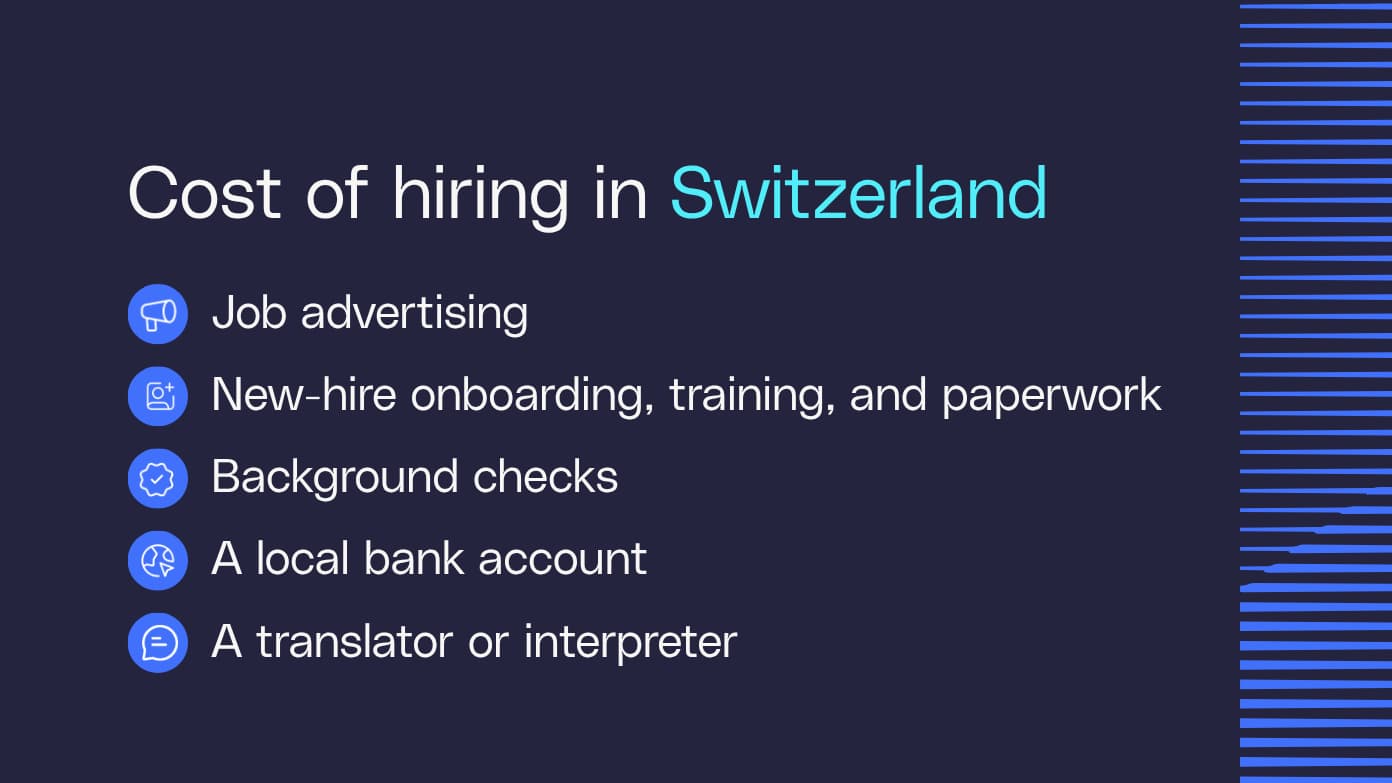
ไม่ว่าคุณจะจ้างพนักงานเพียงคนเดียวหรือทั้งทีม กระบวนการจ้างงานในสวิตเซอร์แลนด์ย่อมมีค่าใช้จ่ายที่หลีกเลี่ยงไม่ได้
งบประมาณสําหรับสิ่งต่อไปนี้:
-
ประกาศรับสมัครงาน
-
การปฐมนิเทศ การฝึกอบรม และเอกสารต่างๆ
-
ซอฟต์แวร์ติดตามผู้สมัคร
-
การตรวจสอบประวัติ
-
อุปกรณ์พิเศษใด ๆ สำหรับพนักงาน
-
ผู้แปลหรือล่าม (ถ้ามี)
-
ค่าใช้จ่ายในการเดินทางไปและกลับจากสวิตเซอร์แลนด์ (หากจำเป็น)
-
AHV/IV/EO
-
ประกันการว่างงาน
-
ประกันอุบัติเหตุจากการทำงาน
-
เงินสมทบเบี้ยเลี้ยงครอบครัว
-
ประกันเบี้ยเลี้ยงรายวันกรณีเจ็บป่วย
-
สิทธิ์การลาพักร้อนของพนักงาน
-
ลูกจ้างจ่ายวันหยุดและสิทธิลาป่วย
ตามข้อมูลของ Gia อัตราภาระรวมของนายจ้างต่อปีในสวิตเซอร์แลนด์ ซึ่งรวมถึงค่าใช้จ่ายที่เกิดขึ้นนอกเหนือจากเงินเดือน อยู่ระหว่าง 10% ถึง 20% ของเงินเดือนขั้นต้น อัตราค่าจ้างจะขึ้นอยู่กับเงินเดือนของพนักงาน อุตสาหกรรม และเขตการปกครอง Gia G-P 13ใช้ประโยชน์จากประสบการณ์การจ้างงานทั่วโลก ปีของ พร้อมด้วยข้อมูลเชิงลึกจากสถานการณ์จริงเกือบล้านสถานการณ์ เพื่อให้ข้อมูลที่ถูกต้องและทันต่อกฎหมายการจ้างงาน
บริษัทจำเป็นต้องมีอะไรบ้างในการจ้างงานในสวิตเซอร์แลนด์?
สหภาพยุโรป/EFTA เทียบกับคนงานนอกสหภาพยุโรป/EFTA
ต้องขอบคุณข้อต กลงเกี่ยวกับการเคลื่อนไหวอย่างเสรีของบุคคล (AFMP) การจ้างพลเมืองจากประเทศสมาชิก EU/EFTA เกี่ยวข้องกับอุปสรรคในการบริหารเพียงเล็กน้อย นายจ้างไม่จำเป็นต้องให้ความสำคัญกับแรงงานชาวสวิสในท้องถิ่น หรือชี้แจงเหตุผลว่าทำไมจึงเลือกผู้สมัครจากสหภาพยุโรป/EFTA สำหรับสัญญาจ้างระยะสั้น (ไม่เกิน 90 4 วันต่อปีปฏิทิน) บริษัทจะต้องส่งการแจ้งเตือนทางออนไลน์ก่อนที่พนักงานจะเริ่มทำงานเท่านั้น สำหรับการจัดเตรียมที่นานขึ้น พนักงานจะลงทะเบียนกับชุมชนที่อยู่อาศัยในประเทศสวิสเซอร์แลนด์ของตนเพื่อรับที่อยู่อาศัย/ในขณะทำงาน (เช่น ใบอนุญาต L หรือ B) สิ่งนี้ทำให้พวกเขาสามารถเข้าถึงตลาดแรงงานของสวิตเซอร์แลนด์ได้ทันที
บุคคลที่ไม่ใช่ชาวสหภาพยุโรป/EFTA
การจ้างผู้สมัครจากประเทศที่ไม่ใช่สหภาพยุโรป/EFTA (รวมถึงสหราชอาณาจักรและสหรัฐอเมริกา) ได้รับการควบคุมมากขึ้น ภายใต้พระราช บัญญัติของรัฐบาลกลางเกี่ยวกับชาวต่างชาติและการบูรณาการ (FNIA) นายจ้างต้องพิสูจน์ว่าความพยายามในการจัดหางานในท้องถิ่นล้มเหลว ใบอนุญาตที่ไม่ใช่สหภาพยุโรป/EFTA ถูก จำกัด เฉพาะเฉพาะบุคลากร เช่น ผู้จัดการ ผู้เชี่ยวชาญอาวุโส หรือผู้สำเร็จการศึกษาจากมหาวิทยาลัยที่มีประสบการณ์เฉพาะทาง
โควต้าใบอนุญาตและตารางเวลาการบริหาร
รัฐบาลสวิตเซอร์แลนด์มีโควตาใบอนุญาต ทํางาน ประจําปีที่เข้มงวดสําหรับบุคคลที่ไม่ใช่พลเมือง EU/EFTA ใบอนุญาตทํางานต้องมีกระบวนการอนุมัติหลายชั้นที่เกี่ยวข้องกับหน่วยงานแรงงานของรัฐและสํานักงานเลขาธิการรัฐว่าด้วยการย้ายถิ่นฐาน (SEM) นายจ้างต้องเริ่มขอใบสมัครล่วงหน้า พนักงานไม่สามารถเริ่มงานได้จนกว่าจะได้รับอนุญาตอย่างเป็นทางการ
ผลประโยชน์ของคุณคือสร้างความสัมพันธ์กับสํานักงานเศรษฐกิจท้องถิ่นหรือสถานทูตของรัฐนั้น ๆ คุณไม่จําเป็นต้องมีนิติบุคคลเพื่อจ้างงานในสวิตเซอร์แลนด์ แต่ถ้าคุณเลือกเริ่มต้นบริษัทในสวิตเซอร์แลนด์ คุณสามารถเลือกได้ระหว่าง:
-
กิจการเจ้าของคนเดียว
-
ห้างหุ้นส่วนทั่วไป
-
ห้างหุ้นส่วนจำกัด
-
บริษัทจำกัดหรือบริษัทร่วมทุน
-
บริษัทมหาชนจำกัด
-
อา
-
สาขาท้องถิ่น
สาขาเป็น เส้นทางทั่วไป สำหรับบริษัทระหว่างประเทศ และกำหนดให้คุณต้องจ่ายภาษีท้องถิ่นและดูแลผู้มีถิ่นที่อยู่ในประเทศสวิสเซอร์แลนด์อย่างน้อยหนึ่งคนที่มีอำนาจตามกฎหมาย คุณต้องเตรียมเอกสารทางกฎหมายสัญญา และบัญชีทางการเงินที่จัดตั้งขึ้นทั้งหมด
จ้างพนักงานในสวิตเซอร์แลนด์โดยไม่ต้องจัดตั้งองค์กรของคุณเองกับ G-P ให้บริการตัวแทนนายจ้าง สร้างทีมของคุณในสวิตเซอร์แลนด์ด้วยต้นทุนที่ต่ำกว่า และมั่นใจได้ว่าคุณปฏิบัติตามข้อกำหนดเฉพาะของแต่ละรัฐอย่างครบถ้วน
ขั้นตอนการจ้างงานในสวิตเซอร์แลนด์
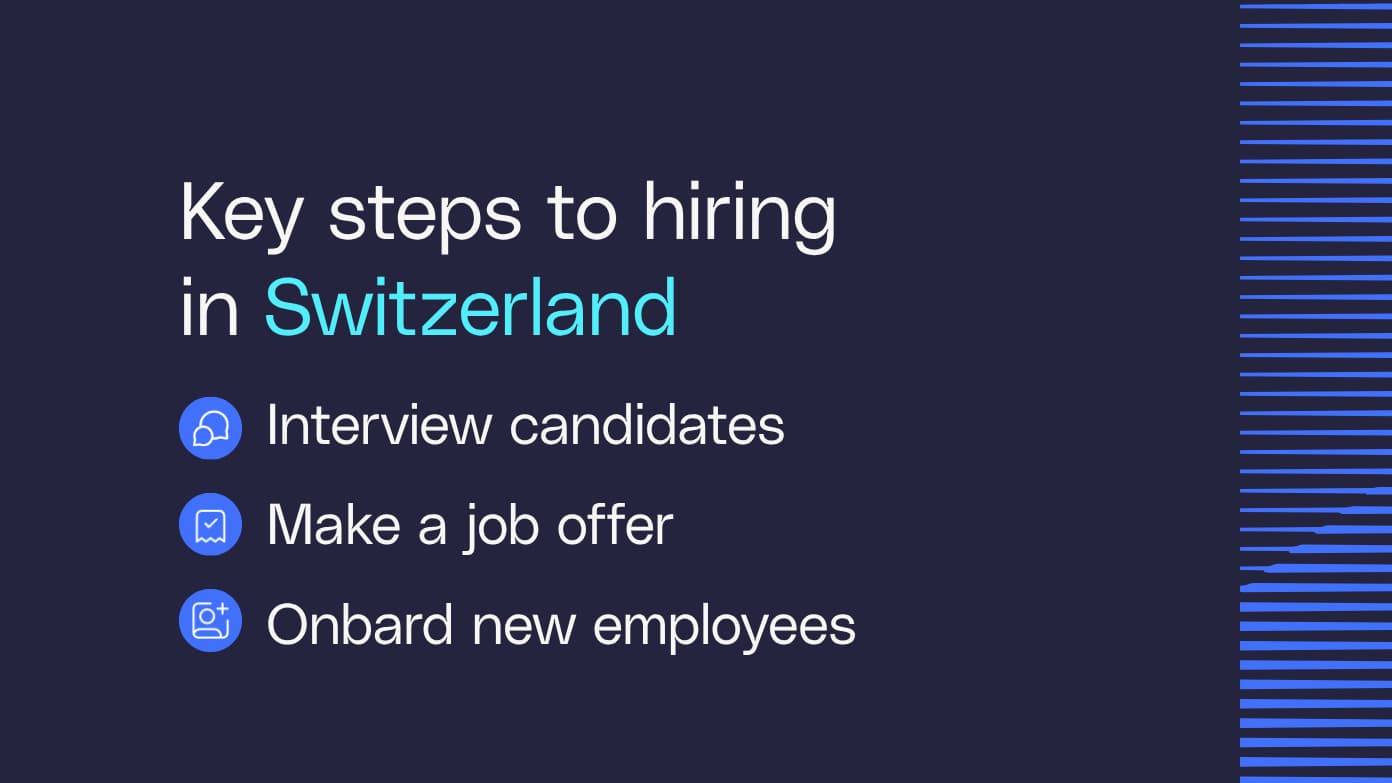
กระบวนการจ้างงานในสวิตเซอร์แลนด์ มีขั้นตอนพื้นฐาน 5 ขั้นตอน ได้แก่ การโฆษณางาน การประเมินใบสมัคร การสัมภาษณ์ผู้สมัคร การส่งข้อเสนองาน และระบบควบคุมเริ่มงานของพนักงานใหม่
1. ลงโฆษณาตำแหน่งงานว่าง
ขั้นแรก ให้จัดทำรายละเอียดงานให้ครบถ้วน ระบุบทบาท หน้าที่ และคุณสมบัติที่จำเป็น สำหรับบางอาชีพที่มีอัตราการว่างงานสูง นายจ้างมีหน้าที่ตามกฎหมายที่จะต้องแจ้งสำนักงานจัดหางานประจำเขตปกครองเกี่ยวกับตำแหน่งงานว่างก่อนที่จะประกาศรับสมัครงานต่อสาธารณะ สิ่งนี้ทำให้มั่นใจในการเข้าถึงสิทธิพิเศษสำหรับผู้หางานที่ลงทะเบียนและกฎหมายตามกฎหมายของรัฐบาลกลางว่าด้วยบริการจัดหางาน
2. ประเมินใบสมัคร
เมื่อผู้สมัครงานยื่นใบสมัครสำหรับตำแหน่งงานใหม่ของคุณแล้ว คุณสามารถประเมินใบสมัครเหล่านั้นและพิจารณาว่าผู้สมัครคนใดเหมาะสมที่สุดสำหรับตำแหน่งงานนั้นได้ กฎหมายสวิสห้ามการเลือกปฏิบัติโดยอิงจากเพศ อายุ เชื้อชาติ ศาสนา ความพิการ รสนิยมทางเพศ หรือลักษณะอื่น ๆ ที่ได้รับการคุ้มครองในทุกขั้นตอนของการสรรหาบุคลากร เรื่องนี้ได้ระบุไว้ในรัฐธรรมนูญแห่งสหพันธรัฐสวิสและกฎหมายว่าด้วยความเสมอภาคทางเพศแล้ว
ตรวจสอบให้แน่ใจอีกครั้งว่าประกาศรับสมัครงาน เกณฑ์การคัดเลือก และคำถามในการสัมภาษณ์นั้นปราศจากอคติ
3. สัมภาษณ์ผู้สมัคร
จากนั้นให้สัมภาษณ์ผู้สมัครที่เข้าสู่รายการย่อของคุณ ใช้เกณฑ์การคัดเลือกที่เกี่ยวข้องกับงานและการสัมภาษณ์ที่มีโครงสร้างเพื่อให้มั่นใจในความยุติธรรมและความสม่ำเสมอ Gia สามารถช่วยคุณสร้างคำถามสัมภาษณ์ที่สอดคล้องกับกฎหมายต่อต้านการเลือกปฏิบัติเมื่อจ้างพนักงานในสวิตเซอร์แลนด์ เพื่อให้คุณสามารถหาคนที่เหมาะสมที่สุดสำหรับตำแหน่งงานนั้นๆ พร้อมทั้งปฏิบัติตามกฎระเบียบท้องถิ่นได้
แนวทางปฏิบัติที่ดีที่สุดคือการเก็บรักษาเอกสารเกี่ยวกับกระบวนการสรรหาบุคลากร รวมถึงบันทึกการสัมภาษณ์และผลการตัดสินใจคัดเลือก ไว้เป็นเวลาอย่างน้อยห้าปี
4. เสนอตำแหน่งงาน
ตอนนี้ถึงเวลาแจ้งให้ผู้สมัครที่คุณเลือกทราบแล้ว จัดทำสัญญาจ้างงานเป็นลายลักษณ์อักษรที่สอดคล้องกับกฎหมายแรงงานของสวิตเซอร์แลนด์ สัญญาควรระบุข้อกำหนดที่สำคัญ เช่น ตำแหน่งงาน หน้าที่ เงินเดือน ชั่วโมงทำงาน ระยะเวลาการแจ้งล่วงหน้า และข้อตกลงการเจรจาต่อรองร่วม (CBA) ที่เกี่ยวข้อง
5. ปฐมนิเทศพนักงานใหม่
ลงทะเบียนพนักงานใหม่กับระบบประกันสังคมของสวิตเซอร์แลนด์ (AHV/AVS) ประกันอุบัติเหตุ กองทุนบำเหน็จบำนาญ (BVG/LPP) และหากจำเป็น ให้ลงทะเบียนกับหน่วยงานด้านภาษีที่เกี่ยวข้องด้วย ตั้งค่าระบบจ่ายเงินเดือนเพื่อให้มั่นใจว่าการจ่ายเงินเดือน การหักเงินประกันสังคม เงินสมทบกองทุนบำเหน็จบำนาญ และภาษีเป็นไปอย่างถูกต้อง
การว่าจ้างผู้รับเหมาในสวิตเซอร์แลนด์
การทำงานร่วมกับผู้รับเหมาอิสระในสวิตเซอร์แลนด์อาจเป็นวิธีที่คุ้มค่าในการทดสอบตลาดและสร้างฐานธุรกิจโดยไม่ต้องผูกมัดกับพนักงานประจำ ผู้รับเหมาที่ตั้งอยู่ในสวิตเซอร์แลนด์เข้าใจพฤติกรรมของผู้บริโภค กฎระเบียบ และแนวปฏิบัติทางธุรกิจในท้องถิ่นเป็นอย่างดี พวกเขาจะพร้อมเริ่มทำงานได้อย่างรวดเร็ว โดยใช้เครื่องมือและอุปกรณ์ของตนเอง รวมถึงกระบวนการทำงานที่วางไว้แล้ว
การว่าจ้างผู้รับเหมา ช่วยให้คุณปรับแผนธุรกิจของคุณให้เหมาะสมกับความต้องการทางธุรกิจได้อย่างง่ายดาย โดยไม่ต้องเผชิญกับความยุ่งยากและค่าใช้จ่ายในการจ้างพนักงานประจำ
ก่อนที่คุณจะทำข้อตกลงกับผู้จ้างงานอิสระในสวิตเซอร์แลนด์ โปรดพิจารณาสิ่งต่อไปนี้:
1. พนักงานประจำกับผู้รับเหมาอิสระ
สิ่งสำคัญคือต้องเข้าใจความ แตกต่างระหว่างพนักงานและผู้รับเหมาอิสร ะ ในสวิตเซอร์แลนด์ สัญญาจ้างงานสำหรับพนักงานมักจะมีข้อกำหนดพิเศษและระบุเวลาทำงาน สถานที่ตั้ง และหน้าที่ ข้อตกลงบริการสำหรับผู้รับเหมามุ่งเน้นไปที่ผลการส่งมอบและผลลัพธ์ โดยเน้นความเป็นอิสระและความเป็นอิสระของคนงาน
บริษัทต่างๆ จ้างงานพนักงานเพื่อทำงาน และตอบแทนพวกเขาด้วยเงินเดือนหรือเงินเดือนปกติ ผู้รับเหมาต้องจัดหาประกันสังคมและแผนการเกษียณอายุด้วยตนเอง ต่างจากพนักงานประจำ ผู้รับเหมาสามารถกำหนดตารางเวลาทำงานเอง ใช้เครื่องมือของตนเอง และทำงานเฉพาะโครงการที่กำหนดไว้เท่านั้น ไม่ใช่การทำงานต่อเนื่องในระยะยาว
2. บทลงโทษสำหรับการจำแนกประเภทผิดพลาด
การจัดประเภทใครสักคนเป็นผู้รับจ้างในขณะที่เขาไม่ใช่ อาจนําไปสู่บทลงโทษรุนแรง หาก ประเภทอื่นๆ เกิดขึ้นในระหว่างที่คุณพยายามจ้างงานในสวิตเซอร์แลนด์ คุณอาจต้อง:
-
จ่ายส่วนแบ่งประกันสังคมของนายจ้างและพนักงานย้อนหลังได้สูงสุดห้าปี ซึ่งรวมถึงเงินสมทบเข้ากองทุนประกันสังคมสำหรับผู้สูงอายุและผู้รอดชีวิต (OASI) ประกันทุพพลภาพ และประกันการว่างงาน
-
ชำระค่าดอกเบี้ยและค่าธรรมเนียมตามจำนวนเงินที่ค้างชำระและระยะเวลาที่ล่าช้า
-
เผชิญกับการตรวจสอบการดำเนินการและการทบทวนกฎระเบียบจากหน่วยงานของสวิส เช่น สำนักเลขาธิการแห่งรัฐเพื่อกิจการเศรษฐกิจ (SECO) ซึ่งอาจนำไปสู่การบังคับใช้เพิ่มเติมหากตรวจพบประเภทดังกล่าว
3. วิธีการชำระเงินให้ผู้รับเหมาในสวิตเซอร์แลนด์
G-P Contractor™ ขจัดขั้นตอนการจ้างงานและการจ่ายเงินผู้รับเหมาที่ยุ่งยากและใช้เวลานาน คุณสามารถสร้างและออกสัญญา รวมถึงจ่ายเงินให้ผู้รับเหมาได้ด้วยคลิกไม่กี่ครั้ง ในขณะที่ยังคงมั่นใจว่ากระบวนการถูกกฎระเบียบ
จ้างพนักงานและผู้รับเหมาในสวิตเซอร์แลนด์กับ G-P
ผลิตภัณฑ์ที่ขับเคลื่อนโดย SaaS และปัญญาประดิษฐ์ของเรา – บริการตัวแทนนายจ้าง, ผู้รับจ้าง และ Gia – ช่วยให้บริษัททุกขนาดสร้างและจัดการทีมระดับโลก
ด้วยประสบการณ์มากกว่าทศวรรษ ผู้จัดการที่ใหญ่ที่สุดของทรัพยากรบุคคล ผู้เชี่ยวชาญด้านกฎหมายและกฎหมาย และฐานความรู้ที่เป็นกรรมสิทธิ์ระดับโลก G-P เป็น ผู้นำที่ได้รับการยอมรับในการจ้างงานทั่วโลก เมื่อคุณต้องการจ้างงานพนักงานในสวิตเซอร์แลนด์
ทำให้การขยายธุรกิจของคุณไปยังสวิตเซอร์แลนด์ง่ายขึ้นด้วย G-P ติดต่อเรา หรือ จองการสาธิต วันนี้